Pastor Sherry’s message for April 13, 2025
Scriptures: Lk 19:28-40; Ps 118:1-2, 19-29; Isa 50:4-9; Ps 31:9-16; Phil 2:5-11; Lk 22:14-23:56
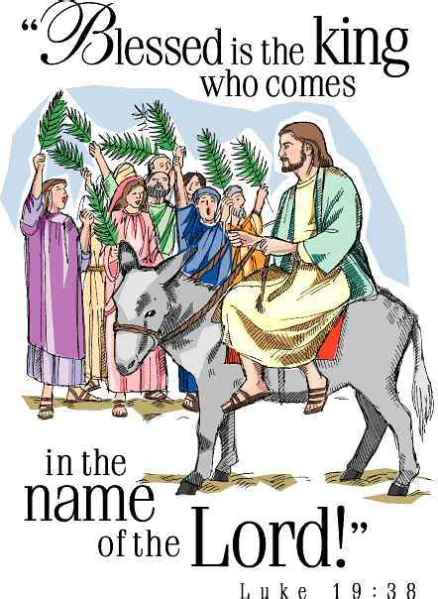
Our custom here at Wellborn Methodist Church has been to focus on Jesus’ Passion—His experiences and thoughts leading up to and including His Crucifixion. Typically, then, we have handed out palm crosses, like you have today, but without focusing on Jesus’ triumphal entry into Jerusalem on Palm Sunday. This year, I wanted us to focus on the difference between Palm Sunday and Good Friday. This is why we began our service on the front porch today, symbolically outside Jerusalem, if you will. And we followed the path of Jesus, riding on a donkey, as He made His way from the city gate into the Temple.
Now the Sadducees of 2000 years ago believed the Messiah would enter the city 4 days before Passover. Passover would have begun at sundown on Friday and ended at sundown on Saturday, the Jewish Sabbath.Thus, they made sure the gates to the Temple remained open the first day of their week, so Messiah could walk right on in and assume His throne.
Under normal circumstances, then, there would have been a great deal of hoopla and excitement among the Passover crowds, with people asking, “Is this the year? Will Messiah show up? “ Knowing He would be arrested early Thursday morning and hanging on His Cross by Friday, Jesus chose to enter Jerusalem on what we call Palm Sunday. What courage!
He fulfilled the prophesy of the minor prophet, Zechariah, from chapter 9, verse 9 (NLT) Rejoice, O people of Zion! Shout in triumph, O people of Jerusalem! Look your king is coming to you. He is righteous and victorious, yet He is humble, riding on a donkey—riding on a donkey’s colt. Victorious kings, Like David, would have entered the city to large, cheering crowds. The people would have waved palms and placed their garments on the road for the King to tread upon. At the end of 4th season of “The Chosen,” in episode 8 (you may call it up on YouTube), the writers re-enact one such victorious return, singing of King David, “Hosannah, Our King is Victorious!”
King David would have ridden in on his war-horse, but King Jesus rides in on a humbler animal, a donkey. Luke wants us to be sure to know that this animal was borrowed from someone who knew of and loved Jesus, and it had never been ridden before. Many in Jerusalem assumed Jesus was the Messiah and thronged around Him, praising Him and singing many of the lines read today from Psalm 118:25-29. Hosannah (Yesha anna in Hebrew) means save us now. The crowds are asking Jesus to save them.
Do you think they knew that He was God in the flesh? They are cheering Him on. They are rejoicing in His presence. They are filled with hope that He is their Messiah.
The Passion readings appointed for today lead us from this celebratory procession to Jesus’ arrest, trials, death, and burial:
A. Paul reminds us in Philippians 2:5-11 that Jesus humiliated or humbled Himself to come to earth to save us. The Palm Sunday crowds expected Him to save them and that is exactly what He intended to do. Paul wants us to be as humble and as obedient to the Father as Jesus was. Jesus obeyed His Father in everything, even up to and including His manner of death. Though totally righteous and holy, He died as though He were a rightfully tortured and despised criminal.
Paul also desires that we appreciate the depths of Jesus’ sacrifice on our behalf: He gave up His heavenly prerogatives as King of the Universe–the One who spoke creation into existence–to be born in a stable, to a poor, young, homeless couple, in a ragtag and oppressed, tiny nation. Instead of demanding respect and a wide following as a great and exalted leader, He humbly behaved as a servant to all. No wonder the Father has honored Him above all things, declaring that His name commands total obedience, from every being, in every sphere of the universe! Incidentally, this includes non-believers who will be shocked to arrive at the Great White Throne Judgment, only to discover they made the wrong choice to dismiss Him during their lifetimel
B. Isaiah prophesies in 50:4-9 how Jesus, the Suffering Servant of God, will be treated during His Passion experience. Verse 4 tells us He was tutored by Holy Scripture and also by His heavenly Father. Verse 5 insists that He was always obedient to the Father’s will. Verse 6 peaking for Jesus in the first person—I offered My back to those who beat Me, My cheeks to those who pulled out My beard. I did not hide My face from mocking and spitting. This verse tells us He would endure beatings: He was beaten by the Jewish Temple guards during the night;
Then He was beaten again by the Roman soldiers early in the morning. He would be spit upon, in His face (such a sign of contempt and hatred), and on His bloody body (YIKES! to so desecrate God Himself)! He will have His beard pulled out.
But notice too, in verses 7-9a—He will trust in God, His Father, the entire time. He remained constant and faith-filled, despite all the evil that was done to Him! I think He thus modeled to us how we might withstand persecution, if such befalls us for being Christians. We are to hold on to our faith in God and to the love of Jesus for us, with both hands.
C. Psalm 31:9-16 was written by King David. The portion we read today is a prayer in which he seeks the Lord’s deliverance from a very powerful foe. It is also very aptly describes what Jesus probably suffered on the way to His crucifixion at Golgatha, and even as He hung suspended from the Cross:
(1) V.9— Be merciful to Me, O LORD, for I am in distress…
(2) V.10—My life is consumed by anguish and my years by groaning; My strength fails….
(3) Vv.11-12—Because of My enemies, I am the utter contempt of My neighbors; I am a dread to my friends—those who see Me on the street flee from Me. I am forgotten by them as though I were dead; I have become like broken pottery.
He is experiencing despair and grief. But He does not succumb to it. In verse 14, he reminds Himself, But I trust in You, O LORD. I say, “You are my God.” And He reaffirms for Himself, (v.15) My times are in Your hands. We can trust in God to sustain us through the most difficult times because He is only a prayer away (meaning He is present to us). He loves us, and He sent His only, beloved Son to die to save us.
D. Our Passion narrative comes from Luke this year (22:14-23:56). It needs little explanation as it speaks very powerfully for itself. We see and understand that, though they had welcomed Him as a hero on Sunday, by Thursday they had replaced their Hosannah’s with outraged cries to Crucify Him! What happened? Well, quite simply, He disappointed their expectations. They wanted a military leader to subdue the Romans; a warrior on a war-horse rather than a humble donkey. They expected Him to overthrow their oppressors instead of teaching and praying daily in the Temple. He didn’t live up to their idea of a Savior. Their disappointment turned into anger and murderous rage, fueled and stoked by the jealous religious leadership who felt threatened by Him. So they killed Him. But they didn’t eradicate either His memory or His influence.
We are currently living through a period in our country in which the influence of Jesus appears to have waned. Fewer and fewer people seem to know Who Jesus is and why believing in Him and worshipping Him is important. Many churches have declining memberships. Folks appear to have given up regular Sunday attendance. In fact, a statistic I heard recently said that most committed Christians only attend church once every three weeks. Many activities compete for our attention—sporting events, leisure time pursuits, work, even sleeping in. I was probably in my late 30’s when I realized that God spoke to me during Sunday worship. His voice came to me through the music, the sermon, the readings, or sometimes from something a fellow worshipper said. As much as I wanted to sleep in, I realized if I missed church, I would miss what the Lord had to say to me that week. And as I came to regard my congregation as my “spiritual family,” I also realized I would miss what was often only a once a week contact.
We need to remember all that Christ has done for us. As I preached last week, we need a Savior because we cannot save ourselves. The Good News is that we are washed clean of our sins by the sinless blood of the true Passover Lamb, our Lord and Savior, Jesus Christ. Come, Let us adore Him!
©️2025 Rev. Dr. Sherry Adams
 Wellborn Methodist Church--Wellborn, Florida