Jesus is the Only One!

Pastor Sherry’s message for January 8, 2023

Scriptures: Isa 42:1-9; Ps 29; Acts 10:34-43; Matt 3:13-17

How many of you bothered to make New Year’s Resolutions this year? I made one. Normally, mine are on the order of pray more, read more Scripture, offer people more grace, and so on. But the one I made this year was to listen to Christian music—all types—more often. A clergy friend had asked me when I had felt closest to Jesus this Christmas. I told her that it was during our services on Christmas Eve and Christmas Day, due to Joy’s singing. You may remember she sang, “Jesu Bambino—O Holy Night” on Christmas Eve, and the soprano aria from Handel’s “Messiah” on Christmas Day, “Rejoice, O Daughters of Jerusalem.” As I sat listening, tears ran down my face. Her beautiful singing lifted my soul right into the throne room of Heaven! I felt like I was in the presence of the Lord.

So, I have resolved to make it a practice to listen to Christian music daily ever since. My new favorite CD is Casting Crown’s “Thrive” album from 2013 (Yikes, it’s 10 years old!) Nevertheless, the group consists of 7 members and their voices and harmonies are wonderful. Some of their songs have a blue-grass banjo accompaniment which I totally love.

I think their song entitled, “You are the Only One” is particularly relevant to our Scripture lessons today:

One more mother with a broken heart;

One more family is torn apart;

One more orphan out in the cold;

One more fear that takes control;

One more tangled in the same old lies;

One more shackled to the same old highs; [how’s that for a

description of addiction?]

One more scared of what tomorrow brings;

And one more chasing yesterday.

Lord, let your Kingdom come!

Who can right every wrong? You are the Only One.

Who can calm every storm? You are the Only One. You alone are Father, Savior, Spirit, Healer, Redeemer, Lord of All!

A. The prophet Isaiah (42:1-9) provides the 1st of four Servant Songs, all of which describe the coming Messiah—and all of which, as it turns out, match Jesus perfectly. In verse 1, God reveals that Messiah/Jesus is My Servant, Whom I uphold [support or back], My Chosen One in Whom I delight. Jesus had the Father’s complete confidence. He also has God’s complete approval. In our Gospel lesson today, Matthew (3:13-17) reports Jesus’ baptism. The Father speaks a blessing over Him from on high (v.17) This is My Son, Whom I love; with Him I am well pleased. The Father announces He loves Jesus and that He is proud of Him. Jesus begins His public ministry with His heavenly Father’s blessing. God further asserts in Isaiah 42:1 that He wiil empower Jesus with His Holy Spirit. Matthew shares that the Holy Spirit descended upon Jesus at His baptism (v.16). There it is—at His baptism, Jesus is given supernatural power and authority from the Father to perform signs and wonders. There are some false gospels that claim Jesus healed wounded birds and revived crushed butterflies as a child. These lack veracity because our Lord had not yet been empowered to heal. Now, at His baptism, Jesus is granted God’s power to help and deliver, to administer God’s justice, and to speak God’s truth.

Through Isaiah, God the Father goes on to reveal Jesus’ character and ministry: He will be a different kind of King. Rather than being a military warrior, fighting to vanquish the Romans and any other Israelite foes, He will minister kindly to bruised reeds and smoldering wicks…these are poetic metaphors for people like you and me, those of us who are broken and who need a healer. He will not run roughshod over those who grieve or who are denied justice. No, He will listen gently and will respond with mercy, compassion, and love. Additionally, while He may look and act like He is meek and mild, He will actually stand strong in His God-given, God-supported, God-empowered confidence. No one will be able to make Him do what He doesn’t choose to do.

Furthermore, He will not just rescue God’s Chosen, the Jews, but He will also be (v.6) a light for the Gentiles, to open eyes that are blind, to free captives from prison and to release from the dungeon those who sit in darkness (shades of Isaiah 61:1, His job description to come). This is what Peter is referring to as he witnesses to the Gentile centurion, Cornelius, in Acts 10:34-43. Though Jesus’ originally came to the House of Israel, Peter realized Jesus’ message was for anyone who would believe—regardless of nationality. He says, (v.34) I know realized how ture it is that God does not show favoritism. What a great line! Thank God—in the all too familiar rhetoric of the day—our Lord is not a racial bigot! Peter goes on the present the Gospel message—Jesus Christ lived among us, died for our sins, and rose again demonstrating His power over both death and sin. He came to save all who believe in Him. Peter affirms this as he closes his sermon with these wonderful, reassuring words (v.43) All the prophets testify about Him that everyone who believes [Gentile, Jew, or whoever] receives forgiveness of sins through His name.

This is a great cue for Casting Crown’s chorus:

Lord, let Your Kingdom Come!

Who can right every wrong? You are the Only One.

Who can calm every storm? You are the Only One.

You alone are Father, Savior, Spirit, Healer, Redeemer, Lord of All!

B. Our Psalm (29) reminds us, through storm metaphors, of the power of God. King David wrote it and wants us to realize that God is mightier and more powerful than the greatest storm (hurricane, tornado, blizzard, typhoon, etc.). Emphasizing God, David cites His name, the LORD, 18 times in 11 verses; and describes the [formidable] voice of the LORD, 7 times. David wants us to know that the Lord is able to see us safely through all the storms of life! Additionally, we know from experience that the storms in our lives eventually come to an end. How often during a particularly trying time in my life have I reminded myself, This too shall pass away (1 John 2:17)? This depression will lift, this physical pain will ease, this financial hardship will lessen, this strained relationship will either improve or come to an end. How do we know this? Because we remember that our God is able to rescue us from–and to be present with us during—the trials and disappointments of life. Because we have Jesus!

We worship a God Who is not only powerful enough to rescue us but also is able to redeems our pain and transform our lives. As the song, “You are the Only One” testifies, due to Jesus…

One more skeptic to believe;

One more prisoner has been set free;

One more longs to be Your hands and feet;

One more standing for the least of these;

One more praying in the morning light;

One more shining in the darkest night;

One more life worth fighting for;

No greater love worth dying for.

Lord, let Your Kingdom come! Let Your will be done!

I want to know You more;

I want to make You known;

I want this world to see that You’re alive in me.

Jesus, You’re the Only One (Father , Savior, Spirit, Healer);

You are the Only One (Redeemer, Lord of all);

You are the Only One!

Thank you, Jesus—You are the Only One! Amen!

©️2023 Rev. Dr. Sherry Adams
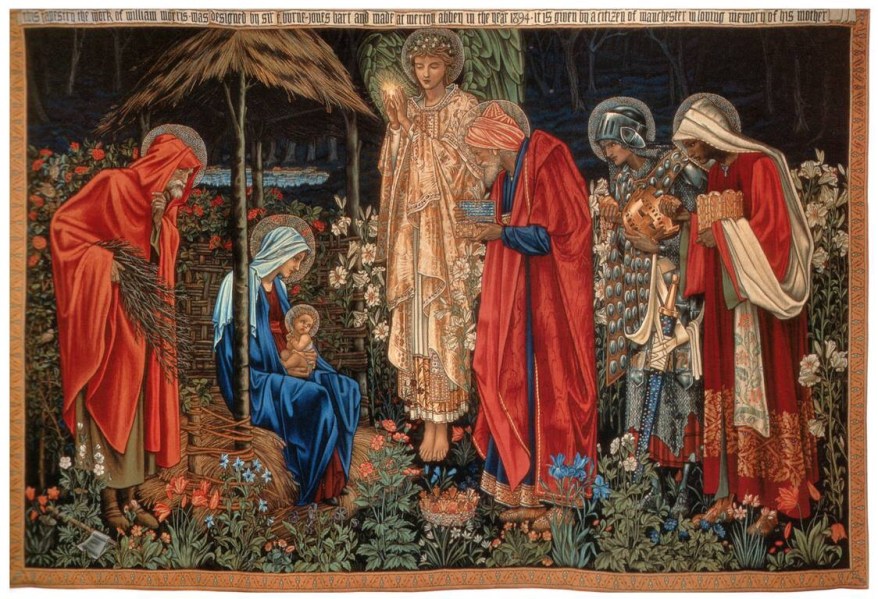
Come, Let Us Adore Him.

Pastor Sherry’s message for New Year’s Day, 2023

Scriptures: Isa 60:1-6; Ps 72:1-14; Eph 3:1-12; Matt 2:1-12

Today is Epiphany Sunday. The word, Epiphany means manifestation (of God), and marks an encounter with God. On January 6th—or the Sunday closest to it—we celebrate the fact that God showed up to eager, Gentile Maji who had traveled hundreds of miles to see and worship Him. These were the 1st non-Jews to come adore the baby Jesus.

Their visit to Bethlehem represents the fact that the birth of Christ was of momentous significance to all people of the world.

A friend told me recently a story of a children’s Christmas Pageant: Young children portraying Joseph and Mary, and a doll for baby Jesus were seated center-stage. Some shepherds and kids dressed as sheep entered from the left and said their lines. But when the 5 year old kings arrived, they developed stage fright and froze in their tracks. Four year old Mary knew what they were supposed to do, and being a bossy little thing, yelled out, “Just come over here and bring your gifts of gold, common sense, and fur.”

Our readings today all want us to realize that God the Father always intended Jesus to show up and be worshipped by all people—not just His Chosen Ones.

Matthew–intent on proving to the Jews that Jesus is their long-awaited Messiah–is the only Gospel-writer to include the story of the visit of the Maji (Matthew 2:1-12). Matthew doesn’t really clarify who they were, or where they were from. Tradition and song refer to them as “kings,” probably based on the 10th verse we recited this morning from Psalm 72 May the kings of Tarshish [Spain] and of the isles render Him tribute; may the kings of Sheba [Yemen] and Seba [Sudan] bring gifts. But the Greek historian, Herodotus, writes that the priestly caste of the Medes [Iran] were called Magi.

We can find mentions of magi also in the Old Testament books of Esther, Jeremiah, and Daniel. Jeremiah and Daniel both describe the Magi as wise and highly educated men who served in the Babylonian [Iraqi] court. They were the doctors, scientists, mathematicians and legal experts of their day. They were also well trained in astronomy, astrology, and magic (Daniel’s specialty was interpreting dreams, a gift from the Holy Spirit).

In fact, the Magi served as advisors to the king. In Daniel 2:48, King Nebuchadnezzar makes Daniel master of all his Magi. Perhaps Daniel, and the other Jews living among them, shared their faith in Israel’s One, True God with their Magi associates. Perhaps they also shared with them prophecies regarding the Coming Messiah. We don’t know for sure, but it is quite possible that they were familiar with the predictions from Numbers 24:17 A star shall come forth from Jacob (meaning Israel), and a scepter (indicative of a king’s rule) shall rise from Israel… and from Micah 5:6 But you, Bethlehem, in the land of Judah, are by no means least among the rulers of Judah; for out of you will come a ruler who will be the shepherd of my people Israel. These 2 passages foretold of a special star to mark a king being born in Bethlehem of Judea.

What we do know for sure is that the Magi came a great distance from the East, bringing gifts to Jesus. They followed a star that led them westward. And then that star supernaturally stopped and remained over the house in Bethlehem to which Jesus and Mary had moved. (After the census had been taken, many returned to their homes elsewhere, so the tight housing problem in Bethlehem opened up, allowing the Holy Family to move out of the stable.) As Matthew describes it, the Magi gifted Jesus with gold, frankinsense, and myrrh.

We really don’t know how many of them there were. Tradition cites three because there were three gifts: Gold for royalty; Frankincense, a fragrant incense used by priests in worship; and myrrh, a pain-killer and a substance used for embalming a dead prophet or king. Their gifts exactly match Jesus’ 3-fold ministries of king, priest, and prophet.

But since their arrival caused a big buzz in Jerusalem and they had no trouble getting in to see King Herod, there were probably more. Paintings from the 2nd-3rd centuries depict 4. Other ancient records cite 12. And, due to the prevalence of highwaymen and robbers who often attacked travelers in those days, they would have been accompanied by armed guards for protection, as well as servants and animal handlers. So surely more than 3 important guys on camels made the trip.

Matthew cites Isaiah’s prophesy, Isaiah 60:1-2 Arise, shine, for your light has come, and the glory of the Lord rises upon you. See, darkness covers the earth and thick darkness is over the peoples, but the Lord rises upon you and His glory appears over you! In chapter 59, Isaiah had predicted that the Redeemer would come to Zion (Jerusalem). But in chapter 60, he uses something unique to Hebrew writing called the prophetic tense. In this tense, the prophet appears to have moved ahead of his prediction, and writes looking back on it as if it has already happened. So, instead of “the Redeemer is coming,” he boldly asserts, “He has come.” Jesus is the glory of the Lord, as well as the light of the world. Even though the times are evil and dark, in His 2nd Coming, Jesus—the revealed glory of God–will also be the light source for the world. Revelation tells us that one of the final plagues God sends on a those who have not been raptured (the Church) or martryed (non-believers who come to believe during the 7 years of the Great Tribulation), in a last ditch effort to bring them to faith, the sun, moon, and stars will disappear. There will be no light at all. Jesus will overcome evil, once and for all, and will reign as the King of the Universe and Light of the World.

Remember, Malachai predicted (4:2) that The day is coming, raging like a forest fire. All the arrogant people who do evil things will be burned up like stove wood, burned to a crisp, nothing left but scorched earth and ash—a black day. But for you, sunrise! The sun of righteousness will dawn on those who honor My name, healing radiating from its wings. You will be bursting with enegy, like colts frisky and folicking (Peterson’s paraphrase of the Bible, The Message, p.1738). Spiritual darkness will be overcome by the Light (power and might) of Christ.

Verse 3 Nations [Gentiles] will come to Your light, and kings to the brightness of Your dawn. Gentile and Jewish believers will flock to Jerusalem to see and worship Jesus when He comes again. This will be the world’s greatest revival! Again, bear in mind that the Church will have been raptured/removed from earth into heaven. Of those who remain on earth, a large percentage of nonbelievers (60%?) will lose their lives during the plagues God will send to earth during the Great Tribulation. Those who will have come to Christ during the Great Tribulation, and who survive those dreadful times, will be the ones who flock to Jerusalem. They will come by land, sea, or air.

In what seems an exact preview of our Matthew passage, verse 6 says, And all from Sheba will come, bearing gold and incense, and proclaiming the praise of the Lord. These God-fearing, Jesus-loving folks will descend upon Jerusalem with gifts for Christ the King. Just as will the Magi at Jesus’ 1st Coming, they will bring gold and incense (perhaps frankincense?). But since there will be no more death, there will be no need for myrrh—and myrrh is omitted.

Paul, in Ephesians 3:1-12, calls himself a prisoner of Christ and the apostle to the Gentiles. He is writing to the Ephesian church from prison in Rome, jailed for preaching the Gospel. He wants the Ephesians and us to know that the Christian Church is a divine mystery–not in the sense of a who-done-it novel–but rather as an innovation of Jesus’, unknown and therefore not mentioned previously in the Old Testament. Furthermore, he asserts that Christ intended the Church is God’s method of reaching the Gentiles, both to demonstrate the love and the wisdom of God.

We demonstrate God’s love by being loving and grace-filled toward others. We demonstrate wisdom by believing in what God has revealed in Scripture and by sharing it with others. This is how we pass on the light of Christ.

Finally our Psalm is a prayer for the new King Solomon written by his father, King David. It is thouight that it was prayed at Solomon’s coronation ceremony. David prays that his son will so love justice and righteousness, that it will be as though Solomon’s rule will reflect the rule of God Himself. Originally, Solomon asked God for the gift of wisdom and he did rule wisely and well for a time, so much so that folks came from all over to hear him dispense wisdom in judgment. However, he later allowed his many pagan wives to influence him away from the Lord. Eventually and sadly, he appears to have abandoned the One True God for idolatry.

David also prophetically expresses his faith in the goodness of the coming Messiah. It is He Who will (v.8) rule from sea to sea and from the River [the Euphrates] to the ends of the earth. Jesus will be a righteous King. All kings of the earth shall bow before Him (v.11). And, (v.14) He will also rescue the needy and the afflicted from oppression and violence.

Aren’t we grateful for Jesus? As we begin the New Year, let’s be mindful of God’s gift to us in Jesus. We may not bring Him gold, frankincense and myrrh—or even gold, common sense, and fur—but we can give Him our hearts, our faith, our obedience; and our gratitude.

Happy New Year! Come, let us adore Him!

©️2023 Rev. Dr. Sherry Adams

The Miracle of Christmas

Pastor Sherry’s message for December 25, 2022

Scriptures: Isa 52:7-10; Ps 98; Heb 1:1-4; Jn 1:1-14

The story is told of a man who struggled to believe God would send His Son to earth to redeem us. The man said to himself, “There is no point to a God who becomes man,” he mused. “Why would an all-powerful God want to share even one of His precious moments with the likes of man? And even if He did, why would He choose to be born in an animal stall? No way! The whole thing is absurd! I’m sure that if God really wanted to come down to earth, He would have chosen some other way.”

“Suddenly, the man was roused from his reverie by a strange sound outside. He went to the window and saw a small gaggle of blue geese frantically honking and aimlessly flopping about in the snow. They seemed dazed and confused. Apparently they had dropped out in exhaustion from the flight formations of a larger flock on its way from the Arctic Islands to the warmer climes of the Gulf of Mexico. Moved to compassion, the man tried to “shoo” the poor geese into his warm garage, but the more he “shooed” the more they panicked.

“’If they only realized I’m only trying to do what’s best for them,” he thought to himself. “How can I make them understand my concern for their well-being?” Then, this thought came to him: “If for just a minute, I could become one of them, an ordinary goose, and communicate with them in their own language, they would know what I am trying to do.” And suddenly … suddenly, he remembered Christmas and a smile came over his face. Suddenly, the Christmas story no longer seemed absurd. Suddenly, he pictured that ordinary-looking infant, lying in the manger, in that stable in Bethlehem, and he knew the answer to his Christmas problem: God had become one of us to tell us that He loves us.“ (Borrowed from the TCM website, 12/19/2022, author’s name unknown.)

This Christmas illustration is meant to remind us of the real miracle of Christmas: That Jesus Christ—the sovereign King of the Universe, seated in heaven at the right hand of God the Father, the seat of power–would take on flesh and become one of us in order to speak our language/ to get through to us and to save us from destruction.

Our scripture lessons today leave no doubt that Christmas is a miracle:

A. The writer to the Hebrews (1:1-4) wants us to know that Jesus Christ is superior in position and power to all of the prophets who have lived and to all of the angels in heaven and on earth. Previously, God had spoken to humankind through prophets He ordained to convey His thoughts to us. Less often, He communicated through angelic beings who came with specific messages to particular persons. And, then He made His thoughts known to us through the 45 Holy-Spirit-inspired authors of the Old Testament written over 1500 years. But with the birth of Jesus, the Father has spoken to us through His Son, the full revelation of God: (v.3) The Son is the radiance of God’s glory and the exact representation of His [the Father’s] being, sustaining of all things by His powerful word. Or, as Peterson paraphrases it in his The Message, By His Son, God created the world in the beginning, and it will all belong to the Son at the end. This son perfectly mirrors God, and is stamped with God’s nature. He holds everything together by what He says—powerful words.

B. That theme of the power of The Word/the Divine Logos is spelled out for us in John 1:1-14.

First, let’s look at where John begins. Matthew and Luke each start with Jesus’ birth, Matthew from Joseph’s perspective and Luke, from Mary’s. Mark omits the birth narratives altogether and jumps into the beginning of Jesus’ earthly ministry. But John starts with the beginning of time and space! Verse 1 In the beginning was the Word, and the Word was with God, and the Word was God. Before creation took place, Jesus was present. Jesus, God’s Word made flesh, was with God, distinct from the Father; but also, Jesus, the Word, was God, part of the same deity as the Father. Like the Father, Jesus is fully divine! Verse 2 He was with God in the beginningThe Father and the Son have always co-existed. The Son did not come into being at His incarnation. He, like the Father, has existed forever.

Verse 3 Through Him all things were made and without Him, nothing was made that has been made. John sometimes repeats things to help insure that we don’t miss his point. Jesus made everything. John knows Genesis 1:1 In the beginning, God created the heavens and the earth. He just does not want us to miss the fact that Jesus was present at Creation. You see, the Father conceived the plan; and the Son, the agent of creation, spoke it into existence. Jesus brought all things to life because He is the life-force (the way, the truth and the life, John 14:6)!

Verse 4 What has come into being in Him was life, and the life was the light of all people. John makes a word play, in the original Greek, on life and light. Spiritually speaking, Jesus’ life brings light into ours. Later, Jesus will say, I am the light of the world (John 8:12) and I am the resurrection and the life (John 11:25). So, as God He is both light and life, and willingly offers both to us.

Verse 5 The light shines in the darkness, and the darkness did not overcome it. He came to dispel the darkness, the darkness surrounding us today: unbelief, sin, death, oppression, bondage, violence, the power of evil. But because we have free will, some of us will miss His gift. Some of us will refuse to believe in Him. Some of us will continue to live in spiritual darkness.

Verse 10 But to all who received Him, who believed in His name, He gave power to become children of God. Those of us who believe in Him are not His biological heirs, or heirs through any human effort, but we are spiritual children of God, through Christ’s blood and the Father’s plan. You see, those of us who have accepted God’s perfect gift—Jesus—receive another gift: the privilege to become daughters or sons of God.

As if that weren’t enough, (v.14)🡪The Word [Jesus] became flesh and made His dwelling among us! This is a total break from all non-Christian thought–the agent of Creation becomes a Creature! Jesus encased Himself in baby flesh and comes to earth as one of us. If I were in charge, I would have had Him come as a King or as a victorious general. But God, in His wisdom, has Him arrive as a vulnerable and totally dependent, nonthreatening babe.

There has never been—nor will there ever be–a human as important as Jesus Christ! He is fully God, and He is fully human. What a miracle!

C and D.Our final two readings look forward to Christ’s millennial reign on earth, His second coming. The Isaiah passage (52:7-10) speaks to what it will be like when what we pray in the Lord’s Prayer comes to passThy kingdom come. Jesus’ rule and reign on earth will be fabulous! Peace, justice, mercy, grace and forgiveness will characterize the behavior of all people. There will be no more wars, murders, illness, death, sexual assaults, human trafficking, slavery, injustice, lying, fraud, etc. Can you even imagine such a state? How wonderful! No wonder everyone will experience great joy!

Our Psalm too (98) celebrates the righteous reign of Christ. Verse 1 Sing to the Lord a new song for He has done marvelous things! The psalmist predicts how joyous celebration will begin in the congregation (Christian Church and Synagogue of Messianic believers); then it will spread to all humans; and finally will impact all of creation. Remember, God cursed the serpent and the ground at the Fall, but not the people. Paul tells us (Romans 8:20-22) For the creation was subjected to frustration, not by its own choice, but by the will of the One who subjected it [God the Father], in hope that the creation itself will be liberated from its bondage to decay and brought into the glorious freedom of the children of God [waiting on the Second Coming of Jesus Christ].

At His 2nd Coming, the Righteous Judge will set all things right. That is a miracle for which I can hardly wait!

So we say, “Happy Birthday, Lord Jesus, on this Christmas Day, 2022!” Thank you for taking on flesh and dwelling among us! Thank you for saving us from the penalty for our sins! Today,

“May our Christmas gifts remind us of God’s greatest gift, His only Son.
May our Christmas candles remind us of Him who is the “Light of the world.”
May our Christmas trees remind us of another tree upon which He died.
May our Christmas cheer remind us of Him who said, “Be of good cheer.”
May our Christmas feast remind us of Him who is “the Bread of Life.”
May our Christmas bells remind us of the glorious proclamation of His birth.
May our Christmas carols remind us of the Son of whom the angels sang, “Glory to God in the Highest!”
May our Christmas season remind us in every way of Jesus Christ our King!”

(Again, borrowed from the TCM website, 12/19/2022, author’s name unknown.)

Blessed Christmas to each one of you!

©️2022 Rev. Dr. Sherry Adams

Christmas Eve 2022

Pastor Sherry’s message for December 24, 2022

Tonight you have heard read 8 passages (Gen 3:8-15; Isa 9:2-7; Isa 35:1-10; Mic 5:2-4; Lk 1:26-38; Lk 1:59-79; Tit 2:11-14; and Lk 2:1-20) all foretelling or describing Jesus as our promised Messiah. They all reference Him in some way. Most were written hundreds of years before His 1st Coming, and some even pertain to His 2nd Coming. Tonight, at this candlelight service celebrating the eve of His birth, I want to focus entirely on the Genesis passage, Genesis 3:8-15.

It might surprise you to find intimations of Jesus from the very beginning of recorded time. You see, God created humans knowing we could never be (by our own efforts) holy enough, obedient enough—this side of heaven—to dwell in His presence. Like Adam and Eve, we fall into sin too easily. We don’t know how many days or weeks Adam and Eve hung out with God in the cool of the day before they sinned. Scripture suggests that their meetings together had become a habit. However, one of my seminary professors, recognizing the seductive allure of sin and our own weaknesses, thought they probably did not last even a day before capitulating to sin (eating the fruit from the forbidden tree).

So, even as He was pronouncing their punishment, God revealed His redemptive plan for human kind. This was not a plan B, but His plan from the foundation of the earth. He loved us so much that He and Jesus agreed Jesus would come to earth and take the penalty of our sins upon Himself.

His shed blood washed away our sins, past, present, and future. In a magnificent exchange, He took our sinfulness and gifted us with His righteousness. We are cleansed from our sins by Jesus’ selfless actions.

Our Genesis passage is thus called by theologians the Proto-Evangelion —The Gospel in the Old Testament, written centuries before the New Testament Gospel accounts unfolded. Because he seduced Adam and Eve, Satan is cursed (v.14) by God. Satan is called a serpent in Genesis and we think snake. However, some biblical scholars believe Satan is a “shape-shifter” (able to take on different shapes at will) and probably originally appeared as a dragon (which is how he is characterized in the book of Revelation). The fact that God tells him he will eat dust all the days of his life means he is ultimately defeated. It also means that God effectively “clipped his wings.” God says that His followers and the serpent will be at continuous war with each other. Satan will think he has won this conflict when he wounds our Lord (at His trials and on the Cross); but, Christ’s substitutionary death on the Cross—and His subsequent resurrection–will be the means by which Jesus demonstrates His victory over death and Satan. It will appear as though the snake has bitten the Lord’s heel. However, Jesus, the seed of the woman [Mary] will crush Satan’s head. Again, until Jesus’ 2nd Coming, humans and the devil will, throughout all history, struggle against each other. There is a reason for our difficulties here on earth. We are encouraged to power through with faith. (Later, Jesus says, In this world you will have trouble, but fear not for I have overcome the world—John 16:33.)

But God the Father, in His love and compassion for us, engineered His divine rescue plan. Jesus Christ, who came to earth the first time as a helpless, vulnerable baby to save us, will come again in all His power and glory, and defeat Satan for all time.

At Christmas, and at all other times, let us express our gratitude to God…who gives us the victory through our Lord, Jesus Christ. Alleluia, alleluia!

©️2022 Rev. Dr. Sherry Adams

Hopeful Readiness

Pastor Sherry’s message for November 27, 2022

Scriptures: 11/27/2019, Isa 2:1-5; Ps 122; Ro 1:11-14; Matt 24:36-44

In a sermon by a preacher named Mark Schaeufele, I heard the following story:

“The Butterball Turkey company [had] set up a hotline to answer consumer questions about preparing holiday turkeys. One woman called to inquire about cooking a turkey that had been in her freezer for 23 years. The operator told her it might be safe if the freezer had been kept below 0 degrees the entire time. But the operator warned the woman that, even if it were safe, the flavor had probably deteriorated, and she wouldn’t recommend eating it. The caller replied, “That’s what we thought. We’ll just give it to the church.”

That, like you, made me laugh! Now I could go on to preach about giving God our best–not a 23 year old frozen turkey—but instead I want us to consider how prepared we are for Christ’s 2nd Coming. If the lady of the joke had been stocking-piling frozen food for 23+ years, we might assume she is ready for any earthly emergency (hurricane, sunami, tornado, volcano, deadly virus, etc.). But is she, and are you, spiritually ready?

This is what our Scriptures address this morning. They all ask the question, “Are we ready for the Second Advent?” Now you may be thinking, “Wait just a minute…I’m doing my best to get ready to celebrate the first Advent, the Incarnation, the birth of Jesus:

(1) I’ve donated a Shoe-box or two, or 20.
(2) I’m baking Christmas cookies and fruit cakes like my hair’s on fire.

(3) I’m decorating my place…inside and out.

(4) I’m gathering gifts from weeks of Black Friday sales.

(5) I’m beginning to write out Christmas cards;

(6) I’m humming Christmas carols in the shower.

(7) We are anticipating Christmas on the Square and the Christmas parade in Live Oak.

(8) The grandchildren and great grandchildren are talking up their Santa lists and are already beyond excited!

(9) Why, we have even decorated the Church—thanks to all of you who came out to help—and lit our first Advent candle, the candle of Hope!

We really are getting ready for Christmas, but our lessons today aren’t about the First Noel. The Mass of Christ (that is where we get the word, Christmas) focuses on the past and the present. Past: Jesus’ birth in a manger long ago; Present: Our attempts to live out that magnanimous love of God the Father—in gifting us with His Only Begotten Son—in our lives today. But Advent also focuses on Jesus’ future return.

To facilitate our hopeful readiness for this future return, our lessons today spotlight the Second Coming of Christ, as the King!

A. Isaiah 2:1-5 Our OT lesson is clearly a Messianic Prophecy: Verse 2 speaks of…the last days….This is a Blibical expression for the end of time. It refers not to when bad things start to happen—like the Great Tribulation—but to when Jesus establishes His Millennial rule and reign on the earth (after He has defeated Satan and evil at the Battle of Armageddon). Several things will happen then:

(1) (V.2) The mountain of the LORD’s temple will be established as chief among the mountains. The mountain of the Lord is Mount Zion, the Temple Mount in Jerusalem. But mountain also means the kingdom, the authority, the rule of Jesus. So we could read the sentence this way: The rule of Jesus will be established as chief among all rulers. Right now, Moslems control or rule the Temple Mount. The Mosque of Omar sits on the former site of the Jewish Temple, and most holy sites are controlled by Christian gentiles rather than Jews. But in the future Advent, God’s Holy Temple will be re-established on Mt. Zion with Jesus and the Father as its residents, and as a gathering place for all Christ-followers.

(2) Jerusalem will become the world center of both government and religion. There will be one, Christ-centered world order. You hear occasionally now calls for a “total world order,” including using the same currency, etc. But don’t be fooled. This is a secular movement, not a movement of God. In the last days, however, we will learn God’s will for us—if we haven’t already–and we will do His will, gladly, joyfully.

(3) Jesus will judge disputes between nations and settle them so He will create true peace. As Isaiah predicts in verse 4 They [all people] will beat their swords into plowshares and their spears into pruning hooks [weapons will be turned into farming implements]. Nation will not take up sword against nation, nor will they train for war anymore. There will be no need for the service academies, military bases, warships or planes, or standing armies. Imagine a world totally at peace.

(4) So, Isaiah urges us to walk in the light of the LORD as we await King Jesus’ return. We should act like we know Jesus is looking—because He is–and we should wait for Him in hopeful readiness.

B. Psalm 122 is a Psalm of Ascent, sung by faithful Jews as they walked uphill toward Jerusalem to worship at the Temple. However, it is also a Messianic prophesy, looking forward to the time when all of the tribes of the Jews will be reunited in Israel and will worship God–and Jesus– in Jerusalem. Hosea 3:4-5 is not one of our lessons appointed for today, but it repeats or echoes this prophecy For the Israelites will live many days without king or prince, without sacrifice [as they are doing right now, today]….Afterward the Israelites will return and seek the Lord their God and David their king [Jesus, David’s descendant]. They will come trembling to the Lord and to His blessings in the last days. In other words, in the last days, the Jews will finally have accepted Jesus as the rightful Messiah.

It may be difficult for us to envision this grand reunion of Jews and Gentiles who all love Jesus, but if we believe Scripture, we can await it with hopeful readiness.

C. Romans 13:11-14 Paul focuses on how we treat our neighbors. He says, in so many words, we demonstrate love for our neighbors in what we do, rather than in what we say. Just prior to this passage, he reminds us not to break the 10 Commandments (not commit adultery, murder, steal, or covet—all sins against others). Then, he goes on to exhort us to Wake up! Because Jesus is coming again! In verse 12 he declares …the night is nearly over, by which he means this present evil age. He goes on to say, The day is almost here, meaning the long awaited second appearing of Jesus Christ. We want to be ready by avoiding, as best we can, deeds of darkness—sins…and to clothe ourselves with the Lord Jesus Christ. In other words, Paul is exhorting us to put Christ first in our lives, and to display outwardly what has taken place inwardly within us. Simply put, Paul wants us to practice all the virtues associated with Jesus, as we wait with hopeful readiness….

D. Matthew 24:36-44 In this passage, Jesus is describing when He will come again. 1st of all, no one knows when that will be–not even Jesus! Then He offers us two metaphors to encourage us to be ready:

(1) When Noah built the ark, no one else much believed it would rain enough to require a large boat; but, it did! And those who had not listened to the Lord (through Noah), and had ridiculed him, drowned. It was a time of great immorality—much like today–and all gross sinners perished.

(2) Burglars tend to come to our homes at night, or when we are away. If we want to thwart a robbery, we need to be prepared. We lock our doors. We have a dog, a burglar alarm, or a gun to ensure our safety. We keep our important papers and jewelry in a safe or bank deposit box. Similarly, Jesus is warning us to be prepared, to be ready. Going back to the issues at hand—Jesus’ 2nd Coming–we should live each day as though it is our last.

All of our lessons exhort us to be hopeful and ready. We can’t just count on looking like we are right with the Lord when He shows up again. We need to practice, daily, being surrendered to His will; and trying, with the help of the Holy Spirit, to live in a way that pleases Jesus.

We could say, then, that Advent is really a “wake up call.” We never really know when the God-moment (2nd Coming) is going to arrive, so we have to be ready all the time. This readiness is not a matter of hanging decorations, baking cookies, sending out Christmas cards, or attending holiday parties—though those things are all fine and good. This readiness is developed by establishing tenderness/love in our hearts, for God and others. It is a willingness in our spirits to hear God’s Word and go God’s way.

Remember, our God has a habit of sneaking up on people, often making appearances in unusual ways, through unlikely people, in unexpected places. In the 1st Advent, it was thru “a little baby, the child of an unwed, teenaged mother, in a dirty, smelly cow-stall, on the other side of nowhere.” (Stated by Fairless and Chilton, The Lectionary Lab, A, 2013, p.4). Who knows when or where God will show up again? It could be this afternoon, or tomorrow, or Christmas Day. But whenever it comes, we need to be awake, hopeful and prepared! Amen!

©️2022 Rev. Dr. Sherry Adams

The Best King Ever!

Pastor Sherry’s message for 11/20/22

Scriptures : Jer 23:1-6; Lk 1:68-79; Col 1:10-20; Lk 23:33-43

The story is told, “In 1987 director Bernardo Bertolucci released the film The Last Emperor to raving reviews. It was based on the autobiography of the last living emperor of the Manchu dynasty in China, Henry Aisin-Gioro Pu Yi (before its fall to the communists in the 1950s). Eventually the movie would be hailed ‘the most honored film in 25 years,’ including nine Academy Awards (Oscars).

“And while the story tells the riches to rags story of Yi’s life, from spoiled child emperor to imprisoned and tortured detainee after the revolution to his final seven years as a gardener in a Beijing Park, what is perhaps most interesting, at least for our sake, is one account towards the beginning of the film.

“At this point, Yi is surrounded by the trappings of an imperial power. 1,000 eunuch servants exist to fulfill his every whim. At one point, Yi’s brother asks him what happens to him when he makes a mistake? The emperor responds, ‘when I do something wrong, somebody else is punished.’ To demonstrate this, he picks up an ornate jar and smashes it on the ground. Immediately a servant is taken and beaten for the action of the emperor. It is, in a sense, a true version of the famous ‘whipping boy’ story.

“Why is this so interesting? Because it gives us a perfect contrast, the perfect opposite to what Jesus does on our behalf. From the world’s perspective, it is the poor and marginalized who are to bear the brunt of the world’s pain and blame. [Isn’t that just so often true!] It is the unnamed servant who receives the punishment in this account, not the emperor. In the Christian story however, it’s just the opposite. The king takes the punishment on our behalf.”

(Stuart Strachan Jr., Source Content from “The Last Emperor,” Columbia Pictures, 1987. )

Today, in the Church calendar, we celebrate Christ the King Sunday. It probably seems a little odd to focus on Jesus’ crucifixion amidst preparations for Thanksgiving feasting, “Black Friday” sales, and the joy we have in Advent of anticipating Christmas. Additionally, we in America long ago divorced ourselves from the idea of having a king in our Revolutionary War. But the truth is that Jesus Christ is the King of the whole world! He is sovereign over all of us, even those who do not believe in Him. And, thankfully, He is the best king ever!

Praise God we do not have to be “whipping boys” because King Jesus took punishment that was justifiably ours upon Himself. Let’s examine together what our Scripture passages have to say about this today:

A. In Jeremiah 23:1-6, God the Father is castigating the kings, nobility, priests and false prophets for their poor leadership of His people. This is just prior to the defeat of the Southern Kingdom at the hands of the Babylonians. The legitimate prophet Jeremiah warns them of punishment to come, (v.1) Woe to the shepherds…! God has been watching. He knows that false prophets, idolatrous kings, and weak, compromised religious leaders have abused His sheep and lead them astray. In a way very similar to that of the prophet Ezekiel (Ezekiel 34:11-24), He declares they have scattered His flock, rather than gathering them in; and driven them away from God rather than drawing them closer t Him. So, since they have (v.2)…not bestowed care on them, I [God] will bestow punishment on you for the evil you have done. God himself will gather His flock and (bring home the remnant from exile in Babylon) and place better shepherds over them.

Then He prophesies the coming of Jesus (vv.5-6) ”The days are coming,” declares the Lord, “when I will raise up to David a righteous Branch, a king who will reign wisely and do what is just and right in the land…He will be called the Lord Our Righteousness.

Jesus, descended from King David, will be, like him, a shepherd-king. However, He will be the True Shepherd, the Good Shepherd (John 10), the Great Shepherd, the Eternal Shepherd, the Best king Ever!

B. Luke 1:68-79 constitutes Zachariah’s Song (the 3rd after Elizabeth’s and Mary’s). Zach, the elderly, priestly father of John the Baptist, had been struck mute by the angel who foretold John’s birth—due to his lack of faith. Once John the Baptist was born, and Zach agreed he was to be called John, Zach got his words back. In this morning’s lesson, he provides a psalm-like song celebrating not just his new son’s role as a Prophet of the Most High, but as the forerunner to Jesus the Messiah.

As he rejoices that the long awaited Messiah is almost here, he bursts into prophesy: The Light is coming into the darkness. God is sending His rescue plan, our salvation. He, Jesus, will empower us to live without fear (for God will be with us), and (vv.74-75) to serve Him…in holiness and righteousness before him all our days. Halleluia! He will be the Best King Ever!

C. Paul, in Colossians 1:10-20, describes Christ the King in even more detail. He explains that Jesus has superior strength and power: Verse 16 For by Him all things were created: things in heaven and on earth, visible and invisible, whether thrones or powers or rulers or authorities, all things were created by Him and for Him. Not only did He create all things, but, to this day, He holds them together. Biologists have discovered that in the cell body of all connective tissue (called Lamina) is a cross.

Jesus is also supreme over all creation. He contains the fullness of God the Father, the Greek word is pleroma It means He has all the attributes and characteristics of God the Father. If we have seen Jesus, we have seen the Father.

Furthermore, (v.20), through His sacrifice of His life on the Cross for us, He has reconciled us—really all things—to God the Father. There is no other king like Jesus—He is the Best King Ever!

D. This brings us to our Gospel passage, Luke 23:32-43. It’s a bit startling, isn’t it, to find ourselves in the midst of the Crucifixion on this final Sunday of the Church calendar year. This Jesus, this King of the Jews (and of us), appears defeated, vanquished, weak, powerless, suffering, dying. He is mocked, derided by Jews and Roman soldiers. His clothes—all He ever owned–are confiscated and gambled over before His very eyes.

And He is hung between two actual criminals.

He speaks only twice: Once, directed to His Father, forgiving His murderers, granting them grace they do not deserve(v.34) Father, forgive them for they don’t know what they are doing. And a 2nd time, gifting the one respectful, faith-filled thief with salvation (v.43) I tell you the truth, today you will be with Me in paradise.

What a great king he is, forgiving, merciful, generous. Thank God our King is not like Emperor Yi. Jesus is the Best King Ever because He came to serve, to suffer for us. You see, the Jewish concept of a king—taught to them by God the Father through the prophets—was that the king was beholden to and under the authority of God. He owed his kingship not to some self-declared divine right or to being born into the right dynasty at the right time. He was anointed/appointed by God to take care of God’s people, His subjects. Isaiah is one of the first to see Messiah as a leader who will suffer for His people. This perspective confounds and frustrates many.

There is a famous old story of two angels that helps demonstrate why this must be so:

Two traveling angels stopped to spend the night in the home of a wealthy family. The family was rude and refused to let the angels stay in the mansion’s guest room. Instead the angels were given a small space in the cold basement. As they made their bed on the hard floor, the older angel saw a hole in the wall and repaired it. When the younger angel asked why, the older angel replied, “Things aren’t always what they seem.”

The next night the pair came to rest at the house of a very poor, but very hospitable farmer and his wife. After sharing what little food they had, the couple let the angels sleep in their bed where they could have a good night’s rest. When the sun came up the next morning the angels found the farmer and his wife in tears. Their only cow, whose milk had been their sole income, lay dead in the field.

The younger angel was infuriated and asked the older angel, “How could you have let this happen? The first man had everything, yet you helped him,” he accused. “The second family had little but was willing to share everything, and you let the cow die.” “Things aren’t always what they seem,” the older angel replied. “When we stayed in the basement of the mansion, I noticed there was gold stored in that hole in the wall. Since the owner was so obsessed with greed and unwilling to share his good fortune, I sealed the wall so he wouldn’t find it. Then last night as we slept in the farmers bed, the angel of death came for his wife ……. I gave him the cow instead … Things aren’t always what they seem.”

Our Jesus appeared to be defeated at the Cross; but instead He was and is Christ, the Victor!

To quote two of my favorite Bible commentators, the Revs. John Fearless and Delmer Chilton (of “Two Bubba’s and a Bible” fame, The Lectionary Lab Commentary, Year C, 2015, p.346):

We celebrate Christ the King today, not because of His regalness, but because of His humility; not because of His power [though His power is matchless], but because of His compassion; not because of His triumph [though He has triumphed over sin and death], but because of His travail; not because He fixes our lives [though he can and often does], but because He shows us how to live in service to God and each other.

Thank God we have Jesus, the Best King Ever!

©️2022 Rev Dr Sherry Adams

Praying with Humility and Gratitude

Pastor Sherry’s message for October 23, 2022

Scriptures: Joel 2:23-32; Ps 65; 2 Tim 4:6-8, 16-18; Lk 18:9-14

I have preached here before on the fact that our God answers our prayers. He tends to answer in one of the following ways:

1. Yes, that’s something I am happy to do for you right away.

2. No, I am omniscient and know that would not be good for you.

3. Not yet.

a. I am working out all the intervening variables;

b. Or, I am waiting on you to develop further.

He also likes for us to have an humble attitude toward Him when we pray. In our Gospel Lesson today, Luke 18:9-14, Jesus contrasts the opposite attitudes of the Pharisee and the publican/tax collector.

The Pharisee was a man at the top of the religious ladder of the day. Was he praying out loud or silently? If out loud, how arrogant of him! He appears to be talking to himself, about himself, rather than dialoguing with God. His prayer is a soliloquy, a speech made by himself to himself. Lord, I’m thankful that I am not like other men (v.11)…YIKES! There’s his first mistake. He should have said, “Thank You that You called me to be a Pharisee; I am so happy to serve You and Your people, Lord!” He might have added, “Thank You for keeping me from becoming a robber, an evildoer, an adulterer, or anyone who mistreats others. I know that there, but for the grace of God, go I.” And he would have been very Christ-like to have requested of God, “Lord, I ask you to bless this tax collector and bring him to repentance for any theft or fraud he has committed.” Instead, being very self-focused and lacking humility, he considers himself a cut above other sinners.

The Publican or tax collector, was considered a low-life in that culture (definitely a sinner!). Unlike the Pharisee, however, he seems to have been very well aware of his deficiencies/his sins. He knows that he has denied his nation (as a Roman collaborator); he knows he has alienated himself from his countrymen. The Romans let tax collectors set their own salary, which they did by demanding a certain percentage above what he was required to collect for them. So typically, tax collectors charged extra, taking care of themselves at the expense of their own fellow citizens. Additionally, they didn’t think they needed God or were too ashamed to approach the Lord (We’ve all known people who have said, “If I entered the church, the roof would fall in.)

But notice his prayer, and contrast it with that of the Pharisee: The tax collector admits he’s a sinner! He is humble and humiliated by his past, his present, his bad choices, his wrong actions. He is so aware of his deficiencies before God, he cannot even raise his eyes toward heaven. His prayer is one sentence (v.13): God have mercy on me, a sinner, or God be merciful to me a sinner. This is where we derive The Jesus Prayer: Lord Jesus Christ, Son of the Living God, have mercy on me, a sinner.” It is a famous old prayer uttered from foxholes, places of danger, and traumatic situations.

I once was visiting some friends when someone they knew asked me to minister to their adult daughter. She had been car-jacked at night, kidnapped, and pistol whipped by two men. She feared for her life, sure she would be raped and murdered. She was a believer and knew to pray “The Jesus Prayer” throughout her entire ordeal. The felons took her to a deserted area, blind-folded her, and told her to remove her clothing. She was sure this was the end for her. Suddenly, however, she heard the sounds of the two men running away. She suffered from Post-Traumatic Stress afterward but also knew that God had saved her in answer to her prayer. We believe the men must have seen a large angel behind her who frightened them away.

So what is the right heart attitude? From what attitude should our prayers arise? Not that of the Pharisee—arrogant, going on about how great we are, how much we’ve done for God, how much better we are than others. Rather, Jesus says the right heart attitude, especially when we pray, should be one of humility–and of gratitude. He says in verse 14–For everyone who exalts himself will be humbled and he who humbles himself will be exalted. We want to approach God humbly, acknowledging and confessing our sinfulness. And, we want to approach God with gratitude for His mercy and love:

Our other lessons today explain why we should pray to God with gratitude:

A. 800 years before Jesus, the prophet Joel warns the Southern Kingdom (Joel 2:23-32) that the Great Tribulation of God’s Judgment is coming. Actually—even now—we haven’t yet seen the End Times. The prophet assures the people that if they repent and turn back to the Lord, He will respond, take pity on them, and call off the conquering Babylonians.

He foretells that they will rejoice in the Lord because…

1.). He will bring life-giving rain (v.23);

2.) He will repay them (v.25) for the years the locusts [enemies; evil-doers] have eaten.

3.) He will provide them with plenty to eat (v. 26);

4.) He will “pour out His Spirit on all people (v.28), empowering them and us to accomplish miraculous things we could never produce in our own.

5.) Best of all (v.28), Everyone who calls on the name of the Lord will be saved. This prophesy predates the saving work of Jesus Christ, but it does infer that redemption is coming.

B. In a similar vein, Psalm 65 is called a “Restoration Psalm” and also prophesies what will occur at Christ’s 2nd Coming: King David wrote it in celebration of God’s goodness to him/us. He knew, historically and personally, that God saves His people from our enemies. He also experienced God’s forgiveness for his (and our) sins. Furthermore, God also draws us near to Him—He wants to be with us!

David recognized that God answers our prayers with what he called (v.5) —awesome deeds of righteousness, and addressed the Lord as, O God our Savior, the hope of all the ends of the earth and of the farthest seas…. As a former Sociology major, I believe our younger American generations now—who do not know God—are suffering from what the French Father of Sociology, Emile Durkheim, called, anomie. This is a sense of purposelessness, of alienation. It occurs when people’s lives lack meaning, when they fail to see they have a reason for living. If unrelenting, it leads people to suicide and to other acts of desperation, like running people over in a parade, or shooting strangers in a grocery store. But for those of us who know and believe in God, we always have meaning and purpose in life (See Psalm 139), and, we are never alone!

Finally, David praises God for His loving provision for us.

C. 2 Timothy 4 constitutes Paul’s farewell address: He wants Timothy, his spiritual son, to know he has—(v.7)…fought the good fight, like a loyal soldier; I have finished the race, like an Olympic runner; and I have kept the faith—remember in our Gospel lesson of last week (Luke 18:8), Jesus wondered, When the Son of Man comes [when Jesus returns], will He find faith on the earth? Paul has kept the faith. He was, in fact, martyred for his faith. Paul is encouraging Timothy and us to keep our faith in Jesus, no matter what comes.

Why? Because death for us is not the final word/final chapter! It is a release:

1.) From the battles of life—or, “the rat race;” and

2.) From the frailty and failings of our mortal bodies. It is like a ship being untied from a wharf, freed to sail out to sea.

3.) And it is a release that frees us to accept our final reward, what Paul calls a crown of righteousness (v.8). It’s not a wreath of olive leaves, like the original Olympic winners got, or even a medal, like present day athletic stars. It is something Jesus, the Son of Righteousness, gives to each one of us who loves Him. Truthfully, I don’t know what it is, but I do know that I want it when my time comes. Death is not the end for those of us who love Jesus.

So why should we pray with gratitude in our hearts?

1.) Because our God is our creator, our provider, and our protector.

2.) Because He loves, forgives, and redeems us.

3.) Because He gives our lives meaning and purpose.

4.) Because He is present to us.

5.) Because He hears our prayers and responds to us

6.) And because He rewards us with a new and a better life—and some special reward–on the other side of death.

The next time you are feeling downhearted, discouraged, or alone, grab onto any one of those reasons to feel grateful to God. Remember, our God is for us, not against us. Thanks be to God!

©️2022 Rev. Dr. Sherry Adams

Don’t Be A Fool!

Pastor Sherry’s message for September 11, 2022

Scriptures: Jer 4:11-12, 22-28; Ps 14, 1 Tim 2:12-17; Lk 15:1-10

The first verse of our Psalm appointed for today says The fool says in his heart, “There is no God.” Consider the following story:

An atheist was walking through the woods, admiring all the “accidents” that evolution had created. “What majestic trees! What powerful rivers! What beautiful animals!” he said to himself. As he was walking alongside the river, he heard a rustling in the bushes behind him. Turning to look, he saw a 7-foot grizzly bear charging towards him. He ran away as fast as he could up the path. He looked over his shoulder and saw the grizzly was closing in. Somehow he ran even faster, so scared that tears came to his eyes. He looked again, and the bear was even closer. His heart was pounding, and he tried to run faster. He tripped and fell to the ground. He rolled over to pick himself up, but the bear was right over him, reaching for him with its left paw and raising its right paw to strike him.

At that instant the atheist cried, “Oh God help!” Time stopped. The bear froze. The forest was silent. Even the river stopped moving. As a bright light shone upon the man, a voice came out of the sky, “You deny My existence for all these years, teach others that I don’t exist, and even credit creation to a cosmic accident. Do you expect Me to help you out of this predicament? Am I to count you as a believer?”

The atheist looked directly into the light and said, “I would feel like a hypocrite to become a Christian after all these years, but perhaps you could make the bear a Christian?”

“Very well,” said the voice.

The light went out. The river ran. The sounds of the forest resumed. Then the bear dropped his right paw, brought both paws together, bowed its head, and spoke: “Lord, for this food which I am about to receive, I am truly thankful.”

(The source of this story is unknown.)

The Hebrew word for fool is nabal. Nabal is variously translated as madman; crazy; lacking in sense. Although our Lord Jesus told us not to call any man a fool, we can probably think of several serving in public office today. Perhaps you remember an Old Testament character from 1 Samuel 25 named Nabal. During the days when King Saul was chasing David and his men around the wilderness, trying to kill him, this man both insulted and denied food and water to David and his 400 men– even after they had protected his sheep and his fields. Last week we talked about “counting the cost.” This man foolishly did not anticipate what his contempt for David might have earned him. David was God’s anointed. Nabal, the fool, died of a massive stroke 10 days later.

The point is that God says those who do not believe in Him—we call them atheists–are fools. The guy in the bear story was a fool. Nabal was aptly named as he too was a fool. Obviously, we don’t want to be fools like those who deny God’s existence. You here in this congregation are all believers and thus are not fools. So why emphasize this point? Did you know that Karl Marx was an atheist and that Communism is built on a rejection of God. There are forces afoot in our culture today trying to drive us into Communism. This is not a direction a wise Christian can tolerate and about which we cannot remain silent.

Two of our Scripture passages today give us God’s perspective on unbelief or atheism:

A. The prophet Jeremiah speaks for God in Jeremiah 4:11-12, 22-28. In verses 11-12, he says the Lord is bringing judgment against Judah, the Southern Kingdom. God’s people there have run out of second, third, fourth, and tenth chances. They had the example of what happened to the Northern Kingdom in 722BC. God has sent them prophet after prophet to warn them. By Jeremiah’s time, the Lord is fed up with their casual and contemptuous treatment of Him. If they do still worship Him, their worship is half-hearted. They respond to God with rote, joyless ritual, rather than with hearts that love and praise Him. Most, however—just like in America today—no longer believe in God and no longer worship Him. The Sabbath is just a day like any other. They don’t know Scripture (Do you notice how often nonbelievers quote Scripture and quote it out of context? They don’t understand it because they have never studied it.) They don’t see the need for a personal relationship with the Lord; thus, they don’t develop one.

Therefore, in verse 22, God says of them My people are fools; they do not know Me. They are senseless children; they have no understanding. They are skilled in doing evil; they know not how to do good. Every week it seems, conservative newscasters ask why our culture has gotten so corrupt, cruel, and violent. People with no knowledge of our God do not realize that it is Judeo-Christian values that have guided ethical and compassionate behavior for centuries. But many modern parents are not teaching their children about the Lord. Someone has said, “God has no grandchildren.” Each generation must teach the one following it. We don’t enter heaven because our grandparents were vital believers. Since teaching then next generation about Jesus has been neglected or overlooked, we in America have now become like the Israelites were at the death of Joshua (Judges 2:10-12)—After that whole generation had been gathered to their fathers [the folks who entered the Promised Land with Joshua], another generation grew up, who knew neither the Lord nor what He had done for Israel. Then the Israelites did evil in the eyes of the Lord and served the Baals. They forsook the Lord, the God of their fathers, who had brought them out of Egypt. They followed and worshiped various gods of the peoples around them. They provoked the Lord to anger. If we don’t choose to worship the Lord, we will put something in His place: wealth, power, sexuality, addictions. We have kicked Jesus out of our schools, our courts, and our public life. And we wonder why there is so much lawlessness and evil stomping around our land today.

Consider this true story: Charles Bradlaugh was an outstanding atheist in England. Down in one of the slums of London was a [Methodist] minister by the name of Hugh Price Hughes [1847 -1902]. All London was aware of miracles of grace accomplished at his mission.

Charles Bradlaugh challenged Mr. Hughes to debate with him the validity of the claims of Christianity. London was greatly interested. What would Mr. Hughes do? He immediately accepted the challenge and in doing so added one of his own.

Hughes said, “I propose to you that we each bring some concrete evidences of the validity of our beliefs in the form of men and women who have been redeemed from the lives of sin and shame by the influence of our teaching. I will bring 100 such men and women, and I challenge you to do the same.

“If you cannot bring 100, Mr. Bradlaugh, to match my 100, I will be satisfied if you will bring 50 men and women who will stand and testify that they have been lifted up from lives of shame by the influence of your teachings. If you cannot bring 50, then bring 20 people who will say, as my 100 will, that they have a great joy in a life of self-respect as a result of your atheistic teachings. If you cannot bring 20, I will be satisfied if you bring 10.

“Nay, Mr. Bradlaugh, I challenge you to bring one, just one man or woman who will make such a testimony regarding the uplifting of your atheistic teachings.”

Again London was stirred. What would Mr. Bradlaugh do? In answer, Charles Bradlaugh, with great discomfiture and chagrin, publicly withdrew his challenge for the debate.

(Source: Encyclopedia of 7700 Illustrations, Bible Communications, 1996, Paul Lee Tan)

That’s right! Atheism does not uplift anyone! Instead, it robs folks of hope, peace, and joy. It encourages exactly the kind of self-centered, morally bankrupt and violent behaviors we are seeing more and more of today.

In verses 23-28, the prophet predicts what the land of the Israelites will look like after the Babylonians have besieged and overcome them. Things will appear to be a reverse of God’s acts of creation—(v.23) …formless and empty. There will be no people, as all will have died or been carted away into slavery. There will be no fruitful land, but only desert. And, by this point, God is very determined on this punishment for unbelief (v.28b) I have decided and will not turn back.

This passage and what subsequently happened to Judah in 587 BC demonstrate to us that there are limits to God’s patience.

B. King David speaks for God in Psalm 14. Read 1st and 2nd Samuel and you will find that David experienced humankind’s depravity on a number of occasions. He describes the fools who do not believe in God as follows: (v.1b) They are corrupt, their deeds are vile; there is no one who does good. He would have agreed with Jeremiah, who came after him. Much later, Paul, will quote David in Romans 3:12 All have turned away, they have together become worthless; there is no one who does good, not even one. We see this today with godless men and women in control of our federal, state and even local government offices. As an example, consider the civil servant in Las Vegas this week who stabbed to death an investigative journalist who had uncovered and reported the man’s dishonesty and fraudulent practices. Corruption, wickedness, and just plain lack of good sense abounds at the highest levels in Washington, D.C. The Israelites have nothing on us—in fact, with social media, TV, and the internet, we have probably out-sinned them (certainly by greater numbers!).

I think we can safely conclude that God is as disappointed in us as He was with them. If we want to see a return to peace in our streets, a lowered crime rate, and more civil behavior, we need to be praying for a national return to Christ. Jesus Christ is the antidote/the corrective vaccine to all of the negative trends in our culture today. He is the Way, the Truth, and the Life (John 14:6).

On this 21st anniversary of 9/11, we need to keep on praying for our country…not just that we will be safe from further terrorist attacks; but that we will relearn—or learn for the 1st time—Christian values and practice Christian virtues. And that we will vote for candidates in 2022 and 2024 who love God and love our country. May God bless us and may God bless America!

©️2022 Rev. Dr. Sherry Adams

Clouds! Oh My!

Pastor Sherry’s message for August 14, 2022

Scriptures: Isa 5:1-9; Ps 80:1-2, 8-19; Hebrews 11:29-12:2; Lk 12:49-56

College football gets underway in less than 20 days. But this year, without Mick Hubert, the sports announcing voice of the University of Florida Fighting Gators for 33 years, who just retired in May. Gator football will not sound the same without him.

According to Wikipedia, Mick “… first came to prominence after the Gators’ last-minute win at Kentucky on September 11, 1993. [The Gators went on to win the SEC Championship that season]. His energetic yelling of “DOERING’S GOT A TOUCHDOWN! DOERING’S GOT A TOUCHDOWN! OHHHH MY!” in describing the game-winning touchdown pass from Danny Wuerffel [UF’s Heisman winning quarterback in 1996] to Chris Doering [a current announcer on ESPN] was extensively replayed on national sports networks and became so well known that it was featured in the ESPN films documentary “More than a Voice” almost thirty years later.”

If you ever listened to him broadcast a Gator football game, you know he got very excited. He would often single out good players for their contributions: “Touchdown! Taylor-Made!” when Fred Taylor, a running back from 1994-97, scored; or “Dallas Baker, Touchdown maker!” whenever Dallas, a wide-receiver from 2003-06, “took it to the house.” One of my favorite Mick-isms was his expression for when a Gator receiver caught the ball all alone in the end-zone. He would yell, “Oh My!’ paired with “Quarantined! All alone!”

If we could get as excited about Scripture as Mick did about football, our Hebrews lesson today truly deserves several “Oh My’s!” The writer to the Hebrews cites a long line of heroes as well as martyrs for the faith. Our passage today begins with the Red Sea Crossing. The 2 million-strong Children of Israel lacked faith. They saw they were trapped at the Red Sea with Pharaoh’s army behind them, and they wanted to run back to Egypt! But Moses trusted in God, spread out his staff over the water, and watched God part it so they could walk across on dry land!

Jericho, the first city they come to in the Promised Land, was fortified with thick walls designed to protect an arrogant but despicable group of pagans. Joshua, God’s military commander, is told to walk around it, once a day, for 6 days; then 7 times the 7th day…and the walls fell down! Joshua and the Israelites had the victory over the citizens of Jericho because Joshua believed in God. He believed enough to do what would seem ridiculous to other generals. And then he conquered the city, riding in on God’s efforts. Rahab, a prostitute of Jericho, is saved because she had heard stories of the Hebrew God, believed in Him, and hid the 2 Hebrew spies Joshua had sent in to scout the city.

The writer goes on to list other Old Testament greats who also lived out their faith in God: Gideon, a weakling from the weakest family in the weakest tribe, obliterated a huge Midianite army with just 300 men plus God. Some of those listed—like Samson and Barak–were not as faith-filled as others, but all allowed God to use them to accomplish His purposes.

Ultimately, they knew they could trust in God and they acted on that belief.

This kind of faith is not just a belief statement of faith, but it is belief in action (Faith or pistuo in the New Testament Greek, is not just a noun but it is also a verb, as in faithing). We don’t just have faith, but we do faith. We live it out. Oh My!

At the end of our Hebrews passage, the writer reminds us that we are …surrounded by such a great cloud of witnesses. Hold it, hold it! Shouldn’t that word be crowd not cloud? Well, who are we to argue words with God? And think about the imagery of cloud in Scripture. It’s a theophany, a sign of God’s presence. The Israelites in the wilderness were led by a cloud, God’s presence, during the day. When they saw the cloud move out, they packed up their tents and followed it. When Moses went up Mt. Sinai to receive the 10 Commandments, he disappeared into a cloud because God was there. Jesus, on the Mount of Transfiguration, was enveloped by a cloud and also shone with blinding light—both signs of God’s presence. So a company of saints who have gone before us–along with God, Himself–are watching us from heaven. Are we going to be a faithful like the heroes of Hebrews 11? Will they exclaim, “Praise God!” or “Oh My!” over us?

Alternatively, the passage could mean, these folks all witnessed to us by the ways they lived their lives. They are models for us of how to live a life that exudes faith. Coach Bobby Bowden, the now deceased former coach of the Florida State Seminoles, used to respond to critics calling them “Play Station All Americans.” He meant that it was easy to play a football video game and think you were good enough to call plays. However, experience with video games does not quite equate with live experience on the field. This great cloud of witnesses were not armchair believers, but they put feet to their faith.

Notice that writer to the Hebrews then encourages us to (12:1-2) …throw off everything that hinders and the sin that so easily entangles, and let us run with perseverance the race marked out for us. Let us fix our eyes on Jesus the Author and Perfector of our faith. We don’t want to allow anything to get in the way of our trust, our belief, our ”faithing” in Jesus. We want to be as trusting as any of those commemorated here.

Let’s now focus on how the Hebrews passage relates to today’s Gospel, Luke 12:49-56.

Jesus first talks about what our faith can cost us: It can and does divide us from our non-believing culture. There are times we clearly may feel out of step with what is going on around us. It is because we walk to the beat of a different drummer, Jesus Christ. Our faith may also divide us from those of our families who choose not to believe in Him. Nearly all of us can cite example of relatives who cannot or will not accept that Jesus is Lord. It introduces a painful separation. It can and does result in differences in the way we speak and in the ways we act—to such a degree that it can even be uncomfortable to be around each other. They may write us off as “Bible-thumpers,” “fanatics,” and “holier than thou” people. Or, worse yet, they may believe we are intolerant or bigoted.

Then Jesus goes on to tell them (and us) to be aware of signs that are important. They and we can sometimes interpret weather patterns. We know that dark clouds gather and the wind picks up just before it storms. A green sky and funnel clouds mean tornadoes are coming. The calm following a hurricane’s wind and rain does not mean the danger is past—just that they eye of the storm is overhead—and we have a blessed breather.

Jesus is not unhappy that we recognize the meanings of these kinds of signs. He just wants us to be able to also interpret the signs of the times as well (social and spiritual). Some examples of these include the following:

1.) The FBI raids a former president’s home—regardless of party affiliation. Politically, it appears to be an attempt to discredit and invalidate a political enemy. Spiritually it is motivated by anger, rage, the desire for revenge, and the urge to gain more power.

2.) The culture chides us to honor transgender athletes, then refuses to listen to a father who does not want his little girl undressing in the same locker room with an older male turned female. This practice is said to be about equal rights for transgender persons, a tiny minority (1%) in America today. However, it violates the rights to privacy and safety of our children and threatens to eliminate girls sports as we know it. Few girls can compete successfully against the larger stature and musculature of a male turned female. Spiritually, it is an attack on the family and on our children’s well-being.

3.) I have said before that the Progressive Agenda ultimately desires to replace our democratic republic with a form of communism. It is Marxist at its basic foundational principles. It is anti-Christian. If it’s so great a form of government, why do people try to escape it? Think of this: There is no place on earth, ever, where this form of government has led to freedom for the majority. Folks always say, “this time, we will do it better.” But remember God inspired Jeremiah to say (17:19) the heart is deceitful above all things; by this our Lord means we can and will justify anything we want to do. Pair this with what the British Lord Acton said, “Absolute power corrupts absolutely.” Together these two truths strongly state that probably only a perfect person, like Jesus, could be in total control of a country and not become an oppressor. Progressive ideology is a front for a Satan-inspired dictatorship.

Jesus asks us to look beyond the face-value of an event and view it from what it demonstrates—or plays out—socially and societally. What are its ramifications? He also wants us to consider what it means from a spiritual standpoint.

Our faith, unshakable faith lived out day to day, is our strongest bulwark against the rigid control and savage excesses of a socialist or communist regime. Who do communists take out when they first take-over a country? Pastors, preachers, and Christian leaders are told they can cooperate, or they will be killed. Next, educated persons, innovators, “the intelligencia,” are eliminated. After that, those in power believe they can control the rest. Take this from a former Government and U.S. History teacher, this same set of tactics has been replayed in all totalitarian movements of the past century.

Jesus warns us to be aware. We are not just to notice weather signs. But also to examine current events and detect the social and spiritual implications that lie within and behind them.

Then what are we to do? (1) We pray for our country and our leaders, as we have been. (2) We cast our votes in elections and vote out the selfish, the greedy, and those who disrespect God, our country, and us. (3) We ask the Lord to intervene in our country, transform our leaders, and to bring our hearts—as a nation–back to Christ. And, (4) like the great cloud of witnesses, we trust in the Lord to guide us and protect us, come what may. Oh my! May it be so!

©️2022 Rev. Dr. Sherry Adams