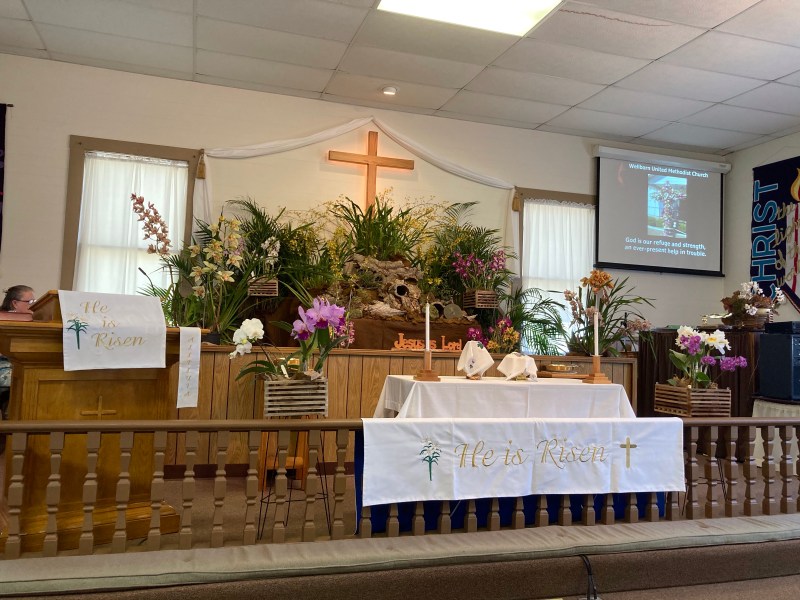
Dire Warnings

Pastor Sherry’s message for July 10, 2022

Scriptures: Amos 7:7-17; Psalm 82; Colossians 1:1-14; Luke 10:25-37

Have you ever noticed that sometimes authorities/experts misdirect us? Some examples of this include the following:

1. In my training as a psychologist in the late 1980’s, we were told not to talk to people about their spiritual beliefs. Supposedly, it was none of our business and not germane to emotional or cognitive struggles. But then I came to realize—thru experience—that at the root of most emotional problems is a misperception (or two or three) about God. True healing requires that we talk these through.

2. Consider the Covid advice and the mandates. We were told to close the churches so as not to spread the virus. But the history of the Christian Church in the first and second centuries demonstrates that the Church grew because Christians helped tend the sick through two vicious plagues. Scripture tells us (Hebrews 10:25) Let us not give up meeting together, as some are in the habit of doing. And Jesus promised that the gates of hell would not prevail against His Church. That’s why we reopened so much sooner than most others around us.

3. You have probably heard the adage, “Nothing good happens after midnight.” This is good advice when raising teenagers. However, my son and I have each written 2 books mostly during the hours from 10pm-2:00 am. As “night owls,” we are most creative then. Additionally, no one else is awake to interrupt or to distract us.

4. I have also heard church authorities tell preachers not to touch on political issues in their sermons. It is often true that if you criticize one party, you run the risk of alienating those who favor it. But you may have noticed that I do criticize what appears to me to be corruption, collusion, and outright fraud and deception—in whichever party—because these behaviors are opposed to, are antithetical to the Christian life. There comes a time when, as a pastor, I have to point out for us how our culture is veering off into directions that are contrary to the teachings of Jesus Christ. I don’t want for you to be conned or misled. And I have to please the Lord, even if it “ruffles the feathers” of some.

Consider the current push toward Socialism—and ultimately Communism—by the “Progressives” in our culture today. This week I read a book called The Naked Communist: Exposing Communism and Restoring Freedom. It was written in 1958 by an FBI agent tasked with investigating communist efforts in the U.S., and updated/reprinted 7 more times (most recently in 2017) by W. Cleon Skousen (and his son, Paul). Dr. Ben Carson says it lays out the whole “Progressive” plan for America. I believe Skousen (and Carson) are right.

Skousen reveals 45 goals of Communism designed to take over the US, and asserts that 44 of them have already been at least partially achieved. Consider the following for example:

#15 Capture one or both of the political parties in US;

#17 Get control of the schools, especially through rewriting history;

#20 Infiltrate the press;

#25 & #26 Breakdown cultural standards of sexual morality; promote pornography, alternate forms of sexual expression, and promiscuity as normal, natural, and healthy.

#27 Infiltrate the churches and replace revealed religion with “social religion;” discredit the Bible.

#28 Eliminate prayer or any type of religious expression in the schools, as a violation of the separation of church and state. I remember when I first arrived in Florida in the mid-1970’s and was teaching in public high school, we began each day with prayer and a Bible verse.

#29 Discredit the American Founding Fathers.

#40 Discredit the American family as an institution. Encourage promiscuity and easy divorce. Florida has “No Fault” divorce, which means a divorce can be granted if only one person wants the marriage to end. Traditional grounds like adultery or cruelty are no longer required.

#42 Create the impression that violence and insurrection are legitimate aspects of the American tradition.

If we examine current trends in the US, we can recognize, with Skousen, how many of these goals have already been achieved in our country.

This brings me to our Old Testament lesson for today: Amos 7:7-17. Amos was a farmer and herdsman, from the Southern Kingdom of Judah, who God ordained as a prophet and sent to the Northern Kingdom of Israel. (His name, Amos, means burden-bearer.) He was a commoner, not of the priestly or political classes. He was an outsider. He prophesized during the reigns of King Ussiah—a good king–in Judah (790-740BC) and of Jeroboam II—a bad king– in Israel (793-753). This was a time of prosperity and security in both kingdoms. Biblical scholars tell us that luxury abounded; that making money had become more important than worshipping God; and that empty “ritual religion” and other forms of spirituality were popular, but belief in and obedience to God was waning. The rich exploited the poor. The judicial system was corrupt, offering one standard for the rich and the influential, and another for the poor. Injustice was rampant, as the peoples’ moral fiber had eroded. Sound familiar?

So God sent Amos to declare His judgment on Israel. He issued a call to repentance. He urged Israelites to seek God sincerely. His job was to warn the Northern Kingdom that God was losing patience with them. The Lord told him to prophesy that that God’s judgment was looming. He was to issue the dire warning that their end was coming. God always gives us plenty of warning before He enacts His judgment. Amos addressed Israel from 760-750BC. The Northern Kingdom was defeated and either killed or carried off by Assyria in 722BC.

In this morning’s reading, we have one of Amos’ warnings. God tells him His judgment is like holding a plumb line to a building or to a strip of wallpaper. If a line is plumb, it hangs vertically and is “straight.” I have hung wall-paper a number of times in my life, and I always snapped a blue chalk-line to ensure the first strip went up plumb. God uses this same image in the prophesies of Isaiah (28:16-19), Jeremiah (31:38-39), and Zechariah (2:1-5) to indicate that He is getting ready to render a judgment. The plumb line is God’s ethical standard, which the people have failed to meet.

Then the passage moves to communications between Amos and Amaziah, the pagan priest of Bethel (King Jeroboam’s Chapel): Amaziah reports Amos to the king, but distorts the prophet’s message (an early example of fake news). He accuses Amos of conspiracy against the King. He misquotes Amos, exaggerating and personalizing the prophet’s predictions. The prophet never says Jeroboam will be killed in battle; instead, Amos predicts Jeroboam’s “house” or dynasty will fall by the sword.

Amaziah brings the King’s message to Amos–>Go back where you belong. Amaziah was no doubt refined, well-educated, perhaps even charismatic and given to flowery speech—we recognize the type, slick and persuasive. He probably considered Amos a country “rube,” a “deplorable,” someone beneath his contempt. He implies Amos is a prophet for hire, being paid to bring bad news—or, worse yet, a fanatic. But Amos answers him, calmly, with modesty and moderation: No, I am not seminary trained nor the son of a prophet. I’m here because the God you no longer worship told me to come. Amos then pronounces God’s judgment against the real false authority, the pagan priest:

1.) Amaziah will die in captivity;

2.) His wife will be reduced to prostitution to survive;

3.) His sons and daughters will be killed (by the blood-thirsty and vicious Assyrians);

4.) His land will be divided (remember, a Levite never had land);

5.) And Israel will be exiled.

Notice that Amaziah had position, wealth, authority, and reputation—but was still dead wrong. Amos lacked these human credentials, but had the true word and the blessing of God Almighty!

If we compare this portion of Scripture with the Communist goals for America cited by Skousen, you can see that, first of all, we (America) are out of plumb with God. Tragically, our culture has wandered far from God’s will. In 2017, polls reported that 32% of US adults under 30 have no religious affiliation. In a recent interview of random strangers on the street in New York, I heard a guy say he did not know who the interviewer meant when he asked him about God. He’d not heard of God. Church attendance is down in most all denominations. Many of those who left with the quarantines/shutdowns have not returned.

Secondly, this means, I believe, that our country is headed toward God’s judgment. Please understand that the Progressive agenda is at best socialist and at worst communist. Both are anti-God and anti-Christianity. This is why we earnestly pray each Sunday for a revival of American faith in Jesus. This is why we pray that the crooks, the dishonest, and the ungodly in both parties in our country would be voted out of office and replaced with Godly persons who love Jesus and love the USA.

This is why we pray for a decline in violence and a rebirth of national respect for life and the rights of others.

Finally, we have to wonder what we can do. Our God issues dire warnings before He brings on His judgment. We need to consider ourselves warned. So, we can…

1. Refuse to be bullied by the progressive culture.

2. Decide, will you obey humans or obey God?

3. Sen. John Kennedy of Louisiana humorously says, “Eat your veggies and vote them out of office!”

4. Consider 2 Chronicles 7:14 …if My people who are called by My name humble themselves and pray and seek My face and turn from their wicked ways, then I will hear from heaven and will forgive their sin and heal their land. Ask God to forgive the sins of our country.

The Lord views us both individually and as a national group, so we can take it on ourselves to ask forgiveness for our national sins. Look around, think about it, and you will know what they are. We can also pray diligently and seek His face.

©️2022 Rev. Dr. Sherry Adams

God Hates Pride (Proverbs 16:18)

Pastor Sherry’s message for July 3, 2022

Scriptures: 2 Kgs 5:1-19; Ps 30; Galatians 6:1-16; Lk 10:1-20

The following is a true story. I shared this with you some years back, but it’s a good one that I think is worth another hearing:

A Granny-lady from Florida approached her car and was shocked to see two men sitting in it. She pulled her pistol out of her pocket-book, pointed it at them, and said, “I have a gun and I know how to use it! Get out of the car!” They immediately jumped out of the car and ran like mad! Relieved—and somewhat proud—she put her key in the ignition only to find it did not fit. Looking around in frustration, she then saw her own car several spaces away (You know how all silver or white SUV’s look the same!) Later, a booking Sargent at the local police station doubled over, laughing, as the 2 pale men reported a car-jacking by a “crazed, white-haired elderly woman, Caucasian, 5’ tall, wearing glasses, and carrying a large handgun. When questioned, the granny pleaded a “senior moment;” No charges were filed.

This is a funny story, isn’t it? It’s amusing precisely because it’s unexpected. The woman had to admit she was wrong—some find this very hard to do. The men were smart to remove themselves quickly. This is the kind of thing that their family and friends probably teased them about later. The lady was elderly. She was no doubt smaller and frailer than either one of them, but they wisely recognized her power differential. They were not too proud to run.

Our Old Testament and Gospel lessons today both demonstrate our Lord’s view of human pride. Let’s look at them together.

2 Kings 5:1-19 relates the story of Naaman, the Syrian general.

We begin in the year 852 BC. Israel and Syria (Aram) had been at war for most of that decade. At the time of this passage, they are enjoying an uneasy truce. Naaman was the very competent commander of the Syrian armies. He had the respect of his King, Ben Haddad II. He was viewed by those who knew him as an honorable man, an effective leader, and a valiant warrior. But he was also afflicted with leprosy. In Israel, he would have had to have quit the military to live in seclusion. Gentiles, however, did not tend to separate out those with skin diseases in those days. Did he actually have Hansen’s Disease, or what we today call “Leprosy?” Scholars are not sure. He may have had a chronic skin rash, like eczema or psoriasis, or even some sort of allergic reaction, like hives. Whatever the cause, he was dogged by this condition and apparently seemed eager to acquire a healing. He learns from his wife, who has a Hebrew slave girl, that there is a prophet in Israel, Elisha, to whom he could go to ask for his healing. So we have a proud, accomplished, but desperate man going along with the suggestion of a little slave girl.

His King gives him leave to go to Israel. He carries with him a letter saying words to the effect that, Here’s my general who comes in peace.…He also brings along a generous payment: 750# of silver; 150# of gold; and 10 sets of clothing. Relying on the usual diplomatic channels (go to the king 1st), he presents himself to the Joram, the King of Israel. Joram is Ahab’s and Jezebel’s son (he ruled 11 years, from 852-841BC. He was not as evil as his father and mother, but also not a true believer in God. King Joram freaks out when this very successful, powerful enemy warrior shows up! Joram, in his panic, forgets Elisha. He mistakenly believes Naaman expects him to heal him, saying Am I God? He is afraid his inability to effect a healing will become a reason to break off diplomatic relations and will precipitate a renewal of war. He tears his garments not in grief, but in frustration and despair. Elisha hears of the General’s visit (the Northern Kingdom was a small country).

Elisha chides the king (verse 8) Why have you torn your robes? Have the man come to me and he will know there is a prophet in Israel. Joram should have prayed, rather than freaking out! He should have called upon the prophet as God’s spokesperson.

In verse 9, Chariots blazing, Naaman arrives at Elisha’s like a rock star! He has the retinue, the diplomatic power, and the wealth of a famous person. He proudly expects to be treated quickly and effectively. But, God intends to heal him as well as to humble him: (1.) The prophet does not even come to greet him, or to offer the barest of hospitality—water, oil, a kiss of greeting; (2.) He instead sends him a message by a servant (v.10) Go, wash yourself seven times in the Jordan, and your flesh will be restored and you will be cleansed: The grand man feels disrespected! He was used to being accorded what we refer to today as “all due respect.” He was expecting some religious ceremony (verse 11) I thought he would surely come out to me and stand and call on the name of the LORD his God, wave his hand over the spot and cure me of my leprosy. And why should he wash in the piddley, muddy Jordan when there are cleaner, clearer, grander rivers in Damascus? He explodes into a fit of temper!

Notice that once again, a servant intervenes. Trusted underlings urge restraint and obedience: (verse 13) …if the prophet had said do some great thing, would you not have done it? So, in verse 14 he obediently and humbly washes 7 times in the Jordan and is cleansed/healed of his skin disease. Naaman then praises God (verse 15a) Now I know there is no God in all the world except in Israel. The great man has been humbled. He now has some new attitudes and has taken on some new behaviors.

His obedience, not the prophet’s ritual, had led to his healing. He was healed when he put aside his pride, his prejudice (against the Jordan), his preconceived notions (the prophet must perform some sort of ritual); and his pushback against simplicity. He was healed when he decided to trust in what his servants told him about the Hebrew God. He suddenly became so devoted to the God of the Hebrews that he carts back a wagon-load of Israelite soil to Syria. Many ancient peoples believed their gods were territorial, to be powerful only on their own soil. He does not yet know that the Hebrew God is God of all the earth, unlimited by country boundary-lines. And he promises that when he has to attend his king in Baal-worship, he will instead be praying in secret to the One True God. Naaman has been healed, humbled, and converted.

Our Gospel lesson today is from Luke 10:1-20 and it reveals a lesson similar to that of our passage from 2 Kings. 72 disciples are sent out in pairs to preach, teach, heal and deliver folks from demons. Jesus tells them to go where they are received (the way has been prepared); and to depend entirely on God for their provision. They come back rejoicing in their success, even over demons. There is a natural tendency to rejoice in our successes, isn’t there? But Jesus reminds them that they belong to God; that is, they are doing God’s work through the power of His Holy Spirit. We don’t want to get “the big head,” thinking our successes in ministry come from our own efforts.

Jesus then goes on to prophecy the future judgment of 3 Jewish communities: Chorazin, Bethsaida, and Capernaum. Unlike Sodom, Tyre, and Sidon, they have each had the opportunity to see Jesus and witness His teachings, healings, and miracles. Nevertheless, He knows they will have each rejected Him following His death on the Cross. As He says, rejecting Him is the same as rejecting God the Father. This is a case of hanging onto human pride (I know what is best for me.), leads to losing an opportunity for salvation.

Our God hates human pride: We are to put it to death. We are to stomp it out in ourselves. We are to smother or crush it. We are to be humble. Someone has once said, “Pride is the difference between what you are and what you think you are.”

It turns out that Samuel Morse was originally a painter of some renown. He was painting a portrait out of town when his wife became ill. Sadly she died before he’d even learned of her illness. Heartbroken, he set aside his painting and dedicated himself to developing a means of communicating, rapidly, over great distances. He eventually invented both the telegraph and the means to transmit messages on it, Morse Code. Even though he became very famous for these inventions, he remained humble, saying, “I have made a valuable application of electricity not because I was superior to other men but solely because God, who meant it for mankind, must reveal it to someone and He was pleased to reveal it to me.” Morse had the right heart attitude.

Consider the following poem by A. Dudley Dennison, Jr.:

Sometime when you are feeling important,

Sometime when your ego’s way up;

Sometime when you take it for granted

That you are the prize-winning “pup”;

Sometime when you feel that your absence

Would leave an unfillable hole,

Just follow these simple instructions,

And see how it humbles your soul.

Take a bucket and fill it with water,

Put your hand in it up to your wrist.

Now pull it out fast and the hole that remains

Is the measure of how you’ll be missed.

You may splash all you please as you enter,

And stir up the water galore,

But STOP and you’ll find in a minute,

It’s back where it was before.

Borrowed from Chuck Swindoll, The Tale of the Tardy Oxcart, Word Publishing, 1998, p.467).

Let us Pray: Lord, we humbly ask You to help us to give God the glory for whatever we do of merit. We also ask, in Jesus’ name, that You would please save us all from the sin of pride! Amen!

©️2022 Rev. Dr. Sherry Adams

Packing Light, Packing Right

Pastor Sherry’s message for June 26, 2022

Scriptures: 2 Kgs 2:1-18; Ps 77:1-2, 11-20; Gal 5:1. 13-25; Lk 9:51-62

I would have liked to preach the passage about Elijah and Elisha, or the one from Galatians, but the Lord told me to preach the Gospel lesson today. I wrote my sermon, then looked back over my sermons for the past 6 years, and realized that I had preached this Gospel lesson (Luke 9:51-62) twice already, in 2016 and 2019. The Lord must believe we need to hear this lesson yet again.

The story is told of a dairy farmer who decided he needed a new pick-up truck: “He had seen an ad in the paper about discounts and factory rebates, so he decided to trade in his old clunker. [My farmer son-in-law just replaced his pick-up truck; it had 470,000 miles on it!] He chose a new model and was ready to write the check for the full amount. The salesman said, “Wait, I haven’t given you the final cost yet.” The farmer said, “Isn’t it the price I saw in the papers? The salesman said, “No, that’s for the basic model, all the options cost extra.” So after the options were added, the farmer reluctantly wrote a check and drove off in his new pick-up.

A few months later the car salesman called the farmer because he wanted to buy a cow for his son’s 4-H [or FFA] project. The farmer assured the car salesman he had several good milk cows for sale for $500. The salesman drove out and selected a cow and took out his checkbook. The farmer said, “Wait. I haven’t given you the final cost yet.” Then he handed the salesman a bill that read:

BASIC COW $500

Two-tone exterior $45, Extra stomach $75, Milk storage compartment $60, Straw recycle compartment $120, Four handy spigots @ $10 each $40, Leather upholstery $125, Dual horns $45, Automatic rear fly swatter $38, Natural fertilizer attachment $185.

GRAND TOTAL $1233.

Whether you’re buying cars or cows, it’s important to get to what we call “the bottom line.” What is the “bottom line” of following Jesus? You may go into sticker shock when you discover it. Many people are only interested in the basic model of Christian living. They want just enough Christianity to keep them out of hell without intruding on their fun. You don’t find the full cost of discipleship advertised very often these days. Few preachers discuss it because it is unpleasant; it doesn’t fill churches. It isn’t the prosperity gospel that says, “Believe and you will be rich and happy.” As Dietrich Bonhoeffer wrote in his classic book, The Cost of Discipleship [and he should know as he died for his faith], “When Christ calls a man, he bids him to die.” (borrowed from a sermon by David Dykes, Don’t Waste Your Life, 8/31/2011.)

Pretty sobering, isn’t it?

Now consider, if you felt called to follow Jesus (and I hope each of you does), how would you pack? You might take a change or two of clothing; your Bible; your toothbrush, comb, and some toiletries; and your prescription meds and any supplements you use. But Jesus doesn’t concern Himself with any of these practical items. Instead He tells you to count the cost, to be sure you are prepared to do what it takes to be His follower. He is more concerned with your priorities than your creature comforts. He is most concerned with your heart-attitudes.

Essentially the message of our Gospel lesson today is to “Pack Light and Pack Right” (Luke 9:51-62). Jesus is headed to Jerusalem and to His crucifixion. He knows His time left to disciple/train His followers is brief. So He takes the shortcut, from His 3rd tour of Galilee in the North to Jerusalem in the South–which involves walking through Samaria. He has sent messengers ahead to a village to prepare for His arrival. He now travels with a retinue including the 12 disciples and a number of women who help pay their expenses from their own wealth. Unfortunately, the messengers discover the Samaritans there don’t want Him to sojourn in their village. YIKES! They reject Christ!

John and James are so outraged that they ask Him to call down the wrath of God on that community. They must have forgotten His admonition to them at the beginning of Chapter 9, when He had sent out the 12, two-by-two to practice on their own what He had taught and demonstrated for them: (1) They were to pack light, depending on God for their provision; (2) They were to preach, heal the sick, and cast out demons in Jesus’ name; (3) And they were to shake the dust off their feet and leave behind any who rebuffed them. There was to be no punishing of those who rejected them or Jesus.

In a sense, rejecting Jesus embodies its own punishment: eternal damnation. Remember, the pig farmers from last week’s Gospel (Luke 8:26-39), preferred saving their livelihoods to saving their souls. Jesus didn’t even rebuke them. He just got back in the boat and returned to Galilee. Jesus’ way is not to take revenge, not to try to ruin those who disagree with Him—so counter to our cancel culture of today. Instead, Jesus modeled for us to be patient, and to pray for and offer grace and forgiveness to those who reject Christ, or who mock or spurn us because we follow Him.

In His subsequent encounters with 3 would-be disciples, Jesus teaches that following Him takes commitment. The 1st man says confidently (v.57) that he will follow Jesus anywhere. Perhaps he has in mind the idea of following a traditional rabbi. Students walked beside or behind him and absorbed his teaching. Later they would convey it to others, saying: Rabbi Hillel said this…Rabbi Gamaliel said that. Have you ever noticed that Jesus never referenced another rabbi, saying instead, you have heard it said ________, but I say ________. There was no more important authority than Jesus, the Father or the Spirit.

But the apostles could have told the man that following Jesus was more like following a prophet. It included a kind of peripatetic “home-schooling.” They learned from Him while they walked with Him, listening to His wisdom and witnessing His miracles. Additionally, a prophet lived off of donations from those who responded to his ministry. So Jesus tells the guy, I’m homeless. Can you commit to being homeless too? I’m rejected. Can you live with being rejected too? Interestingly, Scripture doesn’t tell us the guy’s answer.

Jesus Himself recruited the 2nd fellow (v.59), and the man seemed to have a legitimate reason for hesitating—First let me go and bury my father. Jesus’ reply seems severe: Let the dead bury their own dead, but you go and proclaim the kingdom of God. Biblical scholars believe the guy’s father may have been alive still and thriving (Jesus would know that). He was asking to delay until a later time, like…wait until my kids finish high school; until my daughter gets married (and I have paid off the wedding); until my health improves; or until I win the lottery. Jesus was nearly out of time, so this excuse didn’t wash with Him. Nothing, not even family obligations, should come before what we owe God. Whenever there is a choice, God comes 1st.

The 3rd man volunteers to follow Jesus, but wants a brief delay to bid farewell to his family. Again Jesus offers him what seems to our ears a harsh admonition (v.62) No one who puts his hand to the plow and looks back is fit for service in the kingdom of God. (If someone pushing a hand-plow looks back, they are sure to plow a crooked row.). Jesus’ exacting sounding response means that the man cannot hang onto his old life and also adopt the new. Being Jesus’ disciple means not looking back but looking forward to what might be a rough road ahead.

Recently I read a true story about a preacher who was standing at the door shaking hands as the congregation departed. He grabbed one man by the hand and pulled him aside. The preacher said to him, “You need to join the Army of the Lord!” The man replied, “I’m already in the Army of the Lord, Preacher.” The preacher questioned, “How come I don’t see you except for Christmas and Easter?” He whispered back, “I’m in the secret service.”

Given what Jesus says in today’s Gospel, how many of you think our Lord would be pleased by what the guy in this story said? Jesus may have been amused, but I think He would then have taken the guy to task. The writer to the Hebrews exhorts us (10:25)–>Let us not give up meeting together, as some are in the habit of doing, but let us encourage one another….We encourage each other when we worship together. We have also seen that there is power in corporate worship and power in corporate prayer. Furthermore, once you get into the habit of attending church, you feel like your whole day is amiss if you skip it. Times I have almost not come to church (before being ordained), I would discover something was preached or a Scripture was read that I was exactly meant to hear. If I had not attended that day, I would have missed out on something the Lord meant for me to learn!

When we follow Jesus, we sign on to more than the “basic model” of Christianity, which is…we love Him; we obey Him; and we love others. But we also pack Light—only the essentials—and we pack Right. We choose Jesus above all relationships and all things. He comes 1st. We follow Him, even if it means we suffer rejection and perhaps persecution (On Pentecost, 50 Nigerian Christians were killed while worshipping in their church—most likely by Nigerian Moslems. I know an Anglican Bishop there, Ben Kwashi of Jos, Nigeria. He has for years slept on a concrete floor instead of a comfortable bed, anticipating the day his Moslem neighbors arrest and imprison him. We don’t experience that kind of persecution—yet. But you may have noticed increasingly negative remarks about Christians in the media, and you may have experienced being mocked for your faith.

A number of you have heard me say that I had a vision of Jesus right before I was ordained. He wore the crown of thorns and a white robe, and smiled at me. I believed then and still do that His smile meant He approved of my entering the ministry. He didn’t say a word, but He reached behind Himself and pulled out a crown of thorns for me too. Later, I realized He was warning me that the cost of discipleship is high. I thought to myself at the time, At least it wasn’t a cross! But recently a pastor friend told me one of our seminary professors said in class, If you want to be ordained, you should ask yourself, “How do I look on wood?” Ordained or not, following Jesus is not a walk in the park. it is a death to self. However, embracing Jesus and dying to self is the only route to God’s heart.

©️2022 Rev. Dr. Sherry Adams

Birds on a Buffalo

Pastor Sherry’s message for June 5, 2022

Scriptures: Acts 2:1-21; Ps 104:24-35; Ro 8:14-17; Jn 14:8-17, 25-27

In 2003, I went on a mission trip with the youth of the church I was serving at the time (in Philadelphia) to the Standing Rock Reservation in North Dakota. The Standing Rock covers an extraordinary amount of real estate from the south-central North Dakota to the northern portion of South Dakota. I found the temperatures of 108-115 to be very uncomfortable and I really hated the biting and stinging black flies—who seemed to love getting ahold of me. I had to buy a fly swatter to beat them off my arms and legs. YIKES! Nevertheless, the native Americans were fascinating. While our youth worked with theirs, I focused on ministry to the women of the tribe, talking with them about their families, their health, their way of life, and their view of God.

If you know anything about the history of the Lakota Sioux, you know they were totally dependent upon the buffalo for their food, clothing, shelter, tools, and so on. They followed the buffalo herds wherever they went, taking only what they needed and using all parts of the animal—including appropriating its tail as a fly-swatter. Essentially, their fortunes rose and fell with the availability of the herds. The Sioux word for Buffalo is tatanka. If you have ever seen the movie, “Dances with Wolves,” you may remember the Kevin Kostner character, an army cavalry officer, was trying to communicate with a few Sioux warriors. He made horns with his fingers and stomped on the ground to convey “buffalo.” The Sioux warriors initially thought he was not quite right in the head, but eventually realized what he was trying to convey. They named the animal in their language—tatonka—which I loosely translate as large, powerful, necessary critter. Interestingly, their word for God the Holy Spirit is the Wakantonka, the greatest of all beings! They knew they were totally dependent upon Him, even for the buffalo. I loved that picture of the Holy Spirit! He is the power-arm of the Trinity. No one can control Him! We, His creatures, are totally dependent upon Him.

We noted while we were there that the herds are coming back. I was fascinated with the buffalo, and asked us to pull our van over whenever we encountered a new herd. As I observed them in the wild, I noticed that many carried a little bird on their shoulders. It occurred to me then that we are to the Holy Spirit as that bird is to the buffalo: We are along for the ride, but unable to influence the direction, timing, or speed at which we travel. All the power resides with the buffalo.

Our Scriptures today, this Pentecost Sunday, all revolve around the very important empowering and sustaining work of the Holy Spirit:

A. Our Acts 2:1-21 lesson describes how the Holy Spirit fell on the 120 disciples, empowering them for service. We are familiar with this story as it explains the birth of the Christian Church (Christ-followers of whatever denomination). The disciples are obediently waiting and praying. They are following Jesus’ orders. He had told them in Luke 24:49 that they were to …stay in the city [Jerusalem] until you have been clothed with power from on high [the Holy Spirit]. They had been waiting for 10 days from Christ’s Ascension. Now bear in mind that Pentecost had already been established by God as an annual feast day back in Leviticus 23 (It was part of the Law/Torah). First came Passover (Friday, the beginning of the Sabbath), but foreshadowing the death of Christ, the Lamb of God. Just as the blood of the Passover lamb had spared the Hebrew slaves in Egypt, the shed blood of Christ covers our sins and redeems us from spending eternity in hell. The second feast God inaugurated was called 1st Fruits (we know it as Easter Sunday), and it foreshadowed Jesus’ resurrection. The third feast, 50 days from Passover, was and is Pentecost (a harvest Festival, also called the Feast of Weeks).

On the original Pentecost, the Holy Spirit showed up early (9:00am), but not visibly. There was an auditory sign, (v.2) Suddenly a sound like the blowing of a violent wind came from heaven and filled the whole house where they were sitting. People who have lived through tornadoes say they sound like a multitude of freight trains rushing by. That was the sound of the Holy Spirit’s presence, but without the wind. Nevertheless, it brought people out into the streets. There was also a visual sign of the Spirit’s presence (v.3) They saw what seemed to be tongues of fire that separated and came to rest on each of them. They could see fire, but it did not burn; think of Moses and the burning bush that did not disintegrate as it burned. Isn’t it interesting that they resembled tongues like fire, since they were going to burst into languages (tongues) previously unknown to them. So the Holy Spirit announces His presence with loud surround-sound and some fancy pyrotechnics. They were then empowered to witness about Jesus to Jewish foreign-language speakers in their native tongues and dialects–people groups from all over the Mediterranean, even from as far as Rome. Peter is now emboldened to preach to the crowd.

Now the Holy Spirit falls on all believers, where previously (in the Old Testament) the Holy Spirit was given to individuals for specific purposes and often for limited time. Today, we encounter the Holy Spirit in (a.) Baptism in which we are reborn by water and the Spirit, as Christ-followers; in (b.) Confirmation🡪in which we are sealed by the Holy Spirit (Eph 1:13-14 Having believed, you were marked in Him with a seal, the promised Holy Spirit, who is a deposit guaranteeing our inheritance until the redemption of those who are God’s possession…; and (c.) in the Baptism of the Holy Spirit (your own subjective experience) 1 Cor 12:13 For we were all baptized by one spirit into one body—whether Jews or Greeks, slave or free—and we were all given the one Spirit to drink. This experience is not limited by race or culture or social distinctions. The Holy Spirit is available to all believers who ask for Him, in order for us to minister in the power of Christ, and manifest the fruit of the Spirit in our lives.

B. Our Psalm (104:24-35) is a symphony of praise to the God of Creation. The line most relevant to the work of the Holy Spirit is verse 30 When You send Your Spirit, they [meaning we and all creation] are created, and You renew the face of the earth. Peterson’s paraphrase of Scripture, the Message, states it this way: Send out Your Spirit and they [created things] spring to life—the whole countryside in bloom and blossom. In other words, God’s Holy Spirit is creative and transformative. The power of the Holy Spirit makes good things happen.

C. Among those good things is our adoption, thru Christ Jesus, as children of God and heirs with Christ. This is what Paul asserts in our Romans lesson today (8:14-17). We become sons and daughters of God when we allow ourselves to be led by the Holy Spirit (v.14 …those who are led by the Spirit of God are sons [and daughters] of God. Our obedience is Key. We are following Jesus’ example when we say, Yet not My will, but Yours be done (Luke 22:42).

In today’s Gospel (John 14:8-17, 25-27), Jesus calls the Holy Spirit “the Counselor,” “the Spirit of Truth.” One of His primary jobs is to teach us Jesus’ will and remind us of Jesus’ ways. To this end, the Holy Spirit dwells within us. He also counsels—guides, directs, encourages, helps—us. If we obey Jesus—there it is again—and pray not selfishly but in the character of Christ, God will grant us what we ask for. You may say, “Well, I prayed to get a Mercedes, in Jesus’ name, but didn’t get one.” The issue then becomes was your receiving a Mercedes consistent with God’s will for you? This is often the “sticking point” when the response to our prayers is “No” or “Not yet.”

Because of the Counselor, the Holy Spirit, we are not to fear anything, according to verse 27 Do not let your hearts be troubled and do not be afraid. Please say that last part out loud: We are not to be afraid. Again: We are not to be afraid. We have the Holy Spirit, so we don’t need “safe spaces.” I heard recently that MIT, Evergreen University, and others, have eliminated grades for college courses. Someone has decided that bad grades may hurt a student’s self-esteem. I find this logic puzzling. Wouldn’t we do better to teach students to apply themselves to get good grades, or even to manage their disappointment in a healthy manner? Rather than doing away with grading, our culture would be better served to face the truth with the assistance of the Holy Spirit. We don’t even have to worry about what this world is coming to…we can just trust in God and give our concerns to Jesus, through the power of the Holy Spirit.

The story is told about a little boy who was flying a kite. It was a windy day, and the kite kept going higher and higher. Finally it got so high that it was out of sight. A man passed by and saw the little boy holding onto the string. The man could not see the kite, and he asked the boy, “How do you even know you have a kite up there?” The boy replied, “Because I can feel it.” Typically when we encounter the Holy Spirit today, we don’t hear a great wind or see tongues of flame—or even a dove. Even so, we should be able to discern His assistance in our lives by feeling (sensing) Him (a.) leading us to do the right thing; (b.) empowering us to serve Jesus in His Church; or (c.) helping us to become more like Jesus. As the Lakota Sioux say, He is the wakantonka.

Think about this: Just before Jesus ascended into heaven, His last words were for them to wait until they received the Holy Spirit. He didn’t ask them to write manuscripts or screen-plays. He didn’t expect them to run out and begin evangelizing. He didn’t want them to assemble a committee and come up with a plan or a program. He didn’t even ask them to compose worship songs. Instead, He told them to do nothing until…

(J.D. Grear, Jesus, Continued: Why the Spirit Inside You is Better than Jesus Beside You, Zondervan.)

That should be us: We are the birds on the buffalo. The Holy Spirit is the power source. We wait on Him. We follow His direction. He leads us and we are to go along for the adventure. Amen!

©️2022 Rev. Dr. Sherry Adams

Stay in Tune

Pastor Sherry’s message for 4/24, 2022

Scriptures: Acts 5:27-39; Ps 150; Rev 1:4-8; Jn 20:19-31

I don’t know much about organs—the musical instrument—but I have read that among the many “stops” on most organs there are 4 of particular importance:

1. The Diapason or principal stop, which appears to heighten volume;

2. The Flute stop, which gives us the tones of a flute;

3. The String stop, which gives us the tones of string instruments like the violin, viola, etc.;

4. and the Vox Humana (the Human voice), which, ironically, is very seldom in tune. It seems if it is tuned when the temperature is cold, it will go out of tune when the environment warms up. If tuned when warm, it goes out of tune when the AC is turned on. This is such a lovely image of us, isn’t it? We easily get out of tune with God.

The Bible commentator, J. Vernon McGee uses the metaphor of these 4 stops to explain the meaning behind Psalm 150. He says opening up the Diapason/principal stop is like when Jesus stepped up to speak creation into existence. It burst forth in all of its glory! Stars, space, earth all sang out praises to God the Father. Remember, Paul said (Romans 8:19-22) that all creation groans as it awaits Jesus’ 2nd Coming. And Jesus told the Pharisees that even the rocks would cry out if He forbade His disciples from praising Him (Luke 19:40). The Flute stop, when opened, sounded like birds and angel choirs who then added their songs of praise. When the String stop was opened, light hummed across the universe, and all of creation sang in harmony to the Lord!

(Rev. Dr. J. Vernon Mcgee, Commentary on Psalms, pp.191-192.)

As Psalm 150:6 says Let everything that has breath praise the Lord! You see, we were created to worship God. He is both our Creator and our Redeemer. Perhaps you remember the Westminster Shorter Catechism question–written in 1646 by a team of Anglicans and Presbyterians, containing 107 questions that explain Christian doctrine– “What is the chief end [purpose] of man [kind]? The answer is, It is to glorify God and enjoy Him forever.” By glorify is meant that we give Him the weight He is due because He is preeminent over all other things. Because of His supremacy, we are to praise Him/delight in Him always.

When the Vox Humana was added, however, it was found to be out of tune. We human beings are often out of step with God and out of tune.

So the question presents itself, “How do we humans stay in tune with creation and with God?”

A. Psalm 150 tells us we stay in tune with God when we praise Him and when we allow Him to carry the most weight in our lives.

Many folks today are out of tune with God because they either do not know Him; or, they do not respect Him. Many rich folks believe their money and their ingenuity are all they need. Similarly, numerous university professors, scientists, and medical doctors believe their intelligence saves them. Other folks use drugs, alcohol, serial love affairs, and other addictions to fill the God-shaped hole in their lives. They don’t trust God to help them, so they rely on whatever they can find to comfort themselves or numb themselves out.

Thus, McGee writes in his commentary on Psalm 150, p.194 “Today you and I are living in a created universe that is actually singing praise to God. But men are out of tune. Man is in discord. God’s great purpose is to bring man back into the harmony of heaven.” That is why Jesus went to the Cross, died, and rose again. His costly and loving sacrifice brought those of us who believe in Him back into tune with God and with the universe.

B. The apostles knew this. In our Acts 5:27-39 passage, we read of the account of early persecution of the enfant Christian Church. Led by the Sadducees, the Sanhedrin convenes to reemphasize to the apostles—who they have arrested–that they should stop teaching in Jesus’ name.

Peter and the other 10 reply (v.29) We must obey God rather than men! Jesus had told them (in the Great Commission) to take the Gospel to Jerusalem, Judea, Samaria, and all the ends of the earth (Acts 1:8). Teaching and preaching in the Temple was their faithful response to the first part of this command.

Their insistence on continuing, despite the Sanhedrin’s condemnation of them, infuriated the Jewish leaders. Some hotheads among them urged them to execute them. But Rabbi Gamaliel, Paul’s teacher, recommended a wiser course of action (vv.38-39)…in the present case, I advise you: Leave these men alone! Let them go! For if their purpose or activity is of human origin, it will fail. But if it is from God, you will not be able to stop these men; you will only find yourselves fighting against God. (The presence of Christ-followers to this day proves Gamaliel right.) Gamaliel prevailed and the apostles kept right on preaching the Gospel.

Even though they were flogged, they rejoiced due to their release, but also due to God’s power over the views of men, and because they had shared in some of Jesus’ suffering (the flogging). They had seen the Resurrected Christ! They were empowered by the Holy Spirit. And they were very clear about their purpose. Obeying Jesus, whatever the cost, was how they stayed in tune with Jesus.

C. Our Gospel lesson, John 20:19-32, recounts the need for the apostles, but especially for Thomas, to see and to touch the risen Christ. The 10 believed because they saw Him and interacted with Him on Easter Day. Because Thomas was absent at the time, he missed out. But once he touched Jesus, a week later, he knew the resurrection stories were true.

He then exclaims (v.28) My Lord and my God! This is a profound and a beautiful expression of his faith. But notice that Jesus goes on to bless all of us who have not seen Him in the flesh–who have not touched His crucifixion wounds—and yet we believe. Clearly, Jesus commends faith that arises out of something beyond physical experience. As the writer to the Hebrews asserts (11:1) Now faith is being sure of what we hope for and certain of what we do not see. You just know that you know, even if you can’t always explain it to someone else. We stay in tune with Jesus when we believe in Him.

D. In Revelation 1:4-8, the apostle John journeys into heaven (in a vision) where he sees that Jesus is the One Who is all He claimed to be:

1. He is the faithful witness the One who came from heaven to earth to reveal and explain to us the Truth.

2. He is the firstborn from the dead the first to rise from the dead and never to die again. Jairus’ 12 year old daughter, the widow of Nain’s son, and Lazarus were all raised from the dead by Jesus. However, unlike Jesus, they all experienced death a second time. By His resurrection, Jesus Christ overcame death for Himself and for us.

3. He is the ruler of the kings of the earth the rightful heir to the promised eternal throne of King David.

4. He is (v.8) the Alpha and the Omega…the One who is [currently in heaven], and who was [walked the earth 2000+ years ago], and who is to come, the Almighty.

In verse 4, John mentions the seven spirits before His [God the Father’s] throne. This means the complete Holy Spirit, not that there are 7 separate Holy Spirits. The number 7, to the Hebrews, meant either perfection or completeness. Consider how often 7—for completeness–appears in the context of God’s dealings with humankind: The Sabbath and worship of God occur on the 7th day (We Christ-followers changed it to the first day of the week in honor of Jesus’ resurrection.) In Joseph’s Egypt, there were 7 years of plenty and 7 of famine. Namaan the Syrian was told to wash in the Jordan 7 times to be healed of his leprosy. Nebuchadnezzar, the king of Babylonia, was crazy for 7 years. There are 7 Beatitudes in Matthew. There are 7 petitions in the Lord’s Prayer. Seven loaves (and 2 fish) fed the 5,000. Jesus made 7 statements from the Cross. (See J. Vernon McGee, Commentary on Revelation, p.39.) And John reports in his Gospel that Jesus made 7 “I am” statements, all ways of saying He was and is God. So, we stay in tune with Jesus when we believe He is completely and thoroughly God, as well as man.

Our scripture passages today all attest to the ways we can stay in tune with our God:

1. When we praise God and allow Him to carry the most weight in our lives.

2. When we obey God.

3. When we learn to enjoy God first of all.

Think of what He has done and continues to do for us. It is human nature to think we experience joy when we meet our needs first. But the paradox is the Truth: When we learn to enjoy God above self (and others), we tap into the “organ stop” that blasts out joy.

4. When we believe without seeing Jesus in the flesh.

5. When we believe because we know Jesus is the Alpha and the Omega, the be-all and the end-all, the completeness of God.

Alleluia, He is risen! The Lord is risen indeed! Alleluia!

©2022 Rev. Dr. Sherry Adams

Good Friday Message

Pastor Sherry’s message for April 15, 2022.

Scriptures: Isa 52:13-53:12; Ps 22; Heb 10:16-25; John 18:1-19:42

Our Scripture passages today are all very solemn, fitting this day we remember the death of our Lord, Jesus Christ, on the Cross. The Passion narrative according to John takes us through Jesus’s “kangaroo trials” to His crucifixion.

First, He is arrested. He had made Himself disappear suddenly, in the past, when He did not intend to be captured. In Nazareth, after He had read the passage from Isaiah (61:1-2) that contains the job description of the Messiah and said Today this scripture is fulfilled in your hearing, His hometown friends tried to throw Him off a cliff (Luke 4:29-30). However, He walked through the midst of them and vanished. This time, though, He chose to remain and to face what was coming.

Did you notice that those who came to arrest Him fell back when He identified Himself as Jesus of Nazareth (v.6)? He seemed firmly in control as He calmly surrendered. They had sent a group of some 500 men to capture Him, armed with clubs and weapons, but He wouldn’t allow a fight to ensue. He tells them to let His disciples go. Luke tells us He even healed Malchus’ ear after Peter had cut it off (Luke 22:50-51). This should have made some impression on those who came to arrest Him. Surely they might have wondered if He were not someone special.

From the garden, they take him to the palace of Annas, the former high priest. Out of favor with the Romans, Annas was still the religious power broker of Jerusalem. Biblical scholars say he was both brilliant and satanic. Many credit him with this plan to eliminate Jesus; they had just awaited the “right time” and a Judas to appear. So they arrest Him under the cover of night, when all those who loved and believed in Jesus would be at home.

Jesus challenges Anna’s court honestly, confronting the guy who hit Him (v.23) If I said something wrong, testify as to what is wrong. But if I spoke the truth, why did you strike Me? Jesus, again calmly but firmly, reminds them they are out of line: by Jewish law,

1.) No court trial could begin at night/be held at night;

2.) No one could strike a person on trial without a verdict;

3.) Furthermore, Jewish Law prohibited sentencing a man on the day he was brought to trial.

But this trial at Annas’s was a mockery of justice.

Annas then sends Him to Caiaphas, the Roman’s choice for “high priest,” as well as Annas’s son-in-law (a 1st century example of nepotism). John reminds us that earlier (John 11:50), Caiaphas had said to the Sanhedrin You do not realize that it is better for you that one man die for the people than that the whole nation perish. Caiaphas did not realize at the time that he was speaking prophetically. Nevertheless, Jesus knows He is laying down His life for the sins of Israel and for us. Caiaphas and Annas both find Jesus guilty of blasphemy, because He admitted He is the Son of God. He–the Way, the Truth, and the Life– is accused of lying even though He told the truth. How ironic! They would have liked to have stoned Jesus, but the Romans forbade any nation to invoke capital punishment but them.

So Jesus is next sent to the Roman, Pontius Pilate. Pilate tries every which way to free Jesus. He knows the Jewish religious hierarchy is just jealous of Him. Even though Pilate believes Jesus is innocent, he still has Him scourged (39 lashes with a whip), hoping this will satisfy them. He offers to set Jesus free due to the Passover Holiday. He can find nothing wrong with Jesus, but hands Him over to be crucified when the Jews threaten to tell Caesar that Pilate has released a man claiming to be king of the Jews.

And so, trading the sinless Son of God for a murderous insurrectionist, the Jewish leadership have their way and Jesus is crucified. Ironically, the sign on His cross identifies Him as King of the Jews: It is written…

1.) In Hebrew—the language of religion;

2.) ,In Greek—the language of culture and education;

3.) And in Latin—the language of law and order in the Roman world.

The Jews want it adjusted, but Pilate will not bend.

Notice that John does not tell us much about the crucifixion. None of the Gospel writers do. They highlight Jesus’ dignity. They did not want us to focus on Christ’s agony. In fact, the Bible commentator J. Vernon McGee says the Father deliberately made darkness come over the land from noon until 3:00pm so watchers could not see Jesus’ intense suffering as He took on all the sin of the world, past, present, and future; and as the Father turned His back on Him. We are told that soldiers gamble over who will get His clothes. John then relates three of the 7 statements Jesus makes as He is dying:

1.) He asks John to care for His mother, Mary;

2.) He says He is thirsty;

3.) And, lastly, He asserts, It is finished [meaning the work of salvation He was sent to do]. Finally, we learn He was taken down and buried just before the Sabbath began at sundown.

To get a sense of what the crucifixion was like for Jesus, we have to turn to Isaiah 53 and Psalm 22. Isaiah 52:13-53:12 is the 4th and final Suffering Servant Song, a Messianic Prophecy, often referred to as the Gospel in the Old Testament. Isaiah tells us Jesus will be raised high, lifted up (on the Cross) but also highly exalted (when it is all over). No one would think so as they observed Him carrying His Cross. He will in fact startle or surprise the whole world—even render them speechless—because it will be through the loss of all things that He gains all things.

Seven hundred years before Jesus’ birth, Isaiah accurately predicts the kind of death Jesus will endure. An ordinary man to begin with—not a Rock Star–He will be (v.3) despised and rejected by men, a man of sorrows and familiar with suffering…; beaten beyond recognition; pieced, crushed, oppressed, afflicted; killed in the worst possible way–like a common criminal–hung between true felons; he will die childless—“cut off,” to the Hebrews, evidence of a tragic, futile existence. People will think He got what He deserved, but He didn’t…verses 4-5 Surely He took up our infirmities and carried our sorrows….the punishment that brought us peace was upon Him, and by His wounds we are healed. In verse 9 He was assigned a grave with the wicked, and with the rich in His death, because He had done no violence, nor was any deceit in His mouth.

The Father will richly reward Him (verse 11) After the suffering of His soul, He will see the light of life [resurrection], and be satisfied…Therefore I will give Him a portion among the great, and He will divide the spoils with the strong.

God intends to reward Him as though He were a king sharing in the spoils of a great victory, because He went willingly to death, and because He interceded for our sins.

Psalm 22 reveals to us Christ’s thoughts on the cross: He feels forsaken by His Father: The Father was with Him when He was arrested. The Father was with Him during His ludicrous trials. The Father was with Him when He was beaten. The Father was with Him when He was nailed to the Cross. But the Father turned His back on Him when He became sin for us, from noon until 3:00pm.

He admits to feeling like a worm. The word for worm in the Hebrew is the Coccus worm, which emitted a substance used to make red dye. This is symbolic of Jesus’ blood poured out for us. From the Cross He feels surrounded by His enemies: The soldiers are many bulls…the strong bulls of Bashon. His tormentors from the foot of the Cross—scribes, Pharisees, the hostile mob—resemble (v.13) roaring lions tearing their prey; and verse 16 dogs have surrounded Me; a band of evil men has encircled me, they have pierced my hands and my feet. Nevertheless, He trusts in the love of His Father.

Biblical Scholars tell us Jesus fulfilled 28 prophecies of the Messiah from the Cross. We can recognize them in our Psalm and Isaiah passages. The sinless Son of God laid down His life for us, paying the penalty for our sins; reconciling us to God the Father; and clothing us in His righteousness. These Sacred writings prove to us that Jesus—and only Jesus—was and is the Messiah, the Son of God. Let us ponder His sacrifice and offer Him our gratitude and love.

©2022 Rev. Dr. Sherry Adams

Resisting Temptation

Pastor Sherry’s message for March 6, 2022

Scriptures: Deut 26:1-11; Ps 91:1-16; Ro 10:8-13; Lk 4:1-13

Oscar Wilde, the Irish poet and playwright once wrote, “I can resist everything but temptation.” The story is told of a pastor who stayed in a moderately-priced Bed and Breakfast (B&B). He noticed at breakfast that the table was set with a lovely pewter salt and pepper set and with a matching pewter cream pitcher. He coveted the beautiful items before him and thought to himself how easily he could hide them away in his suitcase. He told himself the inn would hardly miss them. Then he thought some more and decided–if his theft became known–that it would…

1.) Definitely damage his Christian example to the inn-keeper,

2.) Scandalize his congregation,

3.) Form a terrible example to his children,

4.) And embarrass his wife and himself.

So he talked himself out of pilfering the items. Later, on a Sunday like today, when the Gospel centered on Jesus’ temptations, he told of his own temptation at the B&B. He wanted his congregation to know that we all–even including their pastor–could be tempted, but that the Christ-like response was to turn away from the seductions of the world, the flesh, and the devil.

A week later, a package arrived addressed to him. It contained that very set of dining accessories that he had been tempted to steal. Some kind soul in his congregation wanted him to have the pewter items he had loved at the inn, purchased them from the BNB, and sent them to him. The next Sunday he mentioned how grateful he was that someone had sent him the items from the BNB…and then went on to state that he had recently seen a new Lexus he loved (as recorded by Chuck Swindoll in The Tale of the Tardy Oxcart, Word Publishing, 1998, p.560).

Temptations are all around us, aren’t they? Are we like Oscar Wilde, unable to resist any? I hope not…and yet some temptations are very difficult to overcome.

Last year, on the First Sunday of Lent, I focused on how Jesus’ temptations were aimed by Satan at Jesus physically (turn stones into bread), psychologically (impress the crowd by jumping from a great height and being saved by angels), and spiritually (worship the devil, not God)—and that the evil one targets us in these ways also. This year, I want to focus on what Scripture tells us about how to overcome temptations:

1. Our Old Testament lesson, from Deuteronomy 26:1-11, focuses on our need to express our gratitude to God. In this passage, Moses was reminding the Israelites to offer to God always the first and finest of their harvest. This was a tangible means of expressing to the Lord their gratitude for all He had done for them:

a. He had fashioned them into a nation — Abraham, Isaac, and Jacob were not Israelites (until God changed Jacob’s name to Israel). They were wandering Arameans (Syrians). 90 + Joseph, his wife and their 2 sons, or 94 of them sojourned in Egypt, where the Egyptians referred to them as He-bar-ew. 400 years later, they exited that country numbering 2 million Israelites.

b. He had led them out of slavery through Moses’ leadership at God’s direction.

c. He had tested and strengthened them during their wilderness wanderings.

d. And He had brought them, after 40 years, into (v.9)…a land flowing with milk and honey. As a kid, I took this literally and envisioned rapid rivers of milk and sluggish rivers of honey all over the Canaanite landscape. This phrase is metaphorical, however, meaning a peaceful, prosperous land. Cows don’t produce milk in chaotic conditions. Bees don’t settle in and manufacture honey when agitated. God was leading them to a new (to them), peaceful land where they could unpack their belongings and set down roots.

If they couldn’t think of anything to thank God for, Moses was suggesting they express gratitude to God for rescue and deliverance; for gracious provision (manna from heaven and water from rock); for His guidance and protection; for His love for them as individuals and as His chosen people.

Gratitude is a very fine place to hang our hats. To be grateful forces us to remember when God has met us and cared for us. Gratitude is also a good means of overcoming temptation. Temptation always focuses on what we do not have at the moment and creates an appetite for it. Gratitude reminds us to be content with what we have—you could say it helps settle cravings, whether physical, psychological, or spiritual.

2. Psalm 91 lays out for us beautifully how extensive is God’s protection of us. J. Vernon McGee talks about how many servicemen he knew in World War II, Korea, and Vietnam who would meditate upon and pray verses from this psalm daily—and then lived to tell their story.

Verse 3 asserts Surely He will save you from the fowler’s snare [this can be any kind of trap], and from the deadly pestilence [Covid 19, poisonous gases, and other biological warfare]. Verse 5 declares You will not fear the terror of night [bombing, shelling, saboteurs] nor the arrow that flies by day [bullets or missiles]. Verse 13 proclaims You will tread upon the lion and the cobra; you will trample the great lion and the serpent [any fierce enemy known for its strength/lethality]. How reassuring, how comforting to quote to self or comrades the following:

Verse 4 He will cover you with His feathers and under His wings you will find refuge; His faithfulness will be your shield and rampart. This brings to mind how some bird mothers will cover their chicks as fire sweeps over them. The mother sacrifices her life to keep her babies alive.

Verse 7 promises ten thousand may fall at your side, ten thousand at your right hand, but it will not come near you. Why? The answer if found in verse 14 “Because He loves me,” says the Lord, ‘I will protect him, for he acknowledges My name.’ Here are 2 keys to God’s protection: Loving God, and having respect and reverence for, faith in His name. We can pray these same verses for the Ukrainians currently fighting to save their country. On a less drastic front, we can pray these same verses asking God to protect us from our many temptations.

3. In Romans 10:8-13, Paul is telling us that Jesus’ resurrection is at the very heart of the Gospel. He points out how easy it is to be saved: Verses 9-10 avow …if you confess with your mouth, ‘Jesus is Lord,’ and believe in your heart that God raised Him from the dead, you will be saved. It’s not a matter of impressing God with your goodness or your ability to keep the rules. It’s not even a matter of regular church attendance or of receiving the sacraments—though both are very helpful to us. The thief on the Cross may never have attended Synagogue, nor was her probably baptized, yet Jesus told him his belief in Christ would place him in paradise that day. It’s a matter only of saying yes to Jesus: Believing He was resurrected from the dead, and inviting Him into your heart. And, if we aren’t already convinced, Paul reminds us (v.13) …for everyone who calls on the name of the Lord will be saved. As I have said here before many times, God has made it easy. It is only skeptical people who want to make it more difficult than it is.

4. Jesus’ temptation by Satan is covered in 3 of the 4 Gospels– Matthew, Mark, and Luke—who were all concerned with demonstrating Jesus’ humanity. Each gospel assures us that Jesus was tempted as we are. We are only told of 3 major temptations, but we can be confident that our Lord was constantly bombarded by the evil one for 40 days–and did not succumb.

He is our model for overcoming temptation. First, He was empowered by the Holy Spirit. Remember, He was filled with the Holy Spirit at His baptism just prior to His 40 days in the desert. We too are empowered by the Spirit. We can’t often overcome temptation just by our own will-power. When I worked as a psychologist at a residential treatment center for alcohol and drug addiction, I often told the clients that if will power were sufficient to free them, they would already be free. For many people, will-power is not enough. We need the power of God to break free. The right thing to do is often the difficult thing to do…we need God’s help to do the right thing. Who did the pastor in my opening story think reminded him of the consequences of his proposed theft? That wasn’t just his own thinking. That was the Holy Spirit bringing to his mind all of the negative consequences of his proposed theft.

Second, Jesus was committed to following the Father’s will. This is a tough one for many of us. To discover God’s will for us, we need to read the Bible often to learn God’s general will for us; and then pray and listen to learn God’s will for us in a specific situation. The Rev. Mike Flynn, a famous American faith healer, says he envisions Jesus on His heavenly throne, looks to His face, asks if he should take a certain action, and looks to see if Jesus nods “yes” or shakes His head, “no.” Then he does what he believes the Lord has told him.

Third, Jesus quoted Scripture to Satan! Jesus countered every test with a verse from Scripture. Satan can cause us—like Eve in the garden when he asked, “Did God really say…?”—to mistrust God if we do not know His Word well. The Bible teaches us to know God’s character, and to recognize His Word, so that if someone tells us something is OK to do, we can extrapolate correctly what God would want us to do or to avoid. A lot of contemporary fictional works (novels, TV shows, and movies) promote sex outside of marriage as normative and right—just as they excuse abortion and encourage curses that abuse God’s name. These are sins. But we know that while God loves the sinner, He still is the final word on what constitutes sin, and He wants us to avoid these actions/behaviors/attitudes.

I remember when I first moved to assist at a church in New Orleans in 2003. The church clerical staff was reading Dan Brown’s The DaVinci Code, and thought it was true. I was appalled! Brown was raised a Christian, but totally misrepresents the truth of Christ in his novel. Skillfully weaving in fact with fiction, the author claims in his novel that the Catholic Church has for centuries tried to cover up the “fact” that Jesus bore a child with Mary Magdalene. Lord have mercy! Jesus Christ was sinless! He would never had had sex with a disciple only to abandon her and the child—afterall, he made provisions for His widowed mother from the Cross. My boss and I spent time with the staff to point out to them the errors and heresy in the novel. It became clear to me then that it is difficult to discern truth from error if you don’t know Scripture.

So how might we overcome temptation? We can…

1. Express our gratitude to God for all He has done for us.

This involves being mindful of and thankful for our many blessings. Each day recently, I awake, turn on the news, and praise God that the Ukrainians have held out against a massive aggressor for another day. Pray that these brave Ukrainians might have water, heat, food, electricity, medicine, and safety—all things we take for granted.

2. Pray for the Ukrainians to be protected and pray that God would continue to protect us from the assaults of our enemies, both human and demonic.

3. Rest in the knowledge that we are saved by grace through faith in Christ Jesus.

We can also look to Jesus’ example: He was empowered by the Holy Spirit. He was obedient to God’s will. And He responded to Satan’s temptations by quoting Scripture. As we work on our spiritual inventory this Lent, let’s put into practice the strategies our God has given us to overcome temptation. Thanks be to God who gives us the victory [over temptations] through our Lord Jesus Christ!

©2022 Rev. Dr. Sherry Adams

The Trouble With Forgiveness

Pastor Sherry’s message for 2/20/22

Scriptures: Gen 45:3-15; Ps 37:1-11, 39-40; Lk 6:27-38

Corrie ten Boom was a Holocaust survivor, a Christian, and a member of the Dutch underground resistance during WWII. Scott Sauls (in his book, A Gentle Answer, Thomas Nelson, 2020, pp.19-20) tells the following story to demonstrate the trouble with forgiveness:

“After the defeat of Hitler’s Nazi regime in World War II, Corrie returned to Germany to declare the forgiveness of Jesus Christ. One evening, after giving her message, she was approached by a man who identified himself as a former Nazi guard from the concentration camp at Ravensbruck, where she had been held and where her sister, Betsie, had died.

“When Corrie saw the man’s face, she recognized him as one of the most cruel and vindictive guards from the camp. He reached out his hand and said to her, “A fine message, Fraulein! How good it is to know that, as you say, all our sins are at the bottom of the sea! You mentioned Ravensbruck in your talk. I was a guard there, but I would like to hear it from your lips as well. Fraulein, will you forgive me?” About this encounter, Corrie writes:

‘I stood there—I whose sins had again and again been forgiven—and could not forgive. Betsie had died in that place. Could he erase her slow terrible death simply for the asking? It could have been many seconds that he stood there—hand held out—but to me it seemed hours as I wrestled with the most difficult thing I ever had to do . . . I had to do it—I knew that. The message that God forgives has a prior condition: that we forgive those who have injured us. . . . But forgiveness is not an emotion—I knew that too. Forgiveness is an act of the will, and the will can function regardless of the temperature of the heart. “Jesus, help me!” I prayed silently.’

“As she reached out her hand to the former guard, Corrie says that something incredible took place. She continues: ‘The current started in my shoulder, raced down my arm, sprang into our joined hands. And then this healing warmth seemed to flood my whole being, bringing tears to my eyes. ‘I forgive you, brother!’ I cried. ‘With all my heart!’ . . . I had never known love so intensely, as I did then. But even then, I realized it was not my love . . . It was the power of the Holy Spirit.’”

The trouble with forgiveness is that it is easy to talk about but difficult to do. It feels at the time like the emotional equivalent of having your toe-mails curled backwards.

Remember the Calvin and Hobbes cartoons by Bill Watterson? In one of them, Calvin—about 6YO–is sharing his guilt with his tiger friend, Hobbes. He admits he feels bad for calling someone named Susie names and for hurting her feelings. He says he is sorry. (Good for him!) Hobbes, a wise toy tiger, suggests Calvin apologize to Susie. After thinking it through for a moment, Calvin replies, “I keep hoping there’s a less obvious solution.” Isn’t that just the truth for most of us? We know that apologizing or asking for forgiveness is going to require that we humble ourselves and admit our fault. We also suspect that this action will be emotionally painful for us.

Jesus gives us His take on forgiveness in this famous portion of the Gospel of Luke (6:27-38). It is a continuation of the Sermon on the Plain. Jesus directs us to (v.27)love your enemies, do good to those who hate you, bless those who curse you, pray for those who mistreat you. YIKES! This is such a tall order! Foundational to the ability to do as He directs is a willingness to forgive. Corrie ten Boom found it very difficult to extend a hand of forgiveness to the former Ravensbruck guard.

She knew she had just talked about it publically, and hated to be seen as a hypocrite—if she could not. And she wisely asked Jesus to help her. Such forgiveness is beyond our human abilities. It requires the supernatural assistance of the Holy Spirit.

Additionally, in verse 29, Jesus commands us to famously “turn the other cheek.” Rev. Dr. J. Vernon McGee tells the story of an Irish prize fighter who was converted and became an itinerent pastor. “He happened to be in a new town setting up his evangelistic tent when a couple of tough thugs noticed what he was doing. Knowing nothing of his background, they made a few insulting remarks. The Irishman merely turned and looked at them. Pressing his luck, one of the bullies took a swing and struck a glancing blow on one side of the ex-boxer’s face. The former boxer shook it off and said nothing as he stuck out his jaw. The bully took another glancing blow on the other side. At that point the preacher swiftly took off his coat, rolled up his sleeves, and announced, “The Lord gave me no further instructions,” Whop! ( As related by J. Vernon McGee in Charles Swindoll’s Tale of a Tardy Oxcart, 1998, p 214.)

Clearly this is a joke as Jesus told Peter the trouble with forgiveness is that we are to forgive the same person not 7 but 77 times (Matthew 18:22). Jesus sums it up by charging us to (v.31)Do to others as you would have them do to you. We are not to seek revenge or repay evil with evil. Instead, we are called to treat everyone– even enemies– with love and mercy.

Furthermore, He exhorts us (vv.37-38)Do not judge, and you will not be judged. Do not condemn, and you will not be condemned. Forgive, and you will be forgiven. Give, and it will be given to you. A good measure, pressed down, shaken together and running over, will be poured into your lap. For, with the measure you use, it will be measured to you.

The story is told of the famous artist, Leonardo Da Vinci. He was painting “The Last Supper,” (in oils on a plaster wall in a convent in Milan, Italy) and had fashioned the face of Judas at the table to resemble one of his greatest detractors. Then, when he approached painting the face of Christ, he found he could not get it right. He tried and tried unsuccessfully, until he repented of how he had depicted the Judas figure. As soon as he painted over his enemy’s likeness with one more anonymous, he found he could then depict Jesus’ face.

Notice how God withheld blessing Da Vinci’s great work until the artist let go of avenging himself. The trouble with un-forgiveness is that it blocks our ability to receive God’s blessings. The “Cancel Culture” today tells us it is OK and even expected of us to get revenge. But according to Christ, we are blessed in the measure to which we bless others.

Jesus’ admonitions to forgive, not judge, and not condemn are so beautifully lived out by Old Testament Joseph (Genesis 45:3-15). Joseph is probably the most Christ-like person described in the Old Testament. Recall that his 10 brothers from another mother had sold him into slavery (he was about 17). They fully expected him to die in Egypt, as slaves were not treated well. They compounded their sin by lying to their father about Joseph’s supposed death, and causing him great grief. His grief was so profound and so agonizing that his brother Judah ended up leaving the family camp to live among Canaanites for a time.

But because of Joseph’s supernatural skill as a “seer,” he was rescued from prison by Pharaoh to interpret (see the meaning of) his ominous and perplexing dreams (by this point Joseph was 30YO). Previously, he had been able to see into the motives of his brothers, which got him sold into slavery. He had also correctly read the motives of Potipher’s wife, but received a prison sentence anyway. And, finally, his ability to see into the future of his prison roommate’s life had brought him to the attention of Pharaoh.

Now, with his brothers gathered around him in all his splendor (aged 39, having lived in Egypt for 22 years), as Vizier of Egypt, he sees as well as discerns and reveals God’s purposes in what his brothers had done to him. Prior to this passage, he has tested his felonious brothers twice to see if their character has changed at all in the 22 years since he last saw them.

It appears they have come to regret their past actions toward him, as well as the inconsolable grief they have caused their father, Jacob.

So, as per Peterson’s The Message, he tells his kin–>I am Joseph your brother whom you sold into Egypt. But don’t feel badly, don’t blame yourselves for selling me. God was behind it. God sent me here ahead of you to save lives. There has been a famine in the land now for two years; the famine will continue for five more years—neither plowing nor harvesting. God sent me on ahead to pave the way and make sure there was a remnant in the land, to save your lives in an amazing act of deliverance. So you see, it wasn’t you who sent me here but God. He set me in place as a father to Pharaoh, put me in charge of his personal affairs, and made me ruler of all Egypt.

The trouble with forgiveness is that it is difficult for us to offer. Our sinful human nature wants us to pursue revenge. But God will bless our efforts to forgive others. Joseph’s forgiveness results in a Jew, rising to the #2 power position in all of Egypt. It fulfills the prophetic dreams he had had as a young man. In addition, God uses Joseph to save his Father, all 11 of his brothers, and his extended family (approximately 90 people in all). He also saved unnumbered thousands of Egyptians and other Gentiles.

Joseph also demonstates the truth of Psalm 37, which is “Do not fret.” No matter what our circumstances, we do not need to worry.

Verse 3 tells us to Trust in the Lord and do good. Verse 4 encourages us to delight yourself in the Lord and He will give you the desires of your heart. It took 22 years, but Joseph—despite being sold into slavery and falsely accused of rape– does not appear to have lost his trust in God.

He did not get angry with God, he forgave his brothers, and God delivered him.

I think that examples like that of Old Testament Joseph and of Corrie ten Boom validate for us that it is possible for us to forgive others and to extend love to our enemies. Even though difficult for us, we can do it with God’s help.

We want to forgive because…

1. Christ commands it of us.

2. Christ demonstrated it to us, by forgiving us through His saving death on the Cross.

Stuart Strachan Jr. relates a tale written by Ernest Hemingway in this way: “The story revolves around a father and his teenage son Paco, set in Spain. Paco was an extremely common name in the Spain of that time. With desires to become a matador and to escape his father’s control, Paco runs away to the capital (from which the title is derived) of Spain, Madrid.

His father, desperate to reconcile with his son, follows him to Madrid and puts an ad in a local newspaper with a simple phrase: “Dear Paco, meet me in front of the Madrid newspaper office tomorrow at noon. All is forgiven. I love you.” Hemingway then writes, “the next day at noon in front of the newspaper office there were 800 “Pacos” all seeking forgiveness.” The world is full of people in need of forgiveness and reconciliation. The model for such forgiveness is most profoundly found in Jesus Christ.”

3. And because God gives back to us as good as we give.

This week, let’s allow the Holy Spirit to bring to our minds those people we need to forgive. Then let us go before the throne of God and offer up our desire, our intent to forgive them. God can work with the fact that we may only want to want to forgive. Pray for those persons daily for 30 days and watch and see what our Lord does to them and to us.

Thanks be to God who gives us the victory through our Lord, Jesus Christ. Alleluia, Alleluia!

©2022 Rev. Dr. Sherry Adams

Changing our Lives for the Better

Pastor Sherry’s message for January 2, 2022

Scriptures: Jer 31:7-14; Ps 147:12-20; Eph 1:3-19; Jn 1:1-18

The story is told….of a guy named Bill who called his folks to wish them a Happy New Year. His dad answered the phone. Bill said, “So, dad, what’s your New Year’s Resolution for 2022?” His dad answered, “To make your mother as happy as I can each day of this new year.” When Bill’s mother got on the line, he asked her the same question: “Mom, what’s your New Year’s resolution?” His mom replied, “Why, to make sure your dad keeps his New Year’s resolution.”

An unknown wit has added, “Dear Lord, my prayer for this New Year is to develop a fat bank account and a thin body. Please don’t mix these up like You did in 2021.”

This is the time of year that we resolve to begin again to make a better person of ourselves: Perhaps we resolve to be less critical of others and more grace-filled. Perhaps we choose to tame our tempers or our frustrations with others. We may decide to count to 10, to perfect deep breathing (inhale through the nose to a count of four; hold for a count of 4; exhale from the mouth to a count of 5). It is a robust finding in both psychological and medical research that these techniques lower our blood pressure and our respirations, and help us to relax. We may try to breathe out anger, then breathe in peace. Maybe we resolve to read a Bible passage each day, or to pray more regularly. Maybe we aim to become less self-focused and more loving towards others, more Christ-like.

Whatever resolutions you have made—and I hope you have made some—our Scriptures today focus on changing our lives for the better.

A. Jeremiah 31:7-14, our Old Testament lesson, is derived from a dark time in the history of Judah/Jerusalem (around 587 BC). A wicked nonbeliever, a puppet king, Zedekiah rules. The Northern Kingdom (Israel) has already been destroyed and dispersed by the Assyrians (722 BC). As onlookers, the citizens of the Southern Kingdom have learned nothing from Israel’s example. So now King Nebuchadnezzar of the Babylonians is attacking Jerusalem. His 30 month siege resulted in horrible deprivation. Those within Jerusalem’s walls had plenty of water from a natural spring. What they began to lack, though, was food. By the time the Babylonian king broke through the city walls, some had been reduced to eating their children. Nebuchadnezzar destroyed the city and the Temple, and carted off all the able-bodied to Babylon.

In the midst of this awful set of circumstances, Jeremiah is prophesying beyond this horrible time to reassure the people of God’s love. Yes, their idolatry (spiritual adultery) has brought upon them God’s just punishment. But the Lord wants them to know—that at some future date– He will gather them up from wherever they are and return them to “the Holy Land.” Furthermore, embedded in this message of comfort are indications of Jesus’ 1st and 2nd Comings. Yes, God will punish the idolaters; but because He still loves them, He will not abandon them. God says, through the prophet, (v.13) I will turn their mourning into gladness; I will give them comfort and joy instead of sorrow

History tells us God did not give up on His Chosen People! God has not abandoned we true believers either! He sent Jesus Christ to change their lives for the better. He has sent Jesus Christ and He has changed our lives forever! Think back to when you accepted Jesus as your Lord and Savior. Haven’t you changed? I have. A show of hands in our congregation confirms that you too have changed, often radically, since being “born again” in Christ.

B. Ps 147 is a hymn of praise to God, the Creator, for His special grace extended to Israel (and by extension to us). It affirms that God controls the universe and all that is in it. Verse 2 reaffirms that the Lord loves Israel, His Chosen People. Just as in the Jeremiah passage, the psalmist prophesies that God will re-gather His people. He also states that God… heals the brokenhearted and binds up their wounds

A time is coming (2nd Advent of Christ) when God will again visit His people. He will then bless us with peace, plenty, and protection/safety. These actions will certainly change their lives (and ours) for the better.

C. In Ephesians 1:3-19, our New Testament lesson, Paul prays for this church out of his love for them (which he models for us). He wants the Holy Spirit to strengthen them (and us) internally, spiritually, so that they might be rooted and grounded in Christ and rooted and grounded in love. Paul wants them to be so firmly established as Christians that they never doubt God’s love for them.

Finally he prays that they (and we) might be (v.19) filled to the measure of all the fullness of God. If they—and we—are internally strengthened by the power of the Holy Spirit, rooted in Christ and grounded in love, as well as filled with the fullness of God, we are going to be radically different, phenomenally better persons! And the impact we have on others will also generate positive changes in them.

D. Finally in the Gospel lesson appointed for today, John 1:1-18, the apostle John wants us to be assured that Jesus Christ was not just present at Creation, but that He spoke Creation into existence. This is why He is called “The Word,” or “the Word made flesh.” The Word spoke and creation came into being. Additionally, John wants us to know that Jesus both brings forth life and is Himself light. John admits that not everyone—then or now–will believe in Jesus, but for those of us who do, we will become/we are children of God. We will have seen God the Father in the face and in the actions of Jesus, His Son.

And, by implication, this faith of ours in Jesus will change our lives for the better.

As we say goodbye to 2021 and embark on what will unfold in 2022, let’s be intentional about changing our lives for the better.

Let’s follow the advice offered by Frances Ridley Havergal in his poem entitled “New Year’s Wishes”:

What shall I wish thee? Treasures of earth?

Songs in the springtime, pleasure and mirth?

Flowers on thy pathway, skies ever clear?

Would this insure thee a happy New Year?

What shall I wish thee? What can be found

Bringing thee sunshine all the year round?

Where is the treasure, lasting and dear,

That shall insure thee a happy New Year?

Faith that increaseth, waking in light;

Hope that aboundeth, happy and bright;

Love that is perfect, casting out fear;

These shall insure thee a happy New Year.

Peace in the Saviour, rest at His feet,

Smile on His countenance, radiant and sweet.

Joy in His presence, Christ ever near!

This will insure thee a happy New Year

In 2022, we have a new opportunity to change our lives for the better. Really, it all hinges on loving God and loving others more. I know I must sound like a broken record to you, as I say this to you repeatedly. But God is love and we worship Him, the God of love. He wants us to become more loving. By being grounded in the love of Jesus, we can change ourselves for the better; and our demonstrations of love will make a more positive impact on the people with whom we interact. If you doubt your ability to do this, remember, I can do all things through Christ, who strengthens me. Amen!

©2022 Rev. Dr. Sherry Adams

Epiphany

Certain Hope

Pastor Sherry’s message for November 28, 2021

Scriptures: Jer33:14-16; Ps 25:1-10; 1 Thess 3:9-13; Lk 21:25-36

As I was listening to our anthem being sung this morning, the Lord changed my sermon. YIKES! I really don’t like last minute alterations—I feel unprepared– but I have to be obedient as He knows best. He wanted me to change the first story. He wanted me to tell you about George Muller. George was a German missionary from about the time of Charles Dickens (early 1800’S). He thought he was meant to go evangelize Jews, but the Lord told him, “No, I want you to go to England.” George did as he was told and discovered the huge number of orphans on the streets of London. If you’ve read Oliver Twist or David Copperfield, you know that Dickens did a great job of bringing the plight of abandoned children into public consciousness. George and his wife founded 5 or 6 orphanages, paid for entirely by donations and as a result of his intense prayer-times. Over the span of his life, he improved the plight of thousands of British orphans by feeding and housing them, teaching them about Jesus, educating them, and training them for trades or for service jobs. He rarely told anyone what he was praying for, but he experienced God answering his prayers, time after time. In his brief autobiography, he tells of having no bread or milk for breakfast for 250 orphans. He prayed for God’s supply and soon heard that a bakery truck had stopped with day old bread to offer for free. Immediately after, a mild wagon came by with extra milk to give away. The orphans were fed for another dad

I tell this story because George Muller had hope in God’s supply that was certain. He would send up a prayer and wait to see what God would do.

Now, having to wait is tough for most of us–for both kids as well as grownups. We look for the shortest lines in the grocery store or at Walmart, so we don’t have to wait. This time of year, we often have to wait at the P.O, the gas station, or even for parking spaces at the mall. And, of course, we wait on the arrival of Christmas! Few of us appear to be as positive and upbeat about waiting as was George Muller.

Today is the 1st Sunday of Advent, a time of waiting on the arrival of Jesus. We prepare for His 1st Coming, at Christmas, as a helpless infant. He arrived in a small Hebrew backwater town, with a mission to save a sin-sick and lost world. We also await His 2nd Coming, when He will return to earth as a triumphant, all powerful king. His mission at that future time will be to judge the world and to create a heavenly, peaceful order. Our Scriptures today speak to both of Advents or Comings:

1. In Jeremiah 33:14-16, the prophet reminds us that the promised Messianic King (Jesus) will be coming. He will come from a righteous branch of King David’s family tree (a promise God made to David 1000 years earlier). This Messiah will save His people. Jumping ahead to the End Times, Jesus will be called “The Lord Our Righteousness.” At His Second Coming, Jerusalem will Live in safety. It doesn’t now, but it will then.

2. Our Psalm 25:1-10 is a plea from King David for God’s protection and love. In it David suggests that God has a purpose as He makes us wait: Waiting provides time/opportunity

a. To learn His ways more clearly (v.4) Show me Your ways, O Lord, teach me Your paths.

c. To ask for His mercy, love, and forgiveness;

b. To trust in Him more deeply;

d. And to cling to hope due to His great faithfulness.

We can develop these skills by reading Scripture daily; by frequently praying to or talking with God; by remembering those times when God has shown up in our lives (These are usually pretty unique to each of us. I think it’s important to write them down on a 3×5 card and tape them to your bathroom mirror or to your car dashboard so you remember them—especially when you feel discouraged); and by hearing/reading the experiences others, like George Muller, have had with God. Remember our encounters with Christ, and those of others, helps to deepen and strengthen our faith, resulting in certain hope.

3. Our lesson from 1 Thessalonians 3:9-13 teaches us two other benefits of waiting: God uses the time to strengthen a heart of holiness in each of us. Waiting has been called “the crucible of the saints.” As we wait, God is molding/shaping our characters. He is also teaching us to abound in love; that is, to love Him and to love others better.

4. In our Gospel lesson, Luke 21:25-36, Jesus gives us a few more clues as to what we can expect before His 2nd Coming: Just as buds on trees broadcast the coming of spring, we will know the end is near when, according to Peterson’s The Message It will seem like all hell has broken loose—sun, moon, stars, earth, sea, in an uproar and everyone all over the world in a panic, the wind knocked out of them by the threat of doom, the powers that be quaking. Heavenly bodies [stars, planets, our moon], will be shaken, doing never-before-seen things. Worldwide, people will fear the roaring and tossing of the sea. This may mean an increase in the frequency and severity of hurricanes, typhoons, and tsunamis. While God has promised never again to flood the whole earth, He still might allow frightening incursions of water into previously dry territory. I remember learning, when I lived in New Orleans, that the state of Louisiana tends to lose about 2.5 feet of beach to the Gulf of Mexico per year!

No matter what means He uses to signal the end, everyone—but especially non-believers–will be freaked. The Son of Man (Jesus’ favorite name for Himself) will come on a cloud. He will arrive with power and with great glory. Believers can and should rejoice!

We have every reason to Hope in Christ! Additionally, our hope can be certain, sure, accurate.

Our Lord Jesus taught in parables, stories, so let me share two stories of hope:

The first comes from the pen of Bernard Baruch (financial advisor to 2 wartime US presidents, Wilson and FDR) “A man sentenced to death obtained a reprieve by assuring the king he would teach his majesty’s horse to fly within the year–on the condition that if he didn’t succeed, he would be put to death at the end of the year. “Within a year,” the man explained later, “the king may die, or I may die, or the horse may die. Furthermore, in a year, who knows? Maybe the horse will learn to fly.” The story is funny, but the man did see 4 possible reasons for a reprieve from death. Despite how improbable each was, he had hopel

The second is from Bits and Pieces, 1991 The school system in a large city had a program to help children keep up with their school work during stays in the city’s hospitals. One day a teacher who was assigned to the [homebound] program received a routine call asking her to visit a particular child. She took the child’s name and room number and talked briefly with the child’s regular class teacher. “We’re studying nouns and adverbs in his class now,” the regular teacher said, “and I’d be grateful if you could help him understand them so he doesn’t fall too far behind.”

The [homebound] teacher went to see the boy that afternoon. No one had mentioned to her that the boy had been badly burned and was in great pain. Upset at the sight of the boy, she stammered as she told him, “I’ve been sent by your school to help you with nouns and adverbs.” When she left she felt she hadn’t accomplished much.

But the next day, a nurse asked her, “What did you do to that boy?” The teacher felt she must have done something wrong and began to apologize. “No, no,” said the nurse. “You don’t know what I mean. We’ve been worried about that little boy, but ever since yesterday, his whole attitude has changed. He’s fighting back, responding to treatment. It’s as though he’s decided to live.”

Two weeks later the boy explained that he had completely given up hope until the [homebound] teacher arrived. Everything changed when he came to a simple realization. He expressed it this way: “They wouldn’t send a teacher to work on nouns and adverbs with a dying boy, would they?” The boy interpreted the arrival of the homebound teacher as a reason to hope. As the old hymn states, Our hope is set on nothing less than Jesus and His righteousness!

We can, with confidence, hope in Jesus Christ because we know He came to rescue us from the penalty for our sins and to gain for us eternal life. Out of His great love for us, He left His heavenly prerogatives and became incarnate—took on flesh! So, this Advent Season, we celebrate His incarnation, His birthdate, at Christmas.

And because He accomplished these Biblical promises on His first trip here, fulfilling about 325 Old Testament prophesies, we can, with confidence, trust that He will come a second time, in glory, just as He predicted. In other words, if He fulfilled 325 prophesies about His earthly life on the first go-round, we can have certain hope that he will come again to fulfill the remaining 25 Old Testament prophesies. Amen and amen!

©2021 Rev. Dr. Sherry Adams