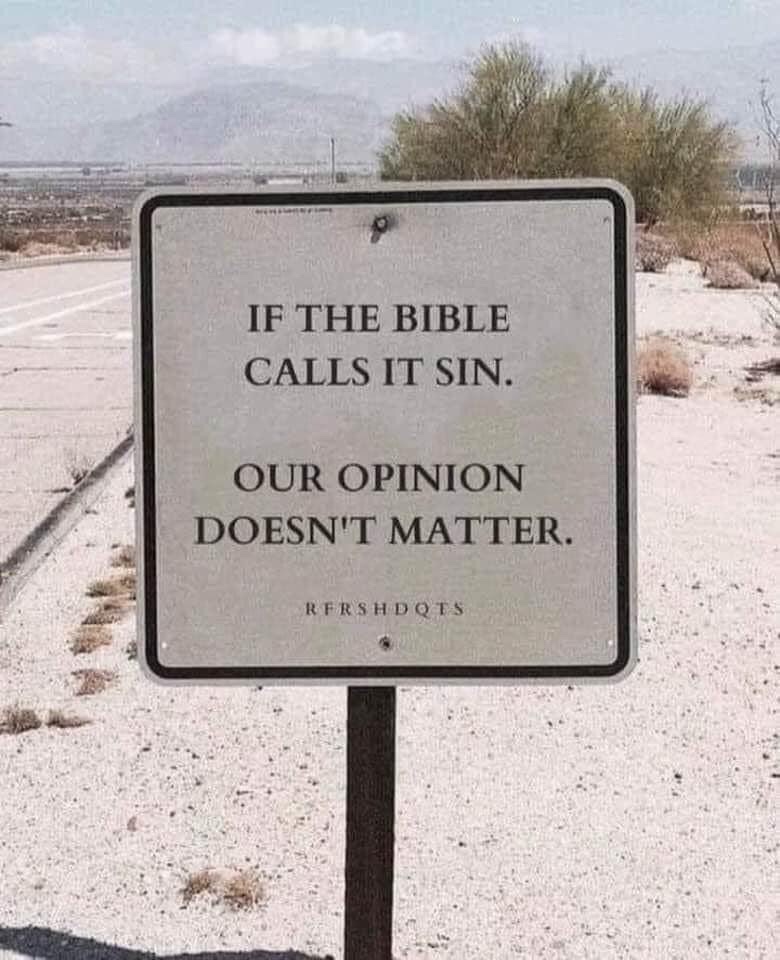
What Does God Want From Me?

Pastor Sherry’s message for January 29, 2023

Scriptures: Micah 6:1-8; Ps 15; 1 Cor 1:18-31; Matt 5:1-12

I heard an interesting, true story this week: A high school student I know—Jake–was called down to the office and told another kid—Sam–had accused him of bringing drugs to school to sell. Now Sam had been caught red-handed with illegal substances. When the school authorities asked where Sam got the drugs, he falsely named Jake. They brought Jake in, told him what he had been accused of, and searched him. Jake defended himself by saying he doesn’t do drugs and he certainly would neither bring them to school nor sell them. Because they had Sam’s story 1st, the authorities seemed reluctant to believe Jake. They frisked him and searched his locker and backpack but found nothing. Finally, they let Jake return to class yet would not tell him the name of the student who had falsely accused him.

The grown-ups must have forgotten that this is a small town. Word got out—as it generally always does–and Jake learned the identity of his accuser. Jake’s parents were furious at Sam—and wanted to address the matter with Sam’s parents straight away–but Jake asked them to let him handle the situation. Jake calmly confronted Sam, asking him why he had lied about him. Sam “stone-walled,” would not answer Jake, and would not give him eye-contact.

I was appalled when I heard this and I wondered if this is indicative of the value system of most teens today. Jake, a Christian, has taken a wise stance: he is now praying for his false-accuser…Praying that Sam would come to know Jesus; and Praying that Sam would regret lying and trying to get an innocent person into trouble. I commend him and would only add my hope that Sam comes to know the 10 Commandments—bearing false witness is #9.

Thinking about this incident over the last few days, I realized Jake’s response is right out of our Micah 6:1-8 lesson, as well as our psalm and Gospel:

The prophet Micah was a contemporary of Isaiah in Judea, and of Amos and Hosea in Samaria, during the 8th century BC. It was a time of great prosperity and wealth in Judah. It was also a time of extensive apostasy. Political corruption was rampant; the rich and powerful felt free to exploit those who were weaker; and many had fallen away from God.

When they did worship Him, their worship was pro-forma, mind-less and rote. Mostly, they just went through the motions. And their moral behavior was despicable. Actually, they were behaving a lot like modern Americans today.

So God appointed Micah as a “whistle-blower” to his time period. His job was to challenge the people on their arrogance, dishonesty, and hypocrisy. He was also tasked with warning them of the judgment to come if they did not turn back to the Lord.

Chapter 6:1-8 forms the climax of Micah’s prophesy: He portrays God as confronting Judah, as though they were adversaries in a court of law.

Listen to Peterson’s paraphrase (The Message) of verses 1-2–Take your stand in court. If you have a complaint, tell the mountains [powerful nations]; make your case to the hills [smaller. Less influential nations]. And now, Mountains, hear God’s case; listen, Jury Earth—For I am bringing charges against My people, I am building a case against Israel. God is telling the world to watch and listen.

But instead of going on the offensive, God asks what He is guilty of that His people have all but abandoned Him. He reminds them of their salvation history with Him:

(1) He has rescued them slavery in Egypt.

(2) He provided them with good leaders like Moses, Aaron and Miriam.

(3) When the king of Moab, Balak, hired the false prophet Balaam to curse them, God protected them by blocking any curses.

(4) He also provided for them when Joshua assumed leadership from Moses (at Shittim), and protected them at Gilgal as they recovered from circumcision. (They had not circumcised anyone on the wilderness march, so all the adult males now needed to take the sign of their covenant with God. Doing so required about 3 days recovery time when they would have been too vulnerable to resist an enemy attack). God had been faithful while they have been faithless.

Then the prophet anticipates the people’s response to God’s indictment: (verses 6-7) —Should we bring an armload of offerings topped off with yearling calves? Would God be impressed with thousands of rams, with buckets and barrels of olive oil? Would He be moved if I sacrificed my firstborn child, my precious baby, to cancel my sin? They are essentially asking, “What do we do to make amends to God?” “Is God mad because we didn’t do enough?” “Should we do more to try to please Him?” But God does not want extravagant offerings from us. As if we can do something for God! A much later generation will ask the same thing of Jesus, and He will answer (John 6:28-29) —This is the work of God [that you can do], that you believe in Him Whom He has sent [faith in Jesus]. All we can do, and the best we can do, is to have faith in our Lord Jesus Christ.

And in verse 8, Micah summarizes the issue: He has shown you, O mortal, what is good. And what does the Lord require of you? To act justly, to love mercy, and to walk humbly with your God. Listen to the way Peterson paraphrases it: But He’s already made it plain how to live, what to do, what GOD is looking for in men and women. It’s quite simple: Do what is fair and just to your neighbor, be compassionate and loyal in your love, and don’t take yourself too seriously—take God seriously.

They are dwelling in darkness, as are many in our country today. . Psalm 15: 2-3 says [Those who please God are] the one whose walk is blameless, who does what is righteous, who speaks the truth from their heart; whose tongue utters no slander, who does not wrong to a neighbor, and casts no slur on others. Sam’s behavior demonstrates he is dwelling in darkness. The folks back then—much like many “religious” folks today–are focusing on external religious practices, while neglecting their internal experience of God. They need to know and relate to God’s heart.

So what does Micah mean in verse 8? This side of the Cross, we know that we must believe in Jesus to be saved. What God wants from us is to demonstrate our faith by living a life that pleases Him:

(1) To act justly means to do what is right and truthful in God’s eyes. Sam lied to get the focus off himself—he threw Jake under the bus. If Sam had acted justly, he would have admitted his own fault and left Jake out of it. To act justly means exhibiting honest practices in business; not cheating on your taxes or your spouse; giving your employer a full day’s work for a full day’s pay (and employers should give their workers the pay they have earned; playing by the rules in sports and cards, etc; in other words, doing the right thing in God’s eyes.

(2) To love mercy means to offer others grace—i.e., treat them better than they deserve. Justice is a great starting point, but it’s not enough. Grace is Jake forgiving Sam for having tried to ruin his reputation and get him into trouble. God has saved us, through Jesus, when we did not deserve it. We offer grace to others because Jesus offered/offers it to us.

(3) To walk humbly with our God means to do God’s will instead of our own. Humility says “God made me and He knows what is best for me. I’m not as smart as He is, so I will submit to Him and follow His will.” Pride, on the other hand, says, “I’m in charge of me and I will do what I want to do.” It puts self ahead of God. In fact, it makes self a god instead of the One Who is God. Prideful people lack a “teachable spirit.” They are unwilling to admit they don’t always know what is best and are therefore unwilling to listen to someone who might be wiser or more experienced.

No wonder God says in Isaiah 66:2–But to this one I will look, to him who is humble and contrite of spirit, and who trembles at My Word.

No wonder Jesus lists humility of spirit as the 1st characteristic to be blessed in the Beatitudes of Matthew. As Peterson phrases it, You’re blessed when you’re at the end of your rope. With less of you there is more of God and His rule.

So what’s God want from me, from us? What defines a life that pleases God? First, we must have faith in His Son, Jesus. Next, we try to live a life that is characterized by the following: Acting honestly and rightly; offering grace to others, even when they don’t appear to deserve it; and being humble with regard to God, remembering to be grateful to Him for all of His blessings, and to be obedient to Him, even when it’s hard. I believe Jake pleased God when he confronted Sam face-to-face, rather than castigating him on social media. This righteous behavior took courage and humility. That young man certainly set an example for Sam, and for us.

May we all remember to act justly, offer grace/mercy to others, and walk humbly with our God! Amen!

©️2023 Rev. Dr. Sherry Adams

Leading Others to Christ

Pastor Sherry’s message for January 15, 2023

Scriptures: Isa 49:1-7; Ps 40:1-11; 1 Cor 1:1-9; Jn 1:29-42

Do you remember who led you to Christ? Perhaps it was a Sunday School Teacher when you were a child? Maybe a godly parent or relative, or even a Christian neighbor, a teacher, or a coach you admired? It might have even been someone you met in the pages of a book—like the Bible or the Chronicles of Narnia? Or someone from TV? A television evangelist someone recommended you watch? Or a series, like the very popular current series, “The Chosen”? If you haven’t tuned into it on a streaming service or YouTube, I would highly recommend that you do. I have long loved Jesus, but I am finding The Chosen’s portrayal of Gospel stories has deepened my faith in Him.

I credit my grandmothers with teaching me about Jesus. They were both church-going, Bible reading women with personal relationships with Jesus. My father’s mother saw to it that I was baptized at age three. Both taught me that Jesus loved me, and saw to it that I attended Sunday School when in their care. In the days before Christian cartoons, movies and internet, I remember those old flannel-board presentations of cut outs of Noah and the animals making their way into the ark, and of David going up against Goliath. My mother’s mother cleaned her church and took me with her as a child, teaching by example the idea of serving God with our hands and our hearts.

Think back to who introduced you to Jesus and be sure to thank them in person, or thank God for them if they have already gone on to Glory.

Our Gospel lesson today (John 1:29-42) describes how John the Baptist (JtB) pointed two of his followers to Jesus. JtB sees Jesus passing by and comments to them (v.36) Look, the Lamb of God! The first is Andrew, the brother of Simon Peter. We don’t know the identity of the second guy—though tradition tells us it was John, the author of this Gospel account. (He is always so modest, never naming himself in his Gospel account, but often calling himself “the disciple Jesus loved.”)

These two come alongside Jesus, Who then asks them, What do you want? He’s not being rude; He just wants to know what is motivating them to connect with Him. Perhaps they are nervous, or feel put on the spot, but they respond, (v.36) Rabbi, where are you staying? I think this is such a curious question. I would have asked about His knowledge and/or His credentials: “Are You indeed the Christ?” “May we ask You some questions?” “May we follow You to find out more?” Instead, it sounds as if they want to know about His accommodations—“Are you staying here Capernaum? “ “At the Holiday Inn or the Hilton Courtyard?” But Jesus isn’t put off and replies, (v. 39) Come and you will see an echo of Psalm 34:8 Taste and see that the Lord is good; blessed is the man who takes refuge in Him. He very simply invites them. He encourages them to Come and…see for themselves, and they do spend the rest of the day with Him.

At some point—maybe that day or the next—Andrew leads Peter to Jesus. Andrew rightly believes that he and John—thanks to JtB—have met the One believed to be Messiah. Andrew then urges his brother, Simon Peter, to come meet Jesus as well. Jesus greets Simon with “a word of knowledge.” Without having previously met Simon, Jesus says his name, and cites his lineage ”You are the son of John” [Simon bar Jonah]. Then He proceeds to change Simon’s name: Cephas is the Aramaic form of rock or stone; Peter is the Greek word for rock. Peter was at that point anything but a rock! Jesus is renaming him not to describe his current state, but to inform who he was to become.

So let’s consider this: JtB, Jesus’ cousin, identifies Christ to Andrew and John. They have JtB’s word for it that Jesus is the Lamb of the God (a title with Messianic implications). They spend time with Him and are convinced He is the Messiah. Andrew brings Peter to Christ (just as John brings his brother James, and his father, Zebedee.) We are each individually introduced to Jesus, very often one-by-one, almost like exposure to a virus (meaning no disrespect).

We can also “catch the fever” by reading Scripture. Some pretty famous Christian authors were nonbelievers prior to reading the Bible: The English professor and subsequent theologian, CS Lewis, was converted by reading Scripture, as were the journalists become Christian writers and apologists, Philip Yancey and Josh McDowell.

Our Old Testament lesson, Isaiah 49:1-7 is the 2nd (of 4) Servant Songs, all prophesies of Jesus. Last week, we read the 1st Servant Song from Isaiah 42, which talked about the character and mission of Jesus. He would be humble, gentle, and compassionate; He would be completely righteous or sinless; And he would be thoroughly dedicated to the task God placed before Him–He would redeem Israel as well as the rest of humankind.

Isaiah 49 speaks again of His task/His ministry of Salvation. God had meant the nation of Israel to be “a light to the Gentiles…,” a good example meant to attract pagan nations to God. But they had focused on themselves and had insulated themselves from other nations, thinking of them as unclean. So the Father would send Jesus Christ to take on the sinfulness of the world (i.e., clean us up). He was God’s plan from the beginning.

In verse 2, the prophet states He [God the Father] made My mouth [Jesus’] like a sharpened sword…. This means that Jesus’ teachings and pronouncements would be truthful and accurate. While His death might look to some like defeat, it would in fact fulfill God’s purposes for Him. The prophet predicts that the Father will be pleased with Jesus’ efforts–and Jesus did effect our salvation! Additionally, this Servant Song predicts, rightly, that Jesus the Messiah will be a light for the Gentiles and will save us all from the penalty for our sins.

Psalm 40:1-11 reiterates the same message. The death of Jesus might look like a catastrophic defeat, but His death and resurrection are in fact a great victory. The Psalmist, King David, through the inspiration of the Holy Spirit, defines Christ’s victory as a New Song, the Song of Redemption. He further asserts that (v.4) Blessed is the man [woman] who makes the Lord his [her] trust. That is what JtB, Andrew, John, and Peter each did. That’s what my grandmothers modeled for me. It’s what we all need to do…fully put our trust in Jesus.

Verse 6 is quoted in Hebrews 10:5 Sacrifice and offerings You did not desire, but a body you prepared for Me; with burnt offerings and sin offerings You were not pleased. In the Old Testament sacrificial system the burnt offering was an atonement for sin. A lamb, bull, goat, or pigeon was killed then burnt whole as an aroma pleasing to the LORD. It was a costly and extravagant offering. No part of it was to be eaten by any human. The life of the animal took the place of the life of the person, in order for the person to gain forgiveness for their sin.

Now, remember, JtB called Jesus the Lamb of God. Way back in Genesis 22:7-8 Abraham is obedient even to the extent of offering his long-awaited son to God, when Isaac asks, Father…the fire and wood are here, but where is the lamb for the burnt offering? Abraham answered, “God Himself will provide the lamb for the burnt offering, my son.” Later on, in Exodus 12 (think back to the 1st Passover) The Israelite slaves in Egypt were to select a 1 year old male lamb without defect. They were to kill it, then sprinkle its blood over their doorways, so when the angel of death swept through Egypt, claiming each first born son, those Israelites who had been obedient were spared. They had been saved by the blood of the lamb. Still later, in Isaiah 53:7 He [the suffering Servant, Jesus] was oppressed and afflicted, yet He did not open His mouth; He was led like a lamb to the slaughter, and as a sheep before her shearers is silent, so He did not open His mouth. This is part of Isaiah’s predictions of how Messiah would die (3rd Servant Song); the prophet refers to Messiah as a lamb. Jesus is the once and for all perfect sacrifice for our sins. His right standing with God is now applied to us.

Our readings today not only demonstrate how we learn about Christ—often one person teaching another—but also how precious is the gift Jesus made of Himself for us. We can and should be grateful to whoever led us to Christ. We can and should, as well, be grateful to Christ for His saving work on our behalf—how incredibly vital this is!

Furthermore, we can and should be about the business of leading others to Christ! Ask the Lord to set before you this week those He desires you to tell about Jesus. Trust in Him to prepare their hearts to hear what you have to say. Trust also in Him to give you the opportunity, the courage, and the words to say.

Thanks be to God who gives us the victory through our Lord Jesus Christ! Alleluia! Alleluia!

©️2023 Rev. Dr. Pastor Sherry Adams

Turn Around!

Pastor Sherry’s message for December 4, 2022

Scriptures: Isa 11:1-10; Ps 72:1-7,18-19; Ro15:4-13; Matt 3:1-12

Someone asked me recently if I preached sermons I find online. I told the person that I do not. I write my own—hopefully with the inspiration of the Holy Spirit–but do locate online illustrations that are relevant to what I hope to convey. In that light, I have borrowed the following story from a Pastor online named Chuck Lawless (Jan 29, 2019):

He recalled that some years back he and his wife lived next door to a little boy named Charlie. One day there was a knock at their door, and Charlie stood there asking if the Pastor could please come out and play. Pastor Chuck figured “Sure, why not? The kid was a nice little guy.”

He discovered that Charlie had just received a new whiffle ball and bat. The child proceeded to tell the pastor, “Here’s what we do, Mr. Chuck. I’ll stand back here,” he said, “you throw the ball, and I’ll hit it.” Chuck threw his first pitch, only to see Charlie swing and miss the ball by several feet. He encouraged the little guy, adjusted his hands on the bat, then threw a 2nd time, only to have the kid miss again. The next pitch was no better – Charlie missed it again.

By now the child was exasperated – at the Pastor! He hefted the ball back to Chuck and yelled out to him, “Mr. Chuck, you’re doin’ it wrong!”

“What do you mean that I’m doing it wrong, Charlie?”

The boy answered: “Mr. Chuck, you’re supposed to be throwing the ball where I’m swinging the bat!”

At the time, he laughed over the boy’s logic…until it occurred to him later that we often treat God the same way. He says, “We’re willing to follow God as long as His plans meet ours, as long as what He demands fits inside our own box – as long as He’s pitching the ball where we’re swinging the bat. That’s not the way it works, however. The Almighty God, the Creator of the world, the Ruler of the universe does not adjust His pitching to where we’re swinging the bat. We’re the ones who must make the adjustments; we follow God and do whatever He demands, even if His plans stretch us.”

Our Advent preparation focus today is on peace; we lit the second or peace candle. Our Gospel lesson describes the work of John the Baptist. So, you might be wondering what does doing things God’s way, or even John the Baptist (JtB), have to do with peace? John, for instance, seems bent on shaking up, maybe even destroying folks’ peace. His message was essentially, Repent! In the original Greek, the word is metanoia. It means to turn, to change, to reverse oneself. It was not a particularly religious word back then. Instead, it was an ordinary, everyday word for turning around (execute a u-turn) and commence immediately to go the other way. But the sense of the word as JtB uses it is not just changing your mind, but totally re-orienting your will. He is saying, If you want true peace, you need to go the direction God is going; If you want true peace, you need to do things the way God wants them.

So, if God’s way is not the way we have been doing things, what are we to do? Here are some possibilities:

1. Consider Giving God a blank check. Don’t put any restrictions or limitations on what you want Him to do. I once counseled a guy who was frustrated about finding a wife. As we processed his dilemma, I discovered he had a whole check list of qualities and characteristics he wanted God to match: pretty, good figure, brunette, green eyes, etc. His list contained all physical attributes—nothing about her character or her personality. Now could God have located a woman who matched his list? Of course. But the Lord had not. Like Charlie, the fellow wanted God to throw the ball where his bat was.

Certainly we can make suggestions to the Lord, but we also need to let God be God. We need to swing our bat where He is pitching the ball.

2. Ask God to show you if there are areas of your life where you are waiting for God to adjust, rather than the other way around. Let’s say God tells you you are too stubborn, too proud, or too rigid? Are you willing to accept His assessment and turn around or turn away from that behavior? Recently a friend told me God had used a pastor to tell him he lacked a heart-to-heart relationship with Jesus. At first this fellow was insulted; but as he thought and prayed about it, he realized the man had been right. He had a head-knowledge of our Lord, but no true relationship with Him. Thankfully, he agreed to change this.

3. Finally—and this is a big one–try hard not to get frustrated with God’s plans for you. I thought God had called me into ordained ministry, after getting my doctorate in Psychology, so that I could do therapy with the clergy. That really never worked out! Instead, here I serving Him and you as a pastor in this church, and happy to do so. I have learned from this that the path to peace is following God’s will. Also, God’s path to peace often involves waiting. Have you ever noticed that many of the Old Testament saints had to wait for years to obtain their promised rewards? I think of waiting as the crucible of the saints. God uses the time to wear off our rough and sharp edges, to mold and shaped our character.

But, to get back to Chuck Lawless’ story, I have had to make adjustments to my swing, instead of expecting God to fulfill my plans—and perhaps you have too.

Let’s turn to our Gospel lesson again–John the Baptist’s words to the Pharisees and Sadducees were straight and true! They had joined the crowds that were coming to JtB, ostensibly to ask to receive the baptism of repentance. So why did John blast them, calling them “you brood of vipers”? He called them out because, as a prophet, he knew they had joined the crowd only out of curiosity. They were not there to humbly ask God’s forgiveness because they realized they needed to change. They did, in fact, need to change their hearts toward God and toward God’s people, but they were clearly unwilling to change.

So he thundered at them, Bear fruit worthy of repentance! What he meant was “Let me see some evidence of a changed direction in your life. You guys seem to believe because you are leaders of God’s Chosen People, you don’t have to examine your consciences, or to consider whether following the rules often means you are missing out on understanding the heart of God. You seem to have overlooked the truth that God is heading in one direction, and you insist you are following Him, even though you are wrong-headedly going the other way.”

If the Kingdom of God is at hand—and if we want the Advent peace God promises–what must we do to get ready? We want to look at the direction God is going, get ourselves turned around, and follow Him. It’s not up to us to debate the quality or direction of God’s pitches. We can insist on our own way and lose out. Or we can surrender our wills to His and join Him.

That’s where we will ultimately find the peace that Isaiah describes in his Chapter 11:6-9 passage this morning:

The wolf will live with the lamb, the leopard will lie down with the kid [young goat], the calf and lion and the yearling [young deer] will eat from the same trough, and a little child will lead them. The cow will feed with the bear, their calves and cubs grow up together, and the lion will eat straw like the ox. The nursing child will crawl over rattlesnake dens, the toddler stick his hand down the hole of a serpent. Neither animal nor human will hurt or kill on My holy mountain, for the whole earth will be full of the knowledge of the Lord as the waters cover the sea.

Oh Lord, may it be so and soon! Amen and Amen!

©️2022 Rev. Dr. Sherry Adams

Why the Wait?

Pastor Sherry’s message for October 30, 2022

Scriptures: Hab 1:1-4; 2:1-4; Ps 119:137-144; 2 Thess 1:1-4,11-12; Lk 19:1-10

Habakkuk is one of the Minor Prophets (a short book at the end of the Old Testament, only 3 chapters long) whose major theme is faith/believing/trusting in God. Habakkuk was a contemporary of Jeremiah and lived from approximately 640-570BC. Instead of writing warnings to sinful Israel to repent, he delivered a series of dialogues between himself and God. In our reading today, he asks God (Chapter1),

1.) Why is there so much violence and injustice?

2.) How come You tolerate wrong-doing, LORD?

3.) Why don’t You do something?!!

Then, in Chapter 2, he asks, Why would you use an unjust nation (Babylonia) to punish us? True, I get that we are sinners who deserve punishment; but why would You use them? They are worse than we are, and they aren’t even believers!

Let’s focus on how God answers Habakkuk, because both the issues the prophet raises–and God’s responses–are very contemporary. To the question of why God permits evil, the LORD says, (v.5) Look at the nations and watch—and be utterly amazed. For I am going to do something in your days that you would not believe, even if you were told. What could that be? In the short run, He is going to allow them to be chastised by/taken to “the Biblical woodshed” by being defeated and captured by the pagan Babylonians. This happened in 587BC. Jerusalem and the Temple were burned; the people who were not killed were chained and led off to Babylon as slaves. However, as the books Ezra and Nehemiah later attest, they were freed to return to the Land after 70 years of captivity. In the long run, however, it is a subtle prediction of the coming of Messiah. Jesus, God Himself coming to earth in human form, is indeed… something in your days that you would not believe. Jesus, Emmanuel—God with us–will be breaking into human history to both demonstrate God’s love for us and to save us from our sins.

To the question of why God uses sinful nations to punish His people—and bear in mind that we Christ-followers are His People, and that we do currently deserve punishment for a multitude of national and personal sins—the prophet says, (2:1) I will stand at my watch and station myself at the ramparts; I will look to see what He [God] will say to me. As a person of great faith, the prophet states essentially, “I don’t understand so I am going to wait on the LORD to make it clear to me.” Notice, he doesn’t say, “This is nuts! I’m just going to do what I need to do to take care of me and mine.” Instead, he waits in faith, trusting in God’s purposes for him and for us.

God does answer him: (2:2-3) …though it linger, wait for it; it will certainly come and will not delay. What’s God mean by this? It is as though the Lord is saying, “Yes I am using a corrupt, immoral nation to discipline My People, but the day will come that I discipline them too.” Nebuchadnezzar was puffed up and arrogant. History reports that Babylon fell in 539 BC, overtaken by the Medes and the Persians. No nation lives outside God’s purview, not then and not now. The Lord truly is sovereign over all things. King Solomon wrote in Ecclesiastes 8:11 When the sentence for a crime is not quickly carried out, the hearts of the people are filled with schemes to do wrong. People wrongly assume that God is not watching, that He doesn’t know what’s going on. When it looks like He is tolerating evil behavior, it’s not an invitation to continue to do wrong. He is instead giving a nation time to come to its senses and repent.

So what is Habakkuk saying to us today? I believe he is making at least four important points:

1. Our God is very aware of all the sinful behavior around us (ours and others’).

2. God’s judgment may not come speedily, but it does come eventually.

3. In the meantime, our Lord is exceedingly patient, not wanting anyone to perish. He gives us all plenty of time and multiple opportunities to come to Him in repentance. And don’t we love and appreciate that about Him!

4. When we don’t understand why God is doing what He is doing, we should follow the example of Habakkuk: Be a watchman or watchwoman, and Trust in the Lord; Pray; and Wait.

Now, let’s turn our focus to today’s Gospel lesson, Luke 19:1-10, a perfect example of why God often chooses to wait.

Jesus is headed toward Jerusalem to be crucified. He enters Jericho, a town 20 miles NE of Jerusalem. Just prior to entering the city, Jesus restores the sight of the blind man, Bartimaeus. Next, He is on the lookout for a notorious sinner, Zacchaeus. Always guided by the Father’s will, Jesus goes looking for this man. This is a divine appointment.

Zacchaeus (ironically his name means pure) is…

1. The Chief Tax Collector for the region— As I explained last week–in reference to the prayers of the Pharisee versus those of the tax collector—tax collectors were despised by their countrymen because they were perceived as Roman collaborators/sell-outs/traitors, as well as thieves. The Mishna, a Jewish commentary on God’s Law, pairs tax collectors with murderers and robbers.

2. He was also very rich because, in a pyramid system, he took a percentage of what every tax collector under his authority pocketed;

3. He was a man who had forsaken his religion in a quest for wealth;

4. Lastly, he was short in stature.

Zacchaeus learns Jesus is coming and wants to see Him (He appears to have a spiritual hunger, like the blind man, Bartimaeus). He runs ahead and climbs a sycamore-fig tree. This tree would have been between 30-40 feet high, with slick bark, and low, broad limbs that ran parallel to the ground. He could have viewed Jesus from that vantage point without being observed—or so he thought! Jesus, of course, knows he is there, stops, and calls to him to come down. Again, this is a divine appointment. Jesus’ mission has always been to reclaim the prodigals (Luke15:11-31—the Parable of the Prodigal Son), and to welcome the humble into God’s kingdom (Luke 18:9-14—the humble. praying tax collector of last week’s Gospel). Notice Jesus says to him, (v.5) Zacchaeus, come down immediately. I must stay at your house today. Now I ask you, what’s with the must? Who can make Jesus do anything? Only God the Father has that kind of influence.

The people murmur….Jesus does not stay at the home of a Pharisee; nor does He appear to visit the most influential persons of the city. Instead he chooses to hang out with the most notorious and despised man there. The crowd considers him outside the possibility of redemption; but thank God Jesus does not write off any who are open to God. There appears to be a time lapse—we don’t know how long they conferred at Zach’s house. But Jesus (and His Father) recognized Zach’s spiritual bankruptcy. Jesus probably talked with Zacchaeus about our need for God and God’s willingness and ability to meet that need.

But whatever was said, Zacchaeus is transformed! He admits he has been robbing the poor and says he will give ½ of his wealth to make amends (compare this with the Rich Young Ruler who could not let go of his money to follow Jesus, Matthew 19:16-24). The Law required giving back what was taken and adding 20%. So a “fine” of 20% was considered generous. Zacchaeus is going to gift the poor with 50% of all he has. He also promises to give back 4 times what he defrauded others. He actually penalizes himself by meeting the standard expected of rustlers: In Exodus 22:1, if a person stole an ox, they had to replace it with 5 cows; if one sheep, 4 sheep were required. Zacchaeus demonstrates his new faith with his works (James 2:18). Jesus affirms his transformation by saying (v.9) Today salvation has come to this house….He also points out that Zacchaeus is a son of Abraham—no matter how bad a sinner; and that Jesus came (v.10) to seek and to save what was lost. (Remember the parables of Luke 15 one lost sheep, a lost coin, and a lost son, all of whom were located).

So why the Wait? Because God may be doing a new thing. So that sinners like Zacchaeus (and us) can be saved. So that we might fall in love with Jesus and desire to please Him. So that we become magnanimous, forgiving, and grace-filled toward Him and others. Thanks be to God Who gives us the victory through our Lord Jesus Christ. Alleluia! Alleluia!

©️2022 Rev. Dr. Sherry Adams

The Watchman’s Challenge

Pastor Sherry’s message for July 17, 2022

Scriptures: Amos 8:1-12; Ps 52; Col 1:15-28; Lk 10:38-42

Last week, I encouraged us to become like “watchmen” on the walls surrounding our country. By this I meant “Prayer Warriors” for the USA. We looked at Amos, chapter 7, and recognized how America—like ancient Israel—is out of alignment with the Lord. Amos’ image, given to him by God, was that of a plumb line. It is a simple device (a string with a weight at the end will do) to help insure a straight vertical line for a wall, or for hanging wallpaper. I’ve seen cabinet installers use laser beams to ensure they set the cabinets in straight; the laser is a new form of plumb line.) The prophet was telling the Northern Kingdom that they were out of plumb with God. Citing a number of examples, we could see where our country, too, is currently out of plumb with God.

This week, in Amos 8:1-12, God gives His prophet the image of ripe fruit. Ripe fruit is fruit taken at its peak. Prior to ripening, it is too sour or too hard to eat. By the same token, you don’t want to let ripe fruit sit around for very long. It gets mushy, brown, or soggy—it spoils; it also attracts fruit flies. God is saying to Israel that “the time is ripe” for them.

Either they change their sinful ways and return to sincere worship of God; or God will no longer spare them. This was God’s final image of warning to them in the book of Amos.

Again, I think this is a very relevant message for us in America today. Like with the Northern Kingdom, many Americans don’t worship the One, True God anymore. And some who do are only going through the motions: God condemned the Israelites for thinking about their businesses while at worship. What do we think about while here in church together? Are we focused on the Lord, or on what we’ll have for lunch after? What we might do later?

The Israelites were infamous at that time for corrupt business practices: Skimping on the quantity—providing less of what was wanted for the same or a larger price; inflating the price; cheating with dishonest scales (and other measures); and buying the poor (with silver or for a pair of sandals.) We tend not to think of ourselves as buying the poor, but what about engaging in sex trafficking, buying the sexual use of someone’s body. And while we no longer have debtors’ prisons, we do have a staggering number of homeless persons who cannot afford to live in today’s economy. It appears as though a surprising number of folks in America don’t realize that God sees all and knows all, and intends to hold them (us) accountable. In vv.7-10, God reminds Israel (and us) The Lord has sworn by the Pride of Jacob: “I will never forget anything they have done.” The Pride of Jacob is a poetic name for the yet to come Jesus (as predicted by Amos around 750 BC). God is swearing by His Son, Jesus, that He will not forget their corrupt deeds (He sees and remembers all evil acts). If the Father makes a vow based on His Son, is there any question that He means to abide by it? No!

I have heard people joke about going to hell: they say they intend to party with all their friends who they think will be there too. YIKES! This is no joking matter! Humans in hell will not be partying! They will be eternally separated from God, as well as from any of their godly friends and relatives. Worse yet, they will experience unending, everlasting torment at the hand of demons who hate God and God’s people. This is not something to aspire to, even glibly.

Amos ends the passage with predictions of what is to come in the end times (the 7 year Great Tribulation): (1) There will be massive earthquakes. (2) Sunlight will be limited to ½ a day. (3) Those who rejoice now will be weeping then, in mourning, wishing they had chosen to follow Jesus while there was yet time. (4) And there will be a famine of hearing God’s Word.

Back then, God sent no more prophets, after Malachi, to declare His word for the 400 years remaining before Jesus’ birth and the appearance of John the Baptist. It appears that even now the Lord has lifted His hand of protection from us, so that we are already experiencing …an increase of evil (as predicted by Jesus in Matthew 24:12).

If this alarms you, be at peace as our remaining Scriptures today are all very encouraging.

A. Our Psalm 52 describes King David’s fearless confidence in God when he was attacked by an arrogant and wicked enemy king. In vv.1-4, he declares there is no reason for evil ones to boast as God will bring them down. John Lawrence, in his book Down to Earth, reports how a city of wicked and sacrilegious people dared God to show Himself:

“On December 25, 1908—Jesus’ Birthday–a newspaper published in Messina, Sicily, printed a parody against God, daring Him to make Himself known by sending an earthquake. Three days later, on December 28, the city and its surrounding district was devastated by a terrible quake that killed 84,000 people.” (Cited in Today in the Word, October, 1997, p. 25). This foolish city went too far. They incurred the wrath of God. We can only hope that God separated out the scoffers and blasphemers for judgment and spared the righteous. At any rate, He clearly remembered their arrogance and their unbelief.

King David goes on to assert (vv.6-7) that the righteous will be ultimately vindicated–which David was, again and again. And those of us who love Jesus will be too. Verses 8-9 conclude with David asserting that he will trust in the Lord—an encouragement for us to do likewise.

B. In Colossians 1:15-28, Paul makes his case for the supremacy of Christ. Why should the believer trust in Jesus? Because Jesus…(1) created all things; (2) is set apart from and is superior to all created things; (3) holds all of creation together (Science has discovered that all human and animal connective tissue has at its heart a substance called lamina. This substance appears in cell bodies in it the shape of a cross. Literally, the Cross of Christ holds our bodies together. (4) He is the head of His body, the Church; and (5) because God had Jesus reconcile all things to the Father. (6) Through Jesus’ death and resurrection, the Father now looks at those of us who love His Son through the eyes of Christ. He forgives us our failings. He offers us grace, love, and mercy.

C. Our Gospel lesson (Luke 10:38-42) records Jesus’ interactions with Mary and Martha. God bless her, Martha is focused on the task of creating a meal for our Lord. Mary, her sister, has abandoned the task to deepen her relationship with Jesus. Jesus reassures Martha that she is not to worry, while affirming Mary’s focus on Him and His teaching. This is a lesson for each of us, too, isn’t it? We don’t want to be invested in doing things for God without spending time investing in our relationship with Him daily.

God’s judgment is coming for America, just as it did for ancient Israel. But we still have time to get right with our Lord: First, we can trust in Him…as a God who protects and defends those who love Him; because of Jesus’ redeeming work on the cross for our sakes; and because He desires a deep relationship with each one of us.

Last week, I encouraged us to stand as watchmen (and watchwomen), praying daily for our country to turn back to God.

This week, I challenge us to pray daily for America. We want to do this because we love the USA. We want to do this because prayer– and the ballot box–are the only means we have for encouraging a national return to Christ. Consider this story from Stuart Strachan, Jr., about Babe Ruth, the great professional baseball player from 1914—1935. For those not familiar with “the Babe,” he hit 714 home runs in his career, and was responsible for bringing another 2, 214 runners in to score. He also contributed to a phenomenal 12 World’s Series wins:

Most of us have heard of Babe Ruth, but have you ever heard of Babe Pinelli? Pinelli was an umpire in Major League Baseball who once called The Great Bambino (Ruth) out on strikes. When the crowd began booing in disapproval of the call, Babe turned to the umpire and said “There’s 40,000 people here who know that the last pitch was a ball.” The coaches and players braced for a swift ejection, but instead, Pinelli responded coolly, “Maybe so, Babe, but mine is the only opinion that counts.”

In life it’s easy to get caught up in the opinions of others, but in the end, it’s not our scoffers or critics by whom we will be judged. The Only Opinion That Matters is God’s.

God may be ready to “lower the boom” on America. Whether His judgment comes tomorrow or 5 or 20 years from now, we should not be afraid. Instead, we are to be faithful until Christ returns. Instead, we need to function as praying watchmen as we wait and watch to see what God does.

©️2022 Rev. Dr. Sherry Adams

God Hates Pride (Proverbs 16:18)

Pastor Sherry’s message for July 3, 2022

Scriptures: 2 Kgs 5:1-19; Ps 30; Galatians 6:1-16; Lk 10:1-20

The following is a true story. I shared this with you some years back, but it’s a good one that I think is worth another hearing:

A Granny-lady from Florida approached her car and was shocked to see two men sitting in it. She pulled her pistol out of her pocket-book, pointed it at them, and said, “I have a gun and I know how to use it! Get out of the car!” They immediately jumped out of the car and ran like mad! Relieved—and somewhat proud—she put her key in the ignition only to find it did not fit. Looking around in frustration, she then saw her own car several spaces away (You know how all silver or white SUV’s look the same!) Later, a booking Sargent at the local police station doubled over, laughing, as the 2 pale men reported a car-jacking by a “crazed, white-haired elderly woman, Caucasian, 5’ tall, wearing glasses, and carrying a large handgun. When questioned, the granny pleaded a “senior moment;” No charges were filed.

This is a funny story, isn’t it? It’s amusing precisely because it’s unexpected. The woman had to admit she was wrong—some find this very hard to do. The men were smart to remove themselves quickly. This is the kind of thing that their family and friends probably teased them about later. The lady was elderly. She was no doubt smaller and frailer than either one of them, but they wisely recognized her power differential. They were not too proud to run.

Our Old Testament and Gospel lessons today both demonstrate our Lord’s view of human pride. Let’s look at them together.

2 Kings 5:1-19 relates the story of Naaman, the Syrian general.

We begin in the year 852 BC. Israel and Syria (Aram) had been at war for most of that decade. At the time of this passage, they are enjoying an uneasy truce. Naaman was the very competent commander of the Syrian armies. He had the respect of his King, Ben Haddad II. He was viewed by those who knew him as an honorable man, an effective leader, and a valiant warrior. But he was also afflicted with leprosy. In Israel, he would have had to have quit the military to live in seclusion. Gentiles, however, did not tend to separate out those with skin diseases in those days. Did he actually have Hansen’s Disease, or what we today call “Leprosy?” Scholars are not sure. He may have had a chronic skin rash, like eczema or psoriasis, or even some sort of allergic reaction, like hives. Whatever the cause, he was dogged by this condition and apparently seemed eager to acquire a healing. He learns from his wife, who has a Hebrew slave girl, that there is a prophet in Israel, Elisha, to whom he could go to ask for his healing. So we have a proud, accomplished, but desperate man going along with the suggestion of a little slave girl.

His King gives him leave to go to Israel. He carries with him a letter saying words to the effect that, Here’s my general who comes in peace.…He also brings along a generous payment: 750# of silver; 150# of gold; and 10 sets of clothing. Relying on the usual diplomatic channels (go to the king 1st), he presents himself to the Joram, the King of Israel. Joram is Ahab’s and Jezebel’s son (he ruled 11 years, from 852-841BC. He was not as evil as his father and mother, but also not a true believer in God. King Joram freaks out when this very successful, powerful enemy warrior shows up! Joram, in his panic, forgets Elisha. He mistakenly believes Naaman expects him to heal him, saying Am I God? He is afraid his inability to effect a healing will become a reason to break off diplomatic relations and will precipitate a renewal of war. He tears his garments not in grief, but in frustration and despair. Elisha hears of the General’s visit (the Northern Kingdom was a small country).

Elisha chides the king (verse 8) Why have you torn your robes? Have the man come to me and he will know there is a prophet in Israel. Joram should have prayed, rather than freaking out! He should have called upon the prophet as God’s spokesperson.

In verse 9, Chariots blazing, Naaman arrives at Elisha’s like a rock star! He has the retinue, the diplomatic power, and the wealth of a famous person. He proudly expects to be treated quickly and effectively. But, God intends to heal him as well as to humble him: (1.) The prophet does not even come to greet him, or to offer the barest of hospitality—water, oil, a kiss of greeting; (2.) He instead sends him a message by a servant (v.10) Go, wash yourself seven times in the Jordan, and your flesh will be restored and you will be cleansed: The grand man feels disrespected! He was used to being accorded what we refer to today as “all due respect.” He was expecting some religious ceremony (verse 11) I thought he would surely come out to me and stand and call on the name of the LORD his God, wave his hand over the spot and cure me of my leprosy. And why should he wash in the piddley, muddy Jordan when there are cleaner, clearer, grander rivers in Damascus? He explodes into a fit of temper!

Notice that once again, a servant intervenes. Trusted underlings urge restraint and obedience: (verse 13) …if the prophet had said do some great thing, would you not have done it? So, in verse 14 he obediently and humbly washes 7 times in the Jordan and is cleansed/healed of his skin disease. Naaman then praises God (verse 15a) Now I know there is no God in all the world except in Israel. The great man has been humbled. He now has some new attitudes and has taken on some new behaviors.

His obedience, not the prophet’s ritual, had led to his healing. He was healed when he put aside his pride, his prejudice (against the Jordan), his preconceived notions (the prophet must perform some sort of ritual); and his pushback against simplicity. He was healed when he decided to trust in what his servants told him about the Hebrew God. He suddenly became so devoted to the God of the Hebrews that he carts back a wagon-load of Israelite soil to Syria. Many ancient peoples believed their gods were territorial, to be powerful only on their own soil. He does not yet know that the Hebrew God is God of all the earth, unlimited by country boundary-lines. And he promises that when he has to attend his king in Baal-worship, he will instead be praying in secret to the One True God. Naaman has been healed, humbled, and converted.

Our Gospel lesson today is from Luke 10:1-20 and it reveals a lesson similar to that of our passage from 2 Kings. 72 disciples are sent out in pairs to preach, teach, heal and deliver folks from demons. Jesus tells them to go where they are received (the way has been prepared); and to depend entirely on God for their provision. They come back rejoicing in their success, even over demons. There is a natural tendency to rejoice in our successes, isn’t there? But Jesus reminds them that they belong to God; that is, they are doing God’s work through the power of His Holy Spirit. We don’t want to get “the big head,” thinking our successes in ministry come from our own efforts.

Jesus then goes on to prophecy the future judgment of 3 Jewish communities: Chorazin, Bethsaida, and Capernaum. Unlike Sodom, Tyre, and Sidon, they have each had the opportunity to see Jesus and witness His teachings, healings, and miracles. Nevertheless, He knows they will have each rejected Him following His death on the Cross. As He says, rejecting Him is the same as rejecting God the Father. This is a case of hanging onto human pride (I know what is best for me.), leads to losing an opportunity for salvation.

Our God hates human pride: We are to put it to death. We are to stomp it out in ourselves. We are to smother or crush it. We are to be humble. Someone has once said, “Pride is the difference between what you are and what you think you are.”

It turns out that Samuel Morse was originally a painter of some renown. He was painting a portrait out of town when his wife became ill. Sadly she died before he’d even learned of her illness. Heartbroken, he set aside his painting and dedicated himself to developing a means of communicating, rapidly, over great distances. He eventually invented both the telegraph and the means to transmit messages on it, Morse Code. Even though he became very famous for these inventions, he remained humble, saying, “I have made a valuable application of electricity not because I was superior to other men but solely because God, who meant it for mankind, must reveal it to someone and He was pleased to reveal it to me.” Morse had the right heart attitude.

Consider the following poem by A. Dudley Dennison, Jr.:

Sometime when you are feeling important,

Sometime when your ego’s way up;

Sometime when you take it for granted

That you are the prize-winning “pup”;

Sometime when you feel that your absence

Would leave an unfillable hole,

Just follow these simple instructions,

And see how it humbles your soul.

Take a bucket and fill it with water,

Put your hand in it up to your wrist.

Now pull it out fast and the hole that remains

Is the measure of how you’ll be missed.

You may splash all you please as you enter,

And stir up the water galore,

But STOP and you’ll find in a minute,

It’s back where it was before.

Borrowed from Chuck Swindoll, The Tale of the Tardy Oxcart, Word Publishing, 1998, p.467).

Let us Pray: Lord, we humbly ask You to help us to give God the glory for whatever we do of merit. We also ask, in Jesus’ name, that You would please save us all from the sin of pride! Amen!

©️2022 Rev. Dr. Sherry Adams

Repent or Perish!

Pastor Sherry’s message for March 20, 2022

Scriptures: Isa 55:1-9; Ps 63:1-8; 1 Cor 10:1-13; Luke 13:1-9

Normally, I like to begin my sermons with a story, or a real life application of our Scripture passages. But on this 3rd Sunday of Lent, I want to review: Remember, our focus has been on using the 40 days of Lent as a time for “spiritual house-cleaning”–a time to consider and confess our sins; a time to renew and strengthen our relationship with God. Two weeks ago, I preached about several ways the Bible suggests we can respond to temptation. Last week, I concentrated on how (and why) we want to pursue full-on access to God.

This week our Scriptures center on two additional but related themes: 1. How we attempt to meet our spiritual hungers; and 2, repenting or perishing.

A. Our Isaiah 55:1-9 passage reiterates the truth that we, ourselves, decide whether or not we will come to God. No one can do this for us. The prophet presents God’s offer of salvation as if He were extending to us free food to eat and no cost water, wine, and milk to drink. The food and drink he refers to are not the physical, material substances themselves, but are metaphors for the spiritual nourishment God has for us. St. Augustine (354-430) taught that there is a God-shaped hole in us (I think it is located somewhere in our chest area) that only God can fill. We work hard in life to fill it with other things (idols), but none of these truly satisfies or fills the hole up.

Given that truth, our God does not want us to pursue these false gods. “Rather,” He says in verse 3🡪Give ear and come to Me; hear Me that your soul may live. False gods—like materialism, money, sex, power, influence, popularity, and intellectualism—are all dead ends. They ultimately leave us feeling disillusioned, empty, and dissatisfied. The American millionaire, Jay Gould (1836-1892, his assets then converted to today’s values= $78.3 billion) said as he lay dying, “I suppose I am the most miserable devil on earth.” Similarly the poet, Lord Byron, had fame creative genius, money, position, and lived a life of pleasure, yet he wrote in his poem, “On my Thirty-Sixth Year,” “The worm, the canker, and the grief are mine alone.” (J. Vernon McGee’s commentary on Isaiah 55, p.130). The day I defended my doctoral dissertation, my committee turned to me and each one shook my hand and said, “Congratulations, Dr. Adams!” I walked out of that experience feeling ecstatic, proud of that achievement. About 2-3 days later, however, I thought to myself, “Now what?” That great feeling of accomplishment did not last. But God offers us, through Jesus, the Holy Spirit, and our Bible reading, food for thought and living water that truly sustains us, more than money, fame, pleasure, or accomplishments.

Isaiah also urges us to be ready for God’s deliverance from captivity in Babylon for the Jews (this was the short term prophesy, as Isaiah wrote this before the Jewish population was carried off into captivity). Before He “lowered the boom” on them (enacted punishment) for their continued idolatry, God was already promising them a return to the land (70 years later, allowing the generation of the idolaters to die off). The prophet also foresaw a coming redemption from sin and death with Jesus’ 1st Advent (this is a mid-range prophesy which unfolded 700-750 years later). Finally, he forecasts judgment for us at Jesus’ 2nd Coming (this is the long term prophesy, which has not yet been fulfilled). This is why he says in verse 6🡪Seek the Lord while He may be found; call on Him while He is near. In God’s mind, our opportunity to choose Him is time-limited (there is an expiration date). We are to remember that we don’t think on the same level or in the same way as He does.

B. David wrote Psalm 63 from the desert, as he was being pursued by the jealous and murderous King Saul. You would therefore think his first plea would be for God to “save his neck” (protect him from his enemy). Instead, his first request of God is for greater intimacy with Him (verses 1-2)🡪…earnestly I seek you; my soul thirsts for You, my body longs for You. He wants to see God (as do we all). He desires full-on access to God. If he can be close to God, he insists that (v.50)🡪My soul will be satisfied as with the richest of foods….(another food/drink image).

He only refers to God’s protection of him by verses 7-8🡪Because You are my help, I sing in the shadow of Your wings. My soul clings to You; Your right hand upholds me. Even then, David does not ask for God’s protection and defense; instead, he regards it as a “given,” already believing that God will take care of him. Oh, if we all only had faith like that!

C. Paul gives us a history lesson in 1 Corinthians 10:1-13. He recounts how the ancient Israelites blew off (dismissed and ignored) God. Verse 1🡪…our forefathers were all under the cloud…they all passed through the sea. He is saying that they were guided by God (His cloud by day, His pillar of fire by night) as they escaped slavery in Egypt. He also miraculously opened the Red Sea for them to cross. God ordained Moses as their leader. So, in a sense they… were baptized into Moses, meaning they identified with him as their leader—just as we identify with Jesus as our leader and submit to His authority in our own baptism. He goes on to recount in verse 3🡪They ate the same spiritual food [the manna] and drank the same spiritual drink; for they drank from the spiritual rock that accompanied them, and that rock was Christ. Remember how Jesus offers the woman at the well (John 4:10) living water, free flowing water that never runs out? This is eternal life. Also recall that He refers to Himself as (John 6:35) the bread of life. He is both our spiritual food and our spiritual drink. In a sense, God gave the Israelites in the wilderness Holy Communion before Jesus would later invent it. They had God’s direction, protection, and provision. Nevertheless, as Peterson puts it (The Message, v.11) But just experiencing God’s wonder and grace didn’t seem to mean much—most of them were defeated by temptation during the hard times in the desert, and God was not pleased.

Paul then goes on to list the ways they rebelled against God:

1.) Some became idolaters (Golden calf) (Exodus 32);

2.) Some committed sexual immorality (during pagan fertility rites)—23,000-24,000 died (Numbers 15:1-9).

3.) Some tested God (regarding food) He sent a wasting disease one time; poisonous snakes another (see Psalm 78:18; 95:9; and 106:14).

4.) Some even complained against God He sent a destroying angel (Numbers 16:41; 21:5-6).

When I was a child, I wrongly assumed that God indiscriminately killed off (smote) a bunch of folks and I felt sorry for them. I have since come to realize that God knows our hearts. He was well aware of who, among the 2 million coming out of Egypt, was guilty of great sin against Him. He singled out only the guilty for punishment, punishment they had been warned would take place. There would have been no cases of mistaken identity or guys punished who were not guilty. Don’t we wish this were so in our court systems today?

Next Paul says (v.11) These things happened to them as examples and were written down as warnings for us, on whom the fulfillment of the ages has come. We can learn vicariously from their experiences. Unfortunately, we are just as capable of messing up as they were and yet, we have Jesus—the fulfillment of the ages. Thank God for Jesus, the fulfillment of over 325 prophesies from the Old Testament! He is our divine rescuer.

Paul concludes that he doesn’t want us to become overly confident, to be naïve, or to think we are exempt from temptations. Instead, he wants us to realize that our Lord never allows us to be tempted without providing us a way out. He is for us, not against us. He will rescue us if we but ask.

D. Jesus is very clear in the Gospel of Luke (13:1-9) that the time for choosing Him is now—Repent or Perish! He lists 2 examples of folks who died untimely deaths. He says their deaths were not due to their sinfulness. His point is that their deaths were unexpected. Since we don’t know the day or time that we will die, we want to get right with God and remain right with God. His fig-tree parable is a metaphor for the nation of Israel. God planted them and provided for them, but they had not gotten themselves right with God. Jesus was implying they still had time. God was/is mighty patient with them/us; but their time was running out, as is ours. For them, time ran out 35 years after Jesus’ ascension into heaven, when the Romans destroyed Jerusalem and dispersed the population

We don’t want to run out of time! We want to turn away from the temptations of the world, the flesh, and the devil and choose God’s free gifts of spiritual food and drink for our souls. This is the only thing that fills up the God-shaped hole in our lives. We want to see God and to be satisfied with intimacy with Him. We don’t want to rebel from God, taking His grace for granted, and sinfully cut ourselves off from Him to perish.

Perhaps you have heard this story: The captain of the ship looked into the dark night and saw faint lights in the distance. Immediately he told his signalman to send a message: “Alter your course 10 degrees south.”

Promptly a return message was received: “Alter your course 10 degrees north.”

The captain was angered; his command had been ignored. So he sent a second message: “Alter your course 10 degrees south—I am the captain!”

Soon another message was received: “Alter your course 10 degrees north—I am a seaman third class.”

Immediately the captain sent a third message, knowing the fear it would evoke: “Alter your course 10 degrees south—I am a battleship!”

Then the reply came: “Alter your course 10 degrees north—I am a lighthouse.”

(As read in Chuck Swindoll’s The Tale of the Tardy Oxcart, Word Publishing, 1998, pp.539-540.)

There is no safety or peace in rebellion from God. I believe we want to repent and to choose life, not perish!

©2022 Rev. Dr. Sherry Adams

Obedience.XYZ

Pastor Sherry’s Message for September 27, 2020.

Scriptures: Matt 21:23-32; Phil 2:1-13; Ex 17:1-7

Norma Dearing, a woman who worked for years in the Christian Healing Ministry in Jacksonville, Florida (with Francis and Judith MacNut), used to use this metaphor when speaking at women’s retreats: Where is Jesus in the car of your life?  She would ask, Is He a hood ornament?  Or abumper sticker?  A decoration for all to see, but conveying no indication of your true commitment to Him.  Or perhaps He is in your trunk, taken along for the ride like luggage, or even bound and gagged, having minimal or no influence on your life at all.  Maybe you drive Him around in the back seat, from which He provides directions that you ignore.  Or, have you placed Him in the passenger seat such thatHe is companionably along for the ride, but with no real control over the direction you take.  Perhaps you have seen those bumper stickers that assert, God is my co-pilot.  Closebut not enough.  Jesus belongs in the driver’s seat of the car of our lives.  If we are obedient to Him, He determines the direction we take and the speed with which we get there.

         Some years back, I decided to use this illustration in a sermon I was giving as a seminarian.  On my way to the church where I was serving an internship–some 30 minutes from my house–I was driving along, practicing my sermon, when I got pulled over.  My 1st response was to fuss with the Lord:   Lord, I am on my way to do Your work…Couldn’t You have hidden me under the radar?  The cop walked up to my window and said, Lady, do you have any idea how fast you were going?  No Sir, I said, I’m afraid I was practicing my sermon and I wasn’t paying attention.  (Honest it was, but not very smart to admit I wasn’t paying attention.)  It turns out I was doing 65 in a 45 zone.  However, he expressed surprise that I, a woman, was on my way to preach (I figure he was probably a Roman Catholic and not used to female clergy).  He took my license and registration, and returned to his patrol car.  I continued to whine to the LORD and to beg for His divine intervention because, as a poor seminarian, I didn’t have the $180-$200 this ticket would cost.  The patrolman returned to my window and said, I’ll tell you what, if you‘ll promise to slow down, I ‘ll let you off this time.  He also asked me to pray for him and his partner.  I was absolutely delighted to comply!  As I continued on my way, more slowly, I was thanking God for His grace and mercy toward me, a sinner.  The Lord then said to me (in my spirit), Sherry, where is Jesus in the car of your life?  I replied, Lord, You know He is in the driver’s seat.  You know I have surrendered my life to Christ!  Sherry, that may be true, but whose foot is on the gas pedal?  I laughed with the Lord all the way to church that day.  I had learned yet another lesson about obedience.  Not just lesson.2 or.10 but .XYZ!

This, I believe, is the Lord’s point in our readings today:

Our Gospel comes from Matthew 21:23-32.  Jesus preaches this parable, in the Temple, on Tuesday before His arrest late Thursday night.  The Chief priests and the elders, the “usual suspects” are there, trying to find a justification to get rid of Him.  Earlier, they had observed Him clear the Temple of the moneychangers (2nd time); heal the blind and the lame; and had heard the peoples’ praise of Him.  These 3 events pointed to His authority as the Messiah, demonstrating Him in the roles of Prophet, Priest, and King.  They know the Scriptures, yet they want Him to state the source of His authority.  They should have been cognizant of the passages predicting Messiah and what He would be like.  They could have recognized Jesus was The One of whom the prophets proclaimed.  But they wouldn’t allow Him in the driver’s seat where He rightfully belonged.  Too concerned with holding their own authority, they were unable to expand their-too small box to include Him.

Our passage picks up with Jesus teaching in the Temple on Tuesday, again two days before His arrest.  He knows His religious enemies will be gathered there like so many vultures.  Nevertheless—and bravely—He teaches three parables on God’s judgment.  These stories are specifically aimed at the religious authorities for having failed as Israel’s spiritual leaders.  Our parable today is the 1st of these.

Jesus sets the parable in a vineyard. Everyone listening knows this symbolizes Israel.  Since grapes were a very important crop in Israel, the vine or the vineyard had become a metaphor for the nation.  The prophet Isaiah talks extensively of God’s disappointment in His disobedient vineyard in Isaiah 5:1-7.  Jesus teaches in JOHN 15:1, I am the true vine and my father is the gardener.  In this judgment parable, however, He introduces a father who commissions his sons to work in his vineyard.  The father figure is God.  He appoints leaders, sons, to work the vineyard, Israel.  Their work is to bring the people into intimate relationship with Him, and to assist Him to usher in His Kingdom on earth.

The first son says No, then apparently reconsiders and is obedient.  As Jesus interprets this, the 1st son represents the tax collectors and the  prostitutes—sinners, the unchurched, pagans—anyone common, ordinary person who has accepted Him as Lord.  They had probably rejected Jesus at first, thinking they didn’t need a Savior, and found themselves caught up in dead-end, sinful lives.  But, hearing Him teach and realizing they do need Jesus, they now have put Him in the driver’s seat.

The second son Jesus describes says, Yes. Lord, I’ll do what You’ve asked, but then doesn’t.  Jesus explains that these are the very ones who are there trying to trip Him up:  the chief priests & the elders. It was their job to guide the people to God and they had failed due to their spiritual blindness. They should have been able to recognize Jesus as the fulfillment of the Messianic prophesies, but they were too worried about hanging onto their power, positions, and influence.  They not only wanted to keep Jesus bound and gagged in the trunk, but they were ready to murder Him and toss His body out onto the roadside.  Jesus knows this and reprimands them for failing to believe in John the Baptist as well as for missing that He is Messiah.  Matthew explains in chapter 21:45-46, When the chief priests and the Pharisees heard Jesus’ parables, they knew He was talking about them.  They looked for a way to arrest Him, but they were afraid of the crowd because the people held that He was a prophet.  

In our Philippians lesson (2:1-13), Paul tells us the way we keep Jesus in the driver’s seat of the car of our lives is to have “the mind of Christ.”  By this he means that Christ was entirely obedient to God the Father.  Jesus humbly gave up His self-will, and all of His heavenly prerogatives, and put God in the driver’s seat.  Jesus’ humble obedience is the best model of this that we have.

We only have to look at our Exodus lesson (17:1-7) to see a repeated example of how not to behave.  Those poor Israelites appear to have forgotten God’s gracious provision for them as soon as they meet a new or different roadblock.  All too like us,they put the Lord in the driver’s seat until they become afraid.  Even so, the Lord always provided for them—this time water from the smitten rock (a prophetic picture of Jesus’ death).  Look at the pattern:  they trust and obey until they come to some new crisis; then they cry, complain, or get angry.  How gracious of God to continually rescue them and to meet their needs, despite their rebellion and lack of trust.

Our lessons today pose the question, which kind of son or daughter are we?  Our Lord calls us to be obedient to Him…are we?  Maybe like the sinners Jesus lists, we said NO at first, buthave come to say YES later in life.  Or perhaps we had never invited Him into the car of our lives, but are happy we have done so now.  Or maybe we trust Him until we hit a bump in the road, then we panic.  Jesus wants to be in the driver’s seat of the car of our lives, hands on the wheel, controlling the speed and the direction we take.  We can trust in Him to get us where we need to go.

We don’t have to whine or complain or rebel…we just need to sit back, relax, and leave the driving to Him.  We can trust and obey, even down to allowing His foot to manage the gas pedal.

©2020 Rev. Dr. Sherry Adams