Forgiveness: A Difficult Command

Pastor Sherry’s message for February 23, 2025

Scriptures: Gen 45:3-15; Ps 37:1-11, 39-40; 1 Cor 15:35-38, 42-50; Lk 6:27-38

Dr. Harry Ironside (1878-1951) was a gifted pastor who first served in the Salvation Army, then became the long term minister, and famous preacher, at the Moody Baptist Church in Chicago.  He told the following story:

On the Lord’s day a group of missionaries and believers in New Guinea were gathered together to observe the Lord’s Supper. After one young man sat down, a missionary recognized that a sudden tremor had passed through the young man’s body that indicated he was under a great nervous strain. Then in a moment all was quiet again. The missionary whispered, “What was it that troubled you?” “Ah,” he said, “But the man who just came in killed and ate the body of my father. And now he has come in to remember the Lord with us. At first I didn’t know whether I could endure it. But it is all right now. He is washed in the same precious blood.” And so together they had Communion. It is a marvelous thing, the work of the Holy Spirit of God. Does the world know anything of this?” 

(Borrowed from http://www.sermons.com, 2/20/25.)

I heard a similar story told by a man involved in Chuck Colson’s Prison Ministry.  He said a young fellow had killed this woman’s son, and was tried and sent to prison for the murder.  Some months later, she felt compelled—perhaps she had read this very Gospel account—to write to him and tell him she forgave him.  That’s extraordinary, isn’t it?  She send him 5 letters, and he returned each one to her unopened.  Finally, he responded to her following her 6th attempt to reach him. He was amazed that she would be willing to forgive him for his crime and wanted to know what compelled her to do so.  She wrote back, telling him about Jesus Christ.  They corresponded for a time and she led him to accept Jesus as his Lord and Savior.  They then decided to lead a Bible study in the prison, together, helping others come to a place of confession and forgiveness.  By several years after this, they had become such good friends that the woman asked to adopt the man who had killed her son.  He agreed.  This is the kind of extraordinary forgiveness that can only be accomplished by those who love Jesus and are inspired by the Holy Spirit.

Demonstrating forgiveness is difficult for any of us.  It’s easy enough to talk about, but very hard to practice.  I have said here before that it often feels like the emotional equivalent of curling your toe-nails backward.  We hope there is an easier way. I remember a Calvin and Hobbes cartoon from some years back in which the 6YO Calvin was telling his stuffed Tiger—who came to life when the two of them were alone—how bad he felt for calling a little girl names and hurting her feelings.  Hobbes was a very wise tiger and so he suggested that Calvin apologize to her.  Calvin thought about it for a moment then said, “I keep hoping there is a less obvious solution.”  Like Calvin, we just don’t want to experience the emotional pain of subduing our pride and admitting our fault.  In other words, we hate to humble ourselves, because forgiveness strikes at our pride.

Two of our passages today deal directly with the difficulty of forgiving another, or even ourselves. 

A. Jesus gives us His take on forgiveness in our Gospel lesson, Luke 6:22-38, , a continuation of His Sermon on the Plain.  Our Lord directs us to (v.27, NLT)—…love your enemies! Do good to those who hate you.  Bless those who curse you. Pray for those who hurt you.  This is really a difficult command, isn’t it?  At the least, would just like to avoid them forever.  But at our worst, we want to avenge ourselves.  The typical human response is to want revenge.  The young man in Dr. Ironside’s story had to forgive the cannibal who killed and ate his father–YIKES!  Forgiveness like this is truly beyond our human abilities.  It requires the supernatural assistance of the Holy Spirit.

Additionally, in verse 29, Jesus commands us to famously “turn the other cheek.”  J. Vernon McGee tells the story of an Irish prize fighter who was converted and became an itinerent pastor. 

“He happened to be in a new town setting up his evangelistic tent when a couple of tough thugs noticed what he was doing. Knowing nothing of his background, they made a few insulting remarks. The Irishman merely turned and looked at them. Pressing his luck, one of the bullies took a swing and struck a glancing blow on one side of the ex-boxer’s face. The former boxer shook it off and said nothing as he stuck out his jaw. The bully took another glancing blow on the other side. At that point the preacher swiftly took off his coat, rolled up his sleeves, and announced, “The Lord gave me no further instructions,” Whop!” 

(As related by J. Vernon McGee in Charles Swindoll’s Tale of a Tardy Oxcart, 1998, p 214.)

Jesus later, in Matthew 18:22, tells Peter the trouble with forgiveness is that we are to forgive the same person not 7 times but 70 X 7—or an unlimited # of times.  He sums it up in today’s passage by charging us to (v.31)—Do to others as you would like them to do to you.  We are not to seek revenge or repay evil with evil.  Instead, we are called to treat everyone– even enemies– with love and mercy. 

Furthermore, He exhorts us just beyond this passage (vv.37-38)—Do not judge, and you will not be judged.  Do not condemn, and you will not be condemned.  Forgive, and you will be forgiven.  Give, and it will be given to you.  A good measure, pressed down, shaken together and running over, will be poured into your lap.  For, with the measure you use, it will be measured to you.

In A Forgiving God in an Unforgiving World, “Ron Lee Davis retells the true story of a priest in the Philippines, a much- loved man of God who carried the burden of a secret sin he had committed many years before. He had repented but still had no peace, no sense of God’s forgiveness.

In his parish was a woman who deeply loved God and who claimed to have visions in which she spoke with Christ and He with her. The priest, however, was skeptical. To test her he said, “The next time you speak with Christ, I want you to ask him what sin your priest committed while he was in seminary.” The woman agreed. A few days later the priest asked, “Well, did Christ visit you in your dreams?”
“Yes, he did,” she replied.
“And did you ask him what sin I committed in seminary?”
“Yes.”
“Well, what did he say?”
“He said, ‘I don’t remember'”


We all need to remember that whatever God forgives, He chooses to forget.  The God who knows everything—He is omniscient—choses to forget our sins when we confess them and ask for His forgiveness.  The poor priest was hanging onto to guilt that God had excused years ago. 

According to Jesus, we are blessed in the measure to which we bless others.  The trouble with un-forgiveness—even of ourselves–is that it blocks our ability to receive the blessings our Lord wants to give us, including healing.  Additionally, when we forgive others, and even ourselves, we experience a deep release of tension we might not even know we were holding in. 

B.  Jesus’ admonitions to forgive, not judge, and not condemn are so beautifully lived out by Old Testament Joseph (Genesis 45:3-15).  Recall that Joseph’s 10 brothers by other mothers had sold him into slavery (at age 17).  They fully expected him to die in Egypt. They then compounded their sin by lying to their father about Joseph’s supposed death, causing Jacob inordinate grief.   Joseph, after 14-15 years of slavery, correctly interprets Pharaoh’s dreams–Remember, 7 years of plentiful crops, followed by 7 years of devastating, region-wide famine. Two years into the famine, his 10 treacherous brothers arrive in Egypt to purchase food.

Unbeknownst to them, their lost brother Joseph has survived—by the design and grace of God—and is now second in command of all of Egypt  They fail to recognize him because he is clean shaven rather than bearded; dressed in Egyptian clothing, wig, and jewelry; 39 years old, 22 years older than when they last saw him; and speaking the Egyptian language while talking to them through an interpreter.

Now, with his brothers gathered around him in all his splendor as Prime Minister of Egypt, he sees/discerns/and reveals God’s purposes in the brothers’ crime against him.  At first, they can’t believe it is their brother.  Then they fear his retribution.  But in a truly Christ-like way, he reassures them, [The Message] (v.5+)—I am Joseph your brother whom you sold into Egypt.  But don’t feel badly, don’t blame yourselves for selling me.  God was behind it.  God sent me here ahead of you to save lives.  There has been a famine in the land now for two years; the famine will continue for five more years—neither plowing nor harvesting.  God sent me on ahead to pave the way and make sure there was a remnant in the land, to save your lives in an amazing act of deliverance.  So you see, it wasn’t you who sent me here but God.  He set me in place as a father to Pharaoh, put me in charge of his personal affairs, and made me ruler of all Egypt.  God uses Joseph to save his Father, his brothers, and his extended family (90 folks), as well  untold numbers of Egyptians and other gentiles in the region. 

Forgiveness, though difficult, is imperative.  Christ requires it of us.  Jesus modeled it for us, forgiving His murders from the Cross.  And He tells us in several places in Scripture that He forgives us to the degree we forgive others.  If we want God to forgive us, we need to be willing to forgive others.  Both OT Joseph and Jesus saw the blessings that flow to us from our forgiveness of others.

Finally, think about this story from the life of Martin Luther (1483-1546):

“In a dream, Martin Luther found himself being attacked by Satan. The devil unrolled a long scroll containing a list of Luther’s sins, and held it before him. On reaching the end of the scroll Luther asked the devil, “Is that all?” “No,” came the reply, and a second scroll was thrust in front of him. Then, after a second came a third. But now the devil had no more. “You’ve forgotten something,” Luther exclaimed triumphantly. “Quickly write on each of them, ‘The blood of Jesus Christ, God’s son, cleanses us from all sins.'”

(Kurt Koch, Occult Bondage and Deliverance, Knegel Publishing, 1972, p. 10.)

Without a doubt, the main blessing is that God forgives us.  He covers our sins with the blood of Jesus Christ and he remembers them no more!  I attended a healing conference at the church of a friend of mine Friday night and Saturday morning.  The speaker said that not all illnesses are caused by forgiveness, but a great many are.  We tend not to think there could be spiritual roots to some diseases, but I have experienced for myself, as well as seen others healed when they made a list of all those they have not yet forgiven and pray forgiveness for them.  It’s a great practice!  Make a list of those you know you resent and need to forgive.  Then forgive them and watch and see what God does.

Thanks be to God Who gives us the victory through our Lord Jesus Christ.  Alleluia!  Alleluia!

©️2025 Rev. Dr. Sherry Adams

Live Like a Tree beside Water

Pastor Sherry’s message for February 16, 2025

Scriptures: Jer 17:5-10; Ps 1; 1 Cor 15:12-20; Lk 6:17-26

For several weeks, I have been preaching about what God wants from us, behavior-wise:  He wants us to love others abundantly and to remain humble.  Today I want to focus on trusting in Him.

Consider this true story:

“There is no situation I can get into that God cannot get me out. Some years ago when I was learning to fly, my instructor told me to put the plane into a steep and extended dive. I was totally unprepared for what was about to happen. After a brief time the engine stalled, and the plane began to plunge out-of-control. It soon became evident that the instructor was not going to help me at all. After a few seconds, which seemed like eternity, my mind began to function again. I quickly corrected the situation.

“Immediately I turned to the instructor and began to vent my fearful frustrations on him. He very calmly said to me, “There is no position you can get this airplane into that I cannot get you out of. If you want to learn to fly, go up there and do it again.” At that moment God seemed to be saying to me, “Remember this. As you serve Me, there is no situation you can get yourself into that I cannot get you out of. If you trust me, you will be all right.”  That lesson has been proven true in my ministry many times over the years.” 

(Pastor James Brown, Evangeline Baptist Church, Wildsville, LA, in Discoveries, Fall, 1991, Vol. 2, No. 4.)

Many of us have learned this over the years, but we need to be reminded of the fact occasionally, don’t we?  We say we trust God with our finances until we discover we owe IRS a bundle with no foreseeable way to pay it.  We say we trust God with our health, until we get the cancer or heart disease diagnosis.  We say we trust God with our relationships until a spouse cheats on us or dies. We seem to trust God as long as He is arranging our lives the way we want them.  It’s when life throws us a curved ball that our faith is stretched and strained. But the wise person trusts in God no matter what comes!

Our Scripture passages today all encourage us to keep trusting in God, no matter the scares we face in life:

A.  The portion of Jeremiah we read today is from chapter 17,verses 5-10. Remember that Jeremiah is the “weeping prophet”, called to pronounce God’s judgment on His disobedient people.  God had warned him ahead of time that no one would listen to him and that no one would heed his words. He was called to a mission of failure–by worldly standards–yet he persevered.

Perhaps he did so because he knew these verses.  God sets out curses and blessings in verses 5-8:  Curses if you put your trust in what human beings say is right; but blessings if you trust in what God says is right.

Jeremiah says those who trust in the Lord are like (v.8, NLT)…trees planted along a riverbank, with roots that reach deep into the water.  Such trees are not bothered by the heat or worried by long months of drought.  Their leaves stay green, and they never stop producing fruit.  What an amazing promise!  Like Jeremiah, we might not experience our blessings this side of heaven, but we can trust in God’s word that if we have been faithful, these blessings are coming.  We want to trust in God, not in news casters, weathermen, climate consultants, economic prognosticators, political analysts, pollsters, etc.  They are only human and can get things wrong.  But God (vv.9-10): search[es] all hearts and examine[s] secret motives.  He knows that the human heart (the Hebrews thought the heart was where we made our decisions, rather than our brains) can be the most deceitful of all things.  We humans can justify to ourselves whatever dishonest or immoral thing we decide to do.  The Lord sees when humans are tripped up by their own dishonorable motives or flawed thinking.  Rev. Dr. J. Vernon McGee puts it this way: “Unfortunately we all have heart trouble …”(Through the Bible Commentary on Jeremiah, Thomas Nelson, 1991, p.81).  In other words, only God sees and knows the Truth all the time.  We need look no further for an example of this than the corruption, fraud, and waste of taxes, recently uncovered by DOGE, and perpetrated by unelected bureaucrats.  These unknown persons dishonorably diverted our tax payer dollars into favorite causes of their own—some even contrary to US interests! Cheating the government is not new. The Israelites at the time of Jeremiah were doing the same or similar things

This passage reminds me of Proverbs 3:5 (NLT): Trust in the Lord with all your heart; do not depend on your own understanding.

B. Given the remarkable coherency of Scripture, Psalm 1 says essentially the same thing:  Joy comes to those who (v.1): do not follow the advice of the wicked or stand around with sinners, or join in with mockers.  These are all folks who proudly assert they are correct.

They don’t trust in God or God’s judgment.  Righteous people, on the other hand—those who love the Lord and try to follow His ways–(v.2):  are like trees planted along a river bank bearing fruit each season. Their leaves never wither and they prosper in all they do.

Again, we are reminded in Proverbs 1:7: Fear [awe, reverence] of the Lord is the foundation of true knowledge; but fools despise wisdom and discipline.  And in Proverbs 3:6: Seek His [God’s] will in all you do, and He will show you which path to take.  Human wisdom is limited but God’s wisdom is eternal and infinite.  We would all do well to consult with the Lord prior to making an important decision.

C. St. Paul is still arguing for the truth of the resurrection in 1 Corinthians 15:12-20.  He is asserting that because over 512 eye witnesses saw and interacted with the Risen Jesus, we can trust that Jesus was raised from the dead.  Reports of this event are trustworthy and true.

Jesus’ resurrection did happen.  If that were not so—and Paul utilizes the word if six times—then none of what we believe as Christians would be worth much.  Since it is true and has been verified, however, it is a truth worth dying for! Over the centuries since Jesus ascended to Heaven, hundreds upon thousands, even millions of Christians have died for this truth.  In 2025, we can stake our lives on its truth as well.

D. Finally, we have Jesus’ words of truth in His Sermon on the Plain, Luke 6:17-26 (Luke’s version of Matthew’s “The Sermon on the Mount”).  Because there were no electronic nor any social media at the time, Jesus had to repeat His primary teachings over and over again to different audiences.  He wanted to be sure folks heard His Words/His Truths.  Though many probably came to be healed or to witness healings, many also wanted to learn from this increasingly famous, itinerant rabbi.  And since there were Gentiles from Tyre and Sidon in this crowd, Jesus focused on sharing His expectations of all of His followers for ethical or righteous living.

He pronounces blessings on those who currently suffer.  He has special compassion on the poor, the hungry, and those who grieve.  They will—at some future time and because they believe in Him—experience total provision, satisfaction, and joy.  And if they experience persecution for Jesus’ sake, they can be (1) greatly reassured, for the prophets were treated the same way; and (2) they can rejoice because they are promised a wonderful reward in heaven.  His message is one of hope: Hold on, because the righteous will be blessed.

But He also pronounces curses or “woes” on those who neither care for God nor for other people.  If they were not generous to others with their wealth, their riches while they were alive will have been their total reward—not to be carried over into the afterlife.  If they are solely focused on the good life now, they will not enjoy their life on the other side.  If they are carried away with mirth, pleasure, and entertainment now, they only will grieve later.  If they enjoy accolades now and do not realize they are accountable to God, they will find themselves on the outside of heaven later on. 

Jesus’ message is clear:  Live your life in such a way now that you clearly demonstrate that you love God as well as your fellow human beings.

So how can we live like a tree planted by water?  Remember our three hurricanes of the past year?  We lost many trees in Suwannee County, Florida, blown over by hurricane-force winds and even some tornadoes spawned by the storms.  Many Water Oaks, whose root systems are shallow, running just undergrown and spreading wide, were felled.  Live Oaks, however, which have roots that grow deep into the ground, remained upright.  Trees planted by water tend to send their roots deep.  Our trust in God is like that—it keeps us anchored, no matter what storms blow around us.

The Bible says over and over again that Fools reject God, but those of us who love Him, trust in Him and His Word.  Consider the following  poem:

Trust Him when dark doubts assail thee,

Trust Him when thy strength is small,

Trust Him when to simply trust Him

Seems the hardest thing of all.

Trust Him, He is ever faithful,

Trust Him, for his will is best,

Trust Him, for the heart of Jesus

Is the only place of rest.

We believe in God.  We remember there is more evidence for the truth of Christ’s Resurrection than there is for the existence of Julius Caesar. 

(Josh McDowell, More than a Carpenter, Tyndale House, 1977, pp.96-97)

Jesus expects us to demonstrate our love for God and our love for others in the way we live.  Let us live a life that shows us firmly planted and well watered.  Let us live a life that reflects well on God and on other Christians. Amen!

©️2025 Rev. Dr. Sherry Adams 

Profiles of Humility

Pastor Sherry’s message for February 9, 2025

Scriptures: Isa 6:1-13; Ps 138; 1 Cor 15:1-11; Lk 5:1-13

Remember Muhammed Ali?  The famous boxer who used to humbly claim, “I am the greatest!”?  Well, the story is told that he was seated on a plane getting ready to take off, and the flight attendant noted he wasn’t using his seatbelt.  She politely asked him to fasten it.  He replied, ”I’m Superman and Superman don’t need no seatbelt.”  To which she responded, ”Superman don’t need no airplane either, so please fasten your seatbelt.”   

 (Steve Jones, “God’s Spiritual Stimulus Plan—Humility, www.sermomcentral.com, 2/6/25.)  

By the way, a parishioner of mine told me (following this sermon) that her father was a city bus driver in Louisville, Kentucky, for years, and that Muhammed Ali (aka, Cassius Clay) rode his bus daily as a child going to school.  Her father said the great boxer had always had a tendency to brag about himself.

 A second story regarding humility involves Benjamin Franklin:  Apparently he once… “made a list of character qualities that he wanted to develop in his own life. When he mastered one virtue, he went on to the next. He did pretty well, he said, until he got to humility.  Every time he thought he was making significant progress, he would be so pleased with himself that he became proud.”

(“Illustrations on Humility,” the Disciplers Blog, 2/7/2025.)

It’s hard to be humble, isn’t it?  But our Scripture passages today provide us with some pretty strong reminders that the virtue of humility pleases God.

A.  Let’s look first at the prophet Isaiah (Isaiah 6:1-13).  This story recaps his call, by the Lord, to become a prophet.  The context for Isaiah is the death of the good king, Uzziah.  Uzziah had ruled the Southern Kingdom (Judea and Jerusalem) for 52 years, from 791-740 BC.  He subdued Israel’s traditional enemies, the Philistines (ancestors of today’s Palestinians), the Arabs, and the Ammonites.  And, as long as Uzziah sought God and did not get too proud, he led the country into a period of peace and prosperity.  When Uzziah died, however, Isaiah was grieved and worried for the future of Judea.  Fortunately, Isaiah took his worry to the Temple, where he placed it on God’s altar through prayer.  No doubt he was lamenting. “Lord, what shall we do? What will happen to us all now?”  

The Lord responds to him with a vision and a calling.  The vision is of God on His throne.  The Lord is so immense that the train of His garment fills the Temple.  God wants to reassure Isaiah that all is well:  Isaiah’s earthly King is dead, but his heavenly King is alive and well and sovereign over all things.

Isaiah also sees 6 seraphim—in the Hebrew, the name means to burn—flying about the Throne.  While the job of the cherubim is to protect the holiness of God, the job of the seraphim is to seek out sin and destroy it.

(J. Vernon McGee, Through the Bible Commentary on Isaiah, Thomas Nelson, 1991, p.68.)

This is important because Isaiah immediately becomes aware that he is a sinful man who has seen God himself.  He knows from Moses’ dialogue with God in Exodus 33:20, that—No one may see Me and live.  No sinful being may exist in the physical presence of the Living God.  So he cries out (verse 5, NLT)—It’s all over!  I am doomed, for I am a sinful man.  I have filthy lips and I live among a people with filthy lips.  Yet I have seen the King, the Lord of Heaven’s Armies.  Isaiah is honest—he admits and takes responsibility for his sinfulness.  He doesn’t blame his environment, his parents, or any sinful associates.  He humbles himself before God.

God then directs a seraph to cleanse Isaiah’s lips with a burning coal from the altar where sacrifices for sins are carried out.  Prior to Jesus’ once- and-for-all-perfect sacrifice of Himself, an animal was chosen to be offered in one’s place.  The sinner consigned his/her sins to the animal’s head, the priest slit the animal’s throat, drained its blood, and placed its body on the sacrificial altar to be burned.  The life blood of the animal paid for the sin of the human.  The burning or live coal the seraph brought to Isaiah came from the altar at which such atonement for sin was made.  McGee goes on to assert that this act foreshadowed the coming cleansing we would all experience through the shedding of Jesus’ blood (Ibid., p.71).  Remember the words of the old hymn, “What can wash away my sins? Nothing but the blood of Jesus.”  Instead of hurting Isaiah, Christ’s future (to him) finished work on the Cross cleansed and healed him.

Then the Lord calls Isaiah to a frustrating work in which he will convey God’s words to a people group who will neither listen to nor receive what the Prophet has to say.  Again, Isaiah humbly agrees to answer the call–Here I am; send me–even though it is to a mission that will feel very frustrating.

B.  In Psalm 138, King David offers thanksgiving to the Lord for His love and protection.  He says in v. 1—I will sing your praises before the gods.  By gods, David was referring to the false gods of Israel’s neighbors, Egyptian, Philistine, and Canaanite gods.  For us, today, the meaning is anything we put ahead of God in our lives (McGee, p.156 of his commentary on the Psalms).  This could be money, power, status, influence, certain relationships with people, and addictions.

In verse 2, he goes on to praise God for His love and His trustworthiness.  In verse 6, he insists—Though the Lord is great, He cares for the humble, but He keeps His distance from the proud.

There it is, the theme of humility and how it pleases God.  Later, James, the half-brother of Christ, will write (James 4:6)—God opposes the proud but gives grace to the humble.  Similarly Peter will state (1 Peter 5:6)—So humble yourselves under the mighty power of God, and at the right time He will lift you up in honor. 

C.  St. Paul, in his 15th chapter of 1 Corinthians (verses 1-11), refutes the first heresy to arise in the infant Christian Church: That there was no resurrection.  He carefully enumerates all the folks who saw and interacted with the risen Jesus.  There were more than 512 eye-witnesses.  Then he, himself, saw Jesus on the road to Damascus.

Next, he humbly recounts (vv.8-10, NLT)—Last of all, as though I had been born at the wrong time, I also saw Him.  For I am the least of all the apostles.  In fact, I’m not even worthy to be called an apostle after the way I persecuted the Church.  But whatever I am now, it is because God poured out His special favor on me….

Some say Paul, the apostle to the Gentiles, was the greatest of all the apostles; but here he humbly reminds us that if he is so, it is only due to the grace and forgiveness of Christ.

D.  Finally, we have the example of Peter (also of James, John, and Andrew, Peter’s brother) in Matthew 5:1-11.  Jesus uses Peter’s (and Andrew’s) boat to address the crowd of His followers.  The fishermen are cleaning their nets, but they are also listening to Jesus.  He dismisses the crowd and urges Peter to pull away from the shore and launch his nets again.  It’s daylight and they have already fished all night with no results.

They are tired, and Peter seems crabby.  He knows from experience that the fish they sought tend to swarm only at night.  He must wonder, “What’s the point of going back out now that it’s daylight?”

But Peter does as Jesus says and is amazed to haul in a gigantic haul of fish!  They bring in enough to tear their handmade nets.  They land enough to nearly sink Peter’s boat and that of the Zebedee brothers, James and John.  Peter recognizes both the miracle of the catch and that Jesus has the surprising power to accomplish miracles.  Like Isaiah before him, he immediately becomes aware of his sinfulness.  He humbles himself.  He feels so unworthy, he even asks the Lord to leave him.  But Jesus instead invites him—all 4 fishing partners, in fact–to become “fishers of men/people.”

Peter humbles himself and Jesus makes him a disciple—an apostle.

The Prophet Micah (6:8) has asserted that the way we please God is…”to do what is right, to love mercy, and to walk humbly with your God.”   Ali lacked humility, Franklin–like us–struggled to attain it, but Isaiah, King David, Paul, and Jesus’ Apostles all demonstrated it.  It is a virtue we can develop.  It is something we can intentionally cultivate and attain.

How do we do it?  King David was right:  (1) Put God first in our lives.  We decide to try to please Him.  (2) Then we recall James 1:17 (NLT)—Whatever is good and perfect is a gift coming down to us from God our Father, Who created all the light in the heavens.  He never changes or casts a shifting shadow [meaning He is not mercurial but is the same yesterday, today, and forever].  Whatever we do that might make us proud is actually something God prompted in us, inspired, or helped us to do.  Then, we must willingly give Him the praise for every good thing we accomplish and every good thing we experience.   Thanks be to God Who gives us the victory through our Lord Jesus Christ.  Alleluia, Alleluia!

©️2025 Rev. Dr. Pastor Sherry Adams

All you need is Love

Pastor Sherry’s message for February 2, 2025

Scriptures: Isa 62:1-5; Ps 36:5-10; 1 Cor 13:1-13; Jn 8:1-11

A few weeks ago, I told you I had gone to college with Bob Dylan (not physically, but his music saturated my college experience).  In a similar way, I could say I went to high school with the Beatles.  Their lyrics were simpler than Dylan’s (e.g., She loves me, yeah, yeah, yeah…)—and sometimes didn’t even make sense–but their melodies were catchy.  A good example is their song, written by Paul McCartney and John Lennon, called, “All you need is love.”  The verses are somewhat nonsensical, but the chorus has stuck with me for years:

“All you need is love;

All you need is love;

All you need is love, love, love is all you need.”

You can see where this chorus could get into your mind and replay itself for so long that it drives you nuts!

Now we know that God is love.  He loves us with a steadfast, loyal love.  And He wants us to try to love others, even when they don’t appear to us to be very lovable.  Think about the fellow who cuts you off in traffic, or the woman who is loudly cussing out her kids in Walmart, or the person who confronts you in anger and with shouting and intimidation. In these cases, we need more than the intention to love others.  We need the empowerment of the Holy Spirit to love the irritating, the irritable, the grumpy, and the disagreeable.  We need love and a supernatural boost to exhibit it.

All of our Scripture lessons today focus on God’s ideas of love.

A.  Let’s begin with our New Testament lesson from 1 Corinthians 13:1-13.  St. Paul has just taught us about spiritual gifts in the 12th chapter.  He names a few and says we are all given at least one in order to contribute to the Church, the Body of Christ.  He even says we can ask for more.  But, in chapter 13, he insists that no spiritual gift is more important than love.  If we, for instance, have a gift of prophesy or of healing others, but are not exercising these out of love, then these gifts have no value in God’s eyes.  Someone has said, “Even the most impressive sacrificial gifts mean nothing if not motivated by love.”  (www.bibleproject.com, 1/28/2025)

St. Paul also wants us to know that to the Christian, love is not self-centered.  It is not self-focused.  It’s not a “quid pro quo” I do what you need or want for you so that you will do what I need or want for me.  That’s a transaction, not a gift.  That kind of love is motivated by my self-interest.

That’s also where a lot of married people get love wrong, feeling they are owed certain behaviors by their partners in order to love them back.  Instead, Christian love is the “willingness to give up one’s own desires for the good of others.”

(www.bibleproject.com, 1/28/2025)

It is a way we serve or bless others.  It is exactly what Jesus does, over and over in the Gospels.

B.  Let’s look at John 8:1-11, the story of the woman caught in adultery.  Jesus is teaching in the Temple and is rudely interrupted by some religious leaders.  They don’t have a theological issue for Him, like healing on the Sabbath or which commandment is the most important.  Instead, they have set a trap for Him and, because as God He is omniscient, He knows it.  Rather than taking Him aside privately, they throw a woman they’ve caught in the act of adultery onto the ground before Jesus and the crowd, and demand to know what He believes should happen to her.  The woman is clearly guilty. 

But where’s her partner?  No one commits adultery all by her or himself.  These hypocrites don’t care about the male partner or about justice.  Rather, they are hoping to make a public scene in which Jesus will violate either the Torah or Roman Law.  It’s a lot like current congressional hearings where the representatives or senators pose questions that can only be answered by “yes” or “no.”  The trap is this:  If Jesus says, “You are right, stone her,” they can run to the Romans to accuse Him (only the Romans could authorize the death penalty).  But, If He urges mercy for her, they can claim He violates Jewish Law.  

What’s interesting is that in trying to trap Jesus, they have themselves violated the spirit of the Law:  Leviticus 20:10 reads If a man commits adultery with another man’s wife—the wife of a neighbor—the adulterer and the adulteress must be put to death.  The same sense is replicated in Deuteronomy 22:22 If a man is found sleeping with another man’s wife, both the man who slept with her and the woman must die.  You must purge the evil from Israel.   Notice, the means of death is not specified in either passage—there is no mention of stoning.  And also notice the Law is aimed at the male and they have not bothered to drag him in.

Finally, notice Jesus doesn’t say a word —THEY CAN’T TRAP HIM IF HE DOESN’T SPEAK!  Jesus is so brilliant as He outsmarts them and their plot.

Instead, He begins to write in the dirt with His finger.  What could He have been writing? Isn’t it a shame that we have no record or the only thing Jesus Christ ever wrote?  I think He looked at them one-by-one and wrote their name next to a big, secret sin, and perhaps the name of the person they had sinned with.  This makes sense because, after having apparently listed their major sins, He then states, (v.7) —IF any of you is without sin, let him be the first to throw a stone at her.  The only sinless person there is Jesus.  One-by-one, they leave, in age order (maybe the older ones had accumulated more sins?  Or maybe they were just willing to admit to them?)

So then Jesus turns His attention to the woman:  Woman, where are they?  Has no one condemned you?  She respectfully replies, No one, Sir.  And Jesus responds, Then neither do I condemn you.  Go now and leave your life of sin (sin no more).  The only one who could have legitimately judged her did not.  Instead, Jesus recognizes her sin, but also offers her grace—unmerited, or unearned favor–and forgiveness.  This is a powerful example of love in action.

C.  Our Old Testament lesson and our Psalm provide two more examples of how the Lord views love:

Psalm 36 (verses 5-10) was written by King David.  In it, he describes how he has experienced our God:  To David, God is merciful and faithful; God is righteous and always delivers right judgments; and God is trustworthy and relates to us through His loving kindness.

In verse 7, he writes —All humanity finds shelter in the shadow of Your wings.  David references God’s assertion in Exodus 19:4 —You have seen what I did to the Egyptians.  You know how I carried you on eagles’ wings and brought you to Myself.  David is teaching us that–for those of us who love God—the Lord offers protection, security, rest, and love.

In Isaiah 62:1-5, the Messiah is speaking to Jerusalem from the standpoint of His 2nd Coming.  Jesus will be ambitious for Jerusalem —He will give her a new name.  She will no longer be called The Forsaken City or The Desolate Land.  Rather, her new names will be Hephzibah (The City of God’s delight) and Beulah (the Bride of God).

Since, at Jesus’ 2nd Coming, the Jews of Jerusalem will have come to realize that Jesus is their Messiah, she too—along with the Christian Church—will be the bride of Christ.  The Lord’s love for Jerusalem will be returned to Him, and He will rejoice over her!

The Beatles would have us believe that all we need is love.  But we know that human love—while wonderful—is not enough to nurture and maintain relationships and life.   We need to experience God’s love in our lives.  We need to act out God’s version of love.  We need a boost from the Holy Spirit to love others, especially the seemingly unlovely ones.  And we need to love generously, without expecting something in return.

©️2025 Rev. Dr. Sherry Adams 

Despite Rejection

Pastor Sherry’s message for January 26, 2025

Scriptures: Jer 1:4-10; Ps 71:1-6; 1 Cor 12:12-31a; Lk 4:14-30

Did you know that Abraham Lincoln…

“…was defeated seven times for elective office before winning the Presidency of the United States. He certainly defied the odds. And he did not give up.

“Then there was Vincent van Gogh. Van Gogh earned all of $85 from his paintings during his lifetime. One hundred years after his death, just one painting alone, Dr. Bachet, sold for the incredible sum of $82.5 million.

“Then there was this itinerant, middle eastern preacher who lived some 2,000 years ago — his ideas were definitely rejected by the people of his hometown, as well as the religious leaders of his time and country. Yet he continued his ministry as he understood it to be — Divine Defiance?

“The point is clear. If Abraham Lincoln, Vincent van Gogh, or Jesus of Nazareth had let rejection rule their lives, and let it keep them from doing and saying what they felt sure to be right — our world would be incredibly impoverished today.”

(Dianne O’Connell, “Divine Defiance,” www.esermons.com, 1/20/2025)

Consider how often these three must have felt discouraged, frustrated, or ready to give up?: Yet, what great examples to us of the importance of persevering in the face of repeated rejection.

Two of our Scripture passages today illustrate this theme of persevering despite rejection:

A.: Our Old Testament lesson is from Jeremiah 1:4-10, and recounts the divine call to Jeremiah to become the Lord’s prophet.

Jeremiah was probably between 17-20 years old when this takes place.  He was already serving God as a priest in his home town of Anathoth, located just North of Jerusalem. King Josiah was about 22 then, in 626BC, and reigned until he died at age 39.: He and Jeremiah were contemporaries, and likely became friends. Jeremiah served all during the remainder of Josiah’s reign, and continuing also during the reigns of kings Jehoahaz and Jehoiakim (sons of Josiah), Jehoiachin (Josiah’s grandson), and Zedekiah (a third son of Josiah).

Josiah, a good and godly king, had led his people in a revival to turn their hearts back to God; but his sons and grandsons were another story.

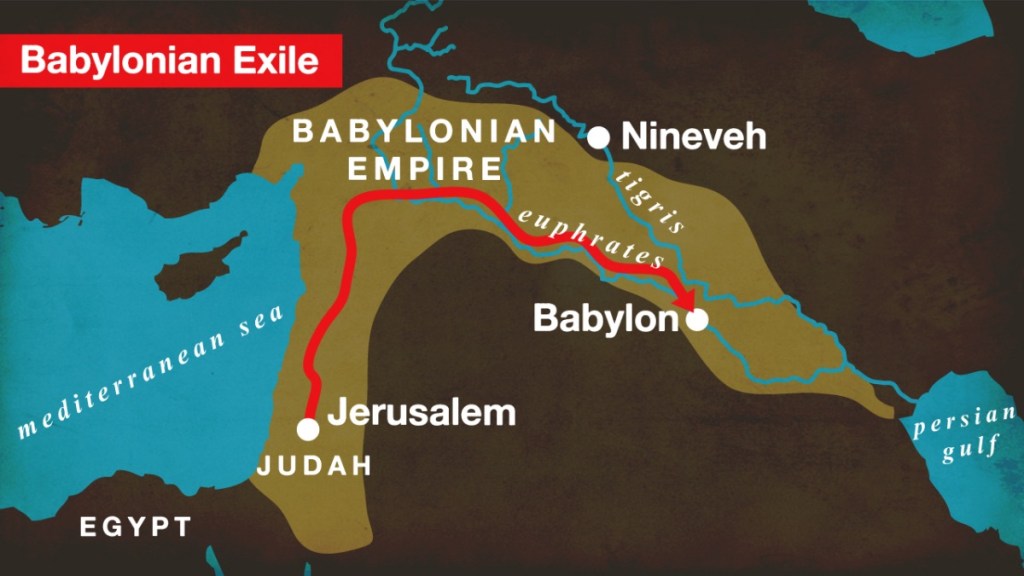
Because of their idolatry and wicked behavior, God allowed the last to be defeated and carried off into slavery by King Nebuchadnezzar of Babylon.

Notice how God calls Jeremiah into His service: verse 5: Before I formed you in the womb, I knew you, before you were born I set you apart.: This is amazing and also a bit intimidating, isn’t it?: It implies that God knows us before we are even conceived, and that He has a plan for our lives—He has given us life for a purpose.: The Lord tells Jeremiah He had determined–even before the young man’s birth–that he would become a prophet and deliver to His people whatever God told him to say.: Jeremiah is a humble young man who replies to God, (v.6): I am only a child, meaning, Yes, I will do it, but I am young and lack much life experience.

In other words, I wouldn’t know what to say!: God’s response must have been very reassuring (v.7): Do not say,’ I am only a child.’: You must go to everyone I send you to and say whatever I command you. Do not be afraid of them, for I am with you and will rescue you.: The Lord assures him He will tell Jeremiah what to say; and He promises to take care of him, even though He was calling him to prophesy divine judgment on Judah and her heretical kings.

If we skip ahead 40 years to the end of Jeremiah’s life and career, we would find that he apparently never made a single convert; after King Josiah, the people ignored or ridiculed his preaching entirely.: He was rejected by his people because of his message, hated, beaten, put in stocks, imprisoned, and charged with being a traitor. He was later called “the prophet of the broken heart” because God’s judgments on his people—and their rejection of God–were so distressing to him.: Actually his emotional response to his rejection mirrored God’s own saddness.: Once, King Jehoiakim cut his hand-written, prophetic scrolls up.: He destroyed them by throwing them into the fire (but God just retold the contents to Jeremiah so he could write them again).

I don’t know about you, but though I would have been proud to speak the Lord’s words to His people, I would also have been exceedingly distressed to have had been so unsuccessful in changing peoples’ behavior.: Jeremiah may have been just as distressed, but he persisted!: He may have been disappointed, but he kept on giving out God’s messages.: He may have been discouraged, but he never gave up!: I think that he stands as an excellent example to us:: He trusted in God’s promise to him and he persevered despite what he probably considered his limited impact.

And, as Paul writes in 2 Timothy 4:7: I have fought the good fight. I have finished the race. I have kept the faith.: Now there is in store for me the crown of righteousness which the Lord, the righteous judge, will award to me on that day—and not only to me, but also to all who have longed for his appearing.: Those lousy kings after Josiah are no longer remembered by anyone, but Jeremiah’s two books of the Bible (Jeremiah and Lamentations) remain available today, 2700 years later!

With what in your life are you struggling today?: With a relative, a co-worker, or an unfair boss?: With an illness or a chronic condition?: With a lack of money or a lack of peace? Jeremiah’s obedience to God, and his perseverance in the face of repeated rejection, inspire and encourage us 

(1) to put one foot after the other, continuing to try to do good where we can; and (2) not to give Satan the victory by caving in to dejection and perceived defeat. 

B.: The same is true of Jesus (as per our Gospel lesson, Luke 4:14-30).: Jesus reads His job description from Isaiah 61:1, and tells His friends and neighbors in Nazareth that they are witnessing the fulfillment of Isaiah’s prophesy in Him.: At first, they were impressed with His knowledge and wisdom–until someone spoke up who reminded everyone that Jesus was the carpenter’s son.: This person had placed Jesus in a box and would not consider that He might in fact have become “more than a carpenter.”

His former neighbors were eager to see Him work some miracles, but they were unwilling to alter their perceptions of Him.: John Mark tells us in Mark 6:5: He could not do any miracles there, except lay His hands on a few sick people and heal them…due to their lack of faith.

Jesus really gets them riled up when He reminds them (v.24): I tell you the truth…no prophet is accepted in his hometown.: Then He further incenses them when He gives them two examples of “outsiders,” Gentiles whom God had provided for, rather than bless Israelites.: There were many widows in need in Israel during the famine and drought of Elijah’s day, but God sent the prophet to minister to a Phoenician woman.: He provided her with a continuous supply of food, and even resurrected her son when he died.: There were lots of Israelite lepers, but God chose to heal the Syrian general, Naaman.: In other words, Jesus is warning them that God will not bless them if they do not believe in His Son.

By this point, they are so enraged that they attempt to kill Him by tossing Him off a cliff.: The fact that He could just disappear from an angry mob should have stretched the box in which they had confined Him.: Surely Jesus was disappointed with their rejection of Him.: He was obviously willing to heal many, but their contempt and anger, their lack of faith, limited what His heavenly Father would allow Him to do there.: Just as with Jeremiah, His own did not believe Him.: So, He moves His base of operations to Capernaum.

I think what is most instructive for us is that is the example Jesus gives us in the face of rejection:: (1) Respond honestly, if given the opportunity.: He was admitting to them that He was the Messiah by saying He fulfills the Isaiah 61:1 passage.: He did not deny the truth even thught hearing it incited them to violence against them.: Don’t deny the truth as you know it, but also (2) don’t reply with anger, name-calling, or physical intimidation.: Years ago, I worked for a woman pediatrician in Tallahassee who gathered several social workers into her practice.: She worked with kids whose conditions did not resolve through the usual medical interventions, so instead, she involved the kids in counseling. I was there to supervise several interns she had working toward licensure, and I counseled some of the parents.: The longer I was there, the more it became evident to me that one of the women I was supervising (though she was married to a man) was having a lesbian affair with the doc.: The woman was good with the kids she counseled, but she viewed their parents as the enemy.: I repeatedly told her she needed to align sufficiently with the parents to change the social and psychological environment they created for their children. She resisted this vehemently.: I told her I could not then recommend her for licensure.: Our boss—and her lover—then demanded I do so despite my reservations.: I had to resign and leave that practice. As my Christian therapist friends helped me move my office, I walked out the door and “shook the dust off my sandals.” (3) Like Jesus, I remained calm, and moved on. The Lord provided me another location to do what He had gifted me to do…and He will do the same for you.

We cannot allow rejection to rule our lives.: We will not win over everyone we encounter.: Let’s remember how Lincoln, Van Gogh, Jeremiah–and even President Trump, whether you like him or not—as well as Jesus, all persevered despite being repeatedly rejected.

In Galatians 6:9, St. Paul encourages us (NLT): So: let’s not get tired of doing what is good.: At just the right time we will reap a harvest of blessing if we don’t give up.:  We are not meant to just, “Be calm and carry on,” but to continue to do our best to please God and to trust in Him.

Thanks be to God Who gives us the victory through our Lord, Jesus Christ.: Alleluia!: Alleluia!

©️2025 Rev. Dr. Sherry Adams  

Invite Jesus!

Pastor Sherry’s message for January 19, 2025

Scriptures: Neh 8:1-10; Ps 19; 1 Cor 12:1-11; Jn 2:1-11

Remember the old TV show, “The Tonight Show” with comedian Johnny Carson?  He was hilarious, wasn’t he?  You can probably recall some particularly funny episodes (You can locate reruns on www.YouTube.com).

One night he featured an interview with an 8 year old hero.  The child had rescued two friends who had gotten trapped in a West Virginia coal mine.

As Johnny continued to talk with the boy, it became obvious that the child was a Christian.

So Johnny asked him if he attended Sunday school. When the boy said he did Johnny inquired, “What are you learning in Sunday school?” “Last week,” came his reply, “our lesson was about when Jesus went to a wedding and turned water into wine.” The audience roared, but Johnny tried to keep a straight face. Then he said, “And what did you learn from that story?” The boy squirmed in his chair. It was apparent he hadn’t thought about this. But then he lifted up his face and said, “If you’re going to have a wedding, make sure you invite Jesus!” 

(Borrowed from www.Sermons.com, 1/14/2025)

The child was wise beyond his years!  We are told in Ecclesiastes 4:12 a cord of three strands is not easily broken.  This passage (4:9-12) is often read at weddings.  The bride and groom represent two of the three strands.  The marriage is strengthened if the third strand is Jesus.

Again, the child said, “If you are going to have a wedding, make sure you invite Jesus.” 

Our Gospel lesson today (John 2:1-11) recounts the wedding at Cana—to which Jesus had been invited.  Weddings were important events in Israel in the time of Christ.  They often involved feasting, dancing, and visiting with friends and family for up to a week!  It was time off for everyone to celebrate!  The couple didn’t take a Honeymoon in those days.

Instead, in the place of what we would call a Wedding Reception, the newlyweds would share their joy, and strengthen their ties, with their relatives and neighbors, with feasting and fun. 

Now the village of Cana was just over the hill from Nazareth.  Some scholars believe Mary, Jesus’ mother, had relatives there, so she, Jesus and the rest of her family had been invited.  You can thus see how, if a couple were poor, there was a real danger of running out of food and/or wine.  Wine to them was a staple with meals.  Perhaps the alcohol content helped kill bacteria in their unfiltered water.  However, drunkenness was universally condemned.  This couple, in our story today, does run out of wine, and the bridegroom is about to be publically embarrassed.

So Mary brings their dilemma to Jesus’ attention.  She says, They have no more wine.  Jesus responds, Dear woman, why do you involve Me?  Scholars are undecided about why she would ask Him to do something for them in this setting.  Jesus knew His Heavenly Father had not yet told Him to begin His public ministry, so He was reluctant to perform a miracle—He says, My time has not yet come.  I have heard this passage preached where the minister claimed Mary was a pushy, Jewish mother.  I could be wrong, but I think because she was His mother, she knew of knew His capabilities and His compassion. She had empathy for the couple.  Thus it is very likely that God the Father nudged Mary to “jump start” Jesus.

Whatever the case, He honors her by resolving the crisis.  He has servants gather 6 large water jars, each holding 20-30 gallons.  This would have been water set aside for ritual purification.  He then transforms the water into the best wine ever—somewhere between 6X20=120 gallons to 6X30=180 gallons!  This was an audaciously generous amount of delicious wine.  The one we would call “the wedding planner” or the master of the banquet, is amazed!  In so doing, Jesus has just offered the first sign of His divinity:  He can transform matter/material world.

We know from this side of the Cross that Jesus only did what His heavenly Father told Him to do.  So why unveil His divine powers at a wedding?

Our Psalm (19) celebrates God as our creator and redeemer. The Hebrew word used for God in the first 6 verses of this psalm is Elohim—it is the plural form of El—the Mighty One, or God the Creator [indicating that all 3 persons of the Trinity were involved in creation].  He created grapes and led someone at some point to ferment grape juice into wine.  The Vineyard is one of several metaphors God uses to describe the nation of Israel. The wedding takes place within the vineyard, Israel, and the groom has need of more wine. Perhaps God is saying, Jesus will meet your need, and what He supplies is better than the best.

In the 1 Corinthians 12:1-11 passage, Paul lists 9 spiritual gifts potentially given– through the power of the Holy Spirit–to those of us who love Jesus. These gifts are not given to us for our personal enjoyment, but for us to help with building up God’s Kingdom here on earth.  Among these is miraculous powers.  Jesus demonstrated His miraculous powers at the wedding in Cana.  Some believe this signaled His endorsement of the marital union.  (Since God the Father invented marriage in Genesis, we can be sure God the Son would support the Father’s idea.)  Other scholars make the distinction between Moses and Jesus: Moses’ first miracle was to turn Nile River water into blood (representing the Law);  Jesus’ first miracle was to turn water into fine wine (indicating grace and mercy).  Still other Biblical experts assert that Jesus took something old and battered (the jugs/water pots) and filled them with something new designed to meet their needs. In other words, He took a good thing from the past—water—and turned it into a good thing for the future–good, new wine. This way, we can begin to see the wine as a metaphor for the generous blessing of God.

Additionally, we have paired with these readings the Old Testament lesson from Nehemiah 8:1-11, which takes place in Jerusalem in 445BC.  Jewish POW’s of first the Babylonian, then the Persian Empires, had been set free by the Persian king, Artaxerxes, to return to their homeland.  Under the oversight and direction of their governor, Nehemiah, they have completed the massive rebuilding of the city walls in just 52 days.  Ezra, their priest, had begun the sad reconstruction of the Temple—which would take many more years.  We find them today assembled–on the equivalent of their New Year’s Day—inside the Water Gate (1 of the 12 refurbished gates of the city).  You may remember that business, legal, and political matters were debated and decided, in those days, at the city gates. So this wasn’t just some narrow passageway. It was, instead, a gate opening into a sizeable square or assembly area.

Ezra and Nehemiah had convened a “solemn assembly” of all the returning citizens.  Scholars estimate some 49,000 men, women, and children of an age to understand, had gathered there.  After 70 years of exile in a foreign nation, they were probably starved for God’s word.  They may have held Bible studies while in captivity, but they had not really been formally taught the Torah (the Law). Ezra and Nehemiah did not want the people to be ignorant of God’s Law. Their parents’ and grandparents’ ignorance and rebellion is what got them transported to Babylon in the first place.

Notice what happens: Ezra proclaims God’s word, in a loud voice, from a raised platform (perhaps the first pulpit). The people remain standing, and quiet, and as they listen for some 4-6 hours!  This is where the synagogue tradition of standing for the reading of Scripture began.  Standing is a sign of respect, of reverence.  I went to 4 years of Catholic Girl’s School (though not a Catholic) and learned quickly that one stood when called upon by one of the nuns. These Israelites are hearing God’s Law, Torah read to them—Genesis, Exodus, Leviticus, Numbers, and Deuteronomy—perhaps for the first time.  There are Levites/priests available to walk among the crowd and explain what God’s Word means.  This is probably the most important job we pastors do—explain the meaning of Scripture, as best as we can.  The pre-Reformation Catholic Church had moved away from this important duty, focusing instead on the dictates of “holy mother church.”  The Protestant Reformers were thus insistent that we preach and explain God’s word.  Like the people of Nehemiah’s day, we cannot obey God’s Word if we don’t know or understand it.

The people respond with AMEN, AMEN! May it be so, hands lifted, praising God.  We say, Thanks be to God! following the reading of Scripture in our worship services, and hopefully we mean it.  They then, as the Word sunk in, became convicted of their sinfulness.  They now knew the standard, and could gage how far short of it they fell.  So, they prostrate themselves and cry tears of repentance.  But Ezra, Nehemiah, the 13 on the platform, and the Levites among them, tell them not to grieve or mourn…a. They were to celebrate their deliverance from captivity by God.  He once again (remember 400 years in Egypt) freed them and restored them.  He hadn’t turned His back on them!  And now they had had a new chance to get it right.  This was an occasion to celebrate, to rejoice about the goodness and mercy of the Lord!

We are just 2 and ½ weeks into the New Year.  Let’s invite Jesus—not just to the wedding—but into our lives.  Let’s also commit ourselves to reading and studying Scripture, God’s Word.  Let’s allow God’s Word to cleanse us, or as Paul puts it in Ephesians 5:26–>wash us with the water of the Word.  God’s Word transforms us, if we are open to Him.  God’s Word leads, guides, and directs us. Finally, let’s look for the miracles, or blessings, He has for us, and be sure to thank Him for them.  Amen!  May it be so!

©️2025 Rev. Dr. Sherry Adams

Light’s On!

Pastor Sherry’s message for January 5, 2025 

Scriptures: Isa 60:1-6; Ps 72:1-7, 10-14; Eph 3:1-12; Matt 2:1-12

A fable is told of… “a cave which lived under the ground, as caves have the habit of doing. It had spent its life in darkness. It heard a voice calling to it: “Come up into the light; come and see the sunshine.” The cave retorted: “I don’t know what you mean; there isn’t anything but darkness.” Finally, the cave ventured forth and was surprised to see light everywhere. Looking up to the sun [the] cave said: “Come with me and see the darkness.” The sun asked: “What is the darkness?” The cave replied: “Come and see.” And so, one day the sun accepted the invitation. As it entered the cave it said:  “Now show me your darkness.” But there was no darkness!”

(Autoillustrator.com, TRUTH, as shared on www.FamilyTimes.com, 1/2/2025.)

It’s true, isn’t it…that the presence of light dispels darkness. Where ever you shine a lamp, a flashlight, a candle, your I-phone, light overcomes or invades and eliminates darkness.  This is the point of our Scriptures today:  Jesus Christ is the Light of the World.  He came into this world to save us, but He also shone the light of His sinless example to model for us a better way to live.

Today our Gospel Lesson (Matthew 2:1-12), on the Sunday closest to January 6th, celebrates Epiphany.  An epiphany is a God-sighting.  It always occurs on God’s timing, and it indicates a moment when the veil is pulled back, allowing humans to see God–and to realize that they have seen Him.  My 17 year old grandson was in a wreck in his pick-up truck on New Year’s Eve morning.  It was foggy and the road was slick.  His truck flipped but he emerged from the accident without a scratch.  It was a miracle that he wasn’t killed.  I told him afterward how happy I was that he is alive, and that it was God who had spared him.  That experience was an epiphany for him and for all of us in my family.

The first NT epiphany occurred when Mary and Joseph beheld the infant Jesus’ face.  The 2nd folks to view Jesus—and recognize Him as Messiah—were the shepherds, the night (or early morning) of His birth.

The prophets Anna and Simeon recognized Him when He was presented on His 8th day at the Temple (though the priests serving there, and the other worshippers, missed out).   But interestingly, the Christian Church has long celebrated Epiphany as the date that marked the visit of the Gentile Magi to Bethlehem.

The Magi seem to materialize out of nowhere, present their gifts, and disappear.  Only Matthew references them and he doesn’t tell us when they came.  I always thought it was directly after the shepherds, but Biblical scholars believe it was up to 1- 2 years later.  Matthew 2:11 reads—on entering the house.  This suggests that after eveyone else who had journied to Bethlehem to be counted and taxed had gone back home, Mary and Joseph had decided to remain.  They had been homeless, but let’s not forget that, as a carpenter, Joseph had a trade he could practice anywhere to support them.  So Jesus may have been a toddler by the time the Magi visited Him.

Matthew also doesn’t tell us how many Magi made the trip.  Paintings from the 2nd and 3rd centuries show four of them.  Other accounts cite 12. Church tradition settled on 3, because there were 3 types of gifts.  But because their caravan caused quite a stir in Jerusalem, there were probably more.

Furthermore, Matthew doesn’t really clarify who they were, or where they were from.  Again, tradition/song refers to them as Kings, probably based on the 10th verse we recited this morning from Psalm 72—May the kings of Tarshish [Turkey] and of the isles render Him tribute; may the kings of Sheba [Yemen] and Seba [Sudan] bring gifts. Some believe they were descended from Noah’s 3 sons, Shem, Ham and Japheth.  A Greek manuscript from the 6th century actually names them:

(1)  Balthasar, who was said to have been a black king from Ethiopia, about 40 years old, brought myrrh. Myrrh was used in perfumes but also as a pain-killer and as a funeral gift.  Due to its high cost, it was used for embalming a dead prophet or a king.

(2) Melchior, also 40, a King of Arabia, brought gold –-the world’s most precious commodity, a gift you presented to royalty! (3) and Caspar, a King of Turkey, around 20, brought frankincense–fragrant gum resin burned as incense in worship services,  This was a gift typically provided to a priest, wheich he would then use in a worship service. 

Thus they appear to represent Gentiles of all nations and races, and to bring gifts fitting for Jesus in his three “offices” (or functions) as suffering prophet, high priest, and king.  All Matthew tells us is that they came “…from the East” [east of Israel](v.1).  The Greek historian, Herodotus, writes that the priestly caste of the Medes [of Iran] were called Magi.  Magi are also mentioned in the Old Testament books of Esther, Jeremiah, and Daniel.  Jeremiah and Daniel both describe the Magi as serving in the Babylonian [Iraqi] court.  They were the doctors, scientists, mathematicians, and legal authorities (wise men) of their time.  They were also well-schooled in astronomy and astrology, and they advised the king.  In Daniel 2:48, King Nebuchadnezzar appoints Daniel, the Jewish prophet, master of all his Magi.  No doubt Daniel, and the other Jews living in Babylon, shared their faith in Israel’s One, True God.  Perhaps they also shared with them prophecies regarding the Coming Messiah.  So it is quite possible that they were familiar with the predictions from Numbers 24:17—A star shall come forth from Jacob [meaning Israel], and a scepter [indicative of a king’s rule] shall rise from Israel…and from Micah 5:2—But you, Bethlehem, in the land of Judah, are by no means least among the rulers of Judah; for out of you will come a ruler who will be the shepherd of my people Israel. 

What we do know for sure about these Gentile visitors is that they came from some distance, bringing gifts, and that they worshipped the baby Jesus. They are probably the first Gentile believers. They were drawn, obediently, to Bethlehem by the star–a “star” that traveled westward, leading them from the East.  This special star appeared to have stopped  and remained over Bethlehem on the exact night of the birth of Jesus-–and may have flashed on and off for some time after—light’s on for the Magi.  This Epiphany light was predicted in our Old Testament Lesson, Isaiah 60:1-2—Arise, shine, for your light has come, and the glory of the Lord rises upon you.  See, [spiritual] darkness covers the earth and thick darkness is over the peoples, but the Lord rises upon you and His glory [His bright, shining light] appears over you!

The Apostle Paul assures us in Ephesians 3:6 (NLT) that God the Father always intended for us Gentiles to come to know His Son, Jesus—And this is God’s plan:  Both Gentiles and Jews who believe the Good News share equally in the riches inherited by God’s children.  Both are part of the same body [the Christian Church] and both enjoy the promise of blessings because they belong to Christ Jesus.  God ensured that the Magi would not miss out on the birth of His Son.  And He didn’t want us to either!

On Epiphany Sunday, we celebrate the fact that the Light of Christ has come into the world!  It is possible to miss it!

Consider the following story:

“A man flew into Chicago and hired a taxi to take him downtown. As he was riding along they came to a red light & the driver went right on through the red light. The man said, “Hey, the light was red. You’re supposed to stop.” The driver said, “Yeah, I know, but my brother does it all the time.” Soon they came to a second red light and again he went right straight through. The passenger said, “You’re going to get us killed. That light was red. Why didn’t you stop?” The driver said, “Don’t worry about it. My brother does it all the time.” Then they came to a green light and he stopped. The man said, “The light is green. Now is the time to go. Why don’t you go on through?” The driver answered, “I know it’s green. But you never know when my brother may be coming through.” Sometimes it seems as if all the world is going through on red and stopping on green. We’re constantly trying things that don’t work. But the Gospel works. Folks, the Gospel works.”

(Melven Newland – Sermon Central; www.family times.com, 1/2/2025).

We don’t want to be misperceiving the meaning of the Light of Christ. We don’t want to stop when we should go or go when we should stop!

Let’s Pray:  Lord God, please help us to recognize any epiphanies—any God-sightings—in our lives.  Through Your Son, Jesus, you have caused a new light to shine in our hearts.  You’ve turned His light on!  May others see that this Christ light shines in us.  May we deeply believe in Him, treasure His light, and allow His light in us to dispel the spiritual darkness of the world around us.  Amen.

©️2025 Rev. Dr. Sherry Adams 

How to Love Well

Pastor Sherry’s message for December 29, 2024

Scriptures: 1 Sam 2:18-26; Ps 148; Col 3:12-17; Lk 2:41-52

I just went with my family to see the biopic movie on Bob Dylan, “A Complete Unknown.”  It was an excellent walk down memory lane as I realized how much his music and songwriting had impacted my life.  But his personal story was sad.  He felt so compelled to write music that his relationships suffered—he appeared to use people rather than to value them.  He also seemed to either suffer from OCD or to be somewhere on the Autism Spectrum.  And it was fairly clear that he had rejected God.  He is still alive, at 83.

How many of you have seen the movie, ”The Blind Side”?  This movie has been out a while and is also excellent (I liked it so much, I read the book).  But, unlike Dylan’s bio, it is a story of redemption!  A wealthy white woman, Leigh Anne Tuohy–a Christian, living in Memphis–takes in a poor, homeless, and very large African-American youth, Michael Oher.  Michael doesn’t really know his daddy.  His mother, with 9-10 neglected children, is on crack and in and out of jail.  So Michael had been sleeping on couches here and there, and overnighting in Laundromats and gymnasiums, before Leigh Anne invited him to live with her family.  The movie chronicles the Tuohys’ and Michael’s adjustments to each other, and how Michael is helped to catch up socially, academically, and athletically.  With the Tuohy’s help, Michael is able to graduate from a Christian High School, and become a superb offensive tackle who is highly recruited.  He goes on attend Ole Miss on a football scholarship, and in 2009, was a first round NFL draft pick for the Baltimore Ravens.

What I liked most about Michael Oher’s story is that it demonstates that the right kind of love can overcome allot of deficits, allot of obstacles.  Bob Dylan could have used this kind of love.  Though enormously talented, his life seems sad and lonely by comparison to that of Michael Oher.

I wish that were the end of the story.  Some time ago, however, I learned that Michael Oher had taken the Tuoeys to court.  They had claimed to have adopted him, but he later discovered they had not—they had instead made themselves trustees of the money he made.  What a disappointment!  It leads us to ask, “So does anyone love well?

I had to give this a lot of thought.  I believe two people who are great examples of folks who truly do love well are the characters in O Henry’s story, The gift of the Magi. Della and Jim are a poor, young married couple with no money for a Christmas gift for the other.  Jim has a gold watch handed down to him from his grandfather and his father.  Della has gorgeous long hair, down to her knees.  Jim sells his beloved watch to buy Della two jeweled hair combs, while Della sells her hair to buy Jim a gold chain for his watch.  They each gave away their most precious asset in order to fund a special gift for the other.  This, then, is a legitimate example of two people who love well.

Our God is a God of love; He has told us to love Him above all things and to love one another as well as we love ourselves. Fortunately, He hasn’t left us clueless about how to do this.  Let’s look at what our Scriptures have to say about how to love effectively, how to love well:

A. Psalm 148 tells us to love God above all things; all of heaven and all the earth’s creation is joined in loving praise of Him.  This is where it starts!  If we get the vertical relationship right [us to God], we know we are loved.  If we get the vertical relationship right, we can let go of trying to make others meet our needs for love.  If we get the vertical relationship right, God empowers us to love generously, to love extravagantly, while holding on to others loosely.  So, it all begins with loving God, praising Him, worshipping Him—like we are doing this morning.

B.  Our Old Testament lesson is from 1 Samue; 2:18-26.  IT tells the story of Hannah and her child, Samuel.  Hannah had been childless until she begged the Lord for a son, promising to place him in God’s service if God answered her prayer.  God does and the previously barren Hannah conceives Samuel [his name means, I asked the Lord for Him].  She keeps her promise and brings Samuel, when he is 3 years old (the age at which Hebrew children were weaned], to serve the Lord at Shiloh, where he will be mentored and trained by the Chief Priest, Eli.

Now this was indeed a risk as Eli had done a very poor job of raising his two sons, Hophni and Phineas.  As Samuel  was growing up, under Eli’s care, the word got around that Eli’s boys were hellions, evil and corrupt.  They helped themselves to the offerings at the altar, even before the Lord was given His portion—thus stealing from God.  YIKES!  They engaged in sexual liaisons with women who came to worship, fornicating in the Temple.  Double YIKES!  We don’t know why they were so bad—some scholars believe Eli may have been too indulgent with them.  By the time of our story today, God was fed up with them and had issued them the death penalty for their rotten behavior.

So Hannah has placed her beloved son among unsavory influences.  But she was a woman of prayer, so we can assume she prayed and prayed mightily for his safety, his intellectual growth, and his moral development.  Furthermore, she visited him when she could, bringing gifts, reminders that he was loved and remembered.  She gracefully models that she loves him enough not to thwart his destiny.  She wanted him to become who God meant him to be:  [1] The first prophet of Israel since Moses; [2] The best of the judges of Israel; [3] And the one who God sends to anoint Saul and David as kings over Israel.

Can we, like Hannah, love enough to take time to pray for our children and grandchildren🡪 asking God to provide for their safety and their physical, intellectual, and moral development?  Rather than determining we want a lawyer or a doctor, we need to look for where God has gifted our children and encourage them to live into their gifting—regardless of our preferences. It may be difficult and inconvenient to commit ourselves to this kind of love, but, as Samuel’s life indicates, it is certainly very effective.   

C.  Our New Testament lesson is drawn from  Colossians 3:12-17.  The Apostle Paul has come to the practical application of what it means to live out a Christian life:  it is to clothe ourselves with Christ, or to imitate Christ.  Eugene Peterson says it this way in his modern paraphrase of Scripture, The Message (p.2148)🡪…dress in the wardrobe God picked out for you: compassion, kindness, humility, [gentleness, patience, self-discipline], …and, regardless of what else you put on, wear love.  It’s your basic, all-purpose garment.  Never be without it!  To this list, Paul adds, be a person who forgives; take hold of God’s peace; demonstrate your appreciation to God for what you have; spend time in God’s Word, so that the wisdom/truth of Scripture is available to you; and encourage others.

I believe the O Henry characters, Jim and Della, live out these characteristics, but I didn’t see evidence of this in Bob Dylan.  It is possible to teach these values and attributes to our children and our grandchildren.  With the help of the Holy Spirit, it is even possible to live them out in our own lives.  Our lives are the best testimony to our children and grandchildren that we can give them.  Sometimes we are grouchy or tired or sick, and so we may not act very Christ-like; but, fortunately, kids who know they are loved tend to be forgiving and to look at the whole rather than a few poor exceptions.

D. Finally, our Gospel Lesson (Luke 2:41-52) recounts the only story we have from Jesus’ youth.  It demonstrates how home, synagogue, and Temple helped form Him.  Obviously Joseph and Mary have brought Him up in the faith.  They attend the Passover in Jerusalem annually.  The Law required believers to attend 3 feasts in Jerusalem each year; however, those who lived far way—Nazareth was 3 days’ journey from Jerusalem—only had to attend one, the Passover.  Men were required to go, but women were not, so the fact that Mary was there, too, is an indication of her own devotion to God.  Surely they had taken Him to Synagogue, taught Him Scripture, gave thanks at the table, and prayed with Him.  The year from age 12-13 was a year of preparation for Jewish boys.  At 13YO, they were declared men and were held accountable for their actions.

So the nearly adult Jesus is in the Temple, listening to and questioning the religious scholars of the day.  He is involved in learning more about God, and likely what the religious scholars were teaching about His Father.  His response was intended to remind Mary and Joseph that He was deep into preparation for His mission (saving humankind)–discussing theology and questioning men of God about His Father.  His response to their worry is to leave the company of scholars and journey back with them to Nazareth.  He is obedient to His parents, but the 3 days spent at the Temple underscore His devotion to God’s call upon His life.  Sometimes our response to God’s call may cause inconvenience to or even worry for others.  There is a tension between choosing God and choosing family, choosing God and choosing friendships.  Prioritizing is difficult.  Jesus, only a young adolescent, demonstrates the right priority: God first, parents second, and we may assume others 3rd.

Our God has provided Scripture–the examples of Hannah, Mary, Joseph, the teachings of Paul, and the model of Jesus–to help us to live lives characterized by love.   As we approach 2025, Let us intend to love well.  As we approach 2025, let us resolve to love effectively.

©️2024 Rev. Dr. Sherry Adams 

Mary, Did You Know?

Pastor Sherry’s Christmas Eve message 12/24/2024

This is the 9th Christmas Eve worship service I have attempted to help us wrap our minds around what it means to realize that Jesus was born.   I have asked us in the past to consider what each of the participants might have felt as they responded to Him:  (1) The shepherds—remember the little boy who thought the words shepherds were watching their sheep by night, were instead shepherds were washing their socks by night?  That misperception led me to images of shepherds, sitting around camp fires, washing their white tube socks and placing them on sticks to dry.  (2) The wise men, possibly disciples of the prophet Daniel, who traveled for miles and miles, seeking the Christ Child.  (3) The angel, Gabriel, ever obedient to God, but wondering if it was such a good plan to send Jesus to earth as a baby—afterall, they are not all very trustworthy or nice down there.  (4) The inn-keeper in Bethlehem, who no doubt wished he had built on even one more room for the young, very pregnant couple.  (5) Jesus’ adoptive father, Joseph, tasked with protecting and providing for his special little family.  6. Even God the Father–what must it have cost Him to send His only Son to earth to die?  And (7) we have examined the feelings and perceptions of the young Mary, unwed, but chosen by God to be the mother of the Messiah.  Tonight I want us to consider again the feelings, the wonder, the awe, the love of Jesus’ mother, Mary.

Perhaps you are aware of the song, “Mary, Did You Know?”  It’s my new favorite Christmas song.  We bless Mary because she said “Yes” to God.  We know she was a devout, humble, faith-filled young woman.

Scholars believe she was somewhere between the ages of 14-16YO, a teenager.  She was also unmarried, yet promised to an older fellow named Joseph (30?  Young girls in those days tended to marry older men who were established in a career and had the means to support a family).  When the angel, Gabriel, appeared to her she was first afraid; then perplexed about how she would have a child though a virgin; and then obedient, willing to bear the long awaited Messiah, no matter the personal cost to her (NIV, Luke 1:38)🡪”I am the Lord’s servant,” said Mary.  “May it be to me as you have said.”

Mary was willing to do God’s will, but did she understand what her obedience would mean?  Consider the words to the song, “Mary, Did You Know?”

Mary, did you know that your baby boy would one day walk on water?

Mary, did you know that your baby boy would save our sons and daughters?

Did you know that your baby boy would come to make you new?

This child that you delivered will soon deliver you?

Mary, did you know that your baby boy would give sight to a blind man?

Mary, did you know that your baby boy would conquer storms with His hand?

Did you know your baby boy has walked where angels trod?

When you kiss your little baby, you kiss the face of God?

Oh, Mary did you know? (repeated several times)

…the blind will see;

…the deaf will hear;

…the dead will live again;

…the lame will leap;

…the dumb will speak the praises of The Lamb.

Mary, did you know that your baby boy is Lord of all Creation?

Mary, did you know that your baby boy would one day rule the nations?

Did you know that your baby boy is Heaven’s Perfect Lamb?

The sleeping child you’re holding is the Great I AM!

(Lyrics by Mark Lowry, 1985; Music by Buddy Greene, 1991; my favorite version can be located on YouTube, sung by the Pentatonix.  It is well worth the listen.)

It’s such a beautiful song!  It causes us to wonder what she might have known, as well as what she probably never expected.

I asked a long time Christian mentor of mine. who also has a doctorate in Marriage and Family Therapy, what she thought Mary might have been cognizant of as she raised her Holy Son.  We agreed she certainly knew He possessed miraculous powers (Remember she encouraged Him to change water into wine at the wedding at Cana).  She would have known He had mastered the Scriptures (Remember she and Joseph found Him at 12 years disputing the meaning of Old Testament passages with Jewish scholars in the Temple). She of course knew that He was the Son of God, Messiah, and that He would save us all.

But did she know how it all would work out?  Did she suspect the extent of His miracles, even to raising people from the dead?  Did she worry about the tangles He would get into with the Jewish religious leaders?  (Remember at one point she and her other children tried to rescue Him, thinking He was crazy.)  Did she suspect she would witness the horrendous way He died?   Probably not, but thank God she said “yes”!  This brave young woman who, as the song says, kissed the face of God.  This Christmas Eve, let us all follow her example and say “Yes” to God’s will in our lives.  This Christmas Eve, let us welcome Jesus into our hearts and into our homes.  Amen!  May it be so!

©️2024 Rev. Dr. Sherry Adams

Touched by God

Pastor Sherry’s message for December 22, 2024

Scriptures: Mic 5:2-5a; Lk 1:46-56; Heb 10:5-10; Lk 1:39-45

The story is told of a man, a nonbeliever, with cancer, who was being treated in the hospital.  His prognosis was poor.  He had been raised to know Jesus, but had quit going to church when his complaints about church and church goers multiplied.  You’ve heard what non-attenders say about us:  (1) The church is too small—I can’t hide out. The folks there are too nosy; the folks there are too judgmental.  (2) The church is too big—I’m lost in the crowd; no one knows my name, or cares if I am there or not.  (3) The people there are hypocrites—acting loving on Sunday, but knifing you in the back Monday-Saturday!  I don’t like the hymns–they are too old fashioned–or I can’t stand the multiple repetitions of contemporary Christian music. (4) All those people want is my money!  (5) YIKES!  They’ve got a woman preacher!  I don’t know this guy’s particular criticism but he had given up on church long before he was diagnosed with an incurable cancer.

One day a hospital chaplain entered his room.  The fellow hadn’t called for a visit from a clergy-person, so he was surprised.  The chaplain addressed him by name and asked if he would like some prayer.  The man thought, “Why not?  What could it hurt?”  The chaplain proceeded to pray for his comfort, freedom from pain, a miraculous healing, and that he might know and trust Jesus as his Lord and Savior.  When the visit ended, the man felt moved to write the following:

“Lying on my narrow, hospital bed, feeling the oil of gladness and healing, I knew I had little time. More importantly though, I felt by a wondrous grace that this was the first time in my memory that the Church was paying attention to me, individually, by name, naming me, praying for me to deal with my painful circumstances and my suffering, the suffering that is uniquely mine. All of a sudden I realized, I matter, I really matter. I still can’t get over the power of this feeling of mattering, of being an irreplaceable individual.”

(Mark Trotter, Collected Sermons, www.Sermons.com, 12/18/2024.)

Praise God the guy experienced being touched by God.  Though he referenced being attended to by the church, he learned that he mattered to Jesus.  Despite his previously negative judgments against churches and church-goers, he learned our Lord touched him, thorough a clergy-person, in his time of need.

Our Scriptures today all center on folks who were touched by God in very unique and important ways.  Let’s see what we can learn from them.

A.  Our Old Testament lesson is from the minor prophet, Micah (5:2-5a)—again minor because his book is short, not because his message is unimportant.  He served as God’s spokesman to both the Northern and Southern Kingdom capital cities from 750-686BC.  He correctly predicted the fall of Samaria (Northern Kingdom) to the Assyrians in 722-721BC; and that of Jerusalem and Judea later in 586.  He then went on to correctly predict Jesus’ birthplace, 700 years before His birth (NIV, v.2)—But you, Bethlehem Ephrathah [Bethlehem and suburbs], though you are small, out of you will come for Me [God the Father] One [Jesus] who will be ruler over Israel, whose origins are from old, from ancient times. 

Though Mary and Joseph lived in Nazareth, Jesus was born in Bethlehem–due to Caesar’s census–fulfilling this prophesy.  A number of Pharisees rejected Him as Messiah because they did not realize Jesus had actually been born in Bethlehem as predicted.  Furthermore, the prophet states that though Jesus arrived on earth as a baby, His origins are from old, from ancient times, meaning He dwelt with the Father from before the creation of the world.  Remember, the Apostle John wrote in the very beginning of his Gospel (NLT, 1:1-3)—In the beginning the Word [Jesus, God’s word made flesh] already existed.  The Word was with God and the Word was God. He existed in the beginning with God.  God created everything through Him and nothing was created except through Him.  Creation was the Father’s idea, but Jesus spoke everything into existence.  This is why He could accurately say to the Jewish religious leaders later, (John 8:58)—I tell you the truth, before Abraham was even born, I AM!

From Jesus’ place of birth, Micah then jumps across the eons to predict the events of Jesus’ 2nd Coming.  At that time, God’s Chosen People will be scattered throughout the world, as they are now (It is said that there are more Jews in New York City than there are in Israel). The Jews will have suffered centuries of travail.  But the Lord Jesus will return to earth to re-gather them (and us, we who are grafted into Jesus’ line) and to shepherd them (v.4)—He will stand to lead His flock with the Lord’s strength, in the majesty of the name of the Lord His God.

Jesus will care for His people powerfully.  They will accept Him as their Messiah, and He will usher in a time of world-wide peace.

Micah was certainly touched by God, inspired by Him to speak these truths to the people of Israel and to us. Through Micah, the Lord tried to touch His people.  Through the book of Micah, the Lord touches us today.

B. The writer to the Hebrews is adamant that Jesus was no afterthought, no Plan B because God’s Plan A had failed.   In Chapter 10, verses 5-10, the author makes it clear that the Lord always knew the blood of animal sacrifices could only temporarily atone for our sins. They covered the sins that were confessed, but did nothing toward any future sins—or even unacknowledged past sins.  So sacrifices would have to be made again and again.  Under that system, you would have to once again purchase or raise an unblemished animal, take it to the Temple, pronounce all your sins upon its head, and watch the priest kill it and sprinkle its blood over the horns of the altar.  But because Jesus was the only perfect, sinless man, the sacrifice of His shed blood covers our sins for all time.  He is the Once and for All Perfect Sacrifice for our Sins!  All of us who are “in Christ”—who believe in Him and who love Him—are credited by the Father with Jesus’ righteousness.  Praise God we have all been touched by God—redeemed–through Jesus!

C. Our psalm or song this morning is Mary’s Magnificat (Luke 1:46-56).  Mary was, of course, very intimately touched by God.  She was no doubt awe-struck at the thought of having God’s Son.  This was the hope/the dream of every Jewish young woman…Will I be the one to bear the Messiah?  The Greek Christians later called her the theotokis—the God-bearer.   And so she celebrates this honor in 3 verses:  (NLT) Vv.46-49—Oh how my soul praises the Lord!  How my spirit rejoices in God my Savior!  For He took notice of His lowly servant girl, and from now on all generations will call me blessed!  For the Mighty One is holy and He has done great things for me.

But the remainder of her Psalm is focused on what God is doing for His people through the arrival of the long awaited Messiah:  She praises God for being merciful to those who respect/revere Him; she reminds us of His past works of power; she celebrates His surprising propensity to reverse worldly expectations:  the lowly are raised up, while the lofty are brought low.  And she applauds God for fulfilling His promises to Israel: He is bringing forth a Messiah who will bless all the earth.  This King comes from King David’s essentially extinct dynasty.  Mary’s genealogy in Luke places her in David’s lineage, though as a very poor relation, and Joseph, as per Matthew’s genealogy, also comes out of this diminished promised line.

Mary is such a great model for us, isn’t she?  She is humble and obedient.  God’s favor upon us is often unexpected, but she immediately complied with God’s plan.  She said “Yes” to God; may we say “yes” to Him as well.

D. Our Gospel lesson today is the passage just before Mary’s song of praise (Luke1:39-45).  The angel, Gabriel, tells Mary her elderly cousin Elizabeth is expecting a child too.  I think he gently gave the unwed Mary a good reason to leave town for a spell. Did he mean to prevent her from being stoned?  Fornicators and adulterers were to be stoned in those days, according to the Law of Moses.  As far as her neighbors were concerned, Mary had conceived as an unwed person and was liable.  Or did God mean to provide her some respite from being judged and condemned by her friends and neighbors, and even her family?  Perhaps all of this, as well as to help her feel affirmed by someone who loved her and who also appreciated the miraculous touches of God.

Elizabeth greets her (v.42) Blessed are you among women, and blessed is the child you will bear!   Without their even having shared Mary’s condition, Elizabeth—inspired by the Holy Spirit—declares—(NLT) Vv.42-45—God has blessed you above all women, and your child is blessed.  Why am I so honored that the mother of my Lord should visit me?  When I heard your greeting, the baby in my womb jumped for joy.  You are blessed because you believed that the Lord would do what He said.  Mary, you believed God, despite the awkward and dangerous position this placed you in at home.  Mary, your faith and trust in God to see you through will ever be a model to the rest of us.  Elizabeth has clearly been touched by God!

Do we all realize that our God so loves us that He broke into human history, as a helpless baby, to live among us and to die for us?  What a fabulous Christmas gift!  As we celebrate His birth this week, may we each be fully aware that we matter to Jesus.  And may we each come away from Christmas believing we have been touched by God. 

Amen!  May it be so!

©️2024 Rev. Dr. Sherry Adams