
Pastor Sherry’s message for 04/26/26
Scriptures: Acts 2:42-27; Ps 23; 1 Peter 2:19-25; Jn 10:1-10
The following story is told of President Franklin D. Roosevelt:
“President Franklin D. Roosevelt got tired of smiling that big smile and saying the usual things at all those White House receptions. So, one evening he decided to find out whether anybody was paying attention to what he was saying. As each person came up to him with extended hand, he flashed that big smile and said, “I murdered my grandmother this morning.” People would automatically respond with comments such as “How lovely!”
“Nobody listened to what he was saying, except one foreign diplomat. When the president said, “I murdered my grandmother this morning,” the diplomat responded softly, “I’m sure she had it coming to her.”
“The problem today is not that God is not speaking but rather we are not listening for Him. It’s not the Lord who is not speaking, but it’s us who are not hearing.”
(Borrowed from a sermon by Jimmy Chapman, “I Lay Me Down to Sleep” 7/3/08 www.SermonCentral.com)
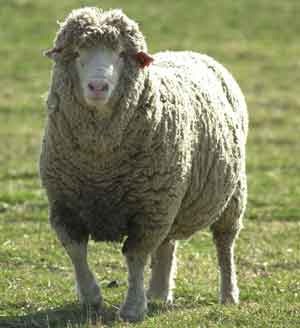
Our Psalm and Gospel readings both refer to us as sheep and the Lord as our shepherd. Truthfully, the fact that God thinks of us as sheep is not a compliment. One writer I remember from years ago–sorry but I can’t recall who it was in order to give the person credit–claimed sheep are “Dumb, directionless, and defenseless.” Sheep need a shepherd to guide them because they are have a “herd” or a “flock mentality” and will follow their leader. Since they are also prone to over-eating, they have been known to follow their flock leader–while pursing edible grass–right off a cliff. They also have a tendency to wander off and get lost. The people of Jesus’ day understood that a competent shepherd would leave the 99 under the care of an associate and seek out his 1 lost sheep (each one represents money on the hoof). They knew that sheep don’t always look where they are going, and probably don’t assess the risks of going there. Finally, they are notoriously skittish, running in a tight knit circle (with lambs to the inside and rams on the edge) when frightened. They need a shepherd to keep them safe from predators. They also need a shepherd to keep them safe from their instincts.
However, on the plus side, they do recognize the voice of their particular shepherd. In Biblical times, several herds of sheep might be housed at night in a common sheepfold, with shepherds rotating nights they each would stand watch while the others went home to sleep in their own beds. In the morning, each shepherd would approach the fold and call his own herd out by name. He would walk ahead, and his particular sheep would follow him.
Now let’s consider the image of the “Shepherd” in Scripture. In the Old Testament, this term generally refers to God the Father, but it can also mean the Jewish leaders, kings, pastors, or teachers. King David wrote in the 23rd Psalm–>The Lord is my shepherd; I shall not be in want. It says in Psalm 100–>…we are His people and the sheep of His pasture. The prophet Isaiah writes in chapter 40, verse 11–>[God] tends His flock like a shepherd; He gathers the lambs in His arms and carries them close to His heart; He gently leads those that have young. God, in Ezekiel 34, lambastes the kings, prophets, and priests of Israel, calling them bad shepherds. He accuses them of abusing, neglecting, and even preying upon His sheep. He promises to save His flock, saying in verse 23–>I will place over them one shepherd, my servant David, and He will tend them and be their shepherd. Now Ezekiel lived about 400 years after David; so this is a prophesy of Jesus, not King David, as our shepherd-king.
In the New Testament, Revelation 7:17 provides yet another sheep/shepherd prophesy: For the Lamb at the center of the throne [the risen Lord Jesus] will be their shepherd; He will lead them to springs of living water. And God will wipe away every tear from their eyes. The Gospel of John, Chapter #10 outlines how Jesus is the Good Shepherd. Scholars say this is the climax of John’s Gospel because Jesus identifies Himself as The Good Shepherd (v. 11), thus equating Himself with God the Father: Verse 14–>I am the Good Shepherd; I know my sheep and my sheep know Me. In today’s passage (vv.3-5), Jesus says, “The watchman opens the gate for him [the shepherd], and the sheep listen to His voice. He calls his own sheep by name and leads them out. When He has brought out all of His own, He goes on ahead of them, and His sheep follow Him because they know His voice. But they will never follow a stranger, in fact, they will run away from him because they do not recognize a stranger’s voice.
How do we know if we are the sheep of the Good Shepherd? 1st, we’re baptized into His flock. 2nd, we learn to hear His voice by developing our spiritual ears. Our God communicates with us! He speaks to us through His written Word, the Bible; through the Holy Spirit. that still, small voice; sometimes through other people; and often through our circumstances. He wants us to communicate back to Him which we do through prayer; through our thoughts, when we meditate on Scripture passages; and through our worship. 3rd, we come to realize that we are each known by Him. It’s such a paradox: We’re members of His flock, but He doesn’t just view us as a herd. He sees us each in all of our individuality. Consider the lessons conveyed in Psalm 139: O Lord, You have searched me and You know me. You know when I sit and when I rise; You perceive my thoughts from afar. You discern my going out and my lying down; You are familiar with all my ways. Before a word is on my tongue You know it completely, O Lord…for You created my inmost being; you knit me together in my mother’s womb…When I was woven together in the depths of the earth, Your eyes saw my unformed body.
God knows us intimately, better than we know ourselves. He knows our every action; our every plan; our thoughts, even before they are fully developed; our words, even before we utter them. He has known us since before we were born. Jesus says, in Luke 12:7–>Indeed, the very hairs of your head are numbered. What comfort! He knows us as we are and loves us anyway!
Psalm 23 spells out the wonderful life benefits that come to us if we listen to and follow Jesus: J. Vernon McGee says the 23rd Psalm is the song of an old, experienced shepherd (King David), looking back over his life. McGee writes, “Life had beaten, battered, baffled, and bludgeoned this man,” and yet…in looking back over his long life, David–also one of God’s sheep–recognizes all the ways that God had intervened for and shepherded him. And he is exceedingly grateful!
1. He provides for us (green pastures, still waters);
2. He renews our strength when we are weak or weary;
3. He guides us along the right paths, encouraging us to avoid pain and destruction;
4. He protects us from being afraid (of threats, of death) and comforts us as we walk through the valley of the shadow of death;
5. He honors and blesses us;
6. And His love and goodness draw us to Himself, now and for eternity.
( J. V. McGee, Through the Bible Commentary on the Psalms, Thomas Nelson, 1991, p.134.)
In John 10:1-10, the Apostle John wants us to realize that “Christianity is not so much a matter of believing certain things as it is of hearing that voice [Jesus] and trusting it with your life.” Have you heard Him call to you from the Scriptures? I have, on a number of occasions. One very meaningful time to me was when I tried to withdraw from the ordination process. I felt I was too old and had had too much schooling and could surely serve God as a Christian psychologist. I opened Scripture and the words of Psalm 110 leaped off the page at me: The Sovereign Lord has decided and will not change His mind. That wasn’t just a coincidence; it was an answer to my prayer from the lips of the Lord Himself. Perhaps passages like the following have really spoken to you: Come to Me, all of you who are weary and carry heavy burdens, and I will give you rest (Matt 11:28). I came that they might have life and have it abundantly (John 10:10). Do not let your hearts be troubled. Believe in God, believe also in me (John 14:1). The Holy Spirit will take you to a place in God’s word that truly speaks to your prayer need.
Do you realize that when you hear me preaching (or read my sermons), it is not just me that you hear or read. Please know that I preach what I hear, what I believe God is directing me to preach. I’m not saying this to puff myself up as some great and holy example, because I am flawed and a sinner like all of us. What I hope you hear in my sermons is the voice of the Good Shepherd speaking through me–and sometimes in spite of me. It’s the same voice we hear in the Scriptures. It’s the same voice we hear in the patterned way we worship on Sundays. It’s the same voice we hear in our hymns-→today, we have twice sung hymns asking Jesus to lead us (See Our Great Redeemer’s Praise, p.150 and p.130). As we leave worship this morning, we will remind ourselves in song that He leads us (p.73). It’s the same voice we hear through the lovely weekly anthem our soloists sing for us. “It’s the voice of deep crying out to deep, of Christ’s Spirit seeking out our spirits and calling us to come into the presence of the lover of our souls.”
(J. Fearless and D. Chilton, The Lectionary Lab Commentary, Year A, 2013, p.122.)
Our God is speaking. Are we listening? We want to be sheep who listen. Our God loves us-→enough to die on a cruel cross to save us. Jesus is calling to each of us. It’s hard to believe that President FDR would have spoken to people who did not take in what he was actually saying. How sad that he could say something so outrageous that only one person picked up on it and responded to him—and that person was a foreigner. Let’s pray now to ask God to help us hear Him (to develop our spiritual ears) and to respond to Him daily.
©️2026 Rev. Dr. Sherry Adams

