Palms to Passion

Pastor Sherry’s message for April 13, 2025

Scriptures: Lk 19:28-40; Ps 118:1-2, 19-29; Isa 50:4-9; Ps 31:9-16; Phil 2:5-11; Lk 22:14-23:56

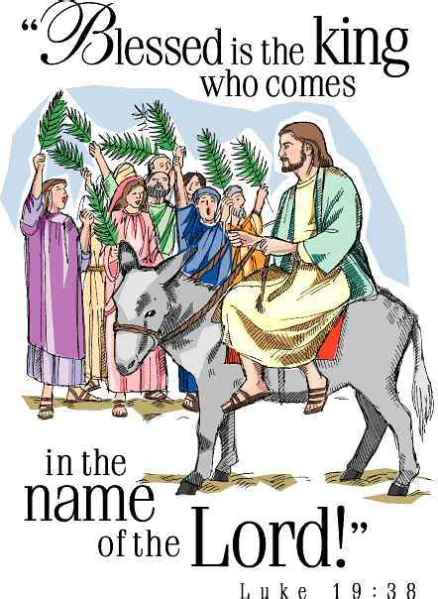
Our custom here at Wellborn Methodist Church has been to focus on Jesus’ Passion—His experiences and thoughts leading up to and including His Crucifixion.   Typically, then, we have handed out palm crosses, like you have today, but without focusing on Jesus’ triumphal entry into Jerusalem on Palm Sunday. This year, I wanted us to focus on the difference between Palm Sunday and Good Friday.  This is why we began our service on the front porch today, symbolically outside Jerusalem, if you will. And we followed the path of Jesus, riding on a donkey, as He made His way from the city gate into the Temple.

Now the Sadducees of 2000 years ago believed the Messiah would enter the city 4 days before Passover. Passover would have begun at sundown on Friday and ended at sundown on Saturday, the Jewish Sabbath.Thus, they made sure the gates to the Temple remained open the first day of their week, so Messiah could walk right on in and assume His throne.

Under normal circumstances, then, there would have been a great deal of hoopla and excitement among the Passover crowds, with people asking, “Is this the year?  Will Messiah show up? “  Knowing He would be arrested early Thursday morning and hanging on His Cross by Friday, Jesus chose to enter Jerusalem on what we call Palm Sunday.  What courage!

He fulfilled the prophesy of the minor prophet, Zechariah, from chapter 9, verse 9 (NLT) Rejoice, O people of Zion!  Shout in triumph, O people of Jerusalem!  Look your king is coming to you.  He is righteous and victorious, yet He is humble, riding on a donkey—riding on a donkey’s colt.  Victorious kings, Like David, would have entered the city to large, cheering crowds.  The people would have waved palms and placed their garments on the road for the King to tread upon.  At the end of 4th season of “The Chosen,” in episode 8 (you may call it up on YouTube), the writers re-enact one such victorious return, singing of King David, “Hosannah, Our King is Victorious!”

King David would have ridden in on his war-horse, but King Jesus rides in on a humbler animal, a donkey.  Luke wants us to be sure to know that this animal was borrowed from someone who knew of and loved Jesus, and it had never been ridden before.  Many in Jerusalem assumed Jesus was the Messiah and thronged around Him, praising Him and singing many of the lines read today from Psalm 118:25-29. Hosannah (Yesha anna in Hebrew) means save us now.  The crowds are asking Jesus to save them.

Do you think they knew that He was God in the flesh? They are cheering Him on. They are rejoicing in His presence. They are filled with hope that He is their Messiah.

The Passion readings appointed for today lead us from this celebratory procession to Jesus’ arrest, trials, death, and burial: 

A. Paul reminds us in Philippians 2:5-11 that Jesus humiliated or humbled Himself to come to earth to save us.  The Palm Sunday crowds expected Him to save them and that is exactly what He intended to do.  Paul wants us to be as humble and as obedient to the Father as Jesus was. Jesus obeyed His Father in everything, even up to and including His manner of death. Though totally righteous and holy, He died as though He were a rightfully tortured and despised criminal.

Paul also desires that we appreciate the depths of Jesus’ sacrifice on our behalf:  He gave up His heavenly prerogatives as King of the Universe–the One who spoke creation into existence–to be born in a stable, to a poor, young, homeless couple, in a ragtag and oppressed, tiny nation. Instead of demanding respect and a wide following as a great and exalted leader, He humbly behaved as a servant to all. No wonder the Father has honored Him above all things, declaring that His name commands total obedience, from every being, in every sphere of the universe!  Incidentally, this includes non-believers who will be shocked to arrive at the Great White Throne Judgment, only to discover they made the wrong choice to dismiss Him during their lifetimel

B.  Isaiah prophesies in 50:4-9 how Jesus, the Suffering Servant of God, will be treated during His Passion experience.  Verse 4 tells us He was tutored by Holy Scripture and also by His heavenly Father.  Verse 5 insists that He was always obedient to the Father’s will.  Verse 6 peaking for Jesus in the first person—I offered My back to those who beat Me, My cheeks to those who pulled out My beard.  I did not hide My face from mocking and spitting. This verse tells us He would endure beatings:  He was beaten by the Jewish Temple guards during the night;

Then He was beaten again by the Roman soldiers early in the morning. He would be spit upon, in His face (such a sign of contempt and hatred), and on His bloody body (YIKES!  to so desecrate God Himself)!  He will have His beard pulled out.

But notice too, in verses 7-9a—He will trust in God, His Father, the entire time.  He remained constant and faith-filled, despite all the evil that was done to Him!  I think He thus modeled to us how we might withstand persecution, if such befalls us for being Christians.  We are to hold on to our faith in God and to the love of Jesus for us, with both hands.

C.  Psalm 31:9-16 was written by King David.  The portion we read today is a prayer in which he seeks the Lord’s deliverance from a very powerful foe.  It is also very aptly describes what Jesus probably suffered on the way to His crucifixion at Golgatha, and even as He hung suspended from the Cross:  

   (1) V.9— Be merciful to Me, O LORD, for I am in distress… 

(2) V.10—My life is consumed by anguish and my years by groaning; My strength fails….

(3) Vv.11-12—Because of My enemies, I am the utter contempt of My neighbors; I am a dread to my friends—those who see Me on the street flee from Me.  I am forgotten by them as though I were dead; I have become like broken pottery.  

He is experiencing despair and grief.  But He does not succumb to it.  In verse 14, he reminds Himself, But I trust in You, O LORD.  I say, “You are my God.”  And He reaffirms for Himself, (v.15) My times are in Your hands.  We can trust in God to sustain us through the most difficult times because He is only a prayer away (meaning He is present to us).  He loves us, and He sent His only, beloved Son to die to save us.

D.  Our Passion narrative comes from Luke this year (22:14-23:56).  It needs little explanation as it speaks very powerfully for itself.  We see and understand that, though they had welcomed Him as a hero on Sunday, by Thursday they had replaced their Hosannah’s with outraged cries to Crucify Him!  What happened?  Well, quite simply, He disappointed their expectations.  They wanted a military leader to subdue the Romans; a warrior on a war-horse rather than a humble donkey.  They expected Him to overthrow their oppressors instead of teaching and praying daily in the Temple.  He didn’t live up to their idea of a Savior.  Their disappointment turned into anger and murderous rage, fueled and stoked by the jealous religious leadership who felt threatened by Him. So they killed Him.  But they didn’t eradicate either His memory or His influence.

We are currently living through a period in our country in which the influence of Jesus appears to have waned.  Fewer and fewer people seem to know Who Jesus is and why believing in Him and worshipping Him is important. Many churches have declining memberships. Folks appear to have given up regular Sunday attendance.  In fact, a statistic I heard recently said that most committed Christians only attend church once every three weeks.  Many activities compete for our attention—sporting events, leisure time pursuits, work, even sleeping in.  I was probably in my late 30’s when I realized that God spoke to me during Sunday worship.  His voice came to me through the music, the sermon, the readings, or sometimes from something a fellow worshipper said.  As much as I wanted to sleep in, I realized if I missed church, I would miss what the Lord had to say to me that week.  And as I came to regard my congregation as my “spiritual family,” I also realized I would miss what was often only a once a week contact. 

We need to remember all that Christ has done for us.  As I preached last week, we need a Savior because we cannot save ourselves.  The Good News is that we are washed clean of our sins by the sinless blood of the true Passover Lamb, our Lord and Savior, Jesus Christ.  Come, Let us adore Him!

©️2025 Rev. Dr. Sherry Adams
Look and live

Pastor Sherry’s message for March 10, 2024

 Scriptures: Num 21:4-9; Ps 107:1-3, 17-22; Eph 2:1-10; Jn 314-21

Most of us can relate to having a dear, eccentric relative of some sort who does or says unexpected things.  We are typically either entertained or embarrassed by their behavior.  And then sometimes they will surprise us by doing the sweetest, most thoughtful things.

My pastor friend had this experience recently.  He found out, in a round-about way, that his Aunt Mildred had paid for years for some sort of farm related accident insurance for him.  She’d never told him about the policy; but she shared with his mother that she worried if he ever wound up in the hospital needing expensive care, he might not have enough money to afford the treatment he needed.  His mother told him to be sure to let Aunt Mildred know if he had a serious accident.  He replied that, “…it did make me feel strange that the best way to make Aunt Mildred happy was to get hurt.” 

He’ s never had an occasion to use the insurance, but he said he was shocked to learn that she had been paying these premiums for him, month after month for years–having never asked him; having never told him; and not expecting anything from him—not even thanks.  He’s been humbled to realize that she has done this for him out of the kindness of her heart, “…because she loved me and cared about me, because she thought it was a good thing to do for me.”

(Fairless and Chilton, 2 Bubba’s and a Bible, The Lectionary Lab, Yr B, 2014, pp.15-117.) 

An unexpected gift like this is truly humbling, isn’t it?  It’s a kind of mini=preview for us of Jesus’ great gift to us of dying on the Cross for our sins.  We didn’t ask Him to do it.  In fact, if we were not believers, we might not even know He had done it.  He took it upon Himself to pay what we owed due to His great love for us.

Let’s see what our Scripture passages today have to say about  this marvelous gift:

A. Numbers 21:4-9 recounts the 8th and final incidence of the Israelites grumbling against God during their desert wanderings.

No doubt they were tired of trudging across desert terrain, of the unchanging wilderness landscape, and of the food—marvelous though it was!  Even a daily ration of steak or lobster would lose its appeal if that were all we had to eat.  So, they declare (v.5) We detest this miserable food.  They were sick of eating manna, despite the fact that it tasted good (like honey and coriander); was so nutritious that they had no diseases, cancers, or flues for 40 years; and they didn’t have to produce it by digging for it or hunting it down. They simply had to gather the flakes from the ground each morning.  Falsely asserting that they had it so good back in Egypt, they grumble one too many times.  YIKES!  They rejected what Jesus called the “bread of heaven,” food the angels eat.

Their behavior is what we might call “snarky,” or “snaky,” and certainly demonstrated a lack of gratitude to God.  So, in an apt judgment for their lack of appreciation, the Lord sets loose poisonous snakes among them.  No doubt these snakes bit the worst of the complainers first, and then struck fear into everyone else.  (I mean, think of it!  No chairs in the desert to jump up on to get away.  No guns to shoot the things!) But, when they beg Moses for help, God also graciously provides a curious snake-bite remedy:  He has Moses fashion a snake out of bronze and affix it to a wooden pole, which he raises up so it can be seen.  He then tells them that if they are bitten, they can look upon the snake on the pole and be healed.  Look and live!

This incident and God’s antidote are actually a foreshadowing, or a typology of Jesus: The snake represents the peoples’ sins, ingratitude,  rebellion, and blasphemy.  The snake—sin–is nailed to tree, branch, or cross.  (In the Hebrew, all three words are the same.  Any portion of a tree, even a twig, was called a tree.)  Jesus, on the Cross, exchanges our sins for His right-standing with God the Father.

B.  Today’s Gospel, John 3:14-15 references and interprets this Old Testament event.  Jesus says, Just as Moses lifted up the snake in the desert, so the Son of Man must be lifted up, that everyone who believes in Him may have eternal life.  In other words, as Jesus explains to the Pharisee Nicodemus—and to us—-it will be/was necessary for Him to go to the Cross and to die for our sins.  We are set free of the penalty for our sins (death) by looking on Jesus with eyes of faith.

John goes on to say, (3:16)For God so loved the world that He gave His one and only Son, so that whoever believes in Him shall not perish but have eternal life.  Notice it says that God loves all, but only saves those who believe in Jesus.  Under the Old Covenant, we paid the price for our own sins.  We raised or purchased an animal for sacrifice.  Our sins were transferred to that animal, which the priest then slaughtered in our presence and burned on the altar.  We left sin-free until we sinned again and had to do the same thing over and over.  But under the New Covenant, we are forever saved by the power of God through our faith in the sacrifice of Jesus on our behalf.  Please don’t miss the symbolism:  Sin (not Jesus) is the snake!  But through Jesus, our sin is nailed to the Cross of Christ– nothing else has to die and we are pardoned.

C.  In Ephesians 2:1-10, Paul wants us to be mindful of the fact that we have no power, within ourselves, to save ourselves.  The pastor did not pay his premiums.  His aunt gifted them for him.  Paul writes, (verses 1-3, Peterson’s The Message, p.2127) It wasn’t so long ago that you were mired in that old stagnant life of sin.  You let the world, which doesn’t know the first thing about living, tell you how to live.  You filled your lungs with polluted unbelief, and then exhaled disobedience.  We all did it, all of us doing what we felt like doing when we felt like doing it, all of us in the same boat.  It’s a wonder God didn’t lose His temper and do away with the whole lot of us.  Some scholars believe that, without Jesus, we are all failures, spiritual zombies, lacking any ability to bring ourselves back to life.

But the great Good News is that (v.5)Instead [of doing away with or executing us], immense in mercy and with an incredible love, He [God] embraced us.  He took our sin-dead lives and made us alive in Christ.  He did all this on His own, with no help from us!  Or, as Paul goes on to explain in verses 8-9 (NIV)For it is by grace you have been saved, through faith—and this not from yourselves, it is the gift of God—not by works so that no one can boast.

Another of my heroes of the Christian faith is Martin Luther, the German reformer in the 1500’s.  He had an exacting, critical father who wanted him to be a lawyer.  Luther aspired to be a Catholic priest instead. To his father’s huge disappointment, he did get ordained, but suffered from depression—probably somewhat due to having never received his earthly father’s approval.  Luther feared he could never be good enough to please God.  It is recorded that he read verses 8-9 in Ephesians 2 one day and had a “Eureka moment”!  He realized he didn’t have to work so hard to attain God’s favor.  No daily confessions—apparently he had attended confession 2-3 times a day trying to overcome his sinfulness.  No repeated praying of the rosary day after day, and no need to beat himself with a hand-held whip to atone.  Instead, he finally realized that God the Father is not like his continually disapproving and rejecting earthly father.  Because of his faith in Christ Jesus, he had God’s favor.  Because of our faith in Jesus Christ, we have God’s favor.

Again, Peterson paraphrases Paul so beautifully here (vv.4-7)Now God has us where He wants us, with all the time in this world and the next to shower grace and kindness upon us in Christ Jesus.  Saving is all His idea, and all His work.  All we do is trust Him enough to let Him do it.  It’s God’s gift from start to finish!  We don’t play the major role.  If we did, we’d probably go around bragging that we’d done the whole thing!  No, we neither make nor save ourselves.  God does both the making and saving.  God loves us, but His holiness and His perfect justice require that we confess our sins to and verbalize our need for Him.  He has the power and the grace to then forgive us due to Jesus’ atoning death on the Cross, and to (pardon) save us.

D.  Psalm 107:1-3, 17-22 spells out for us our appropriate response: In verse 1 the psalmist says we want to give thanks to the Lord because He is good to us and loves us. In verses 17-23 he exhorts us not to be rebellious and ungrateful, like the Israelites in the desert.  In essence, we are urged to recognize God’s saving grace.

The story of the pastor’s Aunt Mildred is really sweet, isn’t it?  Her unexpected gift hit my friend right in his heart.  But our God has gone one better.  He didn’t just pardon us.  He took our sentence, the death penalty, so that justice was fulfilled and we wouldn’t have to pay the price.  So now, we can look to Jesus, trust in Jesus, and live!  

Thanks be to God who gives us the victory through our Lord Jesus Christ!  Alleluia, alleluia!

©️2024 Rev. Dr. Sherry Adams 

He is Risen!

Pastor Sherry’s Easter message for 4/9/23

Scriptures: Acts 10:34-43; Ps 118:1-2, 14-24; Col 3:1-4; Jn 20:1-18


“Max Lucado, in his book, Six Hours One Friday, tells the story of a missionary in Brazil who discovered a tribe of Indians in a remote part of the jungle. They lived near a large river. The tribe was friendly and in need of medical attention. A contagious disease was ravaging the population and people were dying daily. An infirmary was located in another part of the jungle and the missionary determined the only hope for the tribe was to go to the hospital for treatment and inoculations. In order to reach the hospital, however, the Indians would have to cross the river—a feat they were unwilling to perform.

“The river, they believed, was inhabited by evil spirits. To enter the water meant certain death. The missionary set about the difficult task of overcoming the superstition of the tribe.

“He explained how he had crossed the river arrived unharmed. No luck. He led the people to the bank and placed his hand in the water. The people still wouldn’t believe him. He walked out into the river and splashed water on his face. The people watched closely, yet were still hesitant. Finally, he turned and dove into the river. He swam beneath the surface until he emerged on the other side. Having proved that the power of the river was a farce, the missionary punched a triumphant fist into the air. He had entered the water and escaped. The Indians broke into cheers and followed him across.”

Isn’t that what Jesus did? He entered the river of death and came out on the other side so that we might no longer fear death, but find eternal life in Him.

(Max Lucado, Six Hours One Friday, Multnomah Books, 1989, pp.157-158).

Today, Easter Sunday, we celebrate the fact that Jesus Christ demonstrated that He had overcome sin and death by rising from the dead. He demonstrated the full extent of His miraculous power. And He brought us hope for the future (death is not the final outcome for us). All of our readings today refer in some way to Jesus’ resurrection:

A. In our Gospel, John (20:1-18) highlights some of the events of that first Easter Day. Mary Magdalene—remember, she had held a vigil for Jesus, along with His mother, John, and several other women–at the foot of His Cross. She had probably wept and prayed for Him as he hung dying. No doubt she had watched Joseph of Arimathea and Nicodemus quickly wrap His body for burial. In a dry land with limited water, they would have cleaned the corpse as best they could. They had to hurry before the onset of the Sabbath—He had to be buried before sundown. They then coated the body with myrrh, aloe, and the other spices they had brought. Next, they wrapped it up in stripes of cloth, which would have encased the body in a permanent, glued-on, kind of bandage. This process is important to note because of what happens later.

Mary had watched and must have thought the men did not do as good a job as they should have done for someone as important as Jesus. So she returned to the grave early the next morning, intending to make things right. How she thought she might roll away the heavy stone sealing the tomb is anyone’s guess. Nevertheless, she found the tomb already opened but containing no body. John tells us she ran to find Peter and the other disciple [this is how John always refers to himself in his Gospel], both of whom ran to see for themselves. John, the younger man, arrived first but only peeked into the tomb. The older Peter lagged behind, but reached the tomb and charged in to see only grave clothes on the shelf where Jesus had been laid.

The grave clothes told a story: The myrrh, aloe, and spices should have stuck the cloth stripes to the body, like a mummy. Remember Lazarus needed help to remove his. Both men saw strips of linen lying there, as if Jesus had materialized up through them, leaving them behind. In addition, the shroud for his head and face had been neatly folded and set aside. John saw this, knew it was physically impossible and therefore evidence of a miracle, and believed that Jesus had been resurrected. They appeared to have then gone home to ponder over what they’d seen.

Mary remained, grieving. Jesus appeared in His resurrection body and she didn’t recognize Him. Apparently the nail holes on His hands and feet, and the pieced place on His side, were evident, but something about His face and posture were altered in His resurrection body. Or perhaps she didn’t realize it was Him because she wasn’t expecting to see Him. She only comprehended that it was Jesus when He called her by name. He told her then to go tell the other disciples that He is going to see God the Father. Now we know from other accounts that He later met privately with Peter, encountered the two disciples on the road to Emmaus, and arrived back to greet 10 of the 11 disciples in the Upper Room, but we do not really know where He went during the middle hours between dawn and later that evening. Somewhere during that time, He had a joyous reunion with His Father in heaven! Mary, then, obediently carried the Good News of Jesus’ Resurrection—I have seen the Lord!–to the others.

B. Peter is certainly fired up as he preaches to Cornelius and his household in Acts 10:34-43). He had seen the empty tomb, the discarded grave clothes, and the resurrected Christ! Filled with the Holy Spirit (at Pentecost, back in Acts 2), he preaches with fiery conviction. Dr. J. Vernon McGee makes the point that, “There is not a single sermon in Acts that does not mention the resurrection of Jesus.” (Through the Bible Commentary Series, Acts, Thomas Nelson, 1991, p.129).

Peter reviews for the Cornelius’ Roman household the salient points of Jesus’ life and ministry, emphasizing the resurrection (vv.39b-41) They [the Jewish religious authorities + the Romans ] killed Him by hanging Him on a tree, but God raised Him from the dead on the third day and caused Him to be seen. He was not seen by all the people, but by witnesses whom God had already chosen—by us who ate and drank with Him after He rose from the dead. What a privilege to have been chosen by the Father to be one of the 500 or so to actually see and spend time with Jesus!

C. Paul reminds us, in Colossians 3:1-4, that because we are “in Christ,” we …have been raised with Christ. We share in Christ’s resurrection. Due to this new position in Christ, we have said goodbye to our old, fleshly selves; and we have put on a new, spiritual self. As a result of this phenomenal realignment/reorientation of our individual identities, Paul wants us to (v.2) set your minds on things above, not on earthly things. If you have read anything about people who claim to have died and gone to heaven (NDE’s, Near Death Experiences), they all agree they did not want to return to earth. Having seen Heaven, they wanted to stay. Similarly, Paul believes since heaven is ahead of us, we should focus on Jesus as we continue our tenure on earth. As children of the Resurrection, we are to pattern our lives after Jesus and keep our concentrate on heavenly realities.

D. Psalm 18:1-2, 14-24 is an ode to joy! The psalmist, predating but very like Paul, invites us to focus on heavenly realities–not the frustrations and disappointments of this life. Because of the mighty things Jesus has done—including demonstrating His power over death—we can rejoice in the Lord and praise Him for deliverance, provision, and protection.

We are thankful because…

1.) (V.1) The Lord is good; His love endures forever.

2.) (V.14)The Lord is my strength and my song; He has become my salvation.

3.) (V.17) I will not die but live, and will proclaim what the Lord has done.

4.) (V.24) This is the day the Lord has made, let us rejoice and be glad in it.

We also celebrate the fact that (v.22) The stone the builders rejected [Jesus] has become the capstone. The capstone was either a large rectangular stone used as a lintel in a doorway, or a large square or rectangular stone used to anchor or align the corner of a wall. It might also be the keystone or middlemost stone in an arch. The capstone (building corner or doorway lintel) or keystone (arch) kept the building from collapsing by supporting what exited beside and above it. Considering this metaphor for Jesus, no wonder we call Him our Rock and our Redeemer.

The story is told of…”a man (who) took a vacation to Israel with his wife and mother-in-law. During their time in the Holy Land, his mother-in-law unexpectedly passed away. The following day, the husband met with the local undertaker to discuss funeral plans.

“In cases like these, there are a couple of options to choose from,” the undertaker explained. “You can ship the body home for $5,000, or you can bury her in the Holy Land for just $150.” The man took a minute to think about it, and then announced his decision to ship her home.

“The undertaker, intrigued by his decision, said, “That’s an interesting choice. Can I ask why would you pay $5,000 to ship your mother-in-law home, when you can easily bury her here for $150?” The man promptly replied, “About 2,000 years ago, a man died and was buried here. Three days later he rose from the dead, and I can’t take that chance!” (Subsplash website, 5 humorous Easter sermon illustrations, April 13, 2022.)

Of course there is no guarantee that the mother-in-law would have resurrected—unless she had been a believer in Jesus Christ. Additionally, we know, of course, that Jesus’ ability to raise us from the dead is not limited to the geography of Israel—thank Goodness! Nonetheless, we can enjoy a good joke.

We can also enjoy the secure future we have in Christ. Like the missionary to Brazil, Jesus entered the river of death and came out victorious on the other side. Because He did this for us, we too share in His resurrection victory—and all of its benefits.

Alleluia, He is risen! The Lord is risen indeed, Alleluia!

©️2023 Rev. Dr. Sherry Adams

Gratitude Like The One In Nine

Pastor Sherry’s message for October 9, 2022

Scriptures: Jer 29:1-7; Ps 66:1-12; 2 Tim 2:8-15; Lk 17:11-19

A Jesuit priest has said, “It’s not joy that makes us grateful, it’s gratitude that makes us joyful.” That bears repeating: “It’s not joy that makes us grateful, it’s gratitude that makes us joyful.” Modern psychological research has shown that finding things to be grateful for is a key to good mental health. People who can think of 3 things for which they are thankful, daily, are less likely to be depressed and more likely to be happy.

A cartoon in a magazine shows a couple, at the church door, saying goodbye to the pastor following the service. The man says, “Wonderful sermon! Thanks for not mentioning my name.” We can be grateful for not having our sins shared from the pulpit. (I promise you, I will never name you and your personal sins from this pulpit.)

I can think of two other examples of grateful people:

(1) The leader of our denomination, John Wesley, “…was about 21 years of age when he went to Oxford University. He came from a Christian home, and he was gifted with a keen mind and good looks. Yet in those days he was a bit snobbish and sarcastic. One night, however, something happened that set in motion a change in Wesley’s heart.

“While speaking with a porter, he discovered that the poor fellow had only one coat and lived in such impoverished conditions that he didn’t even have a bed. Yet he was an unusually happy person, filled with gratitude to God.

“Wesley, being immature, thoughtlessly joked about the man’s misfortunes. “And what else do you thank God for?” he said with a touch of sarcasm.

“The porter smiled, and in the spirit of meekness replied with joy, ‘I thank Him that He has given me my life and being, a heart to love Him, and above all a constant desire to serve Him!

“Deeply moved, Wesley recognized that this man knew the meaning of true thankfulness.

“Many years later, in 1791, John Wesley lay on his deathbed at the age of 88. Those who gathered around him realized how well he had learned the lesson of praising God in every circumstance. Despite Wesley’s extreme weakness, he began singing the hymn, ‘I’ll Praise My Maker While I’ve Breath.’”

(From a sermon entitled “True Thankfulness” by Donnie Martin, July 26, 2010)

(2) Albert, the fellow who manned a drive up window at a Café DuMonde in New Orleans, where I stopped most mornings to get a CafeAuLait. He lacked most of his teeth but the ones he had were gold. He probably worked for minimum wage, but when I asked him each day how he was, he always replied, “I’m blessed!” The Lord used Albert in my life just as he used the porter in John Wesley’s. Two “simple” but wise—though economically disadvantaged persons–knew the value of daily expressing their gratitude to God.

Let’s see what our Scripture lessons today have to say about daily expressing gratitude to God:

A. Our Psalm (66:1-12) instructs us to praise God because of His deliverance, His preservation, and His provision for us.

B. In our Epistle (2 Timothy 2:8-15), Paul instructs us thank God for our redemption through Jesus Christ.

C. In our Old Testament lesson (Jeremiah 29:1-7), the prophet has written a letter to the Jewish captives in Babylon. They had been carted away, in defeat, to a pagan foreign nation. Surprisingly, instead of commiserating with them, Jeremiah essentially tells them that they are to “bloom where they have been planted.” This sentiment was often pictured on posters in the 1960’s and I remember thinking as a young person, “I don’t want to bloom where I am planted. I want to, instead, change my environment.” I didn’t realize then that God often calls us to do our best where we are, as He intends us to be transformed there, as well as to influence others to be transformed. So, Jeremiah encourages the deportees to build homes for themselves and their families. They are to settle in where they have wound up. Further, he encourages them to plant gardens, so they can feed themselves. Obviously, the Lord intends that they will be there for a while.

They are to marry and have sons and daughters. Again, this implies they will be there for some time. This side of the Cross, we know they were there for 70 years, or for most of 2 generations. Rather than being frustrated or resentful (hateful), they were also to contribute to the peace/prosperity of the city of Babylon. In fact, the Lord says, through the prophet, (v.7) —Pray to the LORD for it [Babylon], because if it [Babylon] prospers, you too will prosper.

They were not to be grateful for their captivity, their deportation to a foreign land. God used that experience to punish them because He is holy (and cannot abide sin). They were guilty of idolatry, greed, lust and sexual perversion, and multiple abuses of power. They had been grossly out of line for a long time. We know from Hebrews 12:5-11 that God disciplines those He loves. We also realize that if He didn’t, we could not really trust Him. He means what He says in Scripture, and He says what He means. The Lord has punished them, hoping they will change their sinful attitudes and improve their behavior in the future. The point is that—even though they are captive in a foreign land—which seems terrible to them, it comes as no surprise to God—He engineered it. They can and should be grateful to Him because they are alive and He has not abandoned them.

We want to be grateful to God for what He teaches us through our trials. When we go through trials—emotional pain—we are molded and shaped by God. Years ago, I was counseling college students at Florida State University as part of a pre-doctoral psychology internship. While there, I encountered a “trust fund baby,” a young man who had been handed everything. He told me that he drove a brand new BMW; all his expenses were paid by his parents; he had a job waiting for him, in his father’s firm, when he finished school; and he had never had to mourn the loss of someone he loved. In other words, he had never suffered, he had never had to struggle. He asked me to help him develop some motivation for life. I suggested he volunteer at a soup-kitchen for the homeless, or spend time with disadvantaged kids in daycare. I have never known anyone to have compassion for others who has not observed or experienced suffering. When we go through trials, we learn compassion for others. We learn to have patience. We learn to trust in God despite our circumstances.

D. In our Gospel lesson (Luke 17:11-19, Jesus heals 10 lepers.

Our Lord is headed to Jerusalem to die. At the fringe of some unnamed village, 10 lepers appeal to Him for healing. He gives them what they want, freely, graciously. Notice: they had faith in Him and in His ability to heal them. He says to them, (v.14) —Go, show yourselves to the priests.

Leviticus 14:1-10 describes all the things a leper who had been healed had to do: (1) Show him/herself to the priest. (2.) The priest would then perform a detailed ritual to ensure the person was cleansed spiritually as well as physically; (3.) Then the healed person was to wash his/her clothes; shave off all his/her hair, even eyebrows; and bathe with water.

So, the ten obey Jesus and scurry off to begin the cleansing process. It is on their way that they are healed. They had stepped out in faith. They had trusted in Jesus. And unlike Naaman the Syrian (2 Kings 5), they were immediately compliant. But only one guy notices his healing and returns first to thank Jesus. Maybe the other nine were just too overjoyed to focus on gratitude. Or maybe they believed they deserved it (they felt entitled). Most likely their attention was on remembering and performing the religious requirements, or on the anticipated happy reunions with their families. We don’t really know why they didn’t think to thank the LORD.

The one guy who does was a hated Samaritan! We would say today that he wasn’t raised right; that he was not well bred; that he was “sorry from way back.” But the fellow who wasn’t raised right knew enough to express his gratitude. Maybe he was shocked that Jesus would heal even him. Maybe he was aware that he didn’t deserve this kind of grace from a Jewish rabbi. Jesus’ response to the Samaritan’s gratitude was fantastic—v. 17–Rise and go; your faith has made you well. This implies that the fellow was kneeling at Jesus’ feet; or maybe he had prostrated himself, in adoration. Jesus is so pleased that he commends him for his faith and for his manners. This guy has received the same physical healing as the other 9; but he has also received a complete healing. In addition to the physical, he received a spiritual healing as well–forgiveness for his sins. Both healings merited eternal gratitude.

Today’s lessons go beyond issues of disease or misfortune and healing: They challenge us to be mindful of all that God has done for us and to be grateful to Him. Too many of us are like a demanding guy in the Post Office. A guy with a broken right arm goes into the Post Office. The lady at the counter asks how she might help him. He proceeds to ask for a post card and a stamp. Then he asks her to write out his message on the card, and finally to address it to his friend. She asks again if there is anything else he needs. He looks at the card and says, “Yes please add an apology to my friend for the bad handwriting.”

(Borrowed from John Fairless and Delmer Chilton, The Lectionary Lab Commentary, Year C, 2015, p.310.)

Are we like that—or like the 9 who were healed, but didn’t express their gratitude? It’s all too easy, isn’t it, to take God’s grace for us for granted and to forget to express to Him our grateful thanks. This week, let’s remember to express to our Lord our thanks and praise. Even better, try to think of three things daily for which you are grateful to God. Do this for a month and watch and see what happens. You should find yourself being more joy-filled.

©️2022 Rev. Dr. Sherry Adams

The Difficulty with Rejoicing

Pastor Sherry’s message for 5/15/2022

Scriptures: Acts 11:1-18; Ps 148; Rev. 21:1-8; Jn 13:31-35

In my Wednesday afternoon Bible Study this week, we focused on Jesus’ call to us to rejoice. In the Parable of the Lost Coin (Luke 15:8-10), the woman featured in the story is filled with joy when she locates her lost coin (1 in a set of 10). She is so excited when she finds it that she calls in her friends to celebrate the find with her. Jesus makes the point that heaven celebrates/rejoices just so when even one sinner repents.

From there, we discussed a difficulty with rejoicing with another, which is that we tend to be jealous of the cause of their joy. Isn’t it true that if friends are celebrating their 40th or 50th wedding anniversary, we are happy for them but also sad that we haven’t made it that far? Isn’t it also true that we rejoice for the woman who finds herself pregnant but are envious and grieved if we are experiencing infertility, or have had our last child–due to the financial burden–even though wishing for more? How about a lottery winner? Or someone who gets their dream job, or our dream job instead of us? Or a full ride scholarship to college? My great-niece just got such a scholarship even though her parents could well afford to pay her way. We might be happy for them at first, but often then move on to entertaining wishes that those good things happened to us instead of them. Unlike the lady in the parable, we may even hesitate to call in our friends to rejoice with us because we fear their jealousy. This may be human nature, but I believe Jesus calls us to put aside our envy—to overcome our natural tendencies–and truly celebrate with those who experience blessings.

Several of our readings today address this issue:

A. Our Acts 11:1-18 passage shows us what can happen when we don’t rejoice with the good fortune of others. Remember that we recently read how Peter baptized Cornelius and his household, all Gentiles? Prior to this, God had dramatically demonstrated to him—3 times—that nothing God creates, neither food, animals, nor non-Jews is unclean. He gets that God doesn’t play favorites, even though the Jews, as His Chosen People, believed otherwise. Peter is rightly convinced that God called him to baptize Gentiles into “the Way,” the enfant Christian Church. Now he is back in Jerusalem, however, and has to explain himself, and his actions, to the Jewish-Christian leaders back in the city. A group of new Christians, called the Judaizers, believed one must become a Jew before converting to Christianity. Remember, the movement was new. They were kind of making up the rules as time went on and occasions arose. This group wanted new believers to be circumcised, eat kosher, and go to Hebrew School prior to accepting Christ. Isn’t that just like human nature? You can almost hear people say, “Well, we had to do it that way. Why shouldn’t they?” Since we had to do that so should they. Rather than rejoice that God was calling more folks into the enfant church, they wanted to legislate a process. But God, the Holy Spirit, had a better idea.

Peter makes the very powerful and convincing point to them that the Holy Spirit (1) had told Cornelius where Peter was and to send for him; (2) then led Peter to Cornelius’ home; (3) and fell upon Cornelius and his friends, such that they were praying and speaking in tongues when Peter arrived. (4) So, since they were already baptized in the Holy Spirit, Peter did not believe he could deny them baptism with water.

Walter B. Knight, a Christian collector of illustrations for sermons and speeches, has written, Joy is the flag that flies over the castle of our hearts, announcing that the king is in residence today. (As submitted by Chuck Swindoll in his book, The Tale of the Tardy Oxcart, Word Publishing, 1998, p.322). The proper response to anyone coming to Christ is for us to rejoice for that person. The Church in Jerusalem should have been rejoicing over the sovereign move of the Holy Spirit, instead of questioning whether Gentiles should first be Jews. Our joy for others shows that we are attuned to God rather than to our fleshly, envious natures.

B. Revelation 21:1-8 describes what eternity will look like after Christ establishes His reign on earth. There will be a new heaven and a new earth. God and His Son, Jesus, will dwell in a new Jerusalem. Those who believed in Jesus will be there, but those who distained Christ—nonbelievers and notorious sinners—will not. Scholars believe this new and Godly environment will be characterized by no sin, temptation or further testing; no sun—just God and Jesus for sources of light; no oceans; no gravity; and we will remain in the presence of God and Jesus. This will be a “Brave New World,” but one in which we will rejoice to live!

C. Our Psalm (148) is ablaze with joy, praise to God, and rejoicing!

It fairly vibrates with joy and praises to God! It begins with a call to all created things to praise God. It ends with our motivation to joyGod’s having provided “a horn.” This term is an Old Testament euphemism for the Messiah, God’s anointed. Our motivation to rejoice in God should be our gratitude for His gift of Jesus. Do we really appreciate this great gift? Does thinking of Jesus and His loving sacrifice on the cross for our sakes fill us with gratitude and joy?

D. Finally, our Gospel (John 13:31-35) contains Jesus’ “new command” (v.34): Love one another. As I have loved you, so you must love one another. It’s actually an old command, dating back to the 3rd book of the Bible (and included in the Jewish Torah or Law), Leviticus 19:18 Do not seek revenge or bear a grudge against one of your people, but love your neighbor as yourself. I am the Lord. The Father tacks on I am the Lord so we realize Moses wrote it down, but God originated and stated the command. The God of the Old Testament is the same as the God of the New. His expectations of us are the same throughout Scripture: We’re to love Him and to love others. God is love and He expects us to Love. Notice Jesus is not calling us to serve in this verse. Neither is He calling us to witness—though both are commendable.

His highest priority is for us to demonstrate love.

Think for a moment about the connection between love and joy. When we learn we are loved, we experience great joy. I remember when I fell in love and learned he loved me in return, I wafted about in a natural high for days. Everything was beautiful and all people were wonderful. I really looked at life through rose-colored glasses. In a word, I was filled with joy! Similarly, Bruce Larson (a prolific Christian author) has said, Grimness is not a Christian virtue. There are no sad saints. If God really is the center of one’s life and being, joy is inevitable. If we have no joy, we have missed the heart of the Good News and our bodies as much as our souls will suffer the consequences. (From his book, There’s a Lot More to Health Than Not Being Sick, and submitted by Chuck Swindoll, The Tale of the Tardy Oxcart, Word Publishing, 1998, p.322).

This week, let’s celebrate God’s blessings in our lives, daily. Make it a habit to think of 3 good things that have happened to you in a given day. We may have to initially ask God to give us eyes to see. Our brains are naturally wired to help us see danger and what is wrong in a situation. We therefore have to retrain our brains to intentionally look for things for which to be thankful. Experience teaches that we can find them if we look carefully.

Then let’s rejoice! Let’s celebrate the goodness of our God.

Finally, let’s discipline ourselves to rein in our envy and jealousy. We need to recognize it for what it is. Next we need to renounce it. The behavior is human but not godly. Then, knowing that God loves you and desires to bless you too, choose to replace envy with rejoicing. Consider Paul’s advice in Philippians 4:4-7 Rejoice in the Lord always, I will say it again: Rejoice! Let your gentleness be evident to all. The Lord is near. Do not be anxious about anything, but in everything, by prayer and petition, with thanksgiving, present your requests to God. And the peace of God which transcends all understanding will guard your hearts and your minds in Christ Jesus.

Thanks be to God who gives us the victory through our Lord Jesus Christ! Alleluia! Alleluia!

©2022 Rev. Dr. Sherry Adams