Palms to Passion

Pastor Sherry’s message for April 13, 2025

Scriptures: Lk 19:28-40; Ps 118:1-2, 19-29; Isa 50:4-9; Ps 31:9-16; Phil 2:5-11; Lk 22:14-23:56

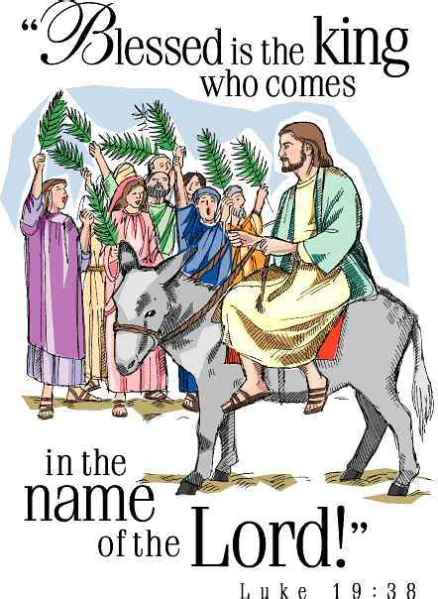
Our custom here at Wellborn Methodist Church has been to focus on Jesus’ Passion—His experiences and thoughts leading up to and including His Crucifixion.   Typically, then, we have handed out palm crosses, like you have today, but without focusing on Jesus’ triumphal entry into Jerusalem on Palm Sunday. This year, I wanted us to focus on the difference between Palm Sunday and Good Friday.  This is why we began our service on the front porch today, symbolically outside Jerusalem, if you will. And we followed the path of Jesus, riding on a donkey, as He made His way from the city gate into the Temple.

Now the Sadducees of 2000 years ago believed the Messiah would enter the city 4 days before Passover. Passover would have begun at sundown on Friday and ended at sundown on Saturday, the Jewish Sabbath.Thus, they made sure the gates to the Temple remained open the first day of their week, so Messiah could walk right on in and assume His throne.

Under normal circumstances, then, there would have been a great deal of hoopla and excitement among the Passover crowds, with people asking, “Is this the year?  Will Messiah show up? “  Knowing He would be arrested early Thursday morning and hanging on His Cross by Friday, Jesus chose to enter Jerusalem on what we call Palm Sunday.  What courage!

He fulfilled the prophesy of the minor prophet, Zechariah, from chapter 9, verse 9 (NLT) Rejoice, O people of Zion!  Shout in triumph, O people of Jerusalem!  Look your king is coming to you.  He is righteous and victorious, yet He is humble, riding on a donkey—riding on a donkey’s colt.  Victorious kings, Like David, would have entered the city to large, cheering crowds.  The people would have waved palms and placed their garments on the road for the King to tread upon.  At the end of 4th season of “The Chosen,” in episode 8 (you may call it up on YouTube), the writers re-enact one such victorious return, singing of King David, “Hosannah, Our King is Victorious!”

King David would have ridden in on his war-horse, but King Jesus rides in on a humbler animal, a donkey.  Luke wants us to be sure to know that this animal was borrowed from someone who knew of and loved Jesus, and it had never been ridden before.  Many in Jerusalem assumed Jesus was the Messiah and thronged around Him, praising Him and singing many of the lines read today from Psalm 118:25-29. Hosannah (Yesha anna in Hebrew) means save us now.  The crowds are asking Jesus to save them.

Do you think they knew that He was God in the flesh? They are cheering Him on. They are rejoicing in His presence. They are filled with hope that He is their Messiah.

The Passion readings appointed for today lead us from this celebratory procession to Jesus’ arrest, trials, death, and burial: 

A. Paul reminds us in Philippians 2:5-11 that Jesus humiliated or humbled Himself to come to earth to save us.  The Palm Sunday crowds expected Him to save them and that is exactly what He intended to do.  Paul wants us to be as humble and as obedient to the Father as Jesus was. Jesus obeyed His Father in everything, even up to and including His manner of death. Though totally righteous and holy, He died as though He were a rightfully tortured and despised criminal.

Paul also desires that we appreciate the depths of Jesus’ sacrifice on our behalf:  He gave up His heavenly prerogatives as King of the Universe–the One who spoke creation into existence–to be born in a stable, to a poor, young, homeless couple, in a ragtag and oppressed, tiny nation. Instead of demanding respect and a wide following as a great and exalted leader, He humbly behaved as a servant to all. No wonder the Father has honored Him above all things, declaring that His name commands total obedience, from every being, in every sphere of the universe!  Incidentally, this includes non-believers who will be shocked to arrive at the Great White Throne Judgment, only to discover they made the wrong choice to dismiss Him during their lifetimel

B.  Isaiah prophesies in 50:4-9 how Jesus, the Suffering Servant of God, will be treated during His Passion experience.  Verse 4 tells us He was tutored by Holy Scripture and also by His heavenly Father.  Verse 5 insists that He was always obedient to the Father’s will.  Verse 6 peaking for Jesus in the first person—I offered My back to those who beat Me, My cheeks to those who pulled out My beard.  I did not hide My face from mocking and spitting. This verse tells us He would endure beatings:  He was beaten by the Jewish Temple guards during the night;

Then He was beaten again by the Roman soldiers early in the morning. He would be spit upon, in His face (such a sign of contempt and hatred), and on His bloody body (YIKES!  to so desecrate God Himself)!  He will have His beard pulled out.

But notice too, in verses 7-9a—He will trust in God, His Father, the entire time.  He remained constant and faith-filled, despite all the evil that was done to Him!  I think He thus modeled to us how we might withstand persecution, if such befalls us for being Christians.  We are to hold on to our faith in God and to the love of Jesus for us, with both hands.

C.  Psalm 31:9-16 was written by King David.  The portion we read today is a prayer in which he seeks the Lord’s deliverance from a very powerful foe.  It is also very aptly describes what Jesus probably suffered on the way to His crucifixion at Golgatha, and even as He hung suspended from the Cross:  

   (1) V.9— Be merciful to Me, O LORD, for I am in distress… 

(2) V.10—My life is consumed by anguish and my years by groaning; My strength fails….

(3) Vv.11-12—Because of My enemies, I am the utter contempt of My neighbors; I am a dread to my friends—those who see Me on the street flee from Me.  I am forgotten by them as though I were dead; I have become like broken pottery.  

He is experiencing despair and grief.  But He does not succumb to it.  In verse 14, he reminds Himself, But I trust in You, O LORD.  I say, “You are my God.”  And He reaffirms for Himself, (v.15) My times are in Your hands.  We can trust in God to sustain us through the most difficult times because He is only a prayer away (meaning He is present to us).  He loves us, and He sent His only, beloved Son to die to save us.

D.  Our Passion narrative comes from Luke this year (22:14-23:56).  It needs little explanation as it speaks very powerfully for itself.  We see and understand that, though they had welcomed Him as a hero on Sunday, by Thursday they had replaced their Hosannah’s with outraged cries to Crucify Him!  What happened?  Well, quite simply, He disappointed their expectations.  They wanted a military leader to subdue the Romans; a warrior on a war-horse rather than a humble donkey.  They expected Him to overthrow their oppressors instead of teaching and praying daily in the Temple.  He didn’t live up to their idea of a Savior.  Their disappointment turned into anger and murderous rage, fueled and stoked by the jealous religious leadership who felt threatened by Him. So they killed Him.  But they didn’t eradicate either His memory or His influence.

We are currently living through a period in our country in which the influence of Jesus appears to have waned.  Fewer and fewer people seem to know Who Jesus is and why believing in Him and worshipping Him is important. Many churches have declining memberships. Folks appear to have given up regular Sunday attendance.  In fact, a statistic I heard recently said that most committed Christians only attend church once every three weeks.  Many activities compete for our attention—sporting events, leisure time pursuits, work, even sleeping in.  I was probably in my late 30’s when I realized that God spoke to me during Sunday worship.  His voice came to me through the music, the sermon, the readings, or sometimes from something a fellow worshipper said.  As much as I wanted to sleep in, I realized if I missed church, I would miss what the Lord had to say to me that week.  And as I came to regard my congregation as my “spiritual family,” I also realized I would miss what was often only a once a week contact. 

We need to remember all that Christ has done for us.  As I preached last week, we need a Savior because we cannot save ourselves.  The Good News is that we are washed clean of our sins by the sinless blood of the true Passover Lamb, our Lord and Savior, Jesus Christ.  Come, Let us adore Him!

©️2025 Rev. Dr. Sherry Adams

What is Love?

Pastor Sherry’s message for September 6, 2020

Scripture: Exodus 12:1-14

The story is told of an old granny lady who had decided that Christmas shopping had just gotten to be too much for her.  Now she still wanted to do something nice for her kids, grands, nieces, nephews, etc., so she decided to send each a nice Christmas card with a $50 Visa card inside.   Granny selected the Christmas cards, addressed the envelopes, added stamps, and deposited them at the post office, innocently assuming she had taken care of Christmas gifts for all of her family in a way that could not help but please each one.  The problem, however, was that–being a little forgetful–she had neglected to include the Visa cards (probably also forgot where she had put them), and had happily written next to her signature, “Merry Christmas!  Go get your own presents.”   We laugh, but this could all too easily be any one of us!  The intention was love, but the result was not.

When I was in college, my school had a foreign language requirement. There were 3 prerequisites:  (1) You had to be able to read it; (2) You had to know the grammar, correct sentence structure, and vocabulary; (3) And then you had to demonstrate you could speak it by passing an interview with the foreign language department professors.

I managed to make it through the first courses, but put the speaking part off until my Senior year…YIKES!  The first day of class, a stereotypical French woman came into class (complete with beret, tight slim skirt with side split, fishnet stockings, and spiked heels), propped herself on the teacher’s desk, told us we could not speak English for the remainder of the semester, and asked us, in French, to respond to the question, “What is love?”  Before I had even begun to formulate an answer in English, then could laboriously translate it into French, she had gone on to the next deep question.  I knew my goose was cooked! 

Praise God I survived conversational French because I paid a linguistically brilliant underclassman to tutor me.  I paid him with coffee and a piece of pie (this was 1967 and he was hungry) to talk with me in French for an hour 2-3 times a week.  By the time he finished with me, I was thinking and dreaming in French!

But I have never forgotten that French professor’s question, “What is love?”  Our Scriptures today give us some good answers to that timeless question.  Our Old Testament lesson comes from Exodus 12:1-14.  Back in Ex 3:7+, God had told Moses:  “I have indeed seen the misery of my people in Egypt. I have heard them crying out because of their slave drivers, and I am concerned about their suffering. So I have come down to rescue them from the hand of the Egyptians and to bring them up out of that land into a good and spacious land, a land flowing with milk and honey. But I know that the king of Egypt will not let you go unless a mighty hand compels him. So I will stretch out my hand and strike the Egyptians with all the wonders that I will perform among them. After that, he will let you go.  That was God’s promise…He would create the situation that would compel the stubborn Pharaoh to let His people go.  Now the Hebrews had been in Egypt about 400 years—long enough for the Canaanites to have time to come to love the true God, which they never did.  So God was finally ready to rescue the Israelites from Egyptian slavery with 10 plagues.

Each plague was actually a put down of some Egyptian god.  Yahweh had declared war on the gods of Egypt:

(1)1st, He turned the Nile to blood—the fish died and no one could drink from it.  They so depended on the river for their water supply and commerce that they equated it with life.  God was saying to them, I, not your river god, am the source of all life.

  • 2nd, He sent a superabundance of frogs.  Seven days after turning the Nile to blood, frogs left the polluted river and invaded the Egyptian homes in huge numbers.  Now the Egyptians equated frogs with evil spirits.  God was saying to them, I can produce animal pests and your numerous gods of nature cannot prevent this.
  •   Similarly, out of dust Moses tosses into the air, God produces 3rd, a plague of lice and 4th, of biting flies.  Essentially God is asking Pharaoh and the Egyptians, Why aren’t your gods countering and destroying these pests? They aren’t able to do what I can do.
  • 5th, God sends disease on their cattle, rams, sheep, and goats, many of which die.  The Egyptians had gods for each of these animals.  But God is saying, I have complete control over animal life, not Osirus, your bull god, or Apis your ram god.
  • 6th, He afflicted the animals that remained—and the people as well–with boils.  Even Pharaoh’s magicians couldn’t prevent breaking out with them. God is saying only I have power over physical health.
  • 7th, He sends hail made of ice clumps and fire.  Egypt normally gets very little rain and fire is a sign of God’s judgment.  Thus God is saying, I—not Hephaistos, your god of fire or Porphry, your god of rain—have complete authority over forces of nature.
  • 8th, God sends locusts to eat up any vegetation left over, then sends them to drown in the Red Sea.  Egypt’s gods of nature are helpless to prevent this infestation.  God is saying, I can raise up hordes of any creature and I can destroy them as I will.
  • By now, the Egyptian economy is in ruins, but still Pharaoh will not let his slave labor go free.  God then sends the 9th plague, 3 days of complete darkness—except over where the Israelites live.  God is saying, Your sun god, Re, is powerless before Me.
  • Finally, God sends the 10th plague–the death of the firstborn, person and animal. They believed their god, Horus, was the god of life.  They also believed Pharaoh was divine. God is saying, Not so fast, My Friend!  Yahweh is the giver of life and He can take it away when it is in rebellion against Him.

This brings us to the Passover:  God intends to take the life of every 1st born.  Those who love Him, however, can and will be spared.

They are to select a perfect male lamb less than 1 year old; they are then to slaughter it on the 14th of Nisan; and paint their door frames with its blood.

The blood of the lamb will be the sign that they are true believers and their lives will be spared. They were to remain inside their homes, eating the roasted lamb, unleavened bread, and bitter herbs. This was a hasty meal that predated “take out.”  It meant that they would soon be free to travel.  The first born of those with no blood over their doors succumbed to the angel of death.  By the next morning, all of Egypt wanted the Israelites to be gone!

This is love!  God provided a way for the angel of death to distinguish Israelites from Egyptians.  While every house in Egypt had a dead person in it, the blood of the Lamb signaled to death, pass over, pass on by those who love the true Lord of all.  This event broke the back of Pharaoh’s resistance.  He finally decided let the God’s people go.  And the Egyptians were so glad to see them leave that they gifted them with gold and silver (God’s provision of reparations/back wages owed).

The historic Jewish Passover finds its ultimate fulfillment in Jesus—it foreshadows or predicts Jesus’ blood shed for us on the Cross.  He too was a perfect male lamb–John the Baptist calls Him (John1:29)…the Lamb of God Who takes away the sin of the world.  Jesus was without sin.  If He had sinned, He would not have been eligible to be our sinless Substitute, our Savior.  Furthermore, He was God, the only Son of God, so His blood was essentially the blood of God.  Paul tells the leaders of the Ephesian Church in Acts 20:28àBe shepherds of the church of God, which He bought with His own blood.No mere person would have been capable of atoning for our sins.  Additionally, Jesus’ sacrifice on our behalf was totally acceptable to His Father.  The writer to the Hebrews says that Jesus is the once and for all perfect sacrifice for our sins.  Peter, on trial before the Sanhedrin, testifies in Acts 4:12 that Salvation is found in no one else [meaning Jesus] for there is no other name under heaven given to men by which we must be saved.  John tells us in 1 John 3: This is how we know what love is:  Jesus Christ laid down His life for us.

So what is love?  The 10 plagues and the Passover formed God’s strategy for motivating a despot to let go of a free labor force of around 2 million people.  The plagues and the Passover demonstrate how far God will go to redeem those He loves.  Jesus’ death on the cross proves the same truth again:  Our God has died an undeserved but agonizing death to obtain our freedom from sin and mortality.  Like His Father before Him, He has gone to extreme lengths to redeem us.

As the apostle John tells us, (1 John 4:10)–this is love: not that we loved God, but that He loved us and sent His Son as an atoning sacrifice for our sins.  If I could go back in time, I would tell my French Conversation professor, “Your question can be answered a number of ways…But the best and most complete answer to that is Jesus Christ loves me and you so much that He died so you and I could have abundant life!

Thanks be to God who gives us the victory thru our Lord Jesus Christ!  Alleluia, alleluia!

©2020 Rev. Dr. Sherry Adams