Palms to Passion

Pastor Sherry’s message for April 13, 2025

Scriptures: Lk 19:28-40; Ps 118:1-2, 19-29; Isa 50:4-9; Ps 31:9-16; Phil 2:5-11; Lk 22:14-23:56

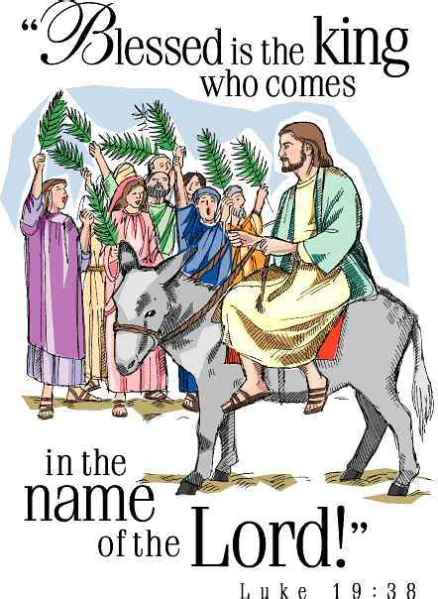
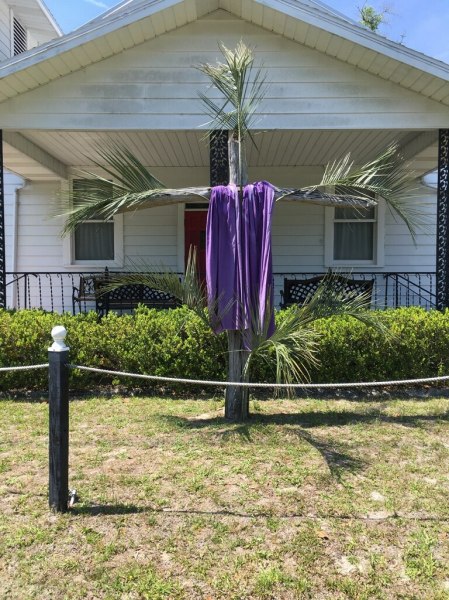
Our custom here at Wellborn Methodist Church has been to focus on Jesus’ Passion—His experiences and thoughts leading up to and including His Crucifixion.   Typically, then, we have handed out palm crosses, like you have today, but without focusing on Jesus’ triumphal entry into Jerusalem on Palm Sunday. This year, I wanted us to focus on the difference between Palm Sunday and Good Friday.  This is why we began our service on the front porch today, symbolically outside Jerusalem, if you will. And we followed the path of Jesus, riding on a donkey, as He made His way from the city gate into the Temple.

Now the Sadducees of 2000 years ago believed the Messiah would enter the city 4 days before Passover. Passover would have begun at sundown on Friday and ended at sundown on Saturday, the Jewish Sabbath.Thus, they made sure the gates to the Temple remained open the first day of their week, so Messiah could walk right on in and assume His throne.

Under normal circumstances, then, there would have been a great deal of hoopla and excitement among the Passover crowds, with people asking, “Is this the year?  Will Messiah show up? “  Knowing He would be arrested early Thursday morning and hanging on His Cross by Friday, Jesus chose to enter Jerusalem on what we call Palm Sunday.  What courage!

He fulfilled the prophesy of the minor prophet, Zechariah, from chapter 9, verse 9 (NLT) Rejoice, O people of Zion!  Shout in triumph, O people of Jerusalem!  Look your king is coming to you.  He is righteous and victorious, yet He is humble, riding on a donkey—riding on a donkey’s colt.  Victorious kings, Like David, would have entered the city to large, cheering crowds.  The people would have waved palms and placed their garments on the road for the King to tread upon.  At the end of 4th season of “The Chosen,” in episode 8 (you may call it up on YouTube), the writers re-enact one such victorious return, singing of King David, “Hosannah, Our King is Victorious!”

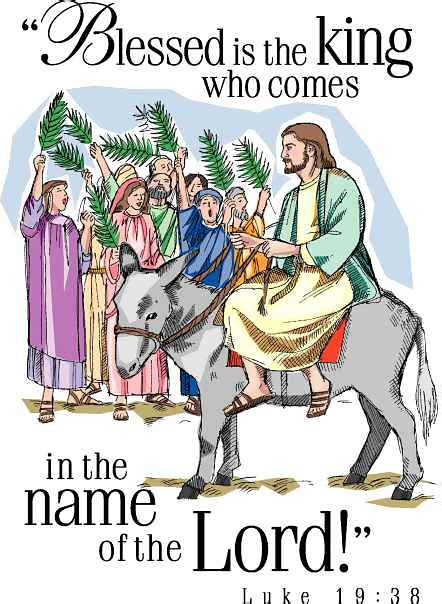
King David would have ridden in on his war-horse, but King Jesus rides in on a humbler animal, a donkey.  Luke wants us to be sure to know that this animal was borrowed from someone who knew of and loved Jesus, and it had never been ridden before.  Many in Jerusalem assumed Jesus was the Messiah and thronged around Him, praising Him and singing many of the lines read today from Psalm 118:25-29. Hosannah (Yesha anna in Hebrew) means save us now.  The crowds are asking Jesus to save them.

Do you think they knew that He was God in the flesh? They are cheering Him on. They are rejoicing in His presence. They are filled with hope that He is their Messiah.

The Passion readings appointed for today lead us from this celebratory procession to Jesus’ arrest, trials, death, and burial: 

A. Paul reminds us in Philippians 2:5-11 that Jesus humiliated or humbled Himself to come to earth to save us.  The Palm Sunday crowds expected Him to save them and that is exactly what He intended to do.  Paul wants us to be as humble and as obedient to the Father as Jesus was. Jesus obeyed His Father in everything, even up to and including His manner of death. Though totally righteous and holy, He died as though He were a rightfully tortured and despised criminal.

Paul also desires that we appreciate the depths of Jesus’ sacrifice on our behalf:  He gave up His heavenly prerogatives as King of the Universe–the One who spoke creation into existence–to be born in a stable, to a poor, young, homeless couple, in a ragtag and oppressed, tiny nation. Instead of demanding respect and a wide following as a great and exalted leader, He humbly behaved as a servant to all. No wonder the Father has honored Him above all things, declaring that His name commands total obedience, from every being, in every sphere of the universe!  Incidentally, this includes non-believers who will be shocked to arrive at the Great White Throne Judgment, only to discover they made the wrong choice to dismiss Him during their lifetimel

B.  Isaiah prophesies in 50:4-9 how Jesus, the Suffering Servant of God, will be treated during His Passion experience.  Verse 4 tells us He was tutored by Holy Scripture and also by His heavenly Father.  Verse 5 insists that He was always obedient to the Father’s will.  Verse 6 peaking for Jesus in the first person—I offered My back to those who beat Me, My cheeks to those who pulled out My beard.  I did not hide My face from mocking and spitting. This verse tells us He would endure beatings:  He was beaten by the Jewish Temple guards during the night;

Then He was beaten again by the Roman soldiers early in the morning. He would be spit upon, in His face (such a sign of contempt and hatred), and on His bloody body (YIKES!  to so desecrate God Himself)!  He will have His beard pulled out.

But notice too, in verses 7-9a—He will trust in God, His Father, the entire time.  He remained constant and faith-filled, despite all the evil that was done to Him!  I think He thus modeled to us how we might withstand persecution, if such befalls us for being Christians.  We are to hold on to our faith in God and to the love of Jesus for us, with both hands.

C.  Psalm 31:9-16 was written by King David.  The portion we read today is a prayer in which he seeks the Lord’s deliverance from a very powerful foe.  It is also very aptly describes what Jesus probably suffered on the way to His crucifixion at Golgatha, and even as He hung suspended from the Cross:  

   (1) V.9— Be merciful to Me, O LORD, for I am in distress… 

(2) V.10—My life is consumed by anguish and my years by groaning; My strength fails….

(3) Vv.11-12—Because of My enemies, I am the utter contempt of My neighbors; I am a dread to my friends—those who see Me on the street flee from Me.  I am forgotten by them as though I were dead; I have become like broken pottery.  

He is experiencing despair and grief.  But He does not succumb to it.  In verse 14, he reminds Himself, But I trust in You, O LORD.  I say, “You are my God.”  And He reaffirms for Himself, (v.15) My times are in Your hands.  We can trust in God to sustain us through the most difficult times because He is only a prayer away (meaning He is present to us).  He loves us, and He sent His only, beloved Son to die to save us.

D.  Our Passion narrative comes from Luke this year (22:14-23:56).  It needs little explanation as it speaks very powerfully for itself.  We see and understand that, though they had welcomed Him as a hero on Sunday, by Thursday they had replaced their Hosannah’s with outraged cries to Crucify Him!  What happened?  Well, quite simply, He disappointed their expectations.  They wanted a military leader to subdue the Romans; a warrior on a war-horse rather than a humble donkey.  They expected Him to overthrow their oppressors instead of teaching and praying daily in the Temple.  He didn’t live up to their idea of a Savior.  Their disappointment turned into anger and murderous rage, fueled and stoked by the jealous religious leadership who felt threatened by Him. So they killed Him.  But they didn’t eradicate either His memory or His influence.

We are currently living through a period in our country in which the influence of Jesus appears to have waned.  Fewer and fewer people seem to know Who Jesus is and why believing in Him and worshipping Him is important. Many churches have declining memberships. Folks appear to have given up regular Sunday attendance.  In fact, a statistic I heard recently said that most committed Christians only attend church once every three weeks.  Many activities compete for our attention—sporting events, leisure time pursuits, work, even sleeping in.  I was probably in my late 30’s when I realized that God spoke to me during Sunday worship.  His voice came to me through the music, the sermon, the readings, or sometimes from something a fellow worshipper said.  As much as I wanted to sleep in, I realized if I missed church, I would miss what the Lord had to say to me that week.  And as I came to regard my congregation as my “spiritual family,” I also realized I would miss what was often only a once a week contact. 

We need to remember all that Christ has done for us.  As I preached last week, we need a Savior because we cannot save ourselves.  The Good News is that we are washed clean of our sins by the sinless blood of the true Passover Lamb, our Lord and Savior, Jesus Christ.  Come, Let us adore Him!

©️2025 Rev. Dr. Sherry Adams

Palm Sunday/Passion Sunday

Pastor Sherry’s message for March 24, 2024

Scriptures: Isa 50:4-9a; Ps 31:9-16; Phil 2:5-11; Mk 14:1-15:47 

I have a pastor friend whose father had a sister; my friend calls her Aunt Mildred.  She never threw anything away!  When challenged about keeping ketchup packets from McDonalds or a program from some neighbor’s child’s 3rd grade school recital, she always said, “Well, you might need it someday.”  These are the words of what we might call today a hoarder.  Maybe you have one of these in your family.  My kids and I can name two.  My friend says he and his siblings would tease her, “But you have to be able to find “it” in order to use “it” when you needed “it.”

However, the joke was on them:  she apparently knew where all her “its” were.  If they asked her for the 1945 phone book for Wellborn and Suwannee County, she would reply something like, “It’s in the back bedroom, in the left hand corner of the closet, third shoebox from the bottom, in a plastic bag.” and she would be right.

My friend believes that God is somewhat like Aunt Mildred.

He appears to have a passion for saving, not stuff, but people!  Due to our frustrating tendencies to sin and sin again, He could have consigned us to some dumpster or heap of trash somewhere, at any point in time.  Instead, He insists—like Aunt Mildred—that we are worth saving.  In fact, He considers us so valuable that He decided we were worth dying for. 

Additionally, He knows where everyone He has saved is because He flat out loves us all!

          (Fairless and Chilton, The Lectionary Lab, Year B, 2014, p.132.)

Our Scripture passages today all emphasize how much Jesus was willing to suffer to save us.  Let’s check them out:

A.  Our Isaiah lesson (50:4-9a), comprises the 3rd of Isaiah’s four “Servant Songs,” and predicts some of the ways the “Suffering Servant” (Jesus) will suffer About 750-700 years before Jesus’ birth, the prophet Isaiah correctly foretold the coming of the Messiah and how He would die to redeem humankind.  Because the Jews rejected Jesus as Messiah, they really didn’t know what to do with these passages.  They thought they might depict the life and death of various prophets, or even the collective experience of the nation—though neither of these explanations really fits.  This side of the Cross, we know these passages (Isaiah 42:1-4; 49:1-6; 50:4-9; and 52:13-53:12) refer to Jesus and especially to what He would undergo (His Passion/emotional spiritual, and physical distress).

He will be obedient to the will of the Father, even though it included His torture and death.  Verse 6 of Isaiah 50—I offered my back to those who beat Me, My cheeks to those who pulled out My beard.  I did not hide My face from mocking and spitting.  This verse tells us He would endure beatings.  He was beaten by the Jewish Temple guards during the night; then He was beaten again by the Roman soldiers early in the morning.  He would be spit upon, in His face, on His bloody body (God Himself, so horribly desecrated!)  He will have His beard pulled out.  But, verses 7-9a—He will trust in God, His Father, the entire time.  Jesus remained so constant, so faith-filled through it all.

B.  Our Psalm (31:9-16) was written by King David.  The portion we read today is a prayer in which he seeks the Lord’s deliverance from a very powerful foe.  It is also very aptly describes what Jesus probably suffered on the way to His crucifixion at Golgatha, and even as He hung suspended from the Cross:  Verse 9— Be merciful to Me, O LORD, for I am in distress….verse 10—My life is consumed by anguish and my years by groaning; My strength fails….verses 11-12—Because of My enemies, I am the utter contempt of My neighbors; I am a dread to my friends—those who see Me on the street flee from Me.  I am forgotten by them as though I were dead; I have become like broken pottery.  He is experiencing despair, abandonment, and grief, but He does not succumb to them.  In verse 14, he reminds Himself, But I trust in You, O LORD.  I say, “You are my God.”  And He reaffirms for Himself, (v.15) My times are in Your hands   We can trust in the Lord to sustain us through the most difficult times because He is only a prayer away (meaning He is present to us).  He loves us, and He sent His only, beloved Son to die to save us.

C.  Paul shared with us what scholars believe is an ancient hymn of the early Church (Philippians 2:5-10).  It was probably a statement that newly baptized Christians had to memorize as it succinctly summarizes exactly what Jesus did for us, and how the Father regarded His saving work on our behalf.  

Paul wants us to be as humble and as obedient to the Father as Jesus was. He obeyed His Father in everything, even up to and including His manner of death.  Though totally righteous and holy, He died like a tortured, despised criminal.

Paul also desires that we appreciate the depths of Jesus’ sacrifice on our behalf:  He gave up His heavenly prerogatives as King of the Universe–the One who spoke creation into existence–to be born in a stable, to a poor, young, homeless couple, in a ragtag and oppressed 2/3rds world nation.  Instead of demanding respect and a wide following as a great and exalted leader, He humbly behaved as a servant to all.   

No wonder the Father has honored Him above all things, declaring that His name commands total obedience, from every being, in every sphere of the universe!

D. Finally, we have Mark’s (Peter’s) version of “the Passion of the Christ.”   Remember, Mark wrote for a Roman audience, to convince them that Jesus far surpassed their pantheon of pagan gods.  His Passion narrative emphasizes Jesus’…(1) Stoicism in the face of injustice and brutality; (2) His total command of the situation, even though His treacherous enemies conspired to murder Him; (3) His enormous self-control; (4) His obedience to His authority, His Father; and (5) the way in which He lived out prophesies spoken about Him from ages past (Romans would only learn this last as they later investigated the new Christian faith).  The centurion at the foot of the Cross, no doubt assigned to hundreds of crucifixion details, both marveled over the way in which Jesus died—neither begging, nor crying, but surrendering His spirit.  And, given that many Romans were superstitious, he noted such supernatural special effects as the eerie darkness from noon to three, the earthquakes, and the numerous tombs opening at his death.  The way Jesus conducted His life, and the very brave way in which He suffered and died, would have impressed the average Roman.

On this Passion Sunday, let’s agree to meditate on Jesus’ behavior and what he modeled for us as He endured the Cross.  His passion proves to us the depth of His love for us.  May we each never lose sight of that fact.  He has saved us (instead of stuff) and, like Aunt Mildred, He never forgets where we are.  Jesus endured the worst Satan could inspire evil men to do to Him, for the joy set before Him (Hebrews 12:2)—our redemption!

I think it is safe to say that we hate to suffer.  However, suffering seems–like death, taxes, and change–inevitable in this life.  During times of suffering, we want to remember–like King David and like Jesus–that God has everything well in hand.  He knows we may be worried about many things:  An inflation economy and runaway spending by Congress; rising and unarrested crime; the deluge of illegal outsiders rushing our southern border; the uneven and unfair application of justice in our courts; wars in Ukraine and in the Gaza Strip; let alone worries about health, our kids, our grandkids, the future.

But He holds us in His hands.  We can trust in Him because He is our saving, redeeming, and very present God.  Let’s focus on being as humble and as obedient to God as Jesus.  And, let’s give our Lord all the glory and praise He is due for loving us and for saving us.  Amen!  

©️2024 Rev. Dr. Sherry Adams

A Four-Day Journey

Pastor Sherry’s message for April 2, 2023

Scriptures: Isa 50:4-9a; Ps 31:9-16; Phil 2:5-11; Matt 27:11-66

Ironically, over 2000 years ago, the Sadducees had a tradition in which they believed the Messiah would show up four days before Passover. As a result, they kept the gates of the Temple open each year on this date so that He could walk right in and assume His rightful place. In fact, Jesus—the True Messiah–did choose to re-enter Jerusalem exactly 4 days before Passover, and proceeded to pray and teach in the Temple. By this time, many Jews had encountered Him. Many others had heard of His miracles, His healings, and of how He cast out demons. They were so taken by Him that crowds waited with joyous anticipation and with baited breath to see what He would do next.

The fact that Jesus chose that exact day to come back into Jerusalem would have driven the Jews’ expectations for their nation to a feverish height. They were sure He would overthrow the Romans, free them from oppression, and reign victoriously as King David had in ages past. But the Romans, too, would have heard the rumors and thus were anticipating an insurrection. They had called in reinforcements in case of an armed revolt. So tensions were very high in the city that day.

Today, we celebrate that historic day, calling it Palm Sunday–because the crowds waved palm branches in celebration of His arrival—or Passion Sunday, in anticipation of Jesus’ suffering and crucifixion, a brief 4 days later. The minor prophet Zechariah had predicted what would happen some 500 years before this event took place (9:9) Rejoice greatly, O Daughter of Zion! Shout, Daughter of Jerusalem! See, your king comes to you, righteous and having salvation, gentle and riding on a donkey, on a colt, the foal of a donkey. This is exactly Who Jesus was—their righteous Savior. This is exactly what happened. This is exactly how the Jews rejoiced: As Jesus rode in, the people shouted Hosanna (actually, Yasha anna in the Hebrew), which means, Save us, Lord! They were quoting Psalm 118:25-29 O Lord, save us! O Lord, grant us success. Blessed is He who comes in the name of the LORD…. The LORD is God and He has made His light shine upon us. With boughs in hand, join in the festal procession up to the horns of the altar. You are my God and I will give you thanks; you are my God, and I will exalt you. Give thanks to the LORD for He is good; His love endures forever.

On this day, they were excited and delighted! But 4 days later, they were demanding His death! By then, they had realized that Jesus had failed to meet their messianic expectations. As the “2 Bubbas and a Bible” explain it, “He was not 6 feet plus, with abs of steel. He rode into town on a baby donkey, not a warhorse. He went to pray at the Temple, not to protest at the palace. Jesus did not turn out to be their idea of a savior.” (Chilton & Fairless, Lectionary Lab Commentary, Year C, 2015, p.142).

But, as our Scriptures today highlight, He was our Heavenly Father’s Idea of a Messiah:

A. In Isaiah 50:4-9a, we read what is known as the 3rd Suffering Servant Song. Written some 750-700 years before Jesus’ birth, the prophet Isaiah predicts, exactly, what Jesus would experience and how He would behave as He faced and endured the Cross. Its theme is that Jesus came to earth determined to save us. He came into the world to pay the penalty for and to redeem us from our sins. He was instructed or trained for this by the Holy Spirit, and by what He read and meditated upon in Scripture (vv.4-5), the Old Testament writings available at that time.

Verse 6 tells us that His trial by the Sanhedrin led to significant suffering at their hands: They beat Him. They mocked Him. They spit in His face. They even pulled out the hairs of His beard. This was all before He was presented to Pilate for round two by the Romans.

What sustained Him? What helped Him to bear up under such torture? First, He knew His purpose. There was for Him deep meaning to His suffering. And, second, He trusted in His heavenly Father to assist and to comfort Him (vv.7-9) Because the Sovereign LORD [the Father] helps Me, I will not be disgraced. Therefore have I set My face like flint, and I know I will not be put to shame…He who vindicates Me is near…it is the Sovereign LORD who helps Me. His relationship and His intimacy with the Father are what propelled and compelled Him. This essentially kept Him emotionally and spiritually “bullet-proof” against the condemnation and the despicable treatment He received from the religious authorities and the forces of evil at work during His passion.

B. Philippians 2:5-11 is known as “the Philippian Hymn.” Bible scholars believe newly baptized Christians, in the early Church, memorized and recited this brief summary of exactly what Jesus did for us as a verbal profession of their faith. St. Paul included it in his letter because he wanted the church in Philippi (and us) to both understand and follow Jesus’ model of humility and obedience to the Father; as well as to realize the huge significance of what Jesus gave up—His heavenly/godly prerogatives— to become human like us. The One Who spoke creation into existence, the King of the Universe, was entrusted as a helpless infant to a poor, homeless, young couple. He lived His early life as a carpenter, eking out a living in an obscure, back-woods village. He Himself was sinless, but at the Cross He bore all our sins, past, present and future. The Great Shepherd humbled Himself and gave His life for us, His sheep.

As a result of His obedient self-sacrifice, God the Father has raised Him to the highest position of honor. At His name, every creature must bow. No person, animal, angel, or demonic entity has more power or greater authority.

C. Our psalm today (31:9-16) details Jesus’ thoughts on the way to and during His crucifixion. He abides in His Father’s love, praying to and calling out to Him in His mind: (V.9) Be merciful to Me, O LORD, for I am in distress; (V.10) My life is consumed by anguish and My years by groaning; My strength fails….(V.11) Because of My enemies, I am the utter contempt of My neighbors…(V.12) …I have become like broken pottery. He is experiencing despair, extreme pain, and grief, but He does not let it overwhelm Him, or turn Him against God the Father (V.14) But I trust in You, O LORD. I say, “You are My God.” Based on His faith, He goes on to reassure Himself, (v.15) My times are in Your hands.

If only we too could remember, when suffering, to pray to God and to trust in Him to sustain us during difficult, painful times.

D. Matthew’s version of Christ’s Passion is well worth meditating on this Holy Week. Traditionally, it begins in Chapter 26 at verse 14 and continues through the end of our Gospel reading today (Matthew 27:11-66). In today’s portion, we follow Jesus from His trial before Pilate, to His exchange for Barabbas, to His beating at the hands of Roman soldiers to His crucifixion, death, and burial. He had been betrayed and abandoned by all His friends–except John and a few female followers, including His mother. His Father registered His grief and judgment against the Jewish establishment with earthquakes, 3 hours of darkness ending with Jesus’ death; and splitting the Temple curtain from top to bottom. Then, anticipating Jesus’ glorious resurrection, the Father opened some tombs, and resurrected (v.52) …many holy people.

What a journey, in 4 days, from a celebratory welcome parade, to a funeral march, to an ignominious death between 2 criminals. Jesus Christ paid the price for our sins because He believed in Scripture, in His purpose, and because He trusted in His Father’s plan and in His Father’s love. By teaching, preaching, healing, casting out demons, dying a dreadful death in our place, He faithfully completed His 1st mission to earth. He has now returned to Heaven and is seated with the Father, awaiting with us the timing of His 2nd Coming. As we wait to greet Him, let us inspire ourselves with the words of the writer to the Hebrews (12:2-3) Let us fix our eyes on Jesus, the author and perfecter of our faith, Who for the joy set before Him [our salvation] endured the cross, scorning its shame and sat down at the right hand of the throne of God. Consider Him who endured such opposition from sinful men, so that you will not grow weary and lose heart.

©️2023 Rev. Dr. Sherry Adams

Palm Sunday, 2020

Pastor Sherry’s Message for April 5, 2020

Scripture Readings: Isaiah 50:4-9a; Psalms 31:9-16; Philippians 2:5-11; Matthew 26:14—27:66

         Some of us are old enough to remember a book that came out in 1984 called Future Shock.  In it the author, Alvin Toffler, cited a dizzying array of changes that had already occurred in the world back then, and proclaimed—accurately so—that the rate of change in the 20th century was increasing exponentially.  He predicted that people would become overwhelmed by the rate of change and would have difficulty orienting ourselves, let alone feeling secure, in what amounts to a cultural whirlwind or earthquake.  As I tune into the daily news reports on the Covid-19 virus, I am reminded of Toffler’s premise.  One day the experts tell us one thing; the next day, given new information, the previous perception has changed and been replaced by something new.  We can expect that our understandings of this pandemic will continue to modify as doctors and scientists gather more data and refine their predictive models.  Meanwhile, we are left coping with the usual anxiety surrounding life as we know it, to which has now been added the stress of a serious health risk and the threat of potential death.  How will we manage to maintain our footing, our balance, our sanity in these uncertain times? 

         As always, our God has some very useful, practical, and encouraging reminders for us in the Scriptures appointed for today.  I recommend you read the passage as I attempt both to explain it and to share its relevance as a counter to our mounting anxiety:

         Our Old Testament lesson is from the prophet Isaiah.  Chapter 50 (verses 4-9a) contains the 3rd of 4 passages known as the “Suffering Servant Songs.”  Between 750-700 years before Jesus was born, the prophet was describing—very accurately—what Jesus would experience and how He would behave as He faced and endured the Cross.  Prior to His crucifixion, the Jews believed these passages may have described the predicted Messiah, but most did not agree that they referred to Christ.  It is only from this side of the Cross that we realize they do refer to and were precisely fulfilled by Jesus.  The point of this 3rd Servant Song is that Jesus came to earth determined to save us; that is, that He came into the world to pay the penalty for and to redeem us from our sins.  To prepare Himself, He studied God’s Word, the Old Testament writings.  During the 30 years before His public ministry, He steeped Himself in Scripture (vv.4-5) We would say He was a “student of the Word.”  Verse 6 tells us that His trial by the Sanhedrin (the Jewish religious ruling body) led to significant suffering at the hands of His own chosen people.  They beat Him, mocked Him, spit upon His precious face, and even pulled out the hair of His beard—all prior to appearing before Pilate.  What sustained Him?  What allowed Him to endure all this?  He knew His purpose and He trusted in the Father to help Him:  (vv.7-9) Because the Sovereign LORD [the Father] helps Me, I will not be disgraced.  Therefore have I set My face like flint, and I know I will not be put to shame…He who vindicates Me is near…it is the Sovereign LORD who helps me.  Jesus is reassuring Himself, though the prophet’s words, of the Father’s presence and the Father’s love.  This is what defines Him, not the attitudes, the condemnation, nor the despicable treatment of the religious authorities of His day. 

Such a lesson for us, isn’t it?  Do you see the trustworthiness of the Lord?  Thank God Jesus Christ is the once and for all sacrifice for our sins (Hebrews 7:6-27)!  He paid the price for us!  His atoning death set us free from the penalty we deserved.  And Jesus did it believing in Scripture and trusting in His Father’s love.  May we cling to the promises of the Old and New Testaments, and may we hold onto our faith in our God—despite accelerating rates of change and worldwide pandemics!  May we exhibit faith like that of Jesus!

Psalm 31 was written by King David.  It describes how he felt during his tough times, both prior to and after ascending the throne of Israel.  But it also very aptly describes what Jesus probably suffered on the way to His crucifixion at Golgatha, and even as He hung suspended from the Cross:  (V.9) Be merciful to Me, O LORD, for I am in distress… (v.10) My life is consumed by anguish and my years by groaning; My strength fails….(v.11) Because of My enemies, I am the utter contempt of My neighbors…(v.12) …I have become like broken pottery.  He is experiencing despair and grief.  But He does not succumb to it.  In verse 14, he reminds Himself, But I trust in You, O LORD.  I say, “You are my God.”  And He reaffirms for Himself, (v.15) My times are in Your hands.  These truths hold true for you and me as well.  I think it is safe to say that we hate to suffer.  However, suffering seems, like death, taxes, and change, inevitable in this life.  During times of suffering, we want to remember–like King David and like Jesus–that God’s got this!  God was not surprised by the virulence of this pandemic.  God knows that many of us are experiencing “cabin fever” while “sheltering in place.”  He knows we are worried about our health and about the economy, and are perhaps even stress-eating. Yikes!   We can trust in Him to sustain us through the most difficult times because He is only a prayer away (meaning He is present to us), He loves us, and He sent His only, beloved Son to die to save us.

St. Paul’s epistle to the Philippians (2:5-11) contains what the early Christian Church called “the Philippian Hymn.”  It was probably a statement that newly baptized Christians had to memorize as it succinctly summarizes exactly what Jesus did for us, and how the Father regarded His saving work on our behalf.  Paul wants us to be as humble and as obedient to the Father as Jesus was.  He also desires that we appreciate the depths of Jesus’ sacrifice on our behalf:  He gave up His heavenly prerogatives as King of the Universe, the One who spoke creation into existence, to be born in a stable, to a poor, young, homeless couple, in a ragtag and oppressed 2/3rds world nation.  Instead of demanding respect and a wide following as a great and exalted leader, He humbly behaved as a servant to all.  He obeyed His Father in everything, even up to and including His manner of death—totally righteous and holy, He died like a tortured, despised criminal.  No wonder the Father has honored Him above all things, declaring that His name commands total obedience, from every being, in every sphere!  Wow!  This reminds me of the lyrics of a Chris Tomlin song from sometime back a while ago:

Amazing love, O what sacrifice,

The Son of God given for me…

My debt He paid and my death He died,

That I might live…that I might live.

How amazing is God’s love for us!

         Finally, we have Matthew’s version of “the Passion of the Christ” (26:14-27:66), or what we know as the story of Jesus’ trials, crucifixion, and death.  It’s a long passage, but well worth reading and meditating upon during Holy Week.  It reminds us of the price our Lord paid for us, emotionally, intellectually, physically, and spiritually.  He was “all in,” whereas Judas, Peter, the rest of the Apostles, the Jewish religious leadership, the mob, even Pilate all betrayed and abandoned Him.  Simon of Cyrene helped Him carry His cross (voluntarily or coerced, it’s unclear), the hardened, Roman centurian on execution detail (a Gentile) attested to His true identity, and a few devoted women (plus John, according to his Gospel) remained with Him until He gave up His spirit.  Notice that the Father registered His own grief with earthquakes, 3 hours of darkness, and splitting the heavy temple curtain (made of woven goat hair) from top to bottom.  Additionally He commemorated the completion of Jesus’ work by opening tombs, and offering a preview of the Big Easter Event by resurrecting (v.52) …many holy people.  The dead Christ was placed in His tomb, the stone sealed, and a detail set by Pilate to guard the grave.  What a journey from the noisy, Hosanna celebration of Palm Sunday to the quiet grief and despair of Good Friday!

         As Paul Harvey would have said, we know the rest of the story.  We know it doesn’t end there, with death having the last word.  Praise God!  When Jesus cried out from the Cross, (John 19:30) It is finished! (tetelestai), He meant that He had accomplished the work of redemption the Father had given Him to do.  All that is left is a kind of “mopping up detail” that we are living out today.  Jesus has demonstrated the truth of His name, God Saves.  Our God has done all the work of salvation for us.  The battle is over.  The victory has been won for us by Christ.  Again, thanks be to God who gives us the victory over sin and death, through our Lord, Jesus Christ.  All we have to do is say “yes” to Jesus.  All we have to do is allow Him to sit on the throne of our lives.  As we surrender to Him—just as He surrendered to His Father–He will bless us, guard us, protect us, and even resurrect us. 

         Yes, the world is changing at a hypersonic rate.  Many things we used to depend upon are uprooted or overturned or no longer reliable or even available.  In these anxiety-riddled and unstable times, Let us fix our eyes on Jesus, the author and perfecter of our faith, who for the joy set before Him endured the cross, scorning its shame and sat down at the right hand of the throne of God.  Consider Him who endured such opposition from sinful men, so that you will not grow weary and lose heart (Hebrews 12:2-3).  We can trust in our God, despite any threats to the contrary.  This Holy Week, let us stand firm our faith that Jesus has the power to help us, to sustain us, and to keep us sane, safe, and secure.  AMEN! 

©2020 Rev. Dr. Sherry Adams