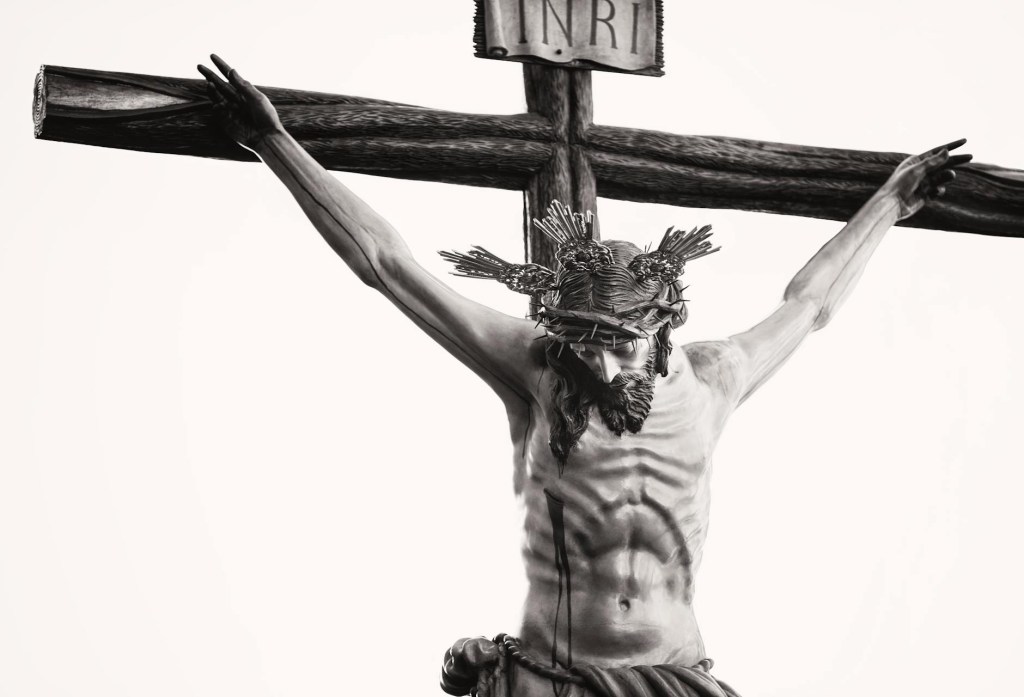
Wise or Foolish?

Pastor Sherry’s message for May 12, 2024

Scriptures: Acts 1:15-26; Ps 1; 1 John 5:9-13; John 17:6-19

Happy Mother’s Day to all of our mothers!  “Former president Jimmy Carter spoke at Southern Methodist University and related an incident that occurred after he left the White House. A woman reporter came to Plains, Georgia, to interview his mother [Lillian Carter] in relation to an article about Mr. Carter and his family. His mother really didn’t want to be interviewed but was being gracious. So when the reporter knocked at her door, Mrs. Carter invited her in. The reporter asked some hard questions and actually was rather aggressive and rude.

“I want to ask you a question,” she said. “Your son ran for the presidency on the premise that he would always tell the truth. Has he ever lied?”

Mrs. Carter said, “I think he’s truthful; I think you can depend on his word.”

The reporter again asked if he had ever lied in his entire life.

His mother said, “Well, I guess maybe he’s told a little white lie.”

“Ah, see there!” the reporter exclaimed. “He’s lied! If he told a white lie, he has lied.”

The reporter was still not satisfied and asked, “What is a white lie?” And then Lillian Carter said, “It’s like a moment ago when you knocked on the door and I went to the door and said I was glad to see you.””

(Brett Blair, http://www.eSermons.com. Adapted from an unknown source.)

Isn’t that just a great story?  Former President Carter’s mother was honest, but also protective of him.  Ms. Lillian was a true southern lady: she was neither rude nor unkind, but she still conveyed her distain for the pushy reporter.  We hope for this from our mothers, don’t we?  They are very well aware of our failings and foibles, but–because of their love for us– they would never admit these to an “outsider.

I think this is the attitude of Jesus in today’s Gospel reading (John 17:6-19).  Jesus is headed to the Cross and so He prays over His disciples to His Father.  He knew He would be leaving them shortly, due to His imminent death, so He was asking His Father to protect them.  He reminds God that He did not lose anyone the Father had placed into His hands [anyone who believed in Him].  He had kept His disciples safe, all except for Judas, His betrayer.  By his choice, Judas rejected Jesus, then (due to guilt, shame, and despair) took his own life.  Jesus refers to Judas as (v.12) the one doomed to destruction so that Scripture would be fulfilled.  How sad for Jesus to know, the whole time He and Judas were developing a relationship, that Judas would betray Him. 

Notice, Jesus is not praying for the world here, but rather about the 11 He had spent 3 years training (plus all of us who have believed in Him down through the ages).  He is headed to the Cross but He is praying for us.

What a gift to have Jesus pray to the Father for us!  He is still doing this to this day.  He sits at the right hand of the Father in heaven and intercedes for us daily.  What a gift to us if our mother and father prayed for us daily!  I remember reading some books back in the early 1990’s by a woman named Stormie Ormartian.  She wrote The Power of a Praying Wife, and The Power of a Praying Mother.  In the latter book, she prayed for the spouses of her newborn children, from their birth until they eventually married.  She saw her children joined to godly spouses due to her long term prayers.  What a gift to our children and grandchildren if we pray for them daily! 

Additionally, Jesus asks His Father not to remove us from the world—even though we, like Him, don’t belong to this world–but rather to keep us safe from the evil one.  He prayed for our protection. President Carter’s mother, Lillian, in a Christ-like way, was trying to keep her son’s reputation safe from an antagonistic reporter.

Our Lord—and our mothers—want us to withstand the seduction of the evil one and make wise choices for our lives.

In Psalm 1, our Lord spells out the biggest most profound decision we will ever make: to choose to be follow God or to reject God.  The psalmist couches this choice as that between godliness/righteousness and that of ungodliness/wickedness.  Do we choose the way of sinners or the way of those who love and obey God?  Proverbs 1:7 reminds us that—the fear of [awe, reverence for] the Lord is the beginning of knowledge, but fools despise wisdom and discipline.  Choosing to revere our God is the wise choice.  Choosing to reject our God is foolish.  Those are the two choices before us. 

The psalmist goes on to assert that the person who chooses to follow God is blessed or experiences true happiness. This blessed person resists becoming ungodly: The blessed person resists listening to the advice of the ungodly, such as, “Go ahead, seek revenge;” or “Hey, steal what you want…no one is looking, and even if they catch you, you won’t serve any time.;” or “You deserve love, even if it means cheating on your spouse, abandoning your children, etc.”  The blessed person resists hanging out with sinners.  We might befriend them so as to lead them to Jesus.  But if we linger with them too long, they begin to win us over to their way of thinking and of living. The blessed person resists joining in with mockers or atheists.  Atheists don’t just deny God’s existence, love, or power.  They are more dangerous than this; they are actually antagonistic to God.

The blessed person, instead, meditates on God’s Word, written and in the flesh (Jesus).  This is where he/she derives guidance to live a godly life. Such persons are fruitful, productive, lively, thriving. The ungodly, by contrast, live meaningless lives. They do not impact others for good, and in the end, are blown away like chaff by the wind.

The psalmist concludes by stating, For the Lord watches over the way of the righteous, but the way of the wicked will perish.  This is consistent with Jesus’ prayer of John 17:6-19, isn’t it?  Jesus prays for those of us who love Him that the Father will protect us from the evil one.

The Apostle John, writes in his first letter (1 John 5:9-13), He [or she] who has the Son has life; he [or she] who does not have the Son of God does not have life.  It’s the same choice as that in our psalm, isn’t it?  If Christ dwells in us—due to our faith, due to our having chosen to follow Jesus, due to our being born again—we are wise, godly, and blessed. 

If not, we are foolish and, as Scripture calls it, wicked.

The disciples were attempting to comply with this in their choice of a successor to Judas (Acts 1:15-26). You see, in the Hebrew way of thinking, 12 is the number of completion; eleven is therefore incomplete. They looked for other followers of Jesus worthy of being the 12th man on the leadership team.  Texas A&M Aggies football fans who attend the games in their home stadium call themselves “the 12th man.”  There are 11 players on the field forming their team, but the fans in the stands make the 12th.  

Peter, the other 10, and 109 or so other followers of Jesus are in the “Upper Room,” waiting on the impartation of the Holy Spirit (Pentecost—remember, next week, wear red, the color of fire and of the Holy Spirit), and develop criteria for the 12th man:  (1) He had to be someone who had followed Jesus from the beginning of His public ministry; and (2) He had to be someone who like them had witnessed and believed in the Resurrected Christ. They came up with two names, Joseph Barsabbas (also called Justus) and Matthias.  They drew lots and discerned that Matthias was God’s choice.  The Holy Spirit made the decision. It was not based on human favoritism or bias. The disciples looked for and ratified God’s choice. They trusted in God to make the final decision.

When we trust in God, we communicate with Him, and we obey, in faith, what we discern He says to us.  This is wisdom.  I once served on a call committee for my church.  We had narrowed down the candidates for our new pastor to two men.  We make our decisions by unanimous vote, assuming that if the Holy Spirit were leading us, we would all agree.  The vote was locked up for 3 meetings, 11 for one fellow, and 1 for the other.  People got angry at the lone hold-out, who was me (this happened before I left for Seminary).  They wanted to vote to change the unanimous agreement requirement so they could vote in the fellow they all liked.   I reminded them that such a vote would require 100% agreement and I would not cooperate in changing the rules until after this pastor decision had been made.  Someone asked me if I would consider voting by lots.  I agreed because I had faith that God’s will would prevail.  Someone else put 12 purple-wrapped candies in a basket along with 12 gold-wrapped candies.  No one could see what we were choosing because the basket of candies was passed over our heads.  As God would have it, all 12 of us picked the color designated for the guy for whom I had held out.  We were all blown away!  We did call that pastor and he lead us into a deeper faith and a deeper knowledge of Scripture.  He was a blessing to our church.  People who operate this way are blessed.

In honor of Mother’s Day, I want to share a Biblical example of a Godly woman, Abigail.  We find her story in 1 Samuel 25:1-44.  She is described as both (v.3) beautiful and intelligent.  But, she was married to a harsh and mean-spirited man, Nabol (his name in the Hebrew actually means fool).  Nabol was wealthy, owning 1,000 goats and 3,000 sheep, but he was also selfish and greedy.  David had been anointed king but was being chased about the wilderness by the jealous King Saul.  David sent emissaries to Nabol to ask for food from his flocks to feed his growing army and his followers.  He reminded Nabol that his men had protected Nabol’s flocks from both human and animal predators.  Nabol’s response was arrogant, inhospitable, and dangerous (vv.10-11)—Who is this David?  Who is this son of Jesse?  Many servants are breaking away from their masters these days.  Why should I take my bread and water, and the meat I have slaughtered for my shearers, and give it to men coming from who knows where? 

YIKES!  Is this the way this fool insults his future king?  David hears the report from his delegation and is steamed!  He assembles 400 soldiers and lights out to set Nabol straight.  He has vengeance on his mind.

Abigail hears from a servant that Nabol has offended the future king. She wisely knows she needs to remedy this or her foolish husband is toast. She gathers several donkeys’ loads of food and wine and heads to intercept David and his men.  She falls at David’s feet, amazingly accepts the blame for her husband’s foolish actions, and offers the hospitality her husband should have provided.  Furthermore, she urges David not to sully his reputation by taking revenge against Nabol.  David commends her for her grace, wisdom, and generosity, and accepts her gift of provisions.  But God takes Nabol’s life 10 days later.  David doesn’t kill him but God protects His anointed.  David then proposes to Nabol’s widow and Abigail becomes the wife of the future king.

Can we aim to be like this?  Righteous, wise, godly, like Abigail?  Or will we be foolishly reckless and contemptuous, like Nabol?  Let us pray that we each make the right choice, the wise choice.  Amen!

©️2024 Rev. Dr. Sherry Adams 

What’s Love Got to Do with It?

Pastor Sherry’s message for May 5, 2024

Scriptures: Acts 10:44-48; Psalm 98; 1 John 5:1-5; John 15:9-17

Back in 1984, the singer, Tina Turner, released a song called, “What’s Love Got to Do with It?” Some of you may remember the chorus to this song:

What’s love got to do, got to do with it?

What’s love but a second-hand emotion.

What’s love got to do, got to do with it?

Who needs a heart when a heart can be broken?

The song had a great tune and was catchy, but the theme was sad. She sang that you can’t trust in love. She sang that she is trying to protect herself emotionally. She was tempted to love again, but feared that if she did, her heart could be broken (and no doubt already had been).

A lot of people go through life this way.  They hold themselves back, afraid to invest in others.  They prefer emotional safety to the potential for hurt and disappointment.  Last week, I talked about how countercultural our God is…this is exactly a case in point:  We are called to love Him and to love others, despite the emotional risk to ourselves.

To quote Tina, “What’s love got to do with it?” Our Scriptures today answer:  Everything!

A. In our Gospel lesson (John 15:9-17) Jesus calls us to love Him, love others, and obey God.  He is essentially repeating and emphasizing the greatest commandments (Matthew 22:37-38)—Love the Lord your God with all your heart, and all your soul, and with all your mind [Be all in with God].  This is the first and greatest commandment.  And the second is like it:  Love your neighbor as yourself.  He also reminds us that we demonstrate or show our love by being obedient to God.  So, even though we might be disappointed or even have had our hearts broken, our Lord wants us to continue to love Him and to love others.  Love is how we abide in Christ—it’s how we stay attached to the Vine.  Sorry, Tina, holding back out of fear is an excuse Jesus would understand but He would not want us to let that fear limit us.

B.  John, the beloved disciple, says pretty much the same thing, but with a slightly different emphasis (1 John 5:1-6): In verse 1, he defines what it means to be born again.  We believe in Jesus and we learn to love Him.  We are born again through our faith, together with our love.  In verse 3, he stipulates how we prove our love for God—This is love for God: to obey His commands.  And His commands are not burdensome….We believe, we love, we obey.  In verses 4-5, he argues that we overcome whatever evil there is in the world not by fighting, but by our faith (typically expressed in prayer).

C. Today, I want to make two points concerning these truths:

1. 1st, we often find what we are looking for, or what we are focused on: The story is told of two fellows who had been in India and happened to be visiting in the home of the same friend.  The guests were talking about mission trips and missionaries.  The first man—who had been in India all of 5 months–said, “I have no use for missions and missionaries.  I spent months there, and didn’t see that they were doing anything; in fact, in all that time I never met a missionary.  I think the church is wasting its money on missions.”  The second fellow was a quiet older gentleman.  He had not spoken up at all until this point.  He now said, “Pardon me; how long did you say you were in India?  ‘Five months.’ ‘What took you there?’  ‘I went out to hunt tigers.’  ‘And did you see any tigers?’  ‘Scores of them.’  ‘It is rather peculiar,’ said the old gentleman, ‘but I have spent thirty years in India, and in those years I never saw a tiger but I have seen hundreds of missionaries.  You went to India to hunt tigers and you found them.  I went to India to do missionary work and found many other missionaries.”

(As reported by Rev. Dr. J. Vernon McGee, Through the Bible Commentary on 1 John, Thomas Nelson, 1991, pp.143-144.)

In the same way, I had never noticed pregnant ladies in bathing suits at the beach, until I became one.  Then I saw them everywhere.  If you drive a Jeep or a Corvette, I am told, you similarly note them wherever you go. The point is that we find what we focus on.  If it’s on becoming broken-hearted, Dear Tina, that’s what we will notice.  But if we can begin to trust in love, we will begin to notice evidence of trust-worthy love all around us.

Neuroscience tells us that our brains are pre programmed to look for the negative in life.  It was probably adaptive back when we were trying to avoid saber-toothed tigers (speaking of tigers).  To habitually think positively, we have to reprogram our brains, deliberately developing new neural pathways.  We have to train ourselves to think positively and this positive thinking is highly correlated with achieving happiness.  Negativity may keep a person emotionally and physically safe, but it does not lead them to happiness.

2. The 2nd point is that any fight we face in the world is God’s to contend with.  He usually does not call us to fight but rather to obey Him in faith.  Paradoxically, Joshua’s battle at Jericho is a perfect example of this (Joshua 6:1-20).  Joshua was God’s choice to succeed Moses as the leader of the children of Israel.  The Lord charged him with taking the Promised Land and conquering the pagans who inhabited it.  Lest you feel sorry for the pagan Canaanites, please note that the Lord gave them over 400 years to accept Him as God and they refused.  They seemed to prefer sacrificing their babies to the fire, and all the sexually perverse religious rituals they performed, to worshipping a holy God.  So He determined that He—who owns the whole earth—would give the land to His Chosen Ones.

In a strategy that is masterful and brilliant, God first stopped up the Jordan at flood stage so all 2 million Israelites could cross over into Canaan (on dry land, as the text makes clear).  Remember the generation that had refused to trust in God to take the Promised Land 40 years earlier had all died out during the wilderness wanderings.  They had experienced the Red Sea Crossing.  Their younger descendants had not.  So God repeats the miracle, both to show them He is with them and to remind them of what He had done for them in the past.

Now bear in mind that this strategy no doubt freaked out the folks of Jericho, who mistakenly thought they were safe until the Spring floods receded. Then when the Hebrew army approached the city, they simply marched around the outside of the city walls.  The Levites carried the Ark of the Covenant and 7 priests blew ram’s horn trumpets, signaling that the Lord will be taking the city.  The soldiers followed, armed, but did not engage the enemy.  They did this once a day, as per the Lord’s instructions, for six days.  Don’t you know the folks of Jericho were wondering, “What in the world are they up to?”  The truth is that our God was engaged in psychological warfare.

On the 7th day (seven being the number for completion or perfection), they marched around the city seven times.  On the 7th trip, the trumpets were blown, the marching army and the encamped women, children, and elderly shouted in unison, and the city walls suddenly collapsed.  Without their massive walls to protect them—and given how psychologically demoralized they must have been–the citizens of Jericho were quickly overcome.

This is such a great example of how God fights for us (2 Chronicles 20:15)—This is what the Lord says to you: “Do not be afraid or discouraged because of this vast army.  For the battle is not yours , but God’s.”  We often summarize this passage by saying “the battle belongs to the Lord.”  Back in Joshua 5:14, and prior to the circular marches, Joshua had encountered the pre-incarnate Christ, Who calls Himself, the Commander of the Army of the Lord (Remember, when Jesus comes again, He will slay all the evil people at Armageddon; He will return as the “Commander of the Army of the Lord”).  At this meeting, Jesus told General Joshua God’s strategy and said to Joshua, See I have delivered Jericho into your hands, along with its king and its fighting men. 

We may not have a similar encounter with Jesus, but it is still true that the battles we believers face belong to the Lord.  Paul tells us in Ephesians 6:12—For our struggle is not against flesh and blood, but against the rulers, against the authorities, against the powers of this dark world and against the spiritual forces of evil in the heavenly realms.  The forces of evil inhabit this world.  When things look to be inspired by evil, we utilize the main weapons we have—the sword of the Spirit (the Word of God) and prayer.  Upset about the economy?  Pray that God would reverse the policies and the governmental overspending that have led to inflation.

Distressed about strife or broken relationships in your family or difficulties at work?  Pray that God will soften hard hearts and bring about peace and reconciliation.  Out of work? Pray that God would supply the right job and help you to have the right attitude as you embark on it. Troubled about your health or your finances?  Pray.  None of these issues is too difficult for God to address and to transform.  On our own, we can’t but He can!

We worship the God who is love.  So “What’s love got to do with it?”  Everything!  Love is the key.  Love is of foremost importance to God–followed closely behind by our faith and our obedience.  We are usually not called to fight; instead, we are called to believe, to trust in the Lord.

If we love God, have faith in Him, and are obedient, we are indeed His children.  He will and does provide for us.  He will and does protect us.  He will and does bless us and shower us with His love!  Thanks be to God Who gives us the victory through our Lord Jesus Christ!  Alleluia, Alleluia!

©️2024 Rev. Dr. Sherry Adams 

Counterculture

Pastor Sherry’s message for April 28, 2024

Scriptures: Acts 8:26-40; Ps 22:15-31; 1 Jn 4:7-21; Jn 15:1-8

Years ago (in the early 1970’s), I was teaching Sociology in a Catholic Girls School in Newport, Rhode Island.  I was a new teacher, trying to impress upon my high school students—all 12th graders—how difficult it is to not conform to societal expectations.  It seems to be true that most of us conform or go along with what is expected, most of the time, so as not to be singled out or harassed by “the crowd.”  You would not usually drive the wrong way on a one way street, for instance.  Most of us would not deliberately walk out of a store without paying for what we found there.  My biggest fear in high school was that I would show up to “Wear Your Pajamas to School Day” in my pj’s, only to discover I had the wrong day.  People are doing more outrageous things in public now than was true back in the 70’s…but most people, most of the time, do what we call is normative or normal. 

So I asked my girls if they would be willing to try a harmless experiment in not conforming.  They wore school uniforms, so there were very few ways they could modify their dress to be unique.  I challenged them to do something simple like wear ribbons in their hair (not a trend at that time).  No one was willing to do even something this tame.  When I led them in a discussion as to why that was, they replied that they did not want to “stick out.”  I considered the experiment a success because they had to seriously consider the personal cost of not conforming to cultural expectations, and decided the potential embarrassment wasn’t worth it.

I bring this up today because, as Christians, we sometimes forget how countercultural Jesus was, and how countercultural He expects us to be as well:

A.  Let’s look at Acts 8:26-40.  In this passage, Dr. Luke describes deacon Philip’s encounter with a fellow returning to Ethiopia.  Persecution against Christians had broken out in Jerusalem.  One would think, “This is terrible!”  But in a countercultural, counterintuitive way, God uses it to begin to push the disciples out into Judea, Samaria, and to the ends of the earth (to begin to fulfill the “Great Commission”).  Philip (not the Apostle, but a deacon) goes to Samaria.  In verses 5-8, before this passage, we are told that he preached the Word, healed the sick, and cast out demons.  He was doing an excellent job!  The culture would say, “He’s a success. Keep him there!”  But God, through the Holy Spirit, sends him off in a countercultural direction.

Philip was serving the Lord in Samaria, to the north, but was suddenly sent to the Gaza Road, way to the South.  The Holy Spirit directs him to the Ethiopian Treasury Secretary.  The guy was a North African believer in Judaism.  Notice:  He has already encountered the Word of God in the Old Testament.  He is reading Isaiah 53, the last of the 4 Suffering Servant Songs—all of which predict Jesus—but he does not understand it.  Philip, in a divine appointment, offers to help him.  The Holy Spirit has already prompted the Ethiopian official to be curious about Scripture.  Then God prompted Philip to be right there to explain.  Philip does such a good job of explaining the Gospel that the guy wants to become a Christ-follower.  He asks to be baptized.  They are in what is essentially a desert, but miraculously spy water—is this a divine appointment or what?–and out in broad daylight, before any passersby, in a countercultural, not-to-be expected way, Philip baptizes him.  Wow!

Wouldn’t we expect, then, that Philip would continue to hang out with the guy, to be sure any other of his questions were answered?  But no, the Holy Spirit immediately whisks him away to a Philistine city, Ashdod, to evangelize others.  Our God seems to delight in doing the unexpected.

In fact, I think He enjoys surprising us in countercultural ways.

Scripture is silent about how many Samaritans or Philistines came to Christ through the ministry of Philip.  But Early Church history tells us that the first big Christian church was built in Ethiopia!  That Ethiopian must have gone home and told many others about Jesus.  Even today Ethiopia is a majority Christian nation surrounded by Moslem nations.

In 1 John 4:7-21, John, the Apostle of love, sets out several countercultural realities about AGAPEO love—the love of God poured out upon us–not philios [brotherly ] or eros [sexual] kinds of love.  In verse 7, we are told that agapeo love comes from God, because God is love.  Love is not our initiative; we humans did not invent it.  So, it makes sense that, as stated in verse 12, when we demonstrate love, we are imitating God.  God demonstrated His love for us (verse14) by sending Jesus to redeem us.  Verses16-17 remind us that one of the ways we see or experience or cooperate with God is by doing things that are motivated by love. 

Aren’t we touched when we see a TV ad (like for Tunnels to Towers or St. Jude’s Childrens’ Hospital), through which generous people provide homes for disabled servicemen, pay off mortgages for police widows, or pay for treatment for kids with cancer?  James writes in 1:17 Every good and perfect gift is from above, coming down from the Father of the heavenly lights, who does not change like shifting shadows.  In other words, if you are moved to do something generous or kind—like contribute to one of these charitable organizations–it is because the Holy Spirit has inspired you.  Watch the news.  It’s hard to see any evidence of love in action.  Loving actions are countercultural and our God wants us to get into the habit of behaving this way.

John adds in verse 18—There is no fear in love.  But perfect love drives out fear.  Knowing God loves us can keep us from caving in to fear.

God’s perfect love for us casts out our fear.  If we live on a daily diet of the broadcast news, we can become fearful of many things…everything from nuclear holocaust, to being mugged or car-jacked, or to losing our homes, health, or incomes.  But if we can focus on God’s love for us, we can enjoy freedom from these kinds of anxieties.  The peace that passes all understanding—not dependent upon our circumstances, but on our relationship with Jesus–is clearly countercultural.

C. Our Psalm today, (22:25-31), reminds us that God’s rule is universal.   If we are aware of what is going on in the world currently, we might be skeptical that this is true.  Anti-Jewish protestors are swarming our college campuses nationwide, threatening the safety of Jewish students; and causing graduations to be cancelled for the very students who missed their high school graduation ceremonies due to Covid lockdowns.  There are wars in Ukraine and between Israel and Arab Terrorists.  Our economy is shaky and the cost of gas and groceries is sky-high.  Wherever we look, it appears as though what we call wrong is seen as right by the culture, and what we see as right, the culture condemns.

The psalmist, King David, wants us to be reassured that the day will come that (vv.27-28)—All the ends of the earth will remember and turn to the Lord, and all the families of the nations will bow down before Him, for dominion belongs to the Lord and He rules over the nations.  This view is countercultural now, but we who believe in Jesus Christ, and in His 2nd Coming, trust that this prediction will come true.

D. Finally, we have our Gospel lesson, John15:1-8—I am the true vine, and my Father is the gardener.  In this lesson, Jesus is referring to Himself as the “genuine Israel.”  All throughout the Old Testament, the vineyard or grape vines are a metaphor for the Jewish people.  If Jesus is the authentic Israelite, it is because He has loved His Father, been obedient to His Father, and loved His people. 

Additionally, He is saying that we can do nothing of any significance apart from Him.  Our culture would have us believe that might makes right; that the one with the most money, biggest social network, or most political power/influence wins. But, counterculturally, we know that none of that stuff will get us to Heaven!  Money, power, fame, even health can all be lost. But a vital relationship with Jesus will see us through this life and safely into the next.

If loving Jesus today makes us nonconformists or even dinosaurs, well I say, so be it!  I don’t know about you, but I would rather love Jesus and live outside the current norms than be a cultural conformist.  Remember, as my little experiment with my high school students demonstrated, the pull or power of the culture over us is very strong.  Wearing ribbons is not a sufficient motivator to behave in a countercultural manner, but being a follower of Jesus Christ is—or should be!

This week, try to be aware of times and events when our faith runs counter to the culture.   Look for the opportunities that exist when God provides you a divine appointment.  Let’s try also to be countercultural people who daily demonstrate God’s love.  Amen and amen!

©️2024 Rev. Dr. Sherry Adams 

SMART SHEEP

Pastor Sherry’s message for April 21, 2024

Scriptures  Acts 4 5-20; Ps 23; 1 Jn 3 16-24; Jn 10 1-18 

The story is told about a woman calling for help from a small plane. She and her husband were flying a small plane to dine with friends, perhaps from Live Oak to Cedar Key.   Once airborne, the husband got sick and fainted.  Scared witless, she radioed for help, saying she didn’t know how to fly. Lots of people provided lots of advice as to her location, her altitude, how to find out how much fuel remained, and how to turn on her landing lights. A flight instructor out at a nearby airport heard the radio chatter. He jumped into his plane and took off. He wisely waited for a lull in radio traffic, then told others who he was and to stop transmitting. He introduced himself to her and told her he would try to coach her down safely. When he saw her plane, he told her to turn her landing lights off. Then he came alongside her and taught her the basics of flying. He also called ahead for an ambulance for her husband and then helped her to land safely. The woman and her husband were saved because she obeyed the voice of the flight instructor.

Our Psalm and Gospel readings both reference us as sheep, and the Lord as our Shepherd. At first blush, referring to us as sheep is not very flattering  they are notoriously helpless, often grazing their way lost; they are skittish, fleeing when frightened; they are prone to over-eating (along with goats, they will even eat kudzu); and, if they fall into running water, their heavy coats will become waterlogged and they will drown.   However, they do recognize the voice of their particular shepherd.

Do you know there are over 700 references to sheep and shepherds in Scripture?   In the Old Testament, the Good Shepherd was God, the Father 

1.) 23rd Psalm The Lord is my shepherd; I shall not be in want (Peterson expresses it this way in The Message  I don’t need a thing!).

2.) Psalm 100  …we are His people and the sheep of His pasture.

3.) Isa: 40

:11  [God] tends His flock like a shepherd; He gathers the lambs in His arms and carries them close to His heart; He gently leads those that have young.

4.)   In Ezekiel: 34, God the Father lambasts the kings, prophets, and priests of Israel, calling them bad shepherds. He accuses them of abusing, neglecting, and even preying upon His sheep. He promises to save His flock.   In verse 23, He declares  I will place over them one shepherd, My servant David, and He will tend them and be their shepherd.   Now Ezekiel lived about 400 years after King David, so he wasn’t talking about David per se.   Instead, he was prophesying about Jesus (who, like David and out of his lineage) is a Shepherd-King.

In the New Testament, the Good Shepherd is Jesus, God the Son   Our Gospel today is from John 10 1-18.   Scholars say this is the climax of John’s Gospel because Jesus identifies Himself as “The Good Shepherd” (v.11), thus calling Himself one with God the Father. In verse 14, Jesus says  I am the Good Shepherd; I know My sheep and My sheep know Me. God the Father called Himself “I am that I am.”  Every time in John, when Jesus makes an “I am” statement, He is admitting that He is God.

We find Him in today’s passage teaching in the Temple during the season of Hanukkah.   He identifies for His audience the bad shepherds  They victimize God’s sheep; they are thieves and murderers; and they are not willing to die to protect their sheep. Then He describes what a Good Shepherd does. Back in Jesus’ day, sheep from several flocks were gathered into a sheepfold at night (a kind of roofless barn bordered by a rock fence). The shepherd would lay across the opening to this structure to make sure the sheep stayed within and that predators would remain outside. So He is saying that He is willing to lay down His life for the benefit of His flock [us].   Unlike a hired hand, he does not flee when confronted with danger.   He is invested in the welfare of His sheep [gain, us].

How do we know we are the sheep of the Good Shepherd?

First, we are baptized into His flock (we become children of God).

Second, we learn to hear His voice  our God communicates with us through our spiritual ears, a kind of knowing that just comes into our heads. He also speaks to us through His written Word; by His Holy Spirit (the still small voice); in our dreams–We know many Moslems have come to Jesus in recent years because He has appeared to them in their dreams– through song lyrics, bumper stickers, billboards; sometimes through other people, even including overheard conversations; and often through our particular circumstances. He speaks to us and He wants us to communicate with Him in return. We talk with Him by praying—it’s just having a conversation with Him. We also talk with Him through our worship and praise. 

Third, we come to realize we are each known by Him. He has known us from before we were born. Psalm 139 says  O Lord, You have searched me and You know me.   You know when I sit and when I rise; You perceive my thoughts from afar.  You discern my going out and my lying down; You are familiar with all my ways.   Before a word is on my tongue, You know it completely, O Lord…for You created my inmost being; You knit me together in my mother’s womb…When I was woven together in the depths of the earth, Your eyes saw my unformed body.  Jesus adds, in Luke 12 7  Indeed, the very hairs of your head are numbered!  God knows us intimately, better than we know ourselves  He knows our every action; our every plan; our thoughts, even before they are fully formed; our words, even before we utter them. This is such a paradox    all of us are members of His flock, but He views us individually as well (I once saw a humorous bumper sticker that read, “Jesus loves you, but I’m His favorite!”).  

Fourth, if we are smart sheep, we follow Him. Shepherds in Jesus’ day led their flocks, from the front. They did not push from behind. They whistled and called the sheep by name. The shepherd’s job, as Psalm 23 says, was to lead them to green pastures (healthy, plentiful food), beside calm, clean waters, to calm them down and settle their fears, and to protect them from predators.  When we follow Him, we go where He wants us to go, we do what He wants us to do.   Because He is the Good Shepherd, we can trust in His intentions for us.  He wants only the best for us, as Jeremiah 29 11 says  ”For I know the plans I have for you,” says the Lord.   “Plans to prosper you and not to harm you; plans to give you a hope and a future.”

When we follow Him… we are to be obedient. Most of us are not too keen on obedience; we prefer to do things our own way (We have all heard toddlers say, “Me do it!”).   This kind of independence starts young.   Beth Moore shared that her 3 year old daughter once stood on the third step of the staircase, with her hands on her hips, and defiantly declared, “I am the boss of me!” But Jesus is clear, saying in John 14 23-24  If anyone loves Me, He will obey my teaching.   My father will love him, and we will come to him and make our home with him.   He who does not love me will not obey my teaching.

We obey His teaching by putting our love into action! Christian love cannot be just a sentiment, a feeling. Christian love must be a Love Relationship–with the members of this body; with the people of this community; with those who do not yet know Jesus. Jesus blesses us when we obey His commands and love one another.

Fifth, smart sheep know Jesus is Lord!   Our Acts passage demonstrates, once again, that Peter and John were so emboldened by the Holy Spirit, that they were brave enough to confront the Jewish religious leaders (the Sadducees), despite their power to jail them. The Sadducees did not believe in a resurrection and did not want them teaching the Jesus had been resurrected.   His resurrection did not fit their narrative, so they denied it. After discussion these leaders let them go, but warned them not to continue to teach anyone about Jesus.   Peter replies, (vv.19-20)  Judge for yourselves whether it is right in God’s sight to obey you rather than God.   For we [Peter and John] cannot help speaking about what we have seen and heard.   In so many words, what Peter means is, “I know Jesus is Lord so I will obey Him in spite of your threats or intimidation.” 

John writes in his epistle (1 John 3 16-24), Christian love means being willing to give your life for the welfare of another (verse 16). Christian love is not just words, but actions (verse 18)!   Smart Sheep demonstrate this by the way we go about loving others.

Just as the lady in the plane lived to tell the story because she listened to and trusted in the flight instructor, we too are best off when we do what our Lord asks of us.  Like the flight instructor, He keeps us on course and guides us to safe landings.  But better than that flight instructor, He knows us intimately and loves us.   This week, let’s remind ourselves that we have a shepherd Who knows and loves us, intimately; Who cares for us generously and graciously; and Who desires that we serve and bless those around us.   For His love’s sake, we want to be smart sheep!

©️2024 Rev. Dr. Sherry Adams

Smart Sheep Hear the Shepherd’s Voice

Changed for Good

Pastor Sherry’s message for April 14, 2024

Scriptures: Acts 3:12-19; Ps 4; 1 Jn 3:1-7; Lk 24:36-48

The story is told of Mahatma Ghandi that…”As a young man, [he] studied in London. After learning about Christianity, and after reading the Sermon on the Mount, he decided that Christianity was the most complete religion in the world. It was only later, when he lived with a Christian family in East India, that he changed his mind. In that household he discovered that the word rarely became flesh — that the teaching of Jesus rarely became the reality of Jesus.”

(Susan R. Andrews, “Holy Heartburn,” article in The Christian Century, April 7, l999; p. 385.)

What a shame!  This is the guy who forced Great Britain– through peaceful means–to give India its independence.  He had been baptized.

He had read the Bible, and was particularly inpressed by the “sermon on the mount,” but he rejected Christianity because he did not see people who called themselves Christians living according to the precepts of Jesus.  It was as though these were great ideas, but none could live them out in reality.  Imagine the impact he may have had on India if he had encountered Holy-Spirit-filled Christians like Pastor Terri preached about last Sunday! 

Our faith in Jesus ought to be demonstrated in the way we live our lives, day to day—not just how we behave in Church on Sunday. Let’s see what our Scriptures today tell us about living a life that shows others we have been changed for good: 

A. First we see Peter in Acts 3:12-19.  Peter and John are going to the Temple at 3:00p.m. to pray.  This was the hour of the evening sacrifice when Jesus had died on the Cross.  Remember, the new Christian Church was composed only of Jewish believers at this point, and many continued their Jewish religious observances. 

A crippled panhandler asks them for money, much in the way we see homeless with their signs at the corners of our city streets, or at the on/off ramps of our interstates.  Peter replies, famously, (v.6) Silver or gold I do not have, but what I have I give to you.  In the name of Jesus Christ of Nazareth, walk.”  What a terrific gift!  Peter and John lift the guy to his feet, and his feet and ankles realign as they are made strong.  The beggar has asked for money, but he receives a healing.  He’s asked for money–provision for a day or two–but Peter and John give him the ability to support himself for the rest of his life.  This is the first recorded miracle of the infant Church.

This incident also prompts Peter’s 2nd sermon.  Once again, he emphasizes the facts that Jesus was real—He lived, died, and truly rose from the dead.  Once again, he asserts the need for repentance for sin and faith in Christ.   Dr. Luke, the physician and author of Acts, tells us 5,000 men (not to mention women and children) at the Temple that day came to faith in Jesus.  (Remember Peter’s sermon on Pentecost resulted in 3,000 conversions).   He’s now preached 8,000 souls into the Kingdom.

Metaphorically speaking, Peter’s hair is on fire!  He knows that Jesus lives and has empowered him to take the Gospel to whoever will hear it.

He is no longer fearful, shaking in his boots!  Peter’s behavior change demonstrates that conviction/faith plus a relationship with Christ (being born again) changed his life for good.

B. Psalm 4 This psalm of David constitutes a prayer for relief.

In it, the King first cries to God for help (perhaps for end of a drought or a victory over an enemy).  In verses 2-3, he inquires of his people why they seek help from fake gods rather than the One True God.  As J. Vernon McGee says, “The refuge of the people of God in the time of trouble is prayer.”  (Through the Bible Commentary on the Psalms, Thomas Nelson, 1991, p.42).  We cry out to God with and in our prayers.

King David knows the pressure of life is often very great, so, 

in verses 4-5, he offers his people a correction:  Do not give in to exasperation, anger, or anxiety; instead, put your trust in the Lord.

This is how we live a life centered on God.

Finally, in verses 6-8, David reminds us all that God is good to us and that He offers provision and peace.  Our God is neither asleep at the wheel, nor careless, nor incompetent.  We can place the fate of ourselves and of our loved ones in His hands when we/they are ill or distressed.  We can trust in the power of prayer.  Furthermore, we don’t have to feel totally alone, up against hostile or evil forces, because we are loved and cared for by our God.  A “true believer,” changed for good, lives life with confidence!

In 1st John 3:1-7, the Apostle John urges us to live like we know Jesus.  He is saying that our lives ought to demonstrate the fact that we are, as Paul says, “in Christ.”  Knowing Jesus should make a positive difference in the way we relate to God and to others:  We don’t just talk the talk, spinning the impression that we love Jesus; instead, we actively walk it out.  We try to keep short sin accounts with God, asking for His forgiveness daily.  We cooperate with the Holy Spirit who assists us to behave like Jesus.  We are kind, loving, and forgiving of others.  Our lives truly reflect the difference loving Jesus has made in us.

  John wants us to know that knowing Jesus intimately is going to change us in ways we couldn’t even predict.  If anyone had told me—even 15 years ago—that I would one day pastor a Methodist Church, I would have written them off as delusional.  Think of the behaviors you have changed since coming to know Jesus:  Maybe you’ve stopped cussing; or stopped being so self-centered; perhaps you have curbed being so critical of others; or stopped gossiping or worrying so much.  Have you added some good behaviors, become more generous?  Are you more peace-filled, more compassionate, more forgiving? 

Some time ago, I shared with you what happened to the sailors from the mutiny on the HMS Bounty (which took place on April 28, 1789):  Led by Lt. Fletcher Christian, they mutinied because their Capt., Lt. William Bligh, was so cruel.  But they also rebelled because they had all become attached to Tahitian women (probably topless) when they spent time in Tahiti for repairs.  Apparently they put Bligh and 18 officers in a lifeboat and then sailed the ship back to Tahiti to pick up their girlfriends.  They then located Pitcairn Island—what someone has said is “1,000 miles from nowhere”–put ashore and burned the ship, fearing capture and death (Mutineers were summarily executed in the British Navy in those days).

Most then proceeded to drink themselves to death within 10 years.

The women and their children became afraid of them and avoided them.  The last two men standing, an old guy and a young fellow, then discovered a mildewed Bible at the bottom of a trunk.  They began to read it and doing so changed their lives.  The children were the first to notice a change in them.  Soon they encouraged the women to come see.  The young guy, Alexander Smith, wrote, “I had been working like a mole for years…and suddenly it was as if the doors flew wide open, and I saw the light, and I met God in Jesus Christ, and the burden of my sin rolled away, and I found new life in Christ.”

Eighteen years following the mutiny on the Bounty, a Boston whaler came across Pitcairn Island.  The Captain went ashore, where he found a community of godly people, filled with love and peace.  When he got back to the United States, he reported that he had never before met a people who were so good, gracious, or loving—all due to reading and absorbing the Bible…these folks had been changed for good because they believed in Jesus Christ and followed His precepts for living.

D. Rather than chastise the Apostles for having abandoned Him during His trials and His crucifixion, in this Post-Resurrection Gospel passage, Luke 24:36-48, Jesus greets them with good will.  He offers to dine with them (demonstrating He was not a ghost, as spirits do not eat).  He then opens up for them the Law, the Prophets, and the Psalms.  What a fabulous Bible Study that must have been!  Messiah Himself teaches them how the Old Testament predicted and described Him, as well as how He fulfilled every “jot and tittle.”  

What grace!  What mercy!  With the possible exception of John (who stood with the women at the foot of the Cross), they had all let Him down.  

He doesn’t retaliate or abandon them.  Instead, He reinstates, reassures, equips, and encourages them.  Additionally, He also goes on to entrust them with a great mission:  take what He has taught them into the world….He overlooks (or simply accepts) their human frailties.   And realizing their potential, He gives them a new purpose for living. 

This is the God we serve; this is the Jesus we believe in.

As Pastor Terri said last week, if we are born again, we have Holy Spirit power.  If we are born again, we will live lives that conform to that of Jesus.

Let us pray:  Lord, help us to live in ways that prove to a new believer—perhaps someone like Mahatma Ghandi—or even to an unbeliever, that loving Jesus really can change us all for the good.  Amen!

©️2024 Rev. Dr. Sherry Adams

Alleluia, He is Risen!

Pastor Sherry’s message for March 31, 2024

Scriptures: Acts 10:34-42; Ps 118:1-2, 14-24; 1 Cor 15:1-11; Mk 16:1-14

The story is told of a woman hurrying to church on Easter Sunday morning, when her car broke down: 

Not wanting to be late for the Easter service, she ordered an Uber to pick her up. The car arrived, and she quickly jumped in the back. 

Halfway through the ride, she asked the driver a question, but the driver didn’t respond. So she leaned forward and tapped [him] on the arm. The driver let out a loud scream, swerved into the other lane, almost hit another car, slammed on the brakes, and skidded over to the shoulder. 

The woman and driver sat in silence for a minute from the shock of what just happened. Finally, she said apologetically, “Wow, I’m so sorry. I had no idea that tapping your shoulder would alarm you like that.” 

“No, you really didn’t do anything wrong. It’s just that it’s my first day driving an Uber. You see, for the past 25 years, I’ve been driving a hearse.” 

(Borrowed from Subsplash.com, a blog, dated February 3, 2024.)

I’ll bet the poor driver thought he had witnessed a resurrection!  He was clearly shocked. He, and the woman trying to get to Easter Sunday services, were fortunate to escape injury.  It’s just a story—I don’t even know if it’s true—but it’s a reminder, isn’t it, of how fragile life is and of how amazingly our God looks after us.  I hope before they resumed their drive, they both took the time to thank the Lord for seeing them through a close call.

I think our responses to Easter Sunday must be belief and incredible gratitude.  Jesus’ death and resurrection accomplished for us what we could not do for ourselves.  He saved us from the penalty for our sin.  He dismantled the barriers between us and God the Father.  He demonstrated God’s life-giving, resurrection power.  And He grafted us into His Father’s family as adopted sons and daughters.

A. Mark gives us what is probably Peter’s account of what happened at the first Easter or Resurrection Sunday:  He shares that 3 women—who had all been at the foot of the Cross, grieving what had been done to Jesus—hurried to the tomb to complete the Jewish burial customs.

He had been hastily buried because of the Sabbath was scant hours away and the Sabbath prohibition from doing any work on that day.

None of the men accompanied them.  They may have been afraid they would be captured and crucified too.  Given the brutality of the Romans, this was all too likely, so the 11 disciples were in hiding.

No doubt the women wondered as they neared the tomb, “How will we roll back the rock covering the entrance?”  But they quickly observed that the tomb was standing open!  Moreover, it was empty!  Except for an angel who said (v.6)”Don’t be alarmed, …You are looking for Jesus the Nazarene, who was crucified.  He has risen!  He is not here.  See the place where they laid Him.  But go, tell His disciples and Peter, ‘He is going ahead of you into Galilee.  There you will see Him, just as He told you.’” 

What an astonishing greeting!  I’ve never seen an angel, but my friends who have say they are about 9 feet tall and shine brightly.  No wonder they always tell those to whom they appear to not be afraid.  The three ladies, who are no doubt in shock, run off.  According to Mark, they say nothing to anyone, at first.  Matthew and Luke tell us they did go and tell the 11 apostles.  John says Jesus appeared to Mary Magdalene first and told her to tell the 11.

So there are a few discrepancies about timing and order—which is often true with eye-witnesses as they process their own shock and surprise—but the main narrative is the same: (1) The tomb is open and empty.  (2) The angel announces the Jesus is alive again!  Alleluia!  He is risen!  (3) Whoever encounters the angel is told take that Good News to Jesus’ closest friends:  Jesus has done what He said He would do!  Alleluia!  He is risen indeed!

B. As Paul makes clear in our 1st Corinthians 15:1-11 lesson,we are to understand 2 facts:

First, Jesus’ resurrection was not just a spiritual truth but a bodily phenomenon.  The words he uses in the Koine Greek (the language in which the New Testament was written) are anastasis nekron, which means the standing up of a corpse.   Jesus appeared to His followers in a real body.  One that had been alive, but was then executed, and then miraculously came back to life!

Second, He appeared (post-resurrection), Paul tells us, to over 500 witnesses.  This is no myth!  This is no baseless narrative that has been spun to deceive.   No, Jesus’ resurrection is a fact!

1.) Peter and John saw Him;

2.) Mary Magdalene and the other faithful women saw Him; 

3.) His mother saw Him;

4.) His brother James saw Him;

5.) The 10 Apostles in the upper room saw Him;

6.) Later, the Apostle Thomas also saw Him;

7.) The two disciples on the road to Emmaus saw Him;

8.) Paul encountered Him on the road to Damascus;

9.) And Paul adds (verse 6) that >500 persons saw Him, at various times, during the 40 days between His Resurrection and Ascension.

You might be able to dismiss the testimonies of a few wild-eyed zealots.

But add to this over 500 “normal people?”   How about the fact that Jesus fulfilled over 325 Messianic prophesies from the OT?  Or the fact that He is probably the most influential person who has ever lived?  Still worshipped today, 2000 years later; still proclaimed as Lord, for 2 millennia. Or that thousands of His followers have met martyr’s’ deaths rather than renounce Him.  Scholars say there is more evidence of Jesus’ life, death, and resurrection than there is of the life of Julius Caesar.  These very strong proofs of the reality of Jesus’ resurrection should strengthen our faith in Him.

But let’s also consider what our other passages today have to say about why His resurrection should also result in our tremendous gratitude:

A.  King David who wrote Psalm 118:1-2, 14-24 as an ode to joy!  He invites us to focus on heavenly realities–not the frustrations and disappointments of this life.  Because of the mighty things Jesus has done—including demonstrating His power over death—we can gratefully rejoice in the Lord and praise Him for our deliverance, provision, and protection.

We are thankful to Him because…

(1) Verse 1—The Lord is good; His love endures forever.

(2) Verse 14—The Lord is my strength and my song; He has become my salvation.

(3) Verse 17—Prophesying Jesus’s resurrection, David wrote, I will not die but live, and will proclaim what the Lord has done.

(4) Verse 24—This is the day the Lord has made, let us rejoice and be glad in it.

(5) We are also grateful for the fact that (v.22)—The stone the builders rejected [Jesus] has become the capstone.  The capstone was either a large rectangular stone used as a lintel in a doorway, or a large square or rectangular stone used to anchor or align the corner of a wall.  It might also be the keystone or middlemost stone in an arch.  The capstone (building corner or doorway lintel) or keystone (arch) kept the building from collapsing by supporting what existed beside and above it.  Considering this metaphor for Jesus, who holds all things together for us, no wonder we call Him our Rock and our Redeemer.

B. Peter is certainly fired up as he boldly preaches to Cornelius and his household in Acts 10:34-43).  He saw the empty tomb, the discarded grave clothes, and the resurrected Christ!  Filled with the Holy Spirit (back in Acts 2), he preaches with fiery conviction.  Peter reviews for the Cornelius household the salient points of Jesus’ life and ministry, emphasizing the resurrection (vv.39b-41)—They [the Jewish religious authorities and the  Roman civil authorities] killed him [Jesus] by hanging Him on a tree, but God raised Him from the dead on the third day and caused Him to be seen.  He was not seen by all the people, but by witnesses whom God had already chosen—by us who ate and drank with Him after He rose from the dead.  Peter says they hanged Him on a tree—remember, Hebrews considered any piece of wood a “tree.”   They hear this and the Holy Spirit falls upon them all with the result that they praised God and spoke in tongues.  Wow! Powerful preaching, Peter!  Then Peter declares, “let’s baptize them with water.”

Here’s Peter-–not so long ago, cowering and ashamed—now boldly proclaiming Christ and baptizing Gentiles into “The Way,” as it was called in the 1st century.  Jesus has restored Peter.  And I think we can safely surmise Peter is so grateful for Jesus’ forgiveness, love, and trust in him, that he will go anywhere and preach to anyone willing to listen.

  Some of you may have seen or read Tolkien’s Trilogy of the Rings.  After accompanying Frodo on a often terrifying, always challenging, and truly exhausting mission to destroy the evil ring, Samwise Gamchee, Frodo’s faithful companion, collapses.  When he comes to, the first thing he sees is the good wizard Gandalf, who Sam had thought was dead.  At that moment, he asks a question (perhaps one of the best lines from the movies or the book, “Is everything sad going to come untrue?”  Jesus entered the river of death and came out victorious on the other side, making the sad of His death come untrue.  Because He did this for us, we too share in His resurrection victory—and all of its benefits. Yes, the world is still broken and people are still hurting, but because of Jesus, we have this promise.  At His 2nd Coming, everything sad will come untrue!!

Alleluia, He is risen!  The Lord is risen indeed, Alleluia!

©️2024 Rev. Dr. Sherry Adams

Good Friday, 2024 

Pastor Sherry’s message for March 29, 2024

Scriptures: Isa 52:13-53:12; Ps 22; Heb 10:16-25; John 18:1-19:42

Our Scripture passages today are all very solemn, fitting this day we remember the death of our Lord, Jesus Christ, on the Cross:

A. The Passion narrative according to John, takes us through…

(1) Jesus’ arrest.  He had made Himself disappear suddenly, in the past, when He did not intend to be captured.  This time, knowing what He was to do, He allowed them to capture Him.  Did you notice, they fell back when He identified Himself as Jesus of Nazareth?  Were they frightened?  Did they glimpse a hint of His divinity?  He seemed firmly in control as He calmly surrendered.  They had sent a group of 500 men to capture Him, armed with clubs and weapons.  But He wouldn’t allow a fight to ensue.  He tells them to let His disciples go.  Luke tells us He even healed Malchus’ ear, after Peter cut it off.

(2) Then to Annas,’ the former high priest’s place.  Out of favor with the Romans, Annas was still the religious power broker of Jerusalem—sort of like George Soros today.  Biblical scholars say Annas was both brilliant and satanic.

Many credit him with this plan to eliminate Jesus, waiting until the cover of night, when all those who loved and believed in Jesus would be at home.  Jesus challenges him honestly, (v.23)—If I said something wrong, testify as to what is wrong.  But if I spoke the truth, why did you strike Me?  Jesus, again calmly but firmly, reminds them they are out of line:  by Jewish law, no court trial could begin at night/be held at night; no one could strike a person on trial without a verdict; Jewish Law also prohibited sentencing a man on the day he was brought to trial.  But this was Annas’ Kangeroo Court, and side-stepping the law to suit one’s agenda is not new.

(3) Annas sends Him to Caiaphas, the Roman’s choice for “high priest,” Annas’ son-in-law (an early example of nepotism).  John reminds us that in Chapter 11:50, Caiaphas had said to the Sanhedrin, You do not realize that it is better for you that one man die for the people than that the whole nation perish.  Caiaphas did not realize at the time that he was speaking prophetically.  In fact, Jesus knew He was laying down His life for the sins of Israel and for us.

Caiaphas and Annas find Jesus guilty of blasphemy, because He admitted He is the Son of God.  This was and is the truth, but they did not believe Him.  They would have liked to have stoned Him, but the Romans forbade any nation to invoke capital punishment but them.

(4) So Jesus is sent to Pontius Pilate.  Pilate tries every which way to free Jesus.  He knows the Jewish religious hierarchy are just jealous of Him.  Hoping to placate them, he has Jesus scourged (39 lashings with a whip).  He offers to set Him free due to the Passover Holiday.  He can find nothing wrong with Jesus, but hands Him over to be crucified when the Jews threaten to tell Caesar that Pilate has let go a man claiming to be king of the Jews.  Pilate is a political animal who wants desperately to leave Judea and return to Rome, so he capitulates, despite his conscience.

(5) And so, trading the sinless Son of God for a murderous rebel, the Jewish leadership have their way and Jesus is crucified.  Ironically, the sign on His cross identifies Him as King of the Jews: It is written In Hebrew or Aramaic, the language of religion; in Greek, the language of culture and education; and in Latin, the Roman language of law and order.  The Jews want it adjusted to read, “He claimed to be the King of the Jews,” but Pilate will not bend.

(6) Notice that John does not tell us much about the crucifixion.  He reports that the soldiers gamble over who will get His clothes.  John relates 3 statements Jesus makes as He is dying:  He asks John to care for His mother, Mary; He says He is thirsty; and, lastly, He asserts, It is finished (meaning He had completed the work of salvation He was sent to do).

(7) Finally, we learn He was taken down and buried just before the Sabbath began at sundown.

B. All 4 of the Gospelers were pretty circumspect about Jesus’ 6 hours on the Cross.  They highlight Jesus’ dignity. They did not want us to focus on Christ’s agony.  J. Vernon McGee says the Father deliberately made darkness come over the land from noon until 3:00pm so watchers could not see Jesus’ intense suffering as He took on all the sin of the world, past, present, and future; and as the Father turned His back on Him.

To get a sense of what the crucifixion was like for Jesus, we have to turn to Isaiah 53 and Psalm 22. 

A. Isaiah 52:13-53:12 is the 4th and final Suffering Servant Song, Messianic Prophesy (called the Gospel in the Old Testament).  Isaiah tells us Jesus will be raised high, lifted up (on the Cross) but also highly exalted (when it is all over).  No one would think so as they observed Him carrying His Cross.  He will in fact startle [not sprinkle] the whole world—render them speechless—because it will be through the loss of all things that He gains all things.  Such a paradox!

700 years before Jesus’ birth, Isaiah accurately predicts the kind of death Jesus will endure.  An ordinary man to begin with—not a fellow with Rock Star looks–He will be 

1.) verse 3—despised and rejected by men, a man of sorrows and familiar with suffering…

2.) beaten beyond recognition;

3.) pieced, crushed, oppressed, afflicted;

4.) killed in the worst possible way, like a common criminal, hung between true felons;

5.) He will die childless—“cut off,” to the Hebrews, evidence of a tragic, futile existence due to no progeny to carry on the family blood line; 

In fact, people will think He got what He deserved, but He didn’t…

1.) Verses 4-5—Surely He took up our infirmities and carried our sorrows….the punishment that brought us peace was upon Him, and by His wounds we are healed.

2.) Verse 9—He was assigned a grave with the wicked, and with the rich in His death, because He had done no violence, nor was any deceit in His mouth.

3.) The Father will richly reward Him—verse 11—After the suffering of His soul, He will see the light of life [resurrection], and be satisfied…Therefore I will give Him a portion among the great, and He will divide the spoils with the strong.  God intends to reward Him as though He were a king sharing in the spoils of a great victory, because He went willingly to death, and because He interceded for our sins. 

B. Psalm 22 reveals to us Christ’s thoughts on the cross: He feels forsaken by His Father.  The Father was with Him when He was arrested.  The Father was with Him during His ridiculous trials.  The Father was with Him when He was beaten.  The Father was with Him when He was nailed to the Cross.  But the Father turned His back on Him when He became sin for us, from noon until 3:00pm.

He admits to feeling like a worm—a Coccus worm, in the Hebrew. This particular worm emitted a substance used to make red dye, symbolic of Jesus’ blood poured out for us.

From the Cross He feels surrounded by His enemies: The soldiers are many bulls…the strong bulls of Bashon.  His tormentors from the foot of the Cross—scribes, Pharisees, the hostile mob—resemble (v.13)— roaring lions tearing their prey; and (v.16)— dogs have surrounded Me; a band of evil men has encircled me, they have pierced my hands and my feet.  Nevertheless, He trusts in the love of His Father.

Biblical Scholars tell us Jesus fulfilled 28 prophesies of the Messiah from the Cross.  You can recognize them and count them from our Psalm and Isaiah passages.  The sinless Son of God laid down His life for us, paying the penalty for our sins; reconciling us to God the Father; and clothing us in His righteousness.  These sacred writings prove to us that Jesus—and only Jesus—was and is the Messiah, the Son of God.

Today through Sunday, Let us ponder His sacrifice and offer Him our gratitude and love.

©️2024 Rev. Dr. Sherry Adams 

Spiritual House Cleaning

Pastor Sherry’s message for March 3, 2024

Scriptures: Gen 20:1-17; Ps 19; 1 Cor 1:18-25; John 2:13-22

Yesterday, my son moved out of my guest room into a modest house in Lake City.  After 2.5 years, it was time for him to be on his own again.  Fortunately for him, the landlord had had the place cleaned.  It’s really a sweet place in a quiet neighborhood.  I think he will be happy there.

When we finished lifting and carrying clothes and boxes, I was too tired to clean the guest room and put it back to the way it looked before he came.  My daughter could tell you, I would have had the vacuum and dust cloths out, and the cleaning frenzy would have commenced.  As it was, at 77, I had just enough energy left to come home, take a hot shower, and fall into bed.

Our Gospel today depicts Jesus in a cleaning frenzy.  Unlike me, He was totally energized to clean up His Father’s House.  Let’s not forget that since He too is God, it was His House as well.  And He was incensed that the religious authorities had allowed what He saw going on there.

In our Gospel lesson (John 2:13-22), Jesus goes head to head with the Temple leadership to effect a physical and a spiritual house cleaning.  The religious establishment had authorized both the buying and selling of sacrificial animals, and a coin exchange–for a fee—on the Temple Grounds.  Some worshippers came from long distances without animals of their own.  So those “pilgrims” without animals had to purchase one or two to make their sacrifice.  Additionally, they had to pay a ½ shekel Temple Tax.  The fact that no Roman coins could be used–because they had Caesar’s face on them (a graven image which Jewish law prohibited), as well as the inscription, “Caesar is Lord” (which constituted blasphemy to the Jews), meant that they also had to exchange their money, for a fee.

Jesus was incensed with all of this for a number of reasons:

1.) Those selling the animals unfairly marked them up. They knew people didn’t have a choice, and they gouged them for the convenience. 

2.) They also charged an outrageous fee for the coin exchange.

3.) The animals were smelly and noisy and distracting in what was a house of prayer and a place of worship.

4.) But perhaps worst of all, the marketplace took over the only area in the Temple where Gentiles could gather.  Essentially, they were prevented from worshipping in the only space allotted to them.

So Jesus cleared the area in no uncertain fashion.  He formed a whip and used it to drive away the animals.  He also overturned tables, no doubt scattering money everywhere.  He shouted (v.16) How dare you turn my Father’s House into a market!  Of course, then “The Jews” (John-speak for the religious establishment) want to know what gives Jesus the right to clear the Temple and upset their very profitable businesses.  They said, Give us a miraculous sign—prove You have sufficient authority to do this.  Jesus responds rather cryptically, telling them (v.19), Destroy this temple and I will raise it again in three days.  They think He is speaking of the Temple building and scoff at Him.  We know He was speaking of His body (predicting His resurrection)—a pretty authenticating sign!  But they were so haughty—so sure their understanding surpassed His—that they did not believe Him.  Don’t you imagine that when He left, they went right back to doing business as usual?  

They must have forgotten verse 6 of Psalm 138—God is close to the humble, but distances Himself from the proud.  It’s dangerous to think we always have all the right answers.  Pride caused most of the Pharisees, Scribes, and Sadducees to miss who Jesus was.  They’d made an idol of their understanding of the Scriptures. Because Jesus didn’t fit their preconceptions, they missed out on the opportunity to develop a relationship with the Son of God.  Let’s not make the same mistake. Let’s make sure we clean our spiritual houses of the sin of pride.

Let’s take a look too at our Old Testament lesson from Genesis 20:1-17.  Just last week, we were praising Abraham, the Father of our Faith, for his trust in the Lord.  Abe is such a great example of trusting in the Lord’s provision of the Promised Land; trusting in God’s promise of descendants without number; and benefiting from God’s blessings of health and wealth. Where he seemed to have wavered in his faith, however, was in being certain that God would protect his life.  Apparently, his wife Sarah was very beautiful.  I’ve heard another pastor humorously refer to her as a “Biblical babe.”  Unfortunately, whenever Abraham encountered a foreign ruler, they appeared to covet her.  Back in Genesis 12, when Abraham moved to Egypt due to a famine, the Egyptian pharaoh heard of Sarah’s beauty and took her from him. Abraham in a sense brought this on himself because he lied, telling Pharaoh she was his sister (she was his half-sister), instead of his wife. He was afraid Pharaoh would kill him in order to clear the way to marry her.  In this situation, he didn’t depend on the Lord!

Fortunately for both of them, God protected them anyway. He afflicted the Egyptians with “serious diseases” until Pharaoh gave Sarah back to Abraham and told them both to leave.  So, this had happened before. You would think that Abraham would now trust God to protect him from rulers tempted by Sarah’s beauty.  But no, in today’s lesson, the two encounter Abimelech, a Canaanite king. Like with Pharaoh previously, Abraham again lied and said Sarah was his sister, not his wife. The same thing happened as Abimelech coveted Sarah and took her, intending to add her to his harem. 

Once again, God intervened—not with disease—but with a dream containing a death threat. Abimelech believed God’s message from the dream and immediately returned Sarah to Abraham. But the pagan king was also outraged and demanded to know why Abraham lied to him and put him and his people at risk.  Abraham, the great model to us of faith, had not trusted the Lord to keep him and Sarah safe from another lusty king. Abraham, who God judged as righteous due to his faith, has now lied twice.

What do you make of this?  I think we can safely say that Abraham was a good man but not a perfect man. There was and is only one perfect man–that’s our Lord, Jesus.  Like us all, Abraham’s great faith wavered from time to time.  Don’t we all have times when our faith is stronger or weaker  than usual.  We too may have areas in our lives where we find it very hard to trust God.  Nevertheless, since he was God’s choice as the patriarch of the Jews—since God meant to accomplish great things through him—the Lord guaranteed his safety.  Similarly, I think God has grace for us in those areas we have not yet surrendered to Him.

Remember, we are in the season of Lent.  These two readings today focus on two aspects of human behavior that God wants us to clean out of our spiritual houses:  (1) Pride (and even the misuse of His house of worship), and lying.  Lent is a time for evaluating our behavior, recognizing our sins, and asking God’s forgiveness.  Maybe you are not overly proud and you don’t lie.  But each of us is probably guilty of some other sins we could name.  Soon, in our preparation to receive Holy Communion, we will say a general prayer of confession.  Let’s take a moment now to call to mind our sins and confess them to Jesus, in our hearts, right now.  Let us also be comforted by what the Apostle John promised in 1 John 1:8-9—If we claim to be without sin, we deceive ourselves and the truth is not in us.  If we confess our sins, He is faithful and just and will forgive us our sins and purify us from all unrighteousness.  Amen and amen!

©️2024 Rev. Dr. Sherry Adams

The Crown Without the Cross

Pastor Sherry’s message for February 18, 2024

Scriptures: Gen 9:8-17; Ps 25:1-10; 1 Pet 3:18-22; Mk 1:9-15

I read a funny story the other day that I want to share with you:  

“The local sheriff was looking for a deputy, and one of the applicants – who was not known to be the brightest academically, was called in for an interview.  “Okay,” began the sheriff, “What is 1 and 1?” “Eleven,” came the reply. The sheriff thought to himself, “That’s not what I meant, but he’s right.”

“Then the sheriff asked, “What two days of the week start with the letter ‘T’?” “Today & tomorrow.” Replied the applicant. The sheriff was again surprised over the answer, one that he had never thought of himself.

“Now, listen carefully, who killed Abraham Lincoln?”, asked the sheriff. The job seeker seemed a little surprised, then thought really hard for a minute and finally admitted, “I don’t know.” The sheriff replied, “Well, why don’t you go home and work on that one for a while?” The applicant left and wandered over to his pals who were waiting to hear the results of the interview. He greeted them with a cheery smile, “The job is mine! The interview went great! First day on the job and I’m already working on a murder case!”

(Borrowed from www.sermoncentral.com, 2/16/2024.)

Our Gospel this morning comes from Mark 1:9-15.  You may recall that we have jumped about some in Mark since Epiphany.  We have focused on Jesus’ choice of His disciples.  We have looked at His demonstrations of His power over the supernatural realm and over physical illness.  Last Sunday, we encountered His revelation of Himself, to Peter, James, and John in all His heavenly glory, on the Mount of Transfiguration.  This included God the Father’s order to the disciples to listen to Jesus.  They were reminded that Jesus goes where the Father directs Him, not where they might think He should go.

How odd, then, that we backtrack to the very beginning of Jesus’ ministry today:  He is baptized and blessed by the Father.  This is so very important because psychological research has revealed that fathers convey self-esteem on their children.  God the Father blesses Jesus before He launches on His ministry.  Then, the Holy Spirit leads Him into the wilderness to be tempted.  We could say it is Jesus’ 1st day of His public ministry—His 1st day of walking in His calling.  There is a lesson here for us:

Before He even really begins, He is confronted with three grave temptations.  Satan is trying to get Him to take a short cut or to “do things the easy way.” God the Father and the Holy Spirit are no doubt watching and rooting for Him to resist the possibilities of accepting His crown while avoiding the Cross.

Whoever it is that creates the lectionary arrangement of the readings (I think it’s a committee) wants us to realize—before we get too far into remembering Jesus’ ministry—that Satan will always try to pull us away from, or divert us from what God wants to accomplish through us. 

Will we take the short cut the evil one offers?  Or will we persevere through the tough times, remaining obedient to God as Jesus was?

Let’s look at these 3 temptations Satan presented to Jesus in more detail:

A.  There is the temptation to feed Himself:  Turn stones into bread.  After 40 days without food, He clearly must have been hungry.  We can only go three days without water, but people can live longer without food.  We grow weaker and lose a lot of weight, but we can still hang on to life.  The greater issue behind feeding Himself was would He be willing to use His power to satisfy Himself?  In terms of His ministry to redeem the world, this would have been a short-sighted choice.  It would have also indicated a lack of faith in His Father—He surely trusted that His Father would not have allowed Him to die before He even got started.  I remember telling you all once that I was flying back to Pittsburgh, PA, from Jackson, MS, when our plane was stranded on the tarmac during a terrible rain storm.  Once the lightening relented, we took off into the air, but proceeded to bump around a lot, losing altitude quickly in those sickening drops.  The lady seated next to me was a seasoned traveler who flew weekly for business.  She got out the “barf bag” because it she said it was the bumpiest she had ever experienced.  She wondered aloud if we were going to crash.  I told her no—with total confidence—because I was still in Seminary and I know the Lord was not finished with me yet.  God was not yet finished with Jesus, either.

The temptation to feed yourself is a little like the college quarterback who recently spent his $300,000 signing bonus (not to sign on but to return for another season) on a Lamborghini for himself, instead of offering watches, like Tom Brady did, to the lineman who protected him; or even cash for school tuition for those teammates who lacked athletic scholarships.

Jesus said “No” to this temptation to take care of Himself first.  Can this be said of each of us?

If we are as God-focused as Jesus, our tithe would come off the top of our pay.  It should be the first check we write after receiving our pay.  Please understand I am not urging you to give Wellborn Methodist Church all 10% of your resources.  We need enough money to keep the lights on…but you are free to offer a portion of your tithe to other worthwhile charities/causes as well.  The point is that rather than paying down our responsibilities and giving God the little that is left over, we gift God first.

Truly, the issue is, “Do we trust God to take care of us?”  Since I have lived on my own, I have found that the Lord always provides for me.  I might get down to my last dime to my name, but the Lord will come through with additional cash in the nick of time and usually in ways I would never have expected.  Even in the extreme situation of having no food for 40 days, Jesus trusted in His Father.

What about Jumping to your death on the rocks below?  If I were starving, the turning stones to bread would have truly tempted me.

This one, not so much…even if I knew I had the power to save myself.

I’m wary of heights.  I can recall visiting the Grand Canyon, which is a mile deep, and creeping cautiously to the edge to look down—there are no guard rails so you do have to be careful.  And I hate that feeling you get in roller coasters—and even in elevators or planes—of the bottom falling out.  My kids will tell you I scream all the way on roller coaster rides.  Nothing about dropping into thin air tempts me.

But again, Satan has offered Jesus a selfish way to attract attention and gain fame.  This is another cheap way out.  I’ll bet Jesus was tempted by the bread, but this one probably left Him cold.  Recall how often He asks people He’s healed not to tell anyone about it?  Last week He urged Peter, John, and James not even to tell the other disciples what they had witnessed on the Mount of Transfiguration.  Jesus wisely understood that some flashy, dynamic miracle witnessed by thousands would have gained Him too much attention from His enemies.  They would have come for Him before He had completed the work the Father gave Him.  As it was, He knew 3 years was hardly enough time to redeem as many hearts as He hoped to.  By rejecting Satan’s dare, He demonstrated for us that it is better to avoid the easy, splashy alternative, and just do the work set before us.

The third and last temptation was a doozy!  Serve Satan, instead of God the Father?  Are you kidding me?  Satan was tempting Jesus, who is God, to worship himself, a counterfeit god. This was a challenge to Christ to practice idolatry.  How absurd!  No wonder Jesus directs Satan to be gone from Him.  For us, however, the temptation may be more enticing.

Think of the siren allure of addictions. This substance or behavior will soothe you; it will help you feel nurtured or cared for.  Power and influence can have the same impact.  Watching the Fulton Country (Atlanta, GA) DA is a perfect example of how power and influence can corrupt.   She promised, on videotape, never to sleep with a subordinate.  Not only has she slept with someone she employed, but she paid for lavish trips for the two of them with public funds.  Corruption appears to abound in our federal government and also in state and even local governments.  How many have pilfered tax payer dollars? How many have sold their integrity for generous amounts of cash?  How many are compromised by elicit behaviors that have been videoed, then used to blackmail officials?  We want to remember that whatever we value more than God becomes our false God.

Jesus Christ has shown us the way:  Just say “No” to putting comfort before duty, fame before love of others, and anything before love of God.  Someone has put it this way:

A seeker after truth came to a saint for guidance.

“Tell me, wise one, how did you become holy?”

“Two words.”

“And what are they, please?”

“Right choices.”

The seeker was fascinated. “How does one learn to choose rightly?”

“One word.”

“One word! May I have it, please?” the seeker asked.

“Growth.”

The seeker was thrilled. “How does one grow?”

“Two words.”

“What are they, pray tell?”

“Wrong choices.”

I could be wrong, but I believe God allows us to endure times of testing to strengthen our faith in Him, and to develop our ability to resist the easy shortcuts with which Satan tempts us.

(Borrowed from Brian Stoffregen, Exegetical Notes, published on http://www.sermoncentral.com 2/16,2024.)

Let us keep our eyes on the example of Jesus, choosing to please God and frustrate the devil.  Amen, may it be so!

©️2024 Rev. Dr. Sherry Adams 

The Transforming Power of the Holy Spirit

Pastor Sherry’s Message for January 14, 2024

Scriptures: Gen 1:1-5; Ps 29; Acts 19:1-7; Mk1:1-11

The story is told that Dwight L. Moody—the great American evangelist who lived in the later part of the 1800’s—while witnessing to a large group of folks, asked how he might get the air out of a simple drinking glass. One listener shouted out that he should pump all the air out. Moody listened attentively, but replied that pumping the air out would create a vacuum, which would result in shattering the glass. He patiently heard some other suggestions, then took a nearby pitcher of water and calmly filled the glass. “’There,’ he said, ‘all the air is now removed.’ He then went on to explain that victory in the Christian life is not accomplished by “sucking out a sin here and there,” but by being filled with the Holy Spirit.”

(Illustration borrowed from Today in the Word, September, 1991, p. 30.)

Our Scriptures today each provide examples of the power of the Holy Spirit, perhaps as a way of encouraging each of us to be filled with the Spirit:

A. The Genesis account cited this morning (1:1-5) places the Holy Spirit at the beginning of creation. We are told that the Spirit hovered over the face of the water. Let’s read Peterson’s modern paraphrase of these 1st two verses (The Message, p.20) First this: God created the Heavens and Earth—all you see, all you don’t see. Earth was a soup of nothingness, a bottomless emptiness, an inky blackness. God’s Spirit brooded like a bird above the watery abyss.

Then God (the Apostle John tells us this was Jesus) spoke the first element of creation into existence. What came first? Light. He formed light and separated it from darkness. The Holy Spirit empowered the formation of day and night. The Holy Spirit is God’s power source. A former pastor of mine used to explain the Spirit as the electricity that flows behind our walls. We plug into it, and become empowered. But then we sin and pull our plug out and lose our power. The analogy is helpful but somewhat simplistic as the Holy Spirit is not just confined to our walls. Nevertheless, the metaphor poses the question: Are you cooperating with the creative, transformative power of the Holy Spirit in your life? Are you staying plugged in?

B. Our psalm (29) compares the powerful voice of the Lord to a storm in nature. We’ve had a few of these this week, haven’t we? We could hear the wind, a very strong wind (65-75 mph; some reported gusts to 105).

We could see our long, leggy, Florida pine trees bending over from the wind’s force. We saw the sky darken, as rain clouds rushed in. The rain commenced and quickly turned into a torrent. If you were in it, you wanted out of it; if you were in your house, you expected the lights to flicker or go out. Some of us did experience temporary power outages.

King David wrote Psalm 29 and it is clear that he is familiar with the voice of the Lord in all its manifestations: (1) Like in Genesis 1, (v.3)—the voice of the Lord is over the waters. (2) (V.4)—the voice of the Lord is powerful. (3) (V.5)—The voice of the Lord breaks the cedars. (4)

(V.7)—The voice of the Lord strikes with flashes of lightning. (5) (V.8)—The voice of the Lord shakes the desert. (6) (V.9)—The voice of the Lord twists the oak and strips the forests bare. David wants us to be aware of God’s mighty power, which He tends to use to (v.11)—…give strength to His people. His Holy Spirit power could function as a massive destructive force. But instead, He intends the Holy Spirit (1) to lead us to the Truth; (2) to heal us; (3) to help us understand Scripture; (4) to be our companion and friend; and (5) to remind us of the teachings of Jesus.

C. On his 3rd missionary journey, Paul traveled to Ephesus from Corinth. He stayed for 2 years, teaching folks at the Greek School of Tyrannus about Jesus. When he realized that 12 disciples (who had come to Christ through the teaching of Apollos) had been baptized by water, but lacked the Holy Spirit, he saw to it that they were also baptized with the Holy Spirit. The baptism of John the Baptist, which was the only one Apollos knew of at the time, is a baptism of repentance for sins, and places us under the leadership of Jesus. But the baptism of the Holy Spirit is what changes our behavior, our attitudes, and even the words that come out of our mouths. Paul wanted the Ephesian disciples to have the power of the Holy Spirit in their lives. The Holy Spirit lives in our hearts, but can you discern a difference in yourself as a result of His presence? Do others see evidence of the Spirit’s transforming power in your life?

D. Finally, in our Gospel lesson, the baptism of Jesus (Mark 1:1-11), we see that the power of the Holy Spirit came upon Jesus as He submitted to John’s water baptism. Jesus was without sin—He did not need a baptism of repentance, but He underwent the ritual in order to identify with our humanity. When He did, the heavens opened and…the Holy Spirit descended upon Him, empowering Him for His public ministry. He also heard His heavenly Father bless and affirm Him, saying (v.11)—You are my Son, whom I love; with You I am well pleased.

Even Jesus, the 2nd member of the Trinity, needed the power of the Holy Spirit at work in Him—energizing Him to teach and preach, and empowering Him to do miracles.

Before leaving Florida to attend seminary, I asked some Christian friends to pray with me for the baptism of the Holy Spirit. We went out to the beach at night and prayed in a pergola perched in the sand. It took a while, but I felt a strong wind come up and blow in my face. It didn’t exactly howl, but it did moan. If you have ever walked the beach during a “nor-easter,” you know the wind comes at you so strongly that you can hardly take a breath. That’s what it was like for me. Afterward, I asked the others if they heard the moaning wind and if they had had trouble catching a breath. They told me they had neither heard nor felt what I did. God had directed that wind of the Spirit just to affect me. In a similar way, when the Bishop laid hands on me to ordain me much later, I felt a huge weight descend on my head. I wondered if the Bishop was trying to push me through the floor. Later I realized the Hebrew word for God’s holiness is kavod, which also means the weightiness of God. The Lord conferred on me both His Holy Spirit power and His sign that He had set me apart for ministry. Praise God!

Todays’ readings compel us to ask, “Are you cooperating with the creative, transformative power of the Holy Spirit in your life?” Our Lord wants to make us more and more like Jesus—and He has the power to pull it off! Are we assisting this process in ourselves, or are we hindering it? He will not force Himself upon us. We have to agree to baptized with the Spirit. Are we willing to take charge of what comes out of our mouths, instead of just allowing ugliness to slip out? Are we willing to restrict our own behavior, doing what will bless but not harm other people? Do we believe that God is with us in the storm, and that He will see us through it? Do we listen for and hear the voice of the Lord in our lives?

Today, let’s pray for a fresh anointing of the Holy Spirit on each of us, as we continue to move in 2024: Father God, we ask in the name of Jesus Christ of Nazareth—our true Lord Jesus Christ—that you would send your Holy Spirit to anoint each of us with Holy Spirit power. Power to do the ministries You have set out for us. Power to cooperate with the Spirit and be molded and shaped into better people. Transformative power to become more and more like your son, Jesus. We pray this in Jesus’ precious and most powerful name. Amen!

©️2024 Rev. Dr. Sherry Adams