True Security

Pastor Sherry’s message for September 5, 2021

Scriptures: Proverbs 22:1-2, 8-9, 22-23; Psalm 125; James 2:1-17; Mark 7:24-37

The following story was included in an edition of Our Daily Bread:

A group of botanists went on an expedition into a hard-to-reach location in the Alps, searching for new varieties of flowers. One day as a scientist looked through his binoculars, he saw a beautiful, rare species growing at the bottom of a deep ravine. To reach it, someone would have to be lowered into that gorge. Noticing a local youngster standing nearby, the man asked him if he would help them get the flower. The boy was told that a rope would be tied around his waist and the men would then lower him to the floor of the canyon. Excited yet apprehensive about the adventure, the youngster peered thoughtfully into the chasm. “Wait,” he said, “I’ll be back,” and off he dashed. When he returned, he was accompanied by an older man. Approaching the head botanist, the boy said, “I’ll go over the cliff now and get the flower for you, but this man must hold onto the rope. He’s my dad!”

A story from an anonymous source recalls the initial construction on the Golden Gate Bridge. Apparently, no safety devices were used and 23 men fell to their deaths. For the final part of the project, however, a large net was used as a safety precaution. At least 10 men fell into it and were saved from certain death. Even more interesting, however, is the fact that 25% more work was accomplished after the net was installed. Why? Because the men had the assurance of their safety, and they were free to wholeheartedly serve the project.

These stories illustrate so beautifully the source of our security in life. The boy could have trusted in the scientists as they were eager to obtain the rare bloom. But he knew he could feel true security only in his own father’s hands. The Golden Gate construction crew could have trusted in their own prowess and skills. Nevertheless, they performed more efficiently and effectively with the security provided by a safety net.

Last week, we looked at what it takes to dwell with God. This week, our Scriptures assert that God is our sure hands and our safety net.

A. Our OT lesson contains 6 Proverbs. Together these assert for us our God created all of us. Rich or poor, or in-betweens, He brought us into being; however, this doesn’t mean that He views all of us the same way. As verse 8 tells us, He who sows wickedness reaps trouble, and the rod of his fury will be destroyed. The Bible divides the people of this world into two camps: the righteous and evil-doers, sheep and goats. Those who are evil-doers will reap what they sow. God will both repay their evil with evil (Boomerang effect), and ultimately thwart/stymie/interrupt their ability to continue their evil practices. The righteous, on the other hand, will be blessed.

This point is reiterated in verses 22-23: Do not exploit the poor because they are poor and do not crush the needy in court, for the Lord will take up their case and will plunder those who plunder them. Yikes! Again we see the principle of reaping and sowing, of “what goes around comes around.” God oversees the world and punishes evil-doers, either in this world or the next. Even if we don’t see the evidence of this at present, the principle still holds—our God is in charge and we can count on His justice!

B. Psalm 125 is called the “Song of Security.” It asserts that

God protects and provides for us, and that the wicked, in eternal terms, have short shelf-lives. Think of the worst tyrants in history. Many were assassinated; many others went mad or took their own lives. True security comes from our intimate relationship with God. It is as rock solid as the mountains around Jerusalem. As Peterson paraphrases (The Message, p.1072), we can trust ultimately that God will round up the backsliders, corral them with the incorrigibles.

C. James 2:1-17 continues this theme. If he were present with us today he would tell us there is no “brotherhood of all humankind.” Instead, there are two kinds of folk: Good people and evil-doers, those who love God and those who reject Him. The “woke folk” would assert that this is intolerant and bigoted, prejudicial and inequitable. But the Bible asserts over and over again that we chose our path. God doesn’t coerce us to take one direction or the other. Our own choices place us on His team or off. We choose whether or not to join the “fellowship of believers.”

So, given this Biblical truth, James spends 11 verses telling us to be sure to demonstrate/live out loving our neighbor. We’re not to show favoritism to rich people over poor, attractive over unattractive folks.

If we are unmerciful and judgmental toward others, God will respond that same way toward us. In verse 13, James reminds us: Mercy triumphs over judgment!

D. Finally, John Mark (probably writing for Peter) shares with us two examples of Jesus’ mercy:

In the first, Jesus treks up to Tyre, north of Israel, to find respite and rest from the crowds following Him. Nevertheless, a Greek woman (according to Matthew) born and living in Syro-Phoenicia, tracks Him down. We don’t know if she believes in the Hebrew God, but she appears to have faith that Jesus can heal her demonized daughter. She garners His attention then enters into a debate with Him. He appears to tell her He isn’t meant to offer healing and salvation to non-Jews (the children at the table). She may not see herself as a dog–like the Jews of the time would have–but she argues that even they get the crumbs that the children drop while eating. In other words, she believes Jesus offers enough to go around to even her. (I remember how my toddler son, from his highchair, would take a bite then hand his cookies or biscuits to our German Shepherd. As a partner in crime, the dog would gently take and eat these offerings.) Jesus is impressed by her humility, her faith, and her perseverance. He assures her that her daughter is healed. He says she is healed from the distance, and Mark reports that the woman returned home to find it was true. As James would say, Mercy triumphs over judgment. Unlike His disciples, Jesus does not overlook the needs of the non-Jews who approach Him in faith. Our God’s mercy transcends the man-made boundaries of race, nationality, political affiliation, and gender.

Next Jesus travels back south to the Sea of Galilee–imagine how many miles He put on His sandals!–and east to the area known as the Decapolis (10 towns). Folks there ask Him to heal a deaf-mute man. Jesus takes the man out of the limelight (off TV, away from phone cameras). He puts His fingers in the guy’s ears first; then, in a way that seems very unsanitary to us, He places some of his spit on the man’s tongue. (This puts me in mind of “mom spit.” How many of us have had spots on our faces washed with mom-spit applied to her finger or thumb? They should examine its chemical properties to discover how it cleans.) Jesus exclaims Ephpatha! Open up! And the man’s hearing and his speech is restored. We don’t know if the guy was a believer, but his friends had faith in Jesus’ ability to heal. This is yet another example of Jesus’ mercy.

Intent on discovering His “healing method,” I once did a review of all of Jesus’ healings recorded in the 4 Gospels. I had to conclude there was no one method we could imitate. He healed some with a word, others with touch, still others with spit or the command to do something (pick up a mat, go see the priests, go wash, etc.). He even insisted that some healings came about due to prayer and fasting. Though His methods varied, what He did appears to have been tailored to meet the needs of each individual.

In conclusion, we can truly rest secure in the fact that our God loves us, protects us, and provides for us. Again the story is told from a daily devotional:

There is a monastery in Portugal, perched high on a 3,000 foot cliff, and accessible only by a terrifying ride in a swaying basket. The basket is pulled with a single rope by several strong men, perspiring under the strain of the fully loaded basket. One American tourist who visited the site got nervous halfway up the cliff when he noticed that the rope was old and frayed. Hoping to relieve his fear he asked, “How often do you change the rope?” The monk in charge replied, “Whenever it breaks!”

Thank God our God is more proactive than that group of monks!

Let us believe in what the psalmist asserts (125:1-2): Those who trust in the Lord are like Mount Zion, which cannot be shaken but endures forever. As the mountains surround Jerusalem, so the Lord surrounds His people both now and forevermore. Jesus Christ is our safety net. Jesus Christ—not our bank accounts, our human contacts, our personal power, our intellect, our degrees, our influence, or safety features like security systems, guns, or non-frayed ropes–provides our true security. Thanks be to God who gives us the victory through our Lord Jesus Christ! Alleluia! Alleluia!

©️2021 Rev. Dr. Sherry Adams

Keeping the Faith

Pastor Sherry’s message for August 29, 2021

Scriptures: Song of Songs 2:8-13; Ps 15; Jas 1:17-27; Mk 7:1-8, 14-15, 21-23

Recently I read Michael Youssef’s book, Saving Christianity (published in 2020). In it, he describes the factors that have led to a serious decline in membership and Sunday attendance in mainline Christian churches such as ours. Youssef is a naturalized US citizen from Egypt. He is the lead pastor of the Church of the Apostles in Atlanta, Georgia (the Buckhead neighborhood). He left a mainline denomination to found his church in 1987. He departed because his superior (a Bishop or Superintendent, unnamed in his book) had rejected the Biblically-faithful notion that Jesus Christ is the way, the truth, and the life, and the only way to the Father. Like too many mainline church leaders, that fellow (Youssef’s boss) did not believe the Bible is the inspired and inerrant Word of God. He also didn’t believe in salvation by grace through faith in Jesus Christ, and only Jesus Christ. (I have served under several such leaders. Like Youssef, I had to walk away from their apostasy.) This leader mocked Youssef as he withdrew to plant the Church of the Apostles. Youssef started with fewer than 40 souls. But, through faithful Biblical preaching and teaching–and a vigorous, Christ-centered outreach to the surrounding community–His church has now grown to over 3000 members.

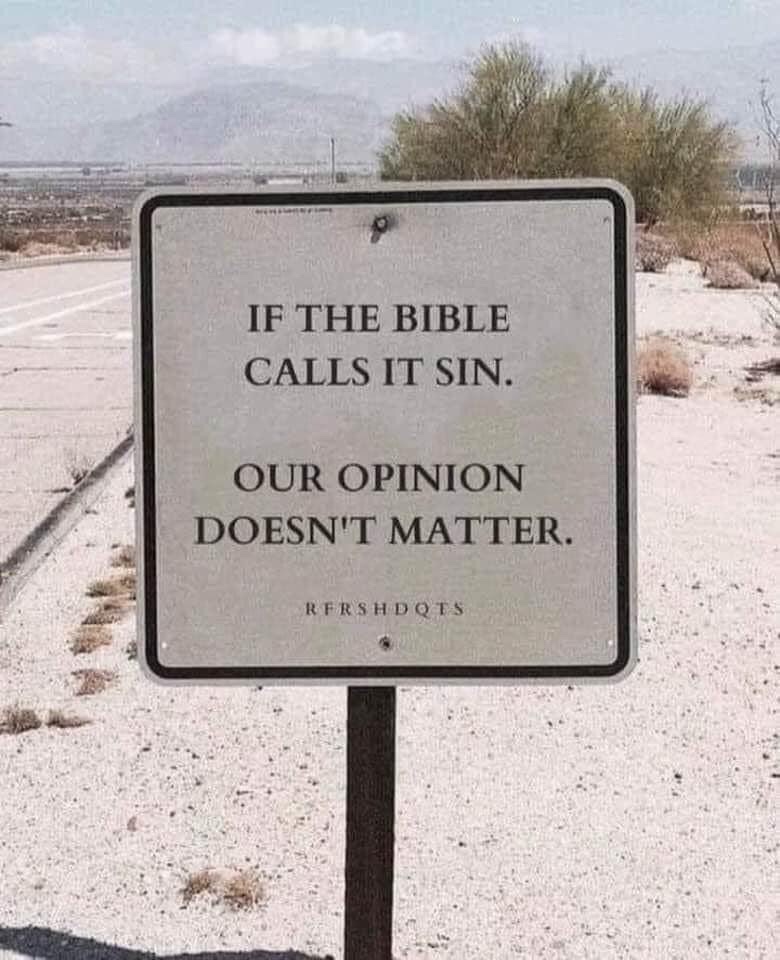
He believes–and I agree—that we cannot cherry-pick the Scriptures, taking in what we agree with and rejecting what we disagree with. There is no integrity to that. Just as Jesus is either God or a madman–but not simply a moral leader or a good teacher–there is also just one choice with the Bible. Either we accept the Bible as God’s word written, in its entirety, or we reject it.

Under the guidance of the Holy Spirit, we are told in 2 Peter 2:1-2–But there were also false prophets among the people, just as there will be false teachers among you. They will secretly introduce destructive heresies, even denying the sovereign Lord who bought them—bringing swift destruction on themselves. Even as far back as the first century, the Church was infiltrated by heretics who sought to either alter or water down the faith. Here Peter is warning the infant church to be wary of those who preach or teach false doctrines. Similarly, Jude, Jesus’ brother, warned in Jude 3-4–I…urge you to contend for the faith that was once for all entrusted to the saints. For certain men whose condemnation was written about long ago have secretly slipped in among you. They are godless men, who change the grace of our God into a license for immorality and deny Jesus Christ as our only sovereign and Lord. The apostle John cautioned, in Revelation 22:18-19–And I warn everyone who hears the words of the prophecy of this book: If anyone adds anything to them, God will add to him the plagues described in this book. And if anyone takes words away from this book of prophecy, God will take away from him his share in the tree of life and in the holy city which are described in this book. Clearly, we are not to add verses or subtract verses from the Bible. As I have urged before, if we don’t understand a Scripture passage, or don’t like it, we are to trust in God’s purposes for us, study the opinions of reliable Bible scholarly and commentators, and patiently wait upon the Holy Spirit to make its meaning clear. As Paul counsels Timothy, (2 Timothy 3:16-17) All Scripture is God-breathed and is useful for teaching, rebuking, correcting and training in righteousness, so that the man [woman] of God may be thoroughly equipped for every good work.

Our passages assigned for today substantiate this approach. They also demonstrate to us the wisdom of Scripture:

A. Song of Songs 2:8-13–reaffirms to us that Jesus loves us.

This book is God’s endorsement for love and sensuality in the marital context. Like the “Beloved,” the newlywed wife depicted here, we are to eagerly anticipate being reunited with Christ. We don’t know where her groom had disappeared to, whether to military deployment, a business trip, or hospitalization, but she waits to hear his voice alerting her to his return. Similarly, Jesus is now physically separated from us, as He sits at the right hand of God the Father in heaven. But we can and do hear the Bridegroom’s or Jesus’ voice through God’s Word. We who believe in Jesus as our Savior, await his call to us—either from the grave or at the rapture—Arise, come, my darling; my beautiful one, come with Me. Our Lord wants us to dwell with Him in heaven.

B. Psalm 15–is a description of those who will dwell with God.

Verse 1 asks the question, Lord, who may dwell in Your sanctuary? Who may live on Your holy hill? The remainder of the psalm provides the answer:

1. Those who are upright/righteous;

2. Those who speak truth;

3. Those who do not slander others or hold grudges;

4. Those who despise vile actions but honor righteous behavior;

5. Those who keep their oaths, even when it costs them;

6. Those who make an honest living and never accept a bribe.

The psalmist, King David, predates Jesus but nevertheless describes Christ’s character. We are to be like Jesus. Those who revere the Lord and who order their lives in accordance to His will can look forward to living with Jesus in heaven. Those who love Him and act like Him will dwell with God.

C. In our Gospel lesson (Mark 7:1—8, 14-15, 21-23), Jesus distinguishes between outward ritual (religion by rote) and heart attitudes. The Pharisees have come to listen but also to find fault. They fault Jesus because His disciples are not following one of their traditions, hand-washing before meals. This practice is wise, a fact which has certainly been reemphasized in this era of Covid. But in the arid Ancient Near East, water was hard to come by. However wise it is for one to wash hands before eating, Jesus reminded them that it is not mandated by Scripture.

Jesus then takes them to task and calls them hypocrites! He points out that they adhere to man-made rules but neglect their relationships with God and their family members. Jesus then goes on to list the sins that come from a wrong heart-attitude toward God and our relatives and neighbors:

1. Sexual immorality;

2. Theft;

3. Adultery;

4. Greed;

5. Malice;

6. Deceit;

7. Lewdness;

8. Envy;

9. Slander;

10. Arrogance and folly.

Notice, these behaviors and attitudes are nearly the opposite of those recommended by our psalmist, David. Jesus is saying, essentially, it’s not rule-keeping or going through the “holiness motions” that allows us to dwell with God, but rather the condition of our heart. Do we love Jesus? Do we ask the Holy Spirit to help us to think and to live like Jesus? Are we surrendered and obedient to the will of God?

D. Finally, James, the brother of Christ–ever offering us practical advice—reminds us in James 1:17-27–(verse 17)—Every good and perfect gift is from above, coming down from the Father of the heavenly lights, who does not change like shifting shadows.

In other words, all good things come from God, who desires to bless us.

We can trust in Him because, unlike humans, He is always faithful and true.

James continues in verse 19–My dear brothers, take note of this: Everyone should be quick to listen, slow to speak, and slow to become angry. He advises us to listen to God and others carefully. Truly hear someone out before composing a rebuttal or a come-back in your mind. Then take time to consider your response before speaking. We all know that once words are spoken, they are difficult to take back. Be careful about becoming angry, and careful with your anger expressions. It is not a sin to become angry, but so often it is what we do with our anger that offends God.

In verse 22 James admonishes us—Do not merely listen to the word, and so deceive yourselves. Do what it says! We are not to be consumers of church services. We are to use what we learn on Sundays to guide the way we operate in our world. We need to “walk the walk.” If a nonbeliever were watching us, would they see enough evidence to assume we are followers of Jesus Christ?

Our passages today confirm for us that (1) Jesus loves us.

(2) We can believe that if we love Jesus, and behave like Him toward God and others, we will join Him in heaven. (3) Christ-like heart attitudes matter more to God than empty ritual and non-biblical tradition. (4) Our faith is evidenced in action.

Youssef believes the broader Christian Church is being decimated by “enemies from within,” by apostasy (false doctrines), and by our lack of respect for the Word of God. Our foes are those who call themselves Christians while divorcing themselves from the Biblical faith.

These folks are being deceived by the evil one (Remember from last week that we are in a spiritual battle). Youssef writes (p.93), If you abandon the foundation of Christianity—the Scriptures and the atoning death and resurrection of Christ—and replace the Christian gospel with the secular left agenda of Darwinism, climate change, identity politics, victim oppression politics, LGBTQ politics, and on and on, you will become the darling of the media and the leftist political establishment. You’ll be interviewed on CNN, MSNBC, and NPR, and you’ll write for the “Washington Post” and “New York Times,” and you’ll be praised by the “Daily Beast” and “Huffington Post.” You can call yourself a “person of good news,” but it won’t be the Good News of salvation by grace through faith in Christ.

NO Sir, our hope is set on nothing less than Jesus and His righteousness! It is not politically correct these days to be a faith-filled, Bible-believing follower of Jesus Christ (Remember, we are in a spiritual battle). But I would rather be out of step with the power-elites, the politically correct, and all the woke folks, than turn my back on Jesus Christ as revealed to us in Scripture, and as faithfully passed remembered and passed on to us by generation after generation of believers in the apostolic faith.

©️2021 Rev. Dr. Sherry Adams

Despite How It Looks Now, Jesus is in Control

Pastor Sherry’s message for January 31, 2021

Scriptures: Deuteronomy 18:15-20, Mark 1:21-28

In 1970, a KGB agent (the Russian version of our CIA), named Yuri Bezmenov, defected to the West. There is a 1985 YouTube video of him talking about the communist strategy for taking over the U.S. 35 years ago, he said the strategy had been plotted for years and had already begun to undermine our country. He claimed there are 4 steps to a communist takeover of America:

​1.) The 1st is what he called “demoralization.”

He said, “Marxism-Leninism ideology is being pumped into the soft heads of at least three generations of American students, without being challenged or counter-balanced by the basic values of Americanism and American patriotism…The demoralization process in the United States is basically completed already [1985]…Most of it is done by Americans to Americans thanks to lack of moral standards.” This process seems to render facts and truth as irrelevant, because, as Bezmenov asserted, a demoralized person is not capable of ascertaining what is true from what is false. Such a person has no standard by which to discern truth. He went so far as to claim, “Even if I take him [a demoralized American] by force to the Soviet Union and show him a concentration camp, he will refuse to believe it until he is going to receive a kick in his fat bottom. When the military boot crashes him, then he will understand, but not before that.” And then it would be too late.

2.) The 2nd stage is a period of “social chaos,” usually lasting 2-5 years. The media, some politicians, and academia join to incite and downplay chaos. Riots, as we saw this past summer, are redefined as “peaceful protests.” But persons who express outrage against this chaos are redefined as “bigots,” “extremists,” and “insurrectionists.” During this time period, the government will promise all kinds of freebies to American citizens as it becomes bigger and more intrusive.

3.) Stage 3 instigates a crisis leading either to “civil war or “foreign invasion.” This stage is said to last from 2-6 months. Bezmenov maintained that the “useful idiots” who helped bring this crisis about will then become disillusioned and will then either be killed off, imprisoned, or exiled by those in authority.

4.) Bezmenov referred to the final stage as “normalization.” The U.S. will have become communist. Based on the experiences of other countries, like Grenada, Afghanistan, Bangladesh, and China, it appears to take about 20 years for the country to accept this as the new norm.

I don’t know about you, but I find his experience and his predictions to be chilling. I started my career path as a high school teacher of US History and US Government. Though I later moved on to become a licensed psychologist and then an ordained pastor, I have never really forgotten my interest in American governance and have continued to observe our cultural trends.

As I considered Bezmenov’s descriptions and predictions, it occured to me that–35 years after his interview—his assessment and predictions appear to be accurate. It looks to me as if we are already in Stage 2 Chaos. As a nation, we have sidelined our moral compass, Jesus Christ. And we are watching those in power currently “restructuring” how we see and do things politically, economically, militarily, and governmentally. This can be both overwhelming and distressing to us.

But in these uncertain and rapidly changing times, we need to pray for our nation and to keep our eyes on–and our faith in–Jesus.This is what our lessons teach us today.
Deuteronomy 18:14-20 Moses is prophesying the coming of a prophet greater than he was. 1st he tells the people to obey the prophets. Why would this be his concern? Because authentic prophets convey messages from God (they are essentially God’s mouth-pieces).

The marks of a true prophet are that what he/she says is consistent with Scripture, and that what he/she foretells actually happens. 2nd, he wants them to get into the habit of listening to the prophets—God will send them a number of good ones—so they will then be prepared to hear the Ultimate Prophet when Jesus arrives. Jesus Christ is the Ultimate Word of God. He is God’s fullest revelation of Himself to us. As the Son of God, He has authentic knowledge of God the Father. He represented the Father openly, honestly, and truthfully. In John 5:30, He says, By Myself I can do nothing; I judge only as I hear, and My judgment is just, for I seek not to please myself but Him who sent Me [totally obedient to the Father]. In John 7:16, He makes a similar point, My teaching is not my own. It comes from Him who sent Me [He says what the Father approves]. As the Son of God, He has authentic authority to speak on the Father’s behalf. In John 5: 36-37, He adds, I have a testimony weightier than that of John [the Baptist]. For the very work that the Father has given Me to finish, and which I am doing testifies that the Father has sent Me. And the Father who sent me has Himself testified concerning Me [The Father voiced His full approval of Jesus at His baptism and on the Mount of Transfiguration]. He goes on to say in John 11: 37-38, Do not believe Me unless I do what my Father does. But if I do it, even though you do not believe Me, believe the miracles, that you may know and understand that the Father is in Me and I in the Father. Finally, He asserts in John 14:10, Don’t you believe that I am in the Father and that the Father is in Me? The words I say to you are not just My own. Rather, it is the Father, living in Me, who is doing His work.

So Moses is telling the people, before he dies, that Jesus is coming as the greatest of all prophets; and that they need to be prepared to listen to and obey Him.  He will be and is our moral authority.

​Our Gospel lesson, Mark 1:21-28, focuses on Jesus’ authority. 

You may remember that Mark (actually, John Mark) was Peter’s disciple and probably wrote down for Peter what is essentially Peter’s Gospel. Peter wanted to get the Good News out to the Romans, so, this is a Gospel of action. You may notice the words Suddenly and immediately are frequently used in this Gospel. Mark’s (Peter’s) Gospel focuses more on the works of Jesus rather than on the thinking behind Jesus’ works (the Apostles John and Paul tend to focus on the latter). Peter knew he would have to convince Roman soldiers of Jesus’ authority. After all, Caesar called himself, Lord; so, why should they believe Jesus is Lord?

The 1st way a Roman (& we) might come to accept Jesus as Lord is if He has authority over the supernatural. Mark will also go on to demonstrate that Jesus had authority/power over nature (storms at sea; walking on water; feeding 5,000, then 4,000 with next to nothing on hand). Jesus also had authority to heal peoples’ physical bodies (the blind, the deaf, the lame, the palsied, lepers, feverish or hemorrhaging women; even resurrectionsfrom the dead). Finally, He also healed people from dysfunctional emotional conditions.

So, the first miracle Mark reports is of Jesus casting a demon out of a man, in church, on the Sabbath. Jesus teaches at the synagogue in Capernaum because He’s been thrown out of His home town, Nazareth.

He makes Capernaum the base of His operations. The demon(s) in a man in the synagogue call out, What do you want with us, Jesus of Nazareth? Have you come to destroy us? [Yes!] I know who you are—the Holy One of God! Notice, the demons recognize Jesus’ true identity as God before the humans do. But Jesus doesn’t want the demons to lead folks to Him. Their agenda is from Satan and is evil. Their agenda is to pull us away from God. He tells the demon(s) to be quiet—the Greek expression He uses is actually, Be muzzled!–and come out of him. He sets the man freefrom demonic oppression. The man may not have known he had a demon in him. He didn’t even ask Jesus for help. By casting the demon(s) out of him, Jesus demonstrates that He both discerns the presence of evil in a person and He has the power to make evil spirits leave. In other words, when He says hush, they have to hush; when He says go, they have to go.

In His first miracle recorded in Mark, Jesus reveals that He has power over the spiritual realm.  He is going to tear down the spiritual walls that separate people from God and from each other.  He is going to war against and defeat dark forces.  The Romans were superstitious, so this would have been astonishing to them.  They believed they had to appease/bribe the gods to keep them on their side.  But here is Jesus, just speaking a word, and vanquishing a foe that only God could command.  This would have stopped most Roman soldiers in their tracks.

Let’s also remember Paul’s teachings in Ephesians 6:12: For our struggle is not against flesh and blood, but against the rulers, against the authorities, against the powers of this dark world and against the spiritual forces of evil in the heavenly realms. Our battles are not with people per se, but rather with the demonic forces that are behind and drive their hateful, seductive, or destructive behavior.

I think we need to be aware of what is going on currently in our country, but we need not be afraid.  We worship a Jesus who has authority over all things and all events. The political and social turmoil in our country is not beyond Him.Either He will, through our prayers, subdue it; or He will allow it to continue to play out as a prelude to End Time events.  Either way, we can rest in the fact that our Lord is in control.

We also worship a Jesus who is the Voice of Authority, the final authority. He has already defeated the Devil on the Cross. Because of Christ, we can trust that He has things under control, despite how it looks to us. Because of Christ, we can leave fear behind and step out in freedom to do God’s work, in God’s way, in this world. Because of Christ, we can pray with confidence that His will would be done in our country as it is in Heaven. Amen!

Be grateful for Jesus, our Shepherd King

Pastor Sherry’s message from November 22, 2020

Scriptures: Eze 34:11-16, 20-24; Ps 100; Eph 1:15-23; Matt 25:31-46

I love funny signs, don’t you?  I found some this week that made me laugh out loud:

Signs on property fence lines:

​​​1. No hunting; No fishing; No nothing!  Go home!

2. No trespassing! Violator will be shot; survivors will be shot again!

​​​3. No trespassing!  We’re tired of hiding the bodies. 

Signs of warning:

1. High voltage. Do not touch. Not only will this kill you, It will hurt the whole time you are dying.

2. Warning. If the help desk thinks your question is stupid, we will set you on fire!

3. Unattended children will be given an energy drink and a free puppy.

​​​4. No dumping cats!  $750 fine and/or 90 days in jail.

5. My personal favorite: Warning! If you think you can run across this pasture in 10 seconds, Don’t! The bull can do it in 9.

As we approach Thanksgiving this week, I think one thing we can all be thankful for is humor. We began our service today with an opportunity for each of us to express our gratitude to God. As you may have noticed as they were read, today’s Scripture passages all focus on reasons we can and should be grateful to God.

Additionally, our Bible passages today all relate to the Kingship of Jesus Christ.

In the Ezekiel passage (34:11-16, 20-24), God is essentially firing the religious leaders of Israel. He is fed up with their ineptitude, their failures to protect His sheep, and their outright abuse of them. Instead, He shares His resolve to send a new, improved, better shepherd to watch over, teach, and guide His people: Jesus.

So, among the many things we have to be grateful for, we can thank God for sending Jesus to be our perfect Shepherd.  He has redeemed us from our bondage to sin and death; and He saved us from the penalty for our sins.  We can also thank God that Jesus, as Christ the King, is coming again.  When He does return, He will dispense true justice.  He will also establish lasting peace on the earth.  And He will gather to Himself those who love Him.

Psalm 100 is a song of praise to Christ as King. During my time at seminary, I worked my way through by directing a college counseling center. The college was “Reformed Presbyterian,” which meant, among other things, that they did not use musical instruments in church or chapel. Instead, they sang the psalms only, with no accompaniment, but in 4-5 part harmony. This psalm they called “Ole 100.” Hearing it sung in 5 parts, acapella, was both spectacular and very moving.

Verse 3 tells us that the LORD is God. He is our Creator, our Redeemer; and He is the Shepherd of Israel and of the Church. V.4 reveals what J. Vernon McGee3 calls “the password to worship: Thanksgiving! [We] Enter His gates with thanksgiving and His courts with praise. This is how we worship God in spirit and in truth. We express our thanks to Him. We praise Him for His goodness, grace, and loving-kindness towards us. After you have memorized Psalm 23 as well as Psalm 51, you may want to put Ole 100 to memory too, as it’s a beaut!

In our Ephesians passage (1:15-23), Paul expresses thanks to God for the faith and love he sees demonstrated by this church.

When I was ordained, my Bishop gave me a devotional that takes a person through the Bible in two years. It’s meant for a pastor’s quiet time daily with the LORD. The Bishop signed it for me, inscribing it with these verses. It was as though he was saying, “I will be praying for you just as Paul was praying for those Corinthians.” Paul was delighted that they loved Jesus, loved Paul, their pastor, and loved God’s Word. He tells them they are on his prayer list. He doesn’t pray for material blessings for them, but rather for spiritual blessings:

1. He wants them to have wisdom and discernment, especially as they meditate on Scripture. He wants the Holy Spirit to continue to lead and guide them. In 1 Corinthians 2:9-10, he wrote, No eye has seen, no ear has heard, no mind has conceived what God has prepared for those who love Him; but God has revealed it to us by His Spirit.

2. He wants them to be people of hope.

3. He wants them to be aware of the endless energy and the boundless strength of Christ that can and will be used for their good. Jesus runs the universe; He also rules the Church. He is no pasty-faced, skinny, 98 pound weakling, but He is both robust and powerful enough to resurrect and to ascend to Heaven. When Scripture asks if anything is impossible for the LORD, the answer is no because He holds the power to do and to act.

In our Gospel (Matt. 25:31-46), Jesus reminds us that, at His 2nd Coming, He will separate out sheep from goats.  The sheep– true believers–will be set on His right side.  These are those of us with faith in Jesus.  Our faith will be evident in the way we lived our lives.  Our charitable works on the behalf on others don’t earn us salvation; only our faith in Christ does.  But because we love Jesus, we try to love others by serving them in loving ways.  Our charitable works come from a generous heart, a trusting spirit.  And we try to be humble…Lord, when did we….Our reward will be to hear Jesus say to us, Come, you who are blessed by my Father; take your inheritance, the kingdom prepared for you….

The goats—unbelievers—will be sent to His left. These are the ones who have discounted Christ, blown Him off, refused to believe in Him during their life time. They will be condemned. They will hear Jesus tell them, Depart from Me, you who are cursed, into the eternal fire prepared for the devil and his angels. The goats will be shocked and horrified. They will react with self-righteousness…When did we not….

What’s so alarming about this teaching is its permanence. Jesus is warning us—like some of those goofy signs I shared earlier—(v.46) [the wicked] will go away to eternal punishment, but be grateful for Jesus, our Shepherd King the righteous to eternal life. He is serious. The results of our choice—with or without Christ—is forever, changeless and without end. What’s so wonderful, however, is that we are free to make the choice. I don’t know about you, but I am so grateful that loving Jesus sets me up to be awarded an eternal place among only righteous persons. I’m so grateful that by loving Jesus, I avoid being consigned to that place where only evil-doers will dwell. I have often thought it would be horrible to be in prison, not just due to your lack of freedom. But consider who your neighbors are there. You would be confined to the company of murderers, thugs, rapists, and robbers. How would one be able to sleep at night? Hell will be so much worse!

So let’s think—as we approach Thanksgiving day—of what all of us has to be thankful or grateful for:

1. Jesus, our Good Shepherd, came to save us.

2. Jesus, our Great Shepherd King, will come again to establish justice and bring us to Himself.

3. That gratitude/thanksgiving is our password into God’s gates; the threshold into true worship.

4. Paul and other intercessors pray for us by name.

5. That Jesus calls us to give ourselves away—using our gifts and talents—in love and service to others.

6. And aren’t we just so grateful, too, for a little humor while we await our heavenly reward?

C 2020 Rev. Dr. Sherry Adams

Surrender … but hold on!

Pastor Sherry’s Message for August 2, 2020

Scriptures: Genesis 32:22-31; Ps 17:1-7

Can you remember how you felt when you knew you had to face some pretty unpleasant event?  I can think of two such events when I was a kid and even one as an adult.  When I was going into the 7th grade, my dad was transferred to Hawaii.  This was in the late 50’s when the islands were still a territory, not yet a state.  So we had to endure a series of painful immunizations.  I dreaded the days we had to present ourselves for those shots.  The anticipation was far worse than the actual event.  In another example, my brother and I had misbehaved badly for our mother.  When our abusive stepdad went out to sea, we both felt like the clamps had come off and I am sure we manipulated our mother something fierce.  One particular time, she threatened, “Just you want ‘til you dad comes home!”  She marked the days on the calendar.  We got more and more distressed as the weeks sped away and the date of his return loomed before us.  I am sure my brother and I were the only ones on the dock, as the ship came in, who were not celebrating its return.  He did beat us, rather severely.  I was only about 9-10, but I remember recognizing that my mother was a weak disciplinarian who never should have left the job to another.  Interestingly, she never seemed to be able to figure out why we didn’t love him better or have happier memories of our childhood.

As an adult, I had stood up as the lone dissenter in a vote for a new pastor.  The rest of the committee got very angry with me as we decided everything by unanimous vote; they perceived that I was holding up the process.  We eventually decided the matter by drawing lots—an old Biblical tradition—and the guy I felt so strongly about won the job unanimously!  Later the new pastor (who thought I was the lone holdout against him) told me I had to be reconciled with each of the other 11.  I did so, and believe me, I approached each individual appointment with anxiety.  The whole experience was an exercise in humility.

This is essentially the situation the patriarch Jacob faces in today’s OT Lesson, Genesis 32:22-31. He is returning to the Promised Land after 20 years of exile.

Recall that he was named “Jacob” (which meant heel grabber, deceiver) as the younger of a set of twins.  He later manipulated his slower, less cerebral brother, Esau, out of his birthright:  The lion’s share of their father’s property & livestock; but also the Covenantal relationship with God.  This is bad enough, but—with his mother’s complicity—he tricks/deceives his blind father into giving him his blessing!  His mother, Rebekah, should have known better.  God had told her that the older twin would serve the younger.  She should have remembered and waited on God to see how He meant to work this out.  Instead, the wily Jacob and his mother demonstrate no respect for Isaac, no love for Esau, and no faith in God.  Jacob gets the blessing, fraudulently, but he earns the murderous rage and hatred of his only sibling.  This forces him to flee the country—never to see his mother again.

As our passage from last week indicated, Jacob is taken to the Spiritual Woodshed by his mother’s brother, Uncle Laban (Let us all hope we never encounter an Uncle Laban in our lifetime):  Jacob agrees to work 7 years for the lovely Rachel, only to be given the less attractive, older sister, Leah, on his wedding night.  The deceiver is deceived!  Uncle Laban justifies his trickery with the custom that older daughters must marry before younger ones.  Once Jacob recovers from his shock and anger, he agrees to work another 7 years for his true love.  The two “sister wives”compete over who can give Jacob the most sons.  The ladies add two more “sister wives” to fuel the race.  Leah, the less valued wife, ends up with 6 sons and a daughter of her own, and two sons by a surrogate.  The favorite wife, Rachel, struggles with infertility, but has two surrogate sons and, finally, two sons of her own (dying as she gives birth to #2 after Jacob has settled in back home).

Once Jacob’s term of 14 years is up, he is forced to indenture himself to Laban for another 6 years, so as to amass sufficient resources to support 4 wives & 12 children.  Meanwhile, the jealousies, resentments, envy and animosity of the “sister wives” and their children continue to fester.  Laban keeps changing the terms of his contract with Jacob (10 times!), trying to cheat him.  We are talking a highly dysfunctional family here.  By the time of today’s lesson, Jacob has been out of the “Promised land” for 20 years.  Jacob, the “Trickster,” has been repeatedly tricked by an even cannier trickster.  I picture him as exhausted, harried, and burnt-out.

Now Jacob knows God has called him to return home, but what about the vengeful Esau?  When Jacob had last encountered his brother, Esau had been intent on killing him.  So Jacob has finally escaped one enemy—Uncle Laban—only to face another, Esau.  Just prior to today’s passage (Gen 32:9-12), Jacob prays a powerful prayer to God:  (1) He acknowledges how God has blessed him; (2) He reminds God that it is He who has called him home; and (3)He asks God to save him from his brother’s wrath.  He then sends his wives & family across the Jabbok (Wadi Zarqa, 20 mi. west of the Jordan).  Alone, he is suddenly grabbed by God!  He struggled all his life to prevail, no doubt thinking, “I can determine my destiny.”  1st, he had contended with Esau; 2nd, with Uncle Laban.  Now, he wrestles all night with the pre-incarnate Christ–Hosea 12:4-5 reports, He strove with the angel and prevailed, he wept and sought His favor.  He met God at Bethel, and there God spoke with him—the LORD the God of hosts, the LORD is His name.

Now, finally Jacob realizes, God holds my destiny.  Actually, God is wrestling with one hand tied behind His back.  But Jacob won’t quit.  Jesus wants to go so He won’t be recognized.  Jacob has surrendered his will to God but he won’t let go of Him.  Jacob has become a perseverer.  Graciously, Jesus will not overrule Jacob’s will, so instead He puts his hip out of joint.  Jacob wisely asks for a blessing from the Divine Logos.  Jesus, who knows everything, asks him a rhetorical question, What is your name?  The Lord then changes his name from Jacob (Deceiver) to Israel (He who contends with God and men and overcomes).

By changing his name, Jesus is indicating that Jacob’s character has been purified. Jesus is also letting Jacob know that his future successes will result (Zechariah 4:6), ”Not by might, not by power, but by my Spirit,” says the Lord Almighty.

Israel wants Jesus’ name but the LORD will not reveal it to him.  We cannot overcome or control God; instead, we yield and hold on!  This is both a spiritual victory for Israel and a demonstration of human frailty in the face of God.  God will superintend the reconciliation with his brother.  As my prayer partner likes to say, God rules and overrules the hearts of men and women.  The apostle Paul wrote in Philippians 1:6, …He who began a good work in you will carry it on to completion until the day of Christ Jesus.  God had begun a good work in Jacob.

The spiritual woodshed was intended to transform him, mold and shape the deceptiveness out of him through adversity.  In wrestling with him, Jesus was saying—without words—your brother, Esau, will not overcome or kill you.  You do not need to fear him, because I and the angel armies are with you.

Among the many lessons of Jacob/Israel wrestling with God are these:

  • God accepts us as we are, but loves us too much to leave us that way. He doesn’t overrule our will, but He will discipline us.  Until we are transformed by this discipline, often the things we most want are what elude us.
  • Nevertheless, He will persist with us, giving us enough lessons to bring us

around.

  • When we finally do surrender to Him, He then blesses us.  Jacob/Israel re-entered the Land with 11 sons and 1 daughter, lots of servants, huge numbers of sheep, goats, cattle, donkeys and camels—enough excess to offer reparations to Esau—or at least “to sweeten” their first meeting.
  • I tell the clients I work with at Honey Lake Clinic, “If you want God to heal you, you have to set aside your ideas of how you will be healed and let God be God.” That is true for all of us. Not my will but yours be done, Oh Lord!  When we are dealing with God, our proper attitude needs to be one of surrender; surrender, but hold on!


©2020 Rev. Dr. Sherry Adams


Palm Sunday, 2020

Pastor Sherry’s Message for April 5, 2020

Scripture Readings: Isaiah 50:4-9a; Psalms 31:9-16; Philippians 2:5-11; Matthew 26:14—27:66

         Some of us are old enough to remember a book that came out in 1984 called Future Shock.  In it the author, Alvin Toffler, cited a dizzying array of changes that had already occurred in the world back then, and proclaimed—accurately so—that the rate of change in the 20th century was increasing exponentially.  He predicted that people would become overwhelmed by the rate of change and would have difficulty orienting ourselves, let alone feeling secure, in what amounts to a cultural whirlwind or earthquake.  As I tune into the daily news reports on the Covid-19 virus, I am reminded of Toffler’s premise.  One day the experts tell us one thing; the next day, given new information, the previous perception has changed and been replaced by something new.  We can expect that our understandings of this pandemic will continue to modify as doctors and scientists gather more data and refine their predictive models.  Meanwhile, we are left coping with the usual anxiety surrounding life as we know it, to which has now been added the stress of a serious health risk and the threat of potential death.  How will we manage to maintain our footing, our balance, our sanity in these uncertain times? 

         As always, our God has some very useful, practical, and encouraging reminders for us in the Scriptures appointed for today.  I recommend you read the passage as I attempt both to explain it and to share its relevance as a counter to our mounting anxiety:

         Our Old Testament lesson is from the prophet Isaiah.  Chapter 50 (verses 4-9a) contains the 3rd of 4 passages known as the “Suffering Servant Songs.”  Between 750-700 years before Jesus was born, the prophet was describing—very accurately—what Jesus would experience and how He would behave as He faced and endured the Cross.  Prior to His crucifixion, the Jews believed these passages may have described the predicted Messiah, but most did not agree that they referred to Christ.  It is only from this side of the Cross that we realize they do refer to and were precisely fulfilled by Jesus.  The point of this 3rd Servant Song is that Jesus came to earth determined to save us; that is, that He came into the world to pay the penalty for and to redeem us from our sins.  To prepare Himself, He studied God’s Word, the Old Testament writings.  During the 30 years before His public ministry, He steeped Himself in Scripture (vv.4-5) We would say He was a “student of the Word.”  Verse 6 tells us that His trial by the Sanhedrin (the Jewish religious ruling body) led to significant suffering at the hands of His own chosen people.  They beat Him, mocked Him, spit upon His precious face, and even pulled out the hair of His beard—all prior to appearing before Pilate.  What sustained Him?  What allowed Him to endure all this?  He knew His purpose and He trusted in the Father to help Him:  (vv.7-9) Because the Sovereign LORD [the Father] helps Me, I will not be disgraced.  Therefore have I set My face like flint, and I know I will not be put to shame…He who vindicates Me is near…it is the Sovereign LORD who helps me.  Jesus is reassuring Himself, though the prophet’s words, of the Father’s presence and the Father’s love.  This is what defines Him, not the attitudes, the condemnation, nor the despicable treatment of the religious authorities of His day. 

Such a lesson for us, isn’t it?  Do you see the trustworthiness of the Lord?  Thank God Jesus Christ is the once and for all sacrifice for our sins (Hebrews 7:6-27)!  He paid the price for us!  His atoning death set us free from the penalty we deserved.  And Jesus did it believing in Scripture and trusting in His Father’s love.  May we cling to the promises of the Old and New Testaments, and may we hold onto our faith in our God—despite accelerating rates of change and worldwide pandemics!  May we exhibit faith like that of Jesus!

Psalm 31 was written by King David.  It describes how he felt during his tough times, both prior to and after ascending the throne of Israel.  But it also very aptly describes what Jesus probably suffered on the way to His crucifixion at Golgatha, and even as He hung suspended from the Cross:  (V.9) Be merciful to Me, O LORD, for I am in distress… (v.10) My life is consumed by anguish and my years by groaning; My strength fails….(v.11) Because of My enemies, I am the utter contempt of My neighbors…(v.12) …I have become like broken pottery.  He is experiencing despair and grief.  But He does not succumb to it.  In verse 14, he reminds Himself, But I trust in You, O LORD.  I say, “You are my God.”  And He reaffirms for Himself, (v.15) My times are in Your hands.  These truths hold true for you and me as well.  I think it is safe to say that we hate to suffer.  However, suffering seems, like death, taxes, and change, inevitable in this life.  During times of suffering, we want to remember–like King David and like Jesus–that God’s got this!  God was not surprised by the virulence of this pandemic.  God knows that many of us are experiencing “cabin fever” while “sheltering in place.”  He knows we are worried about our health and about the economy, and are perhaps even stress-eating. Yikes!   We can trust in Him to sustain us through the most difficult times because He is only a prayer away (meaning He is present to us), He loves us, and He sent His only, beloved Son to die to save us.

St. Paul’s epistle to the Philippians (2:5-11) contains what the early Christian Church called “the Philippian Hymn.”  It was probably a statement that newly baptized Christians had to memorize as it succinctly summarizes exactly what Jesus did for us, and how the Father regarded His saving work on our behalf.  Paul wants us to be as humble and as obedient to the Father as Jesus was.  He also desires that we appreciate the depths of Jesus’ sacrifice on our behalf:  He gave up His heavenly prerogatives as King of the Universe, the One who spoke creation into existence, to be born in a stable, to a poor, young, homeless couple, in a ragtag and oppressed 2/3rds world nation.  Instead of demanding respect and a wide following as a great and exalted leader, He humbly behaved as a servant to all.  He obeyed His Father in everything, even up to and including His manner of death—totally righteous and holy, He died like a tortured, despised criminal.  No wonder the Father has honored Him above all things, declaring that His name commands total obedience, from every being, in every sphere!  Wow!  This reminds me of the lyrics of a Chris Tomlin song from sometime back a while ago:

Amazing love, O what sacrifice,

The Son of God given for me…

My debt He paid and my death He died,

That I might live…that I might live.

How amazing is God’s love for us!

         Finally, we have Matthew’s version of “the Passion of the Christ” (26:14-27:66), or what we know as the story of Jesus’ trials, crucifixion, and death.  It’s a long passage, but well worth reading and meditating upon during Holy Week.  It reminds us of the price our Lord paid for us, emotionally, intellectually, physically, and spiritually.  He was “all in,” whereas Judas, Peter, the rest of the Apostles, the Jewish religious leadership, the mob, even Pilate all betrayed and abandoned Him.  Simon of Cyrene helped Him carry His cross (voluntarily or coerced, it’s unclear), the hardened, Roman centurian on execution detail (a Gentile) attested to His true identity, and a few devoted women (plus John, according to his Gospel) remained with Him until He gave up His spirit.  Notice that the Father registered His own grief with earthquakes, 3 hours of darkness, and splitting the heavy temple curtain (made of woven goat hair) from top to bottom.  Additionally He commemorated the completion of Jesus’ work by opening tombs, and offering a preview of the Big Easter Event by resurrecting (v.52) …many holy people.  The dead Christ was placed in His tomb, the stone sealed, and a detail set by Pilate to guard the grave.  What a journey from the noisy, Hosanna celebration of Palm Sunday to the quiet grief and despair of Good Friday!

         As Paul Harvey would have said, we know the rest of the story.  We know it doesn’t end there, with death having the last word.  Praise God!  When Jesus cried out from the Cross, (John 19:30) It is finished! (tetelestai), He meant that He had accomplished the work of redemption the Father had given Him to do.  All that is left is a kind of “mopping up detail” that we are living out today.  Jesus has demonstrated the truth of His name, God Saves.  Our God has done all the work of salvation for us.  The battle is over.  The victory has been won for us by Christ.  Again, thanks be to God who gives us the victory over sin and death, through our Lord, Jesus Christ.  All we have to do is say “yes” to Jesus.  All we have to do is allow Him to sit on the throne of our lives.  As we surrender to Him—just as He surrendered to His Father–He will bless us, guard us, protect us, and even resurrect us. 

         Yes, the world is changing at a hypersonic rate.  Many things we used to depend upon are uprooted or overturned or no longer reliable or even available.  In these anxiety-riddled and unstable times, Let us fix our eyes on Jesus, the author and perfecter of our faith, who for the joy set before Him endured the cross, scorning its shame and sat down at the right hand of the throne of God.  Consider Him who endured such opposition from sinful men, so that you will not grow weary and lose heart (Hebrews 12:2-3).  We can trust in our God, despite any threats to the contrary.  This Holy Week, let us stand firm our faith that Jesus has the power to help us, to sustain us, and to keep us sane, safe, and secure.  AMEN! 

©2020 Rev. Dr. Sherry Adams