Surrender … but hold on!

Pastor Sherry’s Message for August 2, 2020

Scriptures: Genesis 32:22-31; Ps 17:1-7

Can you remember how you felt when you knew you had to face some pretty unpleasant event?  I can think of two such events when I was a kid and even one as an adult.  When I was going into the 7th grade, my dad was transferred to Hawaii.  This was in the late 50’s when the islands were still a territory, not yet a state.  So we had to endure a series of painful immunizations.  I dreaded the days we had to present ourselves for those shots.  The anticipation was far worse than the actual event.  In another example, my brother and I had misbehaved badly for our mother.  When our abusive stepdad went out to sea, we both felt like the clamps had come off and I am sure we manipulated our mother something fierce.  One particular time, she threatened, “Just you want ‘til you dad comes home!”  She marked the days on the calendar.  We got more and more distressed as the weeks sped away and the date of his return loomed before us.  I am sure my brother and I were the only ones on the dock, as the ship came in, who were not celebrating its return.  He did beat us, rather severely.  I was only about 9-10, but I remember recognizing that my mother was a weak disciplinarian who never should have left the job to another.  Interestingly, she never seemed to be able to figure out why we didn’t love him better or have happier memories of our childhood.

As an adult, I had stood up as the lone dissenter in a vote for a new pastor.  The rest of the committee got very angry with me as we decided everything by unanimous vote; they perceived that I was holding up the process.  We eventually decided the matter by drawing lots—an old Biblical tradition—and the guy I felt so strongly about won the job unanimously!  Later the new pastor (who thought I was the lone holdout against him) told me I had to be reconciled with each of the other 11.  I did so, and believe me, I approached each individual appointment with anxiety.  The whole experience was an exercise in humility.

This is essentially the situation the patriarch Jacob faces in today’s OT Lesson, Genesis 32:22-31. He is returning to the Promised Land after 20 years of exile.

Recall that he was named “Jacob” (which meant heel grabber, deceiver) as the younger of a set of twins.  He later manipulated his slower, less cerebral brother, Esau, out of his birthright:  The lion’s share of their father’s property & livestock; but also the Covenantal relationship with God.  This is bad enough, but—with his mother’s complicity—he tricks/deceives his blind father into giving him his blessing!  His mother, Rebekah, should have known better.  God had told her that the older twin would serve the younger.  She should have remembered and waited on God to see how He meant to work this out.  Instead, the wily Jacob and his mother demonstrate no respect for Isaac, no love for Esau, and no faith in God.  Jacob gets the blessing, fraudulently, but he earns the murderous rage and hatred of his only sibling.  This forces him to flee the country—never to see his mother again.

As our passage from last week indicated, Jacob is taken to the Spiritual Woodshed by his mother’s brother, Uncle Laban (Let us all hope we never encounter an Uncle Laban in our lifetime):  Jacob agrees to work 7 years for the lovely Rachel, only to be given the less attractive, older sister, Leah, on his wedding night.  The deceiver is deceived!  Uncle Laban justifies his trickery with the custom that older daughters must marry before younger ones.  Once Jacob recovers from his shock and anger, he agrees to work another 7 years for his true love.  The two “sister wives”compete over who can give Jacob the most sons.  The ladies add two more “sister wives” to fuel the race.  Leah, the less valued wife, ends up with 6 sons and a daughter of her own, and two sons by a surrogate.  The favorite wife, Rachel, struggles with infertility, but has two surrogate sons and, finally, two sons of her own (dying as she gives birth to #2 after Jacob has settled in back home).

Once Jacob’s term of 14 years is up, he is forced to indenture himself to Laban for another 6 years, so as to amass sufficient resources to support 4 wives & 12 children.  Meanwhile, the jealousies, resentments, envy and animosity of the “sister wives” and their children continue to fester.  Laban keeps changing the terms of his contract with Jacob (10 times!), trying to cheat him.  We are talking a highly dysfunctional family here.  By the time of today’s lesson, Jacob has been out of the “Promised land” for 20 years.  Jacob, the “Trickster,” has been repeatedly tricked by an even cannier trickster.  I picture him as exhausted, harried, and burnt-out.

Now Jacob knows God has called him to return home, but what about the vengeful Esau?  When Jacob had last encountered his brother, Esau had been intent on killing him.  So Jacob has finally escaped one enemy—Uncle Laban—only to face another, Esau.  Just prior to today’s passage (Gen 32:9-12), Jacob prays a powerful prayer to God:  (1) He acknowledges how God has blessed him; (2) He reminds God that it is He who has called him home; and (3)He asks God to save him from his brother’s wrath.  He then sends his wives & family across the Jabbok (Wadi Zarqa, 20 mi. west of the Jordan).  Alone, he is suddenly grabbed by God!  He struggled all his life to prevail, no doubt thinking, “I can determine my destiny.”  1st, he had contended with Esau; 2nd, with Uncle Laban.  Now, he wrestles all night with the pre-incarnate Christ–Hosea 12:4-5 reports, He strove with the angel and prevailed, he wept and sought His favor.  He met God at Bethel, and there God spoke with him—the LORD the God of hosts, the LORD is His name.

Now, finally Jacob realizes, God holds my destiny.  Actually, God is wrestling with one hand tied behind His back.  But Jacob won’t quit.  Jesus wants to go so He won’t be recognized.  Jacob has surrendered his will to God but he won’t let go of Him.  Jacob has become a perseverer.  Graciously, Jesus will not overrule Jacob’s will, so instead He puts his hip out of joint.  Jacob wisely asks for a blessing from the Divine Logos.  Jesus, who knows everything, asks him a rhetorical question, What is your name?  The Lord then changes his name from Jacob (Deceiver) to Israel (He who contends with God and men and overcomes).

By changing his name, Jesus is indicating that Jacob’s character has been purified. Jesus is also letting Jacob know that his future successes will result (Zechariah 4:6), ”Not by might, not by power, but by my Spirit,” says the Lord Almighty.

Israel wants Jesus’ name but the LORD will not reveal it to him.  We cannot overcome or control God; instead, we yield and hold on!  This is both a spiritual victory for Israel and a demonstration of human frailty in the face of God.  God will superintend the reconciliation with his brother.  As my prayer partner likes to say, God rules and overrules the hearts of men and women.  The apostle Paul wrote in Philippians 1:6, …He who began a good work in you will carry it on to completion until the day of Christ Jesus.  God had begun a good work in Jacob.

The spiritual woodshed was intended to transform him, mold and shape the deceptiveness out of him through adversity.  In wrestling with him, Jesus was saying—without words—your brother, Esau, will not overcome or kill you.  You do not need to fear him, because I and the angel armies are with you.

Among the many lessons of Jacob/Israel wrestling with God are these:

  • God accepts us as we are, but loves us too much to leave us that way. He doesn’t overrule our will, but He will discipline us.  Until we are transformed by this discipline, often the things we most want are what elude us.
  • Nevertheless, He will persist with us, giving us enough lessons to bring us

around.

  • When we finally do surrender to Him, He then blesses us.  Jacob/Israel re-entered the Land with 11 sons and 1 daughter, lots of servants, huge numbers of sheep, goats, cattle, donkeys and camels—enough excess to offer reparations to Esau—or at least “to sweeten” their first meeting.
  • I tell the clients I work with at Honey Lake Clinic, “If you want God to heal you, you have to set aside your ideas of how you will be healed and let God be God.” That is true for all of us. Not my will but yours be done, Oh Lord!  When we are dealing with God, our proper attitude needs to be one of surrender; surrender, but hold on!


©2020 Rev. Dr. Sherry Adams


Palm Sunday, 2020

Pastor Sherry’s Message for April 5, 2020

Scripture Readings: Isaiah 50:4-9a; Psalms 31:9-16; Philippians 2:5-11; Matthew 26:14—27:66

         Some of us are old enough to remember a book that came out in 1984 called Future Shock.  In it the author, Alvin Toffler, cited a dizzying array of changes that had already occurred in the world back then, and proclaimed—accurately so—that the rate of change in the 20th century was increasing exponentially.  He predicted that people would become overwhelmed by the rate of change and would have difficulty orienting ourselves, let alone feeling secure, in what amounts to a cultural whirlwind or earthquake.  As I tune into the daily news reports on the Covid-19 virus, I am reminded of Toffler’s premise.  One day the experts tell us one thing; the next day, given new information, the previous perception has changed and been replaced by something new.  We can expect that our understandings of this pandemic will continue to modify as doctors and scientists gather more data and refine their predictive models.  Meanwhile, we are left coping with the usual anxiety surrounding life as we know it, to which has now been added the stress of a serious health risk and the threat of potential death.  How will we manage to maintain our footing, our balance, our sanity in these uncertain times? 

         As always, our God has some very useful, practical, and encouraging reminders for us in the Scriptures appointed for today.  I recommend you read the passage as I attempt both to explain it and to share its relevance as a counter to our mounting anxiety:

         Our Old Testament lesson is from the prophet Isaiah.  Chapter 50 (verses 4-9a) contains the 3rd of 4 passages known as the “Suffering Servant Songs.”  Between 750-700 years before Jesus was born, the prophet was describing—very accurately—what Jesus would experience and how He would behave as He faced and endured the Cross.  Prior to His crucifixion, the Jews believed these passages may have described the predicted Messiah, but most did not agree that they referred to Christ.  It is only from this side of the Cross that we realize they do refer to and were precisely fulfilled by Jesus.  The point of this 3rd Servant Song is that Jesus came to earth determined to save us; that is, that He came into the world to pay the penalty for and to redeem us from our sins.  To prepare Himself, He studied God’s Word, the Old Testament writings.  During the 30 years before His public ministry, He steeped Himself in Scripture (vv.4-5) We would say He was a “student of the Word.”  Verse 6 tells us that His trial by the Sanhedrin (the Jewish religious ruling body) led to significant suffering at the hands of His own chosen people.  They beat Him, mocked Him, spit upon His precious face, and even pulled out the hair of His beard—all prior to appearing before Pilate.  What sustained Him?  What allowed Him to endure all this?  He knew His purpose and He trusted in the Father to help Him:  (vv.7-9) Because the Sovereign LORD [the Father] helps Me, I will not be disgraced.  Therefore have I set My face like flint, and I know I will not be put to shame…He who vindicates Me is near…it is the Sovereign LORD who helps me.  Jesus is reassuring Himself, though the prophet’s words, of the Father’s presence and the Father’s love.  This is what defines Him, not the attitudes, the condemnation, nor the despicable treatment of the religious authorities of His day. 

Such a lesson for us, isn’t it?  Do you see the trustworthiness of the Lord?  Thank God Jesus Christ is the once and for all sacrifice for our sins (Hebrews 7:6-27)!  He paid the price for us!  His atoning death set us free from the penalty we deserved.  And Jesus did it believing in Scripture and trusting in His Father’s love.  May we cling to the promises of the Old and New Testaments, and may we hold onto our faith in our God—despite accelerating rates of change and worldwide pandemics!  May we exhibit faith like that of Jesus!

Psalm 31 was written by King David.  It describes how he felt during his tough times, both prior to and after ascending the throne of Israel.  But it also very aptly describes what Jesus probably suffered on the way to His crucifixion at Golgatha, and even as He hung suspended from the Cross:  (V.9) Be merciful to Me, O LORD, for I am in distress… (v.10) My life is consumed by anguish and my years by groaning; My strength fails….(v.11) Because of My enemies, I am the utter contempt of My neighbors…(v.12) …I have become like broken pottery.  He is experiencing despair and grief.  But He does not succumb to it.  In verse 14, he reminds Himself, But I trust in You, O LORD.  I say, “You are my God.”  And He reaffirms for Himself, (v.15) My times are in Your hands.  These truths hold true for you and me as well.  I think it is safe to say that we hate to suffer.  However, suffering seems, like death, taxes, and change, inevitable in this life.  During times of suffering, we want to remember–like King David and like Jesus–that God’s got this!  God was not surprised by the virulence of this pandemic.  God knows that many of us are experiencing “cabin fever” while “sheltering in place.”  He knows we are worried about our health and about the economy, and are perhaps even stress-eating. Yikes!   We can trust in Him to sustain us through the most difficult times because He is only a prayer away (meaning He is present to us), He loves us, and He sent His only, beloved Son to die to save us.

St. Paul’s epistle to the Philippians (2:5-11) contains what the early Christian Church called “the Philippian Hymn.”  It was probably a statement that newly baptized Christians had to memorize as it succinctly summarizes exactly what Jesus did for us, and how the Father regarded His saving work on our behalf.  Paul wants us to be as humble and as obedient to the Father as Jesus was.  He also desires that we appreciate the depths of Jesus’ sacrifice on our behalf:  He gave up His heavenly prerogatives as King of the Universe, the One who spoke creation into existence, to be born in a stable, to a poor, young, homeless couple, in a ragtag and oppressed 2/3rds world nation.  Instead of demanding respect and a wide following as a great and exalted leader, He humbly behaved as a servant to all.  He obeyed His Father in everything, even up to and including His manner of death—totally righteous and holy, He died like a tortured, despised criminal.  No wonder the Father has honored Him above all things, declaring that His name commands total obedience, from every being, in every sphere!  Wow!  This reminds me of the lyrics of a Chris Tomlin song from sometime back a while ago:

Amazing love, O what sacrifice,

The Son of God given for me…

My debt He paid and my death He died,

That I might live…that I might live.

How amazing is God’s love for us!

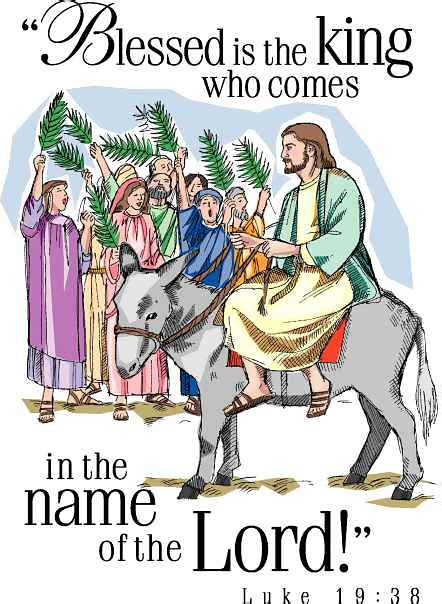
         Finally, we have Matthew’s version of “the Passion of the Christ” (26:14-27:66), or what we know as the story of Jesus’ trials, crucifixion, and death.  It’s a long passage, but well worth reading and meditating upon during Holy Week.  It reminds us of the price our Lord paid for us, emotionally, intellectually, physically, and spiritually.  He was “all in,” whereas Judas, Peter, the rest of the Apostles, the Jewish religious leadership, the mob, even Pilate all betrayed and abandoned Him.  Simon of Cyrene helped Him carry His cross (voluntarily or coerced, it’s unclear), the hardened, Roman centurian on execution detail (a Gentile) attested to His true identity, and a few devoted women (plus John, according to his Gospel) remained with Him until He gave up His spirit.  Notice that the Father registered His own grief with earthquakes, 3 hours of darkness, and splitting the heavy temple curtain (made of woven goat hair) from top to bottom.  Additionally He commemorated the completion of Jesus’ work by opening tombs, and offering a preview of the Big Easter Event by resurrecting (v.52) …many holy people.  The dead Christ was placed in His tomb, the stone sealed, and a detail set by Pilate to guard the grave.  What a journey from the noisy, Hosanna celebration of Palm Sunday to the quiet grief and despair of Good Friday!

         As Paul Harvey would have said, we know the rest of the story.  We know it doesn’t end there, with death having the last word.  Praise God!  When Jesus cried out from the Cross, (John 19:30) It is finished! (tetelestai), He meant that He had accomplished the work of redemption the Father had given Him to do.  All that is left is a kind of “mopping up detail” that we are living out today.  Jesus has demonstrated the truth of His name, God Saves.  Our God has done all the work of salvation for us.  The battle is over.  The victory has been won for us by Christ.  Again, thanks be to God who gives us the victory over sin and death, through our Lord, Jesus Christ.  All we have to do is say “yes” to Jesus.  All we have to do is allow Him to sit on the throne of our lives.  As we surrender to Him—just as He surrendered to His Father–He will bless us, guard us, protect us, and even resurrect us. 

         Yes, the world is changing at a hypersonic rate.  Many things we used to depend upon are uprooted or overturned or no longer reliable or even available.  In these anxiety-riddled and unstable times, Let us fix our eyes on Jesus, the author and perfecter of our faith, who for the joy set before Him endured the cross, scorning its shame and sat down at the right hand of the throne of God.  Consider Him who endured such opposition from sinful men, so that you will not grow weary and lose heart (Hebrews 12:2-3).  We can trust in our God, despite any threats to the contrary.  This Holy Week, let us stand firm our faith that Jesus has the power to help us, to sustain us, and to keep us sane, safe, and secure.  AMEN! 

©2020 Rev. Dr. Sherry Adams