God’s Grace versus Cancel Culture

Pastor Sherry’s Message for 8/30/2020

Scriptures: Ex 3:1-15; Ps 105:23-26; Ro 12:9-21; Matt 16:21-28

Recently I came across 2 examples of our current “cancel culture” at work. With the “cancel culture,” you are only as good as your social media account messages are PC.  Step out of line and your reputation is destroyed, while your future is threatened.

The first concerned a Jordanian-American named Natasha Tynes.  Tynes had researched and written about threats to free speech and a free press in Egypt and then had faced persecution in Egypt for it.  Back in the states again, she was riding the DC-area subway, the Metro, when she saw a transit worker eating in the train.  There are signs posted everywhere prohibiting this behavior, so Natasha confronted the worker and pointed out that she was violating the rules.  The worker rudely blew her off! Natasha said she frequently rides the subway hungry and so was frustrated that a person with the power to fine her for eating was herself violating the rules.  As a result, Natasha wrote a letter of complaint to the transit authorities, asking that they take some disciplinary action.  

She probably should have left the matter there, but she also “tweet-shamed” her by calling the woman out on line, including a picture of her eating on the train. Some 45 minutes later, Natasha rethought what she had done and deleted her tweet.  She also apologized on line for her actions, admitting she had responded out of a “short-lived expression of frustration.  In addition, she wrote the transit authority to ask them to overlook her complaint.  But the Twitter Mob turned on her, calling her “Metro-Molly.”  Ms. Tyne’s publisher learned of this “temptest in a teapot” and decided not to print her latest book. They claimed she had done “something truly horrible” and excused their decision to renege on their contract because Natasha “had threatened the transit worker’s health and safety.  What?

The second incident concerned that vocal young man from the Parkland high school shooting, Kyle Kashuv. We saw him interviewed on TV a number of times.  He received several offers of scholarships to college and turned them all down to attend Harvard.  Later, word got back to Harvard, via some of his classmates that Kashuv–a Jewish conservative–had made anti-semetic and racist comments in a private online chat back when he was 16 years old.  The young man apologized publically.  He even wrote a Harvard dean to admit his responsibility and to ask for forgiveness.

David French of the National Review reported that Kashuv did “everything we want a young man to do when he’s done something wrong.”  Nevertheless, Harvard believed his email remarks from several years younger were too egregious to forgive, and rescinded his admission.

 Recently, Kellyanne Conway resigned as advisor to the President when her 15 year old daughter “tweet-shamed” her and her husband on line.  I am not trying to draw in politics here.  Rather, I am making the point that people feel all too free to call one another out on line.  This teen has hurt her parents very publically by defaming their reputations.  I wonder how she will feel about this when she is 25 or 35, or a parent herself. Sadly, this child has not learned to live out Paul’s admonitions from Romans 12: V.14àBless those who [you believe] persecute you; bless and do not curse; v.16àLive in harmony with one another; and v.17+àDo not repay [even perceived] evil for evil.  Be careful to do what is right in the eyes of everybody.  If it is possible, as far as it depends on you, live at peace with everyone.

This is where we are now.  A mistake, a lapse in judgment, can cost you everything today.  Thank God our Lord does not operate by cancel culture rules!  Let’s look at two He could have chosen to cancel, but didn’t, in today’s scripture passages:

First, we have Moses (Ex 3:1-15).  Last week, we saw this Hebrew slave kid rescued from the Nile, to be raised in Pharaoh’s own household.

By this week, he has advanced to the age of 40, and realized God has tapped him to champion his people, the Jews.  Without waiting on God’s direction, however, he kills an Egyptian overseer for beating a Hebrew slave. His own people, seeing him dressed as an Egyptian, fail to trust him, fearing he is an Egyptian murderer.  Furthermore, Pharaoh hears of the incident and wants to arrest him.  So Moses flees Egypt into the desert.  By attempting to do what he thought he should do, He finds himself driven away.

 He reaches Midian and rescues the 7 daughters of Reuel who were also doing what they were supposed to do—watering their sheep.  Moses observed some rowdy male shepherds attempting to push them aside to water their animals first.  Moses rescues the ladies and sends the ruffians packing.  Subsequently, he marries the eldest, Zipporah; soon has a son, Gershom (whose name means “sojourner” or “alien”—kinda suggests how Moses feels about living in Midian); and tends sheep, for another 40 years. Like King David, later, he is going to be called from tending a flock of animals to shepherding God’s people.

 In today’s passage, he encounters God (the preincarnate Christ) in aburning bush that does not burn up.  He is told to take his shoes off becausehe is in the presence of God, which makes the ground they are on holyindeed.  God calls him by name twice (make no mistake, our God knows our names!).  God also reveals who He is:  The God of the Hebrew patriarchs Abraham, Isaac, and Jacob.  God shares that His name is, I am who I am; or, as some translations say, I will be who I will be.   In other words, as the passage states, He is the God who sees, thinks, hears, knows,remembers, and intervenes for His people.

God also reaffirms Moses’ call to deliver the Hebrew slaves from Egyptian bondage.  Notice, God has not canceled him due to having murdered an Egyptian.  Instead God has hidden him out, in the back of the beyond for 40 years, so that the Pharaoh who sought to arrest him has had time to die and be replaced.  Additionally, those Israelite slaves who witnessed the murder have also passed on. God has made sure it is safe for Moses to return to Egypt.  And Moses has learned to wait on God.

Our Psalm mentions how God sent Moses, His servant, to set His people free.

 Now, let’s jump to our Gospel lesson from Matt 16:21-28.  Last week, we read how Peter confessed what the Holy Spirit had revealed to him:  that Jesus was/is the Messiah.  This week, Jesus begins to educate the Twelve regarding what God’s Messiah will do.  Despite their personal beliefs and expectations of Messiah, Jesus says He will die on a Roman cross, condemned by His own; He will die to redeem those very folks and all the rest of us too.  Like Moses before Him, Jesus is a shepherd, our shepherd and a deliverer, our deliverer.  Understandably, Rocky (Peter) is horrified! Like Moses, he gets ahead of himself.  Rather than taking in what Jesus is saying, he tries to talk Him out of it.  YIKES, Peter!  We don’t get to tell God what to do.  Jesus has just praised Rocky, but now he really tears into him—

He calls His dear friend Satan!  He rightly accuses him of interfering with God’s plan.  Whether he or we like it or not, God’s plan appears to require that we (v.24) deny [ourselves, our self-will], take up [our] Cross and follow [Jesus].  Like so many of us, Peter hears from God but he is also motivated by selfish self-interest and perhaps beguiled by the evil one.

 We know the outcome of both stories:  Moses leads the people out of Egypt—even though they wander in the desert for 40 years.  And Peter becomes a dynamic, faith-filled leader of the new Christian Church. God had grace, mercy, and forgiveness for them both!

What would have happened to Moses or to Peter—Rocky–if our Lord operated by the rules of cancel culture?  Cancel culture assumes—impossibly—that you can never make a mistake.  No grace or mercy is allowed for immaturity, anger, impetuousness.  Cancel Culture believes, Once a sinner, always a sinner.   You cannot even apologize and be forgiven.  As we have seen in the examples of Natasha, Kyle, and the Conways, judgment is swift and forgiveness is withheld!  Furthermore, cancel culture ruins the person’s future—despite a very productive present–based on one lapse in judgment or a perceived wrong response. 

Aren’t we glad our God does not operate that way?  Our God is characterized by love, grace, and mercy.  He keeps His promises and He forgives our sins.  He reinstates us. He uses us once we realize we cannot work out His program in our own strength.  Instead, we operate in His strength, surrendered to His will.  Thanks be to God that He has such patience, such forgiveness, such mercy for us.

This week, I challenge you to pray for Natasha Tynes and Kyle Kashuv, and any other victims of the media mob and the cancel culture.  Pray for peace and reconciliation between the senior Conways and their 15 year old daughter.  Let’s also be aware of God’s mercy.  And let’s be grateful that there is no cancel culture with our Lord!


c 2020 Rev. Dr. Sherry Adams
 

Truth Stranger Than Fiction

Pastor Sherry’s message for July 5, 2020

Scriptures: Gen 24:34-38, 42-49, 58-67; Ps 45:10-17; Ro 7:15-25a; Matt 11:16-19, 25-30

A nine year old boy was asked by his mother what he had learned that day in Sunday School. “Well mom,” he said, “our teacher told us how God sent Moses behind enemy lines on a rescue mission to lead the Israelites out of Egypt.  When he got to the Red Sea, he had his army build a pontoon bridge and all the people walked across safely.  Then he radioed headquarters for reinforcements.  They sent bombers to blow up the bridge after the Israelites were saved.   Pharaoh’s chariot guys all drowned.

Mom asked, “Now, Joey, is that really what your teacher taught you?”

Well no, Mom,” the boy declared in exasperation, “but if I told it the way the teacher did, you’d never believe it!”


Today, we have another Old Testament story that defies logic, unless you believe in a God of miracles.  Remember Isaac, the miraculous “child of promise,” born to parents aged 100 and 90?  Last week, we examined how God demanded that Abraham sacrifice this child to Him, but also rescued Isaac at the last minute by providing a ram to take his place.

Isaac is one of the 4 patriarchs of our faith, but Scripture only gives us a very few glimpses of him.  Nevertheless, we can infer that he was a good son, because he was obedient to his father Abraham—even given the threat of death.  And today’s passage reveals him as a man of faith, praying to God as his bride arrives on a camel.

Let’s examine the story in more depth, as I believe it reveals some principles we can live by today.  Abraham is concerned that Isaac have a wife…(v.1) now Abraham was now old and well advanced in years….He calls his trusty servant (Eliezar?) and tells him to journey to NW Mesopotamia (Syria) to find a good woman from among his extended clan (the people he left behind to follow God).  He does not want Isaac to marry a pagan Canaanite woman.  Nor does he want Isaac to journey outside the Land.  The servant prays to Abraham’s God and suggests a fairly complex sign by which he might recognize God’s choice of a bride for Isaac:  (1) She will offer him water to drink; (2) She will even draw water for his 10 camels; And (3) She will offer traditional ancient middle eastern hospitality including water for the feet; food/refreshments; and overnight accommodations for him and his animals.

When he arrives at the appropriate village, the servant encounters a beautiful young woman who does exactly that.  She gives him water.  She draws water for his animals.  She invites him home to meet her family and to partake of their hospitality.  This woman is Rebekah, Abraham’s great-niece, the virgin granddaughter of his brother.

Now of all the towns the servant could have visited, what are the chances that he would run into Abraham’s kin?  What are the chances that they would still even be alive?  God has clearly superintended this journey.  The servant recognizes this and offers praise and thanksgiving to God: (v.26)–Then the man bowed down and worshiped the Lord, saying, ”Praise be to the Lord, the God of my master Abraham, who has not abandoned his kindness and faithfulness to my master.  As for me, the Lord has led me on the journey to the house of my masters’ relatives.”

This woman, Rebekah, is clearly God’s choice for Isaac.  The servant tells her the story of how he decided to approach her—he’d asked God for a sign.  She doesn’t seem to have difficulty believing him. And he gives her a ring and two gold bracelets, as proof of Abraham’s wealth.  Her brother, Laban, shows up, hears the story, and also invites the servant home.  Once again, the servant shares his instructions with everyone.  Probably Rebekah is somewhere, outside the tent, listening in as the story is retold.  Everyone seems to agree she is God’s choice of a bride for Isaac.  Additionally, the servant has also filled them in on Isaac’s miraculous birth and his divine rescue.  The family appears to be impressed with the costly gifts he has bestowed on the maiden, signifying that Abraham is indeed as wealthy she the servant has claimed.  The bride-price is agreed upon, but by the next morning the family appears to back off a bit.

In an intimation of things to come—Uncle Laban will later renege on his agreement with Jacob, Rebekah’s as yet unborn son–the family urges the servant to wait another 10 days before departing.  Maybe they want to drive the bride-price up a bit.  No doubt concerned for Abraham’s age and health, the servant urges an immediate departure, with no delay.  Interestingly, the family suggests that Rebekah be consulted.  From what she’s heard and experienced, the young woman is ready to go! Maybe she fears her wily brother will somehow interfere with her opportunity.  Whatever the case, she is prepared to go off with a servant she barely knows, to a country she’s never seen, to meet a husband she’s only heard of.  What a brave young woman and what an adventure!

What principles might this story hold for us today?  1st, we note the faithfulness of the servant.  He’s given his word to Abraham to do his best; but otherwise he has no stake in the outcome.  Nevertheless, he works hard to fulfill his word.  He prays for the Lord’s favor.  He diligently repeats his instructions from Abe.  He obviously does not want to mess up!

This servant also moves at the leading of God, rather than his own fleshly desires or his fears.  He is willing to carry out the task his master, Abraham has given him and he appeals to Abraham’s God for help.  This is the antidote to our sinful fleshly desires, as given expression by Paul in Romans 7:15-25a.  The antidote to our self-will is obedience—obedience to Christ, cooperating with the transforming power of His Holy Spirit.

The example of this unnamed servant is about 4,000 years old.  2,000 years later, Jesus will say, Let your yes mean yes and your no mean no.

We are to keep our word.  Like Eliezer, we are to say what we mean and mean what we say.  This is the kind of behavior that helps others to trust us.

Second, I am struck with the willingness of Rebekah.  She doesn’t know Abraham from Adam’s house cat.  She is looking at marrying a dude she’s only just heard of and never seen. She will be making her home far away from her family, probably never seeing them again.  What convinces her to take the risk of leaving everything she has ever known?  Perhaps it was hearing the servant relate the miraculous nature of Isaac’s birth. No doubt she also heard the story of his almost-sacrificial death, and been impressed with the fact that—while he could have overwhelmed his father’s strength, and taken himself off the altar–he instead chose to be obedient to and respectful of his father.  Maybe she rightfully understood that Isaac was special to God and wished to link her future to such an esteemed man.

And, if she were a woman of faith, she might have been able to see and understand how God had indeed chosen her to be Isaac’s mate.  After all, the servant had asked for a complex set of signs; and, without any prior knowledge of them, she had fulfilled each one.

I don’t know if you have ever experienced God providing you a sign, but I have.  My best buddy in seminary came from the Chicago area.  She was trying to verify if God was truly calling her to seminary.  She was walking the shores of Lake Michigan and asked God to affirm her call by proving a green rock among all the gray ones.  She was amazed and delighted to minutes later encounter a green rock—the only green rock–on the shore.  Not only that, the green rock was shaped like a triangle.  She understood this mean she was to attend Trinity out of the other 10 seminaries in our denomination.  Similarly, I asked God for direction as to which seminary He wanted me to attend.  I was living in Tallahassee, Florida, then.  Rarely does anyone in Tallahassee ever hear of Pittsburgh, Pennsylvania, where Trinity is located.  For weeks, my daughter and I were inundated with what we called our “Pittsburgh signs”:  PA license plates, bumper stickers for the Steelers or the Penguins; movies we rented that had been filmed in Pittsburgh or which featured the city; and magazine articles in doctor’s or dentist’s offices on some aspect of life in Pittsburgh. We laughingly told God we got it and He could stop the signs anytime. We were not too surprised when they dried up immediately!

Several years after arriving at seminary, my best buddy and I attended a healing conference.  We shared a motel room while there and I awoke one night to hear her crying.  She was in crisis, doubting her call, and worried she would graduate with a Masters of Divinity, but be unable to locate a Bishop willing to ordain her.  By this time I knew her well, was convinced she was called to ordained ministry, and—coming under conviction–told her she was not to look to the left or the right, or to listen to the opinions of people, but to keep her eyes on the Cross of Christ  She was to trust that the Lord had indeed called her. The next morning, while serving us communion, the lead pastor of the healing ocnference spoke directly to her and said, “You are not to look to the left or to the right, or to listen to the opinions of people, but to keep your eyes on the Cross of Christ.  You have been called into ministry and Jesus will see you through.”  She felt affirmed by this marvelous sign and so did I.  These experiences taught me that we can ask God for signs and He will and does respond.

Our Genesis lesson today has a happy ending.  It’s actually a love story!  Rebekah gets on her camel and rides to Israel and to Isaac.  The evening she arrives, Isaac is out praying.  He sees her and is intrigued.  She sees him, leaps off her camel (she’s impressively energetic, isn’t she?), and wraps herself in her veil, thus indicating she is a single woman.  The servant then relates the entire saga to Isaac.  Isaac obviously sees Rebekah as God’s answer to his prayers (& his father’s plans).  Verse 67 tells us, Isaac brought her into the tent of his mother Sarah [now dead], and he married Rebekah.  So she became his wife, and he loved her; and Isaac was comforted after his mother’s death.

In a number of ways, this story is stranger than fiction, but I believe the lessons are pretty clear:  (1) We want to be faithful to God; (2) We can ask Him for a sign; (3) We want to say yes to whatever He arranges for us; and (4) We can trust that there is a reward for our obedience.  Our God is good.  He desires our love and devotion to Him.  He takes good care of those who love and obey Him.  Thanks be to God who gives us the victory through our Lord Jesus Christ!  Alleluia! Alleluia!

©2020 Rev. Dr. Sherry Adams

Live Like Easter People, People of Hope

Pastor Sherry’s message for April 19, 2020

Scripture lessons: 4/19/2020, Acts 2:14a, 22-32; Psalm 16, 1 Peter 1:3-9; John 20: 19-31

This week, in an on-line message meant to encourage us, our Methodist Bishop Ken Carter, quoted one of his early mentors, a fellow named Ken Callahan: “We are the people of the empty tomb, the risen Lord, the new life in Christ. We are the Easter people. We are the people of hope.” What does that mean to you and to me? To think of ourselves as “Easter People” and “People of hope?” On this first Sunday after the Resurrection of Jesus Christ, these questions deserve our consideration. And, as usual, the Scripture passages appointed for today provide useful direction. Let’s check them out together.

         You may have noticed that after Easter Sunday, the usual Old Testament reading is often replaced by a lesson from the Acts of the Apostles.  This is because the book of Acts records the actions of the first Christian Church leaders.  Shortly after Jesus’ resurrection and ascension into heaven, the new faith became known as “The Way.”  The initial progress of “The Way”—its first 30 years–is recounted for us in Acts.  Acts 2: 14a, 22-32 records a portion of Peter‘s first sermon.  He is speaking to believing Jews only, Jews who have come from all over the Mediterranean world to Jerusalem, to celebrate Pentecost, 50 days after Jesus has left terra firma.  The Holy Spirit has suddenly come upon 120 Christ-followers and has empowered them for ministry.  At the Temple, they break forth into a jubilant and noisy celebration, speaking in many previously (to them) unknown languages, and those who hear them believe they may be drunk from carousing.  After all, it is only 9:00 in the morning!  But Peter launches into a Holy Spirit-inspired speech, boldly proclaiming Jesus’ identity as God’s Son, as demonstrated by His resurrection from the dead (vv.22-24): Men of Israel, listen to this:  Jesus of Nazareth was a man accredited by God to you by miracles, wonders and signs, which God did among you through Him, as you yourselves know.  This man was handed over to you by God’s set purpose and foreknowledge; and you, with the help of wicked men, put Him to death by nailing Him to the crossBut God raised Him from the dead, freeing Him from the agony of death, because it was impossible for death to keep its hold on Him.  Peter is explaining to the crowd exactly what had happened to Jesus. 

         He goes on to recite a portion of Psalm 16 (8-11), a Song of the Resurrection.  Again, inspired by the Holy Spirit, Peter interprets this psalm of David as pertaining to Jesus Christ.  We don’t know if King David even realized at the time he composed it that he was foretelling the resurrection of Jesus; but—from this side of the Cross—we can comprehend that the lines he penned refer not to himself, but to our Lord: (8) I have set the LORD [God, the Father] always before Me.  Because He is at my right hand, I will not be shaken.  (9) Therefore My heart is glad and My tongue rejoices; My body will also rest secure, (10) because You [Father] will not abandon Me [Jesus]  to the grave, nor will You let Your Holy One see decay. (11) You have made known to Me the path of life; You will fill Me with joy in Your presence, and with eternal pleasures at Your right hand.  Clearly King David is not referring to himself, as his bones were buried on Mt. Zion years before and had not made a reappearance since.  Instead, Peter is referring to King David’s descendant, Jesus.  In other words, Peter is saying verse 8 describes Jesus’ earthly life; verses 9-10, His death and resurrection, and verse 11, His ascension.  Later on in (Acts 13:34-37), Paul quotes these same verses from Psalm 16, attesting to the fact that King David died and decayed in his grave, while Jesus was raised whole, neither deteriorated nor decomposed.

So, our first two lessons today reiterate the facts of the resurrection, both prophesied and fulfilled. Perhaps, then, our 1st lesson in what it is to be an Easter people, a People of Hope, is to tell others about Jesus’s death and resurrection (I recommend you first check with the Holy Spirit to determine if He is prompting you, as He best knows who out there is ready to listen and receive). The 2nd lesson, I believe could be derived from Peter’s life and example. When he walked with Jesus, Peter had been brash, impetuous, boastful, larger than life—all traits of someone who could have become a bully. Instead, having been chastened by Christ and realizing how he had failed his Lord, Peter assumes the mantle of leadership in “The Way” as a self-effacing, humble, obedient, but also confident servant of Jesus Christ. In the portion of his letter that we read today, 1 Peter 1:3-9, he celebrates our inheritance through Jesus and encourages us to hold up under our earthly sufferings [from Peterson’s modern paraphrase, “The Message”]:

What a God we have!  And how fortunate we are to have Him, the Father of our Master Jesus!  Because Jesus was raised from the dead, we’ve been given a brand-new life and have everything to live for, including a future in heaven—and the future starts now!  God is keeping a careful watch over us and the future.  The Day is coming when you’ll have it all—life healed and whole.

I know how great this makes you feel, even though you have to put up with every kind of aggravation in the meantime.  Pure gold put in the fire comes out of it proved pure; genuine faith put through this suffering comes out proved genuine.  When Jesus wraps this all up, it’s your faith, not your gold,  that God will have on display as evidence of His victory.

You never saw Him, yet you love Him.  You still don’t see Him, yet you trust Him—with laughter and singing.  Because you kept on believing, you’ll get what you’re looking forward to: total salvation.

 Easter People, People of Hope, do trust in God’s love for us and we love Him in return.  We are people of faith who rely upon God’s care for us.  We don’t have to fear the Wuhan Corona Virus, economic collapse, or the isolation our “sheltering at home” and “social distancing” have created for us.  These things are transitory sufferings, or “every kind of aggravation.”  These earthly threats and annoyances do not carry the value that eternal truths do.  If we are to live as Easter People, People of Hope, we put our trust in God and in Jesus, not in newscasters or politicians or world events.  This is not to say we remain ignorant.  We want to stay informed, but we also want to be confident—like Peter—and calm.  As Paul wrote in 2 Timothy 1:7, For God did not give us a spirit of fear but of power, of love, and of self-discipline.

Finally, our Gospel from John 20:19-31 provides us the example of Thomas. This is the Apostle Thomas who would not believe Jesus had been resurrected on the strength of the unanimous reports of his ten closest buddies.  He insisted he had to see for himself before he would believe that Jesus was alive.  So a week later, Jesus appears to all of them, Thomas included, and invites the skeptic to see for himself.  Notice, Jesus doesn’t condemn him for his doubts. Jesus patiently granted permission to Thomas to put his fingers in the scars on His hands and in His side, to see the nail holes in His feet.  The Bible doesn’t record whether or not Thomas actually felt Christ’s wounds.  Thomas seems to have gotten it as soon as he saw the risen Jesus.  That makes total sense to me.  What is even more amazing–and reassuring–to me, however, is that Jesus doesn’t expect Thomas, or us, to park our intellect at the church door.  Instead, He demonstrates in this encounter with Thomas that He is prepared to meet us where we are.  And, if our hearts are willing, and our spiritual eyes are open, He will reveal to us that He is alive and victorious!

Easter People, People of Hope in the Risen Christ, believe Jesus Christ is alive—even if we have not seen Him with our physical eyes.  We can experience Him through the pages of Scripture.  We can and do come to hear from Him in our prayer life.  We see evidence of His love and care for us in everything from locating a convenient parking place in a downpour, to realizing He has answered our specific prayer, to acknowledging He has shaped circumstances to protect us, to correct us, or to bless us.  Easter People, People of Hope, see Christ at work in events and happenings around us.  Recent research in Neuroscience tells us that our brain’s natural default process is to think negatively about most things.  As a result, and if we want to be happy or content, we must intentionally practice thinking positively to overcome this natural, but unhealthy, tendency. 

This week, let us try to focus on seeing God’s hand at work around us.  Let’s look for evidence of His action in our lives with our “spiritual eyes”—eyes informed by His Holy Spirit rather than our own rods, cone, retinas, and optic nerves.  Let us not allow the news or world events to drive us into fear or panic.  Instead, let us place our faith in the God who loves us and who is alive and on the throne.  Thanks be to God who gives us the victory through our Lord, Jesus Christ!  Alleluia!  Alleluia!

*Addendum: Friends of mine (Dr. Sarah and Rev. Jon Hall) have just written and perform a song touching on today’s readings. If you like, you can go to the following YouTube link to listen to “If There Ever was Hope.” The singer and commentator, Sarah, attended seminary with me. She has a Ph.D. in Old Testament and met her husband, Jon, a Brit, while completing her studies in England. Jon is one of the two founding pastors of Incarnation Anglican Church near the Florida State University campus in Tallahassee, Florida. He is the one accompanying his wife on piano. May this wonderful music (and art) bless you!

©2020 Rev. Dr. Sherry Adams

Palm Sunday, 2020

Pastor Sherry’s Message for April 5, 2020

Scripture Readings: Isaiah 50:4-9a; Psalms 31:9-16; Philippians 2:5-11; Matthew 26:14—27:66

         Some of us are old enough to remember a book that came out in 1984 called Future Shock.  In it the author, Alvin Toffler, cited a dizzying array of changes that had already occurred in the world back then, and proclaimed—accurately so—that the rate of change in the 20th century was increasing exponentially.  He predicted that people would become overwhelmed by the rate of change and would have difficulty orienting ourselves, let alone feeling secure, in what amounts to a cultural whirlwind or earthquake.  As I tune into the daily news reports on the Covid-19 virus, I am reminded of Toffler’s premise.  One day the experts tell us one thing; the next day, given new information, the previous perception has changed and been replaced by something new.  We can expect that our understandings of this pandemic will continue to modify as doctors and scientists gather more data and refine their predictive models.  Meanwhile, we are left coping with the usual anxiety surrounding life as we know it, to which has now been added the stress of a serious health risk and the threat of potential death.  How will we manage to maintain our footing, our balance, our sanity in these uncertain times? 

         As always, our God has some very useful, practical, and encouraging reminders for us in the Scriptures appointed for today.  I recommend you read the passage as I attempt both to explain it and to share its relevance as a counter to our mounting anxiety:

         Our Old Testament lesson is from the prophet Isaiah.  Chapter 50 (verses 4-9a) contains the 3rd of 4 passages known as the “Suffering Servant Songs.”  Between 750-700 years before Jesus was born, the prophet was describing—very accurately—what Jesus would experience and how He would behave as He faced and endured the Cross.  Prior to His crucifixion, the Jews believed these passages may have described the predicted Messiah, but most did not agree that they referred to Christ.  It is only from this side of the Cross that we realize they do refer to and were precisely fulfilled by Jesus.  The point of this 3rd Servant Song is that Jesus came to earth determined to save us; that is, that He came into the world to pay the penalty for and to redeem us from our sins.  To prepare Himself, He studied God’s Word, the Old Testament writings.  During the 30 years before His public ministry, He steeped Himself in Scripture (vv.4-5) We would say He was a “student of the Word.”  Verse 6 tells us that His trial by the Sanhedrin (the Jewish religious ruling body) led to significant suffering at the hands of His own chosen people.  They beat Him, mocked Him, spit upon His precious face, and even pulled out the hair of His beard—all prior to appearing before Pilate.  What sustained Him?  What allowed Him to endure all this?  He knew His purpose and He trusted in the Father to help Him:  (vv.7-9) Because the Sovereign LORD [the Father] helps Me, I will not be disgraced.  Therefore have I set My face like flint, and I know I will not be put to shame…He who vindicates Me is near…it is the Sovereign LORD who helps me.  Jesus is reassuring Himself, though the prophet’s words, of the Father’s presence and the Father’s love.  This is what defines Him, not the attitudes, the condemnation, nor the despicable treatment of the religious authorities of His day. 

Such a lesson for us, isn’t it?  Do you see the trustworthiness of the Lord?  Thank God Jesus Christ is the once and for all sacrifice for our sins (Hebrews 7:6-27)!  He paid the price for us!  His atoning death set us free from the penalty we deserved.  And Jesus did it believing in Scripture and trusting in His Father’s love.  May we cling to the promises of the Old and New Testaments, and may we hold onto our faith in our God—despite accelerating rates of change and worldwide pandemics!  May we exhibit faith like that of Jesus!

Psalm 31 was written by King David.  It describes how he felt during his tough times, both prior to and after ascending the throne of Israel.  But it also very aptly describes what Jesus probably suffered on the way to His crucifixion at Golgatha, and even as He hung suspended from the Cross:  (V.9) Be merciful to Me, O LORD, for I am in distress… (v.10) My life is consumed by anguish and my years by groaning; My strength fails….(v.11) Because of My enemies, I am the utter contempt of My neighbors…(v.12) …I have become like broken pottery.  He is experiencing despair and grief.  But He does not succumb to it.  In verse 14, he reminds Himself, But I trust in You, O LORD.  I say, “You are my God.”  And He reaffirms for Himself, (v.15) My times are in Your hands.  These truths hold true for you and me as well.  I think it is safe to say that we hate to suffer.  However, suffering seems, like death, taxes, and change, inevitable in this life.  During times of suffering, we want to remember–like King David and like Jesus–that God’s got this!  God was not surprised by the virulence of this pandemic.  God knows that many of us are experiencing “cabin fever” while “sheltering in place.”  He knows we are worried about our health and about the economy, and are perhaps even stress-eating. Yikes!   We can trust in Him to sustain us through the most difficult times because He is only a prayer away (meaning He is present to us), He loves us, and He sent His only, beloved Son to die to save us.

St. Paul’s epistle to the Philippians (2:5-11) contains what the early Christian Church called “the Philippian Hymn.”  It was probably a statement that newly baptized Christians had to memorize as it succinctly summarizes exactly what Jesus did for us, and how the Father regarded His saving work on our behalf.  Paul wants us to be as humble and as obedient to the Father as Jesus was.  He also desires that we appreciate the depths of Jesus’ sacrifice on our behalf:  He gave up His heavenly prerogatives as King of the Universe, the One who spoke creation into existence, to be born in a stable, to a poor, young, homeless couple, in a ragtag and oppressed 2/3rds world nation.  Instead of demanding respect and a wide following as a great and exalted leader, He humbly behaved as a servant to all.  He obeyed His Father in everything, even up to and including His manner of death—totally righteous and holy, He died like a tortured, despised criminal.  No wonder the Father has honored Him above all things, declaring that His name commands total obedience, from every being, in every sphere!  Wow!  This reminds me of the lyrics of a Chris Tomlin song from sometime back a while ago:

Amazing love, O what sacrifice,

The Son of God given for me…

My debt He paid and my death He died,

That I might live…that I might live.

How amazing is God’s love for us!

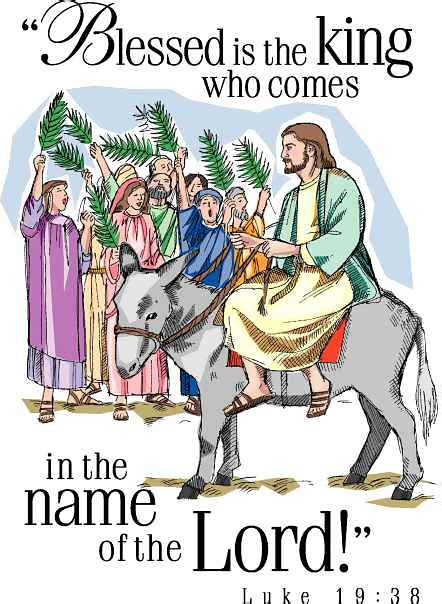
         Finally, we have Matthew’s version of “the Passion of the Christ” (26:14-27:66), or what we know as the story of Jesus’ trials, crucifixion, and death.  It’s a long passage, but well worth reading and meditating upon during Holy Week.  It reminds us of the price our Lord paid for us, emotionally, intellectually, physically, and spiritually.  He was “all in,” whereas Judas, Peter, the rest of the Apostles, the Jewish religious leadership, the mob, even Pilate all betrayed and abandoned Him.  Simon of Cyrene helped Him carry His cross (voluntarily or coerced, it’s unclear), the hardened, Roman centurian on execution detail (a Gentile) attested to His true identity, and a few devoted women (plus John, according to his Gospel) remained with Him until He gave up His spirit.  Notice that the Father registered His own grief with earthquakes, 3 hours of darkness, and splitting the heavy temple curtain (made of woven goat hair) from top to bottom.  Additionally He commemorated the completion of Jesus’ work by opening tombs, and offering a preview of the Big Easter Event by resurrecting (v.52) …many holy people.  The dead Christ was placed in His tomb, the stone sealed, and a detail set by Pilate to guard the grave.  What a journey from the noisy, Hosanna celebration of Palm Sunday to the quiet grief and despair of Good Friday!

         As Paul Harvey would have said, we know the rest of the story.  We know it doesn’t end there, with death having the last word.  Praise God!  When Jesus cried out from the Cross, (John 19:30) It is finished! (tetelestai), He meant that He had accomplished the work of redemption the Father had given Him to do.  All that is left is a kind of “mopping up detail” that we are living out today.  Jesus has demonstrated the truth of His name, God Saves.  Our God has done all the work of salvation for us.  The battle is over.  The victory has been won for us by Christ.  Again, thanks be to God who gives us the victory over sin and death, through our Lord, Jesus Christ.  All we have to do is say “yes” to Jesus.  All we have to do is allow Him to sit on the throne of our lives.  As we surrender to Him—just as He surrendered to His Father–He will bless us, guard us, protect us, and even resurrect us. 

         Yes, the world is changing at a hypersonic rate.  Many things we used to depend upon are uprooted or overturned or no longer reliable or even available.  In these anxiety-riddled and unstable times, Let us fix our eyes on Jesus, the author and perfecter of our faith, who for the joy set before Him endured the cross, scorning its shame and sat down at the right hand of the throne of God.  Consider Him who endured such opposition from sinful men, so that you will not grow weary and lose heart (Hebrews 12:2-3).  We can trust in our God, despite any threats to the contrary.  This Holy Week, let us stand firm our faith that Jesus has the power to help us, to sustain us, and to keep us sane, safe, and secure.  AMEN! 

©2020 Rev. Dr. Sherry Adams