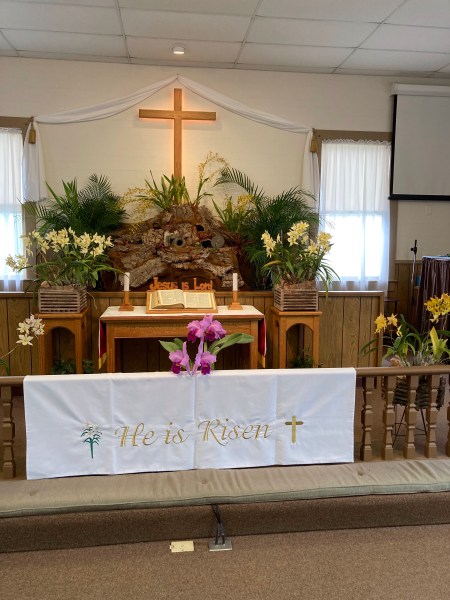
An Attitude of Gratitude

Pastor Sherry’s message for October 12, 2025

Scriptures: Jer 29:1, 4-7; Ps 66:1-12; 2 Tim 2:8-15; Lk 17:11-19

Modern psychological research has demonstrated again and again—when research results are replicated in study after study over differing groups of people, this is called a “robust finding”—that practicing gratitude helps us become happy.: When I have worked with depressed persons in the past, I have challenged them to thank God, daily, for 3 good things that happened to them for each of 30 consecutive days.: Practiced often enough, expressing gratitude becomes a non-medical way of healing depression.: AA programs have long recommended finding things daily for which to be thankful.: They have found over time that giving thanks for being clean or sober one more day, or even one more hour, helps an addict avoid their substance or activity.

Paul admonishes us in Colossians 3:16 (NIV):Let the word of Christ dwell in you richly as you teach and admonish one another with all wisdom, and as you sing psalms, hymns and spiritual songs with gratitude in your hearts to God.: An attitude of gratitude takes your focus off yourself and your complaints—what you don’t have, and keeps your spirit uplifted and focused what the Lord has done for you—what you do have.

Consider the following story from Mother Theresa:: She had heard of an alcoholic man who had been beaten and left for dead in the streets of Melbourne, Australia.: The sisters in her order—the Missionaries of Charity–had located him and taken him into their hospital there called the “Home of Compassion.”: Their kind and compassionate care of him helped him discover that God indeed loved him.: When he was able to leave the facility, he apparently never again touched alcohol, but returned home to reconcile with his family and to regain his former job.: (A healing from alcoholism is a huge miracle, but so too is having a family willing to reconcile and a boss willing to take another chance on a previously underperforming employee.) Upon receiving his first paycheck, he brought it to the Home of Compassion and gave it to the nuns, saying, I want you to continue to demonstrate the love of God for others as you did for me.”: This man was healed through the loving care of these Sisters of Charity.: He saw the heart of God in what they did for him and was immensely grateful!: Their treatment of him changed his life.: He was so thankful that he gave them his first paycheck as a restored person.: (Graham Twelftree, Your Point Being…?,: Monarch Books, 1988, p.125.)

Our Scripture passages today all express God’s desire that we practice an attitude of gratitude for His blessings, no matter our circumstances:

A.: In our Gospel lesson (Luke 17:11-19), Jesus heals 10 persons suffering from leprosy.: Jesus is headed to Jerusalem to die.

At the fringes of some unnamed village, 10 lepers appeal to Him for healing.

He gives them what they want, freely, graciously.: Notice, they had faith in Him and in His ability to heal them.: He says to them (v.14):Go, show yourselves to the priests.: He knew the requirements, stated in Leviticus 14:1-10, which designated all the things the leper who had been healed had to do:: (1) Show him/herself to the priest.: (2) The priest would then perform a detailed ritual to ensure physical and spiritual cleansing. (3): Lastly, the healed person was to wash his/her clothes, shave off all his/her hair, including eyebrows; and bathe with water.

The 10 obey Jesus and scurry off to begin the cleansing process.: It is while they are on their way that they are healed.: They had stepped out in faith, trusting in Jesus.: But only one guy notices his healing and returns first to thank the Lord.: Perhaps the other nine were just too overjoyed to focus on gratitude; or maybe they felt somehow entitled and believed they deserved it.: We don’t really know why they didn’t think to express their gratitude to Jesus. Most likely, however, their attention was on finding a priest, remembering and performing the religious requirements, and anticipating happy reunions with their families.: Remember, they would have had to have lived outside their community, quarantined away from loved ones and even all worship services.

At any rate, the one guy who does return to thank Jesus was a hated Samaritan!: We would say today that he wasn’t socially acceptable; that he was considered by the Jews to be a mongrel (Samaritans descended from the Jews who escaped captivity by the Assyrians and the Babylonians, and then went on to intermarry with Canaanites, and Assyrian and Babylonian overseerers.: The Jews returning to the Promised Land had contempt for them, considering them to be—as they say in our area–“Sorry from way back.” Regardless of his ethnic heritage and his upbringing, this man seemed to know enough to express his thanks.

Jesus’ response to the Samaritan’s gratitude was fantastic:verse 17:Rise and go; your faith has made you well.: This implies that he was kneeling at Jesus’ feet or had prostrated himself in adoration. Jesus is so pleased that He commends him for his faith and his manners. 

This guy has received the same physical healing as the other 9; but, in addition, he has also received salvation!: The other nine were healed of leprosy, but because they ran off and failed to express their gratitude to the Lord, they missed out on this very important extra gift:: This lone Samaritan was forgiven of all his sins.

(J. Vernon McGee, Through the Bible Commentary on Luke, Thomas Nelson, 1991, p.213.)

What this says to me—and perhaps to you as well—through offering his gratitude to Jesus, this enjoyed a special encounter with the Living God, and, anticipating Jesus’ crucifixion, was also cleansed of His sins!

B.: Jeremiah predates Jesus by about 600 years, but—because he is God’s mouthpiece–says essentially the same thing in Jeremiah 29:1-7.: Last week, we read where he lamented and grieved over the Jews who had been killed or carted off the Babylon.: We also read Psalm 137 which detailed the peoples’ grief and anger over their defeat by Babylonian forces.: But in today’s passage, the Lord is telling them to settle down and settle in.: They are to build houses.: They were not to establish a tent city, nor live in cardboard boxes.: God wanted them to build something more permanent, in order to “bloom where they are planted.”: Back in the late 1960’s I frequently saw a poster that said that exact same thing.: It used to make me mad because I believed I needed to work to change where I was or to move to somewhere better.: Similarly, I remember conversations with a pastor friend who was continually disappointed with his congregation.: He wished they were emotionally healthier or financially wealthier.: Finally, after continuous complaints to the Lord, he heard God tell him he was to love and care for the church members the Lord had given him—essentially bloom where he was planted.: God places us in the environment we inhabit.: He has a purpose for us there.

 So these captives are to plant gardens, both so they can feed themselves and because God is telling them it suits His purposes that they remain there for a while.: They are to marry, have sons and daughters.

Again, this implies they will be there for some time.: This side of the Cross, we know they were there for 70 years or approximately two generations.: Rather than persisting in frustration or hateful resentment, they were also to contribute to the peace/prosperity of the city.: God says, through the prophet, (v.7) :Pray to the LORD for it, because if it [Babylon] prospers, you too will prosper.

It’s really difficult, isn’t it, to think of being grateful for their captivity, for their deportation to a foreign land.: God has punished them because they were consistently and repeatedly out of line. They had practiced idolatry, abused their power, and polluted themselves with greed and lust.: A holy God like ours cannot abide such sin. We know from Hebrews 12:5-11, that God disciplines those He loves.: If He didn’t, we could not really trust Him. He means what He says in Scripture and through His prophets, and He says what He means. He has punished them, hoping they will change their sinful attitudes and bring their behavior into alignment with His standards.: The point is that, even though they are captive in a foreign land—which seems terrible to them–it comes as no surprise to God because He engineered it.

They can and should be grateful to Him because (1) they are alive!: And (2) He has not abandoned them.

This concept is lost on our secular culture:: We want to be grateful to God for every good thing, but also for the trials and disappointments we experience.: When we go through trials—emotional pain—we are molded and shaped by God.: When we go through trials, we learn compassion for others, patience, and to trust in the Lord despite our circumstances.

C. Our Psalm (66:1-12) is a song of communal thanksgiving (gratitude) to God which looks forward to the Jews’ restoration to their home in Jerusalem and Judea.: They are filled to the brim, in advance, with gratitude to God for their rescue and restoration.: They enjoin us to (v.1):Shout joyful praises to God, all the earth!: Sing about the glory of His name!: Tell the world how glorious He is.

D. Paul’s 2nd letter to Timothy (2:8-15) echoes a similar theme:

Paul wants young Pastor Timothy to be grateful always for the Good News that Jesus Christ died for our sins and rose again.: On any given day, if we cannot find another thing for which to be grateful, we can cite this reality.

Whatever our present circumstances, our God wants us to practice an attitude of gratitude.:  I challenge you to recall for yourself,: every day, 3 ways in which God blessed you that day.: Recite them, tell them to someone else, or write in a journal these three things so you won’t forget.: Watch and see what happens to your attitude and to your mood.: And remember, even difficult things—like God’s discipline—can be blessings in disguise.:  (Play Laura Story’s song, “Blessings” (with the lyrics) which can be found on www.YouTube.com.): Amen!  

©️2025 Rev. Dr. Sherry Adams
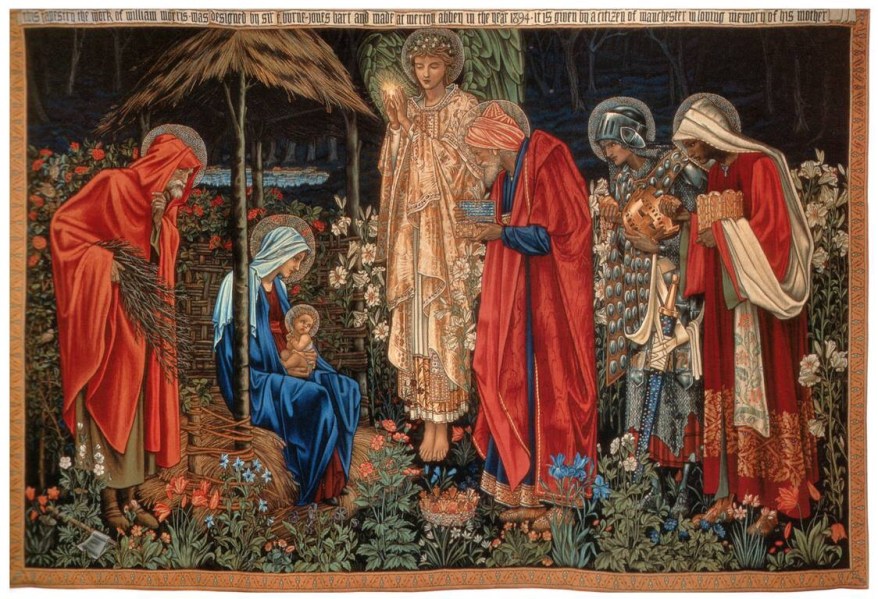
Christ our King

Pastor Sherry’s message for November 24, 2024

Scriptures: 2 Sam 23:1-7; Ps 132; Rev. 1:4-8; Jn 18:33-37

Many of you met my houseguest, Elizabeth, last weekend.  She is a therapist I befriended at Honey Lake and had been recruited by them from Vermont (we’ve both since stopped working there).  When I learned she had never been to a major college football game, I invited her to attend last week’s Gator game against LSU.  It was a great game!  UF won in a surprise upset.  We both wore Gator shirts and hats, and I was amused to see her get so into the game, the cheers, the big crowd atmosphere.  We joked that the 90,000+ fans present outnumbered the entire population of the state of Vermont!

I must say, however, I became a bit frustrated by the lyrics to the UF alma mater, which I had never before really noted.  We were singing along to the words posted on the stadium “jumbotron.”  The last line states, “There’s no other name so glorious, all hail, Florida hail!”  It immediately hit me, “I love the Gators, but just a minute…there’s no other name so glorious?”  Are you kidding me?!!  How about the name of Jesus?

Similarly, if you follow professional fights, the announcers invariably use all kinds of hyperbole to introduce each fighter.  You’ll see them grab a mike lowered from above and shout out something like… 

“Ladies and gentlemen, we are liiiiiiivvvveeee! This is the moment you’ve all been waiting for. Iiiiiiiit’s TIME! Introducing out of New York City, he is the reigning, defending, undisputed heavyweight champion of the world, the one, the only, the infamous [fill in the blank] !!!” The crowd goes crazy.”

But let your imaginations go and consider what if he instead shouted this: “Ladies and Gentlemen, kings and lords, nations of the world, we are liiiiiivvvveeeee! This is the moment you have all been waiting for. It’s time! Introducing out of Bethlehem of Judea [having endured death on a Cross for our sins, and having risen from the dead 3 days later, we have the one, the only Son of the Living God, Jesus Christ, our Savior!!!]

(Concept and dialogue borrowed fromproclaimsermons.ccsend.com, week of 11/18/2024)

Wouldn’t that be something to amaze us and to applaud?  Today, the Church does just that.  Today we celebrate Christ the King Sunday.  It’s the final Sunday of the Church calendar.  Next Sunday we begin Advent, the time of commemorating the birth of Jesus, the “starting place” of the Christian Church.  No jumbotron/fight announcer proclaims it…but all of our readings today acclaim Jesus as greatest King of all times!  Follow along with me to see or hear how this is so.

A. Our Old Testament reading comes from 2 Samuel 23:1-7. These are the last words King David spoke publically.  They are prophetic and humble words.  King David reminds us his father was not a king, but a farmer and sheep-breeder.  He expresses gratitude that God raised him up to become Israel’s 2nd king (reigning after Saul for forty years, from 1010-970 BC).

In verse 3, he acknowledges that the Holy Spirit anointed him as a prophetic spokesman for God.  The Lord told him how a righteous king was to rule, and that he and his descendants would continue to rule over Israel until and unless they stopped worshipping and obeying God.  David says in verse 5 that he knows his family is not worthy—and they weren’t—all but 5 became idolaters!  So, his dynasty died out when Judah was taken captive by the Babylonians in 587BC.

Instead this last public statement becomes a prophesy of the One Who is worthy.  Many generations after King David died came Jesus, David’s descendant, the One King David called “Lord.”  God had promised him (2 Samuel 7:12) that the Messiah would come from his lineage.  (Both Jesus’ mother, Mary, and His step-father, Joseph, were poor descendants of David’s.)  Jesus would be the King that Isaiah will later call, “King of Kings and Lord of Lords” (think “Halleluia Chorus” from Handel’s Messiah).

B.  Psalm 132 celebrates God’s faithfulness to King David.

The psalmist is unnamed, so not King David.  In verses 1-5, he describes David’s greatest ambition as king: to build a house, a Temple, in Jerusalem for God.  He recalls for us in verses 6-9 how the ark of the Covenant was brought into Jerusalem, how the Temple was built (by Solomon), and how God, who is omnipresent, made His particular presence felt there.

Next the psalmist reviews God’s covenant with David:  His line shall continue as kings of Israel provided they do not stray from God—which, as I said earlier–they did.   Unfortunately, most of David’s descendant kings became disobedient idolaters so God brought their reigns to an end.  But, as Isaiah prophesied (in 11:1, NLT)—Out of the stump of David’s family will grow a shoot—yes a new Branch bearing fruit from the old root. 

Then he culminates with this assertion in verses 17-18—…My Anointed One [Messiah, Jesus] will be a light for My people…He will be a glorious king!  Like King David, the psalmist–who celebrates David’s relationship with God—prophesies that David’s most famous descendant will the greatest king of all!

C. The Apostle John wrote Revelation (1:4-8).  It is a narration of what he saw in a Sabbath-day vision.  Late in his life, he was on the prison island of Patmos, praying, when the Lord Jesus appeared to him.  He obediently wrote what he was shown and now addresses this revelation to the churches in Asia Minor with whom he was associated (as Bishop of Ephesus).  The revelation was given to him by Jesus Himself. 

In it, Jesus tells John that He is (v.8)—the Alpha and the Omega—the beginning and the end.  Alpha and Omega are the first and last letters of the Greek alphabet.  Jesus is saying He’s the A to Z, the complete package, all we have ever needed for salvation, blessing, and peace.

Earlier (v.5) John tells us that Jesus is—the faithful witness to these things [what is to be revealed], the first to rise from the dead [and not die again, like Lazarus, Jairus’ daughter, and the widow of Nain’s son], and the ruler of all the kings of the world.  There it is! John is stating that there is no king greater than Jesus.

D. Finally, we have Jesus’ own words in John 18:33-37.

King David, the psalmist who penned Psalm 132, and the Apostle John all testified that Jesus is the greatest of all kings.  Now Jesus Himself, on trial before Pilate, states that He is a king, but not a political one (v.36)—My kingdom is not an earthly kingdom.  If it were, My followers would fight to keep Me from being handed over to the Jewish leaders.  But my Kingdom is not of this world. 

Pilate, a cynic, probably didn’t know what to make of this, but he appeared to realize Jesus was not a threat to Roman rule—but rather to the authority of the Jewish religious establishment.  This side of the Cross, we know that Jesus is King over a spiritual kingdom, the Kingdom of Heaven.  And that His rule will manifest all over the earth when He comes again in all of His sovereign majesty. 

While today is Christ the King Sunday, we also celebrate Thanksgiving this week.  This is a good time to remember to thank God that Jesus is our King.

Just prior to this sermon, we sang the hymn, “Now Thank We All Our God.” 

“This particular hymn was written during the Thirty Years War in Germany, in the early 1600s. [The 30 Years War was a war fought between Catholics and Protestants over which brand of the faith would take precedence in Europe.  I cannot think that Jesus would have ever commended Christians for fighting Christians.]  The hymn’s author was Martin Rinkart, a Lutheran pastor in the town of Eilenburg in Saxony

“Now, Eilenburg was a walled city, so it became a haven for refugees seeking safety from the fighting. But soon, the city became too crowded and food was in short supply. Then, a famine hit and a terrible plague and Eilenburg became a giant morgue.

“In one year alone, Pastor Rinkart conducted funerals for 4,500 people, including his own wife. The war dragged on; the suffering continued. Yet through it all, he never lost courage or faith and even during the darkest days of Eilenburg’s agony, he was able to write this hymn:

Now thank we all our God,

with hearts and hands and voices,

Who wondrous things hath done,

In whom the world rejoices

…[So] keep us in His grace,

and guide us when perplexed,

and free us from all ills,

in this world and the next.

“Even when he was waist deep in destruction, Pastor Rinkart was able to lift his sights to a higher plane. He kept his mind on God’s love when the world was filled with hate. He kept his mind on God’s promises of heaven when the earth was a living hell.”

(Erskine White, Together in Christ, as shared by www.sermons.com, 11/18/2024)

If this man can celebrate God and thank Him in the midst of death, famine, overcrowding, and chaos, can’t we do the same?  By comparison, our lives seem relatively trouble-free.  Let’s remember all we have to thank our God and King Jesus for as we celebrate Thanksgiving this year.  Amen!

©️2024 Rev. Dr. Sherry Adams

The Christmas Let Down

Pastor Sherry’s message for December 31, 2023

Scriptures: Isa 61:10-62:3; Ps 148; Gal 4:4-7; Lk 2:22-40

Hopefully you have not experienced it this year but there is a psychological phenomenon called “Christmas Letdown.”

Let me share a story to illustrate: “A number of years ago, when Lou Holtz was at the University of Arkansas, he was taking his team to play a bowl game in Tempe, Arizona. The game was to be played on Christmas day. He was asked how he felt about playing a game on Christmas, rather than being with his family. The coach answered candidly: ‘I would rather be in Tempe. After all, once you have been to church, had Christmas dinner, and opened the presents, Christmas is the most boring day of the year.’”

(Illustration borrowed from www.sermoncentral.com, 12/26/2023.)

YIKES, Lou! Tell us how you really feel! Part of “Christmas Let Down” is the sense of “what now?” As the coach said, what’s left to expect when the gifts under the tree and in the stockings have been discovered and unwrapped? What’s there to look forward to when the festive meal with family and friends has been eaten?

I was working on continuing education to renew my psychology license while I was sick at home these past two weeks. The author of one course I took on addictions said that recovering addicts must not let themselves think of how much they enjoyed their “high.” She called this selective memory “euphoric memory,” and said it could lead a person right back into their addiction. Instead, the recovering addict should discipline their mind to think of all the ways that being clean and sober improve their life.

(D. Poor, “Codependency: Causes, Consequences, and Cures,” Professional Development Resources, 2015, p.33.)

I think this must be the antidote to “Christmas Let Down Syndrome” as well. Rather than focusing on any disappointed expectations of our own from people or events this time of year, we should look to what our God has done already–and will accomplish for us in the future–in Jesus’ 1st and 2nd Comings. This is certainly the perspective of all of our Scripture readings appointed for today.

A. Let’s begin with Psalm 148, a clarion call to all of creation to praise God. The psalmist includes nearly all imaginable created elements and entities, and calls upon them to praise the Lord:

1. Angels and all the heavenly hosts’

2. Sun, moon and stars;

3. Heavens and rain;

4. The oceans and all creatures within them;

5. Lightning, hail, snow, clouds; and wind;

6. Mountains, hills, and all varieties of trees;

7. Wild and domestic animals, as well as birds;

8. All people from rulers to ordinary citizens, young as well as old.

The psalmist expects them all to exalt the Lord. Why? Because the Lord created them all, and because (v.14) He has raised up for His people a horn, the praise of all His saints, of Israel, the people close to His heart. A horn is a figurative term for a powerful ruler; this is a metaphor for Our Deliverer, Jesus Christ. We don’t carry on like disappointed sad-sacks after Christmas because the very date reminds us that God both created us and sent a divine deliverer to save us.

B. The prophet Isaiah (61:10-62:3) assures us that God deserves our praise because of what He has in store for us with Jesus’ 2nd Coming. After Jesus comes again as a righteous, triumphant, all powerful Judge, He will do away with all evil-doers. Oh Happy Day! Won’t that be amazing?! And He will dress those of us living then who love Him in (v.11)—garments of salvation and…a robe of righteousness. We will be as decked out beautifully, as a bride or a groom, wearing especially fine clothes, as befitting such an grand occasion. Additionally, we will be inundated by righteousness and praise…again, Oh happy day!

Chapter 62:1-3 tells us that our Lord yearns for this to happen. Both God the Father and Jesus are looking forward to this time. Jesus will rule the earth from Jerusalem. The Present poor war-torn Israel will finally be at peace, and the beauty of Jerusalem will exceed what it looked like at its height, in the days of King Solomon. In a sense, God will delight over Jerusalem as a bridegroom cherishes his bride.

C. Not only that, but as Paul tells us in Galatians 4:4-7, our status has already improved due to Jesus’ 1st Coming. Jesus Christ has paid the penalty for our sins. Additionally, by redeeming us, He has grafted us into His lineage as sons and daughters of God. He has gifted us with the Holy Spirit, whose job is to lead us into all truth. Because of both Jesus and the Holy Spirit, we are privileged to enjoy a comfortable, intimate relationship with God the Father–so much so that we might call Him Abba or Daddy.

As an aside, notice in (v.4), Paul states that Jesus was—born under law. This means that Mary was a young Jewish woman, who performed all the requirements of the Law around Jesus’ birth and her post-birth purification. I saw on the news this week that some person claimed that Jesus was/is Palestinian because Mary was a Palestinian. No. That’s just not true. This person does not know Scripture. Jesus was born to a Jewish woman and was/is Jewish—though He died to redeem the world.

D. Finally, we see from our Gospel (Luke 2:22-40), that God sent two prophets to attest to Jesus identity as Messiah days after His birth. Luke relates that Jesus is named and circumcised on the 8th day. Circumcision is an undeniable sign of loyalty to God. Additionally, at the end of 40 days, Mary and Joseph present Him at the Temple (6 miles distant from Bethlehem). Women who gave birth were considered ritually unclean for 40 days after the birthing event. Once the 40 days ended, she was required to go and present an offering that signaled her purification. The offering of 2 turtledoves instead of a calf or a lamb attests to how poor Mary and Joseph were. But note: The offering was for Mary, not for Jesus as He was without sin and did not require a sacrifice under the Law. Dr. Luke wanted us to be sure to realize that Jesus’ earthly parents were raising Him in the traditions of their Jewish faith.

While they were in the Temple grounds, they were spotted by a man named Simeon. He was an old man who had served God faithfully for years. The Holy Spirit had told him he would not die until he had seen the Messiah; then the Spirit must have alerted him that Jesus was present and was “the One.” So, he approaches the couple, takes the child and prophesies over Him, saying he is now ready to die because he has seen “Israel’s consolation.” This is another metaphor for the Messiah, who Simeon expects will comfort His people. Simeon’s Holy Spirit-inspired speech is called the Nunc Dimittis, and is almost a word for word, prayerful repetition of Luke 2:29-32—Lord, now let Your servant depart in peace, according to Your word. For my eyes have seen Your salvation, which You have prepared before the face of all peoples; to be a light to lighten the Gentiles, and to be the glory of your people Israel. (The Anglican Book of Common Prayer, 2019, p.46).

The Holy Spirit uses Simeon to announce that Jesus is to be the means of salvation for both Jews and Gentiles. He will be a cornerstone/strong support for some; and a stumbling block for others. Simeon rightly predicted that Jesus would suffer, and he accurately predicted that Mary would suffer as she watched her son suffer and die on the Cross.

Because Jewish Law required two witnesses to affirm a truth in court, the Lord provided Anna as the 2nd prophetic witness. Dr. Luke tells us she was 84 years old, having been widowed after 7 years of marriage. Anna was a major prayer warrior in the Temple. She was there so much that the priests and Levites gave her a room in which to live. She spent her days praising God and praying. She too was told by the Holy Spirit that Jesus was the Messiah. She reaffirmed this to Mary and Joseph and shared with any interested onlookers Jesus’ true identity.

According to our Scripture passages, we have no excuse to give in to “Christmas Let Down” syndrome. Instead in these days after Christmas, our hearts should be elevated by celebration and praise!

Our God has created and redeemed us. He has great, restorative plans for us that will occur when Jesus returns to earth. Meanwhile, we have been saved by Jesus’ sacrificial death on the Cross and adopted by the Father as His children and as co-heirs with Christ. Many famous Old Testament prophets foretold Jesus’ birth and 2 faithful, spirit-led New Testament persons prophets confirmed His identity even as a newborn infant. So, no matter what has happened to us this Christmas Day and following, we can and should continue to be filled with rejoicing! Emmanuel [God with us] has come to dwell among us. Come, let us adore Him.

©️2024 Rev. Dr. Sherry Adams

God Wants to Talk About You

Pastor Sherry’s message for August 6, 2023

Scriptures: Gen 32:1-31; Ps 17:1-9; Ro 9:1-5; Matt 14:13-21

In August of 2001, country singer Toby Keith released a song titled, “I Wanna Talk about Me.” It’s kind of a country rap showcasing a man’s desire to have some equal “air time” with his significant other. Here are a few of the lyrics:

We talk about your work, how your boss is a jerk,

We talk about your church and your head when it hurts.

We talk about the troubles you’ve been havin’ with your brother,

Bout your daddy and your mother and your crazy ex-lover. We talk about your friends and the places that you been,

We talk about your skin and the devils on your chin,

The polish on your toes, and the run in your hose, And Lord knows we’re gonna talk about your clothes!

You know talking about you makes me smile. But every once in a while, I want talk about me…

Wanna talk about I,

Wanna talk about #1, oh my, me, my…

What I think, what I like, what I know, what I want, what I see.

I like talking about you, you, you, you usually…

But occasionally, I want to talk about me!

I can’t think about this song without smiling. It sounds like his girlfriend is very self-focused, since it’s hard for him to get a word in edgewise. But if and when he gets the floor, what does he want to talk about? Himself! He wants to “talk about me!”

The song has become a metaphor in my family for thinking only of self. Someone cuts us off in traffic. One of us will smile and say to the others, “I want to talk about me.” Someone cuts in line in front of us at the grocery store, or at the post office, etc., and we’ll be thinking, “I wanna talk about me.” Have you noticed that, even when you politely let someone go ahead of you, often they don’t say thank you or even give you eye contact because…”I wanna talk about me.”

Let’s take a look at what the Lord has to say about this all too prevalent attitude in today’s world.

A. Psalm 17:1-9 was written by King David. Biblical scholars believe it dates from the time before he ascended the throne. God had lost confidence in King Saul and had had His prophet Samuel anoint David as the next King. The jealous and mentally unstable King Saul accurately viewed David as a rival to his throne and set out to kill him. In this psalm, David pleads with God for protection against Saul and any other adversaries.

Yes, David is worried about saving his own skin; but he also tells God (Peterson’s The Message, p.962)I’m not trying to get my way in the world’s way. I’m trying to get Your way; Your Word’s way; I’m staying on Your trail; I’m putting one foot in front of the other. I’m not giving up. David views the Lord as his (and our) protector. David trusts in God to provide him a divine rescue.

David knows we need to take our focus off ourselves and put it on God, first, and then on others. This is the shape of the Cross. The vertical reminds us to love God. The horizontal reminds us to love others. God would have us put our focus on loving Him and then on loving others. A healthy self-love comes third.

B. Our Old Testament lesson, Genesis 32:1-31, provides us with an object lesson in where our love/focus should be directed. Jacob is re- entering the Promised Land after having been an immigrant to Syria for 20 years. In that time, his Uncle Laban had cheated him at his wedding, substituting the less desirable Leah in the dark wedding tent for Jacob’s beloved Rachel. Uncle Laban also changed Jacob’s wages 10 times, always shifting things to Laban’s advantage.

Nevertheless, despite these numerous setbacks, the Lord has prospered Jacob: He leaves Syria with great wealth:

1.) 2 wives and 2 concubines (remember, this is before Moses’ time when the Law was given);

2.) 11 sons and 1 daughter;

3.) A large retinue of servants;

4.) and huge numbers of livestock.

Due to God’s blessings, Jacob returns to the Promised Land as rich as an Arabian prince or an oil sheik.

Focused on his fears that his brother might still want revenge (and is coming to greet him with 400 troops), Jacob sends Esau multiple, generous gifts to sweeten the deal:

1.) 200 female goats & 20 males (220 goats); 2.) 200 ewes & 20 rams (220 sheep);

3.) 30 female camels with young (30+ camels); 4.) 40 cows, 10 bulls (50 cattle);

5.) 20 female donkeys, 10 males (30 donkeys).

This represents approximately 600 livestock! And he still has other flocks with which to sustain his people. He divides his clan into two groups and directs them to separate encampments for protection

Then he prays. At this point, I want to shout out, “Good job, Jacob!” He reminds God of His promises to his grandfather, Abraham, to Isaac, his father, and to him. He admits he doesn’t deserve God’s love and mercy. But he does plead for God’s protection—like David will later—(Peterson’s The message, p.70) Save me, please, from the violence of my brother, my angry brother! I’m afraid he’ll come and attack us all, me, the mothers and the children. When he ran for his life 20 years earlier, his focus had been on himself—>“I wanna talk about me.” Now, after 20 years of trials, he has matured: His focus is still on self, but has enlarged to include family and the Lord.

God recognizes Jacob’s maturing faith, but then intervenes to strengthen it. In verse 24, Jacob finds himself engaged in a wrestling match with the pre-incarnate Christ. It’s like Jesus is saying to him, “Jacob, you are less self-focused than you were 20 years ago. But your faith still needs to deepen. In your life, you have wrestled with your twin, Esau…you have wrestled with your Uncle Laban for 20 years. But your first priority must be Me, God!” This then becomes a major turning point in Jacob’s faith: This is why we celebrate the “heal-grabber” as a respected patriarch. He persists. He does not let go of God. He has finally learned it’s not about struggling with God or others. It’s about yielding to God and holding on to Him. Once he comprehends this, Jesus blesses him and changes his name to IsraelGod-wrestlerHe who struggles with God and with men and has come through. (Some translations substitute the word overcome or prevail for come through, but actually none of us can overcome God.)

Our God wants to talk with each of us about us, and He does get the last word. He wants our focus to move from self to Him. He wants us to be generous toward other people, putting their needs above our own.

C. Look at Jesus’ example of this in our Gospel lesson, Matthew 14:13-21. Verse 1 tells us the Lord had just gotten word that King Herod had beheaded His cousin, John the Baptist. Jesus wanted or needed time by Himself to pray and to grieve His cousin’s murder. He tried to sail off to gain some alone-time with His Father. But He was accompanied by His disciples and, when the crowds saw Him depart, they raced around the lake to meet Him where He landed. I hope He was able to take a time- out to regroup and recharge emotionally and spiritually, but He seems hard- pressed for time and opportunity.

Notice He doesn’t act frustrated. Instead, (v.14) He had compassion on them and healed their sick. Additionally, after having taught them all afternoon, He tells His disciples to (v.16)…give them something to eat. They can’t feed this crowd, but Jesus can. He is saying to them, “Trust Me. I can make something from almost nothing [actually, He can make something from nothing]. I can take the little you bring Me and make of it much!”

D. And let’s not forget He does not break His promises. As our Romans 9:1-5 passage demonstrates, even though the Jews of His time rejected Him as their Messiah, He has not rejected them. Many Christians have taken it upon themselves to persecute the Jews because their religious leaders murdered Jesus. But God makes it clear through Paul that He has not forgotten that they are His chosen people. There is no place in the Christian life for us to disdain Jews. Through them, God has worked out His plan of salvation. Through them, God has brought forth the lineage leading up to Jesus. As we read last Sunday in Romans 8:31If God is for us, who can be against us?

God doesn’t want us to just “talk about me,” or be self-focused.

He wants us to focus on Him and on the needs of others. All through Scripture, He urges us to turn away from a concentration on self or selfishness. We are to follow Jesus’ and Jacob’s examples. He wants us to grab ahold of Him and hang on—no matter what. We are to surrender our wills to His, or as AA says, “let go and let God.” And then watch for His often surprising blessings.

©️2023 Rev. Dr. Sherry Adams

He’s a Good, Good Father

Pastor Sherry’s message for June 18, 2023

Scriptures: Gem 18:1-15; Ps 116:1-2, 12-19; Ro 5:1-8; Matt 9:35-38, 10:1-8

Happy Father’s Day to our fathers present here and to those who have gone on, we hope, to glory. Remember Paul Harvey? He wrote the following about fathers:

“A father is a creature that is forced to endure childbirth without an anesthetic. A father growls when he feels good and laughs when scared half to death.

“A father never feels worthy of the worship in a child’s eyes. He’s never quite the hero his daughter thinks; never quite the man his son believes him to be, and this worries him—sometimes. So he works too hard to try to smooth the rough places in the road for those of his own who will follow him.

“A father gets very angry when the school grades aren’t as good as he thinks they should be. So he scolds his son—though he knows it’s the teacher’s fault. A father gives his daughter away to another man who is not nearly good enough—so that he can have grandchildren who are smarter than anybody’s. A father makes bets with insurance companies about who will live the longest. One day, he loses—and the bet is paid off to those he leaves behind. “ (Paul Harvey, quoted by Chuck Swindoll in The Tale of the Tardy Oxcart, Word Publishing, 1998, p.204.)

It’s a touching tribute, isn’t it? I hope that is what your father was/is like. If not, we can all look to our Father God, to understand what a good father—what a really good, good Father is like! Our Scripture passages today make that point clearly.

A. Let’s begin with what Paul tells us in Romans 5:1-8. Paul is instructing us in the great progression of the generous gifts and blessings we obtain—like the one baptized as well as those we receive into our church fellowship today–when we believe in God and in our Lord Jesus Christ:

First, we are reconciled to God through Jesus. This is a huge blessing! Paul teaches, in Romans 1, that we pull ourselves away from God by our sinful behaviors (carnal nature), our rebellious and idolatrous thinking, and by allowing our feelings to dictate our behaviors and our beliefs. Feelings provide us with important data, but we do not want them to direct or compel our behaviors. We live now in an American culture where many people appear to believe it is okay to be driven by their feelings. This kind of behavior is out of control and leads to harm and to chaos. So, often because we do not sense God’s presence, we assume it’s hard to have a relationship with Him! This is just not true! Our Lord is only a prayer away! And He desires a deep connection with each one of us—which Jesus has made possible through His death on the Cross for our behalf.

A second concern, however, is what happens to us as we are drawing closer to God, and engaging in Kingdom work (spreading the gospel, sharing our testimonies regarding our own faith journeys). We encounter trouble! You see Satan leaves us alone if we are not pursuing God or are neutral about the Lord. But when we draw near to God, the evil one comes after us, “tooth and nail,’ trying to turn us against Him. The world and our flesh, inspired by the devil, try to discourage us. These forces work hard to pull us away from Jesus.

If we can hold on to our faith—in the face of trouble—we will emerge victorious. We will have become one who perseveres; one who learns patience; one who develops grit or persistence. This ability to persevere strengthens our character. We become more resilient. Psychology calls resilience the bounce-back factor. Resilient folks recover more quickly from the slings and arrows the enemy throws at us than do people who are not. Resilient people learn that even if we don’t feel God’s presence, we can trust He is with us in our suffering. All of this—suffering, perseverance, and a resilient character–helps us to have hope. We worship the God of all hope. And because our God keeps His promises, this hope does not ultimately disappoint us.

Finally, in verse 8, Paul pens this famous line But God demonstrates His own love for us in this: While we were still sinners, Christ died for us. We love and serve a God who has pursued us for relationship, even when we didn’t deserve His attention. This is the height of romance, isn’t it? John Eldredge, a contemporary Christian author, wrote a book called, The Sacred Romance, in 1997. His premise was that we each want to feel so cherished by another that that person would court us/pursue us, and want to live out their life with us. He contends and I agree that our God has done just that. The woman we baptize this morning has said “yes” to God. Each of us who has been baptized has said “yes” to God. Praise God and Halleluiah!

B. We see the miraculous hand of God in today’s story of Abraham and Sarah (Genesis 18:1-15). Abraham is now 99 years old, and Sarah, 89. They are way past child bearing possibilities! But two angels and the pre-incarnate Jesus visit them to say “the Child of Promise,” Isaac, will finally appear within the year. Sarah laughs at the idea of conception at their ages. (I think I would cry! Of course, they were wealthy and had a lot of servants, so she would have had sufficient help, bless her!) But they are both told (v.14) Is anything too hard for the Lord? It’s a rhetorical question. The answer is, “of course not!” We love and serve an all-powerful God of miracles.

C. Our Psalm (116:1-2, 12-19) reminds us that we appreciate and thank God because He hears and responds to us when we are in distress or trouble. He is our Rescuer, our Redeemer.

D. And our Gospel (Matthew 9:35-38, 10:1-8) demonstrates how He trusts us and empowers us to do Kingdom ministry. He sends out 12 ordinary men and tasks them with preaching the Gospel; warning folks that the Kingdom of God is near [that’s Jesus; Jesus is coming to visit them soon]; healing the sick; casting out demons; and even raising the dead. YIKES! How extraordinary! And He has empowered His followers today do the same.

Chris Tomlin wrote a sang a contemporary worship song called, “He’s a good, good Father.” We do worship a good, good Father, through our Lord Jesus Christ, and by the power of the Holy Spirit. What wonderful blessings we enjoy when we ally or bind ourselves to Jesus Christ:

(1) We experience peace with God and the peace that passes all understanding.

(2) We experience being deeply loved.

(3) We come to enjoy hope, despite our earthly circumstances.

(4) Our characters are developed and strengthened.

(5) We trust that our Redeemer hears and responds to us.

(6) We realize He trusts us enough to give us Kingdom building work to do.

(7) And we align ourselves with the God who works unheard of miracles for those He loves.

Thank you, Lord, for the good fathers you have given us and for modeling what it is to be a good, good father. Amen!

©️2023 Rev. Dr. Sherry Adams

Happy Father’s Day.

God’s Bigger Picture

Pastor Sherry’s message for June 11, 2023

Scriptures: Gen 12:1-9; Ps 33:1-12; Ro 4:13-25; Matt 9:9-13, 18-26

Some years back, a TV news show in the Midwest ran a TV ad campaign to try to increase their share of the viewing market. They showed a woman, sitting in her car, reading or writing down something—perhaps a shopping list—minding her own business, oblivious to her surroundings. Out of nowhere, this guy appears who rips open her car door, grabs her, and throws her out onto the ground. At first it looks like a car-jacking, which have proliferated all over the country lately. The viewer is horrified for the lady. We wonder what the attacker will do next. But the camera angle pulls way back, and we note that the car is on fire. The guy wasn’t attacking her, or trying to steal her car; instead, he had come to her rescue. The ad concluded with the following statement in big letters across the screen: ”You need the bigger picture. Channel XYZ gives you honest, trustworthy news everyday.”

(Borrowed from a sermon by Rev. Jenny Salt, “The Big Picture of God’s Faithfulness,” archived by www.preachingtoday.com, 6/9/2023.)

TV news programs may come and go—and some are more honest and trustworthy than others–but we can absolutely depend upon the faithfulness of our God.

Our readings today all speak to this immutable, unchanging characteristic of our God in all three persons.

A. Abraham is the first of the 4 great patriarchs of Israel.

Prior to Genesis 12:1-9, Scripture has focused on events important to the human race: Creation; the Fall and its consequences; the Flood; and the Tower of Babel. Talk about the Big Picture! But from Chapter 12 on, God begins to record His interactions with specific humans, beginning with Abram (whose name He changes to Abraham five chapters later).

In today’s reading, God tells Abram that he intends to make a great nation from him.

1.) The Lord promises to bless Abram;

2.) To make his name famous;

3.) To make him a blessing to others.

4.) And, in verse 4, God promises I will bless those who bless you and whoever curses you I will curse; and all peoples of the earth will be blessed through you. Wow! What a great set of promises!

How are all people on the earth going to be blessed by Abram? This side of the Cross, we know out of his lineage will come the Messiah, Jesus. This is the Bigger Picture! (By the way, this promise has not expired. Thus, we want to be careful to support Israel, especially praying that they would come to accept Jesus as the true Anointed One.)

Just as with Jesus’ Great Commission, which we considered last week, God tells Abram to “Go.” He was to go to Canaan from the south of present day Iraq. How did he know this? Scripture does not convey the conversations, but we can assume he heard from God. Abram was obedient and went. When he arrived in what would become Shechem, and later, Bethel, God promised him a huge territory 300,000 square miles in size. Even at its height as a nation, Israel has never exceeded 30,000 square miles. This promise is as yet unmet, perhaps awaiting the Millenial Reign of Christ at His 2nnd Coming. In thanksgiving to the Lord, though, Abram erected an altar to Him everywhere he went.

Abram lived about 2100BC, prior to the provision of the Law. He is famous for his faith and obedience to God. He probably suspected that he was missing something in life. He was satisfied that God gave him a bigger perspective. He is famous for his life-changing decision to follow God.

He is famous for his noble, generous character. And he is famous for being a man of destiny—the father of all believers (considered the patriarch of Jews, Christians, and even Moslems). He clearly understood the bigger picture!

B. In Psalm 33:1-12–called an “orphan psalm” because we do not know its author’s name–we are given our motivation to praise God. We praise Him 1st because He is the God of Creation, and 2nd, because He is a “providential ruler.” This means that what He says is always true, so we can count on Him. Additionally, it means He is completely faithful to His promises. Furthermore, He is just and loving in His dealings with us. Nothing—certainly nothing dreamed up by people or the evil one—can thwart His plans. The psalmist concludes (v.12) Blessed is the nation whose God is the LORD. This is why we pray weekly that America will return to the Lord. Our country needs to grasp the bigger picture: We were dedicated to Jesus at our founding; we have all but abandoned our faith in Him now; and we will probably not prosper again as a nation until we return to Christ once again.

C. In our Romans 4:13-25 passage, Paul makes the case that God saved Abraham because of the man’s faith. It wasn’t due to his good works, though he was mostly kind and generous. It wasn’t because Abraham obeyed God’s Law. The Law wasn’t given until the time of Moses.

This was years later than Abraham—after the adventures and exploits of his son, Isaac, his grandson Jacob, and his great-grandson. It was only after years of slavery and following the exodus from Egypt, that Moses was given the Law on Mt. Sinai in the Wilderness. God saved Abraham because of his trust in God’s promises. He trusted despite his circumstances—old age! He was 100 when his wife conceived Isaac, and Sarah was then 90!

Paul tells us Abraham was (v.21) fully persuaded—this means he had no doubts—that God would faithfully fulfill His Genesis 12 promises to him. He grasped the Bigger Picture for his life. Oh, that we all only had such unshakable faith!

D. These passages on faith are paired with our Gospel lesson today from Matthew 9: 9-13, 18-26. It may seem an odd pairing but let’s delve into it and search out the connections.

The first portion deals with Jesus’ call to Matthew. It’s Matthew who is telling this story, but notice how he skimps on the details. He may have simply been being modest. What made him answer Jesus’ call? I imagine he had seen Jesus in and around Capernaum. He would have also heard folks talking about Jesus’ teachings and His miracles. I could be wrong, but I think that like a lot of us, he found his life lived his way was bankrupt.

Being a rich tax collector hadn’t led him to happiness. If you have watched the 3 seasons of “The Chosen,” you have noted that Matthew is portrayed as being friendless, disowned by his orthodox parents, and despised by the Romans he served for being a Jew, but also hated and avoided by the Jews for collaborating with the Romans. Undoubtedly he knew he needed something more, something different. Maybe he was desperate for a change. So, somehow, when he looked into Jesus’ eyes, he had the faith to follow after him, and jumped into God’s Bigger Picture.

This is so similar to the synagogue ruler, Jairus. Though he was already a man of faith, he had to have been listening to the Pharisees who rejected Jesus. He knew they saw Him as a blasphemer or worse. Yet, when his precious child fell ill, he remembered all the people who had been healed by Jesus. Like Matthew, Jairus was desperate and Jesus healed his 12 year old daughter because of her father’s infant faith. Jairus, too, jumped into God’s Bigger Picture.

The woman who had bled continuously for 12 years was also desperate enough to reach out to Jesus. She didn’t make a request of Jesus, like Jairus. She didn’t look Him in the eyes, like Matthew. Bleeding people were considered unclean, and could not approach a rabbi. Her family had probably banished her due to her unclean status and guilt by association. She could not attend synagogue. Even Lepers lived in community, but she was all alone. She kept her eyes down and quietly touched the edge of Jesus’ garment. Jesus immediately understood her alienation and pain, healed her, and said (v.22) Take heart, daughter [restoring her to relationship], your faith has healed you. Additionally, as they portray this encounter in “The Chosen,” Christ kindly and lovingly tells her to look up. Her daring propelled her into God’s Bigger Picture.

Thank God we worship a God who is faithful and trustworthy. He is the God of the Bigger Picture and our divine rescuer. He responds to us with love and grace. In response to Him, we want to be persons of abiding faith…like Abram/Abraham; like Matthew; like Jairus, the synagogue president; and like the unnamed woman who had hemorrhaged for 12 years.

I personally stepped into God’s Bigger Picture when my husband of 16 years left me for another woman. Someone at my church suggested I read Isaiah 54 and it changed my life! The prophet is talking about God’s relationship with Israel, but it seemed so very appropriate to how my life was going just then. In verse 4, he identified my shame and humiliation. Then in verse 5, He reassured me For your Maker is your husband—the Lord Almighty is His name—the Holy One of Israel is your Redeemer…. Having felt abandoned, He comforted me by asserting in verse 10 ”Though the mountains be shaken and the hills be removed, yet my unfailing love for you will not be shaken nor my covenant of peace be removed,” says the Lord, Who has compassion on you. In my grief and heartbreak, I took God at His word, and have never regretted it.

If you are feeling desperate and like life is empty or unfulfilling, please don’t give up on our God. Jesus is still looking for the lost, those who have come to the end of their own resources. Our God has the bigger picture in mind. He sees more than we do. He understands more than we can. He loves us fiercely. He can and does see the forest despite the trees that impede our view. This week, let’s remind ourselves—no matter what happens–that our God sees the bigger picture and will bring about His plans and promises for us (Jeremiah 29:11) ”For I know the plans I have for you,” declares the Lord, plans to prosper you and not to harm you, plans to give you hope and a future.” Amen! May it be so!

©️2023 Rev. Dr. Sherry Adams

He is Risen!

Pastor Sherry’s Easter message for 4/9/23

Scriptures: Acts 10:34-43; Ps 118:1-2, 14-24; Col 3:1-4; Jn 20:1-18


“Max Lucado, in his book, Six Hours One Friday, tells the story of a missionary in Brazil who discovered a tribe of Indians in a remote part of the jungle. They lived near a large river. The tribe was friendly and in need of medical attention. A contagious disease was ravaging the population and people were dying daily. An infirmary was located in another part of the jungle and the missionary determined the only hope for the tribe was to go to the hospital for treatment and inoculations. In order to reach the hospital, however, the Indians would have to cross the river—a feat they were unwilling to perform.

“The river, they believed, was inhabited by evil spirits. To enter the water meant certain death. The missionary set about the difficult task of overcoming the superstition of the tribe.

“He explained how he had crossed the river arrived unharmed. No luck. He led the people to the bank and placed his hand in the water. The people still wouldn’t believe him. He walked out into the river and splashed water on his face. The people watched closely, yet were still hesitant. Finally, he turned and dove into the river. He swam beneath the surface until he emerged on the other side. Having proved that the power of the river was a farce, the missionary punched a triumphant fist into the air. He had entered the water and escaped. The Indians broke into cheers and followed him across.”

Isn’t that what Jesus did? He entered the river of death and came out on the other side so that we might no longer fear death, but find eternal life in Him.

(Max Lucado, Six Hours One Friday, Multnomah Books, 1989, pp.157-158).

Today, Easter Sunday, we celebrate the fact that Jesus Christ demonstrated that He had overcome sin and death by rising from the dead. He demonstrated the full extent of His miraculous power. And He brought us hope for the future (death is not the final outcome for us). All of our readings today refer in some way to Jesus’ resurrection:

A. In our Gospel, John (20:1-18) highlights some of the events of that first Easter Day. Mary Magdalene—remember, she had held a vigil for Jesus, along with His mother, John, and several other women–at the foot of His Cross. She had probably wept and prayed for Him as he hung dying. No doubt she had watched Joseph of Arimathea and Nicodemus quickly wrap His body for burial. In a dry land with limited water, they would have cleaned the corpse as best they could. They had to hurry before the onset of the Sabbath—He had to be buried before sundown. They then coated the body with myrrh, aloe, and the other spices they had brought. Next, they wrapped it up in stripes of cloth, which would have encased the body in a permanent, glued-on, kind of bandage. This process is important to note because of what happens later.

Mary had watched and must have thought the men did not do as good a job as they should have done for someone as important as Jesus. So she returned to the grave early the next morning, intending to make things right. How she thought she might roll away the heavy stone sealing the tomb is anyone’s guess. Nevertheless, she found the tomb already opened but containing no body. John tells us she ran to find Peter and the other disciple [this is how John always refers to himself in his Gospel], both of whom ran to see for themselves. John, the younger man, arrived first but only peeked into the tomb. The older Peter lagged behind, but reached the tomb and charged in to see only grave clothes on the shelf where Jesus had been laid.

The grave clothes told a story: The myrrh, aloe, and spices should have stuck the cloth stripes to the body, like a mummy. Remember Lazarus needed help to remove his. Both men saw strips of linen lying there, as if Jesus had materialized up through them, leaving them behind. In addition, the shroud for his head and face had been neatly folded and set aside. John saw this, knew it was physically impossible and therefore evidence of a miracle, and believed that Jesus had been resurrected. They appeared to have then gone home to ponder over what they’d seen.

Mary remained, grieving. Jesus appeared in His resurrection body and she didn’t recognize Him. Apparently the nail holes on His hands and feet, and the pieced place on His side, were evident, but something about His face and posture were altered in His resurrection body. Or perhaps she didn’t realize it was Him because she wasn’t expecting to see Him. She only comprehended that it was Jesus when He called her by name. He told her then to go tell the other disciples that He is going to see God the Father. Now we know from other accounts that He later met privately with Peter, encountered the two disciples on the road to Emmaus, and arrived back to greet 10 of the 11 disciples in the Upper Room, but we do not really know where He went during the middle hours between dawn and later that evening. Somewhere during that time, He had a joyous reunion with His Father in heaven! Mary, then, obediently carried the Good News of Jesus’ Resurrection—I have seen the Lord!–to the others.

B. Peter is certainly fired up as he preaches to Cornelius and his household in Acts 10:34-43). He had seen the empty tomb, the discarded grave clothes, and the resurrected Christ! Filled with the Holy Spirit (at Pentecost, back in Acts 2), he preaches with fiery conviction. Dr. J. Vernon McGee makes the point that, “There is not a single sermon in Acts that does not mention the resurrection of Jesus.” (Through the Bible Commentary Series, Acts, Thomas Nelson, 1991, p.129).

Peter reviews for the Cornelius’ Roman household the salient points of Jesus’ life and ministry, emphasizing the resurrection (vv.39b-41) They [the Jewish religious authorities + the Romans ] killed Him by hanging Him on a tree, but God raised Him from the dead on the third day and caused Him to be seen. He was not seen by all the people, but by witnesses whom God had already chosen—by us who ate and drank with Him after He rose from the dead. What a privilege to have been chosen by the Father to be one of the 500 or so to actually see and spend time with Jesus!

C. Paul reminds us, in Colossians 3:1-4, that because we are “in Christ,” we …have been raised with Christ. We share in Christ’s resurrection. Due to this new position in Christ, we have said goodbye to our old, fleshly selves; and we have put on a new, spiritual self. As a result of this phenomenal realignment/reorientation of our individual identities, Paul wants us to (v.2) set your minds on things above, not on earthly things. If you have read anything about people who claim to have died and gone to heaven (NDE’s, Near Death Experiences), they all agree they did not want to return to earth. Having seen Heaven, they wanted to stay. Similarly, Paul believes since heaven is ahead of us, we should focus on Jesus as we continue our tenure on earth. As children of the Resurrection, we are to pattern our lives after Jesus and keep our concentrate on heavenly realities.

D. Psalm 18:1-2, 14-24 is an ode to joy! The psalmist, predating but very like Paul, invites us to focus on heavenly realities–not the frustrations and disappointments of this life. Because of the mighty things Jesus has done—including demonstrating His power over death—we can rejoice in the Lord and praise Him for deliverance, provision, and protection.

We are thankful because…

1.) (V.1) The Lord is good; His love endures forever.

2.) (V.14)The Lord is my strength and my song; He has become my salvation.

3.) (V.17) I will not die but live, and will proclaim what the Lord has done.

4.) (V.24) This is the day the Lord has made, let us rejoice and be glad in it.

We also celebrate the fact that (v.22) The stone the builders rejected [Jesus] has become the capstone. The capstone was either a large rectangular stone used as a lintel in a doorway, or a large square or rectangular stone used to anchor or align the corner of a wall. It might also be the keystone or middlemost stone in an arch. The capstone (building corner or doorway lintel) or keystone (arch) kept the building from collapsing by supporting what exited beside and above it. Considering this metaphor for Jesus, no wonder we call Him our Rock and our Redeemer.

The story is told of…”a man (who) took a vacation to Israel with his wife and mother-in-law. During their time in the Holy Land, his mother-in-law unexpectedly passed away. The following day, the husband met with the local undertaker to discuss funeral plans.

“In cases like these, there are a couple of options to choose from,” the undertaker explained. “You can ship the body home for $5,000, or you can bury her in the Holy Land for just $150.” The man took a minute to think about it, and then announced his decision to ship her home.

“The undertaker, intrigued by his decision, said, “That’s an interesting choice. Can I ask why would you pay $5,000 to ship your mother-in-law home, when you can easily bury her here for $150?” The man promptly replied, “About 2,000 years ago, a man died and was buried here. Three days later he rose from the dead, and I can’t take that chance!” (Subsplash website, 5 humorous Easter sermon illustrations, April 13, 2022.)

Of course there is no guarantee that the mother-in-law would have resurrected—unless she had been a believer in Jesus Christ. Additionally, we know, of course, that Jesus’ ability to raise us from the dead is not limited to the geography of Israel—thank Goodness! Nonetheless, we can enjoy a good joke.

We can also enjoy the secure future we have in Christ. Like the missionary to Brazil, Jesus entered the river of death and came out victorious on the other side. Because He did this for us, we too share in His resurrection victory—and all of its benefits.

Alleluia, He is risen! The Lord is risen indeed, Alleluia!

©️2023 Rev. Dr. Sherry Adams

Praying with Humility and Gratitude

Pastor Sherry’s message for October 23, 2022

Scriptures: Joel 2:23-32; Ps 65; 2 Tim 4:6-8, 16-18; Lk 18:9-14

I have preached here before on the fact that our God answers our prayers. He tends to answer in one of the following ways:

1. Yes, that’s something I am happy to do for you right away.

2. No, I am omniscient and know that would not be good for you.

3. Not yet.

a. I am working out all the intervening variables;

b. Or, I am waiting on you to develop further.

He also likes for us to have an humble attitude toward Him when we pray. In our Gospel Lesson today, Luke 18:9-14, Jesus contrasts the opposite attitudes of the Pharisee and the publican/tax collector.

The Pharisee was a man at the top of the religious ladder of the day. Was he praying out loud or silently? If out loud, how arrogant of him! He appears to be talking to himself, about himself, rather than dialoguing with God. His prayer is a soliloquy, a speech made by himself to himself. Lord, I’m thankful that I am not like other men (v.11)…YIKES! There’s his first mistake. He should have said, “Thank You that You called me to be a Pharisee; I am so happy to serve You and Your people, Lord!” He might have added, “Thank You for keeping me from becoming a robber, an evildoer, an adulterer, or anyone who mistreats others. I know that there, but for the grace of God, go I.” And he would have been very Christ-like to have requested of God, “Lord, I ask you to bless this tax collector and bring him to repentance for any theft or fraud he has committed.” Instead, being very self-focused and lacking humility, he considers himself a cut above other sinners.

The Publican or tax collector, was considered a low-life in that culture (definitely a sinner!). Unlike the Pharisee, however, he seems to have been very well aware of his deficiencies/his sins. He knows that he has denied his nation (as a Roman collaborator); he knows he has alienated himself from his countrymen. The Romans let tax collectors set their own salary, which they did by demanding a certain percentage above what he was required to collect for them. So typically, tax collectors charged extra, taking care of themselves at the expense of their own fellow citizens. Additionally, they didn’t think they needed God or were too ashamed to approach the Lord (We’ve all known people who have said, “If I entered the church, the roof would fall in.)

But notice his prayer, and contrast it with that of the Pharisee: The tax collector admits he’s a sinner! He is humble and humiliated by his past, his present, his bad choices, his wrong actions. He is so aware of his deficiencies before God, he cannot even raise his eyes toward heaven. His prayer is one sentence (v.13): God have mercy on me, a sinner, or God be merciful to me a sinner. This is where we derive The Jesus Prayer: Lord Jesus Christ, Son of the Living God, have mercy on me, a sinner.” It is a famous old prayer uttered from foxholes, places of danger, and traumatic situations.

I once was visiting some friends when someone they knew asked me to minister to their adult daughter. She had been car-jacked at night, kidnapped, and pistol whipped by two men. She feared for her life, sure she would be raped and murdered. She was a believer and knew to pray “The Jesus Prayer” throughout her entire ordeal. The felons took her to a deserted area, blind-folded her, and told her to remove her clothing. She was sure this was the end for her. Suddenly, however, she heard the sounds of the two men running away. She suffered from Post-Traumatic Stress afterward but also knew that God had saved her in answer to her prayer. We believe the men must have seen a large angel behind her who frightened them away.

So what is the right heart attitude? From what attitude should our prayers arise? Not that of the Pharisee—arrogant, going on about how great we are, how much we’ve done for God, how much better we are than others. Rather, Jesus says the right heart attitude, especially when we pray, should be one of humility–and of gratitude. He says in verse 14–For everyone who exalts himself will be humbled and he who humbles himself will be exalted. We want to approach God humbly, acknowledging and confessing our sinfulness. And, we want to approach God with gratitude for His mercy and love:

Our other lessons today explain why we should pray to God with gratitude:

A. 800 years before Jesus, the prophet Joel warns the Southern Kingdom (Joel 2:23-32) that the Great Tribulation of God’s Judgment is coming. Actually—even now—we haven’t yet seen the End Times. The prophet assures the people that if they repent and turn back to the Lord, He will respond, take pity on them, and call off the conquering Babylonians.

He foretells that they will rejoice in the Lord because…

1.). He will bring life-giving rain (v.23);

2.) He will repay them (v.25) for the years the locusts [enemies; evil-doers] have eaten.

3.) He will provide them with plenty to eat (v. 26);

4.) He will “pour out His Spirit on all people (v.28), empowering them and us to accomplish miraculous things we could never produce in our own.

5.) Best of all (v.28), Everyone who calls on the name of the Lord will be saved. This prophesy predates the saving work of Jesus Christ, but it does infer that redemption is coming.

B. In a similar vein, Psalm 65 is called a “Restoration Psalm” and also prophesies what will occur at Christ’s 2nd Coming: King David wrote it in celebration of God’s goodness to him/us. He knew, historically and personally, that God saves His people from our enemies. He also experienced God’s forgiveness for his (and our) sins. Furthermore, God also draws us near to Him—He wants to be with us!

David recognized that God answers our prayers with what he called (v.5) —awesome deeds of righteousness, and addressed the Lord as, O God our Savior, the hope of all the ends of the earth and of the farthest seas…. As a former Sociology major, I believe our younger American generations now—who do not know God—are suffering from what the French Father of Sociology, Emile Durkheim, called, anomie. This is a sense of purposelessness, of alienation. It occurs when people’s lives lack meaning, when they fail to see they have a reason for living. If unrelenting, it leads people to suicide and to other acts of desperation, like running people over in a parade, or shooting strangers in a grocery store. But for those of us who know and believe in God, we always have meaning and purpose in life (See Psalm 139), and, we are never alone!

Finally, David praises God for His loving provision for us.

C. 2 Timothy 4 constitutes Paul’s farewell address: He wants Timothy, his spiritual son, to know he has—(v.7)…fought the good fight, like a loyal soldier; I have finished the race, like an Olympic runner; and I have kept the faith—remember in our Gospel lesson of last week (Luke 18:8), Jesus wondered, When the Son of Man comes [when Jesus returns], will He find faith on the earth? Paul has kept the faith. He was, in fact, martyred for his faith. Paul is encouraging Timothy and us to keep our faith in Jesus, no matter what comes.

Why? Because death for us is not the final word/final chapter! It is a release:

1.) From the battles of life—or, “the rat race;” and

2.) From the frailty and failings of our mortal bodies. It is like a ship being untied from a wharf, freed to sail out to sea.

3.) And it is a release that frees us to accept our final reward, what Paul calls a crown of righteousness (v.8). It’s not a wreath of olive leaves, like the original Olympic winners got, or even a medal, like present day athletic stars. It is something Jesus, the Son of Righteousness, gives to each one of us who loves Him. Truthfully, I don’t know what it is, but I do know that I want it when my time comes. Death is not the end for those of us who love Jesus.

So why should we pray with gratitude in our hearts?

1.) Because our God is our creator, our provider, and our protector.

2.) Because He loves, forgives, and redeems us.

3.) Because He gives our lives meaning and purpose.

4.) Because He is present to us.

5.) Because He hears our prayers and responds to us

6.) And because He rewards us with a new and a better life—and some special reward–on the other side of death.

The next time you are feeling downhearted, discouraged, or alone, grab onto any one of those reasons to feel grateful to God. Remember, our God is for us, not against us. Thanks be to God!

©️2022 Rev. Dr. Sherry Adams

God’s Generosity Towards Us

Pastor Sherry’s message for July 31, 2022

Scriptures: Hosea 11:1-11; Ps 107:1-9. 43; Col 3:1-11; Lk 12:13-21

The missionary, Jim Elliott, killed (in 1957 at age of 28) while attempting to witness to the Auca Indians of Ecuador, once said, “He is no fool who gives what he cannot keep, to gain what he cannot lose.” What does this mean? Elliot lived this out, didn’t he? He gave up his life in service to God. We all know life is fragile. We act like we can control the number of our days, but the truth is that we could each—God forbid—be run over by a truck tomorrow. None of us knows for sure when we will die. So Jim Elliot gave up what he couldn’t keep (his life) to honor God and to gain–due to his heart-attitude—what he could not lose (his salvation/his position as an adopted son of God). This guy was sold out to God! Jesus said, Greater love has no one than this, that he lay down his life for his friends (John 15:13). If we can believe what others tell us about Jim Elliott, he was willing to die to help spread the Gospel. By the way, his widow, Elizabeth Elliott, continued Jim’s work with the Auca’s and ended up converting his murderer (and others) to Christ. Jim Elliot lived a short life of incredible generosity toward God and others.

Let me share another illustration of generosity:

“Two young men [were] working their way through Stanford University [members of its 1st class in 1895]. Their funds got desperately low, and the idea came to one of them to engage Paderewski for a piano recital and devote the profits to their board and tuition [There was no “GoFundMe” at that time]. The great pianist’s manager asked for a guarantee of two thousand dollars. The students, undaunted, proceeded to stage the concert. They worked hard, only to find that the concert had raised only sixteen hundred dollars. After the concert, the students sought the great artist and told him of their efforts and results. They gave him the entire sixteen hundred dollars, and accompanied it with a promissory note for four hundred dollars, explaining that they would earn the amount at the earliest possible moment and send the money to him. “No,” replied Paderewski, “that won’t do.” Then tearing the note to shreds, he returned the money and said to them: “Now, take out of this sixteen hundred dollars all of your expenses, and keep for each of you 10 percent of the balance for your work, and let me have the rest.” The years rolled by–years of fortune and destiny. Paderewski had become premier of Poland. The devastating war came [WWI], and Paderewski was striving with might and main to feed the starving thousands of his beloved Poland. There was only one man in the world who could help Paderewski and his people. {After appealing to this man], thousands of tons of food began to come into Poland for distribution by the Polish premier.

After the starving people were fed, Paderewski journeyed to Paris to thank Herbert Hoover for the relief sent him. “That’s all right, Mr. Paderewski,” was Mr. Hoover’s reply. “Besides, you don’t remember it, but you helped me once when I was a student at college and I was in a hole.” (True story, prior to Hoover serving as our 31st president from 1929-1933, from the website www.sermonillustrations.com).

Later in his life, the former college student from Stanford was able to repay the Polish Premier for his earlier generosity.

Three of our lessons for today center on the heart—attitude of generosity.

A. In Hosea 11:1-11, the prophet not only speaks for God, but he also lives out a metaphor of God’s love for His people. In chapter 1, which we read last week, God tells Hosea to marry a whore, a woman who will be repeatedly unfaithful to him. What a dreadful assignment! God used Hosea’s tragic marital life to demonstrate to the Northern Kingdom how He felt about their idolatry—or what God considers “spiritual adultery.”

Hosea’s wife, Gomer, humiliated him time and again by running around with other men. By Jewish law, Hosea was justified in stoning her to death. But God told him to break the law God Himself had created in order to make his life an object lesson for the people. So, Hosea remained faithful, as does our God, to a spouse who was a serial or repeated adulterer.

Gomer bore him 3 children, but he could not be sure they were his. God had him name his 2 boys and 1 girl names that reflected the Lord’s increasing disappointment with and distress over Israel:

1.) A son, Jezreel, whose name meant God scatters;

2.) A daughter, Lo-Ruhamah, whose name meant not loved; and

3.) A second son, Lo-Ammi, whose name meant not My people. God was saying to the people of the Northern Kingdom, I have faithfully loved you, but you have been consistently and blatantly unfaithful to Me. I am withdrawing from you. I will scatter you.

Now, 10 chapters later, God changes the metaphor from a marital relationship to a parent-child relationship. He poignantly recalls (vv.3-4) It was I who taught Ephraim [Israel] to walk, taking them by the arms; but they did not realize it was I who healed them. I led them with cords of human kindness, with ties of love; I lifted the yoke from their neck and bent down to feed them. God rescued them from slavery in Egypt. He freed them, loved them, healed them, led them, and fed them. And how did they respond to His continuous, long-suffering, fatherly love for them? They left Him to take up with pagan gods.

So God names the nation He will use as His method of discipline: Defeat at the hands of the brutal Assyrians. This punishment, finally meted out in 722BC, was not simply meant as just retribution for their on-going betrayals. Rather, it was meant by God to be remedial. God used their defeat by the Assyrian army as a last resort to teach lessons they had rebelliously refused to learn. Our God means what He says. When I first taught high school (1970), my principal told me to always mean what I said to students and to say only what I meant. Otherwise, she said the students would not respect me or trust me. She was right. If I said a certain consequence would follow an act of disrespect or disruption, I had to enforce that consequence even if it meant punishing my favorite student. (Often I found the kids I liked the best were the first ones to try me.) Like a teacher who is firm and in control of her classroom, God loves us but will not tolerate our disobedience and disrespect forever. He is a God of love and mercy, but He will also act to bring about reformation of our character and our morals.

B. Psalm 107 celebrates the goodness of the Lord, in that He hears our prayers and saves us. The Psalm rejoices over God’s saving interventions on behalf of the Israelites in the past. Even though they were often disobedient, He provided for them, guided them, and protected them. He was justified in destroying them, but chose not to due to His love for them.

I believe this is a prophetic message for us today too. Due to His great love for us, our God continues to provide for and to protect us. He is extraordinarily patient with us. But as with the Israelites, there comes a time when He disciplines us to reform our characters.

This is why we pray for His continued mercy. This is why we weekly (and daily) pray for our nation to return to God.

C. In our Gospel passage, Luke 12:13-21, Jesus provides us with a lesson regarding those who are selfish and self-focused. We are meant by God to act generously toward God and others. Those who don’t, like the rich guy in the parable, will not be able to hold onto their wealth and possessions forever. He blithely assumed that he would continue to be blessed as he greedily horded all of his profits to himself. He probably never considered that it could all end for him at his sudden death. Jesus calls him a fool! Let’s think back to the Jim Elliott quote: “He is no fool who gives what he cannot keep, to gain what he cannot lose.” We cannot trust we will keep our wealth. The stock market can crash; inflation cheapens what we have; expected inheritance checks fail to arrive (the deceased may have spent it all before dying; fire, rust, rot, floods, tornadoes, volcanos, and hurricanes can reduce what we own to nothing. While there are no u-hauls carrying our wealth with us in the afterlife, we can trust that God will reward us for being generous toward Him and others.

Our God is generous even as He disciplines us. He gave Israel—and He has given us—dozens and dozens of warnings of coming punishment. In the 350 years from 750-400BC, He sent 12 Minor Prophets and 4 Major ones to warn the people not to stray from Him. There was no social media then and no cable news networks, yet those folks cannot claim they were not warned. 16 prophets in 350 years amount to approximately one every 20 years. Most of them prophesied over a number of years, so their warnings overlapped. The people were not ignorant of God’s displeasure. They simply didn’t care. So He took them to the proverbial woodshed for a thorough thrashing.

And so that we know He means what He says—so that we discover that He is indeed trustworthy and true—He will eventually lower the boom on us as well. As much as we don’t want the discipline we have coming, He punishes us because He loves us: (Hebrews 12:5) My son, do not make light of the Lord’s discipline, and do not lose heart when He rebukes you, because the Lord disciplines those He loves and He punishes everyone He accepts as a son [or daughter].

We are wise to trust in His generosity towards us. We are also wise to fight against any tendencies we have toward greed and selfish self-interest. We can learn to be content with what we have.

We can commit to give to others in need out of our excess; i.e., rather than stock-pile it, we can give it away to others. And we can discipline ourselves to gift God with a tithe of all He has given us. Scripture says He owns the cattle on a thousand hills (Psalm 50:10). This means He owns all wealth. He gifts us with some of it. As a way to demonstrate our continued trust in His provision, and as a spiritual discipline, He wants us to give back to Him a portion…not because He needs it, but because we do.

Let’s pray:

Thank you, oh Lord, for Your incredible generosity towards us! We are exceedingly grateful. Help us to be generous toward You and toward others, we pray in the name of Jesus, our Messiah. Amen

©️2022 Rev. Dr. Sherry Adams

God Hates Pride (Proverbs 16:18)

Pastor Sherry’s message for July 3, 2022

Scriptures: 2 Kgs 5:1-19; Ps 30; Galatians 6:1-16; Lk 10:1-20

The following is a true story. I shared this with you some years back, but it’s a good one that I think is worth another hearing:

A Granny-lady from Florida approached her car and was shocked to see two men sitting in it. She pulled her pistol out of her pocket-book, pointed it at them, and said, “I have a gun and I know how to use it! Get out of the car!” They immediately jumped out of the car and ran like mad! Relieved—and somewhat proud—she put her key in the ignition only to find it did not fit. Looking around in frustration, she then saw her own car several spaces away (You know how all silver or white SUV’s look the same!) Later, a booking Sargent at the local police station doubled over, laughing, as the 2 pale men reported a car-jacking by a “crazed, white-haired elderly woman, Caucasian, 5’ tall, wearing glasses, and carrying a large handgun. When questioned, the granny pleaded a “senior moment;” No charges were filed.

This is a funny story, isn’t it? It’s amusing precisely because it’s unexpected. The woman had to admit she was wrong—some find this very hard to do. The men were smart to remove themselves quickly. This is the kind of thing that their family and friends probably teased them about later. The lady was elderly. She was no doubt smaller and frailer than either one of them, but they wisely recognized her power differential. They were not too proud to run.

Our Old Testament and Gospel lessons today both demonstrate our Lord’s view of human pride. Let’s look at them together.

2 Kings 5:1-19 relates the story of Naaman, the Syrian general.

We begin in the year 852 BC. Israel and Syria (Aram) had been at war for most of that decade. At the time of this passage, they are enjoying an uneasy truce. Naaman was the very competent commander of the Syrian armies. He had the respect of his King, Ben Haddad II. He was viewed by those who knew him as an honorable man, an effective leader, and a valiant warrior. But he was also afflicted with leprosy. In Israel, he would have had to have quit the military to live in seclusion. Gentiles, however, did not tend to separate out those with skin diseases in those days. Did he actually have Hansen’s Disease, or what we today call “Leprosy?” Scholars are not sure. He may have had a chronic skin rash, like eczema or psoriasis, or even some sort of allergic reaction, like hives. Whatever the cause, he was dogged by this condition and apparently seemed eager to acquire a healing. He learns from his wife, who has a Hebrew slave girl, that there is a prophet in Israel, Elisha, to whom he could go to ask for his healing. So we have a proud, accomplished, but desperate man going along with the suggestion of a little slave girl.

His King gives him leave to go to Israel. He carries with him a letter saying words to the effect that, Here’s my general who comes in peace.…He also brings along a generous payment: 750# of silver; 150# of gold; and 10 sets of clothing. Relying on the usual diplomatic channels (go to the king 1st), he presents himself to the Joram, the King of Israel. Joram is Ahab’s and Jezebel’s son (he ruled 11 years, from 852-841BC. He was not as evil as his father and mother, but also not a true believer in God. King Joram freaks out when this very successful, powerful enemy warrior shows up! Joram, in his panic, forgets Elisha. He mistakenly believes Naaman expects him to heal him, saying Am I God? He is afraid his inability to effect a healing will become a reason to break off diplomatic relations and will precipitate a renewal of war. He tears his garments not in grief, but in frustration and despair. Elisha hears of the General’s visit (the Northern Kingdom was a small country).

Elisha chides the king (verse 8) Why have you torn your robes? Have the man come to me and he will know there is a prophet in Israel. Joram should have prayed, rather than freaking out! He should have called upon the prophet as God’s spokesperson.

In verse 9, Chariots blazing, Naaman arrives at Elisha’s like a rock star! He has the retinue, the diplomatic power, and the wealth of a famous person. He proudly expects to be treated quickly and effectively. But, God intends to heal him as well as to humble him: (1.) The prophet does not even come to greet him, or to offer the barest of hospitality—water, oil, a kiss of greeting; (2.) He instead sends him a message by a servant (v.10) Go, wash yourself seven times in the Jordan, and your flesh will be restored and you will be cleansed: The grand man feels disrespected! He was used to being accorded what we refer to today as “all due respect.” He was expecting some religious ceremony (verse 11) I thought he would surely come out to me and stand and call on the name of the LORD his God, wave his hand over the spot and cure me of my leprosy. And why should he wash in the piddley, muddy Jordan when there are cleaner, clearer, grander rivers in Damascus? He explodes into a fit of temper!

Notice that once again, a servant intervenes. Trusted underlings urge restraint and obedience: (verse 13) …if the prophet had said do some great thing, would you not have done it? So, in verse 14 he obediently and humbly washes 7 times in the Jordan and is cleansed/healed of his skin disease. Naaman then praises God (verse 15a) Now I know there is no God in all the world except in Israel. The great man has been humbled. He now has some new attitudes and has taken on some new behaviors.

His obedience, not the prophet’s ritual, had led to his healing. He was healed when he put aside his pride, his prejudice (against the Jordan), his preconceived notions (the prophet must perform some sort of ritual); and his pushback against simplicity. He was healed when he decided to trust in what his servants told him about the Hebrew God. He suddenly became so devoted to the God of the Hebrews that he carts back a wagon-load of Israelite soil to Syria. Many ancient peoples believed their gods were territorial, to be powerful only on their own soil. He does not yet know that the Hebrew God is God of all the earth, unlimited by country boundary-lines. And he promises that when he has to attend his king in Baal-worship, he will instead be praying in secret to the One True God. Naaman has been healed, humbled, and converted.

Our Gospel lesson today is from Luke 10:1-20 and it reveals a lesson similar to that of our passage from 2 Kings. 72 disciples are sent out in pairs to preach, teach, heal and deliver folks from demons. Jesus tells them to go where they are received (the way has been prepared); and to depend entirely on God for their provision. They come back rejoicing in their success, even over demons. There is a natural tendency to rejoice in our successes, isn’t there? But Jesus reminds them that they belong to God; that is, they are doing God’s work through the power of His Holy Spirit. We don’t want to get “the big head,” thinking our successes in ministry come from our own efforts.

Jesus then goes on to prophecy the future judgment of 3 Jewish communities: Chorazin, Bethsaida, and Capernaum. Unlike Sodom, Tyre, and Sidon, they have each had the opportunity to see Jesus and witness His teachings, healings, and miracles. Nevertheless, He knows they will have each rejected Him following His death on the Cross. As He says, rejecting Him is the same as rejecting God the Father. This is a case of hanging onto human pride (I know what is best for me.), leads to losing an opportunity for salvation.

Our God hates human pride: We are to put it to death. We are to stomp it out in ourselves. We are to smother or crush it. We are to be humble. Someone has once said, “Pride is the difference between what you are and what you think you are.”

It turns out that Samuel Morse was originally a painter of some renown. He was painting a portrait out of town when his wife became ill. Sadly she died before he’d even learned of her illness. Heartbroken, he set aside his painting and dedicated himself to developing a means of communicating, rapidly, over great distances. He eventually invented both the telegraph and the means to transmit messages on it, Morse Code. Even though he became very famous for these inventions, he remained humble, saying, “I have made a valuable application of electricity not because I was superior to other men but solely because God, who meant it for mankind, must reveal it to someone and He was pleased to reveal it to me.” Morse had the right heart attitude.

Consider the following poem by A. Dudley Dennison, Jr.:

Sometime when you are feeling important,

Sometime when your ego’s way up;

Sometime when you take it for granted

That you are the prize-winning “pup”;

Sometime when you feel that your absence

Would leave an unfillable hole,

Just follow these simple instructions,

And see how it humbles your soul.

Take a bucket and fill it with water,

Put your hand in it up to your wrist.

Now pull it out fast and the hole that remains

Is the measure of how you’ll be missed.

You may splash all you please as you enter,

And stir up the water galore,

But STOP and you’ll find in a minute,

It’s back where it was before.

Borrowed from Chuck Swindoll, The Tale of the Tardy Oxcart, Word Publishing, 1998, p.467).

Let us Pray: Lord, we humbly ask You to help us to give God the glory for whatever we do of merit. We also ask, in Jesus’ name, that You would please save us all from the sin of pride! Amen!

©️2022 Rev. Dr. Sherry Adams