Christmas Joy, All Year Round

Pastor Sherry’s message for December 15, 2024

Scriptures: Zeph 3:14-20; Isa 12:2-6; Phil 4:4-7; Lk 3:7-18

If there is a single word that describes what Christmas is about, it’s JOY!  Some of our favorite Christmas carols include the word:  (1) Joy to the world, the Lord is come; (2) O come all ye faithful, joyful and triumphant…; (3) Shepherd, why this jubilee, why your joyous strains prolong? (4) Good Christian men rejoice, with heart and soul and voice; (5) Joyful all ye nations rise, join the triumph of the skies, with the angelic host proclaim, “Christ is born in Bethlehem.”

But, I wonder how many of us could truthfully say we are filled with joy this morning?  Listening to these wonderful carols can help lift our spirits; however, it’s not always easy to feel joy, is it?  Judge Oliver Wendell Holmes, Jr.—a Supreme Court justice for 30 years–admitted becoming a judge had been his second choice of vocation.  He later said, “I might have entered the ministry if certain clergymen I knew had not looked and acted so much like undertakers,” a sad commentary on the clergy of his day.

(Moody Bible Institute’s “Today in the Word,” 6/88, p.13).

Or as the Christian writer, John Ortberg asserts, “Joy in this world is always in spite of something.”  His statement implies that we have to fight against negative emotions to feel joy.  It also suggests that we have to work hard to overcome every seduction of the world, the flesh, and the devil to experience it. 

(John Ortberg, The Life you’ve Always Wanted, 1997. P.73)

I think a large part of our problem with the emotion joy is that we have mistaken the way we think about it.  We tend to connect it with happiness and believe it is due to our circumstances.  But the truth is that true joy comes from our relationship with Christ Jesus.  The Rev. Will Willamon, former chaplain at Duke University, once said: Real joy is not self-induced. The Christmas story affirms that despite the oppressive political systems and the depressing reality of life, Christians can still be joyful, for they know joy is not about what they do to solve the problems of life, but that it is instead a byproduct of what God does through Jesus Christ. 

(Will Willimon, Christmas sermon, Duke University, 12/25/1994)

Like the peace that passes all understanding (Philippians 4:7), it has much less to do with what is going on in our life situations, and much more to do with the depth of our connection with our Lord.

Additionally, true joy just shows up on our faces.  Someone once stated, “Countenance is a press conference that your face calls to give the state of union of your soul.”  The story is told of a man… who walked by a table in a hotel and noticed 3 men and a dog playing cards.  The dog appeared to be winning.  “That must be a very smart dog,” the man commented.  “He isn’t so smart,” said one of the players. “Everytime he gets a good hand he wags his tail!”

(Kent Crockett’s  Sermon Illustrations, www.kentcrockett.com, 12/24/18)

I guess you could say that it is possible to look at certain people or animals and see joy all over their faces, or in the way they carry themselves, even if you know their life situations are troublesome. 

Our Scriptures this morning point to how we can experience true joy this Christmas—and actually, all year round:

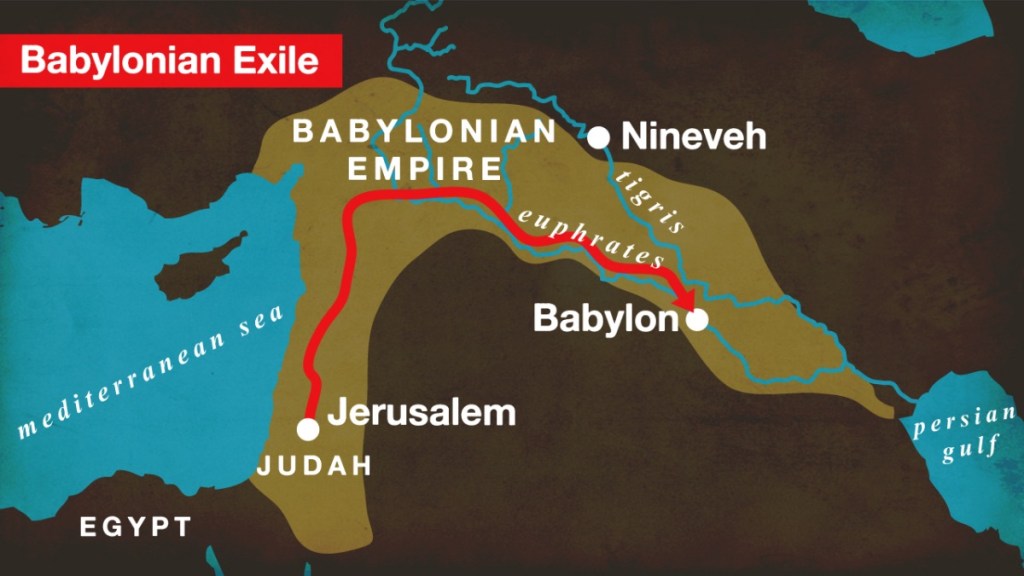
A.  In our Old Testament lesson, Zephaniah 3:14-20, the prophet foretells of a glorious day coming for Jerusalem (and for those of us who love Jesus).  Zephaniah (who prophesied from 640-609 BC) was of royal blood, the great-great-grandson of King Hezekiah—one of the few good kings of Judea.  He was a minor prophet who appeared on the scene during the reign of King Josiah, another good king of Judea, and was one of the last of the prophets prior to the “Babylonian Captivity.”  Unlike his contemporary Jeremiah, who is often referred to as the weeping prophet, Zephaniah is called the prophet of love because of the final chapter of his prophesy.

He spends two chapters warning the people of God’s coming judgment on them for their idolatry and apostasy—for which they were subsequently carried off into the Babylonian Empire for 70 years.  His last chapter foretells of God’s planned restoration and redemption of them.  In His love for them, God is going to bring them back to Jerusalem from where they have been scattered.  How gracious of God to promise them deliverance and restoration even before He punishes them.

The prophet predicts essentially the 2nd Coming of Christ as well, also known as “the Great and Glorious Day of the Lord.”  In verses 14-15 he writes—Sing, O Daughter of Zion; shout aloud, O Israel!  Be glad and rejoice with all your heart, O Daughter of Jerusalem!  The Lord has taken away your punishment, He has turned back your enemy.  The Lord, the King of Israel, is with you; never again will you fear any harm.  And continuing on into verse 17, he comforts us all with this beautiful promise—The Lord your God is with you, He is mighty to save.  He will take great delight in you, He will quiet you with His love, He will rejoice over you with singing.

God, through Zephaniah, wants us to know that He will indeed discipline us, but He will also restore us because of His great love for us.

The writer to the Hebrews affirms this fact in 12:6—…the Lord disciplines those He loves….The Apostle John says it another way, quoting Jesus (John 15:1-2)—I am the True Vine and my Father is the Gardener.  He cuts off every branch in Me that bears no fruit, while every branch that does bear fruit He prunes [this process tends to hurt!] so that it will be even more fruitful.  Paradoxically, the fact that God allows us to go through trials is evidence of His love for us.   Furthermore, if we have the self-discipline and godly insight to recognize this fact, we can actually rejoice in our trials, knowing God is using them to mold and shape us.

B.  Isaiah 12:2-6 is essentially a song of praise to God.  In verse 2 he asserts—Surely it is God who saves me.  I will trust in Him and not be afraid.  He follows this up in verse 6 by assuring us that our response to God’s acts should make us—Shout aloud and sing for joy, people of Zion, for great is the Holy One of Israel among you.  So, we are to rejoice in God because He is our savior; our strength, our song, and our salvation; and because He has done—and will do–glorious things for us.

If we focus our hearts and minds on these things, we cannot help but be filled with joy.

C. In our New Testament lesson, Philippians 4:4-7—Paul actually commands us to rejoice!  We are not to worry about anything, a 2nd command.  Instead, we should submit all our concerns—with thanksgiving–to God through prayer.  Paul is insisting we pray about everything, a 3rd command.  Then, he promises, God’s peace will settle on us and in us and even guard us.  And, if we concentrate, intentionally, only on things that are noble, right, pure, lovely, admirable, excellent, or praiseworthy, we will retain our peace and increase our joy.  In other words, achieving a state of joy is both a choice and a habit.  It comes from disciplining ourselves to look for and celebrate the good.  It is also based upon trusting God, trusting in Jesus. 

Joy is certainly available to us, but it is not found in people’s usual life pursuits:

1. Voltaire, the French philosopher and historian (1694-1778), was an atheist who asserted as he died, “I wish I had never been born.”

2. The British poet, Lord Byron (1788-1824), investigated every possible type of pleasure but concluded before his untimely death at age 36, “The  worm, the canker, and grief are mine alone.”

3. Jay Gould, an unscrupulous, American financier and multi- millionaire (1836-1892), said from his death-bed, “I suppose I am the most miserable man on earth.”

4. Lord Beaconsfield (1804 –1881), also known as British Prime Minister Benjamin Disraeli, later wrote, “Youth is a mistake; manhood a struggle, old age a regret.” 

5. Even Alexander the Great (357-324BC), the young Greek General who conquered the known world of his day, was said to have wept in his tent, because he believed, “There are no more worlds to conquer.”   He died at age 33.

Each of these famous persons realized by the end of his life, that joy does not come from unbelief in God, nor the dogged pursuit of pleasure, money, position, fame, or successful military conquest (i.e., power).  

(Idea borrowed from “Pursuit for Joy,” www.bible.org, 12/14/2018).

D. Fortunately, though, we can all access joy through drawing near to Jesus.  In our Gospel lesson, Luke 3:7-18, John the Baptist teaches two activities that result in joy:  The first is submitting to baptism.

John’s baptism symbolically washes away our past sins.  Jesus’ baptism in the Holy Spirit empowers us to avoid present and future sin.  If you ever saw the movie, “Oh Brother, Where art Thou?” you may remember the scene in which the fugitive convict, Delmer, gets baptized in the river.

Later, in the car with his other 2 convict buddies, he exclaims, “I have been redeemed.  The preacher said so. All my sins and wrongdoings has been wiped away, including robbing that Piggly-Wiggly.”  Another convict says, “Uh, Delmer, I thought you said you was innocent of those charges.”

Delmer confidently replies, “Well, I lied, but I been forgiven of that too.”

Having his sins washed away filled Delmer with joy—as it should for each of us.  

The second activity that can lead to joy is being generous toward and honest with others.  John the Baptist exhorts is listeners to share with those who have needs, to not extort or oppress those less powerful, and to only charge a person their fair tax.  Our Christmas gift exchanges are a great way to experience this kind of generosity.  So are putting money in a Salvation Army kettle, filling Christmas shoe-boxes for Samaritan’s Purse’s Operation Christmas Child, or bringing food to the ill or the grieving.  

May we each draw closer to Jesus this Advent and experience His gift to us of Christmas joy all year round.  Amen!  May it be so!

©️2024 Rev. Dr. Sherry Adams

Recognizing Everyday Saints

Pastor Sherry’s message for November 10, 2024

Scriptures: WMC, 11/10/24; Ruth 3:1-5, 4:13-17; Ps 42; Heb 9:24-28; Mk 12:38-44

I heard this story just the other day.  It appears to describe a large Catholic parish in the Midwest:

“A priest once asked one of his parishioners to serve as financial chairman of his parish. The man, manager of a grain elevator, agreed on two conditions:  (1) No report would be due for a year, and (2) No one would ask any questions during the year.

“At the end of the year he made his report. He had paid off the church mortgage of $200,000.  He had updated the church’s interior. He had sent $1,000 to missions [he could have been more generous here], and he had put $5,000 in the bank’s savings account.

“How did you do all this?” asked the priest and the shocked congregation.  Quietly he answered, “You people bring your grain to my elevator. As you did business with me, I simply withheld 10 percent [in other words, he overcharged them by 10%] and gave it to the church. You never missed it.”

(Contributed by James S. Hewett, http://www.Sermons.com, November 5, 2024)

Now please don’t get alarmed.  I am not going to launch into a sermon on tithing, or your monetary giving to our church.  Too many people just happen to visit a church on the very day the pastor encourages everyone to contribute more money.  They walk away believing the church is only interested in digging into their wallets.  My son attended a non-demoninational church of 22,000 members in Texas.  He said at one point the pastor preached on tithing every week.  I guess he had a large facility and an equally large staff to support, so money was uppermost in his mind.

Because of this, however, I hardly ever say anything tithing.  Instead, I will let today’s Gospel passage speak for itself.

Instead, I want us to focus today on what our Bible passages tell us about how we might go about recognizing everyday saints.

Last week, I distinguished between canonized saints and “everyday saints.”

Canonized saints are those holy people who led obviously Christian lives, may have died for their faith, and often performed some sort of miracle.

Reports about their lives are scrutinized by the Catholic Church.  And if they meet the 3 criteria, they are recognized as true “saints of the Church.” 

Conversely, “everyday saints” are those of us who love Jesus as our Lord and Savior, and who try to model our lives after Him and what we learn from Scripture.  Keeping this 2nd category in mind, let’s examine the passages appointed for today to see how they help us recognize “everyday saints.” 

A.  Our OT lesson is from portions of Ruth 3 and 4.   You may remember that Ruth was from Moab, one of the perennial enemies bordering Israel.  The Moabites originated from the incestuous relationship of a drunken Lot and one of his two daughters.  The girls had seen the destruction of Sodom and feared they would never marry or bear children.  So they got their father drunk and slept with him.  Naturally this was abhorrent to our God (Genesis 19:30-37).  The Moabites also tried to hire a false prophet, Balaam, to curse Israel.  He was not a follower of the Hebrew God, but he obeyed God when He told him he could not curse His Chosen People. (Numbers 22 and 23).  So Ruth was from a nation that Israel despised and avoided.

Nevertheless, she had met and married one of the sons of the Israelite woman, Naomi.  From Bethlehem, Naomi had moved to Moab, with her husband and two sons, to escape a famine.  They had located food in Moab, and jobs, but all three men got sick there and died.  Naomi was once again faced with poverty and starvation and decided to return home to Bethlehem.

She tells her 2 devoted daughters-in-law to return to their Moabite relatives.

One, Orpah agrees and, though sorrowful, leaves her; the other, Ruth, loves Naomi dearly and loyally accompanies her into Israel.

What might this tell us about Ruth, a woman we might term an “everyday saint”?  For one thing, she’s compassionate: She puts her mother-in-law’s needs for companionship and help ahead of her own comforts.  Those of you who have cared for aging parents now or earlier have done the same, haven’t you?   Additionally, she’s loyal enough to accompany Naomi to a land where she might always be considered a despised outsider (Think of what a member of Hamas would experience today if such a person attempted to become a Jew).  Ruth is certainly courageous, willing to leave all she’s ever known to go where she might be treated hostilely.  And, perhaps most important, she has become a follower of Naomi’s God.

As we pick up in today’s reading, Naomi plays matchmaker for Ruth.

Naomi owned land in Bethlehem, land owing what we might call “back taxes.”  Back in Genesis (38: 13-30), the Lord had made provision for widows through the concept of a Kinsman Redeemer.  This male relative could claim the widow’s land if he paid what was owed, and he could marry the dead man’s widow (to continue her dead husband’s line) if she agreed.

Another, closer relation wanted the land but not the foreign widow.  But Naomi knew the kinsman-redeemer, Boaz (who foreshadows Jesus as our Kinsman Redeemer), had signaled he liked Ruth a lot.  So, Naomi has Ruth get all dolled up and approach the sleeping Boaz at a harvest festival.  By placing the blanket at his feet over hers, she signaled to him that she wanted to marry him.  (This may seem a little strange to us today, but that was the custom then.)

They do marry, and happily pick up in chapter #4 where Ruth bears Boaz a son, Obed [servant of the Lord], who will become the grandfather of King David.  Because of Ruth’s faith and character, the Lord establishes from her son, Obed, the line of Jesse, the stump of Judah, from whom Jesus later comes.  The Lord so values Ruth for her faith and character, that He places her—a hated outsider (like Hamas)—in the lineage of the Messiah.

B.  Psalm 42 was written by some sons of Korah.  Though their father had been discredited and killed for leading a rebellion against Moses (Numbers 16), God spared his sons and grandsons.  Those descendants of Korah who had been spared their father’s fate become gate-keepers and choir members in the Tabernacle.

This psalm is called a maschil or a teaching psalm.  Its primary message is that we are to hope and trust in God despite our negative circumstances.  The sons of Korah are certainly evidence that punishment for evil in one can result in good behavior in others, and that people do often recognize and appreciate God’s grace.  The instruction in this psalm consists of realizing that we worship a God of grace and mercy.

C.  The writer to the Hebrews (9:24-28) wants us to be clear that we realize that Jesus’ sacrifice of Himself for our sins was sufficient.  It was enough to clear our debt to the Father for our sins, past, present, and future.  Jesus’ atoning death on the cross was complete, sufficient, and perfect.  We don’t’ have to do anything to assure our salvation except say yes to Christ.  He did all the heavy-lifting, for all time.

Our response to Him should be one of gratitude.

D. Finally, in our Gospel (Mark 12:38-44), Jesus condemns the Pharisees for being fakers, posers, and hypocrites, caught up in appearing righteous to others, while missing out on a legitimate, honest, humble relationship with God.  Everyday saints are sincere.

They don’t just try to look good, but their hearts are good.  They desire to please God more than to please people.  And they, like the widow who gave her last coins to the Temple treasury, are fully trusting and fully committed.

So what are the characteristics of everyday saints?  The Book of Ruth shows us that everyday saints are compassionate, loyal, risk-takers, and courageous.  They are also committed followers of God/Jesus.

Psalm 42 teaches us that everyday saints are grateful to God, trusting in Him, through bad times as well as the good.  As Paul later on states, (Romans 8:28): For we know that in all things God works for the good of those who love Him, and who have been called according to His purpose.

Our Hebrews passage reiterates the powerful message that Jesus has done all that needed to be done to assure our salvation.

As He assured us from the Cross, It is finished.  Simply said, we are saved if we agree to believe in Him.

Finally, we demonstrate we are everyday saints if we are humble and sincere.  This means we don’t “put on airs” or fake our devotion to God.  This means we are not religious hypocrites.  Others will recognize we are everyday saints if we practice the Christian virtues our passages outline today

You may be thinking, “That’s a tall order to be compassionate, loyal, courageous, committed followers of Jesus, grateful, trusting, and sincere.”  Yes it is if we try to practice each of those virtues at once.  But we can consider which ones we already do pretty well, and then pick one we are less likely to demonstrate.  For this next week, try to practice one that is not yet true of you.  Psychology teaches us that it takes 23 repetitions to replace a bad habit with a good one. 

May the Holy Spirit empower you to cement these virtues in your life. Lord, make it so!  Amen!   

©️2024 Rev. Dr. Sherry Adams

Mountain-Moving Jesus

Pastor Sherry’s message for October 13, 2024

Scriptures: Job 23:1-10, 16-17; Ps 126; Heb 4:12-16; Mk 10:17-31 

This is apparently a true story:  Years ago, a fellow wrote a letter to the president of Pontiac, a division of General Motors.  His letter spelled out a complaint he had with regard to his new car.  The guy’s family would vote on what flavor of ice cream they wanted after dinner and the man would drive his new Pontiac to town to pick it up.  If they chose chocolate, strawberry, or butter pecan, the car would crank right back up and carry the man back home.  If, however, the family chose vanilla, the car would not start.  The man could not figure out what there was about vanilla ice cream that would cause his new vehicle not to start.

The president of Pontiac was puzzled, wondering if the man was a crank, but he sent an engineer to check into it. The engineer, expecting a nut, was surprised to find a well-dressed, educated man in a nice neighborhood.  That night, the family selected vanilla, so the engineer traveled with the car owner to the ice cream store. Sure enough, the car would not start.  The next two nights, the family chose other flavors and the car started just fine. Several nights later, the family wanted vanilla again, and sure enough—following the purchase—the car would not start.

The engineer could not believe that the family’s flavor choice would have any impact on the car’s tendency to start. He thought to himself,  “Pontiacs don’t operate that way.”  So he was determined to study the problem until he solved the mystery.  Over several days’ observations, he discovered the true issue:  Vanilla, the most popular flavor, was conveniently located toward the front of the store for ease of purchase.  The other flavors were in a larger display case toward the back of the store. Those selections took longer to make, and check out time was lengthier.

Time was the crucial factor, but what relevance did that have to the car starting/not starting?  The engineer discerned that the problem was not due to vanilla but rather to a condition called “vapor lock.”  The other flavors took more time to check out, allowing the car to cool down sufficiently to start.  The vanilla choice took less time to purchase, so the car engine had less time to cool and for vapor lock to dissipate. 

(Source unknown.)

One of my church members who knows a lot about cars says this is why they invented fuel injection engines.  Now you may be wondering what vapor-lock or vanilla has to do with today’s Scripture lessons.

Nothing.  But perhaps an argument could be made that this story simply illustrates that it’s often easy for any of us to draw the wrong conclusions about what causes our troubles.  You have probably heard that many believe our 4 hurricanes in the past 13 months were due to climate change or fossil fuel emissions.  Or you may have heard that the pile up of disastrous storms is due to God’s judgment on either Florida or the USA.  Causation is difficult to identify, and difficult to prove.

This is exactly what poor ole Job is trying to pin down.

A. In Job 23:1-10, 16-17, it’s clear he doesn’t know what he has done to bring about the calamities in his life.  You see, the prevailing belief in Job’s time was that wealth and wellbeing indicated a righteous life, while poverty, chronic illness, and just plain bad luck was due to sinfulness.  This is why Job’s friends worked so hard to “help” him determine his besetting sin.

But Job was pretty clear that he had lived a righteous life.  So, he wanted to meet up with God to try to understand what was going on.   In verses 3-4, he says—If only I knew where to find Him [God]; if only I could go to His dwelling!  I would state my case before Him and fill my mouth with arguments.  Job wants to meet with God, but can’t find Him.  He wants to plead his case and fall upon God’s grace.  Afterall, other biblical greats did:  Abraham bargained with God not to destroy Sodom and Gomorrah if 10 righteous persons could be found there (Genesis 18:20-32).  Sadly there were less than 10 so God wiped the two cities out.  Moses successfully bargained with God not to destroy the rebellious, idolatrous, and ungrateful Israelites (Exodus 32:9-14; Numbers 14:13-20).

In today’s passage, it appears that Job is beginning to believe God is testing his faith (v.10)—But He [God] knows the way that I take; when He has tested me, I will come forth as gold.  Even so, he appears to be depressed.  He worries that God has rejected him.  Chris Tiegreen, the contemporary Christian author of over 60 books, and a successful blogger about biblical themes, writes—Few things are more painful than rejection.  Deep in the heart of every human being is a longing to be known, to be understood and appreciated.  That’s one reason judging others is such a dreadful sin; it rarely takes into account their true selves, and it amounts to a rejection of their value.  From the Garden to the grave, rejection has been at the core of human relationships and fears. 

(Chris Tiegreen, “Job’s Rejection,” www.Filament.com, 10/9/2024)

We can identify with this, can’t we?  To me, rejection ranks right up there as the worse of all emotional hurts.  So here is Job, feeling rejected by God, but still trusting Him enough to want to meet with the Lord and hash things out.  He is still hopeful.  He has not given up on God, despite his troubles.  This is such a good example for each of us.

b. The message of Psalm 126 is actually very similar:  This is a “Psalm of Ascents,” sung by Hebrew pilgrims on the way to Jerusalem, which was essentially up hill.  Verses 1-3 celebrate Israel’s return to the Promised Land from exile in Babylon.  Babylon was not their home; exile means being away from our true home.  Refugees from Hurricane Milton in our area now are in a sense exiled from their homes.  Hopefully they will be able to return home soon.  When we humans can’t locate our true home, we often create for ourselves false homes, like money, pleasure, influence, fashion, fitness, power, etc.  

Verses 4-6 are essentially a prayer for full restoration from a troubled world to the conditions of the Garden of Eden.  When that happens, when Jesus comes again, we will all be so happy to be home.  Real return from exile comes from finding and following Jesus.  Job knows he is far from “home.”  He aches to return to a deep connection with his Lord.

C.  The writer to the Hebrews (4:12-15) wants us to know it is “home-safe” (as in baseball, or with my home security system which tells me I am “home safe” when the system is turned on) because Jesus Christ is our great high priest!  The Old Testament high priests could only enter the Holy of Holies once a year on Yom Kipur, the Day of Atonement.  They went into the holiest place in the Temple to intercede in prayer for the nation.  No one could go in there except the high priest; they firmly believed anyone else would die.  In fact, in case the high priest had not made sacrfices for his sins, he had bells attached to his hem, and a rope tied to one foot.  If the bells stopped ringing, the other Levites there knew he had died behind the curtain.  Since no one else could go in to reclaim his body, they would have to pull him out by the rope.

But Jesus Christ so far surpasses human priests that He has entered into Heaven, the true Holy of Holies.  He is continuously in the presence of God, not just on Yom Kippur.  And He makes active, effectual intercession for us with God the Father.  Again, Jesus, God’s Word made Flesh, is able to rightly discern our motives and behaviors, but loves us and forgives us anyway.

 We can count on our Mountain-moving Jesus.  Like Job, we never want to give up on God.  Job’s our model for enduring in the face of hardship.  Even if we don’t understand why we are being smacked again and again by devastating hurricanes; even if we don’t understand why we are so often sick, or in debt—seemingly unable to “get ahead”–or struggling with troubled relationships with family or coworkers, our God wants us to keep the faith.

Remaining connected to Christ is our “true home.” It’s where we experience God’s grace and mercy.  It’s home-safe for recovering from fear or rejection.  It is home-safe for feeling loved and secure.

This is where the rich, young ruler from our Gospel (Mark 10:17-31) missed out.  He claimed to have kept the last 6 commandments, the ones having to do with how we relate to and love others—the horizontal arm of the Cross.  He apparently didn’t keep the first 4, having to do with loving and worshipping God, the very important vertical of the Cross.  His wealth insulated him from needing God.  He’d found security in a false home such that he could not give it up in order to follow Jesus.

I would like to close with this poem about the mountain-moving Jesus:

Lord, I’ve never moved a mountain and I guess I never will.

All the faith that I could muster wouldn’t move a small ant hill.

Yet I’ll tell you, Lord, I’m grateful for the joy of knowing Thee,

And for all the mountain moving down through life You’ve done for me.

When I needed help You lifted me from the depths of great despair.

And when burdens, pain and sorrow have been more than I can bear,

You have always been my courage to restore life’s troubled sea,

And to move these little mountains that have looked so big to me.

Many times when I’ve had problems and when bills I’ve had to pay,
And the worries and the heartaches just kept mounting every day, 

Lord, I don’t know how You did it, Can’t explain the where’s or why’s.

All I know, I’ve seen these mountains turn to blessings in disguise.

No, I’ve never moved a mountain, for my faith is far too small.

Yet I thank You, Lord of Heaven, You have always heard my call.

And as long as there are mountains in my life, I’ll have no fear,

For the mountain-moving Jesus is my strength and always near.  Amen!

©️2024 Rev. Dr. Sherry Adams 

When God is Hidden, Part 2

Pastor Sherry’s message for October 6, 2024

Scriptures: 10/6/2024, Job 1:1-22, 2:1-10; Ps 8; Heb 1:1-4, 2:5-12; Mk 10:1-16

I recently came across a list of laws on the books in various states that are both funny and even weird.  Apparently, it is illegal in…

1. Alabama to wear a false mustache that causes laughter in church. 

2. Delaware to whisper in church.

3. Alaska, to push a live moose out of an airborne plane.

4. Arizona to let a donkey sleep in a bathtub.

5. Arkansas to mispronounce Arkansaw as Ar-kansas.

6. Speaking of Illinois, to take a nap in a cheese factory.

7. Georgia to carry an ice cream cone in your back pocket.

8. Louisiana to eat more than 3 sandwiches at a funeral wake, or to let a snake loose at a Mardi Gras parade. 

(Jack Browning, www.onelegal.com , 4/7/2024.)

People can enact some pretty strange rules by which they want us to behave, can’t they?  We have been looking to the Bible this past month to discover what constitutes true wisdom.  Remember, from God’s perspective, wisdom is godly or righteous behavior (just think What Would Jesus Do?) and foolishness is anything but. We’d have to look hard to discover the wisdom behind some of these laws I just mentioned above.

The writers of the Old Testament, the Jews, considered the books of Proverbs, Ecclesiastes, and Job to constitute Wisdom Literature.  Someone has said that Proverbs is optimistic and teaches us that we benefit most when we try to live lives pleasing to God (when we utilize wisdom).  Ecclesiastes claims that human wisdom has its limits, and a life not centered on God is meaningless.  And Job argues that, while God may be hidden as we–even if innocent of wrongdoing–undergo human suffering, we need to remember that (a) Satan is actively making every effort to discourage us from loving God; (b) there is meaning and purpose to our human suffering; and (c) God has not abandoned us but rather is rooting for us as we persevere in faith.

So, this brings us to a second consideration of what we are to do when God appears to be hidden.  Our Scripture passages today provide some powerful answers. 

A.  In Job 1:1-22, 2:1-10, we are introduced to Job—> This man was blameless and upright; he feared God and shunned evil.  In Chapter 1, God (the Father) holds Job up to “the Satan” [in the Hebrew, “Satan” is a title which means he is the embodiment of all evil] as His prime example of a truly good man.  Notice we are told that the Satan had been busy (v.6)—>  …roaming through the earth and going back and forth in it.  What’s that mean?  It means that he was sticking his nose in peoples’ business, trying to catch them at their worst so he could accuse them before God.  This is why Scripture calls him “the accuser.”

So what’s he say to God about Job?  “Well, yeah, Job loves You and does what You want him to, Lord, because You have greatly blessed him.

Let me get ahold of him and make his life miserable, and watch how quickly he blames You and turns his back on You!  Wow!  Notice the Satan’s pride?

He is saying, in essence, “I know humankind better than You, God.  I’m sure this guy can’t really love You minus the good things YOU do for him, that is, without all the perks you bestow on people, You aren’t worthy to be loved.”

YIKES!  God is love and God is good.  No wonder pride was the reason Satan was kicked out of heaven.  He hasn’t learned much over the millennia, has he?

God agrees to let Satan test Job, but He places a limit on what the Satan can do to Job–he cannot kill him.  So, poor Job suddenly gets word that Sabeans (raiders) have taken his 500 yoke of oxen (1,000 altogether); his 500 female donkeys who provided milk that was highly prized in those days; and killed all his herdsmen except the lone messenger.  In quick succession, Job also learns his 7,000 sheep have been hit and killed by fire from the sky (lightening? a meteor? a volcano?).  Additionally, Chaldean raiders have swept in and taken off his 3,000 camels.  And worst of all, a tornado hit the house where his 7 sons and 3 daughters were having dinner, and killed them all.  Job is hit with a series of tidal waves or tsunamis, one following hard on the heels after the other.

Job’s amazing response is (v.21)—> Naked I came from my mother’s womb, and naked I will depart.  The Lord gave and the Lord has taken away; May the name of the Lord be praised.  Strickly speaking, Satan (not the Lord) caused Job’s stock market to crash and all 10 of his children to simultaneously die.  Job seems to understand this and so he does not blame God.

Next, we pick up in Chapter #2,with a second test for Job.  Satan asserts to God, “Well, I ruined his finances and his family, but he still loves You because he has his health.  God allows Satan to take Job’s health and watches to see what he does.  Again, do we all notice who is responsible for the dirty work?  Again, it’s Satan, not God.  Furthermore, God believes in Job…think about that: God trusts in Job’s love and fidelity.  Wouldn’t we all love for Him to trust in us to that extent?  So, Satan covers Job’s body with painful, itchy boils.  Job sits on an ash heap, a sign of mourning.  He’s thoroughly grieved and he does not really understand why so many bad things have happened to him, but amazingly he still doesn’t blame God! Instead his wife–who may have only married him for his wealth, etc.—says to him (v.9)—> Are you still holding on to your integrity?  Curse God and die!  She’s really supportive, isn’t she?  Instead of comforting and encouraging Job, she very disrespectfully blows him and his grief off.  Maybe leaving her around while all their children were killed was another part of Satan’s dastardly plan.

Job actually presents an excellent model for us:  We need to remember his story when trouble comes to us.  It is the evil one who causes our troubles.  God allows them as a test, but meanwhile, God is for us, not against us.  Indeed He provides us what we need to meet and even overcome the test.  I am reminded of the present response to the victims of Hurricane Helene in the western Carolinas.  The federal government has been slow to respond, but churches, neighbors, and many non-profit agencies have marshalled resources to rescue, water, feed, and provide shelter to those who have lost so much.

B.  Psalm 8, written by King David, is a hymn of praise to God for creation.  It begins and ends with those wonderful words, O LORD, our LORD, how majestic is Your name in all the earth!  Then it goes on to celebrate God’s formation of the cosmos, from planets and stars to humans and infants.  We could call this a Messianic psalm because it speaks to a time when all persons will revere our Lord Jesus.  As we know, the names of God and of Jesus are not everywhere honored today; many even use them as curse words.  But with Jesus’ 2nd Coming, all will know that God is real, that He exists, and that He rules in power and might.  Those who love Him and believe in Him will discover the truth of what the prophet Jeremiah wrote in Jeremiah 29:11—> ”For I know the plans I have for you,” declares the Lord, “plans to proper you and to give you a hope and a future.”  Again, our God is for us and not against us.

C.  The writer to the Hebrews (1:1-4; 2:5-12) wants us to know that Jesus Christ is superior in position and power to all of the prophets who have lived and to all of the angels in heaven and on earth.  Previously, God had spoken to humankind through prophets He ordained to communicate His thoughts to us; less often, through angelic beings who came with specific messages to particular persons; and, then through the 40 Holy Spirit inspired authors of the Old Testament written for our edification over 1500 years.  But with the birth of Jesus, the Father has spoken to us through His Son, the full revelation of God.  Or, as Peterson paraphrases it (v.3)—> By His Son, God created the world in the beginning, and it will all belong to the Son at the end.  This son perfectly mirrors God, and is stamped with God’s nature.  He holds everything together by what He says—powerful words.

(Eugene Peterson, The Message, NavPress, 2002, p.2181.)

God has put everything into subjection under Jesus’ authority. And He has made us sons and daughters of God.  This is our position, no matter what life or the Satan throws at us.  For this reason, we can trust in God the Father and we can trust in God the Son, even when we experience trials and tragedies. 

So, when God’s purposes escape us, or when His actions—or seeming lack of action—frustrate us, let us remember…

(1) God is good and God is love.

(2) Thus, His plans and purposes for us are always good.

(3) And when He seems to be hidden from us, we can still, like Job, trust in Him and remain faithful to Him.  Amen!  May it be so!

©️2024 Rev. Dr. Sherry Adams

When God is Hidden

Pastor Sherry’s message for September 29, 2024

Scriptures: Es 7:1-6, 9-10; 9:20-22; Ps 124; Ja 5:13-20; Mk 9:38-50

For several weeks we have examined the choice between living righteously for God—which the Bible calls ”wisdom”— and living foolishly for self.  The story is told of a burglar who cased a particular neighborhood, looking for evidence of folks who left their house unattended.

He observed one family loading suitcases into their car and decided to return to break into their house that night.  He rang the doorbell and waited for silent confirmation that no one was home. He then picked the lock on the front door and crept inside the home.

He called out, “Is anybody home?”  Expecting silence, he was shocked to hear, “I see you and Jesus sees you.”  Startled and frightened, he called out, “Who’s there?”

The voice again answered, “I see you and Jesus sees you.”

The burglar then switched on his flashlight in the direction of the voice and located a parrot.  He was relieved to hear the parrot say once more, “I see you and Jesus sees you.”  The guy laughed his head off as he switched on the lights.  That was when he saw the Doberman Pincer sitting under the parrot’s cage, beginning to growl.  At this point the parrot said, Attack, Jesus, attack!”

(Chuck Swindoll, The Tale of the Tardy Oxcart, Word Publishing, 1998, pp. 594-595.)

I apologize for using a joke that seems disrespectful to Jesus.  I can’t imagine naming a pet after our Lord.  I mean, come on!  But perhaps the owners rightly viewed the dog, like the Lord, as their protector and guardian of their safety.  And certainly the burglar was unwise to have broken into that house.

To me this story also raises the issue of how we are to act when it appears to us that God is hidden.  The dog owners were not home, but the dog—and the parrot—were both at work.  Jesus prayed to His Father, in Matthew 11:25-26—> I praise you, Father, because You have hidden these things from the wise and learned [the religious experts of His day] and revealed them to little children [we believers].  Yes, Father, for this was Your good pleasure.   Jesus appears to be saying that the Father does not always reveal His intentions to us at the time He is working.  But, if we have the faith of little children He does eventually reveal Himself and His actions.

Let’s look at how this truth plays out in the Scripture lessons appointed for today:

A.  Esther 7:1-10; 9:20-22 tells the amazing story of how a young woman (counseled by her wise uncle) saves the Jewish people living in the Persian Empire, post Babylonian Exile (500’s).  Unknown to King Xerxes of Persia, he chooses a beautiful Jewish woman to become his wife/queen.

Haman, the King’s “Prime Minister,” hated the Jews, especially Esther’s Uncle Mordecai, a palace scribe.  (Haman is descended from the Amalekites, long-term enemies of the Jewish people.)  He furtively manipulates the King into passing an edict that would allow citizens of his entire empire to attack and kill the Jews on a certain, future date.  Not realizing his queen is Jewish, Xerxes foolishly signs the edict into law.  Once he does so, according to Persian custom, his edict could not be rescinded.

Uncle Mordecai gets a message to Esther encouraging her to ask her husband to overrule his original edict with another which would allow Jews to defend themselves.  Our passage today describes her strategy: She invites the King and Haman to two banquets.  During the first, she does not make her request.  Xerxes is so pleased—and Haman is so flattered—that the King is willing to give her up to half his extensive kingdom.  But she simply invites the two men back to a second banquet.  At the second, she reveals that she is Jewish and asks that the king spare her people who are set to be annihilated.  The King has a short memory and he fails to realize he signed a death warrant for all the Jews in Persia.  Until Esther confronts Haman, Xerxes fails to remember the idea originated with his Prime Minister.

The King is furious and “takes 5” to mull it over.   Haman appears to attack the Queen as she is reclined on her eating couch.  Perhaps he was only frantically begging for clemency.  When Xerxes returns, however, he believes Haman intends to rape his wife in his own palace.  Ironically, Haman is immediately sentenced to death—for abusing the queen—on the very gallows or pike he had erected to hang or impale Uncle Mordecai!

Paul states for us “The Law of Sowing and Reaping” in Galations 6:7-8—> Do not be deceived:  God cannot be mocked.  A man reaps what he sows.  The one who sows to please his sinful nature, from that nature will reap destruction; the one who sows to please the Spirit, from the Spirit will reap eternal life.  I think you would agree the Esther/Haman story is a dramatic example of the boomerang effect of the Law of Sowing and Reaping.  What we hurl out to another can and often does come right back at us.  Other scriptural examples include…

(1) Old Testament Jacob who tricked his blind father, Isaac, into believing he was his father’s favorite twin, Esau; later Jacob’s 10 sons tricked him into believing his favorite son, Joseph, was dead.

(2) Jacob cheated his brother, just as Uncle Laban later cheated Jacob, over and over again.

(3) Paul appears to have authorized the stoning of the first Christian martyr, Stephen; later, Paul is stoned, almost to death on his 1st missionary journey.

If we choose to do the devil’s work, the same kind of evil often later boomerangs back to us.  God’s hand may be hidden in the outworking.

We often only realize He was involved after we look back from the distance.

B. Psalm 124 recounts what happens to those who choose to love God—He protects them!  King David reviews Jewish history and notes how often God has protected His people.  He asks the rhetorical question (vv.1-2)—> If the Lord had not been on our side [what would have happened to us?].  He accurately credits God with having saved Israel from (1) enemies (vv.1-3); (2) The deep and broad waters of the Red Sea and the raging waters of the Jordan at flood stage (v.4). (3) And other overwhelming circumstances of life are also implied—like hurricanes and too much rain, As we and the folks of North Carolina have just experienced with Hurricane Helene.

David is quick to give God the glory in his famous last line:  Our help is in the name of the Lord, the Maker of heaven and earth.  When we choose to honor God, to trust in God, He blesses us in a positive boomerang.

C. In James 5:13-20, the practical disciple reiterates King David’s point.  God is trustworthy and takes care of us.  If we love and serve Him, He answers our prayers and rescues us from trouble; He listens when we pray intercession for others; and He delights in our praise.  James gives the example of Elijah whose God-directed prayers prevented rain in Israel for 3.5 years.  Then, when again directed by God, his prayers brought on the rain.  James reminds us in verse 16b—> The prayer of a righteous man [woman] is powerful and effective.  There was a period in my life when I believed God was not answering any of my prayers.  I knew enough to pray to Him but I was not living for Him.  Once I turned my life over to Jesus, the Lord began to answer my prayers.  Voila! Righteous living results in prayers that are effective.  What a fantastic, positive, boomerang effect!

D. In Mark 9:38-50, Jesus spells out both a positive and a negative result of the Law of Sowing and Reaping:  Verses 39-41—> Blessings come to those who do miracles and provide physical refreshment to others in Jesus’ name.  Even if the person is not clearly identified as a member of our crowd of Jesus followers, if that person is doing good deeds in Jesus’ name, they and their efforts are blessed.  They may not be of our denomination, ethnicity, citizenship, etc., but if they are for Jesus, we need to be for them.

Conversely, in verses 42-48, Jesus states what happens to the one who causes the innocent to sin—> it would be better for him to be thrown into the sea with a large millstone tied around his neck.  It brings to mind pedophiles and child-sex-traffickers, as well as drug dealers, doesn’t it?

There may be a special level of hell for those folks.  Again, if you/we perpetrate evil, it will boomerang back on us.  That concept is so important that we want to make every effort to keep our sin list with the Lord short.

We want to remain committed to Christ.  We probably need to ask His forgiveness daily.

Our God does not always take obvious credit for His work in our lives.  Just because He chooses to remain hidden does not mean He is not working on our behalf.  We can ask for eyes to see how He is at work in our lives.  And we can ask for faith to believe until He reveals Himself.

Meanwhile, this week, let’s try to be aware of the Law of Sowing and Reaping.  The Law of Sowing and Reaping is, like King Xerxes’ edicts, immutable.  Once our actions have put evil into play, we run the dire risk of having it return to us.  But, on the other hand, when we put blessings into play, blessings come back to us. 

With a thought toward reaping God’s best, this week let’s be aware of doing our best toward Him and others. Amen! May it be so!

©️2024 Rev. Dr. Sherry Adams

Be Careful What You Ask of God

Pastor Sherry’s message for June 9, 2024

Scriptures: 1 Sam 8:1-20; Ps 138, 2 Cor 4:13-5:1; Mk 3:20-35

The story goes that Wally, from Wellborn, Florida, was vacationing in New Mexico.  He knew there was a famous, annual Chili Cook-Off scheduled for the next day. He arrived and thought to himself, “Lord, how I would love to be a judge of this!  All kinds of great chili recipes and all the beer you can chase it down with…sounds like my kind of heaven!”

As it happened, the man slated to be the 3rd judge had come down with the flu, so our Wellborn friend—standing in just the right spot—got asked to take his place.  “Thank you, Jesus!” he said to himself.  He just couldn’t get over his good fortune!

Here are the scorecard notes from the event:

Chili #1—Mike’s Maniac Monster Chile:

1.) Judge #1—A little too heavy on the tomato.  Amusing kick.

2.) Judge #2—Nice, smooth tomato flavor.  Very mild.

3.) Wellborn Wally—Holy Cow!  What’s in this stuff?  You could use it to remove dried paint from your driveway!   Took me 2 beers to put the flames out.  I hope that’s the worst.  These New Mexicans are crazy! 

Chili #2—El Rancho’s After Burner Chili:

1.) Judge #1—Smoky, with a hint of pork.  Slight jalapeño zest.

2.) Judge #2—Exciting BBQ flavor; needs more peppers to be taken seriously.

3.) Wellborn Wally—Keep this out of the reach of children.  I’m not sure what I’m supposed to taste besides pain.  I had to wave off two people who wanted to give me the Heimlich maneuver!

Chili #3—Alfredo’s Famous Burn-Down-the-Barn Chili: 1.) Judge #1—Excellent firehouse chili.  Great kick!

2.) Judge #2—A bit salty.  Good use of peppers.

3.) Wellborn Wally—Call the EPA!  I’ve located a uranium spill.  My nose feels like I have been snorting Drain-O.  Pour on the beer before I ignite!

And on it went—until Mike, complaining that his stomach had imploded—passed out.  (Sorry but I cannot credit the source of this story!  I came across it about 12-15 years ago on the internet.  Back then, I was preaching about 6-8 times a year for vacationing pastor friends and did not think—since my sermons were not being reprinted—to provide footnotes.)  The moral of the story:  Be Careful What You Ask of God.

Our OT lesson, 1 Samuel 8:1-20, makes a similar point.  Let’s examine it:

Samuel, the Prophet, followed the last of 12 Judges to rule Israel.  He provided leadership much like that of Moses ad Joshua, and had done an excellent job until he decided to retire.  Apparently without consulting God, he appointed his two sons to succeed him.  You may remember that he had seen the wickedness of Eli’s (the priest who had mentored him) sons and that God had removed them from power and set Samuel in their place. In what must have surely been a senior moment, he forgot (1) only God—not any person—appoints leaders over His chosen people, Israel; and (2) how incompetent and unworthy his own two sons were.  This is a sad commentary on human memory…or perhaps human ego.  Someone once said, “If we don’t remember history, we are doomed to repeat it.”  Eli’s boys had seduced female assistants at the Tabernacle and had taken the best sacrificial meat (God’s portion) for themselves.  Samuel’s boys were almost as bad.  They took bribes from the worshippers they served and they perverted justice.

So the Administrative Counsel or the Call Committee of that time approached Samuel (vv.4-5) and with all of the subtlety of a New Mexican chili, they said, “Samuel, you are old” (he was all of 65).  Didn’t they know that 65 is the new middle age?  Didn’t they recall that Moses lived to 120 and Joshua, to 110?  So 65 was hardly old.  They were trying to justify their demands.  They were inventing excuses!   They added, “Your sons are reprobates!”  This was true.  But the right thing for the Administrative Counsel, or the Call Committee, and even for Samuel to have done would have been to consult God:  Lord, who is Your choice of the next leader or the next prophet over Israel?  Instead, they arrive at their real agenda:  Make us a king, like all the other nations.  They want to be like everyone else.  What parent hasn’t heard this refrain:  I need a phone, a brand of jeans, or a car/truck just like everyone else has?

Now the selective amnesia has jumped to the people!  Have they forgotten that they were singled out to serve God from the time of Genesis 15?  What about when God says in Exodus 19:5–>Although the whole earth is Mine, You will be for me a kingdom of priests and a holy nation.  They had a special and a unique relationship with God.  He ruled over them and they were His people.  As long as they obeyed Him, they enjoyed His provision, protection, and presence.

But Samuel is feeling rejected, so he takes his disappointment to the Lord (v.6).  The Lord tells him essentially, don’t take it personally. It’s not you they are rejecting; it’s Me.  They’ve got a covenant with Me, the Ruler of the Universe.  I have provided for them, daily.  I have protected them, better than any human king could.  It’s ironically true that the only time Israel lacked protection was whenever they would rebel against God.  Time and time again, it was their idolatry and their disobedience that brought them military defeat.  God was always able to care for them.  

But, by this time, they want a human to take God’s place. Amazingly, God tells Samuel to let them have what they want.  Samuels’ mind must have traveled to Deuteronomy 17:14-20—in which God specified what a king should be like: (a) He should be chosen by God; (b) He should be an Israelite; (c) He should be a covenant-keeper (a member of the Jewish faith); and (d) He should live a simple lifestyle—none of this owning 10 palaces, 20 chariots, and 3 yachts sort of thing. 

Furthermore, God also tells Samuel to warn them that having a king will cost them in ways they may not anticipate.  (In other words, be careful what you ask for!) Samuel proceeds to tell them a king will abuse power (there are 5 he [meaning a king] will take’s in the text):  (1) He will reign over them/or oppress them; (2) He will take your sons for soldiers/or institute a military draft; (3) He will take your daughters to be perfumers and cooks and bakers.  Perfumers was an Old Testament euphemism for concubines.  Samuel was warning them that their daughters will go into servitude, of one form or another.  (4) He will take the best portion of your fields, vineyards, and olive groves, your cattle and donkeys—for his personal use.  And, finally, he will take a 10th (in taxes) of your flocks—and you yourselves will become his slaves. Remember, we have long held in America that the power to tax is the power to destroy.

Knowing all of this—being forewarned by God Himself—they still say they want a human king.  Be careful what you ask of God.  Like Wellborn Wally, they get what they thought they wanted.  But look at the heartburn!  They had Saul, then David, then Solomon, all of whom started well and finished badly—though David did repent and reconcile himself to God.  The Kingdom then split into Northern/Israel (10 tribes) and Southern/Judah (2 tribes).  Israel went on to have a succession of 20 kings, all of them bad.  Judah also had 20 kings, only two of whom proved to be good, God-fearing, and honorable, Josiah and Hezekiah.  This was not a stellar record!  God then allowed the flood of the Assyrians in the North and the Babylonians in the South to end the Israelite monarchy.  God cleaned house in 578 BC!  There were no more kings in Israel until the King of Kings, Jesus, arrived on the scene more than a half century later!

The lesson, again, is be careful what you ask of God.  He knows better than we do what we need.  But He also gives us free will.  He lets us decide for ourselves.  Paul reminds us in Romans 1 that, when we insist, God lets us have our way.  Unfortunately for us, when our way differs from God’s, we step out from under His protection and His provision.  And the consequences can be dire.  If only they were no more painful than Wellborn Wally’s   mammoth indigestion!  Think about the times you took control of your life out of God’s hands.  I can.  It wasn’t pretty.  I wish I had made better choices.  I wish I had let go of my own control and let God.  But isn’t it true that “trial and error” learning can be very effective—Once burned, twice learned.  The lesson sticks with us for a long time, but the cost is also often very high.

Let’s take a lesson from our ancestors of the faith, the Israelites.  They were so sure they needed a human king.  1st & 2nd Samuel, 1st and 2nd Kings, and 1st and 2nd Chronicles all report the trouble that decision brought upon them.  The next time you are tempted to make a major decision for your life, run it by Jesus.   When we trust in humans, we may find our freedoms diminishing.  But as our 2 Corinthians and Gospel (Mark 3:20-35) lessons tell us, our Lord Jesus expands rather than restricts our lives.  Because of Jesus’ resurrection, we who believe in Him now step confidently from this life to an even better one.  Jesus also expands the meaning of family.  Our faith in Christ binds us together more powerfully than blood ties.  We love and serve a Savior Who loves and blesses us when we seek Him.  Amen!   

©️2024 Rev. Dr. Sherry Adams 

Holy Trinity Sunday

Pastor Sherry’s message for 5/26/2024 

Scriptures: Isa 6:1-8; Ps 29, Ro 8:12-17; John 3:1-17

Last Sunday, Pentecost, I shared with you 13 of the many functions of the Holy Spirit in our lives.  Anticipating today being Trinity Sunday, I also pointed out the individual roles of the 3 members of the Holy Trinity.  In honor Trinity Sunday, let’s review these today and consider Who of the Godhead you tend to feel closest to:  

Maybe you stand in awe of the Father: Immortal, invisible, God only wise, in light inaccessible hid from our eyes, most blessed, most glorious, the ancient of Days, almighty victorious, Thy great Name we praise.  These are lines to a hymn to God the Father, Creator of the Universe, completely transcendent, wholly other.  He is the Covenant God, meaning He keeps His promises, always.  He is enthroned in Heaven.  He revealed Himself to Moses as (Ex. 34:6-7): The Lord, the Lord, the compassionate and gracious God, slow to anger, abounding in love and faithfulness, maintaining love to thousands and forgiving wickedness, rebellion and sin. He is clearly in command, but never dominates the other two persons.

I was in the 9th grade before I ever learned my step-father had one good thing to say about me.  He was always very critical and I had learned I could never please him.  One day one of his friends gave me a ride home from school and told me how proud of me my dad was.  I was shocked!  I had been elected president of my high school class, but my dad had never said a word to me about it.  Reading the Old Testament through taught me how much my heavenly Father loves me—and you—and how often He says so, and I have been so grateful, and loved Him back, ever since!

Or perhaps you relate best to Jesus, our Brother, Our Savior, Our Redeemer, and Our Friend: What a Friend we have in Jesus, all our sins and griefs to bear!…Precious Savior, still our refuge, take it to the Lord in prayer.  Here we have a hymn about Jesus.  Jesus is God-in-the- flesh, coming to earth as a vulnerable infant, teaching and healing us, then dying for our sins.  He really helps us learn that God is indeed love.  Jesus too is compassionate, forgiving, and very patient.  If you have watched any episodes of “The Chosen,” you would have to agree that they depict Christ as someone easy to love.  He tried hard to reach us through memorable stories.  And, remember, it was Jesus who said (Jn 14:11), If you have seen me, you have seen the Father, for I and the Father are one.   Again, God-in-the-flesh.  

I was driving in Pittsburgh one winter, on my way to work, when I rounded a curve on a divided highway only to see several wrecked cars all over the road in front of me.  There was no place for me to pull off to avoid the wreck, as there were concrete barriers on both sides.  I downshifted and braked, but hit a patch of “black ice” and went into a spin.  I was then facing southbound in the northbound passing lane, and could see a large utility van headed toward me.  I knew he would soon hit the very same ice and skid into me.  I felt I was a goner.  I quickly prayed, “Lord Jesus, who will raise my daughter?”  My daughter, Meredith, was about 12 or 13; my son, David, was away in college and launched.  But my girl remained at home with me.  The van did hit me.  My airbag bruised my sternum; my glasses flew off and my briefcase went airborne from the back seat to the front.  The front of my little sports car crunched up like an accordian, but nothing was damaged in the cockpit.  Ambulances took a bunch of us involved in the pile-up to be checked out in the hospital.  But I was fine, just bruised and shaken up.  I knew Jesus had saved me and I was so grateful. 

Others gravitate to the Holy Spirit, the immanence of God, the “with us” God: Holy Spirit, Love divine, glow with in this heart of mine; kindle every high desire; perish self in Thy pure fire.   This is a hymn about the Holy Spirit.  He is how we experience God and Jesus now.  The Father and the Son reside enthroned in Heaven; so it is the Spirit Who leads, guides, and directs us here/now.  He tweaks our conscience when we sin;  He intercedes for us when all we can do is groan; and He equips and empowers us for ministry.  This week I had a word from the Holy Spirit.  He directed an intervention in a psychodrama I was to lead.  He told me to do something I had never done before.  I did what He said to do and the results were amazing!  I have learned to always do what He tells me to do, because He is always right.

Each of us may have a favorite, but the truth is the doctrine of the Trinity helps keep us balanced by reminding us there are 3 persons in our one God.  The Trinity also models for us how we are to live:  God lives in loving, cooperative community and we are to do the same!  The Son and Spirit are submitted to the will of the Father; but the Father does not dominate them.  Rather they coexist in steadfast love, mutual respect, and mutual cooperation.  That’s our model.

Let’s see how our Scripture passages today amplify these truths:

A. Our Old Testament lesson is from Isaiah 6:1-8 and recalls for us the priest Isaiah’s additional call to become a prophet.  He is apparently praying in the Temple when he has a vision of God the Father.

He relates that King Ussiah, the last good King of Judah, had just died, having reigned 52 years (792-740BC).  Isaiah sees (v.1): The Lord, seated on a throne, high and exalted, and the train of his robe filled the temple.  How enormous!  How exciting!  Isaiah is grieving the loss of the good king, but then realizes the REAL KING, God, is still on the throne.

Isaiah is reassured that all is still well.

Isaiah also sees seraphs—6-winged, angelic creatures who normally surround God’s throne.  They are shouting, Holy, holy, holy! for the 3 holy Ones, Father, Son, and Holy Spirit. Their shouts were so loud they shook the Temple foundations, and smoke filled the Temple.  Their job is to search out sin—God’s holiness does not keep company with sin.  In their presence—and in the Lord’s presence—Isaiah becomes mortally aware of his own sinfulness (v.5): Woe to me!…I am ruined!  For I am a man of unclean lips, and I live among a people of unclean lips, and My eyes have seen the King, the Lord Almighty.  As one commentator puts it, “Seeing God as holy reminds us deeply and painfully that we are not.”  (J. Fearless and D. Chilton, The Lectionary Lab for Year B, 2014, p.192.)

Job had a similar response to seeing God (42:5-6): My ears had heard of you but now my eyes have seen you.  Therefore I despise myself and repent in dust and ashes.  Daniel saw God in a vision and reported (10:8): I had no strength left, my face turned a deathly pale and I was helpless.  We know what happened to Saul/Paul (Acts 9:4-19): he was knocked off his high horse and blinded for 3 days.  Even St. John, Jesus’ close friend, reports (Rev. 1:17): When I saw Him I fell at His feet as though dead.  So, like them, Isaiah expects to at least faint or even to be slain.

Instead, in God’s mercy, one of the seraphim-searcher-outers-of-sin, brings him an antidote.  He touches his lips with a live coal—OUCH!  And says (v.7): See, this has touched your lips: your guilt is taken away and your sins atoned for.  They have been instantly burned away.  Then God issues Isaiah’s call to become the Lord’s prophet: (v.8): Whom shall I send?  And who will go for us?  Hebrew has no royal “we,” the king speaking in the plural (for himself and the country).  Instead, this is an Old Testament reference to the Trinity.

B.  Psalm 29, written by King David, poetically describes the voice of God.  He mentions God’s voice 7 times (the number for perfection, completeness).  And every metaphor David uses is a strong one.  Isaiah perceived God as huge!  King David perceived God as loud and commanding.

C. In our Romans passage (8:12-17), Paul continues to list the roles of the Holy Spirit: Verse 13: He puts to death the misdeeds of our body [helps us overcome sin]; Verse 14:  He leads and guides us; 

Verse 15a: He does not lead us into fear, but into sonship/daughtership;

Verse 15b: The Spirit calls us into an intimate relationship with God, in which we can actually call Him Abba [daddy].  Verse 16: He testifies that we are God’s children.  And, verse 17: …we are heirs of God and co-heirs with Christ.

D. Finally, in our Gospel passage (John 3:1-17), Jesus is having a dialogue with an open-minded Pharisee, Nicodemus.  Nicodemus, an Old Testament scholar and teacher, wants to know how to enter heaven. Jesus says he has to be born again of the Holy Spirit.  Nick doesn’t understand this, confusing our spiritual birth with our physical one.

Remember, 4 weeks ago, I preached on what it means to be born again:  

(1) We believe in Jesus –so Nick has to have faith in Christ,

(2) And we learn to love Him—this is not so hard to do once we realize all He has done for us.  Being born again is a work of the Holy Spirit:  He leads us into faith in Jesus.  He convinces us to love Jesus.  Jesus is emphatic with Nicodemus:  We do not enter heaven because we know and follow the Law.  We do not enter heaven due to our ancestry or our spiritual or economic rank and privilege.  We enter heaven because of the efforts of the Holy Spirit to bring us into an intimate relationship with Jesus.

Jesus then reminds the Pharisee that no one sees or controls the Holy Spirit.  He shows up when and where God wants Him to be.  We don’t control Him.

I often remind my clients of the Serenity Prayer.  I want to end today with the Serenity Prayer, which always reminds me of the wisdom of the Trinity (The entire prayer is longer, but this is the short, easy to remember version): Lord, grant me the serenity to accept the things I cannot change [others’ behavior, my past, etc.], the courage to change the things I can [myself], and the wisdom to know the difference.  Our triune God grants to us the peace—serenity– that passes all understanding.  Our triune God infuses us with courage when we need it.

Our triune God gifts us with wisdom when we ask.  Amen!  May it be so.

©️2024 Rev. Dr. Sherry Adams

What’s Love Got to Do with It?

Pastor Sherry’s message for May 5, 2024

Scriptures: Acts 10:44-48; Psalm 98; 1 John 5:1-5; John 15:9-17

Back in 1984, the singer, Tina Turner, released a song called, “What’s Love Got to Do with It?” Some of you may remember the chorus to this song:

What’s love got to do, got to do with it?

What’s love but a second-hand emotion.

What’s love got to do, got to do with it?

Who needs a heart when a heart can be broken?

The song had a great tune and was catchy, but the theme was sad. She sang that you can’t trust in love. She sang that she is trying to protect herself emotionally. She was tempted to love again, but feared that if she did, her heart could be broken (and no doubt already had been).

A lot of people go through life this way.  They hold themselves back, afraid to invest in others.  They prefer emotional safety to the potential for hurt and disappointment.  Last week, I talked about how countercultural our God is…this is exactly a case in point:  We are called to love Him and to love others, despite the emotional risk to ourselves.

To quote Tina, “What’s love got to do with it?” Our Scriptures today answer:  Everything!

A. In our Gospel lesson (John 15:9-17) Jesus calls us to love Him, love others, and obey God.  He is essentially repeating and emphasizing the greatest commandments (Matthew 22:37-38)—Love the Lord your God with all your heart, and all your soul, and with all your mind [Be all in with God].  This is the first and greatest commandment.  And the second is like it:  Love your neighbor as yourself.  He also reminds us that we demonstrate or show our love by being obedient to God.  So, even though we might be disappointed or even have had our hearts broken, our Lord wants us to continue to love Him and to love others.  Love is how we abide in Christ—it’s how we stay attached to the Vine.  Sorry, Tina, holding back out of fear is an excuse Jesus would understand but He would not want us to let that fear limit us.

B.  John, the beloved disciple, says pretty much the same thing, but with a slightly different emphasis (1 John 5:1-6): In verse 1, he defines what it means to be born again.  We believe in Jesus and we learn to love Him.  We are born again through our faith, together with our love.  In verse 3, he stipulates how we prove our love for God—This is love for God: to obey His commands.  And His commands are not burdensome….We believe, we love, we obey.  In verses 4-5, he argues that we overcome whatever evil there is in the world not by fighting, but by our faith (typically expressed in prayer).

C. Today, I want to make two points concerning these truths:

1. 1st, we often find what we are looking for, or what we are focused on: The story is told of two fellows who had been in India and happened to be visiting in the home of the same friend.  The guests were talking about mission trips and missionaries.  The first man—who had been in India all of 5 months–said, “I have no use for missions and missionaries.  I spent months there, and didn’t see that they were doing anything; in fact, in all that time I never met a missionary.  I think the church is wasting its money on missions.”  The second fellow was a quiet older gentleman.  He had not spoken up at all until this point.  He now said, “Pardon me; how long did you say you were in India?  ‘Five months.’ ‘What took you there?’  ‘I went out to hunt tigers.’  ‘And did you see any tigers?’  ‘Scores of them.’  ‘It is rather peculiar,’ said the old gentleman, ‘but I have spent thirty years in India, and in those years I never saw a tiger but I have seen hundreds of missionaries.  You went to India to hunt tigers and you found them.  I went to India to do missionary work and found many other missionaries.”

(As reported by Rev. Dr. J. Vernon McGee, Through the Bible Commentary on 1 John, Thomas Nelson, 1991, pp.143-144.)

In the same way, I had never noticed pregnant ladies in bathing suits at the beach, until I became one.  Then I saw them everywhere.  If you drive a Jeep or a Corvette, I am told, you similarly note them wherever you go. The point is that we find what we focus on.  If it’s on becoming broken-hearted, Dear Tina, that’s what we will notice.  But if we can begin to trust in love, we will begin to notice evidence of trust-worthy love all around us.

Neuroscience tells us that our brains are pre programmed to look for the negative in life.  It was probably adaptive back when we were trying to avoid saber-toothed tigers (speaking of tigers).  To habitually think positively, we have to reprogram our brains, deliberately developing new neural pathways.  We have to train ourselves to think positively and this positive thinking is highly correlated with achieving happiness.  Negativity may keep a person emotionally and physically safe, but it does not lead them to happiness.

2. The 2nd point is that any fight we face in the world is God’s to contend with.  He usually does not call us to fight but rather to obey Him in faith.  Paradoxically, Joshua’s battle at Jericho is a perfect example of this (Joshua 6:1-20).  Joshua was God’s choice to succeed Moses as the leader of the children of Israel.  The Lord charged him with taking the Promised Land and conquering the pagans who inhabited it.  Lest you feel sorry for the pagan Canaanites, please note that the Lord gave them over 400 years to accept Him as God and they refused.  They seemed to prefer sacrificing their babies to the fire, and all the sexually perverse religious rituals they performed, to worshipping a holy God.  So He determined that He—who owns the whole earth—would give the land to His Chosen Ones.

In a strategy that is masterful and brilliant, God first stopped up the Jordan at flood stage so all 2 million Israelites could cross over into Canaan (on dry land, as the text makes clear).  Remember the generation that had refused to trust in God to take the Promised Land 40 years earlier had all died out during the wilderness wanderings.  They had experienced the Red Sea Crossing.  Their younger descendants had not.  So God repeats the miracle, both to show them He is with them and to remind them of what He had done for them in the past.

Now bear in mind that this strategy no doubt freaked out the folks of Jericho, who mistakenly thought they were safe until the Spring floods receded. Then when the Hebrew army approached the city, they simply marched around the outside of the city walls.  The Levites carried the Ark of the Covenant and 7 priests blew ram’s horn trumpets, signaling that the Lord will be taking the city.  The soldiers followed, armed, but did not engage the enemy.  They did this once a day, as per the Lord’s instructions, for six days.  Don’t you know the folks of Jericho were wondering, “What in the world are they up to?”  The truth is that our God was engaged in psychological warfare.

On the 7th day (seven being the number for completion or perfection), they marched around the city seven times.  On the 7th trip, the trumpets were blown, the marching army and the encamped women, children, and elderly shouted in unison, and the city walls suddenly collapsed.  Without their massive walls to protect them—and given how psychologically demoralized they must have been–the citizens of Jericho were quickly overcome.

This is such a great example of how God fights for us (2 Chronicles 20:15)—This is what the Lord says to you: “Do not be afraid or discouraged because of this vast army.  For the battle is not yours , but God’s.”  We often summarize this passage by saying “the battle belongs to the Lord.”  Back in Joshua 5:14, and prior to the circular marches, Joshua had encountered the pre-incarnate Christ, Who calls Himself, the Commander of the Army of the Lord (Remember, when Jesus comes again, He will slay all the evil people at Armageddon; He will return as the “Commander of the Army of the Lord”).  At this meeting, Jesus told General Joshua God’s strategy and said to Joshua, See I have delivered Jericho into your hands, along with its king and its fighting men. 

We may not have a similar encounter with Jesus, but it is still true that the battles we believers face belong to the Lord.  Paul tells us in Ephesians 6:12—For our struggle is not against flesh and blood, but against the rulers, against the authorities, against the powers of this dark world and against the spiritual forces of evil in the heavenly realms.  The forces of evil inhabit this world.  When things look to be inspired by evil, we utilize the main weapons we have—the sword of the Spirit (the Word of God) and prayer.  Upset about the economy?  Pray that God would reverse the policies and the governmental overspending that have led to inflation.

Distressed about strife or broken relationships in your family or difficulties at work?  Pray that God will soften hard hearts and bring about peace and reconciliation.  Out of work? Pray that God would supply the right job and help you to have the right attitude as you embark on it. Troubled about your health or your finances?  Pray.  None of these issues is too difficult for God to address and to transform.  On our own, we can’t but He can!

We worship the God who is love.  So “What’s love got to do with it?”  Everything!  Love is the key.  Love is of foremost importance to God–followed closely behind by our faith and our obedience.  We are usually not called to fight; instead, we are called to believe, to trust in the Lord.

If we love God, have faith in Him, and are obedient, we are indeed His children.  He will and does provide for us.  He will and does protect us.  He will and does bless us and shower us with His love!  Thanks be to God Who gives us the victory through our Lord Jesus Christ!  Alleluia, Alleluia!

©️2024 Rev. Dr. Sherry Adams 

Changed for Good

Pastor Sherry’s message for April 14, 2024

Scriptures: Acts 3:12-19; Ps 4; 1 Jn 3:1-7; Lk 24:36-48

The story is told of Mahatma Ghandi that…”As a young man, [he] studied in London. After learning about Christianity, and after reading the Sermon on the Mount, he decided that Christianity was the most complete religion in the world. It was only later, when he lived with a Christian family in East India, that he changed his mind. In that household he discovered that the word rarely became flesh — that the teaching of Jesus rarely became the reality of Jesus.”

(Susan R. Andrews, “Holy Heartburn,” article in The Christian Century, April 7, l999; p. 385.)

What a shame!  This is the guy who forced Great Britain– through peaceful means–to give India its independence.  He had been baptized.

He had read the Bible, and was particularly inpressed by the “sermon on the mount,” but he rejected Christianity because he did not see people who called themselves Christians living according to the precepts of Jesus.  It was as though these were great ideas, but none could live them out in reality.  Imagine the impact he may have had on India if he had encountered Holy-Spirit-filled Christians like Pastor Terri preached about last Sunday! 

Our faith in Jesus ought to be demonstrated in the way we live our lives, day to day—not just how we behave in Church on Sunday. Let’s see what our Scriptures today tell us about living a life that shows others we have been changed for good: 

A. First we see Peter in Acts 3:12-19.  Peter and John are going to the Temple at 3:00p.m. to pray.  This was the hour of the evening sacrifice when Jesus had died on the Cross.  Remember, the new Christian Church was composed only of Jewish believers at this point, and many continued their Jewish religious observances. 

A crippled panhandler asks them for money, much in the way we see homeless with their signs at the corners of our city streets, or at the on/off ramps of our interstates.  Peter replies, famously, (v.6) Silver or gold I do not have, but what I have I give to you.  In the name of Jesus Christ of Nazareth, walk.”  What a terrific gift!  Peter and John lift the guy to his feet, and his feet and ankles realign as they are made strong.  The beggar has asked for money, but he receives a healing.  He’s asked for money–provision for a day or two–but Peter and John give him the ability to support himself for the rest of his life.  This is the first recorded miracle of the infant Church.

This incident also prompts Peter’s 2nd sermon.  Once again, he emphasizes the facts that Jesus was real—He lived, died, and truly rose from the dead.  Once again, he asserts the need for repentance for sin and faith in Christ.   Dr. Luke, the physician and author of Acts, tells us 5,000 men (not to mention women and children) at the Temple that day came to faith in Jesus.  (Remember Peter’s sermon on Pentecost resulted in 3,000 conversions).   He’s now preached 8,000 souls into the Kingdom.

Metaphorically speaking, Peter’s hair is on fire!  He knows that Jesus lives and has empowered him to take the Gospel to whoever will hear it.

He is no longer fearful, shaking in his boots!  Peter’s behavior change demonstrates that conviction/faith plus a relationship with Christ (being born again) changed his life for good.

B. Psalm 4 This psalm of David constitutes a prayer for relief.

In it, the King first cries to God for help (perhaps for end of a drought or a victory over an enemy).  In verses 2-3, he inquires of his people why they seek help from fake gods rather than the One True God.  As J. Vernon McGee says, “The refuge of the people of God in the time of trouble is prayer.”  (Through the Bible Commentary on the Psalms, Thomas Nelson, 1991, p.42).  We cry out to God with and in our prayers.

King David knows the pressure of life is often very great, so, 

in verses 4-5, he offers his people a correction:  Do not give in to exasperation, anger, or anxiety; instead, put your trust in the Lord.

This is how we live a life centered on God.

Finally, in verses 6-8, David reminds us all that God is good to us and that He offers provision and peace.  Our God is neither asleep at the wheel, nor careless, nor incompetent.  We can place the fate of ourselves and of our loved ones in His hands when we/they are ill or distressed.  We can trust in the power of prayer.  Furthermore, we don’t have to feel totally alone, up against hostile or evil forces, because we are loved and cared for by our God.  A “true believer,” changed for good, lives life with confidence!

In 1st John 3:1-7, the Apostle John urges us to live like we know Jesus.  He is saying that our lives ought to demonstrate the fact that we are, as Paul says, “in Christ.”  Knowing Jesus should make a positive difference in the way we relate to God and to others:  We don’t just talk the talk, spinning the impression that we love Jesus; instead, we actively walk it out.  We try to keep short sin accounts with God, asking for His forgiveness daily.  We cooperate with the Holy Spirit who assists us to behave like Jesus.  We are kind, loving, and forgiving of others.  Our lives truly reflect the difference loving Jesus has made in us.

  John wants us to know that knowing Jesus intimately is going to change us in ways we couldn’t even predict.  If anyone had told me—even 15 years ago—that I would one day pastor a Methodist Church, I would have written them off as delusional.  Think of the behaviors you have changed since coming to know Jesus:  Maybe you’ve stopped cussing; or stopped being so self-centered; perhaps you have curbed being so critical of others; or stopped gossiping or worrying so much.  Have you added some good behaviors, become more generous?  Are you more peace-filled, more compassionate, more forgiving? 

Some time ago, I shared with you what happened to the sailors from the mutiny on the HMS Bounty (which took place on April 28, 1789):  Led by Lt. Fletcher Christian, they mutinied because their Capt., Lt. William Bligh, was so cruel.  But they also rebelled because they had all become attached to Tahitian women (probably topless) when they spent time in Tahiti for repairs.  Apparently they put Bligh and 18 officers in a lifeboat and then sailed the ship back to Tahiti to pick up their girlfriends.  They then located Pitcairn Island—what someone has said is “1,000 miles from nowhere”–put ashore and burned the ship, fearing capture and death (Mutineers were summarily executed in the British Navy in those days).

Most then proceeded to drink themselves to death within 10 years.

The women and their children became afraid of them and avoided them.  The last two men standing, an old guy and a young fellow, then discovered a mildewed Bible at the bottom of a trunk.  They began to read it and doing so changed their lives.  The children were the first to notice a change in them.  Soon they encouraged the women to come see.  The young guy, Alexander Smith, wrote, “I had been working like a mole for years…and suddenly it was as if the doors flew wide open, and I saw the light, and I met God in Jesus Christ, and the burden of my sin rolled away, and I found new life in Christ.”

Eighteen years following the mutiny on the Bounty, a Boston whaler came across Pitcairn Island.  The Captain went ashore, where he found a community of godly people, filled with love and peace.  When he got back to the United States, he reported that he had never before met a people who were so good, gracious, or loving—all due to reading and absorbing the Bible…these folks had been changed for good because they believed in Jesus Christ and followed His precepts for living.

D. Rather than chastise the Apostles for having abandoned Him during His trials and His crucifixion, in this Post-Resurrection Gospel passage, Luke 24:36-48, Jesus greets them with good will.  He offers to dine with them (demonstrating He was not a ghost, as spirits do not eat).  He then opens up for them the Law, the Prophets, and the Psalms.  What a fabulous Bible Study that must have been!  Messiah Himself teaches them how the Old Testament predicted and described Him, as well as how He fulfilled every “jot and tittle.”  

What grace!  What mercy!  With the possible exception of John (who stood with the women at the foot of the Cross), they had all let Him down.  

He doesn’t retaliate or abandon them.  Instead, He reinstates, reassures, equips, and encourages them.  Additionally, He also goes on to entrust them with a great mission:  take what He has taught them into the world….He overlooks (or simply accepts) their human frailties.   And realizing their potential, He gives them a new purpose for living. 

This is the God we serve; this is the Jesus we believe in.

As Pastor Terri said last week, if we are born again, we have Holy Spirit power.  If we are born again, we will live lives that conform to that of Jesus.

Let us pray:  Lord, help us to live in ways that prove to a new believer—perhaps someone like Mahatma Ghandi—or even to an unbeliever, that loving Jesus really can change us all for the good.  Amen!

©️2024 Rev. Dr. Sherry Adams

The Transforming Power of the Holy Spirit

Pastor Sherry’s Message for January 14, 2024

Scriptures: Gen 1:1-5; Ps 29; Acts 19:1-7; Mk1:1-11

The story is told that Dwight L. Moody—the great American evangelist who lived in the later part of the 1800’s—while witnessing to a large group of folks, asked how he might get the air out of a simple drinking glass. One listener shouted out that he should pump all the air out. Moody listened attentively, but replied that pumping the air out would create a vacuum, which would result in shattering the glass. He patiently heard some other suggestions, then took a nearby pitcher of water and calmly filled the glass. “’There,’ he said, ‘all the air is now removed.’ He then went on to explain that victory in the Christian life is not accomplished by “sucking out a sin here and there,” but by being filled with the Holy Spirit.”

(Illustration borrowed from Today in the Word, September, 1991, p. 30.)

Our Scriptures today each provide examples of the power of the Holy Spirit, perhaps as a way of encouraging each of us to be filled with the Spirit:

A. The Genesis account cited this morning (1:1-5) places the Holy Spirit at the beginning of creation. We are told that the Spirit hovered over the face of the water. Let’s read Peterson’s modern paraphrase of these 1st two verses (The Message, p.20) First this: God created the Heavens and Earth—all you see, all you don’t see. Earth was a soup of nothingness, a bottomless emptiness, an inky blackness. God’s Spirit brooded like a bird above the watery abyss.

Then God (the Apostle John tells us this was Jesus) spoke the first element of creation into existence. What came first? Light. He formed light and separated it from darkness. The Holy Spirit empowered the formation of day and night. The Holy Spirit is God’s power source. A former pastor of mine used to explain the Spirit as the electricity that flows behind our walls. We plug into it, and become empowered. But then we sin and pull our plug out and lose our power. The analogy is helpful but somewhat simplistic as the Holy Spirit is not just confined to our walls. Nevertheless, the metaphor poses the question: Are you cooperating with the creative, transformative power of the Holy Spirit in your life? Are you staying plugged in?

B. Our psalm (29) compares the powerful voice of the Lord to a storm in nature. We’ve had a few of these this week, haven’t we? We could hear the wind, a very strong wind (65-75 mph; some reported gusts to 105).

We could see our long, leggy, Florida pine trees bending over from the wind’s force. We saw the sky darken, as rain clouds rushed in. The rain commenced and quickly turned into a torrent. If you were in it, you wanted out of it; if you were in your house, you expected the lights to flicker or go out. Some of us did experience temporary power outages.

King David wrote Psalm 29 and it is clear that he is familiar with the voice of the Lord in all its manifestations: (1) Like in Genesis 1, (v.3)—the voice of the Lord is over the waters. (2) (V.4)—the voice of the Lord is powerful. (3) (V.5)—The voice of the Lord breaks the cedars. (4)

(V.7)—The voice of the Lord strikes with flashes of lightning. (5) (V.8)—The voice of the Lord shakes the desert. (6) (V.9)—The voice of the Lord twists the oak and strips the forests bare. David wants us to be aware of God’s mighty power, which He tends to use to (v.11)—…give strength to His people. His Holy Spirit power could function as a massive destructive force. But instead, He intends the Holy Spirit (1) to lead us to the Truth; (2) to heal us; (3) to help us understand Scripture; (4) to be our companion and friend; and (5) to remind us of the teachings of Jesus.

C. On his 3rd missionary journey, Paul traveled to Ephesus from Corinth. He stayed for 2 years, teaching folks at the Greek School of Tyrannus about Jesus. When he realized that 12 disciples (who had come to Christ through the teaching of Apollos) had been baptized by water, but lacked the Holy Spirit, he saw to it that they were also baptized with the Holy Spirit. The baptism of John the Baptist, which was the only one Apollos knew of at the time, is a baptism of repentance for sins, and places us under the leadership of Jesus. But the baptism of the Holy Spirit is what changes our behavior, our attitudes, and even the words that come out of our mouths. Paul wanted the Ephesian disciples to have the power of the Holy Spirit in their lives. The Holy Spirit lives in our hearts, but can you discern a difference in yourself as a result of His presence? Do others see evidence of the Spirit’s transforming power in your life?

D. Finally, in our Gospel lesson, the baptism of Jesus (Mark 1:1-11), we see that the power of the Holy Spirit came upon Jesus as He submitted to John’s water baptism. Jesus was without sin—He did not need a baptism of repentance, but He underwent the ritual in order to identify with our humanity. When He did, the heavens opened and…the Holy Spirit descended upon Him, empowering Him for His public ministry. He also heard His heavenly Father bless and affirm Him, saying (v.11)—You are my Son, whom I love; with You I am well pleased.

Even Jesus, the 2nd member of the Trinity, needed the power of the Holy Spirit at work in Him—energizing Him to teach and preach, and empowering Him to do miracles.

Before leaving Florida to attend seminary, I asked some Christian friends to pray with me for the baptism of the Holy Spirit. We went out to the beach at night and prayed in a pergola perched in the sand. It took a while, but I felt a strong wind come up and blow in my face. It didn’t exactly howl, but it did moan. If you have ever walked the beach during a “nor-easter,” you know the wind comes at you so strongly that you can hardly take a breath. That’s what it was like for me. Afterward, I asked the others if they heard the moaning wind and if they had had trouble catching a breath. They told me they had neither heard nor felt what I did. God had directed that wind of the Spirit just to affect me. In a similar way, when the Bishop laid hands on me to ordain me much later, I felt a huge weight descend on my head. I wondered if the Bishop was trying to push me through the floor. Later I realized the Hebrew word for God’s holiness is kavod, which also means the weightiness of God. The Lord conferred on me both His Holy Spirit power and His sign that He had set me apart for ministry. Praise God!

Todays’ readings compel us to ask, “Are you cooperating with the creative, transformative power of the Holy Spirit in your life?” Our Lord wants to make us more and more like Jesus—and He has the power to pull it off! Are we assisting this process in ourselves, or are we hindering it? He will not force Himself upon us. We have to agree to baptized with the Spirit. Are we willing to take charge of what comes out of our mouths, instead of just allowing ugliness to slip out? Are we willing to restrict our own behavior, doing what will bless but not harm other people? Do we believe that God is with us in the storm, and that He will see us through it? Do we listen for and hear the voice of the Lord in our lives?

Today, let’s pray for a fresh anointing of the Holy Spirit on each of us, as we continue to move in 2024: Father God, we ask in the name of Jesus Christ of Nazareth—our true Lord Jesus Christ—that you would send your Holy Spirit to anoint each of us with Holy Spirit power. Power to do the ministries You have set out for us. Power to cooperate with the Spirit and be molded and shaped into better people. Transformative power to become more and more like your son, Jesus. We pray this in Jesus’ precious and most powerful name. Amen!

©️2024 Rev. Dr. Sherry Adams