Pastor Sherry’s message for August 10, 2025
Scriptures: Isa 1:1, 19-31; Ps 50:1-13, 22-23; Heb 11:1-16; Lk 12:32-40
School starts here in Suwannee County tomorrow. That means that football season is only weeks away. You know I love college football, especially the Gators. I even fly a U.F. Gator flag from my front porch. I love the game and I also love the human interest stories the commentators share about the athletes, and am often amazed at how many athletes are Christians. One such story concerns Nick Foles (a pro, and a former college player), the Super Bowl MVP in 2017, 8 years ago, but perhaps some of you remember:
“Nick Foles didn’t set out to be a Super Bowl MVP. In fact, at one point, he almost walked away from football altogether. He’d been traded. Benched. Injured. Forgotten [a back up only].
“In 2016, he nearly quit the NFL and considered becoming a pastor. But God wasn’t finished with his story. Foles stayed. And in 2017, he was backup quarterback for the Philadelphia Eagles. Then their starting QB, Carson Wentz, went down with a [knee] injury. Foles stepped in.
“Everyone wrote the Eagles off. But game by game, Foles led them to the Super Bowl—and not just any Super Bowl, but one against Tom Brady and the Patriots. And then… the unthinkable happened. Foles played the game of his life. He threw for three touchdowns. Caught one himself in a play forever known as the “Philly Special.” The Eagles won their first championship [their second one was this past year].
“In the post-game interview, Foles didn’t boast. He said: ‘All glory to God.’ He talked about how he had leaned on his faith, how failure and setbacks had shaped him, and how he wanted his story to inspire others to keep trusting God.
His journey wasn’t about football—it was about faith through the ups and downs. Believing that God writes bigger stories than we can imagine.
“Sometimes, mountain-moving faith doesn’t take you to the pulpit. Sometimes, it takes you to the huddle—and reminds you that wherever you are, you can glorify God.”
(Borrowed from www.NewstartDiscipleship.com, 8/7/2025)
Praise God that Nick Foles hung in there! He credits his wife with having convinced him not to quit in 2016, but he also truly must have believed in the verse from Hebrews11:1 (NIV)—Now faith is being sure of what we hope for and certain of what we do not see. The New Living Translation put it this way—Faith shows the reality of what we hope for. It is the evidence of things we cannot see.
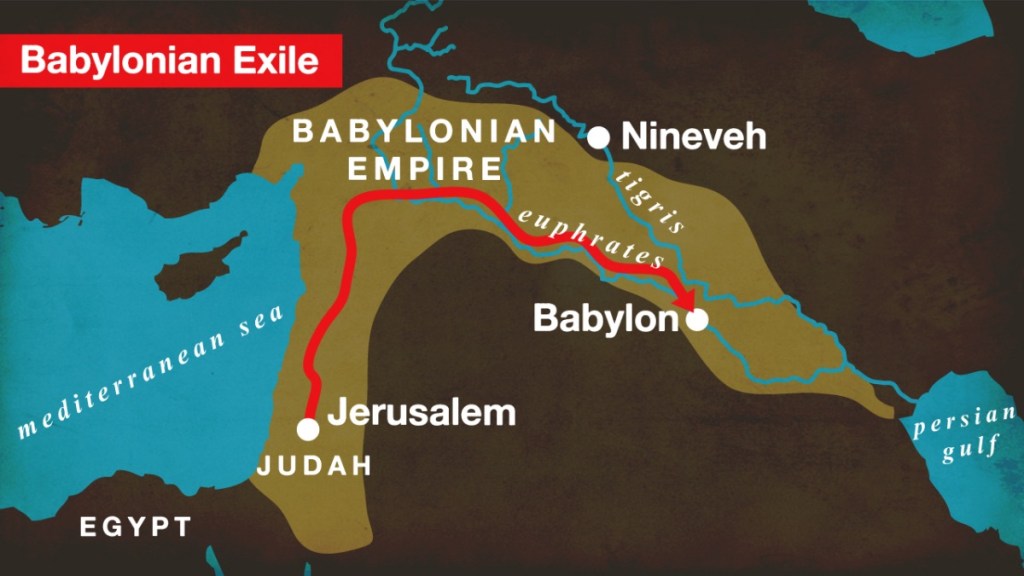
It’s like believing in the words of Isaiah the prophet, when he proclaims God’s warning to Judea (Isaiah 1:19-31). Isaiah said the Lord was calling the world to come to court to hear Him testify against His Chosen people. They were disobedient and rebellious and He was on His last nerve with them. They even had the sad example of the Northern Kingdom’s capitulation to the Assyrians for the same offenses, but they had not changed their ways. Nevertheless. God was giving them yet another chance to repent and return to Him.
It’s like believing Asaph, the psalmist (Psalm 50), who claims that God does not need our offerings. Verses 9-12 state—But I do not need the bulls from your barns or the goats from your pens. For all the animals of the forest are Mine, and I own the cattle on a thousand hills. I know every bird on the mountains, and all the animals of the field are Mine. If I were hungry, I would not tell you for all the world is Mine and everything in it. We don’t give the Lord offerings because He needs them. And we don’t give Him tithes to sweeten Him up towards us—that would be manipulative and we cannot manipulate God. We give to Him as a way of expressing our gratitude to Him for His goodness, grace and mercy.
It’s like believing Jesus when He tells us that the Kingdom of God is “a kingdom of servants; people whose purpose in life is serving each other and the world.” God’s Kingdom is not a place or a location; it’s a heart attitude we carry within us.
(Fairless and Chilton, The Lectionary Lab Commentary, Year C, 2015, p.263.)
It’s like believing that God created the entire universe…(Hebrews 1:2)—…at [His] command, that what we now see did not come from anything that can be seen. When we create something, we use raw materials, wood, yarn, veggies, meat. When God creates, He creates from nothing, or what is called ex nihilo, speaking things into existence
This morning, I want to focus our attention on “the Biblical Greats” who serve as examples to us of people who not only believed in God but also demonstrated great faith in Him by their actions (Hebrews 1:1-16):
A. Abel, the younger of Adam and Eve’s first two sons, was a faithful believer in the Lord. We can only assume that Adam—who had disobeyed God–must have intentionally taught his sons how to please God. God forgave him and Eve by shedding the blood of two sheep and using the fleeces to cover them as they were exiled from the Garden. He would have told them that it takes a blood sacrifice—an animal must give up its life—to cleanse a person from their sin.
Abel, a shepherd, brought the Lord a spotless lamb from his flock. While Cain, the elder son, brought the Lord veggies and fruits he had grown.
Fruit, vegetables, grain are all gifts that represent thanksgiving to God; but such an offering would not cleanse Cain from his sin. He should have taken some of his produce to his brother to buy from him a lamb suitable for a sin sacrifice. But, he was too arrogant, too prideful to submit to his father’s teaching and to the Lord’s will.
We are told in verse 4 (NLT)—It was by faith that Abel brought a more acceptable offering to God than Cain did. Abel’s offering gave evidence that he was a righteous man, and God showed His approval of his gifts. Faith is demonstrated by our obedience to God. Faith is humble—it says, I will do what God wants, even if I might think I know a better way.
B. We don’t know much about Enoch…except that he pleased God. Apparently he was a descendant of Seth, Adam and Eve’s 3rd son. Enoch’s clan consisted of loyal followers of God. Enoch lived for 365 years and walked with God. This means he was a man of faith. This means he was obedient to the Lord. God was so pleased with Enoch’s faith that he took him up into heaven directly (like Elijah), so that he never experienced death.
C. The next hero of the faith listed was Noah. He was a 10th generation descendant from Adam, and was 500YO+ when his sons were born. He lived a righteous, blameless life and was obedient to God, despite the widespread sin and degradation in the culture surrounding him. Verse 5 tells us (NLT)—It was by faith that Noah built a large boat to save his family from the flood. He obeyed God, who warned him about things that had never happened before. He was told to save his family and 1 pair of every known animal. It took him and his 3 sons 100 years to build the ark. It measured 450 feet by 75 feet by 45 feet and was made of gopher wood (perhaps cypress). By today’s standards, it is estimated that 1300 standard shipping containers could have been fit within it.
Imagine the ridicule he endured, as scholars tell us it had never rained prior to the flood. Irrigation rose up from beneath the ground. Water also existed in rivers and streams. But Noah believed God when told it would rain. His neighbors probably brought tours by at all hours to view “Noah’s folly” (but they weren’t laughing when the flood waters appeared).
D. Abraham was so faithful to God that he underwent 7 separations to please Him: (1) He left his home country, Ur of the Chaldees; (2) He left his father in Haran; (3) He left his extended family, all except his nephew Lot, when he departed for Canaan; (4) He allowed Lot to leave him and take the best land for grazing sheep and goats; (5) He banished Ishmael and Hagar in order to protect his younger Son of Promise, Isaac; (6) Believing God could raise Isaac from the dead, He obeyed God by preparing an altar on which to sacrifice him; and (7) Finally, he was separated from his beloved Sarah at her death.
(Shared with me by Dustin Bell, a Pentecostal pastor, student of the Bible, and friend)
How many of us would have submitted to God through all of those losses? No wonder God (Genesis 15:6)—…credited it to him as righteousness.
E. Sarah, too, is included as a person of faith. Even though she despaired of waiting on God and talked Abraham into impregnating her Egyptian slave, Hagar, to produce Ishmael, (By the way, this was a common practice for the barren wives of wealthy men in that time, but not something approved of by God.) Even despite this, she saw God open her womb at 90YO to give birth to Isaac. I think it took marvelous faith to believe she could raise him up, as well!
God credits them with being the patriarch and matriarch of Israel (v.12, NLT)—…a nation with so many people that, like the stars in the sky and the sand on the seashore, there is no way to count them.
These are our heroes of the faith. They were not perfect, but they believed in God and were obedient to him. They persevered through tough times and held on to their faith. They were obedient to God and He rewarded them.
I want to conclude this morning with a story about a special type of Chinese bamboo tree:
“When you plant the seed, nothing happens. No sprout. No shoot. No sign of life. One year goes by—still nothing. Two years—still nothing. Three. Four. Five years—nothing.
“Then, in the fifth year, something miraculous happens. The bamboo tree suddenly shoots up—up to 90 feet in just six weeks. But here’s the truth: it wasn’t doing nothing all those years. Beneath the soil, it was growing an incredible root system—a foundation strong enough to support its sudden, towering growth.
“That’s how faith works. You pray. You serve. You obey. And for a long time… it seems like nothing’s happening. But deep below the surface, God is preparing something far bigger than you can see. He’s growing roots. Strengthening character. Building the foundation for what’s coming. And when the time is right—breakthrough comes fast. Faith is showing up, watering the soil, and believing the harvest is coming—even when the ground looks empty.” (www.NewstartDiscipleship.com, 8/7/2025)
May this be true of each of us. Thanks be to God who gives us the victory through our Lord Jesus Christ. Alleluia, alleluia!
©️2025 Rev. Dr. Sherry Adams






 Wellborn Methodist Church--Wellborn, Florida