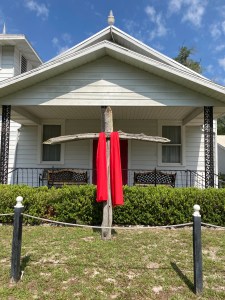
Jacob’s Ladder

Pastor Sherry’s Message for July 19, 2020

Scriptures: Gen 28:10-19a; Ps 139:1-12, 23-24; Ro 8:12-25; Matt 13:24-30, 36-43

 Some years ago, I read a story in Christianity Today about a woman in India, who lived in a concrete sewer pipe with her husband and two kids.

Her name is Shivamma.  She was a member of the Dalit caste, the lowest of the low, pretty much untouchable—except for rape.  She remembers she was barren.  A Dalit Christian named Bangarraju prayed for her in her home and she conceived and bore two children, a son and a daughter.  The girl child became badly jaundiced.  Bangarraju returned, prayed, and the child was healed.  Shivamma became a Christian.  She says she accepted Christ  because, I realized that Jesus is the living God.  We used to drink and everyday we would fight, fight, fight.  Jesus Christ brought peace to our family.  I have no fear, because I have come to know the living God.  I trust Him.  God met her in her need, and she now trusts Him.

 In another story, there was a debate between a Christian and an Atheist.  The Atheist began his presentation by writing on a whiteboard, God is nowhere.  When the Christian speaker stood up to make his arguments, he erased nowhere and used the same letters to write, God is now here.

Let’s look at what our Scriptures have to say today about the twin themes of God’s presence and God’s knowledge of us.  In our OT lessonàGenesis 18:11-22, we encounter the patriarch, Jacob.

He is the younger of the twin boys born to Isaac and Rebekah.  He was named Jacob (which means heel grabber because he was born grasping his older twin’s heel; but it also carries the sense of deceiver, schemer.  God had told his mother, when pregnant, that the older will serve the younger.  In other words, God was reversing the usual order of things.

Even from the womb, God had determined that Jacob would be the one to carry out His plan of redemption from Abraham and Isaac.

Nevertheless, Isaac favors Esau, so Rebekah and Jacob collude to rob Esau of both his birthright and his father’s blessing.  Esau is furious when he discovers this, so Rebekah invents the pretext of needing to go abroad to find a suitable wife to help Jacob escape his brother’s wrath.  Jacob leaves the family compound.  Notice none of them bothers to check in with the Lord: Not Mama Rebekah; Not brother Esau; Not Papa Isaac; Not even the culprit, Jacob.  This does not appear to be a family of very firm faith!

Our passage today finds Jacob has put 40 miles between himself & Esau by the time he stops for the night.  He was “booking it” to get out of Canaan! How must he have felt? No doubt he was anxiously looking over his shoulder for his murderous brother.  He must have felt alone.  Perhaps he was worried about the long, potentially dangerous journey ahead of him, uncertain of his future.  Can you identify?  Maybe you find yourself in a dark & lonely place right now; perhaps you too are filled with uncertainty.  Maybe, like Jacob, it’s even your fault that you find yourself “out there, on your own.”  Well, this story was made for you (and me), so read on!

Jacob falls asleep (not the sleep of the just) and dreams of a ladder or a set of stairs reaching to heaven.  The Lord is at the top (“the Voice from top of stairs”), and Jacob, realizes he is sleeping, at the bottom.  Angels are traversing the ladder, some going up, others coming down.  The Lord reiterates to Jacob the promises He has made to Grandfather Abraham and Father Isaac:  I am giving you Propertyàthe land; Progenyàlots of descendants to populate the land and to bless all people of the earth; PresenceàGod would be with him; and ProtectionàGod says  I am with you and I will watch over you wherever you go, and I will bring you back to this land.  I will not leave you…. Notice:  God does not require anything of Jacob.  There is no if…then clause.

God has chosen an unlikely patriarch.  Even though, as Psalm 139 affirms, God knows his every thought and scheme.  There is no place Jacob can go where God might lose track of him (or of us).  Not departing the Promised Land for Haran (Syria); not getting lost in NYC or the Amazon jungle; not even by participating in a Witness Protection Program, in Minot, ND, where our names and ID’s are changed; Not living in a sewer pipe outside some remote Indian village—these are just issues of geography.

Not even struggling alone with a job loss, the death of a loved one, declining health, financial setbacks, or troubled relationships. Our God knows where we are emotionally and spiritually, besides.  He is the with us God, Emmanuel.  He knows our names.  He is always present to us.

Now do you notice Jacob’s response to God?  He doubts.  He has chutzpah, vowing to follow the Lord if God goes with him; if God protects him; if God provides for him; and if God brings him safely back to the land again.  To his credit, He sets up a memorial stone (and names it Bethelàhouse of God) to commemorate his encounter with the pre-incarnate Christ.   And he promises a tithe, a 10th of all God gives him.  But the schemer is bargaining with God.

I don’t’ know about you, but I take a great deal of comfort from the Jacob story:  Jacob is not of man of strong or good character.  He’s a liar;a trickster.  He’s not even a strong believer.  God has promised him 4 P’s without strings, but he puts conditions on his commitment to God.  He’s not perfect, but still God loves him.  We could say God goes out of His way to comfort Jacob.

If we follow Jacob’s story thru the next 22 chapters of Genesis, we find that the Lord does take Jacob to His woodshed/the Refiner’s Fire:  The deceiver is himself deceived, by wily Uncle Laban. He spends 20 years outside the land, working off debt to his Uncle; building up a family (12 sons, 1 daughter); and acquiring herds and wealth with which to support them.  He flees his Uncle when he returns to the Promised Land.  He fears a hostile reunion with the brother he wronged. His favorite wife dies in childbirth. His only daughter is raped.  His sons cause him grief.  They jealously sell his favorite son into slavery and lead him to believe Joseph is dead.  And, upon entering the Land, he wrestles all night with the pre-incarnate Christ, Who leaves him crippled, but changes his name from Jacob to Israelhe who struggles with God & men, and overcomes.

It’s a heck of a journey, isn’t it?  Jacob’s story makes me glad I am not him!  But it also assures me (and you) that God never deserts us; that He loves us even if we are Scallywags; and that He cares for us, faithfully.

Do you know that scholars believe Jacob’s Ladder is really an image, a prediction of Jesus?  Jesus, you see, mediates between us and God.  Jesus is our only way—our ladder, if you will–to heaven.

So what are the lessons we can draw from Jacob?  (1) If we think God doesn’t know where we are, or what we are thinking, we are grossly mistaken!  (2) Our God appears to enjoy overturning human convention and Human expectations.  He can do great things with the least likely.  He’s not discouraged by our rebellion, sinfulness, or unbelief.  (3) He clearly sees us as we are—there’s no hiding from Him, or fooling him–as well as who He wants us to become.

 There is an ancient Hebrew poem that I think sums this up very well:

Wherever I go…only Thou!

Wherever I stand…only Thou!

Just Thou!  Thou, Thou,

Thou!  When things are good,

Thou!  When things are bad…

Thou!  Thou, Thou, Thou!

©2020 Rev. Dr. Sherry Adams


Truth Stranger Than Fiction

Pastor Sherry’s message for July 5, 2020

Scriptures: Gen 24:34-38, 42-49, 58-67; Ps 45:10-17; Ro 7:15-25a; Matt 11:16-19, 25-30

A nine year old boy was asked by his mother what he had learned that day in Sunday School. “Well mom,” he said, “our teacher told us how God sent Moses behind enemy lines on a rescue mission to lead the Israelites out of Egypt.  When he got to the Red Sea, he had his army build a pontoon bridge and all the people walked across safely.  Then he radioed headquarters for reinforcements.  They sent bombers to blow up the bridge after the Israelites were saved.   Pharaoh’s chariot guys all drowned.

Mom asked, “Now, Joey, is that really what your teacher taught you?”

Well no, Mom,” the boy declared in exasperation, “but if I told it the way the teacher did, you’d never believe it!”


Today, we have another Old Testament story that defies logic, unless you believe in a God of miracles.  Remember Isaac, the miraculous “child of promise,” born to parents aged 100 and 90?  Last week, we examined how God demanded that Abraham sacrifice this child to Him, but also rescued Isaac at the last minute by providing a ram to take his place.

Isaac is one of the 4 patriarchs of our faith, but Scripture only gives us a very few glimpses of him.  Nevertheless, we can infer that he was a good son, because he was obedient to his father Abraham—even given the threat of death.  And today’s passage reveals him as a man of faith, praying to God as his bride arrives on a camel.

Let’s examine the story in more depth, as I believe it reveals some principles we can live by today.  Abraham is concerned that Isaac have a wife…(v.1) now Abraham was now old and well advanced in years….He calls his trusty servant (Eliezar?) and tells him to journey to NW Mesopotamia (Syria) to find a good woman from among his extended clan (the people he left behind to follow God).  He does not want Isaac to marry a pagan Canaanite woman.  Nor does he want Isaac to journey outside the Land.  The servant prays to Abraham’s God and suggests a fairly complex sign by which he might recognize God’s choice of a bride for Isaac:  (1) She will offer him water to drink; (2) She will even draw water for his 10 camels; And (3) She will offer traditional ancient middle eastern hospitality including water for the feet; food/refreshments; and overnight accommodations for him and his animals.

When he arrives at the appropriate village, the servant encounters a beautiful young woman who does exactly that.  She gives him water.  She draws water for his animals.  She invites him home to meet her family and to partake of their hospitality.  This woman is Rebekah, Abraham’s great-niece, the virgin granddaughter of his brother.

Now of all the towns the servant could have visited, what are the chances that he would run into Abraham’s kin?  What are the chances that they would still even be alive?  God has clearly superintended this journey.  The servant recognizes this and offers praise and thanksgiving to God: (v.26)–Then the man bowed down and worshiped the Lord, saying, ”Praise be to the Lord, the God of my master Abraham, who has not abandoned his kindness and faithfulness to my master.  As for me, the Lord has led me on the journey to the house of my masters’ relatives.”

This woman, Rebekah, is clearly God’s choice for Isaac.  The servant tells her the story of how he decided to approach her—he’d asked God for a sign.  She doesn’t seem to have difficulty believing him. And he gives her a ring and two gold bracelets, as proof of Abraham’s wealth.  Her brother, Laban, shows up, hears the story, and also invites the servant home.  Once again, the servant shares his instructions with everyone.  Probably Rebekah is somewhere, outside the tent, listening in as the story is retold.  Everyone seems to agree she is God’s choice of a bride for Isaac.  Additionally, the servant has also filled them in on Isaac’s miraculous birth and his divine rescue.  The family appears to be impressed with the costly gifts he has bestowed on the maiden, signifying that Abraham is indeed as wealthy she the servant has claimed.  The bride-price is agreed upon, but by the next morning the family appears to back off a bit.

In an intimation of things to come—Uncle Laban will later renege on his agreement with Jacob, Rebekah’s as yet unborn son–the family urges the servant to wait another 10 days before departing.  Maybe they want to drive the bride-price up a bit.  No doubt concerned for Abraham’s age and health, the servant urges an immediate departure, with no delay.  Interestingly, the family suggests that Rebekah be consulted.  From what she’s heard and experienced, the young woman is ready to go! Maybe she fears her wily brother will somehow interfere with her opportunity.  Whatever the case, she is prepared to go off with a servant she barely knows, to a country she’s never seen, to meet a husband she’s only heard of.  What a brave young woman and what an adventure!

What principles might this story hold for us today?  1st, we note the faithfulness of the servant.  He’s given his word to Abraham to do his best; but otherwise he has no stake in the outcome.  Nevertheless, he works hard to fulfill his word.  He prays for the Lord’s favor.  He diligently repeats his instructions from Abe.  He obviously does not want to mess up!

This servant also moves at the leading of God, rather than his own fleshly desires or his fears.  He is willing to carry out the task his master, Abraham has given him and he appeals to Abraham’s God for help.  This is the antidote to our sinful fleshly desires, as given expression by Paul in Romans 7:15-25a.  The antidote to our self-will is obedience—obedience to Christ, cooperating with the transforming power of His Holy Spirit.

The example of this unnamed servant is about 4,000 years old.  2,000 years later, Jesus will say, Let your yes mean yes and your no mean no.

We are to keep our word.  Like Eliezer, we are to say what we mean and mean what we say.  This is the kind of behavior that helps others to trust us.

Second, I am struck with the willingness of Rebekah.  She doesn’t know Abraham from Adam’s house cat.  She is looking at marrying a dude she’s only just heard of and never seen. She will be making her home far away from her family, probably never seeing them again.  What convinces her to take the risk of leaving everything she has ever known?  Perhaps it was hearing the servant relate the miraculous nature of Isaac’s birth. No doubt she also heard the story of his almost-sacrificial death, and been impressed with the fact that—while he could have overwhelmed his father’s strength, and taken himself off the altar–he instead chose to be obedient to and respectful of his father.  Maybe she rightfully understood that Isaac was special to God and wished to link her future to such an esteemed man.

And, if she were a woman of faith, she might have been able to see and understand how God had indeed chosen her to be Isaac’s mate.  After all, the servant had asked for a complex set of signs; and, without any prior knowledge of them, she had fulfilled each one.

I don’t know if you have ever experienced God providing you a sign, but I have.  My best buddy in seminary came from the Chicago area.  She was trying to verify if God was truly calling her to seminary.  She was walking the shores of Lake Michigan and asked God to affirm her call by proving a green rock among all the gray ones.  She was amazed and delighted to minutes later encounter a green rock—the only green rock–on the shore.  Not only that, the green rock was shaped like a triangle.  She understood this mean she was to attend Trinity out of the other 10 seminaries in our denomination.  Similarly, I asked God for direction as to which seminary He wanted me to attend.  I was living in Tallahassee, Florida, then.  Rarely does anyone in Tallahassee ever hear of Pittsburgh, Pennsylvania, where Trinity is located.  For weeks, my daughter and I were inundated with what we called our “Pittsburgh signs”:  PA license plates, bumper stickers for the Steelers or the Penguins; movies we rented that had been filmed in Pittsburgh or which featured the city; and magazine articles in doctor’s or dentist’s offices on some aspect of life in Pittsburgh. We laughingly told God we got it and He could stop the signs anytime. We were not too surprised when they dried up immediately!

Several years after arriving at seminary, my best buddy and I attended a healing conference.  We shared a motel room while there and I awoke one night to hear her crying.  She was in crisis, doubting her call, and worried she would graduate with a Masters of Divinity, but be unable to locate a Bishop willing to ordain her.  By this time I knew her well, was convinced she was called to ordained ministry, and—coming under conviction–told her she was not to look to the left or the right, or to listen to the opinions of people, but to keep her eyes on the Cross of Christ  She was to trust that the Lord had indeed called her. The next morning, while serving us communion, the lead pastor of the healing ocnference spoke directly to her and said, “You are not to look to the left or to the right, or to listen to the opinions of people, but to keep your eyes on the Cross of Christ.  You have been called into ministry and Jesus will see you through.”  She felt affirmed by this marvelous sign and so did I.  These experiences taught me that we can ask God for signs and He will and does respond.

Our Genesis lesson today has a happy ending.  It’s actually a love story!  Rebekah gets on her camel and rides to Israel and to Isaac.  The evening she arrives, Isaac is out praying.  He sees her and is intrigued.  She sees him, leaps off her camel (she’s impressively energetic, isn’t she?), and wraps herself in her veil, thus indicating she is a single woman.  The servant then relates the entire saga to Isaac.  Isaac obviously sees Rebekah as God’s answer to his prayers (& his father’s plans).  Verse 67 tells us, Isaac brought her into the tent of his mother Sarah [now dead], and he married Rebekah.  So she became his wife, and he loved her; and Isaac was comforted after his mother’s death.

In a number of ways, this story is stranger than fiction, but I believe the lessons are pretty clear:  (1) We want to be faithful to God; (2) We can ask Him for a sign; (3) We want to say yes to whatever He arranges for us; and (4) We can trust that there is a reward for our obedience.  Our God is good.  He desires our love and devotion to Him.  He takes good care of those who love and obey Him.  Thanks be to God who gives us the victory through our Lord Jesus Christ!  Alleluia! Alleluia!

©2020 Rev. Dr. Sherry Adams

My Way or God’s?

Pastor Sherry’s Message for June 28, 2020

Scriptures: Gen. 22:1-14; Ps 13; Ro 6:12-23; Matt 10:40-42

It appears that this has become the my summer of sermons beginning with songs. For example, two weeks ago, I cited a great hymn about the Trinity. Then last week, I quoted the lyrics from the theme song to the TV show, “Friends.”  This week, I want to remind you of the old Frank Sinatra hit, “I did it my way.”  You may remember that the song is a retrospective view of a man’s life as he considers his mortality:

For what is a man, what has he got? 

If not himself, then he has naught.

                                    To say the things he truly feels, and not the words of one who kneels.

                                    The record show I took the blows, and did it my way.

These are the words of someone who is totally self-possessed, totally self-reliant, and very proud!  These are the words of a person who has decided to live life on his own terms, without regard for God.  The song is from the 1970‘s—in fact, Sinatra quipped that it was our real national anthem in 1974.  Upon reflection, we realize it could easily still be so today.

If we let those lyrics sink in, we realize they celebrate a God-less perspective.  Last week, I talked about how Abraham faced a difficult choice:  Honor God (and his wife, Sarah) and run off Ishmael; or disobey God and keep his first born son close by (and ultimately threaten Isaac, the “child of promise.”  Abraham passed the test (and God took care of Ishmael).  This week, our Old Testament passage has Abraham face another test, his 4th.  YIKES!  In his 1st test, God told him to leave his home and family, in Ur, and go where the Lord would lead him. His 2nd test was Lot’s request that they divide the land to accommodate their growing herds, whereupon Abraham allowed the choicest land to go to Lot. The 3rd test was to set aside Ishmael to protect Isaac.  And now, almost beyond belief, is God’s demand that he sacrifice that same child.

Doing life his way must have looked pretty good to Abraham by this point.  He is now about 136 years old, and Isaac is either about 15 or some scholars believe he is as old as 30 (as Christ was when He began His public ministry). There will be no more children after Isaac from Abraham and Sarah.  Abraham is also probably aware that child-sacrifice is abhorrent to God.  Who knows what he was thinking as he and Isaac trudged toward their destination?  Nevertheless, amazingly, Abraham submits his will to God’s.

Would we be so faith-filled or so obedient, do you think?  This Old Testament lesson (Genesis 22:1-14) is again a rich fore-shadowing of Jesus:  God sends Abe and Isaac to the region of Moriah.

This is the same ridge as the Temple Mount in Jerusalem (constructed much later).  It also appears to be the same ridge as Golgatha, the site of the Crucifixion. There is to be a sacrifice of an only, precious son.  It is a 3 day journey for them,  as would be Jesus’ journey from death to resurrection.

God, at the last minute, provides the sacrificial animal.  This is a male sheep, fully grown (a ram) because the Bible records only one “Lamb of God,” Jesus Christ!  This story vividly demonstrates Abraham’s faithàvv.7-8àIsaac spoke up and said to his father Abraham, “Father?”  “Yes, my son?” Abraham replied.  “The fire and the wood are here,” Isaac said, “But where is the lamb for the burnt offering?”  Abraham answered, “God Himself will provide the lamb for the burnt offering, my son.”  It also establishes the precedent for substitutionary atonement, wherein Jesus took our place as He paid the penalty for our sins.

The test was “Will you do what I ask even if it costs you. What is most precious to you?”  Remember last Sunday Jesus said (Matthew 19:37) we cannot love any person more than we love God?

Abraham is the Father of our faith because he—like Jesus later—did exactly what his heavenly Father asked of him.  It should be obvious that this was a gut-wrenching choice.  It should also be obvious that many of us would not have been willing to submit to God’s will in that situation. Many Biblical scholars hypothesize that Abraham believed God could resurrect Isaac–if it came to that—or somehow restore him.  Actually, he had implied to the two servants that he and his son would meet back up with them.  And he trusted that God would keep His promise to bring forth many nations from Abraham’s and Sarah’s bodies.

This is the best response to any test God may send us.  It is to trust in what you know about God’s nature, even if you don’t understand what He is doing or why.  Our best response is to trust in who God and in what He has promised us.

Our other passages today provide essentially the same message:

This is what David is saying in Psalm 13.  He is weary of being pursued by a murderous King Saul, so he turns to God in prayer, admitting he is afraid even to sleep.  But, by vv.5-6, he has reassured himself of God’s goodness and trustworthiness, and we get the sense that he relaxes.

Paul, in our Romans 6 lesson, reminds us that we all must choose whom we will serve.  He says we either serve ourselves—our sinful nature—or we serve God.  Additionally, if we choose to serve God, we cannot, by our own strength, successfully live a Christian life style.  We need to approach the task with faith like Abraham’s.  We need the assistance of the Holy Spirit at work in and empowering us.

Jesus, in Matthew 10:40-42, also commends the role of faith and obedience.  We participate in God’s work when we do even small acts of service to others.  Additionally, we are not to be overwhelmed by the size of the task.  Instead, we recognize in faith that God has called us to a given task; then we recognize in faith that God will enable us to do what He has called us to.  Finally, trusting in the Holy Spirit rather than in ourselves, we partner with Him to put forth our best effort.

Think today of the times and ways that God has tested you:

Perhaps you have given back an overpayment at the cash register.  Maybe you have held yourself back from taking from social services or the government what you know you don’t truthfully deserve. Possibly you are scrupulous abut providing a full day’s effort for a full day’s pay.  Or, perhaps

if a group of folks were looting the Dollar General Store up the road, rather than joining in with them—even if you thought the police wouldn’t arrest you—you gather friends to intervene and prevent further unlawful mayhem and destruction.  And we are all presented with the choice, aren’t we, to cheat on our taxes or our spouse?

There appear today to be many, many opportunities to do

the wrong thing.  But as followers of Jesus Christ we don’t go the way of the crowd.  We don’t even do it “my way” (according to our will, our flesh).  No, to please our loving Father and our Lord, Jesus Christ, we choose to do things God’s way.  This week (and always), let’s pray for the strength and courage to make choices, every day, that please our God.

©2020 Rev. Dr. Sherry Adams


Difficult Choices!

Pastor Sherry’s Message for June 21, 2020

Scriptures: Gen 21:8-21; Ps 86; Romans 6:1-11; Matt 10:24-39

Happy Father’s Day!  It must be God’s sense of humor that our OT lesson relates a difficult choice for a loving father.  Scripture tells us that Abraham had two sons:  The first born, Ishmael, was born through human expediency.  Sarah had despaired of getting pregnant and had offered for Abraham to impregnate her slave, Hagar.  It was the custom of the day that a barren woman could adopt as her own a child born to her husband and her slave girl (an authorized adultery strategy that Rachel, Jacob’s wife and Leah, her sister-wife also employed).  The other child, Isaac, was born to Abraham and Sarah by the miraculous and incontrovertible intervention of God.  Both Abraham and Sarah were well beyond childbearing years when they conceived and bore Isaac.  In fact, his name means “laughter” as they were both so amazed and delighted with his birth that they rejoiced with laughter.

The problem arose when Ishmael’s true character was revealed.  You may recall that his mother had had contempt for Sarah.  Earlier God revealed to Hagar that Ishmael would be …a wild donkey of a man, his hand will be against everyone, and everyone’s hand will be against him.”  So, at 15-16 years old, Ishmael ridicules or demonstrates contempt for his younger half-brother at the feast surrounding Isaac’s weaning (Isaac was probably about 3YO)–(vv.9-10)But Sarah saw that the son whom Hagar the Egyptian had borne to Abraham was mocking, and she said to Abraham, “get rid of that slave woman and her son, for that slave woman’s son will never share in the inheritance with my son Isaac.”  He may have been making fun of Isaac’s childish antics; or he may have said something like, “That little idiot will be my father’s heir.”  At any rate, Sarah correctly sees him as a threat to Isaac and insists Hagar and Ishmael be disinherited and run off.  (Remember, both Abraham and Sarah were well into their 100’s and would not have been around to see to it that Ishmael did not later take from Isaac his rightful inheritance.)

No doubt this was a difficult choice for Abraham as he loved Ishmael.  God tells him to do as Sarah suggests (vv.12-13)–Do not be so distressed about the boy of your maidservant.  Listen to whatever Sarah tells you, because it is through Isaac that your offspring will be reckoned.  I will make the son of the maidservant into a nation also, because he is your offspring.  How difficult for Abraham!  Ishmael was the only son he had had for years (ages 85-100)!  Imagine having to choose between your children.  (Remember the book and movie, Sophie’s Choice?  The mother, Sophie, had to choose between saving her baby daughter or her young son as they faced the gas chamber in WWII.  She chose her daughter but was never psychologically healthy after realizing she had consigned her son to certain death).  At least in this instance, God is promising to care for Ishmael.  He grows up to become, with Esau (Isaac’s son), the father of the Arab nations.  God does prevent him and his mother from dying of thirst in the desert.  Ishmael eventually becomes known as a great archer.  He experiences divine blessing and protection.  He lives in the wilderness and his mother finds him a wife from among the Egyptians.

 Dads, how would you feel if the Lord asked you to separate yourself from one of your children?  It had to have been really tough on Abraham!

In a number of ways, Isaac foreshadows Jesus:  (1) The births of both Jesus and Isaac were foretold in advance–Abraham/Sarah were told 25 years earlier by God; Jesus had been predicted 1,000 years earlier in a promise by God to King David–the promise of a Messianic king who would come from David’s lineage.  (2) Both births were miraculous: Isaac’s due to his parents’ ages (99, 90); and Jesus’s due to virgin birth/divine conception through the Holy Spirit.  (3) Both were named before they were bornàSarah laughed (Gen 17); Joseph, told by an angel in a dream …you are to give Him the name Jesus, because He will save His people from their sins (Matt 1:21).  (4) Both sons were obedient to their fathers, even unto death.  (5) Isaac’s birth to parents far beyond the years of childbearing pictures the resurrection of Jesusàlife coming forth from death.  And (6) both are a joy and delight to their fathers.


Paul’s arguments for justification in Romans 6 make a point similar to that which God makes with Isaac/IshmaelPaul explains that God declares us good (guilt for our sin is removed) even Jesus’ death doesn’t make us good.  Jesus Christ paid the penalty for our sins.  Nevertheless, we can still live wild, worldly, and sinful lives (which incidentally makes us look like hypocrites to nonbelievers and gives Jesus a black eye)!  We have to agree to surrender our wills to God.  We have to cooperate with the transformative power of the Holy Spirit to live godly lives.  Why?  Because God—not me–declares it to be so.  Surely Ishmael and his mother thought he, as first born, would be Abraham’s heir.  But God makes a decision contrary to the will or tradition of humankind.  And He often asks us to make decisions contrary to our logic, tradition, or intuition.

 Our Gospel lesson from Matthew (10) contains a number of difficult teachings of Jesus’.  Again, in a way that defies human logic or tradition, Jesus makes some bold and troubling statements:  Just as Abraham had to obey God and put aside his elder son, so too is Jesus telling us no one person can come before Him in importance in our lives.  We cannot love a son or daughter, or a spouse, or a mother or father, more than we do our Lord.  Remember in another Old Testament story, God asks

Abraham to sacrifice Isaac, long after having sent Ishmael away.  Now God himself provides the substitutionary sacrifice, so Isaac’s death proves unnecessary.  Nevertheless, the point is that no human relationship can be more important to us than our relationship with Jesus.  Additionally, we are all subservient to Jesus.  Since the very hairs of our heads are numbered, we are not to worry about being murdered for our faith.  If we do deny Christ, He will later deny us before the Father.  YIKES!  And, in His first coming, Jesus did not arrive to institute peace on the earth.  Actually, human beings are incapable of creating lasting peace on earth; true peace is only available when Jesus comes again, or when we find ourselves in heaven—whichever comes first.

We might want to argue with each of these principles—just as Abraham might have wanted to argue to keep Ishmael close….But we worship a God whose thoughts and plans are as high as the heavens are above the earth from ours.  Who of us can comprehend the mind of God?  So who are we to argue with Him?  Our job, even if we don’t understand why, is to try to trust in God’s goodness and in His divine purposes.

In The Lord’s Prayer, we pray, deliver us from evil—actually, the most accurate translation is save us from the time of trial.  God often seems to allow us to be tested with difficult choices.  Will we still love Him when He doesn’t answer our prayers as we wish?  Will we still trust Him when our lives are more difficult than we expected?  None of us expects to have to die a martyr’s death, or even to have to choose our faith over the love of our family members.  Let’s pray that the Lord gives us wisdom to make the difficult choices in a way that honors Him.  Let’s pray that He also gives us the courage and strength to do His will in this life.  Amen!  May it be so!

©2020 Rev. Dr. Sherry Adams

For the Love of God!

Pastor Sherry’s Message for June 14, 2020

Scriptures Gen 18:1-15; Ps 116:1-2, 12-19; Ro 5:1-8; Matt 9:35-10:8

How many of you remember the TV sitcom, “Friends”?  I was not really a fan of the program, but I do recall that it had a memorable theme songTruthfully, though, who knew the words?  According to YouTube, the lyrics went something like this:

 So no one told you life was gonna be this way…

Your job’s a joke, you’re broke, your love life’s D.O.A.

It’s like you’re always stuck in second gear…

When it hasn’t been your day, your week, your month, or even your

year.

You’re still in bed at 10 and work began at 8…

You’ve burned your breakfast…

So far, things are going great.

Your mother warned you there’d be days like these…

But she didn’t tell you when the world has brought you down to your

Knees…

You know, some of us can truly relate to those 1st two verses….We all have bad days, sometimes bad weeks, months or even years.  We can catch ourselves talking like Eeyore (of Winnie the Pooh), saying things like, “whatever can go wrong will go wrong.”  We can become downcast or pessimistic, and may feel depressed and discouraged.  We stress over the Chinese Corona Virus, being quarantined (sheltered in place); being out of work, or not having a job to return to; watching riots and looting—anarchy—play out on the news; witnessing a new and reprehensible hatred for the police; observing no politicians stepping up to make the streets safe again; and hearing of dentists and other professionals being so discouraged and hopeless that they choose suicide over waiting to see how this crisis will work out.

In this environment, the chorus of the Friends theme song is important to remember:

I’ll be there for you

                    When the rain starts to pour.

                    I’ll be there for you

                    Like I’ve been there before.


You see, the song celebrates the value of true, blue friends; but it could just as well celebrate the love of God for us.


               Our Scriptures today all celebrate the love of God for us.

Let’s consider them together:

Our psalm, Psalm 116, is a thanksgiving or Hillel psalm.  Scholars believe Jesus sang it on his way to the Garden of Gethsemane (Hebrews 12:2–Let us fix our eyes on Jesus, the author and perfecter of our faith, who for the joy set before Him endured the cross, scorning its shame, and sat down at the right hand of the throne of God).  Imagine knowing what was going to happen to Him, and nevertheless singing God’s praises as He went to His death!  How brave of Jesus!

The psalmist acclaims his love for and trust in God because he knows that God hears him, and pays attention to his cry for mercy.  Isn’t that true for us too?  We can take all of our stressors, disappointments, frustrations, health concerns, and fears, to the Cross and leave them with Jesus to redeem and transform.  V.12 asks, How can I repay the Lord for all His goodness to me?  Then David answers his own question:  We repay the Lord by lift [ing] up the cup of Salvation; And by fulfil [ing] my vows to the LORD in the presence of all His people.

Now what does this mean to us?  The cup of salvation refers to one of the cups of wine consumed at the Passover meal.  It represented the peoples’ thanksgiving to God for their deliverance from slavery in Egypt; it symbolized offering thanks to God for redeeming them.  Like them, we celebrate Jesus’ redemptive act in communion, when we call the cup the blood of Christ, the cup of salvation.   Our vows to the Lord is a Biblical expression of our decision to praise God.  We praise God, out loud, each Sunday when we spell out the ways He has blessed us this past week (our joys). Dr. J. Vernon McGee says, “Prayer springs from need; but praise follows deliverance.”  Praise, love, and obedience are the only things we can offer to God—He doesn’t need or require anything else from us.  Our psalm also calls this (v.17) a sacrifice of thanksgiving.  We take time away from our own concerns to think of the things for which we are grateful to God.  Then we take time away from our own concerns to direct our thanks to Him.

What are some things for which we can and should express our  thanks to God?  Again, our scripture lessons offer some examples:

Our OT reading (Gen 18:1-15) describes a visitation to Abraham by the preincarnate Christ (& 2 angels).  In the finest Middle Eastern tradition, Abraham offers Jesus and friends water, shade, rest, and food.  Jesus responds with a prediction that Sarah will have “the child of promise,” Isaac, within the coming year.  Now Abraham and Sarah have waited 25 years to have this child. Earlier, the Lord changed Abram’s name from “exalted father” to Abraham, “father of a multitude.”  Finally, in the year to come, Abraham would be able to finally feel like he had lived into his name.  Finally, Sarah would be able to hold and love on a baby of her own.  Don’t you know that they rejoiced and praised God!

In our Epistle lesson, St. Paul extols the benefits we received

from Christ’s atoning death for our sins. Because of Jesus, we have peace with God.  Because of Jesus, we have open access to God through prayer.  Because of Jesus, we have hope for the future (the proper antidote to the news).  Because of Jesus, we know God is with us in our troubles and He helps us triumph over them.  These are all fabulous benefits of our relationship with Christ and most worthy of our gratitude and praise.

Finally, we notice in our Gospel, Matt 9:35-10:8, two remarkable considerations for which we can be grateful:  First, v.36 tells us that Jesus looked about Him, noted the crowds, and …He had compassion on them.  He had been teaching and healing, and may have been tired; but instead of focusing on His needs, He felt great love and empathy for His people.  He still has great love and empathy for us, and we can and should be grateful to Him for this.

Second, He then sends the 12 out to do what He has been doing all along.  He changes their status from disciple (learner) to apostle (delegate); and He empowers them to (v.8)…heal the sick, raise the dead, cleanse those who have leprosy, drive out demons.  Freely you have received, freely give.  He has authorized them to continue His ministry.  He has authorized us to do so as well.  We can be grateful to Christ for their ministry and for ours.

 As I was growing up, I often heard my non-believing parents, say (when frustrated or surprised) things like Oh, good grief! Or For heaven’s sake!  For crying out loud!  Good God Almighty!  (oops, that one is suspiciously like taking God’s name in vain.) And–uttered with great distain and frustration–For the love of God!  These statements were an improvement over some of their more “colorful metaphors,” but it occurs to me that they did not really know what they were saying.  Whether my folks recognized it or not, these expressions all reference the LORD.  And the last one, “for the love of God,” really does summarize what our Scriptures emphasize today.  Because of the love of God for us, we have many things

for which to be grateful to Him.  Friends are lovely, but no one is better at consistently loving us than God.  This week, let’s be grateful for our human (and animal) friends, but let us also be mindful of the many ways in which

God has blessed and continues to bless us.

Thanks be to God who gives us the victory through Jesus Christ our Lord.  Alleluia!  Alleluia!


 ©2020 Rev. Dr. Sherry Adams

.


Trinity Sunday

Pastor Sherry’s message for June 7, 2020

Scriptures: Gen 1:1—2:4a; Ps 8; 2 Cor 13:11-14; Matt 28:16-20

The story is told of a Jewish father who was concerned about his son’s lack of a spiritual life.  The father had never demonstrated what it was to be a practicing Jew.  So, he felt guilty.  As a result, he sent his son to Israel to experience his Jewish heritage, and hopefully to help him develop a lively faith.  The son returned after a year.  He thanked his father for the opportunity to visit the Holy Land and he reported that living in Israel had been both wonderful and enlightening. Then he confessed that while there, he had encountered some Christ-followers and had decided to become a Christian.

The Jewish father was terribly upset, and in the tradition of the patriarchs, he sought advice and comfort from his best friend. “It is amazing that you should come to me,” said his best friend. “I too sent my son to Israel and he returned a Christian!”  So, again according to long standing tradition, the two friends sought out the wisdom and counsel of a rabbi.  “It is amazing that you should come to me,” stated the rabbi.  I also sent my son to Israel and he too developed faith in Jesus of Nazareth.  What is happening to our sons?”

All three lifted their hands to God and began to wail and pour out their grief.  As they prayed, the heavens opened and a mighty voice exclaimed, Amazing that you should come to Me.  I, too, sent My son to Israel….

 Today is Trinity Sunday, the day the Christian Church celebrates one of its most central beliefs.  We believe in One God in Three Persons, Father, Son, and Holy Spirit.  You may recall having sung the hymn, “Come Thou Almighty King” (c.1757), which extols all three persons of the Trinity:

Come thou Almighty King, help us Thy name to sing,

Help us to praise, Father whose love unknown

All things created own,

Build in our hearts Thy throne, Ancient of Days.


Come thou Incarnate Word, by heaven & earth adored;

Our prayer attend:  Come, and Thy people bless;

Come, give Thy Word success;

Stablish Thy righteousness, Savior and Friend.


Come, Holy Comforter, Thy sacred witness bear

In this glad hour:  Thou, who almighty art,

Now rule in every heart,

And ne’re from us depart, Spirit of Power.


To Thee, great One in Three, the highest praises be,

Hence evermore;

Thy sovereign majesty may we in glory see,

And to eternity love and adore.


We believe the Trinity is One Divine God with 3 personalities or 3 roles.  This foundational truth is hard to explain.  We call it a “holy mystery.”

We know that St. Augustine of Hippo took nearly 30 years to write 15 volumes called About the Trinity.  He continued for years to update and revise it.  It is said that he was walking the beach one day, struggling to understand this profound mystery, when he saw a little boy digging a hole in

the sand with a seashell.  The boy would run to the ocean, fill his shell, and rush back to pour the contents into the hole.  St. Augustine said to him, “What are you doing, my little man?”  The boy replied, “I am trying to put the ocean into this hole.”  Augustine later wrote that this experience helped him to see that this was what he had been trying to do with his 15 volumes:  fit the vastness of the Trinity into the limited container of his mind.

The word Trinity appears nowhere in the Bible, but it is implied:  In our Old Testament lessonàGenesis 1:1-2:4–We read the Creation Account:  Verses 1-2, In the beginning [time], God created the heavens [space] and the earth [matter]...and the Spirit of God [creative force] was hovering/moved/brooded [in motion] over the waters.   John 1 further informs us: In the beginning was the Word and the Word was with God, and the Word was God.   All 3 members of the Trinity were involved in Creation.  Notice, the Bible doesn’t try to prove the existence of God.  It just states that HE IS.  Psalm 14:1 declares–The fool says in his heart, “There is no God.”  Psalm 19:1–The heavens declare the glory of God; the skies proclaim the work of His hands. 


Our Psalm for today, 8, is a creation hymn.  It is quoted 3 times in the New Testament, including once by Jesus (v.6–You made Him [Jesus] ruler over the works of Your hands; You put everything under His feet.)  These words testify to God’s great creative power and His accomplishments.  King David asserts (v.1)–O LORD, our Lord, how majestic is Your name in all the earth.  In other words, God the Father is the creator of all the earth.  In the 1st chapter of Genesis, God the Father says, Let there be…10 times, and whatever He has envisioned or planned comes into being.  Even more fantastic than speaking creation into existence, He creates it out of nothing. The Hebrew word for this is bara; in the Latin, it is called ex nihilo.  Only God can create something out of nothing. The rest of us must start with raw materials.


Chapter 1 of Genesis also reveals that He is a God of order:

Day 1, He creates light; Day 2, He creates “air spaces” between the waters on earth and the waters in the sky (vertical division); Day 3, He separates dry ground from the seas (horizontal division); Day 4, He creates vegetation, plant life; Day 5, He creates living creatures in the seas and birds of all kinds; Day 6, (vv.24-25), He creates livestock & wild animals;

Then in verses 26-31, He creates humans. Let us make man in our image, in our likeness.  This means we have personality; that we are conscious of ourselves (metacognition) and of our actions; and that we are free moral agents.  In other words, we get to decide things for ourselves. Notice how God the Father references the other members of the Trinity in this creative act (let us…our), implying there are more than one divine person involved.


Continuing, in Chapter 2, God establishes the Sabbath principle our need for rest following work.  This is also evidence that our God is a  God of compassion.  John Wesley reportedly summarized God’s creative acts in Genesis 1 & 2 by stating, “God created the heavens and the earth and didn’t half try.”


Paul provides us with a Trinitarian blessing in our New Testament lesson today (2 Corinthians 13:11-14)May the grace of the Lord Jesus Christ [the Son] and the love of God [the Father], and the fellowship of the Holy Spirit be with you all.  Without calling it the Trinity, Paul presumes its existence.  Like a good pastor, he wants believers to experience the blessings of the entire Godhead: grace, love, and communion.


Jesus, in our Gospel, sends us out to do the work of the Church in the Great Commission (Matt 28:18-20)à…go and make disciples of all nations, baptizing them in the name of the Father and of the Son and of the Holy SpiritJesus invokes the names of all three divine persons.


So what do we learn about the Trinity from our passages this morning?  Again, All 3 members of the Trinity existed prior to and were active in the Creation of the world.  They are distinct entities but eternally connected in love and communion with each other.


God the Father is Immortal, Invisible, God only wise, in light inaccessible hid from our eyes….Creation appears to have been His idea.

He is spirit, completely transcendent, wholly other; enthroned in Heaven; compassionate, gracious, slow to anger, abounding in love, forgiving wickedness, rebellion, and sin.  Clearly the Father is in command but never dominates or abuses the other two persons. We pray to Him, in the name of Jesus, by the power of the Holy Spirit.  My earthly father was killed when I was 5 years old.  My mother remarried 3 years later.  My step-father, unfortunately was verbally and physically abusive to me.  Because of this, I initially had difficulty seeing God the Father as anything other than a remote, critical, punishing, and disapproving God.  It is only as I have developed further in my faith that I have come to realize He is instead the loving, accepting Father I always wished I had known growing up.


God the Son, Jesus, is our Brother, Savior, Redeemer, and Friend.

He came to earth, God-in-the-flesh, as a vulnerable baby.  He demonstrated God’s love by teaching, healing, forgiving, modeling how to live, and by dying for our sins.  He demonstrated God’s power by performing miracles, rising from the dead, and ascending into heaven.  He died on the cross to pay the penalty for our sins.  We sing, What a friend we have in Jesus…and it is the truth, isn’t it!


God the Holy Spirit is the immanence (everywhere-ness) of God, the “with us” God who is always available to us.  He is how we experience the Trinity today.  He leads, guides, and directs us now; He intercedes for us when all we can do is groan; He sanctifies us and empowers us for ministry.


To echo the hymn, To Thee, great One in Three, the highest praises be, hence evermore; Thy sovereign majesty may we in glory see, and to eternity love and adore!

©2020 Rev. Dr. Sherry Adams


A Call to Pray and Fast

Sisters and brothers, I ask you to join me in spending the next week in prayer and fasting for North America (Wednesday, June 3 – Wednesday, June 10). For those who can fast the whole week, a day, or a meal, I ask you to set aside time to intercede on behalf of your community, state, and nation. 

Pray in the Holy Spirit and as the Holy Spirit leads you, and as you do, consider these petitions:

  • Show me my own sin; reveal to me the darkness of my own heart (Psalms 139:24)
  • Reveal to me the repentance I need in my own life
  • The ending of the lawlessness and violence
  • Justice for those who have had their lives taken from them, especially George Floyd, and comfort for their families
  • Comfort for the family and friends of the thousands of people who have lost their lives because of COVID-19
  • Help for the millions who find themselves suddenly without a job
  • Provision for all those business owners who have lost their business because of the rioting, for those who have insurance and those who do not
  • Strength for the health care workers, nurses, doctors, technicians in hospitals and medical facilities who continue to work fearlessly to save lives
  • Wisdom for our government and civil leaders as they seek to keep us safe both from the virus and from the violence in our cities
  • Food and provision for those who are hungry and in need
  • Fresh anointing for the Church of Jesus Christ to faithfully proclaim the Gospel and reach people who are hurting, suffering, alone, and in need
  • Specific acts of grace and mercy that You want me to carry out in this time


COME, HOLY SPIRIT

Pastor Sherry’s Message for May 31, 2020

Scriptures: Acts 2:1-21; Ps 104:24-35b; 1 Cor:12:3b-13; John 7:37-39

In 2016, this true story of Charlotte Heffelmire of Vienna, Virginia took place:  Charlotte was home from the Air Force Academy visiting her family for Thanksgiving break.  Her dad, Eric, was working on his GMC truck in the family’s garage.  He later recalled, “I was on my back, face up, and I was trying to get at some corroded brake lines when apparently the jack slipped and the truck fell down on me.  The minute the jack slipped, there was an almost instantaneous, real strong smell of gasoline, and then I heard, Whoosh!”  Afterward, he would say he was sure someone would be pulling a dead body out from under the vehicle.  Instead, his 19YO daughter heard the noise and came flying into the garage, barefoot.  She was about 5’4” and weighed 120#.  She says she cannot explain what happened next, but…She lifted that truck off her dad and got him out; then she jumped into the vehicle—which was on fire—threw it into 4 wheel drive, backed it out of the garage on three wheels and closed the garage door to contain the fire.

Then she ran into the house to get the family out, starting with her sister’s baby.

The news reported her saying, “I just did what I had to do. So I don’t feel like a big hero or anything.”  She was later recognized with a Citizen Lifesaving Award by the Fairfax County Fire and Rescue, and given a check for $10,000 on a TV talk show.

         Every once in a while we hear of some similar feat of superhuman strength after which folks say they had no idea how they accomplished it.  You and I know that no smallish young woman would have the upper body strength to lift a truck off her dad.  That kind of empowerment had to have come from the Holy Spirit.  The Holy Spirit is our power source for those times when God wants to do something impossible thru us.


We have looked the last few Sundays at the role of the Holy Spirit in our lives:  We have noted that Jesus promised the HS would…

1.) Remind us of everything Jesus said;

2.) Help us to rightly discern people, spirits, & situations;

3.) Empower us for service to Jesus and His Church;

4.) He also convicts us—like our conscience–of our sins.

This story of Charlotte Heffelmire is an example of HS empowerment.   It is

Superhuman and miraculous.


Today we celebrate Pentecost, the birth of the Christian Church (of all denominations) & the impartation of the HS to each of us believersOur Scriptures include the narrative from Acts 2, in which the Holy Spirit dramatically materializes.  The context is that the 120 disciples, men & women, are praying in the Temple.  Jesus had told them (Acts 1:4) Do not leave Jerusalem, but wait for the gift my Father promised…in a few days, you will be baptized with the Holy Spirit.  So they are being obedient, waiting, praying.


Finally, on the day of Pentecost, the HS shows up!  This is a theophany, an appearance or manifestation (signs & wonders) of God!

1st sign Suddenly from heaven there came a sound like the rush of a violent wind [Ruach—wind, breath, spirit].  This was no gentle breeze!  It came with the sound of a freight train, like a tornado.  Now, God had done this beforeàEze 37:9 God sends the wind to raise the dry bones of Israel to life.

 2nd sign They saw what seemed to be tongues of fire that separated and came to rest on each of them.  Imagine if you had been there!  Fire over your head, fire over the heads of your friends, but no one burning up!  Wow!  God had done this before tooàEx 3:2-5àMoses & the

burning bush.  The bush was on fire, but Moses saw that it did not burn up; instead, God used the bush to light a fire in Moses.  Also, in Isaiah 6àIsaiah’s call to be a prophet, àGod had an angel bring a burning coal to cleanse the prophet’s tongue.  Isaiah did not get burned; but he did get fired up to serve the Lord! 

3rd sign All of them were filled with the HS and began to speak in other languages, as the Spirit gave them ability.  They were all supernaturally empowered—like Charlotte– to do something they had never done before, in this case, speak in languages they had never been taught.  Parthians, Medes, and other folks visiting Jerusalem heard them praising God in their native tongues.  These foreign visitors realized something extraordinary was happening as these were simple folk from Galilee, or we might say from some small town in Florida.

 Now God had done this before tooàIsa 50:4 The Sovereign Lord gave me an instructed tonguethis means inspired speech.  Similarly, the Lord, (2:28), speaking thru the prophet Joel, promises, I will pour out my Spirit on all people. Your sons and daughters will prophesy, your old men will dream dreams, your young men will see visions.  Even on my servants, both men and women, I will pour out my Spirit in those days.  I can truthfully testify of times when I have preached and known the words I spoke were not my own—I had prepared something else–but God had other ideas about what He wanted me to say to His people.  What came out of my mouth was truly Holy Spirit inspired speech.

So, back to our passage.  The Holy Spirit showed up, big time!  But why would God go to this trouble?  (using wind, fire, inspired speech?)  I think He did for two reasons:

  1. Empowerment to tell others about Jesus.

Some denominations call this witnessing ( a word makes some of us uncomfortable)Witnessing, or sharing your testimony—your experience with Jesus—is actually how we go about living out the Great Commission, Matt 28:18àGo and make disciples of all nations, baptizing them…and teaching them to obey everything I have commanded you.  The disciples flowed out from where they had been teaching and praying in the Temple and began praising God and telling anyone who would listen about Jesus.  Witnessing means sharing with others what God has done in our lives and in the lives of our friends.  We do not do this in our own strength, but—like the disciples–thru the power of the Holy Spirit.  We don’t have to stand on street corners and wave our Bibles at people.  On the contrary.  Ask God to show you both who to share with and what to sayàask for an instructed tongue.

  1. Empowerment to do miraculous things for the building up of

God’s Kingdom:  a.) Praying for healing (and watching it happen); b.) Supernatural strength like Charlotte had; c.) Abilities to teach or preach, paint, make music, write, grow orchids, or to help those in need.  Paul describes 9 gifts of the Holy Spirit in our New Testament lesson today, 1 Cor12:3-13à

1.) Wisdom;

2.) Words of knowledge;

3.) Faith;

4.) Healing;

5.) Miraculous powers (Charlotte);

6.) Prophesy;

7.) Discernment of spirits;

8.) Tongues;

9.) Interpretation of tongues.

As our Gospel (John 7:37-39) describes it, the Holy Spirit is the source of the streams of living water Jesus promises to believers.

I want to share with you this humorous story of a miraculous dog (please know, in advance, that I mean no disrespect to either Baptists or Pentecostals).   A Baptist preacher and his wife decided they wanted a dog.  Given the scrutiny/oversight from their congregation, they knew it needed to be a well-behaved Baptist dog.  So they went to an exclusive kennel and expressed their needs and reservations to the owner.  He assured them he had just the right dog for them.  When the dog was produced, the kennel owner began giving it commands:  Fetch the Bible.  The dog bounced over to the bookshelves, looked them over, located the Bible, and obediently brought it to the man.  Then he said, Find the 23rd Psalm.  The dog, demonstrating amazing dexterity with his paws, leafed thru the Bible, found the correct passage, and pointed to it with his nose.

The preacher and his wife were so impressed that they immediately purchased the dog.  Later, they began to show off to members of their congregation what the dog could do, having him locate several Bible verses.  Folks were amazed, but one skeptic asked, Can he do any normal dog tricks?  “Let’s see,” said the preacher and commanded him to “heel!”

The dog immediately jumped up on a chair, laid his paw on a parishioner’s head and began to howl!  The preacher was shocked and turned to his wife and complained, “Honey, we’ve been swindled!  The kennel owner sold us a Pentecostal dog!”

This Pentecostal dog had the Holy Spirit gift of healing!


As we were reminded last week, just before Jesus ascended to Heaven, He gave us all a job:  Empowered by the Holy Spirit, we are to go and do.  We are to go witness to those God places before us…

Tell people who are interested the difference knowing God has made in your life; tell them of the wonderful ways that God has blessed you and might bless them.  Then use the gifts with which the Holy Spirit has entrusted you to build up God’s Kingdom here on earth.  Come, Holy Spirit!  Empower us to witness and to serve, we pray in Jesus’ name!


©2020 Rev. Dr. Sherry Adams


He Who Rides the Clouds

Pastor Sherry’s Message for May 24, 2020,

Scriptures: Acts 1:6-14; Ps 68:1-10, 32-35; Jn 17:1-11

Today is Ascension Sunday, the anniversary of Christ’s departure from earth and arrival back into heaven.  Of the 5 major Christian holidays, it is probably the least known or celebrated.  We celebrate (1) Christmasàhis incarnation and birth; (2) Epiphanyàthe visit of the Gentile Magi to the Christ child in Bethlehem; (3) EasteràChrist’s bodily resurrection from the dead; (4) Pentecostàcoming up next Sunday, 50 days after Easter; it marks the bestowing of the HS upon all believers & the Birth of Christ’s Church;And (5) Ascension–>Perhaps the most often forgotten of the special moments in Jesus’ earthly life. It is described in Luke 24 and in our Acts lesson today.

         Occuring 40 days after Easter, Ascension Day marks the end

of Jesus’ post-resurrection appearances.  The Gospels record 10 specific such appearances.  The point of these was to demonstrate that He really had

overcome death and the grave.  He ate and drank with folks. Something a ghost, a fake, or an illusion could not do.  But we don’t see Him doing TV interviews today, do we, because He then left.  He had completed His mission on earth.  So, it was time for Him to be reunited with the

Father in Heaven.  It was time for Him to regain all of the divine

privileges and prerogatives He gave up to come to earth.

As we read in our Acts lesson (Acs 1:6-14), He led the disciples to the Mount of Olives, gave them their “marching orders,” blessed them, then “lifted off.”  They were to await the impartation and power of the HS.  They were then to share their testimonies re Jesus with those…

1.) in Jerusalem where they were;

2.) then Judea, the rest of the county;

3.) then Samaria, the rest of the state;

4.) then to the all the world.

Next, as they watched, (v.9)…He was taken up before their very eyes, and a cloud hid Him from their sight.

This “FORGOTTEN Event”—the Ascension–was not neglected by the European Medieval Church: Reportedly it was a common practice–beginning in the 14th and continuing until the 17th centuries, to have a HOLE cut in the roof of the church, with a door on it. And each year on the FEAST OF THE ASCENSION, a STATUE of the RISEN CHRIST would be HOISTED UP by ropes up, up, up, through the hole in the ceiling of the church!   The people would stand up and cheer, with arms upraised! And then the workers on the roof, once Jesus had “ascended,” would throw down flowers on the crowd below, as a sign of blessing– preferably red roses, in anticipation of the DAY of PENTECOST!

So, what is the significance of Jesus’ Ascension?  He did not leave in a space suit or a rocket.  He was taken away in a cloud, and not just any cloud.  This cloud was pretty special.  Remember the cloud that guided the Israelites in the wilderness by day (indicating the presence of God).  Remember the cloud that hid Moses for 40 days as He communed with God at Mt. Sinai (meaning again that God was with him).  Recall how the glory of God entered Solomon’s completed Temple, in the form of a cloud, indicating that the Father had taken up residence there.  Remember that a cloud, on the Mount of Transfiguration, hid then removed Elijah and Moses following their conversation with Christ.  The cloud in all four examples is the manifestation of the Shekinah Glory of God.

Jesus jetted back to heaven, in a miraculous conveyance, upheld by the power and majesty of God the Father.  I have flown through clouds—they are vapor!  Ordinary clouds will not support a person’s weight!  Realizing this, some paintings from the Middle Ages depict Jesus’ feet as coming through the bottom of the clouds taking Him to heaven.

The Hebrew word for glory is kavud—weightiness.  The weightier the gold or a diamond, the more valuable.   When I was ordained, the Bishop laid his hands on my head as he prayed over me and for my future ministry.  It felt to me then as though he was trying to push me through the floor.  Later, I realized he had not been pushing me down, but that I had been blessed to have experienced the kavod of God’s at my ordination ceremony.

Psalm 68 is considered by Biblical scholars to be a psalm of the Ascension.  It was written by King David and applauds God’s rule and reign over all the earth.  But it also references God’s ability to ride on the clouds:  Verse 4àSing to God, sing praise to His name, extol Him who rides on the clouds–His name is the LORD—and rejoice before Him.  Also in verses 33-34, not part of our readings this morning, but relevantàTo Him who rides the ancient skies above, who thunders with mighty voice.  Proclaim the power of God, whose majesty is over Israel, whose power is in the skies.   David uses these images to express the extraordinary power of God and His control of/use of phenomena in nature for His purposes.  Unlike us, He is not limited by nature.  He created the laws of physics, but He Himself is not bound by them as we are.

Our Gospel lesson today (John 17:1-11) shows us the predicate for Jesus’ amazing transport.  All of Chapter 17 is called “Jesus’ High Priestly Prayer,” prayed by Him for the disciples (& for us), just before He goes to the Cross.  Some Biblical scholars call this the “true Lord’s Prayer”; the prayer we ordinarily refer to as “the Lord’s Prayer” is what Jesus taught us to use as a template for our addresses to the Father.  But this prayer is really a devout conversation between Jesus and His Father.

He asks 1st of all to be restored to His glory (v.1)àFather, the time has come.  Glorify your Son, that your Son may glorify you.  Jesus has glorified His Father (added to His reputation)  by completing His saving work at the Cross.  He taught; He preached; He healed; He forgave sins; He interacted with ordinary folks, with religious leaders, and with government officials.  Then He died taking the penalty for our sins upon Himself.

In this prayer, He is asking the Father for empowerment to bear up under the torture and humiliation of His trials and His execution; but also to return from the dead and to eventually ascend back into heaven.  Those who were eye-witnesses to these events would have no doubt that Jesus was truly God!

 So what is the meaning of the Ascension for us today?  A chaplin in South Carolina described seeing a sign in a church thrift shop which read, Jesus loves you!  Donations accepted.  The Ascension marks the end of Jesus’ earthly work.  God, in Christ, came to us to call us home to Him and to let us know we are loved beyond our human capacity to understand.  There is nothing we have to do to earn God’s love.  It’s ours.  Like the sign said, Jesus loves you.  That love comes with no conditions whatsoever.  However, our contributions are joyfully accepted!  We contribute  love.  We are also called to tell others about our amazing, loving God.  We start with where we are, Wellborn, Florida; then out into Suwannee County;  then to the state of Florida; finally to our nation and the world.

Just as there are no limits to God’s love, so too are there no limits on our opportunities to share God’s love with others.  This week, be on the lookout for persons with whom God would have you share His love.

©2020 Rev. Dr. Sherry Adams


Are We Done Yet?

Pastor Sherry’s Message for May 17, 2020

Scriptures: Acts 17:22-31; Ps 66:8-20; 1 Pet 3:13-22; Jn 14:15-21

As parents, we are all used to hearing from the backseat, “Are we there yet?”  But there’s another frequently asked question that you hear, especially when you assign your kids/grandkids (or students) a task–“Are we done yet?”  Husbands and wives also ask this of each other.  It indicates boredom and impatience, doesn’t it?  It indicates a desire to get on with the next, hopefully, more fun, entertaining, or exciting activity.

The following story illustratrates this issue:

It seems that one day a kindergarten teacher was helping one of her students put on his cowboy boots.  He asked for help and she could see why.  Even with her pulling and him pushing, the little boots still didn’t want to go on. Finally, when the second boot was on, she had worked up a sweat.  So she almost cried when the little boy said, “Teacher, they’re on the wrong feet.” She looked down and sure enough, they were.

It wasn’t any easier pulling the boots off than it had been putting them on. But she managed to keep her cool as together they worked to get the boots back on – this time on the right feet. And it was only then that he announced, “These aren’t my boots.”

She bit her tongue rather than scream, “Why didn’t you say so?” like she wanted to.  And, once again she struggled to help him pull the ill-fitting boots off his little feet. No sooner had they gotten the boots off then he said, “They’re my brother’s boots. My Mom made me wear ’em….”

I’m sure this teacher wanted to know when she might be done getting this child into somebody’s boots.


Our Gospel lesson today is a continuation of Jesus’ final words of wisdom and reassurance to his disciples, prior to His death on the Cross (John 14:15-21).  Jesus knows His hour has come, but the disciples don’t really get it.  He is trying to encourage them in advance of His arrest and execution.  He doesn’t want them or us to lose heart in the face of overwhelming disappointment, fear, or grief.

One of His final teachings is on the role the Holy Spirit will play in their (and our) lives once He has gone to heaven.  Jesus knows He will have 40 more days with them after His Resurrection and prior to His Ascension;

He wants them to know that, despite His coming death, they are not yet done with Him or with their own spiritual growth.  Actually, this side of heaven, none of us is done yet!


Let’s look more carefully at what Jesus says the Holy Spirit will do for and with us.  In verse 15, Jesus states, If you love Me, you will obey my commands.  As I stressed in my blog message last Sunday, out of Jesus’ love for us—and ours for Him—we obey His commands.  Now this does not mean we abide by the 10 Commandments, then dust our hands off and consider we’ve got it.  No, remember Jesus told the attorney that the first and greatest commandment was to love God, with our entire person and above all things; then the next to the greatest was to love others as we love ourselves.  This admonition implies that obeying Jesus goes beyond

simply adhering to the 10.  Just as we learn from Him, in His Sermon on the Mount (Matthew 5-7), that Thou shalt not kill also means we are not to get so angry that we sin, cuss someone out, or hold a grudge.  Love for neighbors requires that we value those with whom we have interpersonal relationships and we tend to them with care.  In fact, our LORD would probably like us to demonstrate love daily.  So, out of our love and devotion to Christ, we conform to or obey His expectations for or commands to us.


In verses 16-17, Jesus continues…And I will ask the Father, and He will give you another Counselor to be with you forever—the Spirit of Truth.  Jesus left this earth for Heaven, but did not abandon them and He has not abandoned us.  He asked the Father to send the Holy Spirit to remain with us forever–without a time limit.  The word for Counselor in the original Greek is parakletos and it meant (1) Advocate, in the sense of a defense attorney who is on our side, arguing for our rights; (2) It also carries the sense of a helper; and (3) of a comforter…He is our Holy Comforter.  (4) Jesus also calls Him the Spirit of Truth.  This means He will never steer us wrong.  This means He will never give us incorrect advice. We don’t have to fear bias or distortion from Him—everything He tells us will be the truth, the whole truth and nothing but the truth!


The Holy Spirit’s chief jobs, among others, are to (1) remind us of the teachings of Jesus; (2) to help us rightly discern people, spirits, and situations; and (3) to empower us for service to Christ & His church–including gifting people to sing, play music, preach, or teach.  All of our talents and gifts come from the Holy Spirit.  Whenever we encounter persons who have been healed through prayer, we can credit the Holy Spirit for their healing anointing.  Early on, as I began my practice in 1990 as a licensed psychologist, I would listen to a client and despite having learned “standard of practice,” research-based interventions, I would realize that I didn’t know what to do to help some individuals.  I learned to get quiet, to silently pray, and to listen for the still, small voice of the Holy Spirit.  I cannot adequately explain it, but an answer would “drop” into my head.  Often it was not in words I tended to use.  Occasionally it went against my training.  Always, however, it was exactly the right thing to do.  Those were “words of knowledge” and were provided to me by the Holy Spirit.  I was grateful and I believe my clients were too.


Jesus also warns His disciples (and us) that the world will recognize neither the Holy Spirit nor the work of the Holy Spirit.  Isn’t it ironic that the culture today seems to believe in ghosts, zombies, and werewolves–and even looks to the power of witches and consults mediums–but fails to appreciate the reality of the Holy Spirit?  In fact, the work of the Holy Spirit is often explained away as the efforts of humans, of science, or of nature (example: the Covid-19 virus).  Our God works through people, science and even nature but seldom gets the credit.  (On Good Friday, many Christians agreed to pray against the virus.  What if it is prayer that has decreased the expected number of deaths in American or flattened the curve?)  People will even credit an angel before they give credit to God, the Holy Spirit.  The Holy Spirit really is the invisible and unsung hero of the Trinity.


Jesus goes on to declare in verses 19-20àBefore long, the world will not see Me anymore, but you will see Me.  Because I live, you also will live.  On that day, you will realize that I am in my Father, and you are in Me, and I am in you.  Jesus is affirming that He will indeed transition out of this world into the next.  Because of His Resurrection, His triumph over death, we will also leave this life to live forever with Him eternally.  What comfort!  We know there is life after death and since we love Jesus, we too will enjoy it with Him.  When we are reunited with Him in Heaven, we will see the Trinity in all of its glory.  We will then comprehend Their unity and Their oneness of purpose.  We will see that the Father and Son are truly united, and that—due to the Holy Spirit–we are in Christ and Christ has been and is in us.


Jesus concludes this discourse with the summary assertion that(v.21), Whoever has My commands and obeys them, he is the one who loves me.  He who loves Me will be loved by My Father, and I too will love him and show Myself to him.  We demonstrate to Jesus that we believe Him and love Him by being obedient to Him.  We gain Jesus’ love (and the Father’s as well) by loving Christ.  It really is all about love, isn’t it?

Back in the 1960’s the Beatles sang, “All we need is love;” I’m not sure they were celebrating AGAPE or Godly love, but they were perhaps on the right track.  A pastor I know of has put John 14:15-21 into verse:


                                           If you love Me, keep My commands;

                                           I’ll pray that from the Father’s hands

                                           He’ll give you another Helper

                                           To abide with you forever.

                                           Spirit of Truth, the world can’t take

                                           To His presence it’s not awake.

                                           But you know Him, He dwells with you.

                                           What men can’t see will be in you.


I came across the story of a poor man who developed the habit of slipping into a certain church at a certain time of day, regularity, without fail.  Day after day, he would sit and apparently do nothing [my note:  Could he have been praying?]  The pastor of that church, unable to contain his curiosity any longer, asked the old man one day why he came to the church, alone, day in, day out.  What was the draw [My note:  Good grief!  Such a question from a pastor.  Yikes!] The old man looked at the pastor and, with a knowing twinkle in his eye, explained, “I look at Him.  He looks at me.  And we tell each other that we love each other.”  How beautiful!  How loving!


Are we done yet?  No, but becoming intentional about loving Jesus and God the Father puts us on the right road.  Through the Holy Spirit, Jesus has given us the means to love God and others more effectively. Two Sundays from now, we will celebrate Pentecost, the anniversary of the birth of the Christian Church.  It’s the day that the disciples all received the Holy Spirit.   Between now and then, let’s focus on loving God and others, and upon thanking God for the gift of His Holy Spirit.


Thanks be to God, who gives us the victory through our Lord Jesus Christ–and by means of the power of the Holy Spirit.  Alleluia!  Alleluia!  Alleluia!


©2020 Rev. Dr. Sherry Adams