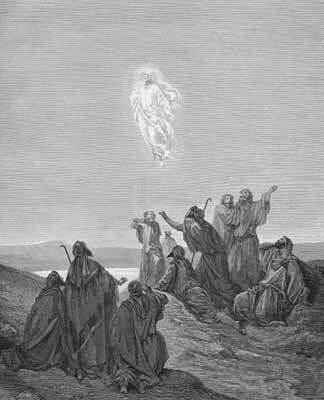
Jesus, Lifted Up

Pastor Sherry’s message for May 21, 2023

Scriptures : Acts 1:1-11; Psalm 47; Eph. 1:15-23; Lk 24:44-53

Today is Ascension Sunday, the anniversary of Christ’s departure from earth and arrival back in heaven. Of the 5 major Christian holidays, it is probably the least known or celebrated. We delight in (1) Christmas in which we commemorate His incarnation and birth. Many also celebrate (2) Epiphany, in memory of the visit of the Gentile Magi to the Christ child in Bethlehem. Folks count 12 days from Christmas Day to Epiphany, the 12 days of Christmas, and even give one gift a day for each day as opposed to all gifts on Christmas Day. At (3) Easter, we go all out to celebrate Christ’s bodily resurrection from the dead. On (4) Pentecost, which we will celebrate next Sunday, we honor both His gifting all of us believers with the power of His Holy Spirit, as well as the Birth of the Christian Church.

Finally, (5) Ascension Day –40 days after Easter–marks the end of Jesus’ post-resurrection appearances. The Gospels record 10 specific citings. The point of these was to demonstrate that Jesus really had overcome death and the grave. Jesus ate and drank with folks, thus he was not a ghost, a fake, or an illusion. Then He miraculously left earth. He had completed 1st His mission here. It was time for Him to be reunited with the Father in Heaven. It was time for Him to regain all of the divine privileges and prerogatives He gave up to come to earth.

As we read in our Acts lesson (Acts 1:1-11), He led the disciples to the Mount of Olives, gave them their “marching orders,” blessed them, then “lifted off.” They were to await the impartation and power of the Holy Spirit. They were then to share their testimonies regarding Jesus with those in Jerusalem where they were at that time; then Judea, kind of like the rest of the county; then Samaria, like the rest of the state; then to the all the world. Next, as they watched, (v.9)…He was taken up before their very eyes, and a cloud hid Him from their sight.

To give us some idea of the impact of this often least celebrated event in the Church year, I want to share a true story:

“The story begins with a real life prince, Sao Kya Seng, from an independent collection of states in northeastern Burma. In the 1950’s Seng came to Denver, Colorado, to study agriculture. Since he wanted to experience what it was like to be a student in the US, he kept his identity secret. Not even his professors knew who he really was.

“One of his fellow students was Inge Sargent. Inge was from Austria. Since both of them were exchange students, Inge and the prince quickly found that they had a lot in common. They started to spend more and more time together. Their friendship eventually grew into love.

“Now here is where it begins to sound like a fairy tale, but I assure you it is not. The prince decided that he would not tell Inge who he really was even though their relationship was beginning to get serious. He didn’t want her to love him because of his title, but for himself alone. Even when they became engaged, he did not disclose his secret. Even on their wedding day in the U.S., he did not reveal his true identity.

“However, on their honeymoon they took a ship to Burma to see his family. As their ship docked in his native land, hundreds of people were waiting at the harbor. Many of them were holding up welcome signs. A band was playing; people were tossing flowers at the ship. Surprised at all this excitement, Inge turned to her new husband and asked whose arrival these people were celebrating. The prince turned to his bride and said, “Inge . . . These people are celebrating our arrival. You are now the princess.” (1) Suddenly Inge saw her husband in a new way” (www.sermoncentral.com, 5/10/2023).

I know a little about this kind of excitement. When I was in the 7th grade, and again in the 11th grade, the Navy sent my officer father and us to Pearl Harbor in Hawaii (for two 2-year tours of duty). On both crossings of the Pacific Ocean, they sent us by ocean liner. We slept on what I suspected was the bottom deck, but on an ocean liner, it’s all luxury. When we docked in Honolulu, there was a band playing, streamers blowing, and crowds waving and cheering. In fact, there was a group of naval officers and their wives with a sign saying, “Welcome Adams Family.” These were the men my father would serve with on board a navy ship based at Pearl Harbor. It was a thrilling surprise for me and comforting to know that a community of sorts awaited us upon our arrival.

No doubt realizing that her husband was a prince was both a shock and a delight to Inge. Similarly, seeing Jesus lift off into heaven was undoubtedly a shock and a delight to the disciples as well. Once again, their perceptions of Him were challenged. Just as the curtain separating the Holies of Holies—and our direct access to the Father–was opened up at Jesus’ crucifixion, Jesus’ Ascension removes a veil and confirms for us His divinity.

For one thing, He did not require a rocket to leave the earth’s atmosphere. He was taken away in a cloud, and not just any cloud. This cloud was pretty special: Remember it was a cloud that guided the Israelites in the wilderness by day. Remember a special cloud hid Moses for 40 days as He communed with God on Mt. Sinai. Remember how the glory of God, in the form of a cloud, entered Solomon’s completed Temple, indicating that the Father had taken up residence there. Remember that a cloud, on the Mount of Transfiguration, hid then removed Elijah and Moses following their conversation with Christ. The cloud in all four examples is the Shekinah Glory of God.

Jesus jetted back to heaven, in a miraculous conveyance, upheld by the power and majesty of God the Father. Consider this for just a moment: In John 12:32, Jesus says But I, when I am lifted up, will draw all men to Myself. The apostle John interprets this to mean Jesus’ crucifixion—lifted up high on a cross—will be what draws folks to Him. Rev. Dr. J. Vernon Mcgee believes Jesus’ resurrection—lifted up back into life–is the truly convicting event. Could it be that the three “liftings up”—crucifixion, resurrection, and ascension—all demonstrate Jesus’ divinity and encourage us to believe in Him?

Psalm 47 is a psalm which provides a picture of the praise and worship in the future Millennial Reign of Christ. After Jesus defeats the massive army of evil people at Armageddon (His 2nd coming), the book of Revelation tells us He will establish His kingdom rule on earth. At that time, all nations of the earth will praise God. Verse 5, especially, predicts Jesus’ ascension God has ascended amid shouts of joy, the Lord amid the sounding of trumpets. This psalm predicts that at His glorious return to earth, He will reign, exalted, over all people.

In our Gospel lesson, Luke 24:44-53, Jesus holds a Bible study for the disciples, revealing to them how all the Law and the prophets predicted His death, resurrection, ascension, and 2nd Coming. Then He tells them they are to be His witnesses to those who don’t know Him. They are to testify to the truth of Who Jesus is. Even though our courts have stopped acknowledging their Christian foundations (in Biblical Law and British Common Law), we still place our hands on the Bible and swear to tell the truth, the whole truth, and nothing but the truth, so help me God, when sworn in as a witness in a court proceeding. Jesus commissions His followers to go out into the rest of the world, declaring what they have seen and learned. He instructs them to wait on empowerment from the Holy Spirit. He then blesses them (prays a blessing over them), and then lifts off to heaven in the Shekinah glory cloud. Their response, like ours, was to worship Him.

Paul does not lift off to heaven, but he does pray for the members of the Church at Ephesus (Ephesians 1:15-23). Do you notice that he did not pray for material blessings for them? In our prayers on Sunday (Joys and Concerns), we often lift up needs for physical healing, comfort from grief—even for jobs, cars, help with tests, travel safety, and etc.

But we also ask for the kinds of spiritual concerns that Paul mentions:

(1) He wanted the Ephesian Church and us to develop spiritual wisdom and revelation about Who Jesus is and why they/we need Him.

(2) He prayed that those who do not yet know Christ will come to know and love Him more deeply.

(3) He prayed that all might know that in Jesus there is hope that—despite the political or economic situation in our country, in any age–He is the God of all hope!

(4) That those of us who love Him may suffer in this life, but we will inherit blessing upon blessing in the next.

(5) Paul also prays that they/we might be assured of God’s amazing power. God had, and still has, the power to raise Jesus from the dead (and us too). Jesus had the power to ascend to heaven (and He has promised to bring us there also).

Today we celebrate the fact that Jesus ascended to heaven when He completed His first earthly mission. That is where He is now, enthroned, lifted up, with the Father. As the Creeds affirm, He will come again to judge the living and the dead, and to rule and reign here on earth.

I don’t know about you, but I can hardly wait until He establishes His kingdom here on earth. Let’s conclude this sermon by singing together “Joy to the World.” We think of it as a Christmas Carol, but from the perspective of Jesus’ ascension and 2nd Coming, it is more than that:

Joy to the world! The Lord is come;

Let earth receive her King;

Let every heart prepare Him room,

And heav’n and nature sing.

Joy to the world! The Savior reigns;

Let men their songs employ;

While fields and floods, rocks, hills and plains

Repeat the sounding joy.

No more let sins and sorrows grow,

Nor thorns infest the ground;

He comes to make His blessings flow

Far as the curse is found.

He rules the world with truth and grace,

And makes the nations prove

The glories of His righteousness,

And wonders of His love.

 (Sir Isaac Watts)

Amen and amen!

©️2023 Rev. Dr. Sherry Adams

The Mother Love of the Father

Pastor Sherry’s message for May 14, 2023

Scriptures: Acts 17:22-31; Ps 66:8-20; 1 Pet 3:13-22; Jn 14:15-21

On Mother’s Day, in America, we try to honor or remember our mothers with love. We tend to think of all the ways they shaped our lives. One humorous soul has listed all the things his/her mother taught (Do any of these sound familiar?):

1. My mother taught me religion. She used to say things like, “You better pray that comes out of the carpet.”

2. My mother taught me medicine: “If you don’t stop crossing your eyes, they’re going to freeze that way.”

3. My mother taught me how to be a contortionist: “Will you look at the dirt on the back of your neck!”

4. My mother taught me to appreciate a job well done: “If you’re going to kill each other, do it outside. I just finished cleaning!”

5. My mother taught me about genetics: “You are just like your father!”

6. My mother taught me logic: “Because I said so, that’s why.”

(As shared by website www.sermons.com, 5/13/2023)

I found these to be funny and hope you do, too. I remember vowing as a young woman, “I will never say to my children the things my mother said to me!” That lasted until I became a mother myself. Then I was appalled to hear my mother’s words come out of my mouth! (We want to avoid vowing we will never or we will always. These vows can become “word curses,” which have the result of boomeranging upon us until we repent and ask God’s forgiveness.)

Even though today is Mother’s Day, our readings today all focus on our heavenly Father’s love—could we be so bold as to say the “motherly love expressed by the Father?” (When it’s Father’s Day, I promise to speak of fatherly love.)

A. In our Acts 17:22-31 passage, Paul is trying to convince the philosophers of ancient Athens—those meeting, debating, and worshipping on Mars Hill–that they have been revering the Christian God without realizing it. In verse 23, he points out that they have an altar, among the many altars erected to various Greek gods, to…an Unknown God. Apparently they had erected this altar so as not to offend any god of which they were unaware. They thought they were being respectful. They thought they were being inclusive. They thought they were being hospitable. Apparently, they wanted any visitor to Athens to find a shrine set aside to worship any god unknown to the Athenians. What Paul does is to use this altar as a jumping off place from which to tell them about the One True God. He affirms them for being concerned about spiritual matters. They are clearly seeking the truth; but Dr. Luke tells us, back in verse 16, that [Paul] was greatly distressed to see that the city was full of idols. Much like many Americans today, they were intrigued by the supernatural, but invested in empty ideologies (New Age, Satanism, witchcraft, even UFO’s). These beliefs promise power, but they ultimately deliver brokenness, addiction, powerlessness, and heartbreak.

Then Paul begins to tell them about our Lord: (1) He is our Creator, a past accomplishment. He created the physical universe and He created humankind. Paul assures them The One True God doesn’t need anything from us; however, He also doesn’t want us wandering off into idolatry. (2) He is our Redeemer. At the time of Paul’s missionary visit to Athens, that was His present accomplishment through Jesus Christ. And, (3) He is our righteous Judge, which Jesus will accomplish in the future.

Then Paul asserts this majestic summary (v.28) For in Him we live and move and have our being. Our God is the be-all and the end-all. There is no need for all the hundreds of other shrines and gods the Athenians revere. As Peterson paraphrases verses 28-31 in modern American (The Message, NavPress, 2002, p.2005-2006) One of your poets said it well: “We’re the God-created.” Well, if we are the God-created, it doesn’t make a lot of sense to think we could hire a sculptor to chisel a god out of stone for us, does it? God overlooks it as long as you don’t know any better—but that time is past. The unknown is now known, and He’s calling for a radical life-change. He has set a day when the entire human race will be judged and everything set right [Jesus’ Second Coming]. And He has already appointed the judge, confirming Him before everyone by raising Him from the dead.

Here is what Paul is saying: “The Christian God is the only God. In His love, He has made it so easy for you, so efficient. You don’t have to worry about placating bunches of gods. Clear them away. You just want to worship, to come to love the One True God.” When I was in seminary, we heard a lecture from an indigenous missionary to India, Rev. Andrew Swamidas. He told us about an event that took place in a city in India. A bus jumped a curb and killed a pedestrian on the sidewalk. By the next day, someone had erected a shrine “to the god of the bus-wreck.” Those poor folks believed they had to appease some kind of bus god to prevent future accidental deaths. There are thousands of gods in the Hindu system, and humans run around trying to keep these gods happy so they won’t retaliate with misery or death. Thankfully, we don’t have to worry about doing this with our God. Paul is telling them our God, in His gracious love and mercy, makes it so much easier for us.

B. Jesus, in our Gospel message today (John 14:15-21) tells us essentially that we demonstrate to God our love for Him by obeying Him. Our Lord says in verse 15 If you love Me, you will obey what I command. We can say we love Jesus, but it is our surrender to Him, our obedience to Him, that proves our love. This is truly a case where our actions speak louder than our words.

Jesus continues by describing His gift to us of the Holy Spirit. The Spirit is (v.17) the Spirit of Truth. He will live within us and help us to discern what is true and what is not. This is Jesus’ gift to us once He ascends to Heaven. His crucifixion earns us salvation we believers are now in Christ. The Holy Spirit will help transform us or change our behavior to be more like that of Jesus. This sanctification arises out of Christ in us. You could, then, say we express our love for God by cooperating with the transforming power of the Holy Spirit.

C. Okay Our Psalm (66:8-20) and our Epistle (1 Peter 3:13-22) readings both warn us that our trust in God will be tested.

Psalm 66, written by King David, is a song of praise and worship. In verses 8-9, David praises God for having rescued him (and us). Then he goes on to list all the ways (vv.10-13) God has allowed His people to be tested: They’ve been imprisoned. They’ve been captured, enslaved as prisoners of war. Their warriors have been run over by enemy chariots.

Figuratively—perhaps even literally—they have gone…through fire and water. These two images are metaphors for severe trials. Think of the tough times in your life: Divorces; deaths of a spouse &/or of a child; handicapping or life threatening illnesses, both physical and mental; losses of homes, health, friends, jobs, cars, money to live on, etc.

God allows these things to happen to us in order to…

(1) Test and refine us/change our behavior Paul writes in Romans 5:3-5 …we rejoice in our sufferings, because we know that suffering produces perseverance; perseverance, character; and character, hope. And hope does not disappoint us because God has poured out His love into our hearts by the Holy Spirit, whom He has given us.

(2) Increase our loyalty to Him—will we still love Him when things are not going well for us?

(3) To deepen our trust in Him—will we trust Him to then (v.12)…[bring us] to a place of abundance? Remember, God does not save us from all trials, but He does promise to be with us throughout them; and to ultimately bless our faithfulness.

Peter writes in his 1st Epistle that suffering produces Christian conduct. Again, our Lord doesn’t create the suffering—the evil one does. But our God allows it to happen in order to refine our character and deepen our faith. And Peter would know this, wouldn’t he?

Actually, when I truly think it through, the Father’s love is often tough love, isn’t it. It’s sometimes painful. But like the crazy examples I used of what our mothers may have taught us, it is always meant to convey His love and His protection for us. How extravagant and deep is the motherly, fatherly love of the Father for us.

Stuart Townsend is a Scottish, Christian composer who in 1997 wrote the song, “How Deep the Father’s Love for us.” Perhaps you know it.

(1st verse)

How deep the Father’s love for us

How vast beyond all measure

That He should give His only son

To make a wretch His treasure.

I don’t know about you, but I do realize that I am a wretch. I am a wretch who is loved by God and who has been claimed by God. Let us pray: Lord, thank You for Your great motherly, fatherly love for us! We are so grateful! Amen!

©️2023 Rev. Dr. Sherry Adams

The WHY Questions

Pastor Sherry’s message for May 7, 2023

Scriptures: Acts 7:54-8:1; Ps 31:1-5, 15-16; 1 Pet 2:2-10; Jn 14:1-14

Remember when your kids or grandkids played “the Why Question Game” with you? We’ve all experienced it. Perhaps we were driving somewhere in the car, or trying to put them to bed, and they would pipe up with a Why question. Example One: We announce, “Kids, We’re going to stop at McDonalds for lunch.” The chorus from the backseat sings out, “Why?” “Because we all like McDonalds!” “Why?” “Well,” we say, “it’s quick and everyone can get what they want.” “Why?” By this time we are beginning to get irritated. But we’re on to them. We know how this goes, so we put a stop to the game. We say, “No more why’s!” From the back seat, accompanied by giggles, we hear, “Why?”

Example Two: The child has been bathed, teeth are brushed, a bedtime story has been read, and prayers are said. We say, “Good night. It’s time to go to sleep.” Just as we go to turn out the light, and close the door, we hear, “Why?” “Because you’ve had a busy day. You need your rest. ” “Why?” “Because your bones grow mainly when you are asleep.” “Why?” And on it can go, ad nauseum, and ad aggravation.

Actually, it’s a very good thing to ask why! Kids can ask why to manipulate or to irritate, but they can also be genuinely interested in cause and effect, and in finding out how their world works. Someone, somewhere once said, “The unexamined life is not worth living.” In other words, that person meant that we are not to live without questioning our routine and habitual ways of living out our lives. From this perspective, asking Why is among the most important things we ever do.

We must all answer for ourselves the Great Existential (things related to life and living) Questions:

1.) Who am I? (This deals with our identity.)

2.) Who (or what) made me?

3.)Why am I here? (What’s my purpose?)

4.) How do I know I have lived a good life?

5.) Where do I go when I die?

They are not all why questions but they do try to get at the Why? of our existence and of our purpose.

Peter offers, in today’s Epistle reading (1 Peter 2:2-10) some pretty effective answers to the Why Questions of life. As Christians, we know we are children of God, created by our Lord to know, love, and serve Him. That belief answers the Who made me Question. The answer, of course, is God. It also addresses the Why am I here Question: (1) To come to know God; (2) To develop a relationship with and learn to love God; and (3) to serve God and his people.

Peter also offers us answers to the identity and purposeful life questions: In verse 5, Peter refers to us each as …living stones [who are] being built into a spiritual house to be a holy priesthood, offering spiritual sacrifices acceptable to God through Jesus Christ. Remember, Jesus is the Rock. He changed Peter’s name from Simon to Peter, which means little rock, or chip off the Rock. As Christ-followers, we too are to live our lives as though we are chips off of Jesus–not just those who follow Christ’s teachings intellectually, but those who imitate Him, in what we do and in what we say.

The Lord wants to use us, as we serve Him, as a holy priesthood. In following Jesus denying Jesus then being lovingly forgiven and received back by Jesus, Peter knows the most important thing for us in life is to be closely connected to Jesus. What is the job/the role of a priest? It is to explain God to people—Who He is and what He wants from us. It is also to help people relate to Him—here’s what helps you draw nearer to Him and here’s what distances you from Him. Finally, a priest assists us to offer sacrifices to God–no longer animals, thank God, because Jesus is the once and for all perfect Sacrifice. But we offer God sacrifices of praise (consider our “Halleluiah Sing” this past Sunday. We each took an hour out of our day to sing hymns to the Lord). We also offer Him our time and talents (to cook, to decorate or maintain the church, to practice and perform music, to operate the Thrift Store, etc.). And we offer to Him money or tithes to help build up His Kingdom here on earth.

Peter goes on to exclaim (v.9) But you are a chosen people, a royal priesthood, a holy nation, a people belonging to God, that you may declare the praises of Him who called you out of darkness into His wonderful light. Peter asserts that we each were chosen. Here’s a great Why? Question. Why was Israel chosen to be God’s special people? Why were each of us chosen to be Christ-followers? Why did God pick us? While each of us is unique and special, none of us has earned special recognition from God—none of us deserves to be among God’s chosen. So why did God choose us? He chose each one of us because of His love and His grace. It all starts with Him. He initiates relationship and we respond to Him. The “Two Bubba’s and a Bible” say it so well: Why were we chosen, royal, holy [set apart]? Because of the pure, unbridled, unadulterated, unmitigated, unreasoned love of God. Why? …Not why as in, ”Why has God loved us, chosen us, made us royal and holy?” But Why as I, “Why has God called us together, what are we chosen for, what is our purpose, our reason for being?” Peter tells us that God has chosen us so that [we] may proclaim the mighty acts of (the One) who has called (us) out of darkness into God’s marvelous light. (Fairless and Chilton, The Lectionary Lab, Year A, 2013, pp.126-127).

There it is! Our purpose is to know, love and serve God by telling others about Him. Our purpose—as they say in Cursillo–is to “be a friend, make a friend, bring a friend to Christ.” Our greatest purpose in life is to help make Jesus known to others. We can do this by talking, blogging, or writing, recounting from our hearts how knowing Jesus has changed our lives. We can do this by assisting people in need, then giving Jesus the credit if they try to thank us. We can do this by the way we live our lives.

Stephen (Acts 7:54-8:1) witnessed to Jesus as he was being stoned to death. Saul observed Stephen’s death and scholars believe the way Stephen died subsequently prepared Saul to accept Jesus (in Acts 9) on the road to Damascus. We can fulfill our divine purpose in life by praying that people who don’t yet know Jesus to come to know Him.

Our Psalm (31:1-5, 15-16) and our Gospel (14:1-14) further illuminate our reasons to love and serve God:

Psalm 31 is a prayer for deliverance from trouble. Certainly being dragged out by an angry mob to be stoned to death, like Stephen–or crucified, like Jesus–qualifies as “big trouble.” Both Stephen and Jesus quote this psalm as they are being murdered: Verse 5 Into Your hands I commit my spirit. Both Jesus and Stephen exhibit the kind of faith in God demonstrated in verses 15-16 My times are in Your hands; deliver me from those who pursue me. Let your face shine on your servant; save me in your unfailing love. They knew that whether they lived or died was up to the Father. Both also forgave their murderers as they were being executed.

In John 14:6, Jesus declares that He is…the way and the truth and the life. No one comes to the Father except through Me. We love and follow Jesus because He is our only route to the Father. People who espouse other beliefs are offended by what they consider to be the “exclusive claims of Christianity.” Jesus is clearly saying no other set of religious beliefs will get us to heaven–neither worshipping the Buddha, Confucius, any Hindu gods, Allah, Baal, Satan, nor even a political party or “the state,” as communists do, will earn someone salvation. The Gospels and the Epistles proclaim that only Jesus can ultimately rescue us.

Jesus goes on to say in verses 9-10 Anyone who has seen Me has seen the Father. How can you say, “Show us the Father?” Don’t you believe that I am in the Father, and that the Father is in Me? In other words, Jesus is the Face of the Father. The Father is spirit and does not take on human form. Jesus fully represented God the Father on earth.

He gave us a human face to look upon; then, He only said what the Father told Him to say; and He did only what the Father told Him to do. He is what people might call “God with skin on.” So, we know we have lived a good life if we have accepted Jesus as our Lord and Savior, and if we have tried to live a life pleasing to Him, obeying Him and His Father.

One final thought: Our Gospel passage today also answers for us the final existential question—Where do we go when we die? John 14:1-3 is often read at funerals because of the hope and comfort it offers. Jesus promises (per Peterson’s The Message, NavPress, 2002, p.1948) Don’t let this throw you. You trust God, don’t you? Trust Me. There is plenty of room for you in my Father’s home. If that weren’t so, would I have told you that I’m on My way to get a room ready for you? And if I’m on my way to get your room ready, I’ll come back and get you so you can live where I live. Where do we go when we die? If we love Jesus, we go to live with Him forever in Paradise, in a room or a home He has prepared for us.

It’s good to ask “the Why Questions.” But it’s even better to know the answers. All of the great existential questions are answered, for those of us who love Jesus, though our faith in our Him.

Thanks be to God who gives us the victory through our Lord, Jesus Christ. Alleluia! Alleluia!

©️2023 Rev. Dr. Sherry Adams

Proof of the Resurrection

Pastor Sherry’s message for April 16,2023

Scriptures: Acts 2:14a, 22-32; Ps 16; 1 Pet 1:3-9; Jn 20:19-31

The story is told that… “in 1799 the armies of Napoleon appeared on the heights above the town of Feldkirch, Austria. It was Easter Day, and the rays of the rising sun glittered on the weapons of the French, as they appeared drawn up on the hills to the west of the town. The Town Council was hastily called together to consult what was to be done.

“After much discussion, the dean of the Church rose and said, ‘My brothers, it is Easter Day! We have been reckoning our own strength, and that fails. Let us turn to God. Ring the bells and have service as usual, and leave the matter in God’s hands.

“They agreed to do as he said. Then from the church towers in Feldkirch there rang out joyous peals in honor of the Resurrection and the streets filled with worshipers hastening to the church.

“The French heard the sudden ringing of the joy bells with surprise and alarm. They concluded that the Austrian army had arrived to relieve the place. So they hastily fled, and before the bells had ceased ringing not a Frenchman was to be seen.”

(Website “Ministry 127,” 2023, quoting Walter Baxendale, Dictionary of Anecdote, Incident, Illustrative Fact: Selected and Arranged for the Pulpit and the Platform, 1888.)

There are a number of great lessons in this story, aren’t there? Look at what God can do when we trust in Him for protection. The French had had their revolution (1787), during which they had killed off many Roman Catholic clergy and protestant Huguenots 12 years before. Without anyone to lead worship, provide Biblical teaching, and help nurture and reinforce their Christian beliefs, the faith of the French army had withered to such an extent that they no longer even recognized Easter Sunday! (This is similar to today in America, in that a recent “man in the street” interview in New York City revealed that only one woman out of dozens of interviewees knew the meaning of Easter.) This is why the Napoleonic Army misconstrued the meaning behind the ringing of the bells.

I rang our bell this morning. Bob, the bell ringer when I arrived 8 years ago, has since moved into a nursing home. No one has rung our bell since he left. It occurred to me today that it was beyond time to ring it again. Our bell could also be called a “joy bell.” It calls us to worship and should remind us of the joy we have in Jesus’ resurrection.

Another story is told of a man driving down a country road with his 5 year old son. They passed a cemetery and noticed a large pile of dirt next to a grave that had been freshly dug. The little boy looked and exclaimed to his father, “Look, Dad, one got out!” The person who composed this story remains unknown. Nevertheless, the next time you pass a cemetery…“think of the One Whom the grave could not hold” (also anonymous).

Another unknown person once said, “Christmas is the promise and Easter is the proof.” Our Scriptures today all instruct us in the proof of Jesus’ resurrection:

A. Part of the proof resides in Psalm 16. It is a prophesy written by King David, but which pertains to and was fulfilled by Jesus some 1000 years later. Jesus says (v.8) I have set the Lord always before me. Because He is at My right hand, I will not be shaken. From this side of the Cross and Resurrection, we can attest that this was (and is) true of Christ’s life. No one and nothing had been able to deter Him from fulfilling His mission here on earth. The Father communicated often with the Son and because of their love for each other, Jesus persevered through (1) His poverty and homelessness; (2) His rejection by the religious authorities of His people; and (3) through His passion and death, to His glorious resurrection.

In verses 9-10, He states, Therefore My heart is glad and My tongue rejoices; My body also will rest secure, because You will not abandon Me to the grave, nor will You let Your Holy One [Jesus] see decay. Jesus totally trusted in His Father. He knew He would die, but He also knew His body would not languish in the grave. Because of His sacrifice for our sins, those of us who believe in Him can also trust our graves are not our final destinations.

Verse 11 describes His ascension into heaven You have made known to Me the path of life; You will fill Me with joy in Your presence, with eternal pleasures at Your right hand.

B. John’s account in our Gospel lesson today (John 20:19-31) describes how patiently Jesus proved His resurrection to the 11 Apostles (Judas had committed suicide) following Easter. First He appeared to all but Thomas, who was absent. His resurrection body suddenly manifested, despite the locked door. We are told He identified Himself to them by showing them His damaged hands, feet, side. This was no imposter, nor was He a ghost. He greeted them in peace (they were scared). He imparted to them Holy Spirit empowerment to overcome their fears, and to assist Him to begin to preach the truth of His resurrection to whomever would listen. The sins of those who became born again through their preaching were forgiven (cleansed by the blood of the Lamb); those who rejected Christ would continue to carry the guilt of their sin themselves.

Then He returned a week later to confront Thomas’ unbelief. Thomas was apparently a “Detective Joe Friday” (Remember the TV show, “Dragnet”?) who wanted to see and hear for Himself, “Just the facts, M’am.”

Like a modern day CSI investigator, he wanted physical proof before he would believe. Jesus knew this about him and patiently provided it for him. Thomas saw, believed, then proclaimed, My Lord and my God. Jesus affirmed Thomas (v.29) Because you have seen Me, you have believed. But He also rebuked him and the others Blessed are those who have not seen and yet have believed. These 11 were eye-witnesses to the Resurrection and they believed. But those of us who weren’t eye-witnesses, and still believe, are especially praised.

C. Peter’s famous Pentecost sermon (Acts 2:14a, 22-32) displays his deepened faith. He has accepted the proof of Jesus’ resurrection. In verse 25, he quotes from Psalm 16:8-11. By now, it is clear to him that Jesus fulfilled King David’s prophesy of Jesus’ life, death, resurrection, and ascension. And this is essentially what he preached to the Pentecost crowd in Jerusalem that day. Peter wanted them to understand that Jesus fulfilled King David’s prophetic promise (vv.31-32) Seeing what was ahead, He [King David] spoke of the resurrection of the Christ, that He was not abandoned to the grave, nor did His body see decay. God has raised this Jesus to life, and we are all witnesses of the fact. Can’t you just hear the excitement, the joy in his voice as he proclaimed this? Clearly Peter had become totally convinced and convicted!

D. In his letter, 1st Peter 1:3-9, the Apostle to the Jews of the Diaspora–those who lived outside Israel–is writing to encourage Christ-followers who are experiencing persecution. The time is somewhere during the mid-60’s of the First Century. Emperor Nero (54-68) had begun persecuting Christians in Rome. It is said that he had set fire to the poorest section of the city, but blamed Christians—even using their burning bodies as torches for his garden parties. (Later on, Emperor Domitian [81-96] would extend persecution of Christians throughout the Empire—claiming Christians were intolerant and seditious because they would not worship the Roman panoply of gods nor agree that “Caesar is Lord”).

Peter encouraged believers in the passage we read today to hold on to their hope, despite any persecution or suffering they might undergo. He says in verse 3 that our hope lies in Jesus’ Resurrection from the dead, and is also due to (v.4) …an inheritance that can never perish, spoil, or fade—kept in heaven for you, who through faith are shielded by God’s power….Despite any persecution we may suffer, we await in faith our own resurrection. Additionally, we happily anticipate joy without limit in Heaven.

Finally, echoing Jesus’ words to Thomas, he commends them (v.8) Though you have not seen Him [Jesus], you love Him; and even though you do not see Him now, you believe in Him. We, too, are to believe in Jesus because of His resurrection, the ultimate proof that He was and is God.

The first 2 Scottish missionaries sent to the Island of Aniwa in New Hebrides were killed and consumed by cannibals. Needless to say, it was difficult to recruit others to try to take their place. One fellow, though, John G. Paton (1884-1907)–perhaps distantly related to our army general, George Patton –bravely volunteered to go. When church members, friends, and family tried to talk him out of it, citing the danger of the cannibalistic natives, he said, “I confess to you, that if I can but live and die serving and honouring the Lord Jesus, it will make no difference to me whether I am eaten by cannibals or by worms; and in the Great Day my resurrection body will arise as fair as yours in the likeness of our risen Redeemer.” Because of the proof of the resurrection, Paton could fearlessly go minister among cannibals. In fact, he served as a missionary in New Hebrides for 15 years and successfully converted the entire island of Aniwa by the time he returned to Scotland.

(Story recounted on Website “Ministry 127,” April, 2023.)

We too can have the same confidence: We can trust that whatever happens to our mortal bodies, we will be raised to have resurrection bodies. We can also trust that we will dwell with Christ and all the resurrection saints in Heaven. The next time you pass a cemetery, think of the One Whom the grave could not hold, and be thankful.

©️2023 Rev. Dr. Sherry Adams

A Four-Day Journey

Pastor Sherry’s message for April 2, 2023

Scriptures: Isa 50:4-9a; Ps 31:9-16; Phil 2:5-11; Matt 27:11-66

Ironically, over 2000 years ago, the Sadducees had a tradition in which they believed the Messiah would show up four days before Passover. As a result, they kept the gates of the Temple open each year on this date so that He could walk right in and assume His rightful place. In fact, Jesus—the True Messiah–did choose to re-enter Jerusalem exactly 4 days before Passover, and proceeded to pray and teach in the Temple. By this time, many Jews had encountered Him. Many others had heard of His miracles, His healings, and of how He cast out demons. They were so taken by Him that crowds waited with joyous anticipation and with baited breath to see what He would do next.

The fact that Jesus chose that exact day to come back into Jerusalem would have driven the Jews’ expectations for their nation to a feverish height. They were sure He would overthrow the Romans, free them from oppression, and reign victoriously as King David had in ages past. But the Romans, too, would have heard the rumors and thus were anticipating an insurrection. They had called in reinforcements in case of an armed revolt. So tensions were very high in the city that day.

Today, we celebrate that historic day, calling it Palm Sunday–because the crowds waved palm branches in celebration of His arrival—or Passion Sunday, in anticipation of Jesus’ suffering and crucifixion, a brief 4 days later. The minor prophet Zechariah had predicted what would happen some 500 years before this event took place (9:9) Rejoice greatly, O Daughter of Zion! Shout, Daughter of Jerusalem! See, your king comes to you, righteous and having salvation, gentle and riding on a donkey, on a colt, the foal of a donkey. This is exactly Who Jesus was—their righteous Savior. This is exactly what happened. This is exactly how the Jews rejoiced: As Jesus rode in, the people shouted Hosanna (actually, Yasha anna in the Hebrew), which means, Save us, Lord! They were quoting Psalm 118:25-29 O Lord, save us! O Lord, grant us success. Blessed is He who comes in the name of the LORD…. The LORD is God and He has made His light shine upon us. With boughs in hand, join in the festal procession up to the horns of the altar. You are my God and I will give you thanks; you are my God, and I will exalt you. Give thanks to the LORD for He is good; His love endures forever.

On this day, they were excited and delighted! But 4 days later, they were demanding His death! By then, they had realized that Jesus had failed to meet their messianic expectations. As the “2 Bubbas and a Bible” explain it, “He was not 6 feet plus, with abs of steel. He rode into town on a baby donkey, not a warhorse. He went to pray at the Temple, not to protest at the palace. Jesus did not turn out to be their idea of a savior.” (Chilton & Fairless, Lectionary Lab Commentary, Year C, 2015, p.142).

But, as our Scriptures today highlight, He was our Heavenly Father’s Idea of a Messiah:

A. In Isaiah 50:4-9a, we read what is known as the 3rd Suffering Servant Song. Written some 750-700 years before Jesus’ birth, the prophet Isaiah predicts, exactly, what Jesus would experience and how He would behave as He faced and endured the Cross. Its theme is that Jesus came to earth determined to save us. He came into the world to pay the penalty for and to redeem us from our sins. He was instructed or trained for this by the Holy Spirit, and by what He read and meditated upon in Scripture (vv.4-5), the Old Testament writings available at that time.

Verse 6 tells us that His trial by the Sanhedrin led to significant suffering at their hands: They beat Him. They mocked Him. They spit in His face. They even pulled out the hairs of His beard. This was all before He was presented to Pilate for round two by the Romans.

What sustained Him? What helped Him to bear up under such torture? First, He knew His purpose. There was for Him deep meaning to His suffering. And, second, He trusted in His heavenly Father to assist and to comfort Him (vv.7-9) Because the Sovereign LORD [the Father] helps Me, I will not be disgraced. Therefore have I set My face like flint, and I know I will not be put to shame…He who vindicates Me is near…it is the Sovereign LORD who helps Me. His relationship and His intimacy with the Father are what propelled and compelled Him. This essentially kept Him emotionally and spiritually “bullet-proof” against the condemnation and the despicable treatment He received from the religious authorities and the forces of evil at work during His passion.

B. Philippians 2:5-11 is known as “the Philippian Hymn.” Bible scholars believe newly baptized Christians, in the early Church, memorized and recited this brief summary of exactly what Jesus did for us as a verbal profession of their faith. St. Paul included it in his letter because he wanted the church in Philippi (and us) to both understand and follow Jesus’ model of humility and obedience to the Father; as well as to realize the huge significance of what Jesus gave up—His heavenly/godly prerogatives— to become human like us. The One Who spoke creation into existence, the King of the Universe, was entrusted as a helpless infant to a poor, homeless, young couple. He lived His early life as a carpenter, eking out a living in an obscure, back-woods village. He Himself was sinless, but at the Cross He bore all our sins, past, present and future. The Great Shepherd humbled Himself and gave His life for us, His sheep.

As a result of His obedient self-sacrifice, God the Father has raised Him to the highest position of honor. At His name, every creature must bow. No person, animal, angel, or demonic entity has more power or greater authority.

C. Our psalm today (31:9-16) details Jesus’ thoughts on the way to and during His crucifixion. He abides in His Father’s love, praying to and calling out to Him in His mind: (V.9) Be merciful to Me, O LORD, for I am in distress; (V.10) My life is consumed by anguish and My years by groaning; My strength fails….(V.11) Because of My enemies, I am the utter contempt of My neighbors…(V.12) …I have become like broken pottery. He is experiencing despair, extreme pain, and grief, but He does not let it overwhelm Him, or turn Him against God the Father (V.14) But I trust in You, O LORD. I say, “You are My God.” Based on His faith, He goes on to reassure Himself, (v.15) My times are in Your hands.

If only we too could remember, when suffering, to pray to God and to trust in Him to sustain us during difficult, painful times.

D. Matthew’s version of Christ’s Passion is well worth meditating on this Holy Week. Traditionally, it begins in Chapter 26 at verse 14 and continues through the end of our Gospel reading today (Matthew 27:11-66). In today’s portion, we follow Jesus from His trial before Pilate, to His exchange for Barabbas, to His beating at the hands of Roman soldiers to His crucifixion, death, and burial. He had been betrayed and abandoned by all His friends–except John and a few female followers, including His mother. His Father registered His grief and judgment against the Jewish establishment with earthquakes, 3 hours of darkness ending with Jesus’ death; and splitting the Temple curtain from top to bottom. Then, anticipating Jesus’ glorious resurrection, the Father opened some tombs, and resurrected (v.52) …many holy people.

What a journey, in 4 days, from a celebratory welcome parade, to a funeral march, to an ignominious death between 2 criminals. Jesus Christ paid the price for our sins because He believed in Scripture, in His purpose, and because He trusted in His Father’s plan and in His Father’s love. By teaching, preaching, healing, casting out demons, dying a dreadful death in our place, He faithfully completed His 1st mission to earth. He has now returned to Heaven and is seated with the Father, awaiting with us the timing of His 2nd Coming. As we wait to greet Him, let us inspire ourselves with the words of the writer to the Hebrews (12:2-3) Let us fix our eyes on Jesus, the author and perfecter of our faith, Who for the joy set before Him [our salvation] endured the cross, scorning its shame and sat down at the right hand of the throne of God. Consider Him who endured such opposition from sinful men, so that you will not grow weary and lose heart.

©️2023 Rev. Dr. Sherry Adams

Follow Me into the Light

Pastor Sherry’s message for March 19, 2023

Scriptures : 1 Sam 16:1-13; Ps 23; Eph 5:8-14; Jn 9:1-41

My new, favorite, contemporary, Christian song is, “Follow Me,” by Casting Crowns* (Thrive CD, 2013). The lyrics are as follows:

(Look/listen for the repeated themes.)

At the end of myself, I am empty and dry

I have nothing to give, But surrender inside.  

[Jesus responds] Let down your nets, This is not the end

From now on, you’ll be Fishers of Men. [Who is this? Peter, Lk 5:1-11]

Follow Me, Follow Me, Follow Me.  

At the end of myself, Judgment calls out my name

I’ve been looking for love, but I’m swallowed by shame. 

[Jesus responds] Throw away all your stones, Find forgiveness in Me.

Let me be your new passion, My daughter you’re free [Woman caught in adultery, Jn 8:1-11]. 

At the end of myself, I’ve done things my own way;

This world gave up on me, now it’s death I do pay.

[Jesus responds] You know who I am, I’m sin’s sacrifice;

Today you will be… in paradise.  [Thief on the Cross, Lk 23:32-45]

[Any seeker] Who is the man who calmed the seas?

And Who is this man who loves the least of these?

[Jesus responds] I am the Promised One; God gave His only Son.

And those who believe…Will live eternally.

At the end of yourself, just follow Me.

I will give you new life, just follow Me, Follow me.

If at the end of yourself, just follow Me.

You may lose everything, just follow Me.

I will give you new life, just follow Me, follow Me.

The repeated themes are, off course, Follow Me, and, At the end of myself. When we come to the end of our own resources, we know we need Jesus. Another way of saying this is that without Jesus, we are spiritually blind. Two of our Scripture passages today deal with blindness (physical and spiritual) and what it takes to come out into the Light of Christ. Let’s examine them together:

A. John 9:1-41 details Jesus’ healing of the man born blind.

The context is that of a Sabbath Day when Jesus spots this blind man begging before one of the Temple gates in Jerusalem. Blind and other physically impaired persons usually did not make a living—in those days–by practicing a trade. Instead, they customarily stationed themselves somewhere near consistent foot traffic and begged for food money from passersby.

Upon seeing him, the disciples want Jesus to explain the cause of the man’s blindness (a theoretical, theological discussion). But Jesus downplays the issue of who or what to blame, saying (v.3, The Message, Eugene Peterson, NavPress, 2002, p.1937)”You’re asking the wrong question. You’re looking for someone to blame. There is no such cause-effect here. Look instead for what God can do. Then He proceeds to meet the man’s most pressing practical need, saying (vv.4-5, MSG)We need to be energetically at work for the One who sent Me here, working while the sun shines. When night falls, the workday is over. [Remember, this was a predominantly rural culture with no one working past sundown.] For as long as I am in the world, there is plenty of light. I am the world’s Light. (Other translations say, I am the Light of the World.) The poor guy has lived in darkness his whole life! Jesus isn’t going to stand there and argue the why’s of the fellow’s condition. He intends to heal him.

He also intends for them and for us to realize He is God. He makes an “I AM” statement—to Jewish ears, he was declaring His divinity. God the Father had identified Himself to them as “I am Who I am,” meaning that He has always existed; in a sense, our God is always exists in the present tense. In the Gospel of John, Jesus makes many I am statements so that the Jews would realize He was identifying Himself as God: I am the Living Water; I am Manna from Heaven; I am the Way, the Truth; and the Life; I am the Good Shepherd; I am the Resurrection and the Life; etc.

Now, this poor blind man has never enjoyed light in his life, but the One who is the Light of the World is going to bring it to him. He makes a kind of clay from saliva and dirt and places it on the guy’s closed eyes.

Now, consider this: The blind fellow has heard Jesus’ voice; he has felt Jesus’ touch; he has probably even smelled Jesus’ scent. He obeys his unseen Redeemer by going, as instructed, to wash the clay off in the pool of Siloam (which John tells us means “sent.” The man was sent by Jesus to the pool named “Sent”). He seems to trust Jesus, sight-unseen. He chooses to do what Jesus tells him (Contrast this with Naaman the Syrian general who was too proud to dip himself—as the prophet had instructed him—in the Jordan. His servants had to convince him to “follow orders” to obtain his healing.)

Throughout the rest of the incident, the Pharisees are trying to figure out how a rabbi who breaks Sabbath rules against working on that day—which makes Jesus a sinner in their eyes—could possibly work a miracle of God. The guys’ neighbors can’t explain it. Some of them don’t even recognize him since he is now sighted. His parents do recognize him but are afraid the religious rulers will excommunicate them if they celebrate Jesus, so they avoid committing themselves. But the grateful and spunky guy takes them to task! He’s not concerned about their theological issues. He just knows he was born blind but now has his sight.

Then Jesus turns the tables on the Pharisees when He calls them physically sighted but spiritually blind. He has worked a miracle that they cannot accept. In so doing, He has fulfilled the prophesy from Isaiah 61:1 that Messiah would restore sight to the blind. But in their confidence that Jesus cannot really be the Messiah, they refuse to see the evidence before their own eyes.

B. Paul also addresses the topic of spiritual blindness in Ephesians 5:8-14. Of course he (and we) start from knowledge that Jesus is the Light of the world. As Peterson puts it his paraphrase (MSG p.2132), Paul exhorts us You groped your way through that murk [habitual sins] once, but no longer. You are out in the open now. The bright light of Christ makes your way plain. So no more stumbling around. Get on with it! The good, the right, the true—these are the actions appropriate for daylight hours. Figure out what will please Christ, and then do it. In other words, prior to accepting Jesus as our Lord and Savior, we lived in spiritual darkness. Once we accept Jesus, we live the Light of Christ. As St. John would say later in 1 John 1:5-6 God is Light; in Him there is no darkness at all. If we claim to have fellowship with Him yet walk in the darkness, we lie and do not live by the truth. We demonstrate the fact that we dwell in Christ’s light by living a life different from that of our culture: We demonstrate goodness or kindness to others. We live lives that are righteous as we try to do those things of which Jesus would approve, and avoid doing the opposite. Our words and our manner reflect truth—i.e., we are sincere and genuine.

Finally, Paul urges us to (v.11) have nothing to do with the fruitless deeds of darkness….Dark deeds aren’t driven away by preaching or lecturing against them; but rather, our actions speak louder—and are a better witness to Christ—than are our words. Rev. Dr. J. Vernon McGee relates a true story of one of his parishioners. She was a married lady who grieved the fact that her husband was uninterested in Jesus. She wanted him to share her faith and to accompany her to church and in prayer. So she educated, begged, pleaded, nagged, and even resorted to crying through the two meals a day they were together. Dr. McGee told her to stop that immediately. He recommended she pray, fix excellent meals, and deal with her husband with a smile on her face and a loving attitude. It took about six months, but one day he suggested they attend church together. We cannot shame another into accepting Christ (McGee’s commentary on Ephesians, Thomas Nelson, 1991, pp.142-143).

The song I read earlier gives 3 examples of people who chose to follow Jesus: Peter, the woman caught in adultery, and the thief on the Cross. Our Gospel lesson provides an additional one, the man born blind. As with each of them, we often come to Jesus when we come to the end of ourselves; i.e., when we exhaust ourselves trying to save ourselves. We realize we can’t do it on our own. We recognize we need Jesus. Then, like the man born blind, we obey Him out of thanksgiving for His gift of salvation and healing.

Following Jesus means we don’t just claim we love Him, but we live lives that are changed due to our relationship with Him. We come to demonstrate the fruit of the spirit (Galatians 5:22) love, joy, peace, kindness, gentleness, goodness, patience, faithfulness, and self-control. We live out being good, being right with God, and being truthful.

Dear Lord, help us to live lives that are pleasing to You and that reflect Your Light to a lost, angry, and hopeless world. Help us to truly follow You. May the way we live attract others to You, O Lord, we pray in Jesus’ name. Amen.

©️2023 Rev. Dr. Sherry Adams

*Follow Me by Casting Crowns’ video: https://youtu.be/LraPDltKlvI

The God Behind the Curtain

Pastor Sherry’s message for February 19, 2023

Scriptures: Ex 24:12-18; Ps 99; 2 Pet 1:16-21; Matt 17:1-9

Today is Transfiguration Sunday, the day the church remembers its brief experience of Jesus in all of His revealed glory.

Typically, when we think of truth being revealed, we tend to summon up images of dark deeds brought into the light: Another corrupt politician or businessman being exposed, or the famous case of the Wizard of Oz. Remember the scene in that classic movie where Dorothy, Toto (her dog), the Tin Man, the Lion, and the Scarecrow encounter the Great Wizard? His voice thunders and his face is projected larger-than-life on a giant screen. Dorothy and friends are terrified until the little dog pulls back the curtain. They see the true, ordinary man, who has used showbiz technology to promote himself as all powerful. In a famous line—now seen as humorous–he cries out, “Pay no attention to the man behind the curtain.” Too late! His posturing has been exposed.

On the other hand, we also hear of wonderful revelations:

I remember seeing a video of a man who’d not seen color before get a pair of glasses that corrected for his color-blindness. He was able to experience the delight that color added to his previous dull gray or brown life. He appeared to be overwhelmed with joy. Or did you see the video of a baby girl with a severe hearing defect? A hospital in Cincinnati provided her a set of hearing aids that allowed her to hear her mother’s voice for the first time. Like the colorblind man, she reacted with great joy and wonder.

Our Scriptures today celebrate the joy and wonder of some particularly blessed humans when they visually beheld the God Behind the Curtain.

A. Let’s start with Peter (2nd Peter 1:16-21). Along with John and James, Peter was present at Jesus’ Transfiguration. He writes this letter in about 66AD, shortly before his crucifixion. One could say this was his farewell address. Just a few verses prior (vv.13-14), he refers to his earthly body as a tent, which Jesus has told him he… will soon put…aside.

As Peter prepares to die, he reassures his readers (including us) that Jesus’ transfiguration was a real event (v.16) We did not follow cleverly invented stories when we told you about the power and coming of our Lord Jesus Christ, but we were eyewitnesses of His majesty.

Peter saw Jesus in all His heavenly glory. He and the other two saw the True Divine Being behind the curtain of His human flesh. Peter heard the voice of the Father say to them (vv.17-18) This is my Son, whom I love; with Him I am well pleased. Peter may have later let his all too human fear override this experience of Jesus, briefly; but in his heart of hearts, he knew the truth of what he had seen and heard.

B. Matthew was not present on the mountain, but he had lived with Peter, James, John (and Jesus), for 3 years and he believed the account the 3 friends revealed after Jesus’ resurrection. Just as Peter later testified, Jesus’ appearance was transformed in a dramatic and otherworldly way. He shone with a tremendously bright light which did not shine down upon Him, but rather emanated from within Him. They saw Him in all his heavenly glory. Later, in Revelation 22:16, Jesus will say of Himself I am the Root and the Offspring of David, and the bright Morning Star. By this He meant He is descended from the lineage of King David, as prophesied, and He is the Divine Light that announces the new dawn.

The 3 apostles also beheld Him with two Old Testament “greats,” the prophets Moses, the Law-Giver, and Elijah, the one who challenged over 800 pagan priests–and who decisively demonstrated the power of God over their demonic gods. Neither one died and went to heaven in the usual way. Moses died as the people moved to enter the Promised Land. Scripture says that God buried him (Deuteronomy 34:6). Elijah exited this life in a blaze of glory in a fiery chariot (2 Kings 2:11-12). It is Luke who tells us (9:31) the Father had sent these two Old Testament saints to confer with Jesus about His impending death, probably to comfort and to reassure Him; and to strengthen and encourage Him to withstand His coming ordeal.

C. Speaking of Moses, our Old Testament lesson, Exodus 24:12-18, features him and his leadership team dining with God. The Lord has just revealed to him the Law, including the 10 Commandments (Exodus 20-23:19). God tells Moses to write the Law down, then read it to the Israelites. Moses obediently does so. The Israelites vow (v.3) Everything the Lord has said we will do, promising obedience. (Yeah, sure, that’s wishful thinking. Their adherence to their vow lasted about 40 days!)

Then God has Moses erect an altar and 12 stone pillars to represent each of the 12 tribes. Young men are then pressed into service to corral sacrificial animals for sin and fellowship offerings. Moses, as directed, collects the blood of the sacrifices and places some on the corners of the altar. He is then directed by God to sprinkle the people with the rest. You may recall that no one can enter into God’s presence with sin on their soul. Sprinkling them with the blood of sacrificial animals symbolizes that the people’s sins are washed away or cleansed. As Moses says (v.8) This is the blood of the covenant that the Lord has made with you in accordance with all these words. (Notice how closely this resembles what we say in the Communion Service over the wine: This is My [Jesus’] blood of the New Covenant which is shed for many for the forgiveness of sins.)

Following this, Moses, his brother Aaron (the 1st high priest), Aaron’s two eldest sons, and 70 elders are all invited to have a meal with God.

This whole procedure is actually the template for our communion service, established by God the Father over 4,000 years ago. Think about it:

(1) God’s Word is read;

(2) God’s Word is preached or explained;

(3) The people respond, “Thanks be to God.”

(4) Jesus is the once and for all perfect sacrifice for our sins (Hebrews 5:7-9), so we need not kill any bulls or lambs. His blood has atoned for our sins, so we are cleansed and can freely come into God’s presence. Communion, a spiritual and physical meal between God and human believers, is served. By the way, the Israelite leadership team did not see God the Father. He is Spirit and we know that no one can see Him. Instead, they dined with the pre-incarnate Jesus.

D. Do you think the leadership team knew they were standing on holy ground? Psalm 99 exhorts us to worship God with our praise. It reminds us that God is holy and totally “other” than us—supreme and exalted over all things, and worthy of our sincere devotion.

When the fleshly curtain of Jesus’ human body is pulled away, we shall see Him in all His divinity, all of His glory. He is the real deal! Some of you may have heard that a revival has broken out on the campus of Asbury University in Kentucky. In answer to our weekly prayers for revival and that God would reach our young people, students and guests from all over the world, have been praising God and worshipping Him, in the university chapel, since February 8th. God appears to be changing the lives of Gen Y’s and Z’s. Praise God! Let’s pray that the Lord brings many to Christ through this new move of the Holy Spirit. Let us, with them, worship the one true God who has revealed Himself from behind the curtain, through our Lord and Savior, Jesus Christ. Amen and Amen!

©️2023 Rev. Pastor Sherry Adams

What Does God Want From Me?

Pastor Sherry’s message for January 29, 2023

Scriptures: Micah 6:1-8; Ps 15; 1 Cor 1:18-31; Matt 5:1-12

I heard an interesting, true story this week: A high school student I know—Jake–was called down to the office and told another kid—Sam–had accused him of bringing drugs to school to sell. Now Sam had been caught red-handed with illegal substances. When the school authorities asked where Sam got the drugs, he falsely named Jake. They brought Jake in, told him what he had been accused of, and searched him. Jake defended himself by saying he doesn’t do drugs and he certainly would neither bring them to school nor sell them. Because they had Sam’s story 1st, the authorities seemed reluctant to believe Jake. They frisked him and searched his locker and backpack but found nothing. Finally, they let Jake return to class yet would not tell him the name of the student who had falsely accused him.

The grown-ups must have forgotten that this is a small town. Word got out—as it generally always does–and Jake learned the identity of his accuser. Jake’s parents were furious at Sam—and wanted to address the matter with Sam’s parents straight away–but Jake asked them to let him handle the situation. Jake calmly confronted Sam, asking him why he had lied about him. Sam “stone-walled,” would not answer Jake, and would not give him eye-contact.

I was appalled when I heard this and I wondered if this is indicative of the value system of most teens today. Jake, a Christian, has taken a wise stance: he is now praying for his false-accuser…Praying that Sam would come to know Jesus; and Praying that Sam would regret lying and trying to get an innocent person into trouble. I commend him and would only add my hope that Sam comes to know the 10 Commandments—bearing false witness is #9.

Thinking about this incident over the last few days, I realized Jake’s response is right out of our Micah 6:1-8 lesson, as well as our psalm and Gospel:

The prophet Micah was a contemporary of Isaiah in Judea, and of Amos and Hosea in Samaria, during the 8th century BC. It was a time of great prosperity and wealth in Judah. It was also a time of extensive apostasy. Political corruption was rampant; the rich and powerful felt free to exploit those who were weaker; and many had fallen away from God.

When they did worship Him, their worship was pro-forma, mind-less and rote. Mostly, they just went through the motions. And their moral behavior was despicable. Actually, they were behaving a lot like modern Americans today.

So God appointed Micah as a “whistle-blower” to his time period. His job was to challenge the people on their arrogance, dishonesty, and hypocrisy. He was also tasked with warning them of the judgment to come if they did not turn back to the Lord.

Chapter 6:1-8 forms the climax of Micah’s prophesy: He portrays God as confronting Judah, as though they were adversaries in a court of law.

Listen to Peterson’s paraphrase (The Message) of verses 1-2–Take your stand in court. If you have a complaint, tell the mountains [powerful nations]; make your case to the hills [smaller. Less influential nations]. And now, Mountains, hear God’s case; listen, Jury Earth—For I am bringing charges against My people, I am building a case against Israel. God is telling the world to watch and listen.

But instead of going on the offensive, God asks what He is guilty of that His people have all but abandoned Him. He reminds them of their salvation history with Him:

(1) He has rescued them slavery in Egypt.

(2) He provided them with good leaders like Moses, Aaron and Miriam.

(3) When the king of Moab, Balak, hired the false prophet Balaam to curse them, God protected them by blocking any curses.

(4) He also provided for them when Joshua assumed leadership from Moses (at Shittim), and protected them at Gilgal as they recovered from circumcision. (They had not circumcised anyone on the wilderness march, so all the adult males now needed to take the sign of their covenant with God. Doing so required about 3 days recovery time when they would have been too vulnerable to resist an enemy attack). God had been faithful while they have been faithless.

Then the prophet anticipates the people’s response to God’s indictment: (verses 6-7) —Should we bring an armload of offerings topped off with yearling calves? Would God be impressed with thousands of rams, with buckets and barrels of olive oil? Would He be moved if I sacrificed my firstborn child, my precious baby, to cancel my sin? They are essentially asking, “What do we do to make amends to God?” “Is God mad because we didn’t do enough?” “Should we do more to try to please Him?” But God does not want extravagant offerings from us. As if we can do something for God! A much later generation will ask the same thing of Jesus, and He will answer (John 6:28-29) —This is the work of God [that you can do], that you believe in Him Whom He has sent [faith in Jesus]. All we can do, and the best we can do, is to have faith in our Lord Jesus Christ.

And in verse 8, Micah summarizes the issue: He has shown you, O mortal, what is good. And what does the Lord require of you? To act justly, to love mercy, and to walk humbly with your God. Listen to the way Peterson paraphrases it: But He’s already made it plain how to live, what to do, what GOD is looking for in men and women. It’s quite simple: Do what is fair and just to your neighbor, be compassionate and loyal in your love, and don’t take yourself too seriously—take God seriously.

They are dwelling in darkness, as are many in our country today. . Psalm 15: 2-3 says [Those who please God are] the one whose walk is blameless, who does what is righteous, who speaks the truth from their heart; whose tongue utters no slander, who does not wrong to a neighbor, and casts no slur on others. Sam’s behavior demonstrates he is dwelling in darkness. The folks back then—much like many “religious” folks today–are focusing on external religious practices, while neglecting their internal experience of God. They need to know and relate to God’s heart.

So what does Micah mean in verse 8? This side of the Cross, we know that we must believe in Jesus to be saved. What God wants from us is to demonstrate our faith by living a life that pleases Him:

(1) To act justly means to do what is right and truthful in God’s eyes. Sam lied to get the focus off himself—he threw Jake under the bus. If Sam had acted justly, he would have admitted his own fault and left Jake out of it. To act justly means exhibiting honest practices in business; not cheating on your taxes or your spouse; giving your employer a full day’s work for a full day’s pay (and employers should give their workers the pay they have earned; playing by the rules in sports and cards, etc; in other words, doing the right thing in God’s eyes.

(2) To love mercy means to offer others grace—i.e., treat them better than they deserve. Justice is a great starting point, but it’s not enough. Grace is Jake forgiving Sam for having tried to ruin his reputation and get him into trouble. God has saved us, through Jesus, when we did not deserve it. We offer grace to others because Jesus offered/offers it to us.

(3) To walk humbly with our God means to do God’s will instead of our own. Humility says “God made me and He knows what is best for me. I’m not as smart as He is, so I will submit to Him and follow His will.” Pride, on the other hand, says, “I’m in charge of me and I will do what I want to do.” It puts self ahead of God. In fact, it makes self a god instead of the One Who is God. Prideful people lack a “teachable spirit.” They are unwilling to admit they don’t always know what is best and are therefore unwilling to listen to someone who might be wiser or more experienced.

No wonder God says in Isaiah 66:2–But to this one I will look, to him who is humble and contrite of spirit, and who trembles at My Word.

No wonder Jesus lists humility of spirit as the 1st characteristic to be blessed in the Beatitudes of Matthew. As Peterson phrases it, You’re blessed when you’re at the end of your rope. With less of you there is more of God and His rule.

So what’s God want from me, from us? What defines a life that pleases God? First, we must have faith in His Son, Jesus. Next, we try to live a life that is characterized by the following: Acting honestly and rightly; offering grace to others, even when they don’t appear to deserve it; and being humble with regard to God, remembering to be grateful to Him for all of His blessings, and to be obedient to Him, even when it’s hard. I believe Jake pleased God when he confronted Sam face-to-face, rather than castigating him on social media. This righteous behavior took courage and humility. That young man certainly set an example for Sam, and for us.

May we all remember to act justly, offer grace/mercy to others, and walk humbly with our God! Amen!

©️2023 Rev. Dr. Sherry Adams

The Antidote to Isolation and Alienation

Pastor Sherry’s message for January 22, 2023

Scriptures: Isa 9:1-4; Ps 27:1-9; 1 Cor 1:10-18; Matt 4:12-23

John Fairless and Delmer Chilton, of “Two Bubba’s and a Bible” fame share the following story:

“Back in the 1980’s there was a man named Larry Trapp living in Lincoln, Nebraska. His name was doubly ironic: He was a man trapped in his own hatred and trapped in his own body. Larry Trapp was suffering from a fatal disease and was confined to a wheel chair; he was nearly blind; he was also the Grand Dragon of the Ku Klux Klan in Nebraska. He truly was a man trapped in darkness.

“Larry Trapp became obsessed with driving Michael Weisser out of town. Weiser was Jewish and the cantor of the Lincoln Synagogue. Trapp barraged Weisser with hate mail, at home and on the job [Remember, this was in the days before cell phones and internet]. He made incessant threatening phone calls, he organized demonstrations; he did everything he could to make life a living hell for Michael Weisser and his family.

“Cantor Weisser was truly intimidated and scared. He had a wife and children he wanted to protect. But Michael Weisser was also a man who was unwilling to let another person’s hate prevent him from showing love. So he started calling Larry Trapp’s home, always getting the answering machine. So, he always left a message. He said, ‘This is Michael Weisser. I’d like to talk to you. I want to know why you are doing this to me.’ Finally, one day, Larry Trapp answered the phone, screaming and cursing and threatening, ‘WHAT DO YOU WANT? YOU’RE HARASSING ME!’

“And Michael Weisser said, ‘I know you have a hard time getting around and can’t drive, and I was wondering if you might need a ride to the grocery store or something?’ After a very long stunned silence, Larry Trapp quietly replied, ‘Uh, no, I’ve got that covered, but thanks for asking.’

“Larry and Michael kept talking by phone. After a while, Larry Trapp started going over to the Jewish Cantor’s house for dinner, they became friends, and when it became apparent he had nowhere else to go the Weisser family invited Larry to move in with them and he did, dying there in Michael’s arms some months later.

“Somewhere along the way, Larry Trapp left the KKK. He spent his last time on earth spreading a message of love in a world of hate; Larry Trapp became an apostle to Klansmen and other hate groups, trying to let them see the great light of love and forgiveness he has seen and experienced.”

(Originally reported in Time Magazine, February 17, 1992)

I wish I could tell you that Michael Weisser was a Christian. He was not a Christian, and yet he offered Christ-like love, compassion, and mercy to someone who had been thoroughly hateful to him. Obviously he lived by God’s admonition in Leviticus 19:18: Do not seek revenge or bear a grudge against one of your people, but love your neighbor as yourself. I am the LORD. What a great example for us! We overcome hate not by repaying it in kind. We overcome hate not by exacting revenge—as the culture advises us. We overcome hate with a calm manner and a loving heart.

The plain truth is that disconnectedness — isolation and alienation (way too common in our nation today) is at the root of most human problems. We are disconnected from God, from each other, and even from our true selves. Think about those who instigate mass shootings—or even those who suicide. They tend to be loners, people who feel like outsiders. They lack genuine, open, trusting, and loving relationships. They don’t feel a sense of community and envy those who do. Over time, they become angry, disappointed, without hope and, I believe, then fall prey to acting on Satan-inspired thoughts like killing or destroying.

Now think about how we are to function as a church: We are to gather together to (1) Worship God; (2) Learn more about Him so we can love Him; (3) And to form a community that demonstrates His love for us to others. The church should be the antidote to the poison of disconnectedness, isolation, and alienation.

This is the clear message of three of our passages today.

A. Our Gospel is from Matthew 4:12-23, and describes how Jesus began His public ministry: Matthew 1st tells us Jesus’ motivation for moving His base of operations from Nazareth to Capernaum. We know from the prophesies of Isaiah in 9:1-2 and 42:6-7, that Jesus was/is meant to be a light for the Gentiles (a corrective for what the Israelites had failed to do). Additionally, Luke 4:14-30 tells us that Jesus was rejected by His friends and neighbors in Nazareth when He essentially claimed He was the Messiah. So, He moved His base of operations NE to a larger town, Capernaum. It was a fishing town on the banks of Sea of Galilee. Peter, Andrew, James, John and Matthew all came from there. It was also a busy border town with a customs house meant to regulate trade from two major trade routes: One running East and West; a second, “The Way of the Sea,” joined Arabia and Egypt with nations north of Israel. It was a region which contained a large number of Roman citizens (there for vacations, retirement, and “peace-keeping” purposes) and other folks from all over. As a result, Jesus could teach and interact with many, but without the scrutiny He would have received in Jerusalem.

There He enlisted His first disciples…out walking on the shoreline. First, He calls brothers Andrew and Peter (Remember, Andrew had been JtB’s disciple, an probably heard John call Jesus “the Lamb of God who takes away the sin of the world.” Then He calls brothers James and John. All four guys fish for a living, but He promises to make them fishers of men. Apparently they drop everything and follow Him. Jesus is picking the original leaders of His as yet to be formed Church.

The Church was/is His strategy for reaching us, the Gentiles. We know He lived and traveled with these guys for 3 years. They learned from His teachings; their observations of Him; and the practice opportunities He gave them. Jesus could have established His church any number of ways, but He gathered together a small group of committed followers. He developed deep, personal relationships with them. He then sent them out to transform the world–to carry His light to Jews, and to rescue Gentiles from the darkness of paganism or unbelief.

B. St. Paul, in his letter to the Corinthian Church (1 Corinthians 1:10-18) emphasizes 2 points: He wants us to be as unified as we can be…Not to argue the merits/strengths of different pastors; not to hold a special allegiance to the ones who baptized us, married us, or buried our mothers, etc.; not even to come to church to make ourselves feel better. Rather, we must remember we are in the church in order to learn to know and to love Jesus, and to offer love to those who don’t yet know Him.

Paul wants us to follow Jesus—just like James, John, Andrew, and Peter. Rather than competing with each other, we need to keep our focus on Christ. Our loyalty is not to this church building—though we may love it–or even to our denomination. Our loyalty is to Jesus.

I reviewed my old sermons and realized I preached what I am about to say three years ago. We are at a cross-road in our denomination: Those who favor ordaining active gay persons and allowing same sex marriage are once again bringing that issue up for a vote. I said then and I think it is still true: I believe the United Methodist Church as we know it, will soon split, with those who hold to Scripture separating from those who appear to be following the dictates of the culture. We will be holding a parish meeting this Wednesday, January 25th, to discuss what we feel called to do. If we want to remain true to Biblical teachings, we may opt to leave the UMC and either join another denomination or remain independent. I urge you to pray about this, and to remember that Paul is urging us to remain faithful to Christ above all things. If the denomination is bowing to pressure from the culture—and chooses to depart from the teachings of Scripture–we may want to disassociate ourselves from the denomination. I was ordained an Episcopal “priest,” and left that demonination when the same split arose in favor of the Anglican Church. Please note I don’t take such a move lightly. In fact, I find it heart-breaking.

Meanwhile, it may seem like a big disconnect to consider a denominational split while also speaking of building relationships. When we pursue the Truth, sometimes we have to walk apart from the culture, from the denomination that nurtured our faith, and even sometimes from our families, or members of our families. Nevertheless, we strive to build relationships when we focus our spiritual energies on loving God and loving our neighbors.

May God give us His wisdom in this hour. Amen!

©️2023 Rev. Dr. Sherry Adams
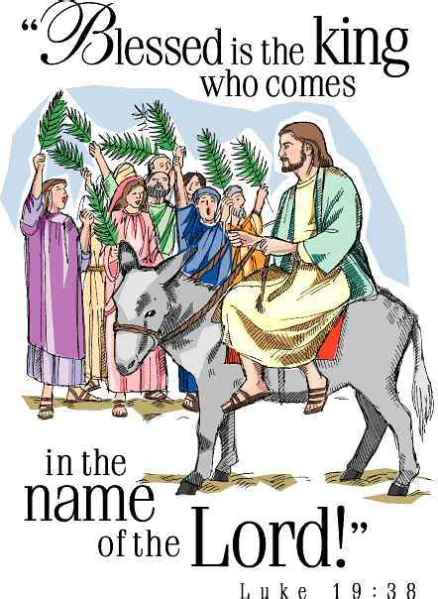
Leading Others to Christ

Pastor Sherry’s message for January 15, 2023

Scriptures: Isa 49:1-7; Ps 40:1-11; 1 Cor 1:1-9; Jn 1:29-42

Do you remember who led you to Christ? Perhaps it was a Sunday School Teacher when you were a child? Maybe a godly parent or relative, or even a Christian neighbor, a teacher, or a coach you admired? It might have even been someone you met in the pages of a book—like the Bible or the Chronicles of Narnia? Or someone from TV? A television evangelist someone recommended you watch? Or a series, like the very popular current series, “The Chosen”? If you haven’t tuned into it on a streaming service or YouTube, I would highly recommend that you do. I have long loved Jesus, but I am finding The Chosen’s portrayal of Gospel stories has deepened my faith in Him.

I credit my grandmothers with teaching me about Jesus. They were both church-going, Bible reading women with personal relationships with Jesus. My father’s mother saw to it that I was baptized at age three. Both taught me that Jesus loved me, and saw to it that I attended Sunday School when in their care. In the days before Christian cartoons, movies and internet, I remember those old flannel-board presentations of cut outs of Noah and the animals making their way into the ark, and of David going up against Goliath. My mother’s mother cleaned her church and took me with her as a child, teaching by example the idea of serving God with our hands and our hearts.

Think back to who introduced you to Jesus and be sure to thank them in person, or thank God for them if they have already gone on to Glory.

Our Gospel lesson today (John 1:29-42) describes how John the Baptist (JtB) pointed two of his followers to Jesus. JtB sees Jesus passing by and comments to them (v.36) Look, the Lamb of God! The first is Andrew, the brother of Simon Peter. We don’t know the identity of the second guy—though tradition tells us it was John, the author of this Gospel account. (He is always so modest, never naming himself in his Gospel account, but often calling himself “the disciple Jesus loved.”)

These two come alongside Jesus, Who then asks them, What do you want? He’s not being rude; He just wants to know what is motivating them to connect with Him. Perhaps they are nervous, or feel put on the spot, but they respond, (v.36) Rabbi, where are you staying? I think this is such a curious question. I would have asked about His knowledge and/or His credentials: “Are You indeed the Christ?” “May we ask You some questions?” “May we follow You to find out more?” Instead, it sounds as if they want to know about His accommodations—“Are you staying here Capernaum? “ “At the Holiday Inn or the Hilton Courtyard?” But Jesus isn’t put off and replies, (v. 39) Come and you will see an echo of Psalm 34:8 Taste and see that the Lord is good; blessed is the man who takes refuge in Him. He very simply invites them. He encourages them to Come and…see for themselves, and they do spend the rest of the day with Him.

At some point—maybe that day or the next—Andrew leads Peter to Jesus. Andrew rightly believes that he and John—thanks to JtB—have met the One believed to be Messiah. Andrew then urges his brother, Simon Peter, to come meet Jesus as well. Jesus greets Simon with “a word of knowledge.” Without having previously met Simon, Jesus says his name, and cites his lineage ”You are the son of John” [Simon bar Jonah]. Then He proceeds to change Simon’s name: Cephas is the Aramaic form of rock or stone; Peter is the Greek word for rock. Peter was at that point anything but a rock! Jesus is renaming him not to describe his current state, but to inform who he was to become.

So let’s consider this: JtB, Jesus’ cousin, identifies Christ to Andrew and John. They have JtB’s word for it that Jesus is the Lamb of the God (a title with Messianic implications). They spend time with Him and are convinced He is the Messiah. Andrew brings Peter to Christ (just as John brings his brother James, and his father, Zebedee.) We are each individually introduced to Jesus, very often one-by-one, almost like exposure to a virus (meaning no disrespect).

We can also “catch the fever” by reading Scripture. Some pretty famous Christian authors were nonbelievers prior to reading the Bible: The English professor and subsequent theologian, CS Lewis, was converted by reading Scripture, as were the journalists become Christian writers and apologists, Philip Yancey and Josh McDowell.

Our Old Testament lesson, Isaiah 49:1-7 is the 2nd (of 4) Servant Songs, all prophesies of Jesus. Last week, we read the 1st Servant Song from Isaiah 42, which talked about the character and mission of Jesus. He would be humble, gentle, and compassionate; He would be completely righteous or sinless; And he would be thoroughly dedicated to the task God placed before Him–He would redeem Israel as well as the rest of humankind.

Isaiah 49 speaks again of His task/His ministry of Salvation. God had meant the nation of Israel to be “a light to the Gentiles…,” a good example meant to attract pagan nations to God. But they had focused on themselves and had insulated themselves from other nations, thinking of them as unclean. So the Father would send Jesus Christ to take on the sinfulness of the world (i.e., clean us up). He was God’s plan from the beginning.

In verse 2, the prophet states He [God the Father] made My mouth [Jesus’] like a sharpened sword…. This means that Jesus’ teachings and pronouncements would be truthful and accurate. While His death might look to some like defeat, it would in fact fulfill God’s purposes for Him. The prophet predicts that the Father will be pleased with Jesus’ efforts–and Jesus did effect our salvation! Additionally, this Servant Song predicts, rightly, that Jesus the Messiah will be a light for the Gentiles and will save us all from the penalty for our sins.

Psalm 40:1-11 reiterates the same message. The death of Jesus might look like a catastrophic defeat, but His death and resurrection are in fact a great victory. The Psalmist, King David, through the inspiration of the Holy Spirit, defines Christ’s victory as a New Song, the Song of Redemption. He further asserts that (v.4) Blessed is the man [woman] who makes the Lord his [her] trust. That is what JtB, Andrew, John, and Peter each did. That’s what my grandmothers modeled for me. It’s what we all need to do…fully put our trust in Jesus.

Verse 6 is quoted in Hebrews 10:5 Sacrifice and offerings You did not desire, but a body you prepared for Me; with burnt offerings and sin offerings You were not pleased. In the Old Testament sacrificial system the burnt offering was an atonement for sin. A lamb, bull, goat, or pigeon was killed then burnt whole as an aroma pleasing to the LORD. It was a costly and extravagant offering. No part of it was to be eaten by any human. The life of the animal took the place of the life of the person, in order for the person to gain forgiveness for their sin.

Now, remember, JtB called Jesus the Lamb of God. Way back in Genesis 22:7-8 Abraham is obedient even to the extent of offering his long-awaited son to God, when Isaac asks, Father…the fire and wood are here, but where is the lamb for the burnt offering? Abraham answered, “God Himself will provide the lamb for the burnt offering, my son.” Later on, in Exodus 12 (think back to the 1st Passover) The Israelite slaves in Egypt were to select a 1 year old male lamb without defect. They were to kill it, then sprinkle its blood over their doorways, so when the angel of death swept through Egypt, claiming each first born son, those Israelites who had been obedient were spared. They had been saved by the blood of the lamb. Still later, in Isaiah 53:7 He [the suffering Servant, Jesus] was oppressed and afflicted, yet He did not open His mouth; He was led like a lamb to the slaughter, and as a sheep before her shearers is silent, so He did not open His mouth. This is part of Isaiah’s predictions of how Messiah would die (3rd Servant Song); the prophet refers to Messiah as a lamb. Jesus is the once and for all perfect sacrifice for our sins. His right standing with God is now applied to us.

Our readings today not only demonstrate how we learn about Christ—often one person teaching another—but also how precious is the gift Jesus made of Himself for us. We can and should be grateful to whoever led us to Christ. We can and should, as well, be grateful to Christ for His saving work on our behalf—how incredibly vital this is!

Furthermore, we can and should be about the business of leading others to Christ! Ask the Lord to set before you this week those He desires you to tell about Jesus. Trust in Him to prepare their hearts to hear what you have to say. Trust also in Him to give you the opportunity, the courage, and the words to say.

Thanks be to God who gives us the victory through our Lord Jesus Christ! Alleluia! Alleluia!

©️2023 Rev. Dr. Pastor Sherry Adams