Pastor Sherry’s message for June 29, 2025
Scriptures: 2 Kgs 2:1-15; Ps 77:1-3, 11-20; Gal 5:1, 11-25; Lk 9:51-62
Among the “Joys and Concerns” we offer up to the Lord each Sunday is a request that He bring down the incidence of violent crime in our country. Thursday of this week, we were confronted with gang-related shootings and a high speed police chase—not in New York, LA, or Chicago—but just a few miles away from us in Lake City. Perhaps you have even purchased a meal at the Arby’s restaurant where this went down.
My understanding is that two 20 year olds and one 18 year old rode in from Jacksonville with the intent to kill a former felon, Jayden Randall, working at Arby’s on a Department of Corrections work-release program. The older two entered the restaurant at 11:30am, dressed in black, with guns drawn. They located Randall, then chased him into the kitchen, shooting him seven times. He was air-lifted to a trauma treatment center in critical condition.
We pray for his full recovery. They also shot a high-school student, an innocent by-stander, also employed at the restaurant. He was treated and released the same day. We pray he has no residual PTSD. All three suspects were caught by the Florida Highway Patrol as they gave chase at speeds of 125MPH going north on I-75.
(The Lake City Reporter. Jun. 26, 2025.)
Reading about this made me grateful that none of my loved ones were in that restaurant at that time. I’ve eaten there and probably many of you have, too. I was also hopeful that the high school student is okay—that could have been one of our children or grandchildren. I was also relieved that no other vehicles crashed during the police pursuit on I-75.
In thinking about the incident since, several things have occurred to me: (1) We really can’t predict what might happen to us in a given day. (2) This is the kind of behavior we might expect of people who do not know or love Jesus. The three suspects were exacting some sort of revenge. We are taught not to seek revenge, but to pray for them and give them over to Jesus. (3) Thank God we do know and love Jesus.
Thank God because we know a better way to live—St. Paul calls it a more excellent way– and thank God because He protects us. As a result, we don’t have to live in fear!
In Galatians 5:1, 13-25, the Apostle Paul reminds us that because we are in Christ—i.e., we put our faith in Him as His followers—we have perfect freedom from having to slavishly live by the Law. We are saved by God’s grace, through Jesus’ perfect sacrifice of Himself on the Cross. As Paul says in verse 1, NLT—So Christ has truly set us free. Now make sure that you stay free and don’t get tied up again to slavery to the Law. We don’t have to follow a lot of rules to earn our salvation (known as works righteousness). In fact, we can’t earn our salvation on our own efforts. We need a Savior and we have one: Jesus Christ. He has done all the work for us.
Paul goes on to insist (vv.13-14, NLT) —For you have been called to live in freedom, my brothers and sisters. But don’t use your freedom to satisfy your sinful nature. Instead, use your freedom to serve one another in love. For the whole law can be summed up in this one command: “Love your neighbor as yourself.” In other words, we don’t live according to Laws, but rather according to Christian principles:
We’re to deny our sinful natures. We are to focus, instead, on loving others.
And we are to (v.16) allow the Holy Spirit to guide our behavior (Be subject to the Holy Spirit rather than the Law).
But, there’s a nearly constant internal struggle going on in each of us, isn’t there? Do what is right (live by the Holy Spirit) Vs. giving into our sinful desires. Paul then supplies us with a sin list—If we do any of the sins on this “Works of the Flesh” list, we are not cooperating with the Holy Spirit—J.Vernon McGee says that Christians who do these things are Christian Cannibals (J..Vernon McGee, Through the Bible Commentary on Galatians, Thomas Nelson, 1991,p.96).. They devour others in the following ways:
(1) Sexual immorality tops the list.
(2) Impurity and lustful pleasures are a close second—these 3 sins use others for a person’s selfish pleasure.
(3) Idolatry—worshipping anything other than God, and dragging others into these practices.
(4) Sorcery—calling on or utilizing power not of God, and recruiting others to do the same.
(5) Hostility and quarreling (offenses against loving our neighbors, and providing a poor example);
(6) Jealousy and envy (we are not to covet the blessings of another person);
(7) Angry outbursts (we’re called to be disciplined in the way we express anger—(Eph 4:26)—Be angry but sin not.);
(8) Selfish ambition (we want to be ambitious for God’s purposes only);
(9) Dissension and division (we encourage peace and unity. I learned recently of a female ordained deacon who stirred up resentment toward the pastor of the church she was serving. When he fired her, she went to another denomination, told her “sad story of having been abused by her former pastor,” and was rather quickly ordained a deacon by her new boss. Neither the new pastor nor the new denomination checked with the former boss to learn she spreads dissension. Since the single best predictor of future behavior is past behavior, they will undoubtedly discover they failed to do their due diligence.
(10) Drunkenness and wild parties (we do not lose our self-control).
Notice Paul follows this up with a list of 9 characteristics/or fruit of the Holy Spirit. We can tell a person is walking in the transformative power of the Holy Spirit if we can see evidence in their lives of:
(1) Love,
(2) Joy,
(3) Peace,
(4) Patience,
(5) Kindness,
(6) Goodness,
(7) Faithfulness,
(8) Gentleness,
(9) and Self-control.
The truth is our Lord wants us to manifest this fruit. In Matthew 13:3-9, Jesus says we are to be fruitful bringing back to Him thirty, sixty, or 100 times what He has given us—and not just with money. We can’t do this on our own, but we can if we allow Christ to live His life in and through us.
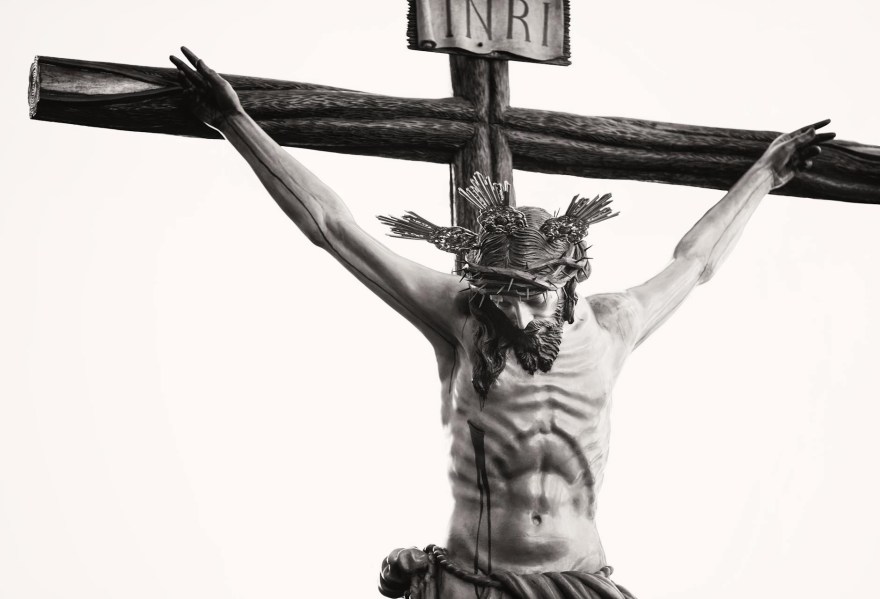
Last week I focused our attention on how Satan uses discouragement as a tool to draw us away from God. Fear is another very effective tool of his. But we don’t have to fall for it. We know that [God’s] perfect love drives out all fear (1 John 4:18), and that…God did not give us a spirit of fear but of power, love, and a strong mind (2 Tim 1:7). As Paul reminds us (vv.24-25), we can nail our fears to the Cross of Christ. Think about how we say at the end of our service each Sunday, “All our problems, we send to the Cross of Christ; All our difficulties, we send to the Cross of Christ; All the devil’s works, we send to the Cross of Christ.” These are the Bible verses that practice is derived from. We can go even further and nail our sinful natures to the Cross of Christ. Additionally, we can ask Jesus to replace our fears, for instance, with love, joy, and peace, the fruit of the Spirit. In fact, we can ask Jesus to replace all of our sinful tendencies with the fruit of the Holy Spirit.
I feel sorry for the 3 thugs from Jacksonville who shot those two people Thursday out of a desire for revenge. They are clearly living out their sin nature! And where has it gotten them? They are slaves to the devil and bound for prison and—without true repentance—they are headed to an eternity in Hell. Let’s hope and pray someone in jail reaches out to them with the message of the Good News of the Gospel. Let’s hope and pray they ask God’s forgiveness and accept Jesus as their Lord and Savior. Let’s hope and pray they nail their sinful mindsets and antisocial life-styles to the Cross of Christ and exchange them for the fruit of the Holy Spirit. Let’s hope and pray that they, like us, do not have to live in fear or as men who are lost in their sins.
As I prepared this message, I was reminded of the lyrics to the hymn, “Come Thou Fount of Every Blessing,” written by a Methodist pastor who had come out of a criminal background, back in 1758:
Come Thou Fount of every blessing, tune my heart to sing Thy grace;
Streams of mercy, never ceasing, call for songs of loudest praise.
Teach me some melodious sonnet, sung by flaming tongues above.
Praise the mount! I’m fixed upon it, mount of Thy redeeming love.
Here I raise mine *Ebenezer, hither by Thy help I’m come;
And I hope, by Thy good pleasure, safely to arrive at home.
Jesus sought me when a stranger, wandering from the fold of God;
He, to rescue me from danger, interposed His precious blood.
O to grace how great a debtor daily I’m constrained to be!
Let Thy goodness, like a fetter, bind my wandering heart to Thee.
Prone to wander, Lord, I feel it, prone to leave the God I love;
Here’s my heart, O take and seal it, seal it for Thy courts above.
(*An Ebenezer is a physical monument to a significant move of God.)
©️2025 Rev. Dr. Sherry Adams







 Wellborn Methodist Church--Wellborn, Florida