Palms to Passion

Pastor Sherry’s message for April 13, 2025

Scriptures: Lk 19:28-40; Ps 118:1-2, 19-29; Isa 50:4-9; Ps 31:9-16; Phil 2:5-11; Lk 22:14-23:56

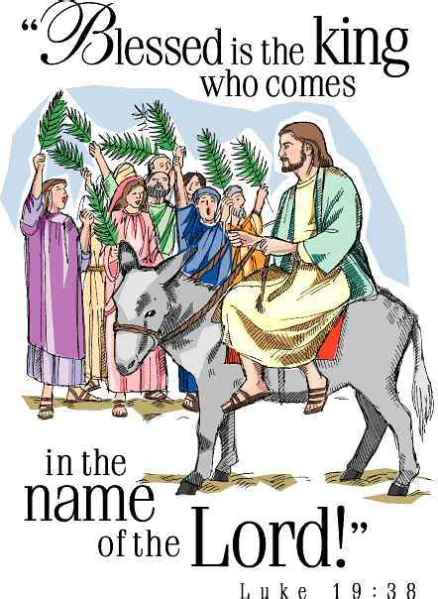
Our custom here at Wellborn Methodist Church has been to focus on Jesus’ Passion—His experiences and thoughts leading up to and including His Crucifixion.   Typically, then, we have handed out palm crosses, like you have today, but without focusing on Jesus’ triumphal entry into Jerusalem on Palm Sunday. This year, I wanted us to focus on the difference between Palm Sunday and Good Friday.  This is why we began our service on the front porch today, symbolically outside Jerusalem, if you will. And we followed the path of Jesus, riding on a donkey, as He made His way from the city gate into the Temple.

Now the Sadducees of 2000 years ago believed the Messiah would enter the city 4 days before Passover. Passover would have begun at sundown on Friday and ended at sundown on Saturday, the Jewish Sabbath.Thus, they made sure the gates to the Temple remained open the first day of their week, so Messiah could walk right on in and assume His throne.

Under normal circumstances, then, there would have been a great deal of hoopla and excitement among the Passover crowds, with people asking, “Is this the year?  Will Messiah show up? “  Knowing He would be arrested early Thursday morning and hanging on His Cross by Friday, Jesus chose to enter Jerusalem on what we call Palm Sunday.  What courage!

He fulfilled the prophesy of the minor prophet, Zechariah, from chapter 9, verse 9 (NLT) Rejoice, O people of Zion!  Shout in triumph, O people of Jerusalem!  Look your king is coming to you.  He is righteous and victorious, yet He is humble, riding on a donkey—riding on a donkey’s colt.  Victorious kings, Like David, would have entered the city to large, cheering crowds.  The people would have waved palms and placed their garments on the road for the King to tread upon.  At the end of 4th season of “The Chosen,” in episode 8 (you may call it up on YouTube), the writers re-enact one such victorious return, singing of King David, “Hosannah, Our King is Victorious!”

King David would have ridden in on his war-horse, but King Jesus rides in on a humbler animal, a donkey.  Luke wants us to be sure to know that this animal was borrowed from someone who knew of and loved Jesus, and it had never been ridden before.  Many in Jerusalem assumed Jesus was the Messiah and thronged around Him, praising Him and singing many of the lines read today from Psalm 118:25-29. Hosannah (Yesha anna in Hebrew) means save us now.  The crowds are asking Jesus to save them.

Do you think they knew that He was God in the flesh? They are cheering Him on. They are rejoicing in His presence. They are filled with hope that He is their Messiah.

The Passion readings appointed for today lead us from this celebratory procession to Jesus’ arrest, trials, death, and burial: 

A. Paul reminds us in Philippians 2:5-11 that Jesus humiliated or humbled Himself to come to earth to save us.  The Palm Sunday crowds expected Him to save them and that is exactly what He intended to do.  Paul wants us to be as humble and as obedient to the Father as Jesus was. Jesus obeyed His Father in everything, even up to and including His manner of death. Though totally righteous and holy, He died as though He were a rightfully tortured and despised criminal.

Paul also desires that we appreciate the depths of Jesus’ sacrifice on our behalf:  He gave up His heavenly prerogatives as King of the Universe–the One who spoke creation into existence–to be born in a stable, to a poor, young, homeless couple, in a ragtag and oppressed, tiny nation. Instead of demanding respect and a wide following as a great and exalted leader, He humbly behaved as a servant to all. No wonder the Father has honored Him above all things, declaring that His name commands total obedience, from every being, in every sphere of the universe!  Incidentally, this includes non-believers who will be shocked to arrive at the Great White Throne Judgment, only to discover they made the wrong choice to dismiss Him during their lifetimel

B.  Isaiah prophesies in 50:4-9 how Jesus, the Suffering Servant of God, will be treated during His Passion experience.  Verse 4 tells us He was tutored by Holy Scripture and also by His heavenly Father.  Verse 5 insists that He was always obedient to the Father’s will.  Verse 6 peaking for Jesus in the first person—I offered My back to those who beat Me, My cheeks to those who pulled out My beard.  I did not hide My face from mocking and spitting. This verse tells us He would endure beatings:  He was beaten by the Jewish Temple guards during the night;

Then He was beaten again by the Roman soldiers early in the morning. He would be spit upon, in His face (such a sign of contempt and hatred), and on His bloody body (YIKES!  to so desecrate God Himself)!  He will have His beard pulled out.

But notice too, in verses 7-9a—He will trust in God, His Father, the entire time.  He remained constant and faith-filled, despite all the evil that was done to Him!  I think He thus modeled to us how we might withstand persecution, if such befalls us for being Christians.  We are to hold on to our faith in God and to the love of Jesus for us, with both hands.

C.  Psalm 31:9-16 was written by King David.  The portion we read today is a prayer in which he seeks the Lord’s deliverance from a very powerful foe.  It is also very aptly describes what Jesus probably suffered on the way to His crucifixion at Golgatha, and even as He hung suspended from the Cross:  

   (1) V.9— Be merciful to Me, O LORD, for I am in distress… 

(2) V.10—My life is consumed by anguish and my years by groaning; My strength fails….

(3) Vv.11-12—Because of My enemies, I am the utter contempt of My neighbors; I am a dread to my friends—those who see Me on the street flee from Me.  I am forgotten by them as though I were dead; I have become like broken pottery.  

He is experiencing despair and grief.  But He does not succumb to it.  In verse 14, he reminds Himself, But I trust in You, O LORD.  I say, “You are my God.”  And He reaffirms for Himself, (v.15) My times are in Your hands.  We can trust in God to sustain us through the most difficult times because He is only a prayer away (meaning He is present to us).  He loves us, and He sent His only, beloved Son to die to save us.

D.  Our Passion narrative comes from Luke this year (22:14-23:56).  It needs little explanation as it speaks very powerfully for itself.  We see and understand that, though they had welcomed Him as a hero on Sunday, by Thursday they had replaced their Hosannah’s with outraged cries to Crucify Him!  What happened?  Well, quite simply, He disappointed their expectations.  They wanted a military leader to subdue the Romans; a warrior on a war-horse rather than a humble donkey.  They expected Him to overthrow their oppressors instead of teaching and praying daily in the Temple.  He didn’t live up to their idea of a Savior.  Their disappointment turned into anger and murderous rage, fueled and stoked by the jealous religious leadership who felt threatened by Him. So they killed Him.  But they didn’t eradicate either His memory or His influence.

We are currently living through a period in our country in which the influence of Jesus appears to have waned.  Fewer and fewer people seem to know Who Jesus is and why believing in Him and worshipping Him is important. Many churches have declining memberships. Folks appear to have given up regular Sunday attendance.  In fact, a statistic I heard recently said that most committed Christians only attend church once every three weeks.  Many activities compete for our attention—sporting events, leisure time pursuits, work, even sleeping in.  I was probably in my late 30’s when I realized that God spoke to me during Sunday worship.  His voice came to me through the music, the sermon, the readings, or sometimes from something a fellow worshipper said.  As much as I wanted to sleep in, I realized if I missed church, I would miss what the Lord had to say to me that week.  And as I came to regard my congregation as my “spiritual family,” I also realized I would miss what was often only a once a week contact. 

We need to remember all that Christ has done for us.  As I preached last week, we need a Savior because we cannot save ourselves.  The Good News is that we are washed clean of our sins by the sinless blood of the true Passover Lamb, our Lord and Savior, Jesus Christ.  Come, Let us adore Him!

©️2025 Rev. Dr. Sherry Adams
Counterculture

Pastor Sherry’s message for April 28, 2024

Scriptures: Acts 8:26-40; Ps 22:15-31; 1 Jn 4:7-21; Jn 15:1-8

Years ago (in the early 1970’s), I was teaching Sociology in a Catholic Girls School in Newport, Rhode Island.  I was a new teacher, trying to impress upon my high school students—all 12th graders—how difficult it is to not conform to societal expectations.  It seems to be true that most of us conform or go along with what is expected, most of the time, so as not to be singled out or harassed by “the crowd.”  You would not usually drive the wrong way on a one way street, for instance.  Most of us would not deliberately walk out of a store without paying for what we found there.  My biggest fear in high school was that I would show up to “Wear Your Pajamas to School Day” in my pj’s, only to discover I had the wrong day.  People are doing more outrageous things in public now than was true back in the 70’s…but most people, most of the time, do what we call is normative or normal. 

So I asked my girls if they would be willing to try a harmless experiment in not conforming.  They wore school uniforms, so there were very few ways they could modify their dress to be unique.  I challenged them to do something simple like wear ribbons in their hair (not a trend at that time).  No one was willing to do even something this tame.  When I led them in a discussion as to why that was, they replied that they did not want to “stick out.”  I considered the experiment a success because they had to seriously consider the personal cost of not conforming to cultural expectations, and decided the potential embarrassment wasn’t worth it.

I bring this up today because, as Christians, we sometimes forget how countercultural Jesus was, and how countercultural He expects us to be as well:

A.  Let’s look at Acts 8:26-40.  In this passage, Dr. Luke describes deacon Philip’s encounter with a fellow returning to Ethiopia.  Persecution against Christians had broken out in Jerusalem.  One would think, “This is terrible!”  But in a countercultural, counterintuitive way, God uses it to begin to push the disciples out into Judea, Samaria, and to the ends of the earth (to begin to fulfill the “Great Commission”).  Philip (not the Apostle, but a deacon) goes to Samaria.  In verses 5-8, before this passage, we are told that he preached the Word, healed the sick, and cast out demons.  He was doing an excellent job!  The culture would say, “He’s a success. Keep him there!”  But God, through the Holy Spirit, sends him off in a countercultural direction.

Philip was serving the Lord in Samaria, to the north, but was suddenly sent to the Gaza Road, way to the South.  The Holy Spirit directs him to the Ethiopian Treasury Secretary.  The guy was a North African believer in Judaism.  Notice:  He has already encountered the Word of God in the Old Testament.  He is reading Isaiah 53, the last of the 4 Suffering Servant Songs—all of which predict Jesus—but he does not understand it.  Philip, in a divine appointment, offers to help him.  The Holy Spirit has already prompted the Ethiopian official to be curious about Scripture.  Then God prompted Philip to be right there to explain.  Philip does such a good job of explaining the Gospel that the guy wants to become a Christ-follower.  He asks to be baptized.  They are in what is essentially a desert, but miraculously spy water—is this a divine appointment or what?–and out in broad daylight, before any passersby, in a countercultural, not-to-be expected way, Philip baptizes him.  Wow!

Wouldn’t we expect, then, that Philip would continue to hang out with the guy, to be sure any other of his questions were answered?  But no, the Holy Spirit immediately whisks him away to a Philistine city, Ashdod, to evangelize others.  Our God seems to delight in doing the unexpected.

In fact, I think He enjoys surprising us in countercultural ways.

Scripture is silent about how many Samaritans or Philistines came to Christ through the ministry of Philip.  But Early Church history tells us that the first big Christian church was built in Ethiopia!  That Ethiopian must have gone home and told many others about Jesus.  Even today Ethiopia is a majority Christian nation surrounded by Moslem nations.

In 1 John 4:7-21, John, the Apostle of love, sets out several countercultural realities about AGAPEO love—the love of God poured out upon us–not philios [brotherly ] or eros [sexual] kinds of love.  In verse 7, we are told that agapeo love comes from God, because God is love.  Love is not our initiative; we humans did not invent it.  So, it makes sense that, as stated in verse 12, when we demonstrate love, we are imitating God.  God demonstrated His love for us (verse14) by sending Jesus to redeem us.  Verses16-17 remind us that one of the ways we see or experience or cooperate with God is by doing things that are motivated by love. 

Aren’t we touched when we see a TV ad (like for Tunnels to Towers or St. Jude’s Childrens’ Hospital), through which generous people provide homes for disabled servicemen, pay off mortgages for police widows, or pay for treatment for kids with cancer?  James writes in 1:17 Every good and perfect gift is from above, coming down from the Father of the heavenly lights, who does not change like shifting shadows.  In other words, if you are moved to do something generous or kind—like contribute to one of these charitable organizations–it is because the Holy Spirit has inspired you.  Watch the news.  It’s hard to see any evidence of love in action.  Loving actions are countercultural and our God wants us to get into the habit of behaving this way.

John adds in verse 18—There is no fear in love.  But perfect love drives out fear.  Knowing God loves us can keep us from caving in to fear.

God’s perfect love for us casts out our fear.  If we live on a daily diet of the broadcast news, we can become fearful of many things…everything from nuclear holocaust, to being mugged or car-jacked, or to losing our homes, health, or incomes.  But if we can focus on God’s love for us, we can enjoy freedom from these kinds of anxieties.  The peace that passes all understanding—not dependent upon our circumstances, but on our relationship with Jesus–is clearly countercultural.

C. Our Psalm today, (22:25-31), reminds us that God’s rule is universal.   If we are aware of what is going on in the world currently, we might be skeptical that this is true.  Anti-Jewish protestors are swarming our college campuses nationwide, threatening the safety of Jewish students; and causing graduations to be cancelled for the very students who missed their high school graduation ceremonies due to Covid lockdowns.  There are wars in Ukraine and between Israel and Arab Terrorists.  Our economy is shaky and the cost of gas and groceries is sky-high.  Wherever we look, it appears as though what we call wrong is seen as right by the culture, and what we see as right, the culture condemns.

The psalmist, King David, wants us to be reassured that the day will come that (vv.27-28)—All the ends of the earth will remember and turn to the Lord, and all the families of the nations will bow down before Him, for dominion belongs to the Lord and He rules over the nations.  This view is countercultural now, but we who believe in Jesus Christ, and in His 2nd Coming, trust that this prediction will come true.

D. Finally, we have our Gospel lesson, John15:1-8—I am the true vine, and my Father is the gardener.  In this lesson, Jesus is referring to Himself as the “genuine Israel.”  All throughout the Old Testament, the vineyard or grape vines are a metaphor for the Jewish people.  If Jesus is the authentic Israelite, it is because He has loved His Father, been obedient to His Father, and loved His people. 

Additionally, He is saying that we can do nothing of any significance apart from Him.  Our culture would have us believe that might makes right; that the one with the most money, biggest social network, or most political power/influence wins. But, counterculturally, we know that none of that stuff will get us to Heaven!  Money, power, fame, even health can all be lost. But a vital relationship with Jesus will see us through this life and safely into the next.

If loving Jesus today makes us nonconformists or even dinosaurs, well I say, so be it!  I don’t know about you, but I would rather love Jesus and live outside the current norms than be a cultural conformist.  Remember, as my little experiment with my high school students demonstrated, the pull or power of the culture over us is very strong.  Wearing ribbons is not a sufficient motivator to behave in a countercultural manner, but being a follower of Jesus Christ is—or should be!

This week, try to be aware of times and events when our faith runs counter to the culture.   Look for the opportunities that exist when God provides you a divine appointment.  Let’s try also to be countercultural people who daily demonstrate God’s love.  Amen and amen!

©️2024 Rev. Dr. Sherry Adams 

Good Friday, 2024 

Pastor Sherry’s message for March 29, 2024

Scriptures: Isa 52:13-53:12; Ps 22; Heb 10:16-25; John 18:1-19:42

Our Scripture passages today are all very solemn, fitting this day we remember the death of our Lord, Jesus Christ, on the Cross:

A. The Passion narrative according to John, takes us through…

(1) Jesus’ arrest.  He had made Himself disappear suddenly, in the past, when He did not intend to be captured.  This time, knowing what He was to do, He allowed them to capture Him.  Did you notice, they fell back when He identified Himself as Jesus of Nazareth?  Were they frightened?  Did they glimpse a hint of His divinity?  He seemed firmly in control as He calmly surrendered.  They had sent a group of 500 men to capture Him, armed with clubs and weapons.  But He wouldn’t allow a fight to ensue.  He tells them to let His disciples go.  Luke tells us He even healed Malchus’ ear, after Peter cut it off.

(2) Then to Annas,’ the former high priest’s place.  Out of favor with the Romans, Annas was still the religious power broker of Jerusalem—sort of like George Soros today.  Biblical scholars say Annas was both brilliant and satanic.

Many credit him with this plan to eliminate Jesus, waiting until the cover of night, when all those who loved and believed in Jesus would be at home.  Jesus challenges him honestly, (v.23)—If I said something wrong, testify as to what is wrong.  But if I spoke the truth, why did you strike Me?  Jesus, again calmly but firmly, reminds them they are out of line:  by Jewish law, no court trial could begin at night/be held at night; no one could strike a person on trial without a verdict; Jewish Law also prohibited sentencing a man on the day he was brought to trial.  But this was Annas’ Kangeroo Court, and side-stepping the law to suit one’s agenda is not new.

(3) Annas sends Him to Caiaphas, the Roman’s choice for “high priest,” Annas’ son-in-law (an early example of nepotism).  John reminds us that in Chapter 11:50, Caiaphas had said to the Sanhedrin, You do not realize that it is better for you that one man die for the people than that the whole nation perish.  Caiaphas did not realize at the time that he was speaking prophetically.  In fact, Jesus knew He was laying down His life for the sins of Israel and for us.

Caiaphas and Annas find Jesus guilty of blasphemy, because He admitted He is the Son of God.  This was and is the truth, but they did not believe Him.  They would have liked to have stoned Him, but the Romans forbade any nation to invoke capital punishment but them.

(4) So Jesus is sent to Pontius Pilate.  Pilate tries every which way to free Jesus.  He knows the Jewish religious hierarchy are just jealous of Him.  Hoping to placate them, he has Jesus scourged (39 lashings with a whip).  He offers to set Him free due to the Passover Holiday.  He can find nothing wrong with Jesus, but hands Him over to be crucified when the Jews threaten to tell Caesar that Pilate has let go a man claiming to be king of the Jews.  Pilate is a political animal who wants desperately to leave Judea and return to Rome, so he capitulates, despite his conscience.

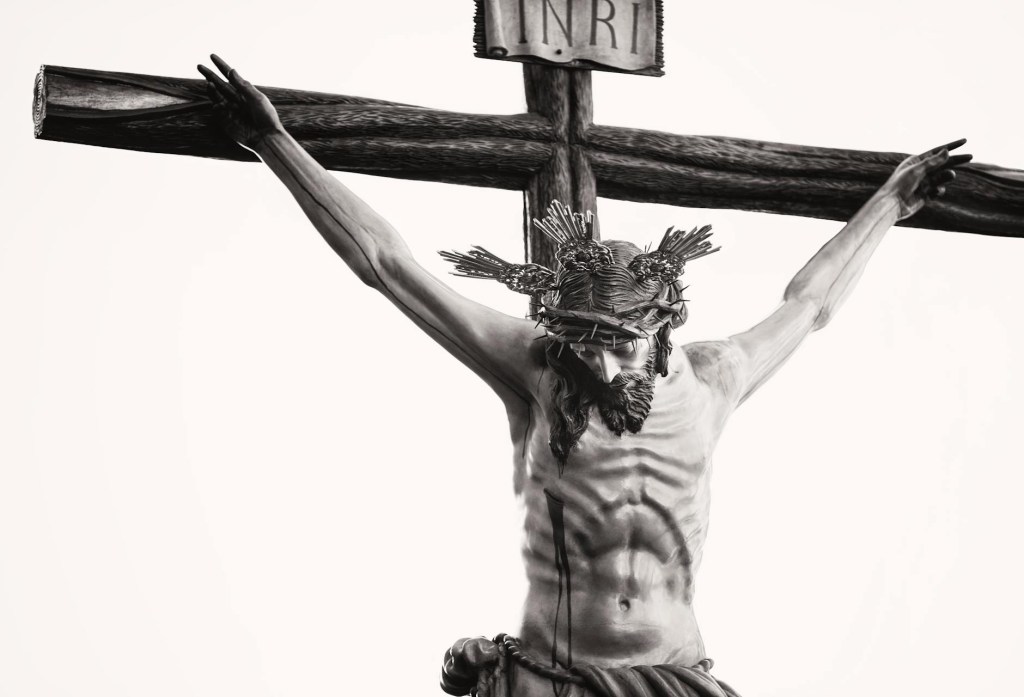
(5) And so, trading the sinless Son of God for a murderous rebel, the Jewish leadership have their way and Jesus is crucified.  Ironically, the sign on His cross identifies Him as King of the Jews: It is written In Hebrew or Aramaic, the language of religion; in Greek, the language of culture and education; and in Latin, the Roman language of law and order.  The Jews want it adjusted to read, “He claimed to be the King of the Jews,” but Pilate will not bend.

(6) Notice that John does not tell us much about the crucifixion.  He reports that the soldiers gamble over who will get His clothes.  John relates 3 statements Jesus makes as He is dying:  He asks John to care for His mother, Mary; He says He is thirsty; and, lastly, He asserts, It is finished (meaning He had completed the work of salvation He was sent to do).

(7) Finally, we learn He was taken down and buried just before the Sabbath began at sundown.

B. All 4 of the Gospelers were pretty circumspect about Jesus’ 6 hours on the Cross.  They highlight Jesus’ dignity. They did not want us to focus on Christ’s agony.  J. Vernon McGee says the Father deliberately made darkness come over the land from noon until 3:00pm so watchers could not see Jesus’ intense suffering as He took on all the sin of the world, past, present, and future; and as the Father turned His back on Him.

To get a sense of what the crucifixion was like for Jesus, we have to turn to Isaiah 53 and Psalm 22. 

A. Isaiah 52:13-53:12 is the 4th and final Suffering Servant Song, Messianic Prophesy (called the Gospel in the Old Testament).  Isaiah tells us Jesus will be raised high, lifted up (on the Cross) but also highly exalted (when it is all over).  No one would think so as they observed Him carrying His Cross.  He will in fact startle [not sprinkle] the whole world—render them speechless—because it will be through the loss of all things that He gains all things.  Such a paradox!

700 years before Jesus’ birth, Isaiah accurately predicts the kind of death Jesus will endure.  An ordinary man to begin with—not a fellow with Rock Star looks–He will be 

1.) verse 3—despised and rejected by men, a man of sorrows and familiar with suffering…

2.) beaten beyond recognition;

3.) pieced, crushed, oppressed, afflicted;

4.) killed in the worst possible way, like a common criminal, hung between true felons;

5.) He will die childless—“cut off,” to the Hebrews, evidence of a tragic, futile existence due to no progeny to carry on the family blood line; 

In fact, people will think He got what He deserved, but He didn’t…

1.) Verses 4-5—Surely He took up our infirmities and carried our sorrows….the punishment that brought us peace was upon Him, and by His wounds we are healed.

2.) Verse 9—He was assigned a grave with the wicked, and with the rich in His death, because He had done no violence, nor was any deceit in His mouth.

3.) The Father will richly reward Him—verse 11—After the suffering of His soul, He will see the light of life [resurrection], and be satisfied…Therefore I will give Him a portion among the great, and He will divide the spoils with the strong.  God intends to reward Him as though He were a king sharing in the spoils of a great victory, because He went willingly to death, and because He interceded for our sins. 

B. Psalm 22 reveals to us Christ’s thoughts on the cross: He feels forsaken by His Father.  The Father was with Him when He was arrested.  The Father was with Him during His ridiculous trials.  The Father was with Him when He was beaten.  The Father was with Him when He was nailed to the Cross.  But the Father turned His back on Him when He became sin for us, from noon until 3:00pm.

He admits to feeling like a worm—a Coccus worm, in the Hebrew. This particular worm emitted a substance used to make red dye, symbolic of Jesus’ blood poured out for us.

From the Cross He feels surrounded by His enemies: The soldiers are many bulls…the strong bulls of Bashon.  His tormentors from the foot of the Cross—scribes, Pharisees, the hostile mob—resemble (v.13)— roaring lions tearing their prey; and (v.16)— dogs have surrounded Me; a band of evil men has encircled me, they have pierced my hands and my feet.  Nevertheless, He trusts in the love of His Father.

Biblical Scholars tell us Jesus fulfilled 28 prophesies of the Messiah from the Cross.  You can recognize them and count them from our Psalm and Isaiah passages.  The sinless Son of God laid down His life for us, paying the penalty for our sins; reconciling us to God the Father; and clothing us in His righteousness.  These sacred writings prove to us that Jesus—and only Jesus—was and is the Messiah, the Son of God.

Today through Sunday, Let us ponder His sacrifice and offer Him our gratitude and love.

©️2024 Rev. Dr. Sherry Adams