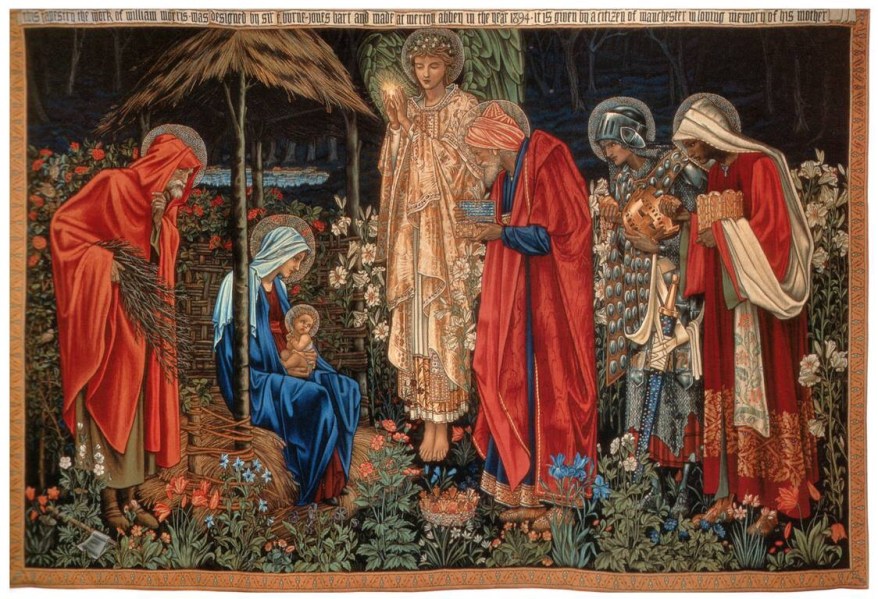
The Alpha and the Omega

Pastor Sherry’s message for November 21, 2021

Scriptures: 2 Sam 23:1-7; Ps 132:1-12; Rev. 1:1-8; Jn 18:33-37

Let me begin by sharing two stories about kingship:

1.) Chuck Colson related this one in his book, The Faith: What Christians Believe, Why They Believe It, and Why It Matters (Grand Rapids, MI: Zondervan, 2008, p.90). In 1990, he was in Russia, preaching at the Moscow Baptist Church, just blocks from the Kremlin, “He told a packed crowd of worshipers that all through human history, as far back as recorded time and doubtless before, kings, princes, tribal chiefs, presidents, and dictators have sent their subjects into battle to die for them. Only once in human history has a king not sent his subjects to die for him, but instead, died for his subjects. This is the King who introduces the Kingdom that cannot be shaken, because this King reigns eternally.”

Colson was, of course, referring to Jesus Christ, comparing Jesus’ selfless reign and rule to that of all other world leaders.

2.) In another story—so old there we do not know to whom to credit it—we have an anecdote concerning the King of England from 1014-1035, who was actually a Danish royal and a Christian, named Canute. “King Canute tired of hearing his retainers flatter him with extravagant praises of his greatness, power and invincibility. He ordered his chair to be set down on the seashore, where he commanded the waves not to come in and wet him. No matter how forcefully he ordered the tide not to come in, however, his order was not obeyed. Soon the waves lapped around his chair. One historian tells us that, therefore, he never wore his crown again, but hung it on a statue of the crucified Christ.” King Canute knew he lacked the power of Christ the King. He probably also realized he would not be willing to die for his subjects, as Jesus did.

Today is the last day of the church calendar, called Christ the King Sunday. Next week we begin our Christmas focus on the Advent or the 1st and 2nd Comings of Jesus. But for today, we close out the Church’s calendar year by focusing on the Kingship of Jesus. Jesus truly is Christ the King.

A. In our OT reading, 2 Samuel 23:1-7, the prophet Samuel records the last words of King David. David credits God with elevating him to the position of king from being a shepherd son of a peasant farmer. He admits the Holy Spirit worked through him—and spoke through him–during his lifetime, probably especially though the music he wrote and played (his psalms), his phenomenal military success, and the fact that he tried to rule righteously.

In verse 5, he alludes to the Covenant agreement David had with God—There would always be a descendant of his to rule Israel, as long as that descendant was obedient to the Lord. Those who did evil would be cast aside; but the Righteous One to be—Jesus—will reign forever and ever.

B. Psalm 132:1-12 was apparently written by King Solomon, King David’s son and immediate heir to his throne. In it, Solomon asks God to remember that David wanted to build an earthly dwelling suitable for the Lord. Solomon has just completed construction of the Temple in Jerusalem and is celebrating having moved the Ark of the Covenant from “the tent of habitation” to the Holy of Holies (a goal of his father’s). This psalm was probably sung at the Temple’s dedication service. Solomon asks God to come and dwell in this Temple—which He does. And then Solomon reminds God of His promises to his father, David:

1.) To always keep a descendant of David upon the throne of Israel, providing that descendant obeys the Lord.

2.) Solomon probably doesn’t realize it, but inspired by the Holy Spirit, he has just prophesied the kingship of Jesus in verse 11–The Lord swore an oath to David, a sure oath that He will not revoke: One of your own descendants I will place on your throne…The last of the Davidic kings was the rebellious Zedekiah (597-586BC). There is, at present, no king of Israel. But Jesus rode into Jerusalem as a kingly figure on Palm Sunday. He admitted to Pilate that He is a king. And He will be enthroned in Jerusalem when He returns to earth a 2nd time.

C. Our Gospel lesson is from John 18:33-37. It records a portion of Jesus’ trial before Pontius Pilate, the Roman ruler of Judea. It is said that Pilate hated Jerusalem and really disliked the Jews. He spent most of his time at Caesarea, on the Mediterranean coast. He made it his habit to visit Jerusalem during the great feasts, like Passover, when Jews from all around the world would crowd into the city to worship God. He hoped to impress his superiors by keeping the peace in a volatile country. Not truly understanding the Jewish religion, he finds himself having to adjudicate Jesus’ case.

Now Pilate was a pragmatist, a Roman military officer, not a philosopher. He probably thought Jesus was a nut-case if He claimed to be Israel’s king. Afterall, Israel was then under the rule of a Roman-appointee, Herod Agrippa, who owed his authority and privileges to Rome. What right would an itinerant rabbi have to call Himself King?

So he enters into the dialogue with Jesus:

PILATE. Are you the King of the Jews?

JESUS. Essentially, what prompted that question?

PILATE—Not me; your own folks say this of you.

JESUS—Yes, I’m a king, but not of this world, or more correctly, out of this world. He will not be a political king, rising out of the political system. He will be a true king, not a political hack. He will be—and is—a theocratic king and will come to earth again as King of King and Lord of Lords (but Jesus doesn’t explain all of this to Pilate).

D. However, this is where our NT lesson from Revelation 1:1-8 picks up. The year is somewhere in the 90’s (near end of 1st century). John is the oldest living apostle (in his late 80’s, early 90’s). Peter has been crucified, upside-down, at his own request! John’s brother James has been put to the sword by King Herod Agrippa. Paul has been beheaded in Rome.

John has outlived them all—some say he is the only apostle to die a natural death.

We find him in today’s narrative, confined to the prison isle, Patmos.

It was a rocky, inhospitable island, about 6 X 10 miles, in the Aegean Sea.

Inmates there were sentenced to hard labor in the mines and quarries, exposed to elements. Our passage tells us (verse 10), On the Lord’s Day, I was in the Spirit. Here he was, in harsh circumstances, isolated from friends, but worshipping God on Sunday, the Lord’s Resurrection Day.

He was praying, in the Spirit, when he has a Holy Spirit assisted vision.

John sees and hears from Jesus.

But I am getting ahead of myself here—Return to verses 1-3:

John tells us God the Father gave this revelation to Jesus Christ. The word, revelation comes from the Greek word, apokalupsis which means an UNVEILING, a REVEALING. In this god-forsaken place, Jesus Himself comes to John. What a comfort that must have been to the apostle:

John, I have not forgotten you! Even though you are elderly and in exile,

I have a job for you to do.

So Jesus is speaking this unveiling, this revealing to John, as the Ascended Lord, the King of the Universe! Jesus is in heaven, seated at the right hand of the Father. This means He is installed right next to God the Father, at God’s right hand of power. Jesus conveys the revelation to John thru an angel (messenger). And John obediently writes for us all that he saw and heard.

Whoever reads it, and hears it, and takes it to heart will be blessed.

So who is that? Us! Yes, it’s complicated and uses a lot of figurative language, (Old Testament allusions) but if we persist/puzzle through Revelation, we will be blessed! We will be blessed because it tells us how our great cosmic history turns out! The Good Guy wins! Through Him, we also win! (We are vindicated).

John greets the 7 churches in Asia Minor (Turkey):

These were specific church groups, but also types/representatives of churches. In verses 4-6, he states, Grace and peace to you from.

Him who is and who was and who is to come [the eternal Father], the 7 spirits before His throne [The Holy Spirit; the Complete Holy Spirit given all of His characteristics], and from Jesus Christ. Jesus is then called by several titles:

1.) The faithful witness— Jesus has told us truth and so He continues to tell us truth (I am the way, the truth, and the life, John 14:6).

2.) The firstborn from the dead—During His earthly ministry, Jesus resurrected 3 persons: His friend Lazarus; the son of the widow of Nain; and he synagogue ruler’s 12 year old daughter. But they all went on to die, again, later. Jesus is the first One resurrected to eternal life!

3.) The ruler of the kings of the earth—In Phil 2:9-11, we are told…at the name of Jesus every knee should bow, in heaven and on earth and under the earth, and every tongue confess that Jesus Christ is Lord, to the glory of God the Father. Ultimately, at the end of time, all Caesars/kings, presidents, premiers, despots and dictators everywhere will acknowledge the lordship of King Jesus. Their eyes will be open to the Truth of Who Jesus is.

4.) V. 8. I am the Alpha and the Omega…who is, and who was, and who is to come, the Almighty. Alpha is the 1st letter of the Greek alphabet; Omega, the last. Jesus is saying, I am the A through Z. He is the full revelation of God the Father. He is the beginning and the end, eternal, unchanging. As the writer to the Hebrews puts it (13:8) Jesus Christ is the same yesterday, today, and forever?

The final outcome is ultimately a good one! God has the last word! We serve Christ the King. The resurrected Jesus Christ is alive and on His heavenly throne. The Alpha and the Omega will come again in glory to rule and reign upon the earth. I can hardly wait, can you? Amen! Maranatha! Come King Jesus!

©2021 Rev. Dr. Sherry Adams

The Law of Sowing and Reaping

Pastor Sherry’s message for 9/26/2021,

Scriptures: Esther 7:1-10; 9:20-22; Ps 124; Jas 5:13-20; Mk 9:38-50

For several weeks we have examined the choice between living righteously for God and living foolishly for self. The story is told of two missionaries to a town called Efulan, in Cameroon, Africa, who became ill and had to return home to the US. They felt bad about abandoning their work and wondered what would become of the 6 men they had been able to convert to Christ. Two years later, they were able to return and were shocked to discover:

1. The 6 Jesus-followers had met weekly for prayer and Bible study;

2. They had witnessed to others about Jesus, to the extent that they became known as “the Jesus men.”

3. 25 years later, that church had grown from 6 men to 7000! Additionally, 3 indigenous ministers had been raised up and trained. And at a special service, 24 native elders helped distribute communion to the 7000 members.

It sounds shocking, I’m sure, that so much growth could take place without the 2 missionaries being there to mentor and teach. I had a similar lesson myself, about 30 years ago. Before going to seminary, I left a group counseling practice to set up an office on my own. It was a true financial risk, one I did not share with my clients. Instead, I closed down for a week to paint and decorate my new space, then launched into private practice. All of my clients moved with me, I was gratified to learn. What I had not expected, however, was how much they would grow and change without me. Each one had made some sort of break-through while I had been out of pocket. It was such a lesson in humility for me. As I discussed it with the Lord, I apologized to Him for thinking He needed me to heal my clients. I learned that week that He did the healing and I was just an instrument He could use or do without.

Those two unnamed missionaries lived for God. They worked faithfully in the mission-field of Cameroon. God grew their initial labor into a church in their absence. Like me, they had sown to the good, and God multiplied and blessed their efforts (as He did mine).

Paul states for us “The Law of Sowing and Reaping” in Galations 6:7-8–Do not be deceived: God cannot be mocked. A man reaps what he sows. The one who sows to please his sinful nature, from that nature will reap destruction; the one who sows to please the Spirit, from the Spirit will reap eternal life. This is not one of our Scripture passages appointed for today, but it does present the foundational theme common to them.

Once again, we are presented with the choice: if we do ungodly things, they tend to boomerang back on us; whereas, if we do good things—like the missionaries—blessings come back to us.

A. Esther 7:1-10; 9:20-22 explains why the Jews celebrate the feast of Purim. It is meant for them to express their gratitude for God’s divine deliverance. Queen Esther, an undercover Jewish woman, was chosen by King Xerxes of Persia to become his new wife/queen. (He had divorced the beautiful Vasti for having disobeyed s summons.) Now Haman, the King’s “Prime Minister,” hated the Jews–especially Esther’s Uncle Mordecai, a palace scribe. Haman sneakily encourages the King to pass an edict that would allow citizens of his entire empire to attack and kill Jews, all over his empire, on a certain, future date. Not realizing his queen was a Jewess, Xerxes signs the edict into law. Once he did so, according to Persian custom, his edict could not be rescinded.

Uncle Mordecai gets a message to Esther encouraging her to ask her husband to overrule his original edict with another which would allow Jews to defend themselves. Our passage today divulges her strategy: She invites the King and Haman to two banquets. During the first, she does not make her request. Xerxes is so pleased—and Haman is so flattered—that the King is willing to give her up to half his extensive kingdom. But, having primed the pump, she simply invites the two men back to a second banquet.

At the second, she reveals that she is Jewish and asks that the king spare her people who are set to be annihilated (by his own order). The King has a short memory. He fails to realize he signed a death warrant for all the Jews in Persia. Until Esther confronts Haman, Xerxes also fails to remember that Haman had initiated the idea. The King is furious over his dilemma and “takes 5” to mull over a response. In his absence, Haman appears to attack the Queen as she is reclining on her eating couch. Perhaps he is fearful and enraged, but maybe he is frantically entreating her forgiveness and mercy. Whatever Haman’s motives, Xerxes returns, and believes Haman intends to rape his wife in the king’s own palace. Ironically, Haman is sentenced to death—for abusing the queen–on the very gallows he had erected to hang Uncle Mordecai!

I think all of us would agree this is a dramatic example of the boomerang effect of the Law of Sowing and Reaping. There are other scriptural examples, as well: Old Testament Jacob tricked his blind father, Isaac; later Jacob’s 10 sons tricked him into believing his favorite son, Joseph, was dead. Additionally, Jacob cheated his brother, just as Uncle Laban later cheated him, again and again. Paul appears to have authorized the stoning of the first Christian martyr, Stephen; later, after his conversion, Paul himself is stoned, almost to death, on his 1st missionary journey. If we choose to do the devil’s work, the same kind of evil often later boomerangs back to us.

B. Psalm 124, on the other hand, recounts what happens to those who choose to love God—He protects them! King David recalls how God rescued the Israelites time and again. He is quick to give God the glory in his famous last line: Our help is in the name of the Lord, the Maker of heaven and earth. When we choose to honor God, to trust in God, He blesses us—a positive boomerang.

C. In James 5:13-20, the practical disciple reiterates King David’s point. God is trustworthy and takes care of us. If we love and serve Him, He answers our prayers and rescues us from trouble; He desires to heal us and to forgive us when we ask; and He delights in our praise. James gives us the example of Elijah whose God-directed prayers prevented rain in Israel for 3.5 years. Then, when again directed by God, his prayers brought on the rain. James reminds us in verse 16b—The prayer of a righteous man is powerful and effective.

There we have it: Righteous living results in prayers that are effective. What a fantastic positive boomerang! Incidentally, when I discover God withholding an answer to prayer I have repeatedly placed before Him, I have to consider what I may have done that might pose a sin-based-impediment to His taking action. Many of us get angry when God appears not to answer our prayers. Instead of being angry with Him, we might be better off examining our own hearts. It is, afterall, the prayers of a righteous person that are powerful and effective.

D. In Mark 9:38-50, Jesus spells out both a positive and a negative result of the Law of Sowing and Reaping. In verses 39-41, Jesus implies that blessings come to those who do miracles and provide physical refreshment to others in Jesus’ name. In other words, good deeds result in blessings. Conversely, in verses 42-48, Jesus states what happens to those who cause children (or “little ones”, perhaps “innocent ones”) to sin—it would be better for [them] to be thrown into the sea with a large millstone tied around [their] neck[s]. It brings to mind pedophiles, doesn’t it? And people like sex traffickers and the Jeffrey Epstein’s and Harvey Weinstein’s of the world. There may be a special level of hell reserved for those folks. Again, if we perpetrate evil, it will boomerang back on us.

Jesus then goes on to exaggerate for effect. He says to cut off or gouge out any body part that leads us to sin. We are not meant to take this literally, blinding or mutilating ourselves. Instead, we want to make every effort to not cooperate with the evil one by sinning, especially in a habitual way. We want to remain committed to Christ and to ask His forgiveness when we stray.

Someone has composed a poem which summarizes the positive side of the Law of Sowing and reaping:

Life’s Mirror

There are loyal hearts, there are spirits brave;
There are souls that are pure and true;
Then give to others the best you have,
And the best will come back to you.

Give love, and love to your life will flow,
A strength in your inmost need;
Have faith, and other hearts will show
Their faith in your word and deed.

Give truth, and your gifts will be paid in kind,
And honor will honor meet;
And a kindly smile will surely find,
A smile that is just as sweet.

Give a helping hand to those in need,
And a harvest of golden grain
You’ll reap some day from the love-sown seed,
If you sowed in the Master’s Name.

For life is the mirror of king and slave—
‘Tis just what we are and do;
Then give to others the best you have,
And the best will come back to you.

This week, let’s try to be aware of which direction we are sowing toward. The Law of Sowing and Reaping is, like King Xerses’ edicts, immutable. Once our actions have put evil into play, we run the dire risk of having it return to us. However, on the other hand, when we put blessings into play, blessings come back to us. With a thought toward reaping God’s best, let’s be aware of doing our best toward Him and others. Amen! May it be so!

© 2021 Rev Dr Sherry Adams

Edifying Speech

Scriptures: Prov 1:20-33l Ps 19; Jas 3:1-12; Mk 8:27-38

Pastor Sherry’s message for 9/12/2021

A wife at a party was overheard saying the following (As reported by Karen Ehman, Keep It Shut, 2015, p. 45, published by Zondervan):

My husband says my ability to talk is what first attracted him to me. He loved how I could work a room, making the shy ones feel included. I could converse with the college president and yuck it up with the grocery store bag boy all in the same afternoon. Yep. My college sweetheart loved how I could talk. So this rather shy guy bought a ring, slipped it on my finger, grabbed my hand, and off we proceeded down the church aisle and into marital bliss.

My proficiency at all things linguistic hadn’t bothered him before. In fact, he had felt it was an asset. I talked and talked. He smiled and listened. And it really didn’t seem to bother him. Then, about three days into our honeymoon, he had this thought: “When is she ever gonna shut up?” In fact, if I make it to heaven before he does, he’s decided just what should go on my tombstone: A period. Ask him why, and he’ll declare, “Well, she’ll finally be done yacking!” (He insists my language has no periods — just commas, colons, and semicolons — because there’s always more to come!)

Isn’t it interesting how the trait we most appreciated about our spouse, before we married, becomes the one that most drives us nuts after we say, “I do.”?

Be that as it may, have you noticed that our lessons lately have had a very practical bent?

1. 5 weeks ago, just as school was starting, they had to do with acquiring spiritual wisdom.

2. 4 weeks ago, St. Paul schooled us in the wisdom of realizing we are in a spiritual battle that requires us to put on spiritual armor and to take up our spiritual weapons: prayer and Scripture.

3. Next we examined the need for us to persevere in the faith so carefully handed down to us by generations of Christ-followers/true believers.

4. And last week, we acknowledged the source of our real security, the Lord.

5. This week, our Scriptures are speaking loudly to us about the wisdom involved in watching our tongues.

The wife in my illustration seems oblivious to the fact that it is possible to talk too much. I have known people like that, haven’t you? They hardly take a breath and leave no space for you to responds. Yet, even if you and I don’t talk too much, we can and do err by sometimes saying the wrong thing.

Let’s look at how our Bible passages today address issues of speech:

A. Proverbs 1:20-33 warns us against rejecting wisdom. The choice these verses set out for us is one we’ve seen before: will we seek wisdom or folly? My son had an older, single roommate once who declared he’d had it with dating and that dating was “foolishness, just a bunch of foolishness.”

While you and I may disagree with his conclusion about dating, we can certainly sympathize with his frustration. But the point is that we can often recognize foolish behavior when we see it in others or when we are guilty of it ourselves. In these proverbs, wisdom is personified, viewed as a person, not just a concept.

In verse 22, she mocks those who persist in foolishness: How long will you simple ones [The Hebrew here is “simpletons”] love your simple ways? How long will mockers delight in mockery and fools hate knowledge? YIKES! This is a flat out condemnation of foolishness.

We have noted the boomerang effect a number of times in Scripture (we reap what we sow). In verse 25, the consequences of choosing to be foolish are dire—[Wisdom is saying,]—since you ignored all my advice and would not accept my rebuke, I in turn will laugh at your disaster; I will mock when calamity overtakes you…. In other words, we are free to choose to act foolishly, but there is a price to pay, verse 31–they [the foolish] will eat the fruit of their ways and be filled with the fruit of their schemes. But if we choose wisdom, verse 33–…whoever listens to me [the voice of wisdom] will live in safety and be at ease without fear of harm.

So what does this have to do with our talk? It implies, by extension, that we need to be wise about what we choose to say. Someone has claimed that trying to take back something unwise we once said is like trying to put feathers back on a plucked bird, or toothpaste back into the tube. Once we’ve spoken something, we can’t take it back. The cancel-culture has been nailing people for things they said way back in their past, assuming they never changed in the intervening years. Thank God our God is willing to forgive us—if we ask Him– for things we said in the past that were less than wise.

B. Psalm 19 outlines three reasons we should revere God:

1. He is Elohim, the Mighty Ones who planned and brought into being all of creation (Notice the plural, Trinitarian reference). Verse 1 reminds us so beautifully—The heavens declare the glory of God; the skies proclaim the work of His hands. God formed and fashioned the stars, the moon, and the sun. Daily they provide evidence that God exists. The wise person realizes this while the fool denies it.

2. Secondly, Jehovah, our Rock and our Redeemer, gave us His commandments, to guide us in the wise way to live. While we often end up breaking them and needing His forgiveness, nevertheless God’s Law convicts us of sin, and it is trustworthy and unchanging, true, uplifting, cleansing, and right.

3. Third, we should worship and praise God because of Jesus’ redeeming work on our behalf.

When we consider the words that come out of our mouths, we need to bear in mind that God hears it all, from all of us. Is what we say godly? Is it edifying? Is it uplifting?

C. In James 3:1-12, Jesus’ brother really takes us to task about what comes out of our mouths. First he uses several metaphors to explain how something so small—our tongue—can and does have such a huge effect:

Our tongue is like the bit on a horse, a small appliance of metal that controls a thousand pound animal. Or it’s like the relatively small rudder of a ship that directs the huge vessel.

Then he goes on to state that our tongues can have the destructive power of a forest fire. Verses 7-8–All kinds of animals, birds, reptiles and creatures of the sea are being tamed and have been tamed by man, but no man can tame the tongue. It is a restless evil, full of deadly poison. Wow, James, how do you really feel about our tongues?

He sounds overcome and defeated, doesn’t he? Even so, it is as though he has circled back to our Proverbs today: We have a choice between wisdom and folly. We have the capability to praise God or to curse folks made in His image. But we really shouldn’t allow two such opposite sentiments to come out of our mouths. Foolish, destructive speech is critical, condemning, and gossipy. My kids once asked why a relative of theirs was so negative about others all the time. Trying to be truthful without condemnation, I told them that some folks believe the only way to rise up in this world is by stepping on the reputations of others. By contrast, speech that pleases God is uplifting, true, and edifying.

D. Finally, Jesus, in our Gospel lesson (Mark 8:27-38), both praises and rebukes Peter for what he says. First He praises Peter because, as spokesman for the 12, he states that Jesus is the Messiah, (in the Greek, this is His title, the Christ). They are now trekking up to Caesarea Philippi, North of Galilee (present day Jordan). It is about 6 months before His crucifixion. Perhaps as they are walking along, Jesus wants to know who they have come to believe He is. But when He goes on to state what will happen to Him as Messiah, Peter rebukes Him—No, no, that cannot be! Peter has just proclaimed Jesus is God; but when he hears Jesus say something he cannot abide, Peter tries to change God’s mind. How absurd! As if a person can tell God what He can and cannot do. If we could, then we would be God instead of God. However, Jesus recognizes that Peter’s words are actually inspired by the willfulness of the evil one. Remember, Satan majors in rebellion against the plans and the will of God. Just as the evil one can and did manipulate Peter—a man who spent 3 years with Jesus—so too can he tempt us to say things we later regret.

This week, let’s try to follow the example of Johnathan Edwards, the colonial preacher and theologian from the 1700’s who wrote several resolutions for himself. We tend to remember only his sermon entitled, “Sinners in the Hands of an Angry God.” We often forget that his church youth group inspired the first great revival in America and that he was noted for his sincerity and his passion that people would come to a saving knowledge of Jesus. Apparently, he once wrote out a number of resolutions for himself concerning his speech:

31. Resolved, Never to say anything at all against any body, but when it is perfectly agreeable to the highest degree of Christian honor, and of love to mankind, agreeable to the lowest humility, and sense of my own faults and failings, and agreeable to the golden rule; often, when I have said anything against any one, to bring it to, and try it strictly by, the test of this Resolution.

34. Resolved, In narrations never to speak anything but the pure and simple verity [truth].

36. Resolved, Never to speak evil of any, except I have some particular good call to it.

70. Let there be something of benevolence in all that I speak.

This week, and always, let’s be conscious of what we say to and about others. Remember, God is listening. Kids are listening.

Non-believers are listening. As a contemporary sign I once saw in Hobby Lobby says, “Grace and mercy spoken here.” Amen! May that be our goal!

©️2021 Rev. Dr. Sherry Adams

Keeping the Faith

Pastor Sherry’s message for August 29, 2021

Scriptures: Song of Songs 2:8-13; Ps 15; Jas 1:17-27; Mk 7:1-8, 14-15, 21-23

Recently I read Michael Youssef’s book, Saving Christianity (published in 2020). In it, he describes the factors that have led to a serious decline in membership and Sunday attendance in mainline Christian churches such as ours. Youssef is a naturalized US citizen from Egypt. He is the lead pastor of the Church of the Apostles in Atlanta, Georgia (the Buckhead neighborhood). He left a mainline denomination to found his church in 1987. He departed because his superior (a Bishop or Superintendent, unnamed in his book) had rejected the Biblically-faithful notion that Jesus Christ is the way, the truth, and the life, and the only way to the Father. Like too many mainline church leaders, that fellow (Youssef’s boss) did not believe the Bible is the inspired and inerrant Word of God. He also didn’t believe in salvation by grace through faith in Jesus Christ, and only Jesus Christ. (I have served under several such leaders. Like Youssef, I had to walk away from their apostasy.) This leader mocked Youssef as he withdrew to plant the Church of the Apostles. Youssef started with fewer than 40 souls. But, through faithful Biblical preaching and teaching–and a vigorous, Christ-centered outreach to the surrounding community–His church has now grown to over 3000 members.

He believes–and I agree—that we cannot cherry-pick the Scriptures, taking in what we agree with and rejecting what we disagree with. There is no integrity to that. Just as Jesus is either God or a madman–but not simply a moral leader or a good teacher–there is also just one choice with the Bible. Either we accept the Bible as God’s word written, in its entirety, or we reject it.

Under the guidance of the Holy Spirit, we are told in 2 Peter 2:1-2–But there were also false prophets among the people, just as there will be false teachers among you. They will secretly introduce destructive heresies, even denying the sovereign Lord who bought them—bringing swift destruction on themselves. Even as far back as the first century, the Church was infiltrated by heretics who sought to either alter or water down the faith. Here Peter is warning the infant church to be wary of those who preach or teach false doctrines. Similarly, Jude, Jesus’ brother, warned in Jude 3-4–I…urge you to contend for the faith that was once for all entrusted to the saints. For certain men whose condemnation was written about long ago have secretly slipped in among you. They are godless men, who change the grace of our God into a license for immorality and deny Jesus Christ as our only sovereign and Lord. The apostle John cautioned, in Revelation 22:18-19–And I warn everyone who hears the words of the prophecy of this book: If anyone adds anything to them, God will add to him the plagues described in this book. And if anyone takes words away from this book of prophecy, God will take away from him his share in the tree of life and in the holy city which are described in this book. Clearly, we are not to add verses or subtract verses from the Bible. As I have urged before, if we don’t understand a Scripture passage, or don’t like it, we are to trust in God’s purposes for us, study the opinions of reliable Bible scholarly and commentators, and patiently wait upon the Holy Spirit to make its meaning clear. As Paul counsels Timothy, (2 Timothy 3:16-17) All Scripture is God-breathed and is useful for teaching, rebuking, correcting and training in righteousness, so that the man [woman] of God may be thoroughly equipped for every good work.

Our passages assigned for today substantiate this approach. They also demonstrate to us the wisdom of Scripture:

A. Song of Songs 2:8-13–reaffirms to us that Jesus loves us.

This book is God’s endorsement for love and sensuality in the marital context. Like the “Beloved,” the newlywed wife depicted here, we are to eagerly anticipate being reunited with Christ. We don’t know where her groom had disappeared to, whether to military deployment, a business trip, or hospitalization, but she waits to hear his voice alerting her to his return. Similarly, Jesus is now physically separated from us, as He sits at the right hand of God the Father in heaven. But we can and do hear the Bridegroom’s or Jesus’ voice through God’s Word. We who believe in Jesus as our Savior, await his call to us—either from the grave or at the rapture—Arise, come, my darling; my beautiful one, come with Me. Our Lord wants us to dwell with Him in heaven.

B. Psalm 15–is a description of those who will dwell with God.

Verse 1 asks the question, Lord, who may dwell in Your sanctuary? Who may live on Your holy hill? The remainder of the psalm provides the answer:

1. Those who are upright/righteous;

2. Those who speak truth;

3. Those who do not slander others or hold grudges;

4. Those who despise vile actions but honor righteous behavior;

5. Those who keep their oaths, even when it costs them;

6. Those who make an honest living and never accept a bribe.

The psalmist, King David, predates Jesus but nevertheless describes Christ’s character. We are to be like Jesus. Those who revere the Lord and who order their lives in accordance to His will can look forward to living with Jesus in heaven. Those who love Him and act like Him will dwell with God.

C. In our Gospel lesson (Mark 7:1—8, 14-15, 21-23), Jesus distinguishes between outward ritual (religion by rote) and heart attitudes. The Pharisees have come to listen but also to find fault. They fault Jesus because His disciples are not following one of their traditions, hand-washing before meals. This practice is wise, a fact which has certainly been reemphasized in this era of Covid. But in the arid Ancient Near East, water was hard to come by. However wise it is for one to wash hands before eating, Jesus reminded them that it is not mandated by Scripture.

Jesus then takes them to task and calls them hypocrites! He points out that they adhere to man-made rules but neglect their relationships with God and their family members. Jesus then goes on to list the sins that come from a wrong heart-attitude toward God and our relatives and neighbors:

1. Sexual immorality;

2. Theft;

3. Adultery;

4. Greed;

5. Malice;

6. Deceit;

7. Lewdness;

8. Envy;

9. Slander;

10. Arrogance and folly.

Notice, these behaviors and attitudes are nearly the opposite of those recommended by our psalmist, David. Jesus is saying, essentially, it’s not rule-keeping or going through the “holiness motions” that allows us to dwell with God, but rather the condition of our heart. Do we love Jesus? Do we ask the Holy Spirit to help us to think and to live like Jesus? Are we surrendered and obedient to the will of God?

D. Finally, James, the brother of Christ–ever offering us practical advice—reminds us in James 1:17-27–(verse 17)—Every good and perfect gift is from above, coming down from the Father of the heavenly lights, who does not change like shifting shadows.

In other words, all good things come from God, who desires to bless us.

We can trust in Him because, unlike humans, He is always faithful and true.

James continues in verse 19–My dear brothers, take note of this: Everyone should be quick to listen, slow to speak, and slow to become angry. He advises us to listen to God and others carefully. Truly hear someone out before composing a rebuttal or a come-back in your mind. Then take time to consider your response before speaking. We all know that once words are spoken, they are difficult to take back. Be careful about becoming angry, and careful with your anger expressions. It is not a sin to become angry, but so often it is what we do with our anger that offends God.

In verse 22 James admonishes us—Do not merely listen to the word, and so deceive yourselves. Do what it says! We are not to be consumers of church services. We are to use what we learn on Sundays to guide the way we operate in our world. We need to “walk the walk.” If a nonbeliever were watching us, would they see enough evidence to assume we are followers of Jesus Christ?

Our passages today confirm for us that (1) Jesus loves us.

(2) We can believe that if we love Jesus, and behave like Him toward God and others, we will join Him in heaven. (3) Christ-like heart attitudes matter more to God than empty ritual and non-biblical tradition. (4) Our faith is evidenced in action.

Youssef believes the broader Christian Church is being decimated by “enemies from within,” by apostasy (false doctrines), and by our lack of respect for the Word of God. Our foes are those who call themselves Christians while divorcing themselves from the Biblical faith.

These folks are being deceived by the evil one (Remember from last week that we are in a spiritual battle). Youssef writes (p.93), If you abandon the foundation of Christianity—the Scriptures and the atoning death and resurrection of Christ—and replace the Christian gospel with the secular left agenda of Darwinism, climate change, identity politics, victim oppression politics, LGBTQ politics, and on and on, you will become the darling of the media and the leftist political establishment. You’ll be interviewed on CNN, MSNBC, and NPR, and you’ll write for the “Washington Post” and “New York Times,” and you’ll be praised by the “Daily Beast” and “Huffington Post.” You can call yourself a “person of good news,” but it won’t be the Good News of salvation by grace through faith in Christ.

NO Sir, our hope is set on nothing less than Jesus and His righteousness! It is not politically correct these days to be a faith-filled, Bible-believing follower of Jesus Christ (Remember, we are in a spiritual battle). But I would rather be out of step with the power-elites, the politically correct, and all the woke folks, than turn my back on Jesus Christ as revealed to us in Scripture, and as faithfully passed remembered and passed on to us by generation after generation of believers in the apostolic faith.

©️2021 Rev. Dr. Sherry Adams

Armored Up!

Pastor Sherry’s message for August 22/2021, 

Scriptures: Ephesians 6:10-20; John 6:56-69

In his 2013 book titled Did the Devil Make me Do It?, Mike McKinley asks us to consider what would happen if the Devil told us the truth when he tempted us. He says it might sound something like this:

    Satan:  You should cheat on your spouse with that good looking gal/guy at the office/coffee shop/church, etc..

    Us:  I don’t think so.  It’s wrong and it would hurt my spouse.

    Satan:  Fair enough, you make a good point.  But look, I’ve run a cost-benefits analysis for you.  Here’s what I’ve come up with:

        Benefits:  

            1.) A few moments of physical pleasure;

            2.) A temporary boost to self-esteem.

        Costs:  

            1.) Disobedience to God;

            2.) Sin, so separation from God;

            3.) Ruin or possibly even end your marriage;

            4.) Humiliate your spouse;

            5.) Mess up your kids’ lives;

            6.) Public embarrassment and exposure;

            7.) Could cost you your job (especially in a church);

            8.) Might mess up the life of your partner in sin;

            9.) You might get a sexually transmitted disease;

            10.) There could be an unwanted pregnancy;

            11.) Wreck your Christian witness to others…

    Us:  Wow, hmmm, a ratio of 2:11…No thanks!

But the problem for us, unfortunately, is that Satan is never honest with us. Jesus tells us in John 8:44 [The devil]…was a murderer from the beginning, not holding to the truth, for there is no truth in him. When he lies, he speaks his native language, for he is a liar and the father of lies. Later, in John 10:10, Jesus contrasts Himself, the Good Shepherd, with the devil, “the thief”, saying The thief comes only to steal and kill and destroy. I have come that they [the sheep; us] may have life, and have it to the full.

    Both Jesus and Paul were very concerned that we believers would not be done in by the evil one.  In Ephesians 6:10-20, Paul reminds us that we who love Christ are always, daily, sometimes moment to moment, in a spiritual battle!  The devil doesn’t have to work hard with those who belong to him anyway.  Instead he works tirelessly to pull the Lord’s faithful away from Him.  Thus, when we are frustrated in life, we need to consider not just what we see with our eyes or understand with our minds.  We also need to remember we live in a spiritual realm, in which both angels and demons operate.

C.S. Lewis wrote, in The Screwtape Letters: There are two equal and opposite errors into which our race can fall about the devils. One is to disbelieve in their existence. The other is to believe, and to feel an excessive and unhealthy interest in them. They themselves are equally pleased by both errors ….. So, one mistake is to deny the existence of Satan and his demons. We may think he is a myth, a superstition, a made up entity—like the “Boogey Man”– intended to scare us into doing right. This is a grave and a naive blunder! A second error is to see demons, the Devil’s minions, behind every bush, and to deny our own personal responsibility for our actions. When Satan fell from heaven he took 1/3 of the angels with him. These became the demons he now commands. We need to remember, then, that God is both more powerful than he is—after all, God cast him out of heaven– and that the legions of angels outnumber demons by at least two to one. Regardless, we can’t just excuse ourselves by saying, “the Devil made me do it.” We have to remember that the Devil tempts us to sin, but we only sin when come into agreement with him and succumb to the temptation.

    To me the best proof for the existence of the Devil is that fact that Jesus, Peter, Paul, James and the Church—up until the Age of the Enlightenment, about 250 years ago–all believed that Satan and his demons were real:

    1.) I have already quoted to you from the Gospel of John what Jesus had to say about Satan.

    2.) After having been reconciled to Christ, Peter wrote (1 Pet 5:8) Be self-controlled and alert.  Your enemy the devil prowls around like a roaring lion looking for someone to devour.  Resist him, standing firm in the faith….

        3.) Paul Ephesians 4:27-27: In your anger, do not sin.  Do not let the sun go down while you are still angry, and do not give the devil a foothold.

        4.) James, the brother of Christ Submit yourselves, then, to God.  Resist the devil, and he will flee from you.  Come near to God and He will come near to you.           

    So let’s look, verse by verse at what Paul is telling us in our New Testament passage today (Ephesians 6:10-20):

    Verse 10 Finally, be strong in the Lord and in His mighty power.  Our strength, in any conflict, in any attack from the evil one, comes from God.  We do not have the power to fight Satan on our own.  But God does!  Jesus does!  We know that Jesus does because He continuously cast out demons during His earthly ministry, and because as Paul reminds us in  Philippians 2:10 the name of Jesus, every knee shall bow, in heaven and on the earth and under the earth, and every tongue confess that Jesus Christ is Lord, to the glory of God the Father.  Satan and all of his demons must submit to Christ’s authority.  This is why we daily tell Satan to cease and desist from any temptation by calling upon the name of Jesus.

    Verse 11 Put on the full armor of God so that you can take your stand against the devil’s schemes.  God has given us spiritual armor because we are in a spiritual battle.  He has not left us defenseless.  He has provided protection for us.  We are to appropriate the armor and STAND We don’t have to beat a retreat.  We don’t have to engage in combat in our own strength.  We just have to take on a stance of strength and wait upon the Lord.  So often in the Old Testament, we see how God won the battle.  Numerous accounts of Israeli forces during the 1967 “Six Days War” tell of how they were outnumbered, but became invisible to their Arab foes; how they caused superior numbers of Arab soldiers to surrender, even though the Israelis were out of ammunition; how large angels dressed as soldiers protected them, etc.  The battle belonged to the Lord.

    Now why are we to stand?  Verse 12 For our struggle is not against flesh and blood, but against the rulers, against the authorities, against the powers of this dark world and against the spiritual forces of wickedness.  Our battle is not against flesh and blood people!  Or even events!   It’s against the demonic.  As in any army, there are organized ranks in the demonic realm:

    1.) Rulers (principalities; king/princes) They have oversight of nations.

2.) Authorities (generals, lieutenants) demons who operate through seduced individuals and plague humankind;

3.) Powers of this dark world Satan; the power behind darkness;

    4.) Spiritual forces of wickedness these are pagan gods; witchcraft; wiccan; and voo-doo.

    Despite this army of evil, God expects us to stand verse 13 Therefore put on the full armor of God, so that when [not if] the day of evil comes, you may be able to stand your ground and after you have done everything, to stand.  We are meant to utilize the armor He gives us (I put it on daily, in the name of Jesus).  We are told to stand 4 times in this passage.   

    Next Paul names the components of our protective armor:

    Verses14-15 Stand firm then, with the belt of truth buckled around your waist, with the breastplate of righteousness in place, and with your feet fitted with the readiness that comes from the gospel of peace.  The Belt of truth is The Word of God (the Bible).  To be armored up, we need to be reading our Bibles.  The Breastplate of Righteousness guards our heart.  Jesus Christ is our righteousness.  In baptism and in confirmation, we have put on Christ, we have been clothed in His righteousness.  As Peter says in today’s Gospel reading, (John 6:68-69)…Lord, to whom shall we go?  You have the words of eternal life.  We believe and know that You are the Holy One of God.  It’s only in and through Jesus that our hearts are protected.  Our feet are shod with the readiness or preparation that comes from the Gospel of peace.  In other words, our feet are anchored when we stand upon the firm foundation, the Solid Rock, Jesus Christ, as revealed to us in Scripture.

    Verses 16-17 in addition to all this, take up the shield of faith, with which you can extinguish all the flaming arrows of the evil one.  Take the helmet of salvation and the sword of the Spirit, which is the word of God.  The Shield of Faith probably refers to the shields carried by Roman soldiers of the time.  They were about the size of a door and made of leather that was soaked, before battle, in water so as to douse any flaming arrows that flew at them.  Similarly our faith keeps all of us fully protected against the “fiery darts” which are all of Satan’s schemes to defeat us.  The Helmet of Salvation is meant to protect our mortal minds.  When we are under spiritual attack, we want to focus on our faith in Christ, not on what Satan whispers or mutters in our ears.   The Sword of the Spirit, again, refers to the Word of God written.  Scripture and prayer are our only offensive weapons!  In His temptations, Jesus modeled for us defeating Satan’s attacks by quoting God’s word.  We can do this too.

    Verse 18 And pray in the Spirit on all occasions with all kinds of prayers and requests.  With this in mind, be alert and always keep on praying for all the saints.  Again, prayer is our second offensive weapon in our spiritual battles.  It is truly the Christian’s nuclear option.  We are to pray for our families, our friends, our church, our state, our nation,

We do this each Sunday when we offer up our “Joys and Concerns” at the beginning of our worship service.  But we can also pray while driving our cars, taking a walk, cooking, washing dishes, weeding the garden, taking a shower.  This week, please be sure to pray for our soldiers and citizens stranded in Afghanistan, as well as those Afghani civilians who partnered with us over the past 20 years.  Pray for their safety and their rapid rescue.  Also, I urge you to pray for the protection of Afghani women and children under the control of the militant and often abusive Taliban.

    This side of heaven, we are in a spiritual battle.  This week, let’s take a look at our personal struggles.  Think about whether they are due to our own poor choices, or to some attack from the evil one.  Then, put on the full armor of God and stand firm, using your spiritual weapons, Scripture and prayer.  Amen!

©️2021 Rev. Dr. Sherry Adams

Spiritual Wisdom

Pastor Sherry’s Message for August 15, 2021

Scriptures: 1 Kings 2:10-12, 3:3-14; Ps 111; Eph 5:15-20; Jn 6:51-58

About 30 years ago, before I attended seminary, I led a mental health team who treated residents of 4 nursing homes in and around Tallahassee, Florida. In this work, I learned a hymn I’d never heard before. My colleague who provided music therapy for those who had Alzheimer’s would play this hymn and the patients–even if they could not remember their children’s names–all remembered it and would sing along! I was amazed.

What can wash away my sins?

Nothing but the blood of Jesus.

What can make me whole again?

Nothing but the blood of Jesus.

Oh, precious is the flow that makes me white as snow.

No other fount I know,

Nothing but the blood of Jesus.

Such a great hymn and so true.  We were bought with a price and redeemed by the shed blood of Jesus Christ. Thank you, Lord Jesus!

    Our readings today have to do with gaining true wisdom, spiritual wisdom.  School began this past Tuesday here in North Florida.  The start of the school year always puts me in mind of our hopes that our children’s and grandchildren’s teachers and professors would…

    1.) Recognize and even appreciate their academic talents;     2.) Make allowances for and help them overcome their deficits. 

Some years back, I taught a male student at Santa Fe Community College who could not read.  He failed my first two exams.  After class following the second test, I asked him to verbally respond to the questions.  He knew the information completely.  He could remember the material but was sadly unable to “crack the written code.”  Some of my college students admitted they had never opened a book in high school; others realized, too late, they would have to study more to succeed in college. 

    3.) We also hope teachers and professors will not kill students’ desire to learn, nor their love for their God, their family, or their country.

We also hope that our kids/grandkids would be intent on being fully present; attentive; eager to learn; on time; well-behaved, and disciplined enough not to play games on their laptops or text on their cell phones. Wouldn’t it be great if students all sought wisdom in their educational endeavors? Similarly, wouldn’t it be wonderful if teachers/professors also exhibited wisdom in both the presentation of material in their classes, and in their evaluations of how much their students have learned?

    I don’t know about you but I find it interesting that, just as school is starting, our lectionary readings–which cycle around every three years—contrast the two forms of wisdom, academic or secular wisdom and spiritual wisdom?  It’s no coincidence, but rather a “God-incidence.”

    Our Old Testament reading comes from 1 Kings 3:3-14. It narrates events from 970 BC, almost 3000 years ago.   Having ruled from 1010-970 BC, King David has died.  His two eldest sons predeceased him:  As you may remember from last week, Amnon—son of David’s 3rd wife–was killed by Absalom—son of his 4th wife, for having raped Tamar, Absalom’s sister.  Nine years later, Absalom was slain in a Civil War he had started to wrest the throne from his father.  The next son in line was Adonijah, the son of David’s 5th wife, Haggith.  But God had selected, and King David had crowned Solomon—son of Bathsheba, his 8th wife—as his successor.  (Remember that  David had been the runt of the litter, youngest of 8 boys, when he was chosen by the Lord to be King).  Once again, God jumps the “normal” order of succession to bring about His choice.  After all, the King of Israel was both a political and a theocratic or spiritual king, who ruled at God’s pleasure.  So, despite his birth order, Solomon has assumed the throne.

In some verses skipped, he takes as his wife, in a political alliance, the daughter of Pharaoh and not a believer in the God of Israel. We are told in verse 3 that he loved the Lord. Initially, then, he lived according to the Law of Moses—he kept God’s Law. However, he also worshipped the Lord in Canaanite “high places” which had been set apart for pagan gods of fertility. From the get-go, Solomon seemed to be hedging his bets. He appears to have had a weakness for women, lots of women (having accumulated 700 wives and 300 concubines—many of whom worshipped pagan gods–by the end of his reign). So, over the long run, he did not remain loyal to God. He appears to have thought: I’ll follow the God of my father, David; but what can it hurt to honor other gods as well?

    This practice of mixing pagan elements with worshiping the One True God is called syncretism and is abhorrent to our God.  When I was in seminary, my daughter and I had a friend named Mrs. Wilson.  She was kind and generous to us, but she mixed her Roman Catholic beliefs in with the Hindu concept of reincarnation.  I remember asking her why she would want to risk returning to earth as a cockroach or a rat.  I assured her that Jesus Christ had done all the work necessary for her to reach heaven if she only put her trust in Him.  Such syncretism violates the 1st Commandment.  We are told (verse 5) that the syncretistic Solomon offered a very generous number (1000) of sacrifices to Israel’s God, Yahweh—but in a place devoted to pagan worship.  Thus Solomon ignores the urging of the one who wrote Psalm 111 who says, (verse 1) I will extol the LORD with all my heart, in the council of the upright and in the assembly.  The psalmist implores us to worship our God with single-minded devotion.

    Nevertheless, despite Solomon’s lack of a steadfast commitment to God alone, notice that God still planned to use him and to bless him.  This is good news to him and to us.  Except for Jesus Christ, there are no perfect people.  We tend to align ourselves along a continuum from not at all committed to God to totally sold out to God, and on any given day, we land somewhere in between–and often moving toward one pole or the other.  Even so, God chooses to use us.  How amazing!

That night, God spoke to Solomon in a dream. In what strikes me as a beautiful act of grace, God says to the not-quite-committed new king, (verse 5) Ask for whatever you want Me to give you. If I had been God, I doubt I would have been so generous. This guy is all too human—not as whole-heartedly faithful to God as his father David had been. Why should God trust him? Solomon, though, gives a great answer: Recognizing his limitations, he admits (verse 7), I am only a little child and do not know how to carry out my duties. He honestly admits he knows he is not yet equipped or experienced enough to rule. As Eugene Peterson, in his modern paraphrase of the Bible, restates it, I don’t know the ropes, hardly know the ‘in’s’ and ‘outs’ of this job and the scope of it is intimidating. So please give me a God-listening-heart so I can rule your people well. He has asked for wisdom in judgment and in governmental leadership or statesmanship. He has asked to know what is the right thing to do as he rules. God is so pleased with this request that He rewards him. God notes that Solomon wasn’t moved by self-centered motives: a long life for himself, great personal wealth, or the deaths of his enemies. So the Lord grants his request, (v.12) I will give you a wise and discerning heart, so that there will never have been anyone like you, nor will there ever be. Solomon will be the wisest king—other than Jesus—who ever lived!

However, he fails in moral leadership, in the way he lives his life. He asked for wisdom to govern well, not wisdom to guide his own personal life. That just occurred to me as I studied the passage this week. I had never seen it before. I always wondered how he could have messed up so badly and still been so wise. Under the influence of his foreign wives, he veers off into idolatry, and appears to have suffered from a sexual addiction. Perhaps Paul was thinking about Solomon as he wrote to the Ephesians in our New Testament lesson today (Ephesian 5:15-20). The apostle tells us Be very careful, then, how you live—not as unwise but as wise….Solomon had great wisdom for governing—oh, if we only had that in DC today! But he lacked a firm moral compass, rooted in faithfulness to the Lord. Believers who walk wisely, remain in the will of God. Jesus urges us in John 15:4 No branch can bear fruit by itself [“operating out of human wisdom”]; it [we, the branches] must remain in the vine. Neither can you bear fruit unless you remain in Me.

King Solomon provides such a good lesson to us as someone who starts off pretty well, but ends up badly. Nevertheless, God knew he was inadequate and chose to work through him anyway. In a sense, all of us are inadequate to serve God. We can only go as far and as high as we do on our knees (in prayer and submission to God). We do best when we seek spiritual wisdom, God’s will. Again, the author of Psalm 111 writes, (verse 10) The fear of the Lord [awe, reverence for, respect of] is the beginning of wisdom. My Old Testament professor, Dr. Paul House, put it this way: Wisdom, even God-given wisdom, must be maintained by responsible human faithfulness. Serving God faithfully, according to Eugene Peterson, really is a long obedience in the same direction—us being obedient to accompany God in His direction.

    Jesus shocked His contemporaries by suggesting in today’s Gospel (John 6:51-58) that they feed on Him.  They didn’t understand that He meant spiritually.  We need to establish, nurse, and maintain a deep relationship with Him.  He is our source!  He is our Savior.  As the old hymn says, the shed blood of Christ protects and redeems us.  Recognizing and exhibiting gratitude for His great love for     us is true wisdom.

As your loved ones (or you yourself) begin the new school year, may you (and they) be endowed with Godly wisdom and an obedient heart, remaining faithful to the God who loves, equips, and blesses you.

©️2021 Rev. Dr. Sherry Adams

Who’s On First?

Pastor Sherry’s message for 8/1/2021

Scriptures: 2 Sam 11:26-12:13a; Ps 51; Eph 4:1-16; Jn 6:24-35

    I’m dating myself, now, but do any of you remember a comedy routine by Bud Abbott and Lou Costello called “Who’s on first”?  The premise is that Bud [the smart, serious guy] is trying to explain the location of the baseball players—Who, What, and I Don’t Know–to Lou [the less smart but funny one]:

        Lou:  Who’s on first [base]?

        Bud: Yes, Who’s on first.

        Lou: That’s what I want to know, who’s on first?

        Bud: Exactly, Who’s on first.

        Lou (by now getting exasperated):  That’s what I want to know. What’s the fella’s name on first?

        Bud:  No, no.  What’s on second, Who’s on first.

        Lou (now pulling his hair, getting angry):  Let’s try something different.  Who’s on third?

        Bud:  No, no, no.  Who’s on 1st.  I Don’t’ Know’s on 3rd.

        Lou (now angrily shouting): If you don’t know, who does?

        Bud: Yes, Who knows, he’s the captain.

        And it continues as Lou gets increasingly upset and confused.

    This famous comedy routine is somewhat reminiscent of our Gospel lesson today, John 6:24-35.  It appears that Jesus, and some spokespersons from the crowd following Him, are talking from completely different perspectives/understandings. The crowd wants another free meal. But Jesus is not so much interested in feeding their bellies as He is in saving their souls.  It seems that Jesus and the crowd are speaking at cross-purposes with each other 

It’s just like the woman at the well (John 4:1-26). Jesus offers her “living water,” which she assumes means flowing [not stagnant] water. She’d like a private source of water that was clean and not algae-infested. Then she wouldn’t have to fill her pail at the public well and encounter the women who taunt her about her lifestyle. Like Lou in “Who’s on first,” she isn’t getting it. Jesus is actually offering her something better than clean water; He is offering her eternal life.

    The same is true of the Pharisee, Nicodemus, in John 3:1-18.  He is puzzled about what Jesus means by “rebirth,” thinking Jesus is requiring him to re-enter his mother’s womb as an adult.  Instead, Jesus is instructing him in what it takes to enter God’s Kingdom:  belief in Jesus as God’s Son.

    How patient our God is with them and with us.  Jesus is concerned foremost with our salvation—our deepest spiritual need; while they and we so often are more concerned with our physical and relational needs—hunger, thirst, healing, restored relationships, etc. 

    Let’s try to enter into God’s perspective on what’s most important in our lives by looking at our Gospel and our Old Testament readings:

    In John 6: 24-35, the crowd follows Jesus in order to obtain more food.  But He wants them to know that He is the Bread of Life.  They don’t get it.  They want to know what they must do to be fed.  Who’s on first?

They and we don’t have to do anything to be fed spiritually except to believe in Jesus.  It’s a free gift, but they can’t take that in.

So they ask for a sign. They’ve just had a sign. Jesus fed anywhere from 5,000-15,000 from next to nothing, the multiplication miracle I preached about last week. They want to see Him do it again. They ask him, How about producing manna, like Moses did? Jesus tells them that God, not Moses, was responsible for the manna. Now, God has sent His Son, Jesus. Manna sustained the Israelites for 40 years in the wilderness. Jesus knows what they really need is the true manna, God’s spiritual provision, in Jesus—which will sustain them eternally

    The question then strikes me, How much proof do we need?  Will another miracle be the event that tips us, them, into belief?  They had the Old Testament as their Scripture; we have the Old and the New.  What else do we need?  Often we need a personal experience of Christ, reaching inot our lives.  They have just witnessed Jesus feeding a horde of folks from 5 small loaves and two small fish.  He is not going to perform for them like a trained seal.  They need to realize that Jesus Christ is the Way, the Truth, and the Life.  He is the Living Water, the Manna from Heaven, the Only Way to the Father.  He is our Salvation!

    Our Old Testament Lesson, 2 Sam 11:26-12:13a, provides such a great example of why we need Jesus.  You may remember from last week that King David has sinned by 

        1.) Coveting and entering into an adulterous relationship with Bathsheba, Uriah’s wife;

        2.) And by arranging for Uriah’s death when she becomes pregnant by David.

    Though his sins are state secrets, several of the psalms he penned tell us he has not really gotten off scott-free.  Only Bathsheba, the servants who David sent to gather her, and Joab, his general, know of his treachery, and they are not talking!  They know he could have them arrested and executed.  Nevertheless, King David feels wretched.  Several of the psalms he wrote, including today’s psalm, Psalm 51, tell of his great, private shame, remorse, and misery: (v.4) For I know my transgressions, and my sin in always before me.  In Psalm 31:10, he wrote—My life is consumed by anguish and my years by groaning; my strength fails because of my affliction, and my bones grow weak.  Similarly in Psalm 32:3–When I kept silent, my bones wasted away through my groaning all day long.  We would say the Holy Spirit has brought him under conviction and he is suffering the resulting emotional anguish.

The only One who knows–besides those who refuse to talk—is the Lord. Notice that God does not abandon King David to his sin. Instead, He sends the brave prophet, Nathan, to call him to account. Nathan tells David a story about a poor man taken advantage of by a rich man. David, thinking this is a report about someone in his kingdom, is outraged! He wants the rich man brought to justice! So Nathan confronts him (v.7)—You are the man! The story was only a metaphor. Nathan conveys God’s disappointment in David. God had given him so much. The Lord has in fact “blessed his socks off!” But David’s sinful actions convey to God that he lacks gratitude to and has contempt for the Lord. (What a novel way to consider sin: Our sins show our contempt for God. YIKES!)

    David has 3 choices in the way he could respond:

        1.) He could deny his sin altogether—as they do in DC today;

        2.) He could have Nathan executed—as any despot would;

        3.) Or he could admit the truth.

This is how King David is a man after God’s own heart:  He admits his sin, he repents, and he asks God to forgive and restore him.

    Remember, this is a saga from the Old Testament.  It predates the saving work of Jesus Christ.  God graciously forgives David and Bathsheba, but He does not prevent the grave consequences of David’s sin from affecting him.  Notice the boomerang effect of the Law of Sowing and Reaping:

        1.) The child born to Bathsheba, a firstborn son, dies after birth (his death for a death?).

        2.) Later, one of David’s other sons, Amnon, covets and rapes his beautiful step-sister, Tamar (a sexual sin—rape–for a sexual sin–adultery). 

        3.) Absalom, Tamar’s full brother, kills Amnon in revenge (another death for a death).

        4.) Still later, Absalom will try to wrest the throne from David (lawlessness and rebellion against David for lawlessness and rebellion against God).

As God proclaims through the prophet Nathan, (v.16)—Now, therefore, the sword will never depart from your house, because you despised Me and took the wife of Uriah the Hittite to be your own. 

Psalm 51, is David’s great plea to be made right with God again, and is such a great model for us to follow when we sin. First, he makes it very clear that he regrets what he has done. Second, he admits that he knows what God requires of him. Third, he states his conviction, his faith, that God can forgive and renew him: Verse 7–Cleanse me with hyssop, and I will be clean; wash me, and I will be whiter than snow. Verse 10–Create in me a pure heart, O God, and renew a steadfast spirit within me. Verse 17–The sacrifices of God are a broken spirit; a broken and a contrite heart, O God, You will not despise.

    David begs for God’s forgiveness and God grants it.

    What would our Lord want us to learn from these passages? We too can get at cross-purposes with God when we come to Him always and only to meet our physical or emotional needs.  First and foremost, He is concerned with our spiritual life.  He wants to save us.  He wants our trust, our love, and our obedience.

God’s greatest concern is that we draw close to Him. When we sin and cut ourselves off from Him, what are we to do? Like King David, we want to confess our sins to God. Like King David, we want to ask for God’s forgiveness. Thanks be to God that we don’t have to worry about who’s on first. Jesus Christ, our outstanding Coach, has all the bases covered.

©️2021 Rev. Dr. Sherry Adams

Semantic Spin Revisited

Pastor Sherry’s message for June 6, 2021

Scriptures 1 Sam 8:1-20; Ps 138; 2 Cor 4:13-5:1; Mark 3:20-35

Three years ago, when these Scripture passages appeared in the Lectionary, I preached about “Semantic Spin,” and the distinction the media and politicians were making at that time between a “spy” and an “informant.” I referred to that as a real life example of defining something one way to deflect criticism, when in truth it is actually the opposite.  Despite the 9th Commandment, which prohibits lying–or bearing false witness against another—isn’t it all too frequent that we find our politicians, media, business leaders, educators, and neighbors, spinning lies to in an attempt to manipulate our cooperation/compliance/agreement?  Some notable examples recently include: 

​​1. Critical Race Theory—now embedded in our school curricula, government, military, and corporations—and touted as truth, it defines human history as a struggle between oppressors, usually white, against everyone else.  This is Marxism with a new spin.  Rather than breeding a spirit of unity in our country, it actually promotes racial division and hatred.

​​2. We were told the Group “Black Lives Matter” exists to encourage and strengthen black families; but it is actually a front for funding and fomenting civil unrest and hatred toward America.

​​3. We were told Covid-19 did not originate in a Chinese Virology Lab, so as not to offend the Chinese Communist government. But now a significant amount of evidence supports the conclusion that it was manufactured by the Chinese and escaped containment.

​​4. The power elites advocate that, contrary to science and to God’s order, there is no such thing as two genders.  Kindergarteners in some school districts are being taught this as truth.   They are also recommending that kids as young as 8YO should be allowed to opt for sex ​change surgeries and authorized to use powerful sex change hormones.

​​5. President Biden’s proposed Budget for 2022 resumes federal funding for abortions because they are considered by some as a women’s health issue.  What about the health of the unborn baby?

6. 1 year ago, segregation was immoral, but now we are going to segregate those who have declined taking the Covid vaccine from these who have taken it. If we begin this sort of discrimination, what might be next? Will we segregate those with Hepatitis-C, with TB, or with HIV-Aids?

Radical influences in our culture would like us to set human will above human nature or even common sense, let alone good theology.

My favorite news commentator often ends his show by stating that his program is “the sworn enemy of lying, pomposity, smugness, and group think.”  These four are all good things to oppose and are currently rampant in our culture.

​Our Scriptures today provide two further examples of Semantic Spin, and how God responds to it:

1 Sam 8:1-20àThe Israelites are unhappy. The Prophet Samuel has reached retirement age, so the question has arisen as to who should replace him. Like Eli’s sons before him, Samuels’ two sons did not walk in the ways of the Lord. They were either not believers at all, or they knew better–but lacked integrity–and sold their influence to the highest bidder. The people did not want these two young men to lead them. Up until this point, there had been no king in Israel. God had appointed a prophet (or a judge) who was to hear from God what He wanted, then convey God’s will to the people. So rather than ask the prophet to inquire of God who God wanted to lead them, they ask for a king. Notice, Samuel could have inquired of the Lord but he didn’t. And now the people have an excuse they spin to justify getting a king: A reliable prophet has not been assigned us.

So, we’d like to be like all the other countries of the known world, and have a king.  What they really mean—but don’t say—is that we want to do things our way rather than be led by the Lord.

​In verse 9, God tells Samuel not to take it personally—God knows they are actually rejecting Him, not Samuel—but to warn them what having a king might mean for them.  God has a special house, the Tabernacle, but they will have to build another special house for the king, a palace.  This will cost them money, which means they will be taxed.  A king will want to have his own army, which will result in higher taxes.  And their sons will be conscripted into the army, while their daughters will serve as palace maids, artisans, and possibly wives and concubines.  Samuel warns them in verses13+àHe [a king] will take the best of your fields and vineyards and give them to his attendants….He will take the best of your menservants, maidservants, cattle and donkeys….He will take a 10thof your flocks, and you yourselves will become his slaves.

​Nevertheless, despite all these arguments against it, the people still demand a human king.  What were they thinking? God is not fooled!  They can spin it however they want, but they are rejecting God’s leadership.

We gotta have a king…is a semantic spin on disobedience.  It’s a “no confidence vote” for God—we don’t trust The One who is the same today, yesterday, and forever—so we want to place our trust in a human, fallible, possibly self-focused leader.  REALLY?  YIKES!  They will get a king but at considerable cost.  Accepting semantic spin is ultimately expensive.

​In our Gospel lesson, Mark 3:20-35, Jesus is teaching in Capernaum, 30 miles from Nazareth.  He’s been so swamped by ministry at this point that He has ducked into a home to get a meal (probably Peter and Andrew’s house). But the teachers of the Law have followed Him, to accuse Him:  This time they claim He is doing His miraculous work by the power of Satan.  Good gracious!  Think of this:  They are saying the 2ndPerson of the Trinity, who stands before them, is doing work inspired by the Father (Person 1), through the power of the Holy Spirit (Person 3)—and they are claiming He is instead drawing on the power of Satan.  Even Satanists will tell you their power comes from the Devil.   What an insulting charge! What an outrageous spin!

​But Jesus responds to them calmly and logically.  Essentially, He says, I am casting Satan out of people; why would Satan want Me to work contrary to his goals?  He asserts in verses 23-26àHow can Satan drive out Satan?  If a kingdom is divided against itself, that kingdom cannot stand.  If a house is divided against itself, that house cannot stand.  And if Satan opposes himself and is divided, he cannot stand; his end has come.  Then He warns them—I am doing what I do by the power of the Holy Spirit.  If you call what I do a work of Satan, you have blasphemed/falsely accused both the Holy Spirit and Me, two persons of the Trinity.  This is not smart. This is in fact an unforgivable sin because it credits the Work of God to Satan; and it indicates a heart already taken over by Satan.  Again, semantic spin is very expensive!

​Now He’s really said it, hasn’t He?  The crowd is murmuring, no doubt speculating how long Jesus has before the power elites arrest Him.  Some gossip, or perhaps even some well-meaning person, runs the 30 miles to Nazareth to get Mary, James and Jude to rescue Jesus before He is arrested.  No doubt they cry, He’s talking crazy!  He’s making them mad!  They’ll arrest Him for sure!  You better go see about Him!  Afterall, John the Baptist, Jesus’ cousin, has already been arrested and jailed.  His family knows what tends to happen to religious zealots.  They’ve suggested Jesus is crazy, but He is just honestly challenging the illogical arguments of the teachers of the Law.  He’s being defined as out of His mind—semantic spin–

but He’s actually exercising His power as God to define what is true.

Nevertheless, Mary and her grown sons rush to rescue Him. When Jesus is told that His family has arrived, He responds in an unexpected way. We/they would have expected Him to go greet them. Instead, Heredefines the concept of family: Verse 33àWho are my mother and my brothers? Verse 34àWhoever does God’s will is my brother and sister and mother. He is saying the spirit-ties of those who believe in Him actually form a closer relationship to Him than blood ties do. Haven’t you found that this is so? I share much more in common with the Body of Christ than I do with my blood kin who do not accept Jesus as Lord. I can and do love them; but there is not the same meeting of the mind and heartwith them that I enjoy with my fellow-believers. We have heard, “Blood is thicker than water.” But here Jesus is saying that the waters of Baptism are supernaturally “thicker than the blood of family.”

So, let’s return to the business of “semantic spin revisited.”

There’s a lot of this going around in our culture today. We need to know God’s Word to discern the truth. We need to call upon the Holy Spirit to pare away fiction or lies from the truth. We can ask the Holy Spirit for spiritual gifts of wisdom and discernment. He can and will help us identify—and resist–lying, pomposity, smugness, and group-think.

​​

Let’s pray: Gracious Lord, please lead, guide and direct us. Help us not to be taken in by those whose motives are to tear down another and advance their own cause. Help us to discern truth and to recognize semantic spin. The enemy tried so many times to accost you with lies, Lord Jesus. We appear to be similarly bombarded with lies today. Reveal to us the truth in every political and governmental situation. Bring integrity and truth-telling back into the halls and agencies of our national and state governments. Rule and overrule the hearts of anyone who is corrupt or who is advancing an evil plot. Bring all lies and corruption out into the light of Christ, we pray in His all-powerful name. AMEN

©️2021 Rev. Dr. Sherry Adams

Depend Upon the Lord

Pastor Sherry’s message for May 16, 2021

Scriptures: Acts 1:15-26; Ps 1, 1 Jn 5:9-13; Jn 17:6-19

​Bishop Alf Stanway was the first Dean President of the seminary I attended in Ambridge, PA (just west of Pittsburgh).  He had passed away by the time I got there, but stories about him abounded.  I learned much that deepened my faith from his approach to life.  One of my favorites came from his tenure as the Principal of a Christian Boarding School in Kenya.  Besides teaching the usual academic subjects, this school also trained the students in skills they could use to make a living.  Alf had just assumed his position as principal when he ​learned they needed someone skilled to teach tailoring.  The only tailors anyone could think of in the area were Muslims.  Alf wanted only Christian instructors at his school, so he worked tirelessly to locate a Christian tailor.   None of his efforts, however, yielded an appropriate applicant.

He was soon called away to attend a conference but found he could not concentrate on the speakers due to his anxieties about locating a Christian tailor to teach his students. He knew he had to let go of his worry and so he prayed that God would take it away. What an interesting prayer. How often do we consider asking God to remove a particular worry from us? Aren’t we usually praying, instead, for the solution to what is plaguing us?

God so completely removed his worry that it was only as he re-entered his office at the school that he remembered he still had no one to teach tailoring. Classes were set to begin in 3 days! YIKES! He greeted his clerk, Joseph, and asked what he thought could be done about a Christian tailor. Joseph responded with a big smile—some Kenyans have very dark skin and very white teeth, so when they smile it is dazzling! Joseph smiled and replied, “There is now a tailor in the sewing workshop. Go see for yourself if you think he is qualified.” While Alf had been away, a Christian tailor had heard of the vacancy and had come to check it out. Joseph had asked for a demonstration of his skills. Alf took a look at the man’s tailoring and hired him on the spot.

Not only had God removed Bishop Alf’s worry, but He had sent him a Christian tailor. God answered the spoken prayer, and also met the attendant, unspoken need.

​Our Scriptures today all remind us that we can, like Bishop Stanway, safely depend upon the Lord:  

In our Acts 1:15-26 passage, Peter and the 119 other disciples are praying. Jesus has ascended into heaven after having told them to wait upon the baptism of the Holy Spirit. So, they obediently meet daily to pray together and to encourage one another. On this particular occasion, the topic of a replacement among the 12 for Judas Iscariot comes up. Peter addresses them all and explains both how Judas’ betrayal of Jesus and his subsequent suicide had been predicted in Scripture, as well as the consequent need for a replacement Apostle. This would be like having a JV or 2nd stringer elevated to Varsity status. They determined that the primary requirement was having been an eye-witness to Jesus and His work. The newly elevated candidate had to have been with Jesus from the beginning of His earthly ministry (His baptism), through His crucifixion and resurrection, and including His ascension–which we honor today. In other words, they were united in searching out a legitimate witness—just as Bishop Stanwaywanted only a Jesus-believing tailor.

The group no doubt talked it over and then arrived at two candidates, Joseph Barsabbas (also called Justus) and Matthias. Both men met the criteria. However, rather than taking a Roberts Rule of Order vote, they enlisted the guidance of the Holy Spirit through casting lots. The idea was that the Holy Spirit would superintend the process and lead them to the “right” person. I experienced how this works some years ago—prior to attending seminary–when I served on a “call committee” whose job it was to select a new pastor for our church. There were 12 of us and we decided all issues by unanimous vote—assuming the Holy Spirit would lead us all into agreement. Over a year, we narrowed our focus from 99 contenders to two. When we tried to take a vote on the final two, we were repeatedly stymied at 11-1. I was the lone dissenter. I believed firmly that I had been told by the Lord to “stand firm” for this particular nominee. Our committee took several votes, all of which resulted in the same impasse. Someone suggested we drop the unanimous rule for this decision, but I reminded them we would need a unanimous vote to do so and I would not agree to such a change until after this decision had been made. (Hadn’t we learned somewhere, “Don’t change the horse in the middle of the stream?”)

Finally, after much frustration and even anger expressed towards me, someone suggested we cast lots. Knowing this was both Biblical and that the Holy Spirit would guide this process, I was willing to go along with it. We agreed to fill a basket with 12 gold wrapped and 12 purple wrapped hard candies, the gold indicating the one candidate, the purple representingthe other. A clerk passed the basket around above our heads and we each had to reach up to draw out our selection. I was there and I saw all 12 of us draw the same color! The probabilities of this happening—without the guidance of the Holy Spirit—are so miniscule as to be impossible. The one we selected was the one I had held out for. But now all of us knew that candidate must have had the approval of the Holy Spirit.

So the lesson is clear, both from Scripture and from my experience 25some odd years ago, that we can depend upon the Lord to help us make a right choice.

Psalm 1àContrasts for us the behavior and destinies of godly and ungodly folks. The godly or righteous person does not…

(1) Listen to those who leave God out of their lives. Six years ago, I was teaching Psychology in a community college nearby. I noticed that my three sections each semester were loaded with the maximum of 35 students. I asked the department secretary why I had so many students when other adjunct professors had fewer. She told me it was because the kids had learned I am a Christian. Students knew of non-Christian professors who would ridicule them publically for their faith. They assumed I was safe, so they piled in. They wisely did not want to listen to—or be graded by—those who exclude God from their lives.

(2) Exclusively hang out with the godless. We need to interact with those who do not know Jesus so them we can tell them about Him. But if we hang only with them, we are likely to be brought down by our associations. Remember when we were either raising teens or when we were a teen. We knew that associating with “bad actors” would probably lead us into trouble. My college students who tried to quit smoking for their “Self-Change Project” I assigned each semester, soon learned they had to stop hanging out with the smokers in order to truly kick the habit. Associating with smokers just continually tempted them to smoke again.

(3) Join in with the jeering of atheists. Similar to point (2), it is all too easy to find yourself a victim of group think; that is of conforming with the dominant views of the group and becoming contemptuous of God if you hang out with a crowd who expresses contempt toward Him.

What the godly person does is meditate on Scripture. This word, meditate literally means chew the cud, like a cow. The godly person reads the Bible carefully and over and over again. Each reading is made with a view toward understanding both what it meant to the folks living in Jesus’ time as well as what it means for us now. As you read a passage, askyourself, “What is God saying to me through this passage?”

The godly person also derives his/her blessings from being planted in Christ, or being born again. This keeps us connected to the vineàJesus.

This keeps us drinking in living wateràJesus. The psalm goes on to state that the ungodly person does not do these things. The ungodly person does not stay connected to Jesus. The ungodly, or the wicked, therefore, will be judged and will perish.

So, the question Psalm 1 provokes is, “Are we going to live like godly persons or ungodly persons?” The choice is ours.

In 1 John 5:9-13, the Apostle John makes it abundantly clear that the key to eternal life is Jesus. We have life if we trust in the testimonies of 3 kinds of witnesses:

(1) People All of those who lived with and followed Jesus. 500 eyewitnesses encountered Him after His resurrection, and countless thousands during His years of earthly ministry. They knew He was/is the heaven-sent Son of God.

(2) God the Holy Spirit He was present at Jesus’ baptism (in the form of a dove hovering over His head), and at work in all of His miracles.

(3) God the Father He audibly affirmed Jesus at both His baptism and on the Mount of Transfiguration. He also restored Him to life in the Resurrection and empowered His ascension into Heaven.

According to John, we have life if we believe in Jesus Christ (verses11-12) And this is the testimony: God has given us eternal life, and this life is in His Son. He who has the Son has life; he who does not have the Son of God does not have life.

This lesson is straightforward and clear. We can depend upon Jesus to honor our faith in Him. If we love and believe in Jesus, we are Heaven-bound.

Finally, in our Gospel lesson, John17:6-19, we are eavesdroppers on Jesus’ great intercessory prayer for us believers. He has completed the Last Supper and is probably on His way to the Mount of Olives when He prays to the Father for us (obviously out loud so that John could overhear).

He reports to His Father that He has been obedient to complete His mission: the Rescue Plan. He has said to His followers what the Father told Him to say. He has taught them what the Father told Him to teach. While He came to save the world, He is here praying only for those who believe in Him.

Verse 9 I pray for them [believers]. I am not praying for the world.

Amazingly, we are among His final thoughts before He goes to the Cross.

He also asks the Father to protect us…not to take us out of the world because we have ministry to do; but, rather, to be kept safe from the Evil One and from wicked people while we remain here. He asks the Father to sanctify us, consecrate us. Set us apart as those who believe in the Truth, the Truth He taught us. Jesus makes it clear that He continues to intercede for us and that we have a mission to the world. He defends us to the Father against the accusations of the Devil. He prays for our success with godly living, and in sharing with others what Jesus has done for us.

I hope that you, like me, find this tremendously comforting! Who better to plead our cause than Jesus? As Paul says in Romans 8:31à…If God is for us, who can be against us? And again, in verse 35àWhoshall separate us from the love of Christ? These are both rhetorical questions. They don’t require an answer because the answer is obvious:

no one!

We can depend upon our God because He meets our needs, both spoken and unspoken. He can and does lead us to make wise decisions. He teaches us, through His Word, how to remain connected to the Source of eternal life. He gives us eternal life when we choose to believe in Jesus. Jesus intercedes for us daily before the throne of His Father.

​We can, like Bishop Stanway—and many Christ-followers just like him—depend upon the Lord. Thanks be to God who gives us the victory through our Lord, Jesus Christ! Alleluia, alleluia!

©️2021 Rev. Dr. Sherry Adams

Anomalies for Christ

Pastor Sherry’s Message for May 2, 2021

 Scriptures: Acts 8:26-40, 1 Jn 4:7-21; Jn 15:1-8

         The other day I bumped into an old friend, a pastor I have          known for years.  We chatted about our families and our churches.  Then we got to laughing about our surprising career paths.  He has been called out after 4+ years of retirement to serve his former church again (as they search for another pastor); while I, an Anglican, am pastoring a Methodist Church.  He commented that it seems a happy fit—since I’m in my 6th year here at WUMC.  I bragged on you, telling him that you love Jesus, love Scripture, and love each other (& me, I        hope).

         Thinking over the unusual turns my life has taken, he said, “Sherry, you have always been an anomaly.”  Now I could have been insulted as an anomaly can be       defined as a defect.  But since he’s a big tease, I knew he was probably thinking more along the lines of “being different,” “unique,” “unexpected,” or     “outside the norm.”  My Anglican Bishop has said he thinks I have “the spirit of Deborah,” the only female judge or national leader in the book of Judges.  She was certainly unique and so clearly outside the norm.

         Though I have chuckled over my friend’s assessment, it has since struck me that following Jesus makes us each an anomaly.

Think about it:  If we love Jesus, we live out values different than the mainstream; we behave in such a way that we almost no longer fit in with present day American culture.  I have another friend who often says our Christian values so set us apart that we are like cultural dinosaurs (Though neither extinct nor obsolete).  Knowing y’all, I don’t think you would disagree.

         Our Scriptures today share some ways we are gonna be countercultural–we are gonna be anomalies–if we love Jesus:

         Acts 8:26-40 In this passage, Dr. Luke describes deacon Philip’s encounter with a fellow returning from Jerusalem to Ethiopia.  The context of this encounter is the persecution against Christians—followers of “The Way” as it was first called–that had broken out in Jerusalem, beginning with the stoning of Stephen, another deacon.  One would think, “This is terrible! What a tragedy!”  But remember that Jesus had told them they were to take the Gospel beyond Jerusalem into Judea, Samaria, and to the ends of the earth.  Instead, they had remained in a “holy huddle,” hunkered down with like-believers.  God uses the persecution to scatter or push the disciples out into other Jewish then non-Jewish areas.

         Philip (not the Apostle, but a guy in the 2nd tier, a deacon) goes first to Samaria.  In verses 5-8, before this passage, we are told   that he preached the Word, healed the sick, and cast out demons!  He’s not God but–empowered by the Holy Spirit–he is doing the work Jesus did.  And he was doing it very well!  Secular wisdom would say, “He’s a success. Keep him there, growing the church bigger and bigger!”  But God, thru the Holy Spirit, sends him off in another direction.

         The Holy Spirit sends Philip on a divine appointment.  Have you ever had one of those?  You are frustrated when your car breaks down, but then have an opportunity to talk to the tow truck driver, or the mechanic, about the Lord.  You are about to leave the house when a distressed friend calls in a dither. You speak to them, calm them down, and pray for them.  In these and similar events, you realize after that those were not coincidences.  No, they were nudges to kindness and service, divine appointments, ordained by God.

         Philip was serving in Samaria, to the north, but was then sent to the Gaza Road, way to the South.  The Holy Spiritdirects him to the Ethiopian governmental official.  The guy was a North African believer in the God of the Jews.  Notice:  He has already encountered the Word of God.  As he is chauffeured along in his chariot (perhaps the equivalent of a stretch limo) he is reading Isaiah 53, the last of the 4 Suffering Servant Songs—all of which predict Jesus.  However, he is understandably confused.  Is the prophet Isaiah talking about himself or of someone else?  He already has a hunger to know more about God.  Running alongside the chariot, Philip offers to help him.  Notice: the Holy Spirit has prompted the Ethiopian official to be curious about Scripture.  Notice again: God has prompted Philip to be right there to explain.  This is truly an appointment that God has arranged.

         Philip does such a good job of explaining the Gospel—Jesus lived, died for our sins, and came back to life, all so that all of us who believe in Jesus could become close to the Father—that the guy wants to become a Christ-follower.  He asks to be baptized, and Philip obliges him (and the Lord).

         Interestingly, instead of continuing on toward Ethiopia, Philip is then whisked away to a Philistine city, Ashdod, to further evangelize.  We have absolutely no idea how many Samaritans or Philistines came to Christ through the ministry of Philip.  Early Church history does tell us, though, that the first big church was built in North Africa!  That Ethiopian went home and told many others about Jesus.  Even today, 2100 years later, 62.8% of Ethiopians are Christians (while 34.6% are Muslims).

         1 John 4:7-21 John, the Apostle of love, sets out several counter-cultural realities about AGAPEO love (not philios [brotherly or sisterly] or [sexual] eros).  In verse 7 he affirms that love comes from God, because God is love.  In other words, love is not our initiative.  Human beings did not invent it.  In verse 12 he states that whenever we demonstrate love, we are imitating God.  In verse 14 he reminds us that God demonstrated His love for us by sending Jesus to redeem us.  Furthermore, in verses 16-17 he assures us thatone of the ways we see/experience/and cooperate with God is by taking loving action.   Aren’t we touched when we see a TV ad as touching as the old Budweiser ones?  Remember the one featuring the Clydesdale pony who, as a grown up horse, leaves the parade to find and to nuzzle his former trainer?)   How about those rare TV news stories in which someone has done something generous or unexpectedly kind for someone else?  Those are examples of love in action.

         Now James, Jesus’ brother, states in his epistle (1:17) Every good and perfect gift is from above, coming down from the Father of the heavenly lights, who does not change like shifting shadows.  In other words, if you are moved to do something generous or kind, it is because the Holy Spirit has inspired you to do so.  And this is counter-cultural.  Without God in our lives prompting us to love, Isa 64:6 …all of our righteous acts are like filthy rags.  If youwatch the news, it’s hard to see any love in action.  I think ofSilicon Valley CEO’s and Wall Street magnates who behave unscrupulously then donate a huge amount of cash to some charitable enterprise.  Their actions look loving, but unless Jesus is at the center of their giving, according to Isaiah their gifts are like “dirty diapers” (the literal translation of filthy rags).  Loving actions are anomalies our God wants us to demonstrate all the time.

Finally, in verse 18, the Apostle writes, There is no fear in love.  But perfect love drives out fear.  Knowing that God loves us can keep us from caving into fear.  God’s perfect love for us casts out our fear.  As a survivor of repeated childhood trauma, I grew up always afraid of the dark.  This changed for me when I developed a personal relationship with Jesus Christ.

I still pray for Him to keep me safe at night.  He hasn’t ever let me down. I’m no longer afraid at night.

         Now, if we live on a daily diet of the news, we can become          fearful of many things–Everything from nuclear holocaust to being mugged, to dying from the Covid.  But if we can focus on God’s love for us, we can enjoy freedom from these kinds of anxieties. The peace that passes all understanding is clearly countercultural—and if we abide in it, we will be perceived as anomalies.

         In John 15:1-8 Jesus asserts that, I am the true vine, and My Father is the gardener.  Last Sunday, in a terrific sermon, Ken told you about Jesus’ 7 I am statements in John’s Gospel.  Any believing Jew of that day would have known that God the Father referred to Himself as I am (or The Great I AM).  So any Jew paying attention to Jesus’ 7 I am sayings would understand that He was equating Himself with     God. Since many of them did not believe He was God, they charged Him with and executed Him for blasphemy.  We know He was speaking the truth because He is God.

         Not only this, but He is referring to Himself as the true or genuine Israel.  All throughout the Old Testament, the vineyard or grape vines are a metaphor for the Israelite nation.  If Jesus is the authentic, genuine Israelite, it is because He has loved His Father, been obedient to His Father, and loved and served His people.  They have not done likewise, though that is what God wanted from them.

         Additionally, He is saying that we can do nothing of any significance apart from Him.  This is so congruent with the concept from Isaiah 64:6.

Our culture would have us believe that “Might makes right”; or “The one with the most money, most expensive toys, or the most political power wins.  But we anomalies know that none of that stuff will get us to Heaven!  We can take no U-Hauls with us into the afterlife, right?  In this life, money, power, fame, even health can all be lost.  But a vital relationship with Jesus will see us through this life and safely into the next. 

         If loving Jesus makes us anomalies, well so be it!  I don’t know about you, but I would rather love Jesus and live outside the current norms than be a cultural conformist without Him.  Remember those critters called lemmings?  When they overpopulate, they run themselves off cliffs into the sea to drown.  I wonder if any unique, non-normative lemmings stand off to the side and say to themselves, “What are you all doing?  That way leads to death!  Not me, Buddy!” 

         This week, try to be aware of when God shifts your direction; when He provides you with a divine appointment.  Let’s try also to be countercultural people who daily demonstrate God’s love in word and in deed.

©2021 Rev. Dr. Sherry Adams