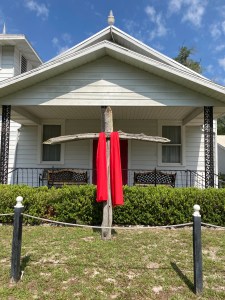
COME, HOLY SPIRIT

Pastor Sherry’s Message for May 31, 2020

Scriptures: Acts 2:1-21; Ps 104:24-35b; 1 Cor:12:3b-13; John 7:37-39

In 2016, this true story of Charlotte Heffelmire of Vienna, Virginia took place:  Charlotte was home from the Air Force Academy visiting her family for Thanksgiving break.  Her dad, Eric, was working on his GMC truck in the family’s garage.  He later recalled, “I was on my back, face up, and I was trying to get at some corroded brake lines when apparently the jack slipped and the truck fell down on me.  The minute the jack slipped, there was an almost instantaneous, real strong smell of gasoline, and then I heard, Whoosh!”  Afterward, he would say he was sure someone would be pulling a dead body out from under the vehicle.  Instead, his 19YO daughter heard the noise and came flying into the garage, barefoot.  She was about 5’4” and weighed 120#.  She says she cannot explain what happened next, but…She lifted that truck off her dad and got him out; then she jumped into the vehicle—which was on fire—threw it into 4 wheel drive, backed it out of the garage on three wheels and closed the garage door to contain the fire.

Then she ran into the house to get the family out, starting with her sister’s baby.

The news reported her saying, “I just did what I had to do. So I don’t feel like a big hero or anything.”  She was later recognized with a Citizen Lifesaving Award by the Fairfax County Fire and Rescue, and given a check for $10,000 on a TV talk show.

         Every once in a while we hear of some similar feat of superhuman strength after which folks say they had no idea how they accomplished it.  You and I know that no smallish young woman would have the upper body strength to lift a truck off her dad.  That kind of empowerment had to have come from the Holy Spirit.  The Holy Spirit is our power source for those times when God wants to do something impossible thru us.


We have looked the last few Sundays at the role of the Holy Spirit in our lives:  We have noted that Jesus promised the HS would…

1.) Remind us of everything Jesus said;

2.) Help us to rightly discern people, spirits, & situations;

3.) Empower us for service to Jesus and His Church;

4.) He also convicts us—like our conscience–of our sins.

This story of Charlotte Heffelmire is an example of HS empowerment.   It is

Superhuman and miraculous.


Today we celebrate Pentecost, the birth of the Christian Church (of all denominations) & the impartation of the HS to each of us believersOur Scriptures include the narrative from Acts 2, in which the Holy Spirit dramatically materializes.  The context is that the 120 disciples, men & women, are praying in the Temple.  Jesus had told them (Acts 1:4) Do not leave Jerusalem, but wait for the gift my Father promised…in a few days, you will be baptized with the Holy Spirit.  So they are being obedient, waiting, praying.


Finally, on the day of Pentecost, the HS shows up!  This is a theophany, an appearance or manifestation (signs & wonders) of God!

1st sign Suddenly from heaven there came a sound like the rush of a violent wind [Ruach—wind, breath, spirit].  This was no gentle breeze!  It came with the sound of a freight train, like a tornado.  Now, God had done this beforeàEze 37:9 God sends the wind to raise the dry bones of Israel to life.

 2nd sign They saw what seemed to be tongues of fire that separated and came to rest on each of them.  Imagine if you had been there!  Fire over your head, fire over the heads of your friends, but no one burning up!  Wow!  God had done this before tooàEx 3:2-5àMoses & the

burning bush.  The bush was on fire, but Moses saw that it did not burn up; instead, God used the bush to light a fire in Moses.  Also, in Isaiah 6àIsaiah’s call to be a prophet, àGod had an angel bring a burning coal to cleanse the prophet’s tongue.  Isaiah did not get burned; but he did get fired up to serve the Lord! 

3rd sign All of them were filled with the HS and began to speak in other languages, as the Spirit gave them ability.  They were all supernaturally empowered—like Charlotte– to do something they had never done before, in this case, speak in languages they had never been taught.  Parthians, Medes, and other folks visiting Jerusalem heard them praising God in their native tongues.  These foreign visitors realized something extraordinary was happening as these were simple folk from Galilee, or we might say from some small town in Florida.

 Now God had done this before tooàIsa 50:4 The Sovereign Lord gave me an instructed tonguethis means inspired speech.  Similarly, the Lord, (2:28), speaking thru the prophet Joel, promises, I will pour out my Spirit on all people. Your sons and daughters will prophesy, your old men will dream dreams, your young men will see visions.  Even on my servants, both men and women, I will pour out my Spirit in those days.  I can truthfully testify of times when I have preached and known the words I spoke were not my own—I had prepared something else–but God had other ideas about what He wanted me to say to His people.  What came out of my mouth was truly Holy Spirit inspired speech.

So, back to our passage.  The Holy Spirit showed up, big time!  But why would God go to this trouble?  (using wind, fire, inspired speech?)  I think He did for two reasons:

  1. Empowerment to tell others about Jesus.

Some denominations call this witnessing ( a word makes some of us uncomfortable)Witnessing, or sharing your testimony—your experience with Jesus—is actually how we go about living out the Great Commission, Matt 28:18àGo and make disciples of all nations, baptizing them…and teaching them to obey everything I have commanded you.  The disciples flowed out from where they had been teaching and praying in the Temple and began praising God and telling anyone who would listen about Jesus.  Witnessing means sharing with others what God has done in our lives and in the lives of our friends.  We do not do this in our own strength, but—like the disciples–thru the power of the Holy Spirit.  We don’t have to stand on street corners and wave our Bibles at people.  On the contrary.  Ask God to show you both who to share with and what to sayàask for an instructed tongue.

  1. Empowerment to do miraculous things for the building up of

God’s Kingdom:  a.) Praying for healing (and watching it happen); b.) Supernatural strength like Charlotte had; c.) Abilities to teach or preach, paint, make music, write, grow orchids, or to help those in need.  Paul describes 9 gifts of the Holy Spirit in our New Testament lesson today, 1 Cor12:3-13à

1.) Wisdom;

2.) Words of knowledge;

3.) Faith;

4.) Healing;

5.) Miraculous powers (Charlotte);

6.) Prophesy;

7.) Discernment of spirits;

8.) Tongues;

9.) Interpretation of tongues.

As our Gospel (John 7:37-39) describes it, the Holy Spirit is the source of the streams of living water Jesus promises to believers.

I want to share with you this humorous story of a miraculous dog (please know, in advance, that I mean no disrespect to either Baptists or Pentecostals).   A Baptist preacher and his wife decided they wanted a dog.  Given the scrutiny/oversight from their congregation, they knew it needed to be a well-behaved Baptist dog.  So they went to an exclusive kennel and expressed their needs and reservations to the owner.  He assured them he had just the right dog for them.  When the dog was produced, the kennel owner began giving it commands:  Fetch the Bible.  The dog bounced over to the bookshelves, looked them over, located the Bible, and obediently brought it to the man.  Then he said, Find the 23rd Psalm.  The dog, demonstrating amazing dexterity with his paws, leafed thru the Bible, found the correct passage, and pointed to it with his nose.

The preacher and his wife were so impressed that they immediately purchased the dog.  Later, they began to show off to members of their congregation what the dog could do, having him locate several Bible verses.  Folks were amazed, but one skeptic asked, Can he do any normal dog tricks?  “Let’s see,” said the preacher and commanded him to “heel!”

The dog immediately jumped up on a chair, laid his paw on a parishioner’s head and began to howl!  The preacher was shocked and turned to his wife and complained, “Honey, we’ve been swindled!  The kennel owner sold us a Pentecostal dog!”

This Pentecostal dog had the Holy Spirit gift of healing!


As we were reminded last week, just before Jesus ascended to Heaven, He gave us all a job:  Empowered by the Holy Spirit, we are to go and do.  We are to go witness to those God places before us…

Tell people who are interested the difference knowing God has made in your life; tell them of the wonderful ways that God has blessed you and might bless them.  Then use the gifts with which the Holy Spirit has entrusted you to build up God’s Kingdom here on earth.  Come, Holy Spirit!  Empower us to witness and to serve, we pray in Jesus’ name!


©2020 Rev. Dr. Sherry Adams


He Who Rides the Clouds

Pastor Sherry’s Message for May 24, 2020,

Scriptures: Acts 1:6-14; Ps 68:1-10, 32-35; Jn 17:1-11

Today is Ascension Sunday, the anniversary of Christ’s departure from earth and arrival back into heaven.  Of the 5 major Christian holidays, it is probably the least known or celebrated.  We celebrate (1) Christmasàhis incarnation and birth; (2) Epiphanyàthe visit of the Gentile Magi to the Christ child in Bethlehem; (3) EasteràChrist’s bodily resurrection from the dead; (4) Pentecostàcoming up next Sunday, 50 days after Easter; it marks the bestowing of the HS upon all believers & the Birth of Christ’s Church;And (5) Ascension–>Perhaps the most often forgotten of the special moments in Jesus’ earthly life. It is described in Luke 24 and in our Acts lesson today.

         Occuring 40 days after Easter, Ascension Day marks the end

of Jesus’ post-resurrection appearances.  The Gospels record 10 specific such appearances.  The point of these was to demonstrate that He really had

overcome death and the grave.  He ate and drank with folks. Something a ghost, a fake, or an illusion could not do.  But we don’t see Him doing TV interviews today, do we, because He then left.  He had completed His mission on earth.  So, it was time for Him to be reunited with the

Father in Heaven.  It was time for Him to regain all of the divine

privileges and prerogatives He gave up to come to earth.

As we read in our Acts lesson (Acs 1:6-14), He led the disciples to the Mount of Olives, gave them their “marching orders,” blessed them, then “lifted off.”  They were to await the impartation and power of the HS.  They were then to share their testimonies re Jesus with those…

1.) in Jerusalem where they were;

2.) then Judea, the rest of the county;

3.) then Samaria, the rest of the state;

4.) then to the all the world.

Next, as they watched, (v.9)…He was taken up before their very eyes, and a cloud hid Him from their sight.

This “FORGOTTEN Event”—the Ascension–was not neglected by the European Medieval Church: Reportedly it was a common practice–beginning in the 14th and continuing until the 17th centuries, to have a HOLE cut in the roof of the church, with a door on it. And each year on the FEAST OF THE ASCENSION, a STATUE of the RISEN CHRIST would be HOISTED UP by ropes up, up, up, through the hole in the ceiling of the church!   The people would stand up and cheer, with arms upraised! And then the workers on the roof, once Jesus had “ascended,” would throw down flowers on the crowd below, as a sign of blessing– preferably red roses, in anticipation of the DAY of PENTECOST!

So, what is the significance of Jesus’ Ascension?  He did not leave in a space suit or a rocket.  He was taken away in a cloud, and not just any cloud.  This cloud was pretty special.  Remember the cloud that guided the Israelites in the wilderness by day (indicating the presence of God).  Remember the cloud that hid Moses for 40 days as He communed with God at Mt. Sinai (meaning again that God was with him).  Recall how the glory of God entered Solomon’s completed Temple, in the form of a cloud, indicating that the Father had taken up residence there.  Remember that a cloud, on the Mount of Transfiguration, hid then removed Elijah and Moses following their conversation with Christ.  The cloud in all four examples is the manifestation of the Shekinah Glory of God.

Jesus jetted back to heaven, in a miraculous conveyance, upheld by the power and majesty of God the Father.  I have flown through clouds—they are vapor!  Ordinary clouds will not support a person’s weight!  Realizing this, some paintings from the Middle Ages depict Jesus’ feet as coming through the bottom of the clouds taking Him to heaven.

The Hebrew word for glory is kavud—weightiness.  The weightier the gold or a diamond, the more valuable.   When I was ordained, the Bishop laid his hands on my head as he prayed over me and for my future ministry.  It felt to me then as though he was trying to push me through the floor.  Later, I realized he had not been pushing me down, but that I had been blessed to have experienced the kavod of God’s at my ordination ceremony.

Psalm 68 is considered by Biblical scholars to be a psalm of the Ascension.  It was written by King David and applauds God’s rule and reign over all the earth.  But it also references God’s ability to ride on the clouds:  Verse 4àSing to God, sing praise to His name, extol Him who rides on the clouds–His name is the LORD—and rejoice before Him.  Also in verses 33-34, not part of our readings this morning, but relevantàTo Him who rides the ancient skies above, who thunders with mighty voice.  Proclaim the power of God, whose majesty is over Israel, whose power is in the skies.   David uses these images to express the extraordinary power of God and His control of/use of phenomena in nature for His purposes.  Unlike us, He is not limited by nature.  He created the laws of physics, but He Himself is not bound by them as we are.

Our Gospel lesson today (John 17:1-11) shows us the predicate for Jesus’ amazing transport.  All of Chapter 17 is called “Jesus’ High Priestly Prayer,” prayed by Him for the disciples (& for us), just before He goes to the Cross.  Some Biblical scholars call this the “true Lord’s Prayer”; the prayer we ordinarily refer to as “the Lord’s Prayer” is what Jesus taught us to use as a template for our addresses to the Father.  But this prayer is really a devout conversation between Jesus and His Father.

He asks 1st of all to be restored to His glory (v.1)àFather, the time has come.  Glorify your Son, that your Son may glorify you.  Jesus has glorified His Father (added to His reputation)  by completing His saving work at the Cross.  He taught; He preached; He healed; He forgave sins; He interacted with ordinary folks, with religious leaders, and with government officials.  Then He died taking the penalty for our sins upon Himself.

In this prayer, He is asking the Father for empowerment to bear up under the torture and humiliation of His trials and His execution; but also to return from the dead and to eventually ascend back into heaven.  Those who were eye-witnesses to these events would have no doubt that Jesus was truly God!

 So what is the meaning of the Ascension for us today?  A chaplin in South Carolina described seeing a sign in a church thrift shop which read, Jesus loves you!  Donations accepted.  The Ascension marks the end of Jesus’ earthly work.  God, in Christ, came to us to call us home to Him and to let us know we are loved beyond our human capacity to understand.  There is nothing we have to do to earn God’s love.  It’s ours.  Like the sign said, Jesus loves you.  That love comes with no conditions whatsoever.  However, our contributions are joyfully accepted!  We contribute  love.  We are also called to tell others about our amazing, loving God.  We start with where we are, Wellborn, Florida; then out into Suwannee County;  then to the state of Florida; finally to our nation and the world.

Just as there are no limits to God’s love, so too are there no limits on our opportunities to share God’s love with others.  This week, be on the lookout for persons with whom God would have you share His love.

©2020 Rev. Dr. Sherry Adams


Are We Done Yet?

Pastor Sherry’s Message for May 17, 2020

Scriptures: Acts 17:22-31; Ps 66:8-20; 1 Pet 3:13-22; Jn 14:15-21

As parents, we are all used to hearing from the backseat, “Are we there yet?”  But there’s another frequently asked question that you hear, especially when you assign your kids/grandkids (or students) a task–“Are we done yet?”  Husbands and wives also ask this of each other.  It indicates boredom and impatience, doesn’t it?  It indicates a desire to get on with the next, hopefully, more fun, entertaining, or exciting activity.

The following story illustratrates this issue:

It seems that one day a kindergarten teacher was helping one of her students put on his cowboy boots.  He asked for help and she could see why.  Even with her pulling and him pushing, the little boots still didn’t want to go on. Finally, when the second boot was on, she had worked up a sweat.  So she almost cried when the little boy said, “Teacher, they’re on the wrong feet.” She looked down and sure enough, they were.

It wasn’t any easier pulling the boots off than it had been putting them on. But she managed to keep her cool as together they worked to get the boots back on – this time on the right feet. And it was only then that he announced, “These aren’t my boots.”

She bit her tongue rather than scream, “Why didn’t you say so?” like she wanted to.  And, once again she struggled to help him pull the ill-fitting boots off his little feet. No sooner had they gotten the boots off then he said, “They’re my brother’s boots. My Mom made me wear ’em….”

I’m sure this teacher wanted to know when she might be done getting this child into somebody’s boots.


Our Gospel lesson today is a continuation of Jesus’ final words of wisdom and reassurance to his disciples, prior to His death on the Cross (John 14:15-21).  Jesus knows His hour has come, but the disciples don’t really get it.  He is trying to encourage them in advance of His arrest and execution.  He doesn’t want them or us to lose heart in the face of overwhelming disappointment, fear, or grief.

One of His final teachings is on the role the Holy Spirit will play in their (and our) lives once He has gone to heaven.  Jesus knows He will have 40 more days with them after His Resurrection and prior to His Ascension;

He wants them to know that, despite His coming death, they are not yet done with Him or with their own spiritual growth.  Actually, this side of heaven, none of us is done yet!


Let’s look more carefully at what Jesus says the Holy Spirit will do for and with us.  In verse 15, Jesus states, If you love Me, you will obey my commands.  As I stressed in my blog message last Sunday, out of Jesus’ love for us—and ours for Him—we obey His commands.  Now this does not mean we abide by the 10 Commandments, then dust our hands off and consider we’ve got it.  No, remember Jesus told the attorney that the first and greatest commandment was to love God, with our entire person and above all things; then the next to the greatest was to love others as we love ourselves.  This admonition implies that obeying Jesus goes beyond

simply adhering to the 10.  Just as we learn from Him, in His Sermon on the Mount (Matthew 5-7), that Thou shalt not kill also means we are not to get so angry that we sin, cuss someone out, or hold a grudge.  Love for neighbors requires that we value those with whom we have interpersonal relationships and we tend to them with care.  In fact, our LORD would probably like us to demonstrate love daily.  So, out of our love and devotion to Christ, we conform to or obey His expectations for or commands to us.


In verses 16-17, Jesus continues…And I will ask the Father, and He will give you another Counselor to be with you forever—the Spirit of Truth.  Jesus left this earth for Heaven, but did not abandon them and He has not abandoned us.  He asked the Father to send the Holy Spirit to remain with us forever–without a time limit.  The word for Counselor in the original Greek is parakletos and it meant (1) Advocate, in the sense of a defense attorney who is on our side, arguing for our rights; (2) It also carries the sense of a helper; and (3) of a comforter…He is our Holy Comforter.  (4) Jesus also calls Him the Spirit of Truth.  This means He will never steer us wrong.  This means He will never give us incorrect advice. We don’t have to fear bias or distortion from Him—everything He tells us will be the truth, the whole truth and nothing but the truth!


The Holy Spirit’s chief jobs, among others, are to (1) remind us of the teachings of Jesus; (2) to help us rightly discern people, spirits, and situations; and (3) to empower us for service to Christ & His church–including gifting people to sing, play music, preach, or teach.  All of our talents and gifts come from the Holy Spirit.  Whenever we encounter persons who have been healed through prayer, we can credit the Holy Spirit for their healing anointing.  Early on, as I began my practice in 1990 as a licensed psychologist, I would listen to a client and despite having learned “standard of practice,” research-based interventions, I would realize that I didn’t know what to do to help some individuals.  I learned to get quiet, to silently pray, and to listen for the still, small voice of the Holy Spirit.  I cannot adequately explain it, but an answer would “drop” into my head.  Often it was not in words I tended to use.  Occasionally it went against my training.  Always, however, it was exactly the right thing to do.  Those were “words of knowledge” and were provided to me by the Holy Spirit.  I was grateful and I believe my clients were too.


Jesus also warns His disciples (and us) that the world will recognize neither the Holy Spirit nor the work of the Holy Spirit.  Isn’t it ironic that the culture today seems to believe in ghosts, zombies, and werewolves–and even looks to the power of witches and consults mediums–but fails to appreciate the reality of the Holy Spirit?  In fact, the work of the Holy Spirit is often explained away as the efforts of humans, of science, or of nature (example: the Covid-19 virus).  Our God works through people, science and even nature but seldom gets the credit.  (On Good Friday, many Christians agreed to pray against the virus.  What if it is prayer that has decreased the expected number of deaths in American or flattened the curve?)  People will even credit an angel before they give credit to God, the Holy Spirit.  The Holy Spirit really is the invisible and unsung hero of the Trinity.


Jesus goes on to declare in verses 19-20àBefore long, the world will not see Me anymore, but you will see Me.  Because I live, you also will live.  On that day, you will realize that I am in my Father, and you are in Me, and I am in you.  Jesus is affirming that He will indeed transition out of this world into the next.  Because of His Resurrection, His triumph over death, we will also leave this life to live forever with Him eternally.  What comfort!  We know there is life after death and since we love Jesus, we too will enjoy it with Him.  When we are reunited with Him in Heaven, we will see the Trinity in all of its glory.  We will then comprehend Their unity and Their oneness of purpose.  We will see that the Father and Son are truly united, and that—due to the Holy Spirit–we are in Christ and Christ has been and is in us.


Jesus concludes this discourse with the summary assertion that(v.21), Whoever has My commands and obeys them, he is the one who loves me.  He who loves Me will be loved by My Father, and I too will love him and show Myself to him.  We demonstrate to Jesus that we believe Him and love Him by being obedient to Him.  We gain Jesus’ love (and the Father’s as well) by loving Christ.  It really is all about love, isn’t it?

Back in the 1960’s the Beatles sang, “All we need is love;” I’m not sure they were celebrating AGAPE or Godly love, but they were perhaps on the right track.  A pastor I know of has put John 14:15-21 into verse:


                                           If you love Me, keep My commands;

                                           I’ll pray that from the Father’s hands

                                           He’ll give you another Helper

                                           To abide with you forever.

                                           Spirit of Truth, the world can’t take

                                           To His presence it’s not awake.

                                           But you know Him, He dwells with you.

                                           What men can’t see will be in you.


I came across the story of a poor man who developed the habit of slipping into a certain church at a certain time of day, regularity, without fail.  Day after day, he would sit and apparently do nothing [my note:  Could he have been praying?]  The pastor of that church, unable to contain his curiosity any longer, asked the old man one day why he came to the church, alone, day in, day out.  What was the draw [My note:  Good grief!  Such a question from a pastor.  Yikes!] The old man looked at the pastor and, with a knowing twinkle in his eye, explained, “I look at Him.  He looks at me.  And we tell each other that we love each other.”  How beautiful!  How loving!


Are we done yet?  No, but becoming intentional about loving Jesus and God the Father puts us on the right road.  Through the Holy Spirit, Jesus has given us the means to love God and others more effectively. Two Sundays from now, we will celebrate Pentecost, the anniversary of the birth of the Christian Church.  It’s the day that the disciples all received the Holy Spirit.   Between now and then, let’s focus on loving God and others, and upon thanking God for the gift of His Holy Spirit.


Thanks be to God, who gives us the victory through our Lord Jesus Christ–and by means of the power of the Holy Spirit.  Alleluia!  Alleluia!  Alleluia!


©2020 Rev. Dr. Sherry Adams


That Way There Be Dragons

Pastor Sherry’s Message for May 10, 2020

Scriptures: Acts 7:51-60; Ps 31:1-5, 14-16; 1 Peter 2:2-10; John 14:1-14

         I understand that some current historians argue against the authenticity of this, but apparently maps dating from the middle ages would often include the inscription, “That way there be dragons.”   Often accompanied with colorful illustrations of these fearsome creatures, this warning was meant to alert folks of uncharted territories, especially oceans, which might contain terrifying dangers.  The phrase indicates peril.  It is intended to caution people to either avoid an area entirely, or to proceed with great care.  It arises from fear, not faith.  Fear is a kind of faith, but it is a faith in a negative outcome.  As Jesus tells us in our Gospel lesson today, John 14:1 Do not let your hearts be troubled [fearful, anxious]Trust in God; trust also in Me. The antidote to fear is faith or trust in God. 

         The context of our Gospel passage is Jesus’ desire to comfort His disciples prior to His crucifixion.  He wants them to understand several important points prior to His death and resurrection:

(1) What is to come will be of no surprise to Him: (v.2) In My Father’s house are many rooms; if it were not true, I would have told you.  I am going there to prepare a place for you.  Eugene Peterson, in his modern paraphrase of scripture, The Message, puts it this way: (vv.1-3) Don’t let this throw you. You trust God, don’t you?  Trust Me.  There is plenty of room for you in My Father’s home.  If that weren’t so, would I have told you that I’m on my way to get a room ready for you?  And if I’m on my way to get your room ready, I’ll come back and get you so you can live where I live.  He wanted them not to fear his death sentence and execution.  He knew that when the crisis arrived, they would cut and run.  He also knew that death would not hold Him.  He had other things to accomplish for their sakes, and for ours, and He would rise up to complete them.  He wanted them to be encouraged, to believe in what He had taught them and had demonstrated for them for 3+ years.  He wanted us to believe in what we’ve learned about Him in Bible readings and studies, and from sermons we had heard or read in our Christian journey.

(2) Jesus is trustworthy because He is God.  Technically, He is God’s Son, but fully God (as well as fully man).  Jesus states this very clearly (vv.9-10), Anyone who has seen Me has seen the Father….Don’t you believe that I am in the Father, and that the Father is in Me?   We could say He is the face of God the Father (who exists in spirit-form).  Jesus and His Father were in constant communication as He traveled, preached, and healed in the cities and towns of 1st century Palestine.  He took His “marching orders” directly from His Father.  As Jesus says in John 5:19-20, I tell you the truth, the Son can do nothing by Himself; He can do only what He sees His Father doing, because whatever the Father does, the Son also does.  For the Father loves the Son and shows Him all He does.  So, if God the Father is trustworthy—He says what He means and means what He says—then so too is Jesus, His Son. 

(3) We access God the Father solely through Jesus.  Jesus tells us (v.6), I am the Way and the Truth and the Life.  No one comes to the Father except through Me.  He is our intercessor; He is the Way, our gate, our entrée, the only way for us to gain admission to Heaven or to a relationship with the Father.  Years ago, I heard a story (that has since been memorialized by Nicholas Sparks in one of his novels):

 A wealthy man and his son collected rare works of art together.  Over the years, they had developed a large collection, including priceless paintings by Picasso, Renoir, Van Gogh, Rembrandt, and Monet.  Father and son enjoyed finding and purchasing them; they delighted in looking at them and discussing them.  When the Vietnam War broke out, the son volunteered for service.  Sadly, this courageous soldier died saving another.  His father grieved deeply as this young man had been his only child.

Just before Christmas that year, the fellow his son had saved knocked at the father’s door.  He shared with the grieving man how his son had saved his life and then presented him with a portrait he had painted of the young soldier.  The portrait was not excellent, but it did capture his son’s personality, and especially his eyes.  With great love and gratitude, the father hung it over his mantle, and came to value it more than all his other, finer paintings.

The wealthy man died months later and his will provided that his extensive collection of paintings would be sold at auction.  Art collectors from all over the world gathered to bid.  The first work offered was the favored painting of the son.  “Who will bid for this picture?” the auctioneer invited.  But the art connoisseurs only moaned; they considered this work substandard and were anxious to get to the masterpieces.  The auctioneer again asked, “Who will take the son?”  Again, no one responded as the collectors grew more and more agitated.  Someone in the crowd called out, “We’re not interested in this amateur painting.  Bring out the master works!”  But the auctioneer insisted that someone must bid on the initial painting before the others could be offered. 

Finally, a former servant who had also loved the son, bid $10, all he had on him.  The auctioneer tried for more, but the crowd was becoming impatient and angry.  So the auctioneer slammed down his gavel and announced, “Sold for $10.00…That concludes this auction!”  This declaration was met with a stunned silence which then exploded into general outrage:  “But what about the great works of art?”  The auctioneer then explained that such was the stipulation of the will:  Those seeking only the fine art work lost out; whereas the one who valued the portrait of the son got it all!

           We cannot come to the Father without loving and accepting His Son.   The only way to the Father is through His Son. 

          (4) Finally, Jesus assures them that whatever they ask, in prayer, of the Father—consistent with Jesus’ name and character—God will grant to them.  Now this does not constitute “carte blanche.”  Verse 15 (just beyond today’s reading) gives us an additional condition:  If you love Me, you will obey what I command.  Jesus is telling us that the Father will answer our prayers provided (a) they are requests for what Jesus would approve (not for revenge or for selfish motives like winning the lottery), and that (b) the petitioner—the one praying–lives a life submitted to Christ.  If we have wondered why God hasn’t answered our prayers at times, we might want to consider how (dis)obedient we have been as we have done the asking.  Sometimes our lack of submission to Christ serves as an impediment, a roadblock, to receiving from God what we have asked of Him.

          In sum, we do not need to fear dragons—or anything else, including the Wuhan Coronavirus!—if we trust in Jesus.  He is trustworthy and true.  Faith in Christ is our antidote to fear. 

         The psalmist, King David, stresses the same theme:  trust in God.  Given that King Saul chased David about the wilderness trying to kill him, for roughly 15 years, he clearly knew that godly believers can and do experience troubles.  It’s true, isn’t it, that our faith in Christ does not exclude us from experiencing tough times.  But David exclaims (vv.1-2)àIn You, O LORD, I have taken refuge; let me never be put to shame; deliver me in your righteousness.  Turn your ear to me, come quickly to my rescue; be my rock of refuge, a strong fortress to save me.  David knew and trusted that the God who anointed him King would protect him.  Even still, our God does protect us and is with us during our darkest moments.  You probably recognize verse 5 as one of the statements Jesus made from the Cross:  Into Your hands I commit [some translations say commend] My spirit….  He was trusting that He would be with the Father in His death.  So too have many Christian martyrs quoted this very passage at the instant of their deaths. John Huss, one of several Protestant Reformers burned at the stake in 1415 for “heresy”–against what he considered the erroneous teachings of the Catholic Church of the time–is reported to have forgiven his enemies as they lit the fire, to have sung the Psalms as the flames engulfed him, and to have given his spirit to the Lord, quoting this verse, as he died.  I believe that just as the pre-incarnate Christ walked in the fiery furnace with Shadrach, Meshach, and Abednego (Daniel 3:19-27), so too will our Lord be with us believers as we face death.  This kind of trust is the way of safety and eternal security.

         This was certainly true for Stephen (Acts 7:51-60), the first Christian martyr.  Arrested by the Sanhedrin for teaching and preaching Christ and His resurrection, Stephen, a deacon in the infant Church, confronted his accusers with their unbelief in a masterful sermon.  Just as they began to stone him, he attested to seeing heaven open and Jesus standing to the right of God the Father (considered the position of power).  The Sanhedrin was bound up by belief in their religious traditions and on their lust for power and influence.  They had followed Jesus about and had witnessed His miracles and heard His authoritative teachings.  Nevertheless, they failed to believe He was/is God.  That way—their way—there be dragons.

         As Peter makes clear (1 Peter 2:2-10), the safe way is obedience to Christ, the foundation stone of our faith.  Our faith in Jesus builds us into (v.9)àa chosen people, a royal priesthood, a holy nation, a people belonging to God, that you may declare the praises of Him who called you out of darkness into His wonderful light.  Lack of faith in Jesus is ultimately fatal.  That way there be dragons.  But faith in Him is actually the safe route and the only highway to God’s mercy and His eternal blessings. 

         As Easter people, we embrace the Risen Christ!  We put our trust in Him.  Our hearts swell with love for Him.  Thank you, Lord Jesus, for saving us!  Thank you for being the Way, the Truth, and the Life!  We appreciate You.  We are grateful to You.  We bless Your holy name!  Alleluia!  Amen!

 ©2020 Rev. Dr. Sherry Adams

Lord Knows We Need a Shepherd

keksschaf_Shepherd

Pastor Sherry’s Message for May 3, 2020

Scriptures: Acts 2:42-47; Psalm 23; 1 Peter 2:19-25; John 10:1-11

Recently, I became aware of a Christian blogger named Tim Challies.  I was impressed with his writing, his research, and his sense of humor.  (You can look him up on the internet and read for yourself.)  On August 26, 2013, he posted his thoughts on sheep in an article he titled, “Dumb, Directionless, Defenseless.”  This warranted my interest as today’s lessons are on the “Good Shepherd,” the “Great Shepherd,” and the “Chief Shepherd,” our Lord, Jesus Christ.

  Challies makes the points that the Bible refers to Israel—and by extension, to those of us who believe in Jesus—as sheep.  It also says that God is the Great Shepherd of the sheep.  He cares for us, leads us, protects us, and provides for us.  The religious and political leaders of ancient Israel were supposed to have been good shepherds as well, but they often enriched themselves at the expense of the sheep.  God really takes them to task in Ezekiel 34, and says He will remove them from their positions of power and replace them (vv.23-24) with a much better shepherd.  Somewhere between the years 593-571 BC, the prophet Ezekiel, speaking for God the Father, foretells the first coming of Jesus in this chapter.  Jesus was meant to be this honest, compassionate, loving, protective shepherd.

Challies goes on to write that sheep need a good, caring shepherd because these animals are essentially defenseless, cannot survive on their own without guidance and protection, and if unguarded, can stumble into deadly calamities.  He cites a news event of the week of his post, 8/2013, in which careless shepherds in eastern Turkey failed to keep an eye on their sheep while taking a break to eat a meal.  Left to roam, 400 sheep fell to their deaths into a ravine; another 1,100 animals survived the same fall by landing on the soft cushion created by the first fatalities.  The economic loss was estimated at $74,000.  Apparently, as sheep tend to do, each followed the one in front of him or her, even as it meant going over a cliff!  Needless to say, it is no compliment to us that God sees us as sheep!

The 23rd Psalm (probably outside John 3:16, the best known passage in the Bible), was written about 400 years before Ezekiel’s prophecy, but it too can be understood as another early prophesy of Jesus.  Composed by an aged King David, also a shepherd both of his father’s sheep and of his people, the king reviews what he has learned about God’s role as shepherd in his own experience:  He is clear that God has functioned as the Shepherd King of the shepherd king.  God has provided for David (vv.1-2, green pastures, still waters), as well as for us.  I know He has always done so for me personally.  Even when money has been scarce or “tight,” the Lord has ensured that I have never gone hungry nor have I been unable to pay my bills.  I thank Him and praise Him for this.  Perhaps you have had the same experience?  He has certainly provided rest and restoration when I have been worn out and in need, and He has offered guidance when I have been wise enough to seek it from Him (vv.3-4).  We may need to get to heaven to learn of all the times He has protected us from bad relationships, poor investments, unwise actions, and even from death!  Maybe you can think back to such times, now recognizing and appreciating God’s protection of you then.  I can, I do, and I praise Him.  God used His rod and His staff with King David, and may have done so with us as well.  The shepherd’s rod, a symbol of his authority, was used to count, guide, rescue, and, as a weapon, to protect his flock from predators.  The shepherd’s staff was intended to help support the shepherd when tired or when trudging up a steep path, but also to give direction to the sheep.  Verses 5-6 refer to David’s gratitude for times the Lord has redeemed him from harm, defended him, and showered him with blessings, as well as the King’s desire to remain in God’s pocket all the days left to him.  Wouldn’t we all do well to think of times God has rescued us, blessed us, and even vindicated us?  Shouldn’t we all want to walk alongside Him, tucked up under His protective arm as a child with a loving parent or grandparent?  I know that’s where I want to be!

In our lesson from 1 Peter, the apostle is still extolling the great redemptive virtue and value to us of Christ’s death and resurrection.  In 2:23-24, he writes, When they [the mob, the Romans, and the religious establishment] hurled their insults at Him, He did not retaliate; when He suffered, He made no threats.  Instead, He entrusted Himself to Him who judges justly [God the Father].  He Himself bore our sins in His body on the tree [remember, the Hebrew language considered any part of a tree, including a single stick or even a cross composed of two beams, as “a tree”], so that we might die to sins and live for righteousness; by His wounds you have been healed [a quote from Isaiah 53:3].  In keeping with today’s theme of shepherds and sheep, he goes on to say (v. 25), For you were like sheep going astray [think of those Turkish sheep blithely walking off the cliff], but now you have returned to the Shepherd and Overseer of your souls.  Peter is exhorting us to follow hard after Jesus, instead of adhering to our own wills or the poor examples or seductive encouragement of misguided others.  Oh, may that be so for each and every one of us!

In today’s Gospel lesson, John 10:1-11, Jesus identifies Himself as the Good Shepherd, the one indicated both by King David in Psalm 23 and by the prophet Ezekiel in Ezekiel 34.  I have heard people protest that Jesus never identified Himself as God.  These critics do not seem to comprehend that whenever Jesus made an “I am” statement—and there are plenty of them in the Gospel of John–He was essentially claiming that He was and is God—after all, God the Father had told Moses that His name was/is I am (Exodus 3:13).  He goes on to describe shepherding practices, images widely known to the people of that day, distinguishing what He does for us from what evil doers do–especially the Evil One.  The shepherd would go into the sheepfold, where all the village flock would have spent the night, by way of the gate.  Only those intent on wrong doing, thieves or robbers, would jump the fence.  Since the Shepherd is legit, He enters through the doorway.  He would then call his own sheep out, by name, from among those of the other shepherds.  He would lead only his own out to the day’s pasture and water, and his particular sheep would respond to his voice and follow him.  They would not respond to someone else’s voice.  Furthermore, Israelite shepherds led their sheep instead of driving them from behind.

Now, in using these familiar images, Jesus was pointing out how His leadership, His Kingship, His shepherding differs from imposters and from evil doers.  He knows us, intimately, by name.  He calls us by name.  His first “I am” statement in this passage is contained in verse 7àTherefore Jesus said again, “I tell you the truth, I am the gate for the sheep.  And again in verse 9àI am the gate; whoever enters through Me will be saved.  He will come in and go out, and find pasture.  In other words, the only way into Jesus’ flock or Jesus’ Kingdom is by believing in Jesus.  Cultural wisdom tells us that there are many routes into heaven.  But Jesus is here telling us He is the only actual entrance to heaven, our one and only means of salvation.  Later, in John 14:6, Jesus clarifies, I am the Way, the Truth and the Life. No one comes to the Father except through Me.

 There is another image here worth understanding:  In the Ancient Near East, a shepherd often slept across the gateway at night.  There may have been a watchman posted about, but often shepherds took turns being the guy who actually slept in the gateway to the sheepfold.  His duty was to protect the several flocks gathered in for the night with his own body.  Evil doers could only get in over his dead body (this is probably where that expression originated)Additionally, no sheep could foolishly escape, unprotected, wandering off into the danger and darkness.  Jesus is clearly alluding to His protective shepherding of us.  During this Wuhan Coronavirus season, I truly have not worried about contracting it.  I have taken social distancing seriously, have washed my hands often, and have worn a protective mask into the grocery store, but I have not really sweated getting it.  I believe the Lord desires to protect us and will do so if we trust in Him.  In verse 11, He identifies Himself as the Good Shepherd:  I am the Good Shepherd.  The Good Shepherd lays down His life for the sheep.  Jesus Christ has given His life so that you and I might have life and …have it to the full (other translations read, …have it more abundantly) (v.10).

Finally, notice that Jesus condemns His religious predecessors as thieves and robbers (v.8) probably because the Pharisees and Chief Priests of Israel taught a form of religious ritual instead of the importance of having a personal relationship with God—and, most importantly, because they missed the fact that Jesus was the promised Messiah.  They saw Him and heard Him preach, they observed the miracles He performed, but they did not rightly perceive that He was their Lord and their God.  May we have eyes to see and ears to hear, and minds that rightly perceive the Truth when we are exposed to it. 

In this post-Easter Season, I have been writing about how we might live out being an Easter People.  How do we demonstrate being folks who believe in the Resurrection of Jesus?  We wisely recognize Him as the Good Shepherd of Psalm 23, Ezekiel 34, and John 10.  We agree with the writer to the Hebrews (13:20) that He is…our Lord Jesus, that Great Shepherd of the sheep.  And we believe, with St. Peter, (1 Peter 5:4) that he is…the Chief Shepherd.  As Challies writes, we may at times be dumb, directionless, and defenseless; but hopefully, as believers in Jesus, we are more often guided, cared for, protected, defended, loved, healed, and saved!  Thanks be to God who gives us the victory through our Lord Jesus Christ!  Alleluia!  Alleluia!

©2020 Rev. Dr. Sherry Adams


E-Mouse Walks

Pastor Sherry’s Message for April 26, 2020

Scriptures:

Acts 2:14a, 36-41; Psalm 116:1-4, 12-19; 1 Peter 1:17-23; Luke 24:13-35

         Some years back, I heard of a gruff, burly, no-nonsense, German, Lutheran retreat leader who organized and ran 3-day retreats.  He was (in)famous for two things:  (1) He would gather all the people who had arrived to begin his retreat and proceed to rummage through their luggage,  confiscating all cell phones, I-pods, Kindles, laptops, and blackberries, as well as any cigarettes, wine, or alcohol.  (2) Next, he would divide folks into pairs and send them out into the woods to experience an “E-Mouse” walk–this was the way he pronounced “Emmaus.”  His hope was that those attending the retreat would begin their experience by having an encounter with Jesus, just as did the two described in today’s Gospel lesson (Luke 24:13-35). 

Now clearly we can and do stumble upon Jesus in nature.  Psalm 19:1 tells us, The heavens declare the glory of God; the skies proclaim the works of His hands.  How many of us have marveled at God’s majesty and creativity as we have gazed at a beautiful, starry night sky!  Paul reiterates this truth in Romans 1:20, where he asserts that God has revealed Himself to all persons through His creation: For since the creation of the world, God’s invisible qualities—His eternal power and divine nature—have been clearly seen, being understood from what has been made, so that men[and women] are without excuse.  In other words, Paul is saying no one can legitimately deny God’s existence as His works all about us in nature demonstrate that He is real.  Truly, we can encounter Christ in His creation. 

The authors of our Scripture passages today, however, emphasize other ways in which we can and do encounter our Lord.  Peter, in the continuation of his sermon in Acts 2:36-41, underscores the importance of Jesus’ death and resurrection.  In this speech, Peter insists that we all bear responsibility for Jesus’ execution: Therefore let all Israel [and by analogy, all the rest of us] be assured of this:  God has made this Jesus, whom you crucified, both Lord and Christ.  He is making the point that Jesus died for their sins and for ours. These words of his were so moving at that time that 3,000 persons in Jerusalem felt sufficiently convicted of their sins to repent, to submit to being baptized, and–under the inspiration of the Holy Spirit—to walk away from their Jewish faith to become Christ-followers.  We encounter Jesus when we realize both our need for a savior and His willingness to die to redeem us from our sins.

Peter very consistently stresses this same point in his epistle, 1 Peter 1:18-19àFor you know that it was not with perishable things such as silver or gold that you were redeemed from the empty way of life handed down to you from your forefathers, but with the precious blood of Christ, a lamb without blemish or defect.  The whole idea behind the sacrificial system of the Old Testament was that there must be an atonement or payment for sin.  Our holy God established the principle that the one who sins is responsible for his or her actions and pays with his or her life (see Leviticus 17:11; Deuteronomy 12:23; and Ezekiel 18).  We may not like it or agree with it, but this is a foundational principle that God Himself instituted.  However, in His love and mercy, He had also provided a method by which those who believed in Him could avoid the death penalty for their sin:  They could sacrifice a perfect, unblemished male lamb, goat, or bull in their place.  The fact that atoning for sin required some sacrifice (time and money to raise the animal, as well as losing any revenue the animal may have provided) was meant to impress upon sinners the cost to them (and to the animal) of their sin. The life-blood of the animal covered, or made restitution for, the sins of the person who offered it.  But because they (and we) sinned so often, daily—even numerous times in one day—this system was frustrating, expensive, and did not ultimately solve the human sin problem. 

Peter asserts that, essentially, there is nothing that we can do on our own that would redeem us from our sins.  Instead, we are redeemed by Jesus’ “precious blood.”  Isn’t it interesting that a hardened, practical fisherman would use such an expression?  That fact alone tells us how much he valued Jesus and His willingness to take upon Himself our sin-penalty.  He then refers to Jesus as a “sacrificial lamb.”  He is referencing the Old Testament sacrificial system as well as building on John the Baptist’s prophetic assertion that Jesus was and is (John 1:29)à…the Lamb of God, Who takes away the sin of the world.  The writer to the Hebrews dedicates an entire chapter (10) to explaining how Jesus eliminated the Old Testament sacrificial system by becoming the once and for all, perfect sacrifice for our sins.  The shedding of His blood was sufficient to make up for all or our sins, past, present, and even future.  How profound!  How incredibly generous and loving!  It puts me in mind of that old hymn:

What can take away my sins?

Nothing but the blood of Jesus.

What can make me whole again?

Nothing but the blood of Jesus. 

Oh precious is the flow …

That makes me white as snow.

No other fount I know…

Nothing but the blood of Jesus.

Additionally, Peter wants us to comprehend—and remember he was an eye-witness—that Jesus was sinless and therefore “perfect.”  He then goes on to say (verses 22-23, from Peterson’s The Message) Now that you’ve cleaned up your lives by following the Truth [Jesus Christ is the Way, the Truth, and the Life], love one another as if your lives depended on it.  Your new life is not like your old life.  Your old birth came from mortal sperm; your new birth comes from God’s living Word.  Just think:  a life conceived by God Himself!  Peter keeps reminding us of Christ’s resurrection power.  He wants us to know that we encounter Jesus when we recall that He paid the price for our sins.  He wants us to know encounter Jesus when we realize that He put His life on the line for us.  As a result, we owe Him our love and our gratitude.  As a result, we want to live life differently; we want to be more loving toward God and more loving toward others. 

The psalm appointed for today, Psalm 116:1-4, 12-19, can be viewed as a kind of love song to God.  It invites us to praise God for delivering us from the finality of death.  It also encourages us to realize that God considers as having great value.  I often tell people who worry that they are of no consequence to God, that even if they had been the only person alive, Jesus Christ would still have gone to the Cross to redeem them.  That’s how important we are to our God!  This is why we want to offer to Him not a blood sacrifice, thank goodness, but a “sacrifice” of praise.  The writer to the Hebrews says in chapter 13:15àThrough Jesus, therefore, let us continually offer to God a sacrifice of praise—the fruit of lips that confess His name.  Like offering compliments to relatives or friends, it takes some time and our intentional effort to praise God.  He is worthy of our praise!  We encounter Christ as we lift up praises to God.

Finally, our Gospel lesson recounts the experiences of the two disciples on the road to Emmaus (not E-mouse).  They are disheartened because their hopes that Jesus was the longed for Messiah had been dashed by His death on the Cross.  Apparently all of Jerusalem had been abuzz, talking of Jesus’ arrest, trials, crucifixion, death, and reported resurrection.  Some women claimed they had seen Him but as yet no others had.  In other words, they are walking the 7 miles home from Jerusalem, on Resurrection Day, without having believed that Jesus had overcome the grave.  So, Jesus, in His mercy, appears to them.  He listens to their despair, then chastises them (v.25): How foolish you are, and how slow of heart to believe all that the prophets have spoken!  He then “takes them to school.”  Without revealing His identity, He explains how all the Old Testament prophesies are fulfilled by the Christ.  What a Bible study that must have been!  Here is the in-the-flesh Word of God revealing Himself through God’s written word.  Wouldn’t you have loved to have been there listening to this vibrant and powerful teaching?  Wow!  Later, they get just Who He is when He prays and has a meal with them.  Notice that He does not show them the nail holes on His hands and feet.  From our perspective, this side of the Cross, we can say instead that He made Himself known to them in Word and in Sacrament.

These same two kinds of encounters with Christ are available to us today.  We encounter Jesus when we read, study, and meditate on Scripture.  We encounter Jesus when we join with Him in table fellowship, by partaking in the bread and wine or grape juice of Communion.

Since Easter, I have been writing to you about how we live out being “an Easter people.”  We can do this by focusing on (1) Jesus’ perfect, sacrificial, atoning death for our sins; (2) His glorious and powerful Resurrection; (3) His demonstration of God’s amazing love for us; (4) Our logical and heartfelt response of praise and gratitude to Him; and (5) Recognizing Jesus in Word and Sacrament.  We can take “E-mouse walks” in the woods to encounter Christ, but we can also do so in our heads, and in our hearts, and in our spirits.  This week, let’s resolve anew to study Scripture daily and—as we do so—let’s ask the Holy Spirit to reveal Jesus to us in new, robust, life-changing ways.   

©2020 Rev. Dr. Sherry Adams


Live Like Easter People, People of Hope

Pastor Sherry’s message for April 19, 2020

Scripture lessons: 4/19/2020, Acts 2:14a, 22-32; Psalm 16, 1 Peter 1:3-9; John 20: 19-31

This week, in an on-line message meant to encourage us, our Methodist Bishop Ken Carter, quoted one of his early mentors, a fellow named Ken Callahan: “We are the people of the empty tomb, the risen Lord, the new life in Christ. We are the Easter people. We are the people of hope.” What does that mean to you and to me? To think of ourselves as “Easter People” and “People of hope?” On this first Sunday after the Resurrection of Jesus Christ, these questions deserve our consideration. And, as usual, the Scripture passages appointed for today provide useful direction. Let’s check them out together.

         You may have noticed that after Easter Sunday, the usual Old Testament reading is often replaced by a lesson from the Acts of the Apostles.  This is because the book of Acts records the actions of the first Christian Church leaders.  Shortly after Jesus’ resurrection and ascension into heaven, the new faith became known as “The Way.”  The initial progress of “The Way”—its first 30 years–is recounted for us in Acts.  Acts 2: 14a, 22-32 records a portion of Peter‘s first sermon.  He is speaking to believing Jews only, Jews who have come from all over the Mediterranean world to Jerusalem, to celebrate Pentecost, 50 days after Jesus has left terra firma.  The Holy Spirit has suddenly come upon 120 Christ-followers and has empowered them for ministry.  At the Temple, they break forth into a jubilant and noisy celebration, speaking in many previously (to them) unknown languages, and those who hear them believe they may be drunk from carousing.  After all, it is only 9:00 in the morning!  But Peter launches into a Holy Spirit-inspired speech, boldly proclaiming Jesus’ identity as God’s Son, as demonstrated by His resurrection from the dead (vv.22-24): Men of Israel, listen to this:  Jesus of Nazareth was a man accredited by God to you by miracles, wonders and signs, which God did among you through Him, as you yourselves know.  This man was handed over to you by God’s set purpose and foreknowledge; and you, with the help of wicked men, put Him to death by nailing Him to the crossBut God raised Him from the dead, freeing Him from the agony of death, because it was impossible for death to keep its hold on Him.  Peter is explaining to the crowd exactly what had happened to Jesus. 

         He goes on to recite a portion of Psalm 16 (8-11), a Song of the Resurrection.  Again, inspired by the Holy Spirit, Peter interprets this psalm of David as pertaining to Jesus Christ.  We don’t know if King David even realized at the time he composed it that he was foretelling the resurrection of Jesus; but—from this side of the Cross—we can comprehend that the lines he penned refer not to himself, but to our Lord: (8) I have set the LORD [God, the Father] always before Me.  Because He is at my right hand, I will not be shaken.  (9) Therefore My heart is glad and My tongue rejoices; My body will also rest secure, (10) because You [Father] will not abandon Me [Jesus]  to the grave, nor will You let Your Holy One see decay. (11) You have made known to Me the path of life; You will fill Me with joy in Your presence, and with eternal pleasures at Your right hand.  Clearly King David is not referring to himself, as his bones were buried on Mt. Zion years before and had not made a reappearance since.  Instead, Peter is referring to King David’s descendant, Jesus.  In other words, Peter is saying verse 8 describes Jesus’ earthly life; verses 9-10, His death and resurrection, and verse 11, His ascension.  Later on in (Acts 13:34-37), Paul quotes these same verses from Psalm 16, attesting to the fact that King David died and decayed in his grave, while Jesus was raised whole, neither deteriorated nor decomposed.

So, our first two lessons today reiterate the facts of the resurrection, both prophesied and fulfilled. Perhaps, then, our 1st lesson in what it is to be an Easter people, a People of Hope, is to tell others about Jesus’s death and resurrection (I recommend you first check with the Holy Spirit to determine if He is prompting you, as He best knows who out there is ready to listen and receive). The 2nd lesson, I believe could be derived from Peter’s life and example. When he walked with Jesus, Peter had been brash, impetuous, boastful, larger than life—all traits of someone who could have become a bully. Instead, having been chastened by Christ and realizing how he had failed his Lord, Peter assumes the mantle of leadership in “The Way” as a self-effacing, humble, obedient, but also confident servant of Jesus Christ. In the portion of his letter that we read today, 1 Peter 1:3-9, he celebrates our inheritance through Jesus and encourages us to hold up under our earthly sufferings [from Peterson’s modern paraphrase, “The Message”]:

What a God we have!  And how fortunate we are to have Him, the Father of our Master Jesus!  Because Jesus was raised from the dead, we’ve been given a brand-new life and have everything to live for, including a future in heaven—and the future starts now!  God is keeping a careful watch over us and the future.  The Day is coming when you’ll have it all—life healed and whole.

I know how great this makes you feel, even though you have to put up with every kind of aggravation in the meantime.  Pure gold put in the fire comes out of it proved pure; genuine faith put through this suffering comes out proved genuine.  When Jesus wraps this all up, it’s your faith, not your gold,  that God will have on display as evidence of His victory.

You never saw Him, yet you love Him.  You still don’t see Him, yet you trust Him—with laughter and singing.  Because you kept on believing, you’ll get what you’re looking forward to: total salvation.

 Easter People, People of Hope, do trust in God’s love for us and we love Him in return.  We are people of faith who rely upon God’s care for us.  We don’t have to fear the Wuhan Corona Virus, economic collapse, or the isolation our “sheltering at home” and “social distancing” have created for us.  These things are transitory sufferings, or “every kind of aggravation.”  These earthly threats and annoyances do not carry the value that eternal truths do.  If we are to live as Easter People, People of Hope, we put our trust in God and in Jesus, not in newscasters or politicians or world events.  This is not to say we remain ignorant.  We want to stay informed, but we also want to be confident—like Peter—and calm.  As Paul wrote in 2 Timothy 1:7, For God did not give us a spirit of fear but of power, of love, and of self-discipline.

Finally, our Gospel from John 20:19-31 provides us the example of Thomas. This is the Apostle Thomas who would not believe Jesus had been resurrected on the strength of the unanimous reports of his ten closest buddies.  He insisted he had to see for himself before he would believe that Jesus was alive.  So a week later, Jesus appears to all of them, Thomas included, and invites the skeptic to see for himself.  Notice, Jesus doesn’t condemn him for his doubts. Jesus patiently granted permission to Thomas to put his fingers in the scars on His hands and in His side, to see the nail holes in His feet.  The Bible doesn’t record whether or not Thomas actually felt Christ’s wounds.  Thomas seems to have gotten it as soon as he saw the risen Jesus.  That makes total sense to me.  What is even more amazing–and reassuring–to me, however, is that Jesus doesn’t expect Thomas, or us, to park our intellect at the church door.  Instead, He demonstrates in this encounter with Thomas that He is prepared to meet us where we are.  And, if our hearts are willing, and our spiritual eyes are open, He will reveal to us that He is alive and victorious!

Easter People, People of Hope in the Risen Christ, believe Jesus Christ is alive—even if we have not seen Him with our physical eyes.  We can experience Him through the pages of Scripture.  We can and do come to hear from Him in our prayer life.  We see evidence of His love and care for us in everything from locating a convenient parking place in a downpour, to realizing He has answered our specific prayer, to acknowledging He has shaped circumstances to protect us, to correct us, or to bless us.  Easter People, People of Hope, see Christ at work in events and happenings around us.  Recent research in Neuroscience tells us that our brain’s natural default process is to think negatively about most things.  As a result, and if we want to be happy or content, we must intentionally practice thinking positively to overcome this natural, but unhealthy, tendency. 

This week, let us try to focus on seeing God’s hand at work around us.  Let’s look for evidence of His action in our lives with our “spiritual eyes”—eyes informed by His Holy Spirit rather than our own rods, cone, retinas, and optic nerves.  Let us not allow the news or world events to drive us into fear or panic.  Instead, let us place our faith in the God who loves us and who is alive and on the throne.  Thanks be to God who gives us the victory through our Lord, Jesus Christ!  Alleluia!  Alleluia!

*Addendum: Friends of mine (Dr. Sarah and Rev. Jon Hall) have just written and perform a song touching on today’s readings. If you like, you can go to the following YouTube link to listen to “If There Ever was Hope.” The singer and commentator, Sarah, attended seminary with me. She has a Ph.D. in Old Testament and met her husband, Jon, a Brit, while completing her studies in England. Jon is one of the two founding pastors of Incarnation Anglican Church near the Florida State University campus in Tallahassee, Florida. He is the one accompanying his wife on piano. May this wonderful music (and art) bless you!

©2020 Rev. Dr. Sherry Adams

Alleluia, the Lord is risen!

Pastor Sherry’s Easter Message

Scriptures: Acts 10:34-43; Ps 118:1-2, 14-24; Colossians 3:1-4; Matthew 28:1-10

         There is an old story that given our increasingly post-Christian culture–in which so many do not even know about Jesus—seems remarkably timely and all too accurate for someA man was walking down a street when he noticed in a store window a beautiful painting of the crucifixion of Jesus Christ.  He stood there gazing at the picture for the longest time, and then realized that a little boy was standing beside him.  He patted the child on the head and said, “Son, what does that mean?”  The little boy said, “Doncha know?  That there man is Jesus, an’ the woman that’s crying is His mother, an’ them others is Roman soldiers.  They killed Him.”  The man nodded, smiled, and then started walking away.  In a few moments he heard someone running, turned and saw that it was the little boy.  He dashed right up to the man, out of breath, and said, “Mister, Mister, I forgot to tell you that He didn’t stay dead.”  Or, as a 3 year old once told me, “Jesus busted off the Cross!” 

That is the great good news of Easter, isn’t it?  Today we celebrate that wonderful, that astonishing, and unique fact of the Gospels, that Jesus Christ rose from the dead.  In my Good Friday meditation, I wrote that Jesus is the only leader of a major world religion who died to save His people.  All other world religions report the death of their leaders, but Jesus Christ came back to life and lives to this day!  Only Christianity attests to a resurrection!  Only Christianity confirms that Jesus Christ, the Son of the Living God is Himself living…(Acts 7:55), …standing at the right hand of God [The Father, in Heaven]As Paul testifies in 1 Corinthians 15:3-7àFor what I received I passed on to you as of first importance: that Christ died for our sins according to the Scriptures, that He was buried, that He was raised on the third day [which we celebrate as Easter Sunday], and that He appeared to Peter, and then to the Twelve.  After that, He appeared to more than five hundred of the brothers [not counting the sisters] at the same time…Then He appeared to James [His previously unbelieving, half-brother], then to all the apostles, and last of all He appeared to me [Paul]….  Scholars tell us there is actually more evidence of Jesus’ life, death, and resurrection than there is of the existence of Julius Caesar.  We can trust that our God lives!

Our Acts (10:34-43) lesson today reiterates this theme:  After Jesus’ resurrection and ascension into Heaven, Peter—at the urging of the Holy Spirit–has journeyed to the home of the Roman Centurion Cornelius, a man who believed in the Jewish God but was eager to learn more about Jesus.  Peter delivers the Gospel message to Cornelius and his household, saying, We [Jesus’ disciples] are witnesses of everything He did in the country of the Jews and in Jerusalem.  They [the Jewish religious leadership] killed Him by hanging Him on a tree, but God raised Him from the dead on the third day and caused Him to be seen.  He was not seen by all the people but by witnesses whom God had already chosen—by us who ate and drank with Him after He rose from the dead.  He commanded us to preach to the people and to testify that He is the One whom God appointed as judge of the living and the dead.  All the prophets testify about Him that everyone who believed in Him receives forgiveness of sins through His name.  The same Peter who denied being a Christ-follower three times during one of Jesus’ trials, is now boldly and confidently telling a powerful and influential Gentile about Christ.  Jesus’ resurrection is no myth!  Please note that if you search through all of the book of Acts, you will find that every sermon recounted mentions the resurrection of Jesus.  You see, the resurrection is the very heart of the Gospel.  We worship a God so powerful that He can bring the physically dead—as well as the spiritually dead–back to life!  Wow!

Psalm 118 is a “Song of Salvation,” praising God for saving His people.  Written centuries before Jesus’ birth, death, and miraculous return to life, it refers to His resurrection in verses 17-18àI [Jesus] will not die but live, and I will proclaim what the Lord has done.  The Lord has chastened Me severely, but He has not given Me over to death.  The remainder of the psalm expresses the believer’s gratitude and praise to God for His goodness, His love, and His divine rescue.

The Gospel account of post-resurrection events reiterates the resurrection event from Matthew’s perspective (Jesus’ Kingship and His fulfillment of all Old Testament prophesy of the Messiah).  Prior to the women’s arrival, there has been (v.2) …a violent earthquake, for an angel of the Lord came down from heaven and, going to the tomb, rolled back the stone and sat on it.  His appearance was like lightning and his clothes were white as snow.  The guards were so afraid of him that they shook and became like dead men [they fainted]The resurrection had occurred earlier that morning.  The angel did not have to let Jesus out.  He had already miraculously left the tomb.  The angel simply demonstrated the empty tomb for the benefit of these first witnesses, Mary Magdalene and Mary, the mother of James and Joses.  The angel testifies to Jesus’ resurrection—(v.5)àDo not be afraid, for I know that you are looking for Jesus, who was crucified.  He is not here.  He has risen, just as He saidinviting them to see the now vacant tomb, and directing them to go tell the other disciples that Jesus has risen and that they are to meet Him in Galilee.  Come, see, go, meet.  It is a simple message, a directive from Christ Himself, delivered by a heavenly messenger.  And the women obediently do as the angel directs.

The women’s faith in the resurrection is based on the evidence of their eyes and ears.  They relay what they believe to Jesus’ disciples and a group of them do set out, in faith, to rendezvous with Him in Galilee.  This is, I believe, a message for us as well.  Our faith is developed by what we perceive—through sight, by reading the Bible, God’s word, and through hearing the testimony of others’ knowledge of and encounters with Christ.  Then we are to go and share our personal experiences with others, helping them to come to a saving faith in Jesus as well.  We meet Jesus in our Scripture readings and in prayer.  We see evidence of Him all around us, if we look with our spiritual eyes and listen with our spiritual ears.  He is alive and desires a persona relationship with each of us.

Finally, in our Colossians lesson (3:1-4), Paul exhorts us to Set your minds on things above, not on earthly things.  In other words, and in view of Jesus’ resurrection, we are to make Christ preeminent in our lives.  He is the Creator, so He truly is supreme over all of creation.  He is our Redeemer, eminently qualified to rescue us.  He gave Himself up to death to save us from the stranglehold of sin and death over us, so we owe Him not only our gratitude, but also our obedience.  You see, the most important thing in our lives right now is not the Wuhan Corona Virus, nor is it our being isolated or quarantined at home, nor is it the looming threat of economic collapse.  These are all earthly concerns.  Our God is sovereign over all earthly concerns, over all worldly events, over all history.  If we can believe that He could come back from the grave, we can trust that He’s got this!  We don’t have to worry.  Our God rules and reigns! 

Perhaps my favorite Easter hymn—especially if played on a big, booming pipe organ—is “He is Risen.”  Written in the 1880’s, the lyrics are a bit outdated, but even so they summarize the theology of the resurrection so beautifully:

He is risen, He is risen!  Tell it out with joyful voice:

He has burst His three day’s prison; let the whole wide earth rejoice;

Death is conquered, we are free,

Christ has won the victory!

Come, ye sad and fearful hearted, with glad smile and radiant brow!

Death’s long shadows have departed;

Jesus’ woes are over now,

And the passion that He bore-–sin and pain can vex no more.

Come with high and holy hymning, hail our Lord’s triumphant day;

Not one darksome cloud is diming yonder glorious morning ray,

Breaking o‘re the purple east,

 Symbol of our Easter feast.

He is risen, He is risen!  He hath opened heaven’s gate;

We are free from sin’s dark prison, risen to a holier state;

And a brighter Easter beam

On our longing eyes shall stream.

         As we celebrate Jesus’ resurrection, and the reality of our divine rescue, let us resolve this week—and always—to love Jesus above everything and to reach out to other people in Christ-like love.  Easter blessings and the love of the Messiah to you all!

©2020 Rev. Dr. Sherry Adams

Good Friday Meditation

Pastor Sherry’s Good Friday Meditation

Scriptures: Isaiah 52:13-53:12; Psalm 22; John 18:1-40.

         This past weekend, I provided some psychological (as a licensed psychologist) and spiritual (as an ordained pastor) training at a nearby Christian, residential treatment center for those suffering from mental health issues or addictions.  In response to something I said, one young man wanted to know what makes me think Christianity is superior to any other of the great world religions.  The treatment center is avowedly Christian, so I was surprised that he appeared to believe that Jesus is just like any other religious figure, one among equals; I also realized he was less interested in discovering an answer and more committed to being provocative.  I thought a minute and replied, “It is the only world religion in which the God chose to die for His people.”  That answer seemed to have caused him to think.  I hope it also opened a way for him to draw closer to our Lord.

         On Good Friday, we commemorate the day our God died.  We say, “Christ died for us,” and that is true.  Over 2000 years ago, on a hill just outside the city of Jerusalem, Jesus Christ—God in the form of a man–died on a cross.  As Revelation 13:8 tells us, He was…the Lamb slain from the creation of the earth.  This was not a “Plan B,” devised by the Trinity when it became evident that people could not, on their own, sustain an intimate relationship with a holy God.  It had always been God’s plan that His Son would die as a substitutionary sacrifice for the sins of all of us.  At the Cross of Christ, we see our God at His most loving and at His best.  We also see human beings at our worst. 

         Our Scripture passages appointed for today are all appropriately solemn.  The Apostle John’s “Passion Narrative”  (please read it now) takes us through Jesus’ arrest; His trials before the former high priest, Annas, the current high priest, Caiaphas, and the Roman overlord, Pontius Pilate; then finally to His actual crucifixion.  What is stunning in John’s account is how calm Jesus appears to be.  We know He had been so stressed earlier that, as He prayed, He sweated blood.  Now that His time had come, however, as a huge detail of men arrives to capture Him, He seems to be firmly in control.  Twice He tells them who He is, almost prompting them to proceed.  Though the lynch mob was armed, Jesus would not allow them to become violent toward His disciples.  He even chastised Peter for cutting off Malchus’ ear and heals the damage.  One would think this might alert them that Jesus is who He says He is, but they are so bent on destroying Him that they ignore that evidence.  Instead, they tie Him up and haul Him off to see Annas.

         Now Annas had displeased the Romans, so, though legally out of power, he nevertheless still operated as the chief religious broker of Jerusalem.  Biblical scholars say he was both brilliant and evil.  Many credit him with the final plan to eliminate Jesus.  He has his troops wait until the cover of night, when all those who loved Jesus would be home sleeping.  Annas interrogates Him and an official of some sort strikes Jesus for what he interprets as insubordination.  Jesus challenges them honestly (verse 23)àIf I said something wrong, testify as to what is wrong.  But if I spoke the truth, why did you strike Me?ImHim  The most just and honest person in the crowd calmly but firmly reminds them that they—and this kangaroo court–are out of line.  By Jewish law, no court trial could begin or be held at night.  Additionally, no one could legally strike a person on trial without a verdict.  Finally, Jewish Law prohibited sentencing a man on the day he was brought to trial.  Annas then sends Jesus to Caiaphas, the Roman’s choice for “high priest” and Annas’ son-in-law (an early example of nepotism).

         John reminds us in 11:50, that Caiaphas had previously said to the Sanhedrin—when they were plotting how to eradicate Jesus—You do not realize that it is better for you that one man die for the people than that the whole nation perish.  The puppet high priest did not realize then that he had spoken prophetically.  Nevertheless, Jesus knew that by this point, He had totally recommitted to laying His life down for the sins of Israel and for us.  Caiaphas and Annas find Jesus guilty of blasphemy because He honestly admitted He is the Son of God.  They would have liked to have stoned Him, but the Romans forbade any other nation to invoke capital punishment but them.  So Jesus is next sent to Pilate.

         Pilate tries every which way to free Jesus:  He knows the Jewish religious establishment is just jealous of Him.  He has Jesus scourged (39 lashings with a whip), hoping this will satisfy their blood-lust.  He offers to set Him free, but hands Him over to be crucified when the Jews threaten to report to Caesar that Pilate has let a man go who claimed to be the king of the Jews.  And so, trading the sinless Son of God for a murderous insurrectionist, the Jewish leadership has their way and Jesus is crucified.  Ironically, the sign on His cross identifies Him as King of the Jews in three languages:  Hebrew, the language of religion; Greek, the language of culture and education; and Latin, the language of law and order.  The Jews want it reworded, but ironically Pilate will not bend. 

         Notice that John does not tell us much about the crucifixion.  The soldiers gamble over who will get His clothes, and John relates three statements Jesus makes as He is dying:  (1) He asks John to care for His Mother, Mary; (2) He says He is thirsty; and (3) He asserts, It is finished (meaning the work of salvation He was set to do is complete).  Lastly we learn that Jesus’ body was removed and buried just before the Sabbath began at sundown.

         All four Gospel writers were all rather circumspect about Jesus’ six hours on the Cross.  They each highlight His dignity, but they did not want us to focus on His agony.  J. Vernon McGee says the Father deliberately made darkness come over the land from noon until 3:00pm so that curious observers could not witness Jesus’ intense suffering.  He was of course suffering from extreme physical torment, but also because He had taken on all the sins of the world (spiritual torture)—past, present, and future—as well as experiencing, for the first time, being totally separated from His Father (emotional and cognitive anguish).

         To get a sense of what the crucifixion was like, we have to turn to the Isaiah (52:13-53:12) and Psalm (22) lessons.  The Isaiah lesson appointed for today (please read it now) is the 4th Suffering Servant Song.  It is a Messianic prophesy, written about 700 years before the events actually transpired, but fulfilled perfectly by Jesus.  It is a prediction of how Messiah would be treated prior to and during His execution.  Isaiah tells us that Jesus will be raised high, lifted up (on the Cross), but also highly exalted (when it is all over).  No one who viewed Him carrying His Cross would think this could ever be so.  He will, in fact, startle the whole world—render them speechless—because it will be through the loss of all things that He gains all things.

         To begin with, He looked ordinary, not model or movie star handsome. Isaiah foretold that He would be (v.3)à…despised and rejected by men, a man of sorrows and familiar with suffering…. He was beaten beyond recognition; pierced, crushed, oppressed, afflicted; executed in the worst possible way, like a common criminal, hanged between two true felons; and he died childless, cut off—a condition the Jews would have regarded as evidence of a tragic, futile existence.  People will think He got what He deserved, but He didn’t: (vv.4-5)àSurely He took up our infirmities and carried our sorrows…the punishment that brought us peace was upon Him, and by His wounds we are healed.  Verse 9 tells us He was assigned a grave with the wicked, and with the rich in His death, because He had done no violence, nor was any deceit in His mouth.  The Father will richly reward Him (v.11)àAfter the suffering of His soul, He will see the light of life [resurrection], and be satisfied…Therefore I will give Him a portion among the great, and He will divide the spoils with the strong.   In other words, God intends to reward Him as though He were a king sharing in the spoils of a great military victory.  His rewards derive from having gone willingly to death and from having interceded with His body for our sins.

         Psalm 22 (please read it now) reveals to us Christ’s thoughts from the Cross.  He feels forsaken by His Father—even though the Father had been present with Him as He was arrested, subjected to His ludicrous trials, beaten, and nailed to the Cross.  But the Father turned His back on Him when He became sin for us, from noon until 3:00pm.  He admits to feeling like a worm.  This was a specific type of worm, called a “Coccus,” which emitted a substance used to make red dye—symbolic of Jesus’ blood poured out for us.  From the Cross, He feels surrounded by His enemies:  The soldiers are the many bulls…the strong bulls of Bashon; His tormentors from the foot of the Cross (Scribes, Pharisees, the hostile Jewish mob) resemble (v.13)àroaring lions tearing their prey; and (v.16)àdogs have surrounded Me; a band of evil men has encircled Me, they have pierced my hands and my feet.  Nevertheless, He trusts in the love of His Father.

         Biblical scholars tell us Jesus fulfilled 28 prophesies of the Messiah from the Cross.  We can recognize them from our Psalm and Isaiah readings.  The sinless Son of God laid down His life for us, paying the penalty for our sins, clothing us in His righteousness, and reconciling us to God the Father.  These sacred writings prove to us that Jesus—and only Jesus–was and is the Messiah, the Son of God. 

         Psalm 30:5 says, Weeping may endure for a night, but joy comes in the morning.  The only way to the joy of Easter is through the agony of Good Friday.  In God’s economy, suffering often appears to precede satisfaction, trial comes before triumph, clouds before sunshine, rain before flowers.  Today, let’s remember that salvation is free for humankind, but it cost God and Jesus everything!  Let us remember our Lord today with gratitude and abiding love!  Thanks be to God who gives us the victory—over sin and our death penalty–through our Lord, Jesus Christ!  AMEN!    

©2020 Rev. Dr. Sherry Adams