Pastor Sherry’s message for January 4, 2026
Scriptures: Jer 31:7-14; Ps 84; Eph 1:3-14; Matt 2:1-12
Some dear members of our congregation who have a huge movie collection loaned me a video that I watched several days ago. The name of the film is Purgatory, and it was released in 1999. It featured some actors you might recognize: Sam Shepard, Randy Quaid, and Donnie Wahlberg. The premise is that some famous gunslingers from the Old West, fellows who actually had good hearts, are resurrected to live in the supernatural town of Refuge. They can advance to Heaven if they avoid violence, immoral living, and cussing/dirty language for 10 years. However, if they slip up, an old American Indian from their era collects them and throws them off a cliff into the fires of Hell. The town of “Refuge” is actually Purgatory.
Roman Catholics believe in Purgatory as a place where you burn off your sins until the prayers of your family or others get you released to heaven. This is a very comforting belief because it promises another chance after death to receive forgiveness for our sins. The problem is there is no Biblical support for this belief. In fact, in the parable of Lazarus and Dives, the Rich man vs. the Poor Beggar, Jesus makes the point that there is no coming back from Hell. We make our choice over where we spend eternity by how we choose to live our lives while we are alive.
At any rate, the famous gunslingers include Wild Bill Hickok, Doc Holliday, Jesse James, and Billy the kid. They are all doing pretty well at controlling their carnal natures until a gang of about 25 bank robbing killers enters their town.
The 4 are then faced with a terrible dilemma: (1) Strap back on their guns and save the citizens of Refuge from this murderous gang, thereby consigning themselves to Hell; or (2) maintain their good behavior record but let the violent, lawless hoodlums rape and pillage their friends and their town. Following some pretty rotten behavior on the part of the bad guys, the four “fastest guns in the West” decide to sacrifice their eternal future to save their friends. Wild Bill says he’d spent almost 10 years (and his previous lifetime) thinking only of himself, but that it was now time to think of others.
In a massive shoot out, the 4 manage to kill every last bad actor. They are sure they have thus lost their chance at Heaven, and present themselves to the old Indian. However, they are shocked and relieved to discover their sacrificial love and selfless defense of their town has saved them from Hell.
To those of us who know the Bible, the theology of the movie is obviously faulty: This life is where we make the choice to follow Jesus and are saved—there is no purgatory. Additionally, we are not saved through our own goodness; in fact, we really cannot redeem ourselves—we need Jesus! However, what I liked about it is that they were redeemed by putting the needs of others before their own, even at such a colossal price.
On this first Sunday of 2026, I would encourage us all to resolve to love God and to love others—in ways that are self-sacrificial–before we take care of ourselves. Our Scripture passages today all speak to why this should be the case.
A. Our Old Testament lesson comes from Jeremiah 31:7-14. Speaking for God, the prophet tells the Israelites that even though Nebuchadnezzar and the Babylonian armies are at the gates of Jerusalem, the Lord promises to eventually bring them back. Following the 70 year penalty for their idolatry and disobedience, they will be returning to the Promised Land. The Lord promises to carefully hand deliver the most vulnerable, like the lame, the blind, children, and nursing mothers. 15 times in chapter 31, He says, I will…,” vowing to redeem them. In spite of their impending defeat and captivity, God is promising, in advance, that He will restore them because He declared, back in (v.3, NLT)-→>”I have loved you, My people, with an everlasting love. With unfailing love I have drawn you to Myself.”
Later, in verse 9, He calls Himself the Father of Israel, the collective people, the nation. This is significant because He calls Moses (Job 1:2)–> “MY servant;” King David, too, He refers to as (Psalm 89:3)->”My servant.”
Because the nation of Israel consists of His sons and daughters, He will restore them following their discipline.
(J. Vernon McGee, Through the Bible Commentary on Jeremiah, Thomas Nelson, 1991, pp.130-136.)
We want to resolve in 2026 to love God more than ourselves because we, the Church, are—like Israel—His children.
B. Our psalm (84) describes how someone feels who truly loves God above all things. Verse 10, as paraphrased in Peterson’s The Message (p.1019) reads-→One day spent in Your house, this beautiful place of worship beats thousands spent on Greek island beaches. I’d rather scrub floors in the house of my God than be honored as a guest in the palaces of sin. Our worship of God is both a beautiful and a pleasing thing to God. That’s why it’s important for us to be here each Sunday. We honor our God, but we also leave feeling better, elevated, even comforted somehow.
Spending time in God’s House is also safe. The psalmist mentions the sparrows and wrens that nest in the Temple. They are noisy and messy birds, but neither the Lord nor the Levite keepers of the Temple ever chased them off. God’s House is a safe place, a sanctuary.
When we truly Love God more than our own comfort, we make sure we come to worship Him. The writer to the Hebrews said (10:25)-→Let us not give up meeting together, as some are in the habit of doing, but let us encourage on another. This is how we do life together. This is how we dwell in Christ.
We want to resolve in 2026 to spend time in God’s House each week as a way of showing both the Lord and our church family that we love Him and them more than we do sleeping in late—or doing all the less important things that compete for our attention here on earth.
C. Our New Testament lesson (Ephesians 1:2-14) is a true celebration of God the Father and of Jesus Christ His Son. Listen to portions of this passage as paraphrased by Peterson in The Message (p.2126)-→How blessed is God! What a blessing He is! He’s the Father of our Master, Jesus Christ, and takes us to the high places of blessing in Him. Long before He laid down the earth’s foundations, He had us in mind, had settled on us as the focus of His love, to be made whole and holy by His love. Long, long ago, He decided to adopt us into His family through Jesus Christ….Because of the sacrifice of the Messiah, His blood poured out on the altar of the Cross, we’ re a free people … And not just barely free, either. Abundantly free!…It is in Christ that we find out who we are and what we are living for. It is in Christ that you, once you heard the truth and believed it…, found yourself home free—signed, sealed, and delivered by the Holy Spirit.
In other words, God has adopted us through the saving work of Jesus on the Cross. Like the nation of Israel, we are now His Chosen People, His sons and daughters. Ultimately, with Jesus’ 2nd Coming, God the Father will place all things under the authority of His Son. Because we are God’s children we will be co-heirs with Jesus, sharing in His inheritance.
We want to resolve in 2026 to love God and to love others better than we love ourselves because—just like the supernatural stagecoach coming to pick up the 4 famous gun-slingers—we want to avoid Hell and share in God’s glory in Heaven.
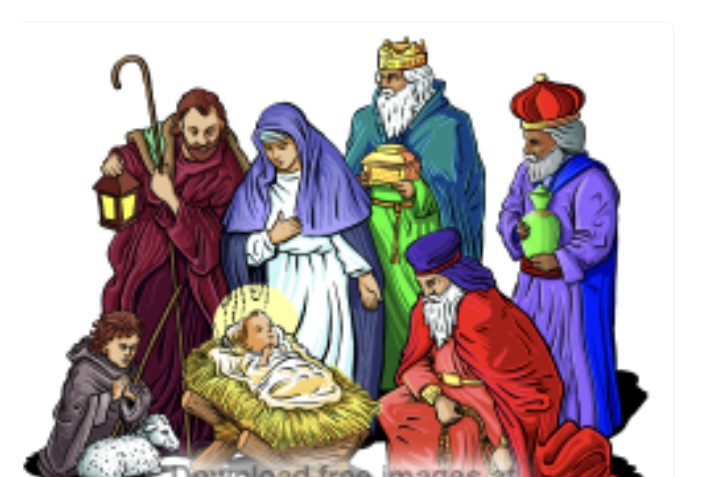
D. Finally, our Gospel lesson (Matthew 2:1-12) reminds us that wise persons of all times, places, ethnicity, and nationality have sought the Christ. They model for us the appropriate response to Jesus: The wise men seek Him earnestly, even at considerable time and expense to self. When you locate Him, kneel in reverence and worship Him. Bring Him gifts of your time, talents, and finances. Be aware that there are forces at work who would try to destroy your faith. These include the world, the flesh, and the devil. Recognize and fight against the attempts of these forces to draw you away from God.
We want to resolve in 2026 to love God the Father and our Lord Jesus Christ so strongly that nothing can take us away from them.
In 2026, Let us resolve to love God above all things because He is our creator and redeemer. Let us resolve to spend time with the Lord each week, in His house, worshiping Him and sharing fellowship and love with other believers. Let us resolve to do all that is necessary to spend eternity with God and share in Christ’s glory and inheritance in Heaven. Let us also resolve to be watchful, guarding against all attempts of the evil one to pull us away from our Lord and Savior.
The driver of the Heaven-bound supernatural stage coach in “Purgatory” tells the four newly redeemed “The Creator may be tough, but He’s not blind.” I take this to mean that the Lord has standards but He also is grace-filled. It makes me happy to think that Wild Bill Hickok, Doc Holliday, Jesse James, and Billy the Kid could be in Heaven. But it will make me even happier to arrive there one day and find each one of you there as well. Amen!
©️2026 Rev. Dr. Sherry Adams

 Wellborn Methodist Church--Wellborn, Florida