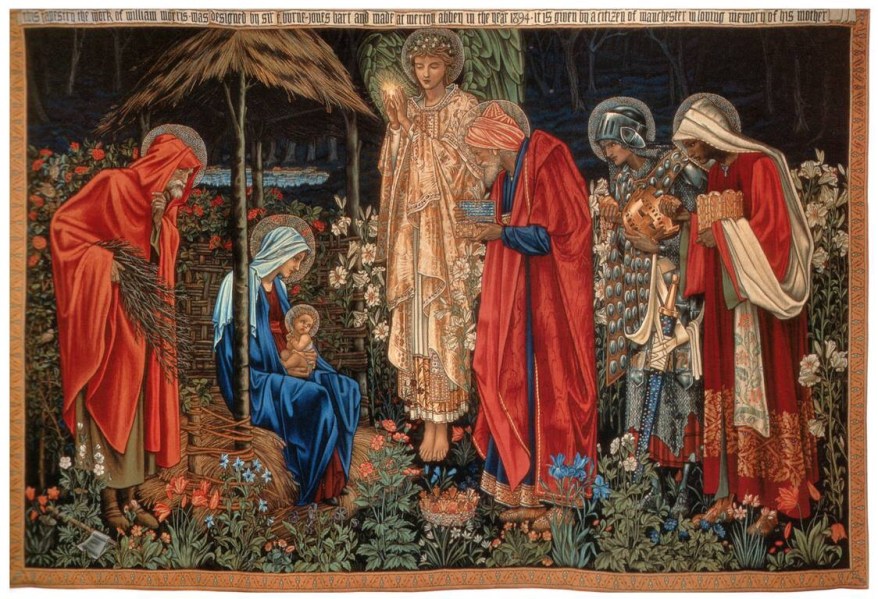
Trusting Jesus.

Pastor Sherry’s message for December 18, 2022,

Scriptures: Isa 7:10-16; Ps 80:1-7, 17-19; Ro 1:1-7; Matt 1:18-25

In his book, Holy Sweat, Tim Hansel shares the following biking metaphor for how he came to trust Jesus:

“At first, I saw God as my observer, my judge, keeping track of the things I did wrong, so as to know whether I merited heaven or hell when I die. He was out there sort of like a president.

“But later on when I met Christ, it seemed as though life were rather like a bike ride, but it was a tandem bike, and I noticed that Christ was in the back helping me pedal.

“I don’t know just when it was that He suggested we change places, but life has not been the same since. When I had control, I knew the way. It was rather boring, but predictable…it was the shortest distance between two points.

“But when He took the lead, He knew delightful long cuts, up mountains and through rocky places at breakneck speeds. It was all I could do to hang on! Even though it looked like madness, He said, ‘Pedal!’

“I worried and was anxious and asked, ‘Where are you taking me?” He laughed and didn’t answer, and I started to learn to trust.

“I forgot my boring life and entered into the adventure. And when I’d say, ‘I’m scared,’ He ‘d lean back and touch my hand….

”I did not trust Him , at first, in control of my life. I thought He’d wreck it; but He knows bike secrets, knows how to make it bend to take sharp corners, knows how to jump to clear high rocks, knows how to fly to shorten scary passages.

“And I am learning to shut up and pedal in the strangest places, and I’m beginning to enjoy the view and the cool breeze on my face with my delightful constant companion, Jesus Christ.“

(Chuck Swindoll, The Tale of the Tardy Oxcart, Word Publishing, 1998, p.586-587)

I think Tim Hansel captures the experience many of us have as we learn to surrender control over our lives to Jesus. It can be and often is a very difficult lesson to learn—to trust Jesus–but as Hansel says, it is well worth taking the risk.

Two of our lessons today relate to this issue of putting our faith and trust in the Lord:

A. In our Old Testament lesson, Isaiah 7:10-16, the prophet Isaiah relates for us the example of King Ahaz of Judah. He was a faithless idolater who is reported to have sacrificed his first born son to the fires of the pagan god Molech. He was 20 years old when he ascended the throne and ruled Judah for 16 years. A descendant of King David, he was a grandson of the good king, Uzziah, and a son of Jothem, another good king. But unlike his father and grandfather, he did not believe in the Lord, the one, true God. We are told in 2 Kings 16:3-4 that… he did not do what was right in the eyes of the Lord his God.

The context of today’s lesson finds him, in 734 BC, surrounded by enemies who threaten to invade his kingdom: Rezer, king of Syria, and Pekah, king of Israel, have formed a coalition against him and are marching on Jerusalem. So a terrified Ahaz is thinking of aligning himself with either Egypt or with Assyria—both traditional enemies of the Jews–for safety. Since Ahaz is a godless king, we would expect the Lord to abandon him to his own devices. However, our God is not like that. Seeing an opportunity to gather Ahaz to Himself, God sends the prophet Isaiah to offer the king comfort. Because he is a nonbeliever—pedaling his bike on his own—it has never even occurred to him to ask God for help! (Some years back, I saw the film “Perfect Storm” with George Clooney. Clooney played a fisherman who is down on his luck and who needed a great catch to save his both boat and his livelihood. He succeeds in loading up his boat with fish, only to find himself in a dangerous storm at sea. His boat is swamped and he and his men know they are about to drown, and not one of them cries out to the Lord. I was truly dismayed, wondering if we as a nation have wandered so far from God that even when in danger of dying, we fail to ask for His help.)

Probably Ahaz similarly assumed that because he does not worship God, he cannot expect the Lord to help him overcome his enemies. Isaiah meets him at the source of Jerusalem’s water supply, in the place where the citizens of the city did their laundry, and informs him that God will not abandon him or Judah. Notice the rich symbolism God has set up: “Ahaz, despite your unbelief, and your heinous sins, I can wash you clean; I can sustain your life with living (flowing) water” (an image of Christ Who later will refer to Himself as “Living Water” in John 4). God has also told the prophet to take his son to this meeting, Shear-Jashub, whose name meant a remnant will return.

We lit the candle for love today. Do you see how loving and generous the Lord is toward this sinful reprobate, Ahaz? God tells him, through Isaiah, that He will protect him and he can even ask for a sign that this will be so. Ahaz acts pious Far be it from me to ask God for a sign…I would never test God like that! Somewhere along the way, he had learned not to test the Lord. However, he is in a national emergency and God has offered. Nevertheless, he doesn’t trust God enough, even given the encouragement of this very trustworthy, accurate prophet.

Ahaz is looking to the current crisis, but the prophet predicts a long-term solution, Jesus: A son—Jesus–will be born to a virgin. He will be Immanuel, God with us. He will eat yogurt (curds) and honey, the food of poor people in that day (available during drought or poor agricultural years). By the time He is 11 or 12 years old, the kings you fear will have long been taken over and deported by the Assyrians. Scholars believe there might have been an Israelite princess then (perhaps Isaiah’s 2nd wife?) who would give birth to a son in Ahaz’ time. There is, however, no record of a child born to Isaiah named Immanuel. However, this side of the Incarnation, we know this is a prediction of Jesus. Ahaz is graciously given a sign, but he still refuses to believe. He is entirely faithless!

B. Now contrast Ahaz’ response to that of Joseph in our Gospel, Matthew 1:18-25. Luke describes the circumstances of Jesus’ birth from the perspective of Mary, while Matthew emphasizes Joseph’s response. Notice Joseph’s trust in God. He has learned that Mary is pregnant and knows he has never slept with her. Instead of demanding that she be stoned, as he could have done by law, Joseph [v.19]…was a Righteous man [who] did not want to expose her to public disgrace, so he decides to quietly divorce her. God, however, intervenes by sending him a dream. In the dream an angel tells him [v.20] Joseph, son of David, do not be afraid to take Mary home as your wife, because what is conceived in her is from the Holy Spirit. She will give birth to a son, and you are to give him the name Jesus, because he will save his people from their sins. Unlike King Ahaz, Joseph is a man of God and so he believes the angel’s message and is obedient. He marries Mary and cares for her. He does not consummate their marriage until after Jesus’ birth, so there is no question of Jesus’ divine paternity. And Joseph does name the baby Jesus, which means God saves.

What a great opening for Matthew! Remember, Matthew wrote his Gospel for the Jews, writing to demonstrate to them how Jesus fulfills the Messianic prophesies from the Old Testament. He immediately references our Isaiah 7 lesson [vv.22-23] all this took place to fulfill what the Lord has said through the prophet: The virgin will be with child and will give birth to son and they will call him Immanuel, which means, “God with us.” The current day New Testament scholar and Anglican Bishop, N.T. Wright, claims that until Matthew wrote his Gospel, no one had ever thought of this Isaiah passage as referring to the promised Messiah. But under the guidance of the Holy Spirit, Matthew asserts it, attesting to the supernatural origin of Jesus. Jesus is both human (born of Mary), and divine (born of the Holy Spirit). Furthermore, in Jesus, God Himself is here, God Himself is with us, as the fullness of God is present in Christ.

John Ortberg, a Presbyterian pastor and author, writes in his book, God is Closer Than You Think, The central promise in the Bible is not, “I will forgive you,” though of course that promise is there. It is not the promise of life after death, although we are offered that as well. The most frequent promise in the Bible is “I will be with you.” This promise is spoken in Scripture over and over again: to Abraham, Jacob, Joseph, Moses, Joshua, King David, the prophets, the Virgin Mary, and the Righteous Joseph. They all heard the comfort, the love, and the promise: Don’t be afraid, I am with you.

Ahaz was afraid and mistrusted God. He did not accept God’s sign to him. Instead, he aligned himself with an untrustworthy human ally—Assyria—against his northern enemies. And in 722 BC, (12 years later) the Assyrians overran Syria and Israel, and made Judah a vassal state. Joseph was also afraid, but God told him not to be. In fact, God made him the same promise he had made to the old, idolatrous king: “The Child will be a sign, Immanuel, God with us.” Joseph believed and was comforted, protected, and blessed.

So, our Scriptures today poses the question: How are you doing with regard to trusting Jesus? Is your faith going to look like that of Ahaz or like that of Joseph? Are we going to trust in our own plans and schemes to save us? Or, are we going to trust–like Joseph did and despite our fears– in the God of love? In Immanuel, the One who promises to be with us, no matter our fears, our trials, or our difficulties. As Christmas Day draws near, let us put our faith and trust firmly in the hands of our loving Savior…come, let us trust Him and adore Him. Let’s let Jesus drive our tandem bike.

©️2022 Rev. Dr. Sherry Adams

Advent Expections

Pastor Sherry’s message for December 11, 2022

Scriptures: Isa 35:1-10; Lk 1:47-55; Ja 5: 7-10; Matt 11:2-11

The story is told of a baby boy born into the Lane family in 1958. The father, a man named Robert, chose to name his boy Winner. How could the young man fail to succeed with a name like “Winner Lane”?

Several years passed and the Lanes had another son. For unknown reasons (this is a true story), Robert named this boy “Loser.” What a terrible thing to do to the baby—(like Johnny Cash’s “A Boy named Sue”)—Robert and his silent wife seemed to have doomed their 2nd son’s prospects. I wonder how many years he spent in counseling trying to overcome that moniker.

Of course, everyone who knew the boys probably thought they could figure out how they would turn out. After all, the psychological concept of the “Self-fulfilling Prophecy”–or you get what you expect from a child–is well known (Consider the “Pygmalion in the Classroom” research in which 4th grade teachers were told their students were brilliant—when they were actually ordinary—and watched how they treated these kids. By year’s end, those kids had performed excellently and had even raised their IQ points, demonstrating that teachers’ expectations had an important effect on kids’ performance.)

But contrary to everyone’s prophecies, Loser Lane succeeded. He graduated from college and later became a sergeant with the NYPD, shield # 2762. Nowadays, no one feels comfortable calling him “Loser.” His colleagues simply refer to him as “Lou.”

And what about the other brother? The one everyone expected to be a great success? The most noteworthy achievement of Winner Lane is the sheer length of his criminal record. Inmate #OOR28Q7 has nearly three dozen arrests for burglary, domestic violence, trespassing, resisting arrest, and other assorted acts of mayhem. Sometimes things don’t quite turn out as we might expect.

(Borrowed from Tom Hughes, Down to Earth: How Jesus’ Stories Can Change Your Everyday Life, NavPress, 2019, p.13).

These examples demonstrate that we need to be careful about what we expect of our children and of others. Often our expectations may be too high or too low. They can put emotional pressure on those we love and thus limit or frustrate them, disappointing them and us. This time of year, we also tend to have expectations of Christmas which may or may not be appropriate.

The best way to keep our Advent expectations realistic is to check them against what Scripture records and predicts:

A. Our psalm this morning is the Song of Mary, also known as “The Magnificat” (Luke 1:47-55). (The custom in the early church was to name psalms after the Latin rendering of the 1st word or two; so, Magnificat for “My soul magnifies….” Notice: We would expect the whole psalm to say, “YIPPEE, God picked ME!” Young women from the tribe of Judah grew up wishing and believing they might be the one to bear the Messiah. And despite her challenges of being unmarried and poor, Mary does rejoice in God’s choice of her.

But the majority of her focus is on glorifying/praising God for what He is doing (through her) for His people! How mature! She wisely takes the focus off herself, and sets it upon God’s activity. She praises Him for His mercy to those who respect and revere Him; His past works of power; His surprising, unexpected propensity to reverse worldly fortunes (the low are raised up and the lofty are brought low); and for His fulfillment of His promises (Genesis 12, 17, and 22) to Israel: a king from the lineage of David; and a messiah who will bless all nations on earth.

What does Mary have to teach us about expectations? She had been raised to expect the Messiah to come. She knew from Scripture that He would redeem His people.

What does Mary have to teach us about love and joy (We lit the candle for joy today)? Because she loved God, she was willing to bear up under public criticism and condemnation. Because she loved God, she surrendered to His will. Because she loved God, she praised Him, with great joy, for keeping His promises to His people.

B. In our Gospel lesson today, Matthew 11:2-11, Jesus has sent the 12 out to put into practice all He has taught them. He, Himself, continues to preach and teach. JtB (John the Baptist) has been imprisoned for some time now, and—as often happens—he begins to doubt his earlier faith that his cousin Jesus is the Messiah. He deploys 2 disciples to ask Jesus (v.3) Are You the One who was to come, or should we expect someone else?

No doubt JtB expected Jesus to set him free. Jesus does not do so. Instead He reiterates His job description from Isaiah 61:1: the blind see; the lame walk; lepers are healed; the deaf hear; the dead are raised to life; and the Good News is preached to the poor. Because He avoids saying He will…proclaim freedom for the captives and release from darkness for the prisoners, JtB learns Jesus will not be leading his jail break. The response comes back to him, “Yes, your cousin is the Messiah you proclaimed at the beginning of His earthly ministry. But no, He will not be supervising your prison release.”

Jesus does not meet JtB’s personal expectations. Apparently, it suited God’s purposes for JtB to leave the scene (decrease) so Jesus’ ministry could increase. But He does proclaim him the greatest of the Old Testament prophets. Hopefully, JtB understood this need to exit the world stage and began to prepare himself to meet his Maker.

C. In fact, JtB probably knew Isaiah 35:1-10, a Messianic prophecy from 700 years before Jesus’ birth. He would have remembered that in the predicted Messianic Age (the 1000 year reign of Christ). The material earth will be restored to the time before the Fall. Scholars believe it will be returned to what the Garden of Eden was like. When Adam and Eve sinned, God cursed the ground and the serpent, but not the people. Paul will later assert (Romans 8:22) We know that the whole creation has been groaning as in the pains of childbirth right up to the present time. Paul had learned from Jesus that creation, too, would be redeemed at Jesus’ 2nd Coming.

Additionally, JtB would recall that the bodies of human beings will be renewed. Verses 5-6 state …the eyes of the blind will be opened and the ears of the deaf unstopped. Then will the lame leap like a deer, and the mute tongue shout for joy. Water will gush forth in the wilderness and streams in the desert. Jesus accomplished the healing of many individuals during His 1st Advent. But when He comes again, all of humankind will be spiritually, physically, and emotionally healed. How’s that for a truly wonderful Advent expectation (and promise)!

D. No wonder we have the James 5:7-10 passage assigned for today as well. The 2nd coming of Jesus Christ will right all that is now wrong with our world. However, as James counsels us, we need to (v.7) Be patient, then, brothers [and sisters] until the Lord’s coming. Scripture has told us what to expect. We just need to wait with faith, as a farmer waits for his/her crops to grow. When I was in seminary in Pittsburgh, I planted crocuses around my house. Even if there was still snow on the ground, these were the first blooms of Spring to manifest. They made such a beautiful display against a white or dirt background. Unfortunately, there were also many deer around my place, and they dined on those flowers about as fast as they came up. James also recommends we meditate on the lives of the prophets—including JtB—who prophesied the wonders to come, but did not get to experience them during their lifetime on earth.

Remember how, as a child, it was so difficult to wait until Christmas morning to see what Santa left under the tree or to unwrap our gifts? We would be so anxious and excited we could hardly sit still. As grown-up believers in Jesus, we can have this same excitement over Jesus’ appearing, while we patiently wait, in faith, for that great day. We just want our Advent Expectations of Jesus to line up with what Scripture promises and describes.

Thanks be to God, Who gives us the victory through our Lord Jesus Christ! Alleluia, Alleluia!

©️2022 Rev. Dr. Sherry Adams

Turn Around!

Pastor Sherry’s message for December 4, 2022

Scriptures: Isa 11:1-10; Ps 72:1-7,18-19; Ro15:4-13; Matt 3:1-12

Someone asked me recently if I preached sermons I find online. I told the person that I do not. I write my own—hopefully with the inspiration of the Holy Spirit–but do locate online illustrations that are relevant to what I hope to convey. In that light, I have borrowed the following story from a Pastor online named Chuck Lawless (Jan 29, 2019):

He recalled that some years back he and his wife lived next door to a little boy named Charlie. One day there was a knock at their door, and Charlie stood there asking if the Pastor could please come out and play. Pastor Chuck figured “Sure, why not? The kid was a nice little guy.”

He discovered that Charlie had just received a new whiffle ball and bat. The child proceeded to tell the pastor, “Here’s what we do, Mr. Chuck. I’ll stand back here,” he said, “you throw the ball, and I’ll hit it.” Chuck threw his first pitch, only to see Charlie swing and miss the ball by several feet. He encouraged the little guy, adjusted his hands on the bat, then threw a 2nd time, only to have the kid miss again. The next pitch was no better – Charlie missed it again.

By now the child was exasperated – at the Pastor! He hefted the ball back to Chuck and yelled out to him, “Mr. Chuck, you’re doin’ it wrong!”

“What do you mean that I’m doing it wrong, Charlie?”

The boy answered: “Mr. Chuck, you’re supposed to be throwing the ball where I’m swinging the bat!”

At the time, he laughed over the boy’s logic…until it occurred to him later that we often treat God the same way. He says, “We’re willing to follow God as long as His plans meet ours, as long as what He demands fits inside our own box – as long as He’s pitching the ball where we’re swinging the bat. That’s not the way it works, however. The Almighty God, the Creator of the world, the Ruler of the universe does not adjust His pitching to where we’re swinging the bat. We’re the ones who must make the adjustments; we follow God and do whatever He demands, even if His plans stretch us.”

Our Advent preparation focus today is on peace; we lit the second or peace candle. Our Gospel lesson describes the work of John the Baptist. So, you might be wondering what does doing things God’s way, or even John the Baptist (JtB), have to do with peace? John, for instance, seems bent on shaking up, maybe even destroying folks’ peace. His message was essentially, Repent! In the original Greek, the word is metanoia. It means to turn, to change, to reverse oneself. It was not a particularly religious word back then. Instead, it was an ordinary, everyday word for turning around (execute a u-turn) and commence immediately to go the other way. But the sense of the word as JtB uses it is not just changing your mind, but totally re-orienting your will. He is saying, If you want true peace, you need to go the direction God is going; If you want true peace, you need to do things the way God wants them.

So, if God’s way is not the way we have been doing things, what are we to do? Here are some possibilities:

1. Consider Giving God a blank check. Don’t put any restrictions or limitations on what you want Him to do. I once counseled a guy who was frustrated about finding a wife. As we processed his dilemma, I discovered he had a whole check list of qualities and characteristics he wanted God to match: pretty, good figure, brunette, green eyes, etc. His list contained all physical attributes—nothing about her character or her personality. Now could God have located a woman who matched his list? Of course. But the Lord had not. Like Charlie, the fellow wanted God to throw the ball where his bat was.

Certainly we can make suggestions to the Lord, but we also need to let God be God. We need to swing our bat where He is pitching the ball.

2. Ask God to show you if there are areas of your life where you are waiting for God to adjust, rather than the other way around. Let’s say God tells you you are too stubborn, too proud, or too rigid? Are you willing to accept His assessment and turn around or turn away from that behavior? Recently a friend told me God had used a pastor to tell him he lacked a heart-to-heart relationship with Jesus. At first this fellow was insulted; but as he thought and prayed about it, he realized the man had been right. He had a head-knowledge of our Lord, but no true relationship with Him. Thankfully, he agreed to change this.

3. Finally—and this is a big one–try hard not to get frustrated with God’s plans for you. I thought God had called me into ordained ministry, after getting my doctorate in Psychology, so that I could do therapy with the clergy. That really never worked out! Instead, here I serving Him and you as a pastor in this church, and happy to do so. I have learned from this that the path to peace is following God’s will. Also, God’s path to peace often involves waiting. Have you ever noticed that many of the Old Testament saints had to wait for years to obtain their promised rewards? I think of waiting as the crucible of the saints. God uses the time to wear off our rough and sharp edges, to mold and shaped our character.

But, to get back to Chuck Lawless’ story, I have had to make adjustments to my swing, instead of expecting God to fulfill my plans—and perhaps you have too.

Let’s turn to our Gospel lesson again–John the Baptist’s words to the Pharisees and Sadducees were straight and true! They had joined the crowds that were coming to JtB, ostensibly to ask to receive the baptism of repentance. So why did John blast them, calling them “you brood of vipers”? He called them out because, as a prophet, he knew they had joined the crowd only out of curiosity. They were not there to humbly ask God’s forgiveness because they realized they needed to change. They did, in fact, need to change their hearts toward God and toward God’s people, but they were clearly unwilling to change.

So he thundered at them, Bear fruit worthy of repentance! What he meant was “Let me see some evidence of a changed direction in your life. You guys seem to believe because you are leaders of God’s Chosen People, you don’t have to examine your consciences, or to consider whether following the rules often means you are missing out on understanding the heart of God. You seem to have overlooked the truth that God is heading in one direction, and you insist you are following Him, even though you are wrong-headedly going the other way.”

If the Kingdom of God is at hand—and if we want the Advent peace God promises–what must we do to get ready? We want to look at the direction God is going, get ourselves turned around, and follow Him. It’s not up to us to debate the quality or direction of God’s pitches. We can insist on our own way and lose out. Or we can surrender our wills to His and join Him.

That’s where we will ultimately find the peace that Isaiah describes in his Chapter 11:6-9 passage this morning:

The wolf will live with the lamb, the leopard will lie down with the kid [young goat], the calf and lion and the yearling [young deer] will eat from the same trough, and a little child will lead them. The cow will feed with the bear, their calves and cubs grow up together, and the lion will eat straw like the ox. The nursing child will crawl over rattlesnake dens, the toddler stick his hand down the hole of a serpent. Neither animal nor human will hurt or kill on My holy mountain, for the whole earth will be full of the knowledge of the Lord as the waters cover the sea.

Oh Lord, may it be so and soon! Amen and Amen!

©️2022 Rev. Dr. Sherry Adams

Hopeful Readiness

Pastor Sherry’s message for November 27, 2022

Scriptures: 11/27/2019, Isa 2:1-5; Ps 122; Ro 1:11-14; Matt 24:36-44

In a sermon by a preacher named Mark Schaeufele, I heard the following story:

“The Butterball Turkey company [had] set up a hotline to answer consumer questions about preparing holiday turkeys. One woman called to inquire about cooking a turkey that had been in her freezer for 23 years. The operator told her it might be safe if the freezer had been kept below 0 degrees the entire time. But the operator warned the woman that, even if it were safe, the flavor had probably deteriorated, and she wouldn’t recommend eating it. The caller replied, “That’s what we thought. We’ll just give it to the church.”

That, like you, made me laugh! Now I could go on to preach about giving God our best–not a 23 year old frozen turkey—but instead I want us to consider how prepared we are for Christ’s 2nd Coming. If the lady of the joke had been stocking-piling frozen food for 23+ years, we might assume she is ready for any earthly emergency (hurricane, sunami, tornado, volcano, deadly virus, etc.). But is she, and are you, spiritually ready?

This is what our Scriptures address this morning. They all ask the question, “Are we ready for the Second Advent?” Now you may be thinking, “Wait just a minute…I’m doing my best to get ready to celebrate the first Advent, the Incarnation, the birth of Jesus:

(1) I’ve donated a Shoe-box or two, or 20.
(2) I’m baking Christmas cookies and fruit cakes like my hair’s on fire.

(3) I’m decorating my place…inside and out.

(4) I’m gathering gifts from weeks of Black Friday sales.

(5) I’m beginning to write out Christmas cards;

(6) I’m humming Christmas carols in the shower.

(7) We are anticipating Christmas on the Square and the Christmas parade in Live Oak.

(8) The grandchildren and great grandchildren are talking up their Santa lists and are already beyond excited!

(9) Why, we have even decorated the Church—thanks to all of you who came out to help—and lit our first Advent candle, the candle of Hope!

We really are getting ready for Christmas, but our lessons today aren’t about the First Noel. The Mass of Christ (that is where we get the word, Christmas) focuses on the past and the present. Past: Jesus’ birth in a manger long ago; Present: Our attempts to live out that magnanimous love of God the Father—in gifting us with His Only Begotten Son—in our lives today. But Advent also focuses on Jesus’ future return.

To facilitate our hopeful readiness for this future return, our lessons today spotlight the Second Coming of Christ, as the King!

A. Isaiah 2:1-5 Our OT lesson is clearly a Messianic Prophecy: Verse 2 speaks of…the last days….This is a Blibical expression for the end of time. It refers not to when bad things start to happen—like the Great Tribulation—but to when Jesus establishes His Millennial rule and reign on the earth (after He has defeated Satan and evil at the Battle of Armageddon). Several things will happen then:

(1) (V.2) The mountain of the LORD’s temple will be established as chief among the mountains. The mountain of the Lord is Mount Zion, the Temple Mount in Jerusalem. But mountain also means the kingdom, the authority, the rule of Jesus. So we could read the sentence this way: The rule of Jesus will be established as chief among all rulers. Right now, Moslems control or rule the Temple Mount. The Mosque of Omar sits on the former site of the Jewish Temple, and most holy sites are controlled by Christian gentiles rather than Jews. But in the future Advent, God’s Holy Temple will be re-established on Mt. Zion with Jesus and the Father as its residents, and as a gathering place for all Christ-followers.

(2) Jerusalem will become the world center of both government and religion. There will be one, Christ-centered world order. You hear occasionally now calls for a “total world order,” including using the same currency, etc. But don’t be fooled. This is a secular movement, not a movement of God. In the last days, however, we will learn God’s will for us—if we haven’t already–and we will do His will, gladly, joyfully.

(3) Jesus will judge disputes between nations and settle them so He will create true peace. As Isaiah predicts in verse 4 They [all people] will beat their swords into plowshares and their spears into pruning hooks [weapons will be turned into farming implements]. Nation will not take up sword against nation, nor will they train for war anymore. There will be no need for the service academies, military bases, warships or planes, or standing armies. Imagine a world totally at peace.

(4) So, Isaiah urges us to walk in the light of the LORD as we await King Jesus’ return. We should act like we know Jesus is looking—because He is–and we should wait for Him in hopeful readiness.

B. Psalm 122 is a Psalm of Ascent, sung by faithful Jews as they walked uphill toward Jerusalem to worship at the Temple. However, it is also a Messianic prophesy, looking forward to the time when all of the tribes of the Jews will be reunited in Israel and will worship God–and Jesus– in Jerusalem. Hosea 3:4-5 is not one of our lessons appointed for today, but it repeats or echoes this prophecy For the Israelites will live many days without king or prince, without sacrifice [as they are doing right now, today]….Afterward the Israelites will return and seek the Lord their God and David their king [Jesus, David’s descendant]. They will come trembling to the Lord and to His blessings in the last days. In other words, in the last days, the Jews will finally have accepted Jesus as the rightful Messiah.

It may be difficult for us to envision this grand reunion of Jews and Gentiles who all love Jesus, but if we believe Scripture, we can await it with hopeful readiness.

C. Romans 13:11-14 Paul focuses on how we treat our neighbors. He says, in so many words, we demonstrate love for our neighbors in what we do, rather than in what we say. Just prior to this passage, he reminds us not to break the 10 Commandments (not commit adultery, murder, steal, or covet—all sins against others). Then, he goes on to exhort us to Wake up! Because Jesus is coming again! In verse 12 he declares …the night is nearly over, by which he means this present evil age. He goes on to say, The day is almost here, meaning the long awaited second appearing of Jesus Christ. We want to be ready by avoiding, as best we can, deeds of darkness—sins…and to clothe ourselves with the Lord Jesus Christ. In other words, Paul is exhorting us to put Christ first in our lives, and to display outwardly what has taken place inwardly within us. Simply put, Paul wants us to practice all the virtues associated with Jesus, as we wait with hopeful readiness….

D. Matthew 24:36-44 In this passage, Jesus is describing when He will come again. 1st of all, no one knows when that will be–not even Jesus! Then He offers us two metaphors to encourage us to be ready:

(1) When Noah built the ark, no one else much believed it would rain enough to require a large boat; but, it did! And those who had not listened to the Lord (through Noah), and had ridiculed him, drowned. It was a time of great immorality—much like today–and all gross sinners perished.

(2) Burglars tend to come to our homes at night, or when we are away. If we want to thwart a robbery, we need to be prepared. We lock our doors. We have a dog, a burglar alarm, or a gun to ensure our safety. We keep our important papers and jewelry in a safe or bank deposit box. Similarly, Jesus is warning us to be prepared, to be ready. Going back to the issues at hand—Jesus’ 2nd Coming–we should live each day as though it is our last.

All of our lessons exhort us to be hopeful and ready. We can’t just count on looking like we are right with the Lord when He shows up again. We need to practice, daily, being surrendered to His will; and trying, with the help of the Holy Spirit, to live in a way that pleases Jesus.

We could say, then, that Advent is really a “wake up call.” We never really know when the God-moment (2nd Coming) is going to arrive, so we have to be ready all the time. This readiness is not a matter of hanging decorations, baking cookies, sending out Christmas cards, or attending holiday parties—though those things are all fine and good. This readiness is developed by establishing tenderness/love in our hearts, for God and others. It is a willingness in our spirits to hear God’s Word and go God’s way.

Remember, our God has a habit of sneaking up on people, often making appearances in unusual ways, through unlikely people, in unexpected places. In the 1st Advent, it was thru “a little baby, the child of an unwed, teenaged mother, in a dirty, smelly cow-stall, on the other side of nowhere.” (Stated by Fairless and Chilton, The Lectionary Lab, A, 2013, p.4). Who knows when or where God will show up again? It could be this afternoon, or tomorrow, or Christmas Day. But whenever it comes, we need to be awake, hopeful and prepared! Amen!

©️2022 Rev. Dr. Sherry Adams

The Best King Ever!

Pastor Sherry’s message for 11/20/22

Scriptures : Jer 23:1-6; Lk 1:68-79; Col 1:10-20; Lk 23:33-43

The story is told, “In 1987 director Bernardo Bertolucci released the film The Last Emperor to raving reviews. It was based on the autobiography of the last living emperor of the Manchu dynasty in China, Henry Aisin-Gioro Pu Yi (before its fall to the communists in the 1950s). Eventually the movie would be hailed ‘the most honored film in 25 years,’ including nine Academy Awards (Oscars).

“And while the story tells the riches to rags story of Yi’s life, from spoiled child emperor to imprisoned and tortured detainee after the revolution to his final seven years as a gardener in a Beijing Park, what is perhaps most interesting, at least for our sake, is one account towards the beginning of the film.

“At this point, Yi is surrounded by the trappings of an imperial power. 1,000 eunuch servants exist to fulfill his every whim. At one point, Yi’s brother asks him what happens to him when he makes a mistake? The emperor responds, ‘when I do something wrong, somebody else is punished.’ To demonstrate this, he picks up an ornate jar and smashes it on the ground. Immediately a servant is taken and beaten for the action of the emperor. It is, in a sense, a true version of the famous ‘whipping boy’ story.

“Why is this so interesting? Because it gives us a perfect contrast, the perfect opposite to what Jesus does on our behalf. From the world’s perspective, it is the poor and marginalized who are to bear the brunt of the world’s pain and blame. [Isn’t that just so often true!] It is the unnamed servant who receives the punishment in this account, not the emperor. In the Christian story however, it’s just the opposite. The king takes the punishment on our behalf.”

(Stuart Strachan Jr., Source Content from “The Last Emperor,” Columbia Pictures, 1987. )

Today, in the Church calendar, we celebrate Christ the King Sunday. It probably seems a little odd to focus on Jesus’ crucifixion amidst preparations for Thanksgiving feasting, “Black Friday” sales, and the joy we have in Advent of anticipating Christmas. Additionally, we in America long ago divorced ourselves from the idea of having a king in our Revolutionary War. But the truth is that Jesus Christ is the King of the whole world! He is sovereign over all of us, even those who do not believe in Him. And, thankfully, He is the best king ever!

Praise God we do not have to be “whipping boys” because King Jesus took punishment that was justifiably ours upon Himself. Let’s examine together what our Scripture passages have to say about this today:

A. In Jeremiah 23:1-6, God the Father is castigating the kings, nobility, priests and false prophets for their poor leadership of His people. This is just prior to the defeat of the Southern Kingdom at the hands of the Babylonians. The legitimate prophet Jeremiah warns them of punishment to come, (v.1) Woe to the shepherds…! God has been watching. He knows that false prophets, idolatrous kings, and weak, compromised religious leaders have abused His sheep and lead them astray. In a way very similar to that of the prophet Ezekiel (Ezekiel 34:11-24), He declares they have scattered His flock, rather than gathering them in; and driven them away from God rather than drawing them closer t Him. So, since they have (v.2)…not bestowed care on them, I [God] will bestow punishment on you for the evil you have done. God himself will gather His flock and (bring home the remnant from exile in Babylon) and place better shepherds over them.

Then He prophesies the coming of Jesus (vv.5-6) ”The days are coming,” declares the Lord, “when I will raise up to David a righteous Branch, a king who will reign wisely and do what is just and right in the land…He will be called the Lord Our Righteousness.

Jesus, descended from King David, will be, like him, a shepherd-king. However, He will be the True Shepherd, the Good Shepherd (John 10), the Great Shepherd, the Eternal Shepherd, the Best king Ever!

B. Luke 1:68-79 constitutes Zachariah’s Song (the 3rd after Elizabeth’s and Mary’s). Zach, the elderly, priestly father of John the Baptist, had been struck mute by the angel who foretold John’s birth—due to his lack of faith. Once John the Baptist was born, and Zach agreed he was to be called John, Zach got his words back. In this morning’s lesson, he provides a psalm-like song celebrating not just his new son’s role as a Prophet of the Most High, but as the forerunner to Jesus the Messiah.

As he rejoices that the long awaited Messiah is almost here, he bursts into prophesy: The Light is coming into the darkness. God is sending His rescue plan, our salvation. He, Jesus, will empower us to live without fear (for God will be with us), and (vv.74-75) to serve Him…in holiness and righteousness before him all our days. Halleluia! He will be the Best King Ever!

C. Paul, in Colossians 1:10-20, describes Christ the King in even more detail. He explains that Jesus has superior strength and power: Verse 16 For by Him all things were created: things in heaven and on earth, visible and invisible, whether thrones or powers or rulers or authorities, all things were created by Him and for Him. Not only did He create all things, but, to this day, He holds them together. Biologists have discovered that in the cell body of all connective tissue (called Lamina) is a cross.

Jesus is also supreme over all creation. He contains the fullness of God the Father, the Greek word is pleroma It means He has all the attributes and characteristics of God the Father. If we have seen Jesus, we have seen the Father.

Furthermore, (v.20), through His sacrifice of His life on the Cross for us, He has reconciled us—really all things—to God the Father. There is no other king like Jesus—He is the Best King Ever!

D. This brings us to our Gospel passage, Luke 23:32-43. It’s a bit startling, isn’t it, to find ourselves in the midst of the Crucifixion on this final Sunday of the Church calendar year. This Jesus, this King of the Jews (and of us), appears defeated, vanquished, weak, powerless, suffering, dying. He is mocked, derided by Jews and Roman soldiers. His clothes—all He ever owned–are confiscated and gambled over before His very eyes.

And He is hung between two actual criminals.

He speaks only twice: Once, directed to His Father, forgiving His murderers, granting them grace they do not deserve(v.34) Father, forgive them for they don’t know what they are doing. And a 2nd time, gifting the one respectful, faith-filled thief with salvation (v.43) I tell you the truth, today you will be with Me in paradise.

What a great king he is, forgiving, merciful, generous. Thank God our King is not like Emperor Yi. Jesus is the Best King Ever because He came to serve, to suffer for us. You see, the Jewish concept of a king—taught to them by God the Father through the prophets—was that the king was beholden to and under the authority of God. He owed his kingship not to some self-declared divine right or to being born into the right dynasty at the right time. He was anointed/appointed by God to take care of God’s people, His subjects. Isaiah is one of the first to see Messiah as a leader who will suffer for His people. This perspective confounds and frustrates many.

There is a famous old story of two angels that helps demonstrate why this must be so:

Two traveling angels stopped to spend the night in the home of a wealthy family. The family was rude and refused to let the angels stay in the mansion’s guest room. Instead the angels were given a small space in the cold basement. As they made their bed on the hard floor, the older angel saw a hole in the wall and repaired it. When the younger angel asked why, the older angel replied, “Things aren’t always what they seem.”

The next night the pair came to rest at the house of a very poor, but very hospitable farmer and his wife. After sharing what little food they had, the couple let the angels sleep in their bed where they could have a good night’s rest. When the sun came up the next morning the angels found the farmer and his wife in tears. Their only cow, whose milk had been their sole income, lay dead in the field.

The younger angel was infuriated and asked the older angel, “How could you have let this happen? The first man had everything, yet you helped him,” he accused. “The second family had little but was willing to share everything, and you let the cow die.” “Things aren’t always what they seem,” the older angel replied. “When we stayed in the basement of the mansion, I noticed there was gold stored in that hole in the wall. Since the owner was so obsessed with greed and unwilling to share his good fortune, I sealed the wall so he wouldn’t find it. Then last night as we slept in the farmers bed, the angel of death came for his wife ……. I gave him the cow instead … Things aren’t always what they seem.”

Our Jesus appeared to be defeated at the Cross; but instead He was and is Christ, the Victor!

To quote two of my favorite Bible commentators, the Revs. John Fearless and Delmer Chilton (of “Two Bubba’s and a Bible” fame, The Lectionary Lab Commentary, Year C, 2015, p.346):

We celebrate Christ the King today, not because of His regalness, but because of His humility; not because of His power [though His power is matchless], but because of His compassion; not because of His triumph [though He has triumphed over sin and death], but because of His travail; not because He fixes our lives [though he can and often does], but because He shows us how to live in service to God and each other.

Thank God we have Jesus, the Best King Ever!

©️2022 Rev Dr Sherry Adams

Waiting for Christ’s Return

Pastor Sherry’s message for November 13, 2022

Scriptures: Isaiah 65:17-25; Isaiah 12; 2 Thess 3:6-13; Luke 21:5-19

Does it seem to you that we are often called upon to wait? We wait to be called in at the doctor’s, the dentist’s, or the vet’s office and in lines at Walmart, the grocery story, and the airport. How about waiting on the final results of this year’s elections? Florida had 7.5 million votes tabulated mere hours after the polls closed. Why has it taken Las Vegas—a place known for skillfully counting cards and numbers—and Maricopa County (Phoenix), Arizona, days and days to tally theirs?

Often we may feel like the old guy in the following story:

A very old man lay dying in his bed. In death’s doorway, he suddenly smelled the aroma of his favorite chocolate chip cookie wafting up the stairs. He gathered his remaining strength and lifted himself from the bed. Leaning against the wall, he slowly made his way out of the bedroom, and with even greater effort forced himself down the stairs, gripping the railing with both hands.With labored breath, he leaned against the door frame, gazing into the kitchen. Were it not for death’s agony, he would have thought himself already in heaven. There, spread out on waxed paper on the kitchen table were literally hundreds of his favorite chocolate chip cookies. Was it heaven? Or was it one final act of heroic love from his devoted wife, seeing to it that he left this world a happy man? Mustering one great final effort, he threw himself toward the table. The aged and withered hand, shaking, made its way to a cookie at the edge of the table, when he was suddenly smacked with a spatula by his wife. “Stay out of those,” she said. “They’re for the funeral. Source Unknown

That joke is awful! The wife certainly isn’t behaving like a Christian, is she? But it does bring home the point that we can wait with great expectation but be disappointed in the results. We might even wish we hadn’t gotten our hopes up.

However, Christ’s return will not disappoint those of us who love Him. It seems like it’s taking forever, and we wonder when it will happen. In 2 Peter 3:8-15a—Peter reminds us that God himself is patient. He calculates time differently than we do (vv.8-9)–>With the Lord a day is like a thousand years, and a thousand years are like a day. The Lord is not slow in keeping His promise, as some understand slowness. He is patient with you, not wanting anyone to perish, but everyone to come to repentance. A Smart aleck once read these words and went on to have a conversation with God that sounded like this:

“Lord – is it true that a thousand years for us is just like a minute to you?”

“Yes.”

“Then a million dollars to us must just be a penny to you.”

“Yes.”

“Lord, would you give me one of those pennies?”

“All right. Wait here a minute.”

(Source =Lifeway website; sermon by Rick Ezell on Wednesday, January 01, 2014)

Today’s Scripture passages all deal with either how to wait or signs to help us discern if the end is truly near.

A. Paul has much to say in his letters to the Thessalonian church about recognizing and awaiting the End Times. In our passage from last week, 2 Thessalonians 2:1-17, Paul is writing in about 52 or 53AD, just twenty years or so after Jesus’ ascension into heaven. Some in the church thought they were in the End Times due to the Roman persecution. They worried that Christ had already returned and they had missed Him. Paul declares they have not and tells them what should reassure them: First of all, there will be a huge, active falling away from Christ—international apostasy—out of which will arise, “the man of lawlessness” (the Anti-Christ). We are seeing this already in America. We are now a post-Christian nation, with many not even knowing who Jesus is and with others who couldn’t care less. They dabble in the occult, they look to horoscopes and mediums, they may even worship Satan, but they tend to have no interest in pursuing the Christian God.

But back to “the man of lawlessness.” He will become a dictator, taking military, political, and religious control of the world. The big key to his identity is that (v.4) —He will oppose and will exalt himself over everything that is called God or is worshiped so that he sets himself up in God’s temple, proclaiming himself to be God. Right now, the Holy Spirit is holding him back/restraining him/preventing him from appearing. But when he arrives on the scene, he will mimic Jesus, claim to be Him, and perform counterfeit miracles based on Satan’s power. Right now, dictators come, ascend to power, fall and die. But the question to ask is, “Do they take over God’s temple and claim to be God?”—and— “Can they work miracles?” Nevertheless, take heart! Whatever he says or does, Jesus will overcome him.

What will help us stand firm until Jesus comes again is…

1.) Knowing Scripture so we can’t be fooled;

2.) Holding onto our faith, despite hard times;

3.) And prayer.

In today’s passage, 2 Thessalonians 3:6-13, Paul gets after those believers who have stopped working as they wait. “No” he says! Look at his example: he worked as a tentmaker when he was among them. In verse 10, he is adamant—If a man [or woman] will not work, he [she] shall not eat.

So, how do we wait on Jesus’ Second Coming?

1.) Study Scripture, so we are aware of the signs.

2.) Hold onto our faith, no matter what happens in the culture.

3.) Pray.

4.) And work—even if we are retired (we can do acts of service and always pray for others).

B. Jesus, in Luke 21:5-19, forecasts some other signs that the end is coming. He predicts (v.8), first, there will be what He calls “false Christs,” false Messiahs. They will make claims that they are gods, but we must measure them against what we know of our One, True, Lord Jesus Christ. Also, they will bring with them indoctrination into false religions (perhaps like Progressive ideology, Critical Race Theory, and distortions of gender and sexuality, involving sex-change surgeries and hormonal therapies for children and the belief that men can have babies).

Next, He says we can look for wars, revolutions, and rumors of wars. It will be a time of turbulence all over the globe. These will precede the end, but are not the end itself. In verses 10-11, He describes worldwide chaos: Nations aligning with or fighting against each other; widespread earthquakes, famines, and plagues; fearful events and great signs from heaven—whatever those will be.

But even before these happenings arrive, Christ-followers will be persecuted. Even now, Christians are being raided and arrested by the FBI. The MyPillow®️ guy was stopped at a Hardee’s drive through and had his phone confiscated by FBI agents serving a subpoena. These violations of our civil rights will only increase. But Jesus assures us that we are not to worry about what to say when brought before judges or governmental officials. Instead of being horrified, we are to consider this our opportunity to witness to them. Instead of being tongue-tied or worried about what to say, Jesus assures us that He—through the power of the Holy Spirit–will give us the words to say, words that no one can dispute. We will become objects of hate to non-believers, perhaps including our family members and friends, but Jesus will protect us. He wants us to trust Him, despite whatever happens to us, including being martyred. This is a difficult truth to preach, but it is what Jesus predicted. May we have the courage and be strengthened to endure it if it comes to that.

C. Isaiah 65:17-25 reminds us of why we should stand firm in our faith, no matter what persecutions or trials we face in the End Times.

After Jesus defeats the forces of evil at Armageddon, God (v.17) will create new heavens and a new earth. If you read through Revelation, you can tell our world will be pretty beaten up by the time Jesus appears a 2nd time. We will probably need a new earth, at a minimum. God tells us, through His prophet (v.19) —The new Jerusalem will be delightful! God will be overjoyed with His people there; and they too will be very happy, with no weeping or crying. Premature death will be an event of the past (no cancers, illnesses, strokes, or heart-attacks). People will be able to enjoy the fruits of their labors (which assumes no warfare or taxes). All of God’s people will be blessed! God will answer our prayers before we even finish praying them. And all animals will become plant-eaters—no more carnivores devouring prey—and will be at peace with each other. Nonbelievers say it is certainly impossible for carnivores to become herbivores. However, if God created them, He can certainly alter their digestive systems and their food preferences.

Isaiah paints a great picture of what is to come while we wait for Christ’s return. But, like so many times in life, it appears to be going to get pretty rough for us before it eases up. I think of the three times I gave birth. Labor is truly hard work, but the birth at the end makes it all worth the travail. Our Lord promises us that it will smooth out and the end will be great!

The challenge for each of us is to hold on to our faith while we wait. In the meantime, we don’t want to get discouraged over political, economic, or social hardships. Instead we want to hold on to Jesus with both hands, trusting in Him no matter what comes. We want to be like Paul, who exhorted us (in Philippians 3:13-14) … straining toward what is ahead, I press on toward the goal to win the prize for which God has called me heavenward in Christ Jesus. Amen! May that be so for all of us!

©️2022 Rev. Dr. Sherry Adams

Our God Prefers Truth over Lying to Influence People

Pastor Sherry’s message for November 6, 2022

Scriptures: Haggai 1:15-2:9; Ps 145:1-5; 2 Thess 2:1-17; Lk 20:27-40

One of the things I most love about our God is that He is a straight shooter. He always speaks the truth, and nothing but the truth, even if folks don’t like it or don’t want to hear it. Truth, real truth, is often a scarce commodity. In this time of elections, for instance, we hear “facts” from a candidate that are called “disinformation”—or outright lies—by his/her opponent. Since they contradict each other, we end up wondering which one is telling the real truth. The same is true of newscasters. Remember the days of the great Walter Cronkite? He detailed the news without spin or opinion. We felt like we were hearing the truth and we trusted him. Telling the truth leads to trust in the person who tells it.

Two stories I read recently highlight this:

(1) The first concerns 2 outrageously wealthy and wicked brothers. They were consummate hypocrites, acting like they were such great Christians on Sundays, and contributing tons of money to various church projects—you know the type—while the rest of the week, they schemed and scammed at work, defrauded their friends and colleagues, and cheated on their wives. (These are the kinds of Christians that non-Christians point to, paint with a broad brush, and use to call us all hypocrites.)

A new pastor arrived who preached Biblical truths with passion and commitment. Under his leadership, the church grew so much that the congregation needed to enlarge their worship space. At about that time, one of these brothers died. The other brother approached the new pastor and offered to cover the entire cost of the building expansion, if the new pastor would claim at the funeral that the deceased brother had been a saint.

Now the new minister had discerned the truth about these two brothers. Nevertheless, he gave his word that he would call the deceased a saint. He took the check to the bank, where he immediately deposited it. He then said the following at the funeral the next day: “This man was an ungodly sinner, wicked to the core. He was unfaithful to his wife, hot-tempered with his children, ruthless in his business, and a hypocrite at church…but compared to his brother, he was a saint.”

(2) The 2nd story comes from a 4th grade class who wrote a letter to their teacher who was convalescing in the hospital from surgery: “Dear Mrs. Fisher, Your fourth grade class wishes you a speedy recovery by a vote of 15-14.”

(Both stories reported by Chuck Swindoll, The Tale of the Tardy Oxcart, Word Publishing, 1998, pp.587-588.)

Two of our passages today demonstrate God’s preference for truth-telling over lying:

A. Haggai 1:15-2:9. The prophet Haggai, another minor prophet, proclaimed God’s word to the Israelite remnant when they returned to the Promised Land after their 70 year exile in Babylon. He ministered during the same period as Ezra, Nehemiah, Daniel, and Zechariah. His book is the 2nd shortest in the Old Testament (only Obadiah is shorter).

He gave five messages to the people and each is precisely dated based on the reigns of the kings of Persia. The challenge which proceeds today’s reading (1:1-11) was given on September 1, 520BC. The people had encountered resistance from Samaritans and Arabs around them in their efforts to rebuild the Temple. So when the process became difficult, they wrongly assumed it must not be God’s will to rebuild at that time. God rebuked and redirected the remnant’s erroneous assessment (1:12-15) on September 24, 520. Essentially, the Lord told them, “Au contrare, mes amis. [This is the last that I remember of my high school French.] You have deserted your work on My house to work on your own houses. I am not happy with this! Don’t worry about the resistance because…(v.13) I am with you.” So they jumped to it! (v.15b) on the 24th day of the 6th month in the 2nd year of King Darius.

After they had gathered material and begun again to rebuild, the Lord encouraged the people, (2:1-9) on October 21st, 520. The elderly folks—who had been around to see the grandeur of Solomon’s Temple—were dismayed by how pitiful (to them) the reconstructed temple looked. Solomon’s Temple, which Nebuchadnezzar of Babylon had destroyed, had been a “jewel box,” and one of the 7 Wonders of the Ancient World. It had been constructed of marble overlaid with gold, silver and jewels. These poor refugees had no such gold, silver, or jewels; they rebuilt with just rock set upon rock. So God had the prophet tell the political leader, Zerubbabel, the religious leader, Joshua (a different Joshua from the one who had led the Children of Israel into the Promised Land), and all the people, Be strong…for I am with you. The Lord encouraged them by saying (vv.6-9) In a little while I will once more shake the heavens and the earth, the sea and the dry land [in other words, shock and awe everyone]. I will shake all nations, and the desired of all nations [Jesus] will come, and I will fill this house with glory [because Jesus will be teaching within it]. The silver is Mine and the gold is Mine…the glory of this present house will be greater than the glory of the former house…and in this place I will grant peace.

So God conveyed to them the stark truth: “You have abandoned building My house because you got scared, then focused on your own houses. You need to get cracking on My house!” Once they did begin construction, they were disappointed with the results. Again, God redirected them. “I’ve got this. This house will exceed the beauty of Solomon’s Temple, though plain, because Jesus, My Son, will grace it with His divine presence.” Notice: God is honest with them but also tender and encouraging.

2. Luke 20:27-40. In a way similar to that of God the Father, Jesus rebukes and redirects the Sadducees. Remember, the Sadducees were the rich, urbane, religious liberals of the day. They dismissed the Pharisees as fundamentalists, and they curried the favor of the Romans for power and influence. They approach Jesus with a ridiculous issue: How likely is it that a woman would marry one brother after his elder brother had died, on and on through 7 brothers? Brothers 3-7 would no doubt decide she was cursed and would avoid her, or barren and would avoid her.

We see this with Judah’s 1st two sons. Back in Genesis 38, Tamar married Judah’s 1st son, Er. He was so wicked he was put to death by God.

Then, according to the law intended both to provide for and to protect widows—as well as ensure descendants for the dead man–Tamar married Judah’s 2nd son, Onan. Onan was also very evil so the Lord put him to death as well. Judah refused to allow Tamar to marry his 3rd son, Shelah, believing she might somehow cause his death too. My maternal grandmother married five times (but not to 5 brothers). Each died a natural death. Nevertheless, we teased her claiming that marrying her was the “kiss of death” for her husbands.

These Sadducees should have been familiar with this Genesis story, so would have known their example was preposterous. Additionally, as Luke points out, Sadducees didn’t even believe in an afterlife or in a resurrection.

Matthew and Mark both report that Jesus told them they neither knew Scripture nor understand the power of God (they didn’t believe in the supernatural or in miracles). Jesus doesn’t really address their ridiculous case, but instead demonstrates from Exodus 3 that Our God is the God of living persons. He says to them (v.37) But in the account of the bush, even Moses showed that the dead rise, for he calls the Lord “the God of Abraham, and the God of Isaac, and the God of Jacob” [all present tense]. He is not the God of the dead, but of the living, for to Him all are alive. He is the God of all of us on earth and also of those who go on to heaven to dwell—in a different life form—with Him there. He rebukes them for their ignorance of God’s Word and their unbelief, but redirects them to the reality of resurrection.

So what is God saying to us today thru these passages? Among a number of possibilities are the following:

(1) I believe He is asking us, “Will we be honest with people?” Like our God is, like the new pastor in the story was, and like the children were. God the Father enjoined us not to lie, making slander or “bearing false witness,” the 9th of the 10 Commandments. We want to remember that Jesus called Himself the way, the truth, and the life. To our God, truth is not just a virtue or a concept, it is the person of Jesus! Jesus called the Holy Spirit the Spirit of Truth, so He too both embodies truth and can lead us to the truth. We can ask the Holy Spirit to help us discern what is true and what isn’t. We can also ask the Holy Spirit to give us the courage to speak the truth, in all situations.

(2) We want to speak truth, but we also want—as best as we can– to speak the truth in love. The Father rebuked the remnant, then also encouraged them. Jesus rebuked the Sadducees, then redirected them, addressing their core theological errors. In both stories I related, the folks involved told the truth, but without much love or compassion.

(3) Lying politicians, newscasters, and others need to beware. Jesus says of Satan, in John 8:44 that…[Satan] was a murderer from the beginning, not holding to the truth, for there is no truth in him. When he lies, he speaks his native language, for he is a liar and the father of lives. Lying helps us resemble the evil one in behavior. Lying is never a good idea. It offends God. Additionally, the truth generally always comes out, then the liar is shown for what he/she is.

This Tuesday, Election Day, let’s watch and see who the American people perceive are the liars, and may the truth-tellers win! And may we resolve always to speak the truth in love.

©️2022 Rev. Dr. Sherry Adams

Upcoming Events

Bible study is Wednesday December 20, 2022, at 3:30 pm at Pastor Sherry’s house in Live Oak. No Bible study December 27.

Christmas Eve Candlelight service 7:00 pm.

Sunday worship 11:00 am Christmas Day.

Continuing our practice of limited contact, we now have an offering box beside the main entrance. Church bulletins are available in the back of the box.

Bulletins and offerings box

Why the Wait?

Pastor Sherry’s message for October 30, 2022

Scriptures: Hab 1:1-4; 2:1-4; Ps 119:137-144; 2 Thess 1:1-4,11-12; Lk 19:1-10

Habakkuk is one of the Minor Prophets (a short book at the end of the Old Testament, only 3 chapters long) whose major theme is faith/believing/trusting in God. Habakkuk was a contemporary of Jeremiah and lived from approximately 640-570BC. Instead of writing warnings to sinful Israel to repent, he delivered a series of dialogues between himself and God. In our reading today, he asks God (Chapter1),

1.) Why is there so much violence and injustice?

2.) How come You tolerate wrong-doing, LORD?

3.) Why don’t You do something?!!

Then, in Chapter 2, he asks, Why would you use an unjust nation (Babylonia) to punish us? True, I get that we are sinners who deserve punishment; but why would You use them? They are worse than we are, and they aren’t even believers!

Let’s focus on how God answers Habakkuk, because both the issues the prophet raises–and God’s responses–are very contemporary. To the question of why God permits evil, the LORD says, (v.5) Look at the nations and watch—and be utterly amazed. For I am going to do something in your days that you would not believe, even if you were told. What could that be? In the short run, He is going to allow them to be chastised by/taken to “the Biblical woodshed” by being defeated and captured by the pagan Babylonians. This happened in 587BC. Jerusalem and the Temple were burned; the people who were not killed were chained and led off to Babylon as slaves. However, as the books Ezra and Nehemiah later attest, they were freed to return to the Land after 70 years of captivity. In the long run, however, it is a subtle prediction of the coming of Messiah. Jesus, God Himself coming to earth in human form, is indeed… something in your days that you would not believe. Jesus, Emmanuel—God with us–will be breaking into human history to both demonstrate God’s love for us and to save us from our sins.

To the question of why God uses sinful nations to punish His people—and bear in mind that we Christ-followers are His People, and that we do currently deserve punishment for a multitude of national and personal sins—the prophet says, (2:1) I will stand at my watch and station myself at the ramparts; I will look to see what He [God] will say to me. As a person of great faith, the prophet states essentially, “I don’t understand so I am going to wait on the LORD to make it clear to me.” Notice, he doesn’t say, “This is nuts! I’m just going to do what I need to do to take care of me and mine.” Instead, he waits in faith, trusting in God’s purposes for him and for us.

God does answer him: (2:2-3) …though it linger, wait for it; it will certainly come and will not delay. What’s God mean by this? It is as though the Lord is saying, “Yes I am using a corrupt, immoral nation to discipline My People, but the day will come that I discipline them too.” Nebuchadnezzar was puffed up and arrogant. History reports that Babylon fell in 539 BC, overtaken by the Medes and the Persians. No nation lives outside God’s purview, not then and not now. The Lord truly is sovereign over all things. King Solomon wrote in Ecclesiastes 8:11 When the sentence for a crime is not quickly carried out, the hearts of the people are filled with schemes to do wrong. People wrongly assume that God is not watching, that He doesn’t know what’s going on. When it looks like He is tolerating evil behavior, it’s not an invitation to continue to do wrong. He is instead giving a nation time to come to its senses and repent.

So what is Habakkuk saying to us today? I believe he is making at least four important points:

1. Our God is very aware of all the sinful behavior around us (ours and others’).

2. God’s judgment may not come speedily, but it does come eventually.

3. In the meantime, our Lord is exceedingly patient, not wanting anyone to perish. He gives us all plenty of time and multiple opportunities to come to Him in repentance. And don’t we love and appreciate that about Him!

4. When we don’t understand why God is doing what He is doing, we should follow the example of Habakkuk: Be a watchman or watchwoman, and Trust in the Lord; Pray; and Wait.

Now, let’s turn our focus to today’s Gospel lesson, Luke 19:1-10, a perfect example of why God often chooses to wait.

Jesus is headed toward Jerusalem to be crucified. He enters Jericho, a town 20 miles NE of Jerusalem. Just prior to entering the city, Jesus restores the sight of the blind man, Bartimaeus. Next, He is on the lookout for a notorious sinner, Zacchaeus. Always guided by the Father’s will, Jesus goes looking for this man. This is a divine appointment.

Zacchaeus (ironically his name means pure) is…

1. The Chief Tax Collector for the region— As I explained last week–in reference to the prayers of the Pharisee versus those of the tax collector—tax collectors were despised by their countrymen because they were perceived as Roman collaborators/sell-outs/traitors, as well as thieves. The Mishna, a Jewish commentary on God’s Law, pairs tax collectors with murderers and robbers.

2. He was also very rich because, in a pyramid system, he took a percentage of what every tax collector under his authority pocketed;

3. He was a man who had forsaken his religion in a quest for wealth;

4. Lastly, he was short in stature.

Zacchaeus learns Jesus is coming and wants to see Him (He appears to have a spiritual hunger, like the blind man, Bartimaeus). He runs ahead and climbs a sycamore-fig tree. This tree would have been between 30-40 feet high, with slick bark, and low, broad limbs that ran parallel to the ground. He could have viewed Jesus from that vantage point without being observed—or so he thought! Jesus, of course, knows he is there, stops, and calls to him to come down. Again, this is a divine appointment. Jesus’ mission has always been to reclaim the prodigals (Luke15:11-31—the Parable of the Prodigal Son), and to welcome the humble into God’s kingdom (Luke 18:9-14—the humble. praying tax collector of last week’s Gospel). Notice Jesus says to him, (v.5) Zacchaeus, come down immediately. I must stay at your house today. Now I ask you, what’s with the must? Who can make Jesus do anything? Only God the Father has that kind of influence.

The people murmur….Jesus does not stay at the home of a Pharisee; nor does He appear to visit the most influential persons of the city. Instead he chooses to hang out with the most notorious and despised man there. The crowd considers him outside the possibility of redemption; but thank God Jesus does not write off any who are open to God. There appears to be a time lapse—we don’t know how long they conferred at Zach’s house. But Jesus (and His Father) recognized Zach’s spiritual bankruptcy. Jesus probably talked with Zacchaeus about our need for God and God’s willingness and ability to meet that need.

But whatever was said, Zacchaeus is transformed! He admits he has been robbing the poor and says he will give ½ of his wealth to make amends (compare this with the Rich Young Ruler who could not let go of his money to follow Jesus, Matthew 19:16-24). The Law required giving back what was taken and adding 20%. So a “fine” of 20% was considered generous. Zacchaeus is going to gift the poor with 50% of all he has. He also promises to give back 4 times what he defrauded others. He actually penalizes himself by meeting the standard expected of rustlers: In Exodus 22:1, if a person stole an ox, they had to replace it with 5 cows; if one sheep, 4 sheep were required. Zacchaeus demonstrates his new faith with his works (James 2:18). Jesus affirms his transformation by saying (v.9) Today salvation has come to this house….He also points out that Zacchaeus is a son of Abraham—no matter how bad a sinner; and that Jesus came (v.10) to seek and to save what was lost. (Remember the parables of Luke 15 one lost sheep, a lost coin, and a lost son, all of whom were located).

So why the Wait? Because God may be doing a new thing. So that sinners like Zacchaeus (and us) can be saved. So that we might fall in love with Jesus and desire to please Him. So that we become magnanimous, forgiving, and grace-filled toward Him and others. Thanks be to God Who gives us the victory through our Lord Jesus Christ. Alleluia! Alleluia!

©️2022 Rev. Dr. Sherry Adams

Praying with Humility and Gratitude

Pastor Sherry’s message for October 23, 2022

Scriptures: Joel 2:23-32; Ps 65; 2 Tim 4:6-8, 16-18; Lk 18:9-14

I have preached here before on the fact that our God answers our prayers. He tends to answer in one of the following ways:

1. Yes, that’s something I am happy to do for you right away.

2. No, I am omniscient and know that would not be good for you.

3. Not yet.

a. I am working out all the intervening variables;

b. Or, I am waiting on you to develop further.

He also likes for us to have an humble attitude toward Him when we pray. In our Gospel Lesson today, Luke 18:9-14, Jesus contrasts the opposite attitudes of the Pharisee and the publican/tax collector.

The Pharisee was a man at the top of the religious ladder of the day. Was he praying out loud or silently? If out loud, how arrogant of him! He appears to be talking to himself, about himself, rather than dialoguing with God. His prayer is a soliloquy, a speech made by himself to himself. Lord, I’m thankful that I am not like other men (v.11)…YIKES! There’s his first mistake. He should have said, “Thank You that You called me to be a Pharisee; I am so happy to serve You and Your people, Lord!” He might have added, “Thank You for keeping me from becoming a robber, an evildoer, an adulterer, or anyone who mistreats others. I know that there, but for the grace of God, go I.” And he would have been very Christ-like to have requested of God, “Lord, I ask you to bless this tax collector and bring him to repentance for any theft or fraud he has committed.” Instead, being very self-focused and lacking humility, he considers himself a cut above other sinners.

The Publican or tax collector, was considered a low-life in that culture (definitely a sinner!). Unlike the Pharisee, however, he seems to have been very well aware of his deficiencies/his sins. He knows that he has denied his nation (as a Roman collaborator); he knows he has alienated himself from his countrymen. The Romans let tax collectors set their own salary, which they did by demanding a certain percentage above what he was required to collect for them. So typically, tax collectors charged extra, taking care of themselves at the expense of their own fellow citizens. Additionally, they didn’t think they needed God or were too ashamed to approach the Lord (We’ve all known people who have said, “If I entered the church, the roof would fall in.)

But notice his prayer, and contrast it with that of the Pharisee: The tax collector admits he’s a sinner! He is humble and humiliated by his past, his present, his bad choices, his wrong actions. He is so aware of his deficiencies before God, he cannot even raise his eyes toward heaven. His prayer is one sentence (v.13): God have mercy on me, a sinner, or God be merciful to me a sinner. This is where we derive The Jesus Prayer: Lord Jesus Christ, Son of the Living God, have mercy on me, a sinner.” It is a famous old prayer uttered from foxholes, places of danger, and traumatic situations.

I once was visiting some friends when someone they knew asked me to minister to their adult daughter. She had been car-jacked at night, kidnapped, and pistol whipped by two men. She feared for her life, sure she would be raped and murdered. She was a believer and knew to pray “The Jesus Prayer” throughout her entire ordeal. The felons took her to a deserted area, blind-folded her, and told her to remove her clothing. She was sure this was the end for her. Suddenly, however, she heard the sounds of the two men running away. She suffered from Post-Traumatic Stress afterward but also knew that God had saved her in answer to her prayer. We believe the men must have seen a large angel behind her who frightened them away.

So what is the right heart attitude? From what attitude should our prayers arise? Not that of the Pharisee—arrogant, going on about how great we are, how much we’ve done for God, how much better we are than others. Rather, Jesus says the right heart attitude, especially when we pray, should be one of humility–and of gratitude. He says in verse 14–For everyone who exalts himself will be humbled and he who humbles himself will be exalted. We want to approach God humbly, acknowledging and confessing our sinfulness. And, we want to approach God with gratitude for His mercy and love:

Our other lessons today explain why we should pray to God with gratitude:

A. 800 years before Jesus, the prophet Joel warns the Southern Kingdom (Joel 2:23-32) that the Great Tribulation of God’s Judgment is coming. Actually—even now—we haven’t yet seen the End Times. The prophet assures the people that if they repent and turn back to the Lord, He will respond, take pity on them, and call off the conquering Babylonians.

He foretells that they will rejoice in the Lord because…

1.). He will bring life-giving rain (v.23);

2.) He will repay them (v.25) for the years the locusts [enemies; evil-doers] have eaten.

3.) He will provide them with plenty to eat (v. 26);

4.) He will “pour out His Spirit on all people (v.28), empowering them and us to accomplish miraculous things we could never produce in our own.

5.) Best of all (v.28), Everyone who calls on the name of the Lord will be saved. This prophesy predates the saving work of Jesus Christ, but it does infer that redemption is coming.

B. In a similar vein, Psalm 65 is called a “Restoration Psalm” and also prophesies what will occur at Christ’s 2nd Coming: King David wrote it in celebration of God’s goodness to him/us. He knew, historically and personally, that God saves His people from our enemies. He also experienced God’s forgiveness for his (and our) sins. Furthermore, God also draws us near to Him—He wants to be with us!

David recognized that God answers our prayers with what he called (v.5) —awesome deeds of righteousness, and addressed the Lord as, O God our Savior, the hope of all the ends of the earth and of the farthest seas…. As a former Sociology major, I believe our younger American generations now—who do not know God—are suffering from what the French Father of Sociology, Emile Durkheim, called, anomie. This is a sense of purposelessness, of alienation. It occurs when people’s lives lack meaning, when they fail to see they have a reason for living. If unrelenting, it leads people to suicide and to other acts of desperation, like running people over in a parade, or shooting strangers in a grocery store. But for those of us who know and believe in God, we always have meaning and purpose in life (See Psalm 139), and, we are never alone!

Finally, David praises God for His loving provision for us.

C. 2 Timothy 4 constitutes Paul’s farewell address: He wants Timothy, his spiritual son, to know he has—(v.7)…fought the good fight, like a loyal soldier; I have finished the race, like an Olympic runner; and I have kept the faith—remember in our Gospel lesson of last week (Luke 18:8), Jesus wondered, When the Son of Man comes [when Jesus returns], will He find faith on the earth? Paul has kept the faith. He was, in fact, martyred for his faith. Paul is encouraging Timothy and us to keep our faith in Jesus, no matter what comes.

Why? Because death for us is not the final word/final chapter! It is a release:

1.) From the battles of life—or, “the rat race;” and

2.) From the frailty and failings of our mortal bodies. It is like a ship being untied from a wharf, freed to sail out to sea.

3.) And it is a release that frees us to accept our final reward, what Paul calls a crown of righteousness (v.8). It’s not a wreath of olive leaves, like the original Olympic winners got, or even a medal, like present day athletic stars. It is something Jesus, the Son of Righteousness, gives to each one of us who loves Him. Truthfully, I don’t know what it is, but I do know that I want it when my time comes. Death is not the end for those of us who love Jesus.

So why should we pray with gratitude in our hearts?

1.) Because our God is our creator, our provider, and our protector.

2.) Because He loves, forgives, and redeems us.

3.) Because He gives our lives meaning and purpose.

4.) Because He is present to us.

5.) Because He hears our prayers and responds to us

6.) And because He rewards us with a new and a better life—and some special reward–on the other side of death.

The next time you are feeling downhearted, discouraged, or alone, grab onto any one of those reasons to feel grateful to God. Remember, our God is for us, not against us. Thanks be to God!

©️2022 Rev. Dr. Sherry Adams