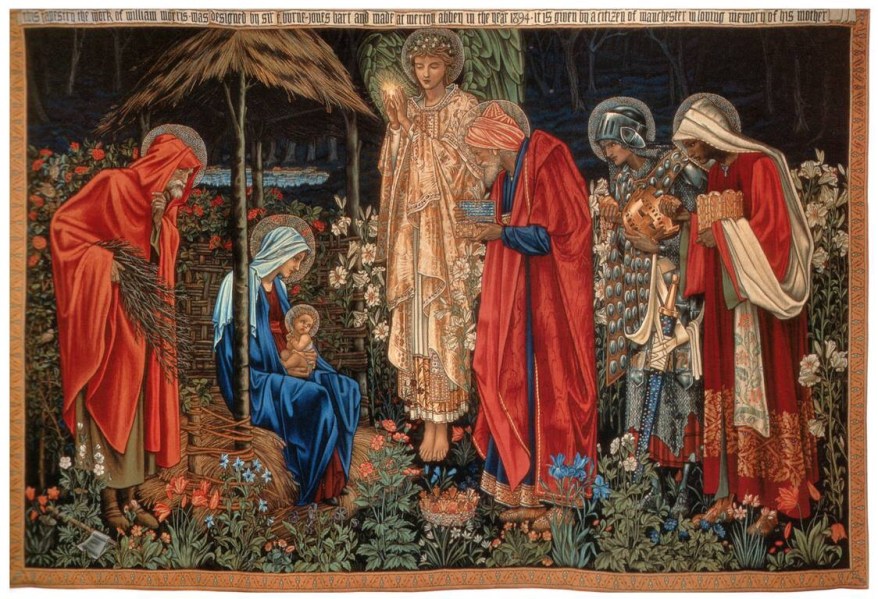
The Christmas Let Down

Pastor Sherry’s message for December 31, 2023

Scriptures: Isa 61:10-62:3; Ps 148; Gal 4:4-7; Lk 2:22-40

Hopefully you have not experienced it this year but there is a psychological phenomenon called “Christmas Letdown.”

Let me share a story to illustrate: “A number of years ago, when Lou Holtz was at the University of Arkansas, he was taking his team to play a bowl game in Tempe, Arizona. The game was to be played on Christmas day. He was asked how he felt about playing a game on Christmas, rather than being with his family. The coach answered candidly: ‘I would rather be in Tempe. After all, once you have been to church, had Christmas dinner, and opened the presents, Christmas is the most boring day of the year.’”

(Illustration borrowed from www.sermoncentral.com, 12/26/2023.)

YIKES, Lou! Tell us how you really feel! Part of “Christmas Let Down” is the sense of “what now?” As the coach said, what’s left to expect when the gifts under the tree and in the stockings have been discovered and unwrapped? What’s there to look forward to when the festive meal with family and friends has been eaten?

I was working on continuing education to renew my psychology license while I was sick at home these past two weeks. The author of one course I took on addictions said that recovering addicts must not let themselves think of how much they enjoyed their “high.” She called this selective memory “euphoric memory,” and said it could lead a person right back into their addiction. Instead, the recovering addict should discipline their mind to think of all the ways that being clean and sober improve their life.

(D. Poor, “Codependency: Causes, Consequences, and Cures,” Professional Development Resources, 2015, p.33.)

I think this must be the antidote to “Christmas Let Down Syndrome” as well. Rather than focusing on any disappointed expectations of our own from people or events this time of year, we should look to what our God has done already–and will accomplish for us in the future–in Jesus’ 1st and 2nd Comings. This is certainly the perspective of all of our Scripture readings appointed for today.

A. Let’s begin with Psalm 148, a clarion call to all of creation to praise God. The psalmist includes nearly all imaginable created elements and entities, and calls upon them to praise the Lord:

1. Angels and all the heavenly hosts’

2. Sun, moon and stars;

3. Heavens and rain;

4. The oceans and all creatures within them;

5. Lightning, hail, snow, clouds; and wind;

6. Mountains, hills, and all varieties of trees;

7. Wild and domestic animals, as well as birds;

8. All people from rulers to ordinary citizens, young as well as old.

The psalmist expects them all to exalt the Lord. Why? Because the Lord created them all, and because (v.14) He has raised up for His people a horn, the praise of all His saints, of Israel, the people close to His heart. A horn is a figurative term for a powerful ruler; this is a metaphor for Our Deliverer, Jesus Christ. We don’t carry on like disappointed sad-sacks after Christmas because the very date reminds us that God both created us and sent a divine deliverer to save us.

B. The prophet Isaiah (61:10-62:3) assures us that God deserves our praise because of what He has in store for us with Jesus’ 2nd Coming. After Jesus comes again as a righteous, triumphant, all powerful Judge, He will do away with all evil-doers. Oh Happy Day! Won’t that be amazing?! And He will dress those of us living then who love Him in (v.11)—garments of salvation and…a robe of righteousness. We will be as decked out beautifully, as a bride or a groom, wearing especially fine clothes, as befitting such an grand occasion. Additionally, we will be inundated by righteousness and praise…again, Oh happy day!

Chapter 62:1-3 tells us that our Lord yearns for this to happen. Both God the Father and Jesus are looking forward to this time. Jesus will rule the earth from Jerusalem. The Present poor war-torn Israel will finally be at peace, and the beauty of Jerusalem will exceed what it looked like at its height, in the days of King Solomon. In a sense, God will delight over Jerusalem as a bridegroom cherishes his bride.

C. Not only that, but as Paul tells us in Galatians 4:4-7, our status has already improved due to Jesus’ 1st Coming. Jesus Christ has paid the penalty for our sins. Additionally, by redeeming us, He has grafted us into His lineage as sons and daughters of God. He has gifted us with the Holy Spirit, whose job is to lead us into all truth. Because of both Jesus and the Holy Spirit, we are privileged to enjoy a comfortable, intimate relationship with God the Father–so much so that we might call Him Abba or Daddy.

As an aside, notice in (v.4), Paul states that Jesus was—born under law. This means that Mary was a young Jewish woman, who performed all the requirements of the Law around Jesus’ birth and her post-birth purification. I saw on the news this week that some person claimed that Jesus was/is Palestinian because Mary was a Palestinian. No. That’s just not true. This person does not know Scripture. Jesus was born to a Jewish woman and was/is Jewish—though He died to redeem the world.

D. Finally, we see from our Gospel (Luke 2:22-40), that God sent two prophets to attest to Jesus identity as Messiah days after His birth. Luke relates that Jesus is named and circumcised on the 8th day. Circumcision is an undeniable sign of loyalty to God. Additionally, at the end of 40 days, Mary and Joseph present Him at the Temple (6 miles distant from Bethlehem). Women who gave birth were considered ritually unclean for 40 days after the birthing event. Once the 40 days ended, she was required to go and present an offering that signaled her purification. The offering of 2 turtledoves instead of a calf or a lamb attests to how poor Mary and Joseph were. But note: The offering was for Mary, not for Jesus as He was without sin and did not require a sacrifice under the Law. Dr. Luke wanted us to be sure to realize that Jesus’ earthly parents were raising Him in the traditions of their Jewish faith.

While they were in the Temple grounds, they were spotted by a man named Simeon. He was an old man who had served God faithfully for years. The Holy Spirit had told him he would not die until he had seen the Messiah; then the Spirit must have alerted him that Jesus was present and was “the One.” So, he approaches the couple, takes the child and prophesies over Him, saying he is now ready to die because he has seen “Israel’s consolation.” This is another metaphor for the Messiah, who Simeon expects will comfort His people. Simeon’s Holy Spirit-inspired speech is called the Nunc Dimittis, and is almost a word for word, prayerful repetition of Luke 2:29-32—Lord, now let Your servant depart in peace, according to Your word. For my eyes have seen Your salvation, which You have prepared before the face of all peoples; to be a light to lighten the Gentiles, and to be the glory of your people Israel. (The Anglican Book of Common Prayer, 2019, p.46).

The Holy Spirit uses Simeon to announce that Jesus is to be the means of salvation for both Jews and Gentiles. He will be a cornerstone/strong support for some; and a stumbling block for others. Simeon rightly predicted that Jesus would suffer, and he accurately predicted that Mary would suffer as she watched her son suffer and die on the Cross.

Because Jewish Law required two witnesses to affirm a truth in court, the Lord provided Anna as the 2nd prophetic witness. Dr. Luke tells us she was 84 years old, having been widowed after 7 years of marriage. Anna was a major prayer warrior in the Temple. She was there so much that the priests and Levites gave her a room in which to live. She spent her days praising God and praying. She too was told by the Holy Spirit that Jesus was the Messiah. She reaffirmed this to Mary and Joseph and shared with any interested onlookers Jesus’ true identity.

According to our Scripture passages, we have no excuse to give in to “Christmas Let Down” syndrome. Instead in these days after Christmas, our hearts should be elevated by celebration and praise!

Our God has created and redeemed us. He has great, restorative plans for us that will occur when Jesus returns to earth. Meanwhile, we have been saved by Jesus’ sacrificial death on the Cross and adopted by the Father as His children and as co-heirs with Christ. Many famous Old Testament prophets foretold Jesus’ birth and 2 faithful, spirit-led New Testament persons prophets confirmed His identity even as a newborn infant. So, no matter what has happened to us this Christmas Day and following, we can and should continue to be filled with rejoicing! Emmanuel [God with us] has come to dwell among us. Come, let us adore Him.

©️2024 Rev. Dr. Sherry Adams

God’s Perfect Gift

Pastor Sherry’s message for Christmas Eve, 2023

Scriptures: Isa 52:7-10; Ps 98; Heb 1:1-4; John 1:1-14

A pastor wrote, ”Yes, God is our loving and gracious Heavenly Father—but He eternally dwells in unapproachable [ineluctable, unavoidable, inescapable, certain] light. That means that God transcends us and is totally beyond us. In Theology proper a Latin term is used to capture this reality; God is defined as Deus absconditus, which translates as ‘the hidden God’. If God had not initiated revealing Himself to sinful and fallen mankind in the Garden of Eden and onward through the Old Testament; if God had not chosen to come out of His holy habitation—mankind would have hopelessly lived and died without knowledge of Him. Christmas is the time we celebrate God coming to be with us; no longer sending others, like prophets, priests, kings, and angels to give us His Word. Christmas is God Himself no longer sending–but coming.

“We should reflect upon how fortunate we are that God has mercifully and graciously come to us in our dreadfully lost condition. The writer of Hebrews described our distance from God quite simply as, “our God is a consuming fire” (Heb. 12:29). The imagery of God as [a] blazing and consuming fire aptly expresses God’s holy distance. Because of His holiness, God is eternally inaccessible to man. Our God always lives in an atmosphere of absolute purity, far too holy for mortals to ever enter. Note that Hebrews says that ‘our God is [not was!] a consuming fire.’ ”

“But to solve the problem of the God who is unapproachable, God Himself came to be with us—as one of us, to die for the whole world of lost sinners.”

(Dr. John Barnett, sermon entitled, “The Six Names Of Christmas – Immanuel – God With Us,” www.sermoncentral.com, Jul 10, 2018.)

The Scriptures appointed for today share with us God’s motivation for sending Jesus to earth as a tiny baby, as well as what our response to Him should be:

A. Again, the writer to the Hebrews puts it this way in our New Testament reading (Hebrews 1:1-4): In the past, God reached out to us through the prophets (v.1). But, more recently, He …has spoken to us by His Son, whom He appointed heir of all things, and through whom He made the universe. The writer to the Hebrews wants us to realize that God reached out to us first. He initiated a relationship with us, not the other way around. First, He sent many prophets (Moses, Samuel, Isaiah, Jeremiah, Daniel, Ezekiel, etc.) to let us know who He is and what He wants of us. When all those efforts fell short—because human beings were lukewarm, or even outright rebellious, in their response–He sent us His One and Only Son.

But Jesus is not just a messenger of God! The Son (v.3)is the radiance of God’s glory and the exact representation of His being, sustaining all things by His powerful word. I love the way Peterson expresses it (The Message, p.2181)By His Son, God created the world in the beginning, and it will all belong to the Son at the end. This Son perfectly mirrors God and is stamped with God’s nature. He holds everything together by what He says—powerful words! In other words, Jesus is higher than prophets or even angels. He is perfectly human, but also perfectly God. As God encased in baby flesh, He—the Holy One—can interact with sinful us.

B. The apostle John (1:1-14) begins His Gospel essentially asserting what the Writer to the Hebrews later wrotethat God intends to reveal Himself, His glory, through Jesus! Where Luke and Matthew begin with Jesus’ birth stories, and Mark, with Jesus’ entre into ministry, John takes us back to creation, before time and space began. Jesus was present at Creation. John wants to make sure we understand that Jesus, (v.1)the Word, was with God, distinct from the Father; and also that the Word was Godpart of the same deity. They share an identity of being; like the Father, Jesus is fully divine. The Apostle writes in verse 2 that the Father and the Son were in relationship with each other. Additionally, Jesus, the WORD, was the agent of Creation (v.3). God the Father planned it; but all things came into being through the words Jesus spoke. The WORD is life”the Life force.” Life comes to us not just through Him; in fact, His life is our light. Physically, we cannot live without light. Spiritually, His life enlightens (brings light into) ours. In John 8:12 Jesus saysI am the light of the world. As if to reinforce this notion, the 3rd verse of “Silent Night” statesSon of God, Love’s pure light, radiant beams from Thy holy face, with the dawn of redeeming grace, Jesus, Lord at Thy birth….

Jesus came to dispel the darkness of unbelief, sin, death, oppression, and bondage. Even though He made us, some of us will–and have– refused to believe in Him. In our rebellion, some of us (what John calls the world) will reject Him and the freedom He offers. But to those of us who have received Him (v.10)–we who have accepted His gift of Himself–He has given another gift: the right to become children of God! We are not biological heirs, not heirs through any human effort; instead, we are spiritual children of God, through Christ’s blood and the Father’s will.

In verse 14, John famously assertsThe WORD became flesh and made His dwelling among us! This is a break with all non-Christian thought: The agent of creation becomes a creature. Peterson describes it this way (The Message, p.1916)

The WORD became flesh and blood

And moved into the neighborhood.

We saw the glory with our own eyes,

The one-of-a-kind glory,

Like Father, like Son,

Generous inside and out,

True from start to finish.

Jesus came to demonstrate to us, in the flesh and through His behavior, the Father’s nature. He is God revealing God: (1) Behaviorally, (2) Relationally,

(3) Intellectually, and (4) Spiritually. He is our Savior, our Redeemer, our Healer, our Good Shepherd, our King. Our response to Him must go beyond intellectual agreement! We need to be in a personal relationship with Him.

We need to accept God’s Perfect Gift.

C. Our Psalm (98) anticipates Jesus’ 1st Coming and urges us to celebrate Him with great joy.

D. Our Isaiah (52:7-10) lesson anticipates Jesus’ 2nd Coming with the same excitement and joy.

James, the brother of Jesus, wrote (1:17)Every good and perfect gift is from above, coming down from the Father of the heavenly lights, who does not change like shifting shadows. This Christmas, let us remember that God the Father has given us the Perfect Gift, His Son, Jesus Christ. Even if there are no gifts for you under your Christmas tree, God has generously sent Jesus into your life. Because of this, we are truly blessed!

Because of God’s perfect gift of Jesus, we can state the following with confidence (please repeat after me) (Borrrowed from Joel Osteen’s The Power of I Am, Faith Works, 2015):

1. “I am forgiven. I am redeemed. I am wearing a robe of righteousness. I am clothed in Christ” (p.42).

2. “God promised me beauty for ashes, joy for mourning. I’m not staying here. I’m moving forward. New beginnings are in my future. The rest of my life will be the best of my life” (p.41).

3. “I have grace for this season. I am strong in the Lord. Those who are for me are greater than those who are against me” (p.41).

4. “I am getting stronger, healthier, wiser. My youth is being renewed like the eagles” (p.38).

5. “I am free. Addictions do not control me” (p.39).

6. “I am blessed. I am prosperous. I have the favor of God” (p.38).

7. Sickness, addiction, poverty, you are temporary. I am a child of the Most High God. I am overcoming you,” by the blood of the Lamb of God (p.44).

Jesus is the gift that just keeps giving! Thanks be to God who gives us the victory through our Lord, Jesus Christ. Alleluia, alleluia!

©️2023 Rev. Dr. Sherry Adams

Humility and Joy

Pastor Sherry’s message for December 17, 2023

Scriptures: Isa 61:1-4, 8-11; Ps 126; Lk 1:46b-55; Jn1:6-8, 19-28

Our Gospel today focuses on the role of John the Baptist as a forerunner to the appearance of Jesus.

“Two hundred years ago there was another man named John, a preacher of extraordinary power and influence in England and America. We know John Wesley as the founder of the Methodists. Surprisingly, however, Wesley was not the most popular preacher of his day. A man named George Whitefield preached to far more people than Wesley, baptized many more into the Kingdom of God and was a favorite of such prominent Americans as Benjamin Franklin.

“Whitefield and Wesley were the best of friends –[in fact they had met in college and, together with Charles Wesley, founded the Methodist denomination]– until they had a severe falling out over Whitefield’s strict adherence to Calvinist doctrine. Whitefield was asked following this falling out, “Do you expect that you will see John Wesley in heaven?”

“’No,’ answered Whitefield.

“’That’s what I thought you would say,’ his questioner replied.

“’But you don’t know what I mean,’ said Whitefield. ‘Wesley will be so far up there near the great Throne, I will never see him.’

“Such an answer takes a certain kind of divine humility.”

(Rev. King Duncan, www.Sermons.com, 12/17/2023)

Isn’t it great to know that a famous contemporary of the founder of our denomination was such an humble guy? George Grandison Whitfield led the Great Awakening, the first revival in colonial America, in the 1740’s. His theatrical, charismatic preaching brought many Americans to a saving faith in Jesus, just as Wesley’s preaching accomplished a similar feat in England. Whitfield is said to have preached “at least 18,000 times to perhaps 10 million listeners in Great Britain and her American colonies.” (Wikipedia citation on George Whitfield). In this example, Whitfield was as humble as John the Baptist. As we read in today’s Gospel, John the Baptist humbly redirected attention from himself to Jesus.

I think we can all agree that this kind of humility is fairly rare in our culture today, as well as very admirable. You all know by now that I love college football, but the sense of entitlement and arrogance among today’s players is causing me to rethink continuing as a fan. I heard this week that some players at my favorite school were consistently late to practice and did not work as hard as they should have in the weight room. They have full scholarships to an excellent academic institution, free condo apartments, free training table meals, and free tutoring, and yet they are too full of themselves to cooperate with their coaches and to settle into the program. Instead of appreciating their opportunities, they whine about too little playing time and bail out of the team to transfer where they are promised more money. How many other students would be thrilled to have what they take for granted. They are increasingly short on gratitude and humility.

But back to our Biblical example of humility: Let’s examine John the Baptist’s humility as described in John 1:6-8, 19-28. The Apostle John began his Gospel version of Jesus’ ministry by establishing that our Lord was both present at creation and spoke it into existence. He was and is the logos, the Word Made Flesh. The words coming from the Word established the foundations, the geography, the plants and animals of the world.

The Apostle John then inserts into his account the existence and mission of John the Baptist (vv.6-8) He came as a witness to testify concerning that Light, so that through Him all men might believe. He himself was not the Light; he came only as a witness to the Light.

From there, John goes on to describe (vv.19-28) a dialogue between John the Baptist and some Priests, Levites, and Pharisees regarding his identity. They wondered if he were Elijah, come back to earth. They surmised he might be the prophet mentioned in Deuteronomy 18:15 and 18, a successor to Moses–though all the prophets from Moses until John the Baptist were successors to Moses. John the Baptist freely admits he is not the Messiah/the Christ. He also denies he is any of the others they suggest. Then he quotes Isaiah 40:3—which we read last week—and admits he is the forerunner to JesusThe voice of one calling in the desert, “Make straight the way for the Lord.” He very humbly also states (vv.26-27)I baptize with water…but among you stands one you do not know. He is the one who comes after me, the thongs of whose sandals I am not worthy to untie.”

One among you—did that mean Jesus was there in the gathered crowd, ready to be baptized by JtB? Or does it mean that Jesus was already in Israel and they had not yet encountered Him? Whichever the case, this statement should have clued them in that the Promised Messiah was coming soon. Apparently, they didn’t believe him.

Nevertheless, what a joy for JtB to realize his job was to announce the coming of the Messiah. What a joy to know that he was supposed to get the hearts of the people ready to receive Him. And how humble to later say (John 3:28-30)I must decrease so that He [Jesus] may increase.

This theme of humility and joy continues with Mary’s Magnificat, our New Testament lesson (Luke 1:46-55). The pregnant mother of Jesus realizes a great honor is being given to her. Every Jewish girl hoped to become the mother of the Messiah. The angel told Mary she would have that honor. She would be what the ancient Greek Christians would later label the theotokis or God-bearer.

In her joy, she creates a song in which she praises God because (v.49)The Mighty One has done great things for me—holy is His name. But, with great humility, she moves quickly ahead to also applaud God for what He is doing through her for His people: She celebrates Him for His mercy to those who respect and revere Him; His past works of power/His miracles; His surprising, unexpected propensity to reverse worldly fortunes. Contrary to the ways of the world, He raises up the lowly, the humble, while He brings low the lofty and arrogant. Finally, she praises Him for His fulfillment of His promises (from Genesis 12 and 22) to Israel: There would come a righteous king from the lineage of David. This Messiah will bless all the nations on earth. Can’t you just hear her joy as she delights in the plans of God the Father and in the future redeeming work of her soon-to-be-born son?

Psalm 126 is an expression of joy for God’s rescue of His people from captivity in Babylon and for the anticipated restoration of Jerusalem. This psalm is a prophesy of things to come, but is written in what’s known as “the prophetic tense,” past tense for something that has not yet happened because it will take place. After 70 years, the Persian King Cyrus, a nonbeliever, will allow the Jews to return to and rebuild their country. He sent the returnees with armed soldiers for protection and included the gold that had been taken from the Temple to finance reconstruction. Ezra the priest would oversee rebuilding the Temple. Nehemiah, the king’s trusted spokesperson, will oversee reconstruction of the city of Jerusalem.

The returning remnant were overjoyed to be going home (vv.1-2)We were like men who dreamed. Our mouths were filled with laughter, our tongues with songs of joy. The returnees rightly and humbly acknowledge it is only God who could have effected their release from Babylon. The psalm hints, too, of Jesus’ 1st Advent, when He would come to free us from the penalty for our sins.

In our Old Testament lesson (Isaiah 61:1-4, 8-11), the prophet summarizes what Jesus will do in both His first and second comings. Jesus came the 1st time to preach Good News to the Poor/the humble (in spirit and economically). He brought comfort. By paying for our sins, He brought blessed assurance. He also came to bind up or heal the broken-hearted. Jesus can heal any wound we received either as a child or as an adult. He is able. Additionally, He proclaimed freedom for captives (those who have been captured and harmed by the sins of others). He released prisoners (those whose own sins have put them in bondage).

Because of what He did in His first Advent, we can trust with faith that He will accomplish what is yet to be when He returns a 2nd time: He will judge between the good and the evil-doers. He will put down rebellion. He will eradicate evil. He will usher in the Millenium (1000 year reign of Christ). He will rule the world from Jerusalem. It will be a time of great peace and prosperity. He will provide peace and comfort to all those who mourn or grieve, exchanging their pain and grief for beauty, gladness, and praise. He will so strengthen them that they will stand as strong as oaks of righteousness, a planting of the Lord for the display of His splendor. Additionally, they will be empowered to rebuild the ancient ruins…and renew the ruined cities….

When Jesus comes again in all His glory, He will greatly bless those who love Him, materially, physically, and spiritually. Both Advents are causes for humility and joy!

Do you see the twin themes of Humility and Joy in all of our readings today? As we celebrate Jesus’ 1st Coming, we want to be both humbled and joy-filled—Humbled because we have done nothing to merit God’s great loving care for us. He planned and fulfilled His divine rescue out of His amazing, saving love for us. The Incarnation is a miracle! Jesus agreed to come to earth, leaving all of His prerogatives in heaven to live among us in poverty, and to die a horrid death to atone for our sins. We want to be joy-filled because we owe God the Father and Jesus our gratitude and praise.

Thanks be to God who gives us the victory through our Lord Jesus Christ. Alleluia, Alleluia.

©️2023 Rev. Dr. Sherry Adams

Waiting on Jesus

Pastor Sherry’s message for December 3, 2023

Scriptures: Isa 64:1-9; Ps 80:1-7, 17-19; 1 Cor 1:3-9; Mk 13:24-37

Waiting is difficult, isn’t it? Think of all the times you’ve had to wait…

1. Would you get the job you just interviewed for?

2. What about the results of that medical test or scan you just underwent?

3. Did that person you fell in love with also love you back—remember the agony of that wait?

4. Would your child get into the college or internship of their choice?

5. Would your house sell? Would the sellers of the house you want accept your offer?

6. How about that last month of pregnancy? Would that baby ever make an entrance?

7. What about waiting on a grant to come through or a check in the mail?

8. How about those hostages of Hamas, waiting to be set free, or their families, dying to know how they are?

9. Remember being a kid and having to wait for Christmas morning to finally arrive?

Most of us hate to wait. We wring our hands. We pace the floor. We lose sleep. We grumble and groan and complain. We engage in what addiction counselors are now calling “BEEPS” Behaviors, Experiences, Events, People, and/or Substances that help us self-medicate or suffocate our anxiety as we wait.

(Ed Khouri, Restarting, Life Model Works, 2010, p.32.)

If we’re really smart, we pray and ask God to help us wait, so that we can learn what He means for us to learn during this time; so that we may develop the spiritual fruit of patience.

Today is the first Sunday of Advent—a time of great anticipation as we wait upon the arrival of Jesus.

A. In Isaiah 64:1-7, the prophet reminds us both that God controls the entire universe and that our condition as humans is that of unclean sinners (vv.5-7). Verses 1-2 constitute a cry, a plea for God to come down to earth, to defeat Israel’s enemies (and ours), and to make things right.

Isaiah recalls times God did intervene on the behalf of Israel doing (v.3)—…awesome things that we did not expect. He also reminds them and us, (vv.4-5)—Since ancient times, no one has heard, no ear has perceived, no eye has seen any God beside You, who acts on behalf of those who wait [there it is, wait] for Him. You come to the help of those who gladly do right, who remember Your ways. In other words, we can and should call upon God for help when we are troubled or anxious, when we are worn out with waiting. Isaiah assures us God will respond!

But notice, the prophet attaches this caveat: God rescues those who do the right thing, who remember to do as God would have us do.

I have told you before that I had some difficulty and fear around selling my house when I was leaving seminary. I had listed it in September of 2001, but then 9/11 took place and no one in SW Pennsylvania was buying or selling homes. By January 21, 2002, I had completed my degree but still had no buyers for my home. Worse yet, I had no job and no money. I was sick with a cold and would awaken all through the night whenever I became too congested to breathe. I would take something then return to bed, begging God in prayer to sell my house. Finally, at about 4am, I asked the Lord if I were doing something or not doing something that served as an impediment to Him taking action. I heard Him say, in my spirit, that I had not surrendered to being a lead pastor. He was of course right. I had thought to assist someone, as my gifts are in teaching and counseling, not in administration or leadership. I immediately agreed to surrender to His will, got up at 8:00am, and sent off letters to 4 small parishes in North Florida (I wanted to go home and I wanted a church small enough so I could know everyone’s names.) I put those letters in the mail at 10:30am on January 22nd. My realtor called at 11am with a couple interested in my house. They came at 5:00pm that day and signed a contract by 8:30pm. Additionally, I needed to close on February 7th as my next mortgage payment was due on the 8th and I knew I would be unable to pay it. My Jewish realtor said there wasn’t enough time to make that happen, but I replied that she did not know my Jesus. Sure enough, we closed on my house on the 7th, thanks be to God! I learned from this that God sometimes waits for us to change before He moves on our behalf. We have to be willing to ask if our wills are blocking His will and take action to rectify that.

Finally, Isaiah reminds us in this passage that we are like clay in the great Potter’s hands. We want to conform to His will. We want to allow Him to mold and shape us into the image of our best selves. When we wait upon God to act, God is working on our character, transforming us more and more into the image and likeness of Jesus. We may hate to wait, but God uses that time to do a work in us.

B. Psalm 80:1-7, 17-19, is both a prayer for God to relieve the peoples’ suffering—especially after an attack by brutal enemies—and a plea for God to lead them again. The psalmist, Asaph, a contemporary of King David, appeals to God as our shepherd king as He is enthroned in heaven. He is asking God to move on behalf of His people. In the desert wanderings, the ark and the cloud would move out for the days’ march. This signified that God was their leader. When camped, three tribes situated themselves to the north of the ark, three to the east, three to the west, and three to the south, with God at their center. When they moved, however, the tribe of Benjamin, along with the half-tribes of Joseph’s sons Ephraim and Manasseh (remember, Benjamin and Joseph were Jacob’s two favorite sons), would past like the Red Sea, allow the Ark to lead them, then follow directly behind. Then the other 9 tribes would all fall in behind them as well.

Asaph asks for God’s favor (v.3)—Restore us, O God: Make Your face shine upon us, that we may be saved (This is repeated 3 times). This is a poetic way of saying, smile at us. Demonstrate on your face that you enjoy being with us. Picture how people hold an infant and smile as they talk baby-talk to the new little one. Our faces often “shine upon” or look with great favor upon babies when we talk to them.

He also uses the images of eating and drinking tears to describe how much Israel has suffered. Some biblical experts believe there is no nation ever that has suffered to the degree that Israel has—and survived. (J. Vernon McGee, Commentary on Psalms, Chapters 42-89, Thomas Nelson, 1991, p.5.) According to Paul, as he writes in Romans 11, the Jews have suffered because they rejected Jesus as the Messiah when He walked among them. However, when “the time of the Gentiles” is over–or after the Church is raptured–and when the Great Tribulation begins, there will be a huge harvest of God’s original chosen people, as they finally recognize Jesus Christ as their Messiah.

Indeed, verse 17 predicts that Messiah, Jesus, will be standing at God’s right hand and will come (2nd Coming) to save them. We are to await that great day with hope and faith.

C. In 1 Corinthians 1:3-9, Paul refers to Jesus Christ a total of 5 times in 7 verses. The season of Advent calls upon us to be a waiting people. Who or what are we waiting for? Paul asserts it is Jesus, the end all and be all of our lives. And Paul assures us He will impart to us grace with which to await His 2nd Coming.

D. Finally, in our Gospel lesson (Mark 13:24-37) we are reminded, as we wait, of Jesus’ 2nd Coming. At the Incarnation, Jesus’ 1st Coming, God broke into human history, as a flesh and blood infant person. He came to preach, teach, heal, encourage, and to demonstrate to us God’s great saving love for us. When He comes again, it will be as the Great King of the Universe, and as a conquering military hero, to judge all the people of the earth. He will liberate all of the Christ-followers who are left from the effects of a fallen world.

His 2nd arrival will follow what the news media will probably proclaim as great heavenly catastrophes and climate change calamities: The sun and the moon will no longer give off light (the light source will be God the Father and Jesus). The stars will fall and planets will change their orbits. Non-believers will be horrified, terrified of what is to come. But Jesus will have already gathered to Himself the Church in the Rapture, and will at that time, then gather in those who have come to believe in Him through the Great Tribulation. Christ’s warning to us is clear: We are to be ready for when this happens…this afternoon or tonight, next month or next year. We don’t know the hour or the day, but while we wait, we need to get ready.

We hate to wait, so what can we do to help us wait with grace and peace? First it helps to understand that waiting can reveal to us our true motives. Are we committed enough to take some time. Or, are we so “me focused” that we are impatient and won’t postpone gratification?

Second, waiting builds the spiritual fruit of patience. The old saw goes, “Don’t pray for patience. If you do, God will put you in a situation that requires that you develop it.” God will and does answer that prayer, but you may wish He had taught you that virtue another way.

Third, waiting builds anticipation, so that we better appreciate those things that did not come to us immediately.

Fourth, waiting builds intimacy with and dependence upon God. Remember that waiting is the crucible of the saints! Back before pills were packaged, pharmacists used a mortal and pestle to pulverize substances into powder form, then sold the compounds they created in little bags. We are like those substances, with God grinding out our impurities as we wait. We are not alone in having to wait. In fact, waiting is a grand Biblical tradition: Abraham waited 25 years for Isaac; (his descendants waited 440 years to inherit the Land). Jacob, his grandson, worked for Laban 21 years before returning to “the Land” as Israel. Joseph was a slave in Egypt in Potipher’s house for 7 years, then in prison for another 7 before being raised second only to Pharaoh. Moses waited 40 years in Egypt, then another 40 years as a shepherd in Midian, before he led the nation of Israel out of bondage. King David was anointed by Samuel, then waited 20 years to become king. Jesus was 30 before beginning His ministry.

As I have said before, waiting molds and shapes our character. God uses it to train us to trust and to persevere. God uses the time to burn off or grind down our impurities (impatience, anxiousness, bad temper, Beeps). God uses it to make us dependent upon Himself. The result, if we wait and trust, is fantastic! The prophet Isaiah wrote in 40:31—Those who wait upon the Lord will renew their strength. They shall run and not grow weary; they shall walk and not be faint.

We have a God who keeps His promises! Let us wait upon Him and His timing with grace and in faith. In this season of Advent, let’s not grow anxious or impatient. But, instead, let’s trust in God’s goodness and loving kindness towards us, and in His perfect timing!

©️2023 Rev. Dr. Sherry Adams

Saying “Yes” but Living “No”

Pastor Sherry’s message for October 1, 2023

Scriptures: Ex 17:1-7; Ps 78:1-4, 12-20; Phil 2:1-13; Matt 21:23-32

Isn’t it true that we see lots of examples today of folks who have said “Yes” to something or someone, then proceeded to live like they’d said “No”? Some current day examples include the following:

1. A college football player who signs on for a scholarship—including room, board, books, tuition, fitness training, tutoring, and other benefits—then refuses to go to class, to comply with his training regimen, to attend team meetings, or respect his coach.

2. Federal judges who take a vow to uphold the constitution, then bring in verdicts based on their political loyalties.

3. A husband or wife who promises to be faithful to their spouse in their marriage ceremony, then has affairs with others, often including other peoples’ spouses.

4. A money manager/investment specialist who promises to care for your retirement assets, then either invests them unwisely so that they are lost, or steals them to support their own greed.

5. Teachers who train to ethically convey a body of knowledge to our kids, who then try to indoctrinate them into their gender politics or political beliefs.

6. A “Border Czar” who says our Southern Border is secure while letting in millions of illegal immigrants.

7. Doctors who withhold critical information prior to surgery—like “You’ll be on meds the rest of your life,” or “This artificial joint will need to be replaced in 10-20 years”–or who perform surgeries/prescribe treatments that harm rather than heal (e.g., gender reassignment surgery in children).

You can no doubt think of other examples.

Nevertheless, this kind of behavior is abhorrent to our God. He really hates lying, fraud, cheating, willfully misrepresenting, and so many disreputable behaviors we see all too often today. He has shown us in Scripture how He wants us to behave.

Our Scripture passages today each point out in some way the very different standards by which our God urges us to act:

A. Jesus addresses, in today’s Gospel (Matthew 21:23-32), a specific kind of integrity that He and our Heavenly Father want us to practice: Neither is kindly disposed toward those who say “Yes” to God but then live like they have said “No.” He takes the chief priests and the elders—the religious establishment—to school in this passage. He knows that they have become more and more threatened by His popularity, His healings and His miracles, and the content of His teaching. They jump on this opportunity to confront Him publically regarding the source of His authority. They are saying essentially, “What gives you the right to challenge our teachings and the way we tell folks how they should live?”

We might restate what they are saying as “Who died and put You in charge?” Or, “Who do You think You are?”

He wisely side-steps their challenge (He doesn’t dance their dance-steps or play their game). If He had said He is God or that His authority comes from God, they would have charged Him with blasphemy. As in tennis, then, He sends the ball back into their court saying, ”I’ll answer you if you answer a question for me.” Verse 25John’s baptism—where did it come from? Was it from heaven, or from men? If they agreed John the Baptist’s authority came from God, then they would have had to have admitted they were disobedient to God because they dismissed the prophet (Jesus said John was the greatest of all the prophets) as a wild-eyed religious nut and discredited his ministry. But they were afraid to put down John the Baptist in front of the Jewish crowd because he had been very popular with the people. Jesus thus puts them on the proverbial horns of a dilemma; His question positioned them between a rock and a hard place. Realizing this, they refused to answer Him and so He traps them and essentially says, “back at you, Friends!”

The real lesson from Jesus is contained in the parable He goes on to relate. One son says “No” then lives out “Yes,” while the other says “Yes” but lives out “No.” In verse 31, Jesus asks His religious adversaries the indicting question🡪Which of the two did what His father wanted?

They correctly answered that it was the one who said “no” first, then behaved obediently/walked out “yes.” He then points out to them that they have missed the proverbial boat. They have said “yes” they would serve God, but their behavior consistently demonstrates that they do not listen to or obey Him. They have followed their own wills, not the will of the Father. They have become religious judges and critics rather than servants of God who demonstrate the Lord’s love and grace. Their pride and their hardened hearts have led them to say “No” to God. But tax collectors and prostitutes—folks they despise (those who may have originally blown God off, only to accept Him when they realized they couldn’t manage life without Him)–are way ahead of them in their faith journeys. The chief priests and the elders have their credentials; but their lives lack faith in and understanding of the God they claim they serve.

B. Paul, in today’s epistle (Philippians 2:1-13), directs us specifically to live out a lifestyle of humility, caring for others as well as self, and having “the mind of Christ;” i.e., to say “Yes” and then live “Yes.” We say “Yes” to God and live out our “Yes” by having what Paul calls the mind of Christ. This is not just an imitation of Jesus. Instead it is a real life change, a real heart change, a consistent behavior change accomplished in us by the Holy Spirit.

Eugene Peterson paraphrases verses 1-2 in The Message (p.2138) this way: If you’ve gotten anything at all out of following Christ, if His love has made any difference in your life, if being in a community of the Spirit means anything to you, if you have a heart, if you care—then do me a favor: Agree with each other, love each other, be deep-spirited friends. Don’t push your way to the front; don’t sweet-talk your way to the top. Put yourself aside, and help others get ahead. Don’t be obsessed with getting your own advantage. Forget yourselves long enough to lend a helping hand. Think back to our recent experience with Hurricane Idalia. One unexpected result of the loss of electricity was that traffic lights did not work. Without the lights, we should have treated each intersection as a 4-way stop, all drivers taking turns so that each could proceed through safely. Instead, many only thought of themselves and barreled on through. Until the lights were restored through generator power, we took our lives in our hands whenever we approached an intersection. Many people today are unwilling to consider…helping others get ahead. All too often they are …obsessed the getting [their] own advantage. Having the mind of Christ also means being as humble and as obedient as Jesus was and is. It means saying “Yes” to God and living out that “yes.”

C. Our OT lesson (Exodus 17:1-7) provides yet another example of how believers can and do say “Yes” but live out “No.”

How patient God is! How frustrated Moses became! Prior to today’s passage, God has rescued the people from Egypt, opened the Red Sea, wiped out the pursuing Egyptian army, fed them manna and quail, and provided them with water, several times over. Yet they still complain and whine and quarrel. They accuse God of bringing them into the desert to die. They remember their recent history as slaves with fondness—What? It defies logic! But isn’t it just like us? We forget what God has done for us in the face of our most recent pressing need. They should have prayed and trusted that God—who has provided for them many times over—would continue to do so. Instead they fail God’s test of them (Massah or testing) and quarrel (Meribah or quarreling) and the geographic place is named accordingly to memorialize this rebellion.

The same principle remains true for you and me. We need to trust in our God. We need to say “Yes” to Him, and live out our “Yes” to Him because He has proven Himself and His good intentions for us over and over.

D. This is the prevailing message of our psalm today (Psalm 78:1-4, 12-20). Credited to Asaph, it records the historical record of how God’s people, from Abraham to Moses, repeatedly demonstrated “practical atheism.” Dr. J. Vernon McGee says we demonstrate practical atheism when we say we believe in God, and we believe God’s promises, but then act as though we cannot trust Him. The psalm reports the marvelous things God did for His people, as well as how quickly they forgot their past experiences with Him when faced with a new dilemma. They were believers who said “Yes,” but—when encountering a tough patch—acted out “No.”

Let’s agree today not to do this to God. We don’t want to be “practical atheists.” We don’t want to be hypocrites, saying we believe, then living like we don’t. We want to live like we believe God is who He says He is and that He does what He promises He will do. We also want to cooperate with the transforming power of the Holy Spirit, who empowers us to have the mind of Christ. Let’s put our new intentions to work immediately by praying that the Holy Spirit would give us each the mind of Christ. Thanks be to God, who gives us the victory through our Lord Jesus Christ! Alleluia, Alleluia!

©️2023 Rev. Dr. Sherry Adams

Rebellious Tenants

Pastor Sherry’s message for October 8, 2023

Scriptures: Ex 20:1-21; Ps 19; Phil 3:4b-14; Matt 21:33-46

The story is told of Josef Stalin (the horrendous dictator from 1924-1953 of Soviet Russia, who killed between 6-9 million of his own countrymen) that “…at one time [he] had been a seminary student, preparing for the ministry. At a later time it seems that he made a decisive change from his belief in God. This dramatic and complete reversal of conviction that resulted in his hatred for all religion is why Lenin chose Stalin and positioned him in authority–a choice Lenin too late regretted. (The name Stalin, which means “steel,” was not his real name, but was given to him by his contemporaries who fell under the steel-like determination of his will.) And as Stalin lay dying, his one last gesture was a clenched fist toward God, his heart as cold and hard as steel. (Ravi Zacharias, Can Man Live Without God, Word Publishing, 1994, p. 26).

How amazing to think Stalin had started out as a Christ-follower, only to defect to atheistic communism. He came to believe that the Christian Church had helped oppress the Russian people. He also decided that the Russian Orthodox Church held too much power—power that could be turned against the communists. So he killed and imprisoned many, many religious leaders and many Christians. In an incredible example of human pride, it would seem that he grew tired of waiting on God to change human behavior and to irradiate human injustice, and took the job into his own hands—only to become a perpetrator or human injustice.

That the Church still survives in Russia, despite decades of persecution, is a testimony to the fact that dictators can control our behaviors but not our beliefs. Furthermore, look at the oppressive tactics communist dictators use to coerce compliance: In the last century and into this one, both Russian and Chinese communists are responsible for an estimated 100 million deaths. They build walls to keep people in, rather than out (for example, the Berlin Wall and the border between North and South Korea). They shoot people who try to escape their borders. They use imprisonment, slave labor camps, executions, brain-washing, and even starvation to crush the will of anyone they consider an enemy of their regime.

Contrast this with our God Who wants us to live by a moral code, but never forces our compliance:

A. Psalm 19, written by King David, reminds us of how God’s glory is on display in His creation->v.1->The heavens declare the Glory of God; the skies declare the work of His hands. His masterpieces are all available for everyone to see. This is what theologians call “general revelation,” and helps explain how anyone who thinks about such things can know God exists. Scripture and the person of Jesus are considered “specific revelation,” because you have to be curious and willing to read the Bible and to learn about Jesus.

Beginning in verse 7, David extolls or celebrates God’s specific revelation of Himself in His Law->The Law of the Lord is perfect, reviving [restoring] the soul. The statutes of the Lord are trustworthy, making wise the simple. From this side of the Cross, we know adhering to the Law cannot save us. It is like a mirror we hold up to our faces which proves to us that we are not perfect. It makes clear to us that we need a savior, a rescuer, a redeemer. But even so, God does not force us to believe or to comply.

Additionally, that famous verse 14 foreshadows Christ->May the words of my mouth and the meditations of my heart be pleasing in Your sight, O Lord, my Rock and my Redeemer. Jesus is our Redeemer. Jesus is both the Rock of Ages and the Solid Rock on which we stand.

B. Our Genesis lesson (20:1-21) lays out the 10 Commandments. These 10 laws are the foundation of human moral behavior. The first 4 tell how we are to behave toward God; the last 6 specify how we are to behave toward other people. The Chinese communist leader, Xi Jinping, has recently altered each of the 10 commandments to fit communist rhetoric—Woe be unto Him! He either doesn’t know or doesn’t care that we are not to add to nor take away from the words of Scripture. Lord, please frustrate the ways of the wicked! (Psalm 146:9).

The 10 Commandments of the Bible are not meant to cramp our style, but rather to ensure we live morally and peaceably with our neighbors, and to provide a sense of security and safety for all of us. Consider how many of the commandments are broken daily in the United States, and observe the results: (I apologize in advance if anyone is offended that I take on political issues. Some believe pastors should never comment on political issues as they can be so divisive. However, my undergraduate degree was in Sociology and so I have been trained to observe societal trends. Like you, perhaps, I find many political trends today very alarming, and anti-Christian, and feel compelled to denounce them in the name of Christ.)

1.) Gangs of looters steal store goods without consequences in major cities (Commandment #8). I saw an article this week in which it was reported that 97% of restaurants in San Francisco have been vandalized, in the past year, in one form or another. It is true that if District Attorneys don’t prosecute and our courts do not punish those who are guilty, lawlessness abounds and prices go up—so that we all pay—and stores and restaurants go out of business. Conversely, when we can be pretty sure that no one will steal or damage our stuff, businesses can exist and we can feel safe, secure, and protected.

2.) Lying (Commandment #9) is so commonplace in Washington D.C. that we no longer have confidence in most of our governmental officials, governmental agencies, or most news media. Whatever happened to “Your word is your bond?” Truth-telling is essential in a democratic republic. We must be able to trust that politicians do what they claimed they would do in order to get elected, and that governmental agencies exist to ensure the rights of our citizens are maintained, not violated.

3.) Don’t even get me started on Commandment #6, Don’t murder, or #7, Don’t commit adultery. If you know someone whose family member has been murdered, or whose parents, spouse, or sibling suffered through adultery, you know the impacts of both sins are long-lasting and incredibly painful.

These are not kill-joy commandments, but rather the guardrails on the mountain-pass-highway-of-life. God has made us like Ferraris or Rolls Royces. We are not meant for driving off into the rough or down the cliff on the side of the road. When we disregard any of the commandments, we run the risk of tearing ourselves up, spiritually, emotionally, and sometimes physically. Someone has said, “Grace is what God is, while Law captures God’s thinking with regard to what people ought to be” (as shared by Rev. Dr. J. Vernon McGee, Commentary on Exodus, Thomas Nelson, 1991, p.23). Again, our God does not coerce us.

C. We might say that Paul is on a roll in our epistle lesson today, Philippians 3:4b-14. He cites all his credentials: He came from godly parents; he was born into the tribe of Benjamin, Jacob’s favorite son in his old age and thus a favored tribe; he is a leader of the Hebrews and a Pharisee, a teacher and protector of the law; he was zealous in persecuting the infant Christian Church, believing they were heretics; and he kept God’s Law righteously, always offering the designated sacrifices for his sins—not perfect, but perfectly compliant.

However, despite all these glowing accomplishments, he—since coming to know Jesus—has discerned that they are as useless as scubala, human or animal waste products. None of our human successes earns us heaven. Neither our lineage nor our achievements can save us. So he implores us to realize this in our own lives and seek out Jesus. Like a runner in an Olympic relay race, we want to (v.12)->…press on to take hold of that for which Christ Jesus took hold of me. Additionally, he urges us (v.14)->Forgetting what is behind [our past] and straining toward what is ahead, … [we] press on toward the goal to win the prize for which God has called [us] heavenward in Christ Jesus. He wants us to recognize that nothing earthly is more important than our relationship with God. He wants us to choose to put God first in our lives.

D. Finally, in our Matthew 21:33-46 passage, Jesus gives us a front row seat to a major confrontation He has with the Jewish religious leaders. Remember, from last Sunday’s Gospel, Jesus had made them aware that they continuously sinned against God by saying “yes” to His service, but “no” to following His will. He immediately follows this up by telling them the Parable of the Tenants. In this story, the vineyard owner is God; the rebellious tenants are the Jewish religious leadership; the servants thrown out or killed were the prophets; and the son is of course Jesus. He asks the leaders what the owner of the vineyard will do to those rebellious tenants when he returns. They answer correctly (v.41)->He [God the Father] will bring those wretches to a wretched end…and He will rent the vineyard to other tenants who will give Him His share of the crop at harvest time. Though they have studied Scripture, they have missed recognizing God’s Son, Jesus the Messiah. (Notice, embedded in the parable, Jesus predicts His death at their hands.) So He declares (v.43)->Therefore I tell you that the kingdom of God will be taken away from you and given to a people who will produce its fruit.

The leadership of God’s mission to save humankind will be transferred from them to the emerging Christian Church. This, of course, enrages them and 5 chapters later, they arrest and execute Him. Some have used this passage as a justification to persecute the Jews, but they have no excuse if they have read the later chapters of Romans and of Revelation. Both books make the case that God still considers the Jews—as well as the addition of the Church–to be His Chosen people

Though not believers, the dictators Josef Stalin and Xi Jinping are rebellious tenants. The Jewish religious leadership of Jesus’ day were also rebellious tenants. Jesus strips them of their leadership over God’s earthly kingdom. That was their punishment. Imagine what punishments await the communist leaders of this and the past century!

We don’t want to be rebellious tenants. Our God has revealed Himself—and His heart–through His creation and His Law. His laws are meant for our good—to keep us from crashing and burning. Neither they nor our own excellent achievements can save us. But in His mercy, our God has sent us His Son, Jesus to save and to redeem us. Let us thank Him, praise Him, and obey Him. Amen!

©️2023 Rev. Dr. Sherry Adams

Reckless Love

Pastor Sherry’s message for October 15, 2023

Scriptures: Ex 32:1-14; Ps 106:1-6, 19-23; Phil 4:1-9; Matt 22:1-14

Back in 2017, Corey Asbury, a worship leader at the Bethel Church in Redding, California, wrote a worship song called “Reckless Love.” The lyrics go like this:

Before I spoke a word, You were singing over me.
You have been so, so good to me.
Before I took a breath, You breathed Your life in me.
You have been so, so kind to me.
Oh the overwhelming, never-ending, reckless love of God!
Oh it chases me down, fights til I’m found, leaves the 99.
I couldn’t earn it and I don’t deserve it;
Still You give yourself away.
Oh the overwhelming, never-ending, reckless love of God!
When I was Your foe, still Your love fought for me.
You have been so, so good to me.
When I felt no worth, You paid it all for me.
You have been so, so kind to me.
Oh the overwhelming, never-ending, reckless love of God!
There’s no shadow You won’t light up,
No mountain You won’t climb up, coming after me.
There’s no wall you won’t kick down,
Lie You won’t tear down, coming after me.

It’s pretty clear from his song that Corey Asbury has experienced God’s intentional, loving pursuit of him. He’s a grateful man. He’s fallen in love with God because God has “recklessly,” unrelentingly sought him out. We can all be grateful that our God has not given up on any of us.

Now some well-meaning critics have taken issue with Corey’s characterization of God’s love as reckless. Asbury addressed this in a facebook post:

“Many have asked me for clarity on the phrase, ‘reckless love.’ Many have wondered why I’d use a “negative” word to describe God. His love isn’t cautious. No, it’s a love that sent His Own Son to die a gruesome death on a cross. There’s no ‘Plan B’ with the love of God. He gives His heart so completely, so preposterously, that if refused, most would consider it irreparably broken. Yet He gives Himself away again. The recklessness of His love is seen most clearly in this – it gets Him hurt over and over. Make no mistake, our sin pains His heart. And ‘70 times 7’ is a lot of times to have Your heart broken. Yet He opens up and allows us in every time. His love saw you when you hated Him – when all logic said, ‘They’ll reject me,’ He said, ‘I don’t care if it kills me. I’m laying My heart on the line.’ To get personal, His love saw me, a broken down kid with regret as deep as the ocean; my innocence and youth poured out like water. Yet, He saw fit to use me for His kingdom because He’s just that kind. I didn’t earn it and I sure as heck don’t deserve it, but He’s just that good. Oh, the overwhelming, never-ending, reckless love of God.”

This is the theme of our readings today. With God’s reckless love for us in mind, let’s examine them together:

A. Psalm 106:1-6, 19-23, as we have seen before, is an historical psalm. It almost reads as a confession of Israel’s sins of not trusting in God and of continuously rebelling against Him. In today’s portion, the incident of the golden calf is memorialized. Lord, have mercy! They had just been dramatically rescued by the Lord, and then given the 10 Commandments, only to break the 1st and 2nd ones once Moses was away for 40 days. They incorrectly assumed he was dead (Remember the saying, “assume makes an a__ out of u and me”). They further erred in believing that the God Who had just made covenant with them had abandoned them! Rather than trust, pray, and wait to see what would happen, they lapsed into idolatry. What foolishness! God had proven His faithfulness to them.

He had protected them and provided for them. But, by a month or so later, they had forgotten it all. They let their fears overcome their good sense and their past experience with God.

Isn’t this so like us? Things aren’t going well for us. So, rather than remember all that God has done for us in the past, we focus on what He does not appear to be doing in the present. I recommend that you write down on a 3 by 5 card the encounters you know you have had with God—times you know He has been there for you and has arranged circumstances to bless you. Tape it to your bathroom mirror, to your dresser top, or to your car dashboard so you can remind yourself of God’s faithful, reckless love for you. He really does deserve greater faithfulness from us.

B. Our Exodus passage (32:1-14) describes the golden calf incident in greater detail. Aaron, Moses’ older brother, has just been made high priest. His job was to lead worship that glorified God; and help the people develop a right or proper relationship with the Lord. Instead of doing his God-appointed job, he caved to their demands (he became a people-pleaser rather than a God-pleaser) and dared to fashion the golden calf idol! YIKES! Later, when caught (vv.22-24), he will tell Moses he threw the people’s gold into the fire and a golden calf just jumped out. Oops, Aaron also broke the 9th commandment against lying. Additionally, the pagan idol reminded the people of pagan religious orgies. The Hebrew word for revelry is strongly suggestive of sexual misbehavior. Instead of remaining pure and chaste, as God desired of them, a number of them engaged in sexual acts abhorrent to Him.

No wonder God is disappointed and angry! Do you know that anger is the smoke whereas hurt is the burning coals underneath? Anger is generally a response to having been offended or realizing someone we love has been injured. God must have been so hurt that they would abandon Him so soon.

How ridiculous of them to want to worship something made by human hands, instead of the Creator Himself! Where’s the power in something they created? And how can one have a relationship with an inanimate gold statue?

In verses 11-13, Moses intercedes to God for them. It’s fairly easy to ask God to grant us our prayer-needs. In intercessory prayer, however, we offer up someone else’s needs. This is truly an example of loving our neighbor as ourselves. God had contemplated wiping them all out and forming a new nation from Moses and his progeny. But Moses selflessly reminds God of His long-suffering love for them. He points out how killing them all off in the desert will look to the Egyptians. He also reminds Him of His covenant promises to Abraham, Isaac, and Jacob: (1) Progeny—they will multiply their descendants until their number is like that of the stars in the sky or the grains of sand on the beach; (2) Property—He means to settle them in the Promised Land; (3) Protection from enemies; (4) His Presence with them; (and,5, the promise of Prosperity He made to Abraham).

God listened to Moses. Out of His “reckless love,” God relents. Thank God for Moses’ love and loyalty to the people. Thank God for His own goodness and kindness to them and to us.

C. In our Gospel lesson (Matthew 22:1-14), Jesus continues dialoging with the chief priests and the Jewish religious leaders.

The confrontation began when they challenged His authority (21:23-27).

You may remember that two Sundays ago we learned He took them to task for their willfulness, arrogance, and hard-heartedness. Last Sunday we read that He told a parable in which He predicted His death and also that His Church will take over from the Jews the mission of leading people to God.

In today’s Parable of the Wedding Banquet (Matthew 22:1-14), He issues a third prophetic warning. The certain king is God the Father. It is God Who has prepared a wedding banquet for His Son, Jesus. The Jewish Chosen People had been invited to this banquet, (v.3)…but they refused to come. He invites them again, but some are otherwise occupied and blow off the invitation, rudely and heedlessly offending God. A confession I learned as an 8th grader, from the 1928 Episcopal Book of Common Prayer, says “We have followed too much the devices and desires of our own hearts. There is no health in us.” The devices and desires are our own plans that get in the way of following God’s plans. Others mistreat or kill the servants (the prophets) He sends to gather them in. As a result, the King (v.7) sent His army and destroyed those murderers and burned their city. (This actually happened in 70AD when the Roman Titus burned Jerusalem and destroyed the Temple. No doubt any of these religious leaders alive at that time were killed in that punitive action.) Then the King invites anyone His servants can locate—this refers to we Gentiles, to us! He even provides, out of His extravagant love for us, wedding clothes which are the righteousness of Christ. Jesus is thus warning them ahead of time that no one will enter into God’s Kingdom or heaven except through faith in Jesus Christ.

Through Jesus’ teachings and model, the Father had shown His people what was necessary for them to come to His banquet. Really, due to God’s reckless and extravagant love, all are invited (See John 3:16.). However, many refuse to believe in Jesus and miss out. Jesus is graciously and lovingly inviting the religious authorities—and us–yet again, to accept God’s invitation. The choice involves faith in Jesus. Those who reject God’s Son, will be ultimately thrown into…the darkness, where there will be weeping and gnashing of teeth (v.13).

Our God has gone to great lengths—including sending Jesus to die a gruesome death on a cross—to redeem us, to save us, and to win our love for Him. He so courageously puts Himself out there, daily, hourly, for each one of us. How many of us would be willing to do so for another? For years I have protected myself with a “three times rule”: Offer friendship or love 3 times and if rejected each time, I stop after three. I tend not to trust that person and to afterward hold them at arm’s length. I forgive them and pray for them, but I am unwilling to risk my heart again. But Corey Asbury contrasts my self-protective stance with that of God: Yet He gives Himself away again. The recklessness of His love is seen most clearly in this – it gets Him hurt over and over. How amazing and how brave! Rather than being as fickle and faithless as the Israelites, or as self-protective as me, let us consciously commit ourselves to returning His relentless, reckless love, now and always. Amen!

©️2023 Rev. Dr. Sherry Adams

Render to God

Pastor Sherry’s message for October 22, 2023

Scriptures: Ex 33:12-23; Ps 99; 1 Thess 1:1-10, Matt 22:15-22

Today’s Gospel (Matt 22:15-22) recounts another confrontation between Jesus and Jewish leaders. The story is told that a…young woman…”was soaking up the sun’s rays on a Florida beach when a little boy in his swimming trunks, carrying a towel, came up to her and asked her, “Do you believe in God?” She was surprised by the question but she replied, “Why, yes, I do.” Then he asked her: “Do you go to church every Sunday?” Again, her answer was “Yes!” He then asked: “Do you read your Bible and pray every day?” Again she said, “Yes!” By now her curiosity was very much aroused. The little boy sighed with relief and said, “Will you hold my [dollar] while I go in swimming?” (As relayed by http://www.Sermons.com, 10/22/2023.)

This child was wisely trying to discover if the young woman was trust-worthy and honest enough for him to entrust her with his cash. But in our Gospel lesson today, the Pharisees and Herodians (a political party loyal to King Herod) were neither wise nor honest. They were unwilling to put their trust in Jesus. They really weren’t even all that interested in his input on an issue of doctrine. They were, in fact, hoping to trip Him up and make Him look bad enough to arrest.

If He supported paying a hated tax—and it was hated—they figured He could not have been their Messiah. Additionally, the coin used to pay the tax, a dinar, had Caesar’s image on it. Jews weren’t allowed to put the likeness of a human face on their coins—so this was already an offense to them. Even worse, the inscription on the coin declared that Caesar was the “Son of God” and “High Priest.” They firmly believed their Messiah would never condone such coinage. However, if He told them not to pay the tax, they could turn Him over to Rome as an instigator of rebellion. To defy Rome in those days usually led to painful death.

But Jesus is absolutely brilliant in His answer, isn’t He? He points out that the coin has Caesar’s image on it. Then without committing Himself to either choice they provided, He simply tells them to render (give or deliver) to Caesar what belongs to him and to God, what belongs to Him. Now the Romans had provided a unified coinage, good roads, and law and order throughout the empire. In other words, Jesus is saying that citizens should be expected to pay Caesar for such perks.

But, what has God provided them/us? How about life, for starters? A beautiful world in which to live? Skills and talents with which to make our way in this world? Family, friends, a nation to provide us with a sense of identity, and a sense of belonging in community? And let us not forget, Someone much bigger and more powerful than us to both give us standards to live by, and provide Himself as a divine entity to Whom we may direct our love and worship? Jesus raises the issue of what we should render to God, but He doesn’t specify His answer in this Gospel lesson, does He?

I think a case can be made that our other passages today provide some answers:

A. In our Old Testament lesson, Exodus 33:12-23, Moses expresses to God his wish to know Him (to see Him). We know Moses met with Him on the mountain top to receive the 10 Commandments, additional laws, and the design for the Tabernacle (Chapters 20-31). Did he see God up there? Not exactly. John 1:18 tells us that no one has ever seen God. So Who did Moses see whenever he visited the tabernacle to meet with the Lord? In John 14:9, Jesus says, Anyone who has seen Me has seen the Father. Jesus is the full revelation of the Father in human form. So, Moses was meeting with the Pre-incarnate Son of God, Jesus (in the Old Testament, He is often called “the Angel of the Lord”—not “an angel” but “the Angel”).

One verse before our lesson today reports The LORD would speak to Moses face to face, as a man speaks with his friend. Moses spoke with Jesus but did not see the face of the Father. In this passage, however, Moses expresses a desire to see the Father, face-to-face. He wants to know the Father more intimately. This is what Paul means when he says in Philippians 3:10—>I want to know Christ…. This is what Philip was referring to when he asked Jesus in John 14:8, Lord, show us the Father…. Rev. Dr. J. Vernon McGee writes (Commentary on Exodus, chapters 19-40, Thomas Nelson, 1991, p.120)—>”I believe every sincere child of God has a desire to know God.”

Now consider the Father’s response to Moses (v.20)—>You cannot see My face, for no one may see Me and live. He is going to pass before Moses, but He will shield the man from viewing His face.

Instead, Moses will see God “in his rearview mirror.” In other words, Moses has asked to become very intimate with God and the Lord has allowed it.

What does this mean to us? It means that if we pursue friendship with God as Moses did, our God will allow us this kind of intimacy with Himself.

We can render to God a desire to know Him intimately, to walk with Him daily, and to talk with Him often.

B. Psalm 99 celebrates God’s kingly might and His holiness. It calls upon all believers to praise the Lord. We are to praise Him because

1.) He reigns and is exalted over all the earth;

2.) He is holy and reigns justly. He does what is right, always.

(Wouldn’t we love to see this in our elected officials at all levels?)

3.) He answers prayers.

4.) He is present to His people of old and to us now.

5.) He forgives our sins, yet punishes us when we deserve it.

Verse 6 admonishes us to Exalt the Lord our God and worship at His holy mountain, for the Lord our God is holy. The psalm reminds us to render to our God worship and praise.

C. Paul commends the infant church in Thessalonica (1 Thessalonians 1:1-10), for living out the Christian virtues of faith, hope, and love. They had turned from idolatry to faith in Christ Jesus. This was their work produced by faith (v.3). They experienced considerable persecution for their faith, but persevered regardless. Second, they labored for the faith because of their love for Jesus (and Paul). Love compelled their obedience to God (and to Paul’s teachings about Jesus). Love for God is expressed by us in our obedience to Him. Third, despite persecution by nonbelievers, their endurance [was] inspired by hope in our Lord Jesus Christ (v.3). Their hope was in Jesus’ 2nd Coming—so is ours! Their hope did not reside in human heroes, political movements, presidential candidates, or the alignment of the stars, etc. It rested firmly on Jesus.

Martin Luther, the Protestant reformer once stated, “Everything that is done in the world is done by hope.” The British poet, Alexander Pope, wrote, “Hope springs eternal in the human breast.” Our own statesman and past president, Thomas Jefferson, said, “I steer my bark [small boat] with hope in the head [God], leaving fear astern [behind].” Thomas Carlyle, a Scottish philosopher (1795-1881), asserted, “Man is, properly speaking, based upon hope, he has no other possession but hope, this world of his is emphatically the place of hope.”

So, like the infant church in Thessalonica, we can render to God…our faith in Him; our love expressed in obedience to Him and in loving gestures to others; and in our continued hope—despite the current world situation–in Jesus’ 2nd coming, when He will make all things right.

So what shall we render (give or deliever) to God? Render to God our desire for intimacy with Him. Today, if you use the term intimacy, many people would assume this is meant in a sexual sense which would be abhorrent to God. Instead, I am referring to intimacy in the emotional and spiritual sense–coming to know God as well as you do your spouse, your children, or your best friend. Render to God sincere worship and praise for His power, righteousness, mercy, grace, and love. Render to God faith, love, and hope. Amen! May it be so!

©️2023 Rev. Dr. Sherry Adams

Christ, our Shepherd King

Pastor Sherry’s message for November 26, 2023

Scriptures: Eze 34:11-16, 20-24; Ps 95:1-7a; Eph 1:15-23; Matt 25:31-46

I love funny signs. Here are a few I’ve shared with you in years past and some new ones seen recently. Given it’s deer hunting season, we can appreciate these signs hung on property fences:

1. No hunting; No fishing; No nothing! Go home!

2. No trespassing! Violator will be shot; survivors will be shot again!

3. No trespassing! We’re tired of hiding the bodies.

How about these warning signs?

1. High voltage. Do not touch. Not only will this kill you, it will hurt the whole time you are dying.

2. Unattended children will be given an energy drink and a free puppy.

3. (I need this sign for my yard, since I feed 7 strays on my front porch.) No dumping cats! $750 fine and/or 90 days in jail. But, Hey! I’ll pray for you!

4. My personal favorite: Warning! If you think you can run across this pasture in 10 seconds, Don’t! The bull can do it in 9.

Finally, just for fun:

1. “Thank you for noticing this new notice. Your noticing has been noted and will be reported to the authorities.”

2. “Please do not throw your cigarette butts on the ground. The chickens come out at night and smoke them and we are trying to get them to quit.”

3. A sign outside a coffee shop: “Small coffee,” $5.00; “Small coffee, Please,” $3.00; “Hello, one small coffee, please” with a smile, $1.50.

4. On an infant’s onesie: “I just did 9 months on the inside; my parents are now in for life.”

Today we celebrate Christ the King Sunday. Our readings seem to progress, in a crescendo-like movement, like signs directing us to recognize and celebrate Christ as our Shepherd King.

A. In Ezekiel 34:11-16, 20-24—God tells us through the prophet that Jesus is our True Shepherd. The false prophets, idolatrous kings, and weak, compromised religious leaders of Israel and Judah have done a miserable job of shepherding God’s people. They have not fed the people on the Word of God; helped the sick; brought back the strays; or loved God’s people. God the Father is fed up with their ineptitude, their selfishness, their failures to protect His people, and their outright abuse of them. He says He will restore the flock and remove the selfish and self-focused shepherds. He will replace them with someone much superior.

So, this chapter contains a prophesy of Jesus. God will appoint Him as their True Shepherd (vv.23-24) I will place over them one shepherd, my servant David [it won’t be David himself, but Jesus from the lineage of David], and He will tend them; He will tend them and be their shepherd. I, the LORD, will be their God, and my servant David [Jesus] will be prince among them. I the lord have spoken. In other words, about 550 years before Jesus’ birth, and about 450 years after King David’s death, God is telling His people that an earthly king is coming who will rule wisely and justly. They needed Him and we need Him because most of our human leaders—whether religious or political–have been dismal failures. As Scripture says, He will be the One Shepherd, the Good Shepherd, the Great Shepherd, and the True Shepherd. Like His forefather, King David, Jesus will be a shepherd-king.

B. Psalm 95 is a song of joy and praise! (v.2)—Let us come before Him with thanksgiving and EXTOL [praise, worship] Him with music and song. Why? Because He is our Creator, our Maker, and the Rock of our Salvation. And in verse 7—For He is our God and we are the people of His pasture and the flock under His care [the sheep of His hand]. Again, we need God—and to be grateful to Him—because He watches over us/guards us like a Good Shepherd. Thus, we can worry less, risk more, and sleep better.

C. In Ephesians 1:15-23, Paul’s prayer is for the church at Ephesus, a church noted for its faith and love. He is not praying for material blessings for them. Instead, he wants them to have spiritual blessings: (1) to depend on the Holy Spirit for wisdom and revelation, so they will better understand God’s Word; (2) and for their spiritual eyes to be opened so that they will have hope; they will become aware of their spiritual inheritance because of Christ Jesus (adopted children of God and inheritors of heaven due to Jesus’ work on the Cross); and they will appreciate the exceeding and abundant power of the Holy Spirit—and call upon the Spirit to use this marvelous power in their behalf.

Then he declares that God the Father has made Jesus the Head (or shepherd) over everything! We, the Church, are the Body of Christ. God the Father planned for us; God the Son paid for us with His blood; and God the Holy Spirit empowers and protects us. Again, Jesus is our Good Shepherd.

D. Matthew 25:31-46—Reiterates that, at the end of time, King Jesus will assume the throne of this world. He will then judge the nations of this world (individuals too). God calls us all His sheep. There are two types of sheep: (1) the Saved—those who believe in Jesus and try to live according to His will; and (2) the Lost—those who reject Jesus and live life according to their own will. We only have to look around our world today to see examples of dictators who reject Christ and act as they are laws unto themselves. Folks like Putin of Russia and Ji Jinping of China appear to be among the Lost, especially as Ji has apparently taken it upon himself to rewrite the Bible. What hubris!

Then there are goats—whole nations (ethnos in the Greek) who have rejected Jesus. We recognize Christians by their love. In the Roman colony of Carthage in North Africa, in the second century, there was an extensive plague. Political and religious leaders took off and left the sick behind to tend themselves or to die. Furthermore, unwanted girl babies were abandoned left exposed on the garbage heaps outside the city. But the Christians of Carthage stayed behind to nurse the sick and to rescue the babies. They risked their own health. They did what no usual Roman citizen would. Carthaginian citizens were so astonished by the compassion and love of their Christian neighbors that many came to believe in Jesus as well.

Similarly, non-Christians are and will be defined by their lack of love, their lack of compassion. What kind of government builds weapons and arms but allows their people to suffer hunger? What kind of government uses noncombatant women, the elderly, and children as shields in military fights? What kind of government shoots to kill citizens trying to escape their cruelty? We can identify goats by their behavior. It is not our place to judge, but unless they undergo a heartfelt and radical change to the good, they are lost. I read recently that some of the religious authorities of Hamas told the terrorists, prior to their October 7th raid into Israel, that Allah would overlook their cruelty and barbaric treatment of Israeli women and children. What kind of god would authorize such inhumane behavior? Such people seem to resemble the kinds of folks to whom Jesus said (v.45)—I tell you the truth, whatever you did not do for one of the least of these, you did not do for Me. Then they will go away to eternal punishment, but the righteous to eternal life.

The signs are all there. Thank God, Jesus is our Shepherd King. The ancient Israelites needed Him. We need Him now. And we will need Him om the future. Christ our King is a mighty and a competent shepherd. We can trust in Him to care for us. We are safe in His arms.

Thanks be to God who gives us the victory through our Lord Jesus Christ! Alleluia, alleluia!

©️2023 Rev. Dr. Sherry Adams

Kingdom Courage

Pastor Sherry’s message for November 19, 2023

Scriptures: Jud 4:1-24; Ps 90:1-12; 1 Thess 5:1-11; Matt 25:14-30

Chuck Swindoll recalls the story of a 70 year old man who was being celebrated aboard a cruise ship for having saved a young woman. These folks were on a week-long cruise from California to Hawaii. The man was out walking on the deck when he saw the young woman fall overboard. He saw she could not swim, so he immediately went in after her, staying with her until they were both rescued. That night, the captain insisted they honor the somewhat embarrassed gentleman, over dinner, for his heroic actions. Speeches were made and the story of the man’s bravery was told and retold. Finally, they invited the fellow to the mike to say a few words. In what was probably the shortest hero speech ever offered, the fellow spoke these stirring words:

“I just want to know one thing—who pushed me?”

(Chuck Swindoll, The Tale of the Tardy Oxcart, Word Pub., 1998, p.119.)

I love this story because it illustrates so well the fact that our God can make the most unlikely of us into heroes. Can you imagine jumping overboard—at age 70—to rescue someone you didn’t know? Perhaps you’ve heard of similar stories. Courageous persons don’t allow their fears to talk them out of doing the brave thing. They also usually involve trusting in God to see them through a tough situation.

Our Old Testament and Gospel lessons today give us two examples of God’s concept of Kingdom Courage:

In our Old Testament lesson (Judges 4:1-24), we have the only example of a woman called to lead the nation of Israel, Deborah the Prophetess. Scripture mentions several women prophets: Miriam (Moses’ sister) (Exodus 15:20), Huldah, who sent a message to the good King Josiah (2 Kings 22:14), Noadiah, a bad prophet who tried to thwart the rebuilding of Jerusalem (Nehemiah 6:14), and Anna, who recognized that the infant Jesus was the Messiah (Luke2:36).

Deborah was called and equipped by God to lead during the time of the Judges. Joshua had died at 110, leaving no successor (no human understudy to rise up and lead in his place). Even though the people had promised him many times they would remain obedient to God, within 40 years, they had taken up idolatry and forsaken the LORD. The Lord would then allow a Canaanite people—Amorites, Amonites, Moabites, Midianites, or even Philistines—to then oppress them. They would then call out to the LORD for His rescue. God would forgive them and raise up a judge to lead them in defeating their enemies. They would thank and praise Him; but shortly, once the threat was over, they would again forget about their loyalty to God. And the 40 year cycle would begin all over again. The book of Judges reports 7 such cycles and 7 judges. Deborah was the 4th.

Who was she? Scripture tells us she was…

1.) A wife to Lippidoth. We know nothing of him, except that he seemed to have recognized God’s call on his wife’s life and did not appear to try to frustrate her influence or power.

2.) “A mother of Israel,” out of the tribe of Ephraim. While this may mean she had children of her own, it also means she nurtured and cared for the nation.

3) A wise counselor people came from miles around to seek her wisdom and advice.

4.) A renown judge—like Judge Janine Pirou or Judge Judy. Instead of sitting at the city gates to hear cases as was typical in those days (V.5)She sat beneath a palm tree named for Her–the Palm of Deborah–located between the cities of Ramah and Bethel.

5) A legitimate prophetess—She was anointed by God, who told her what to say to His people. She foretold events accurately, and nothing she prophesied disagreed with Scripture.

6.) We learn in today’s passage that she was a warrior.

7.) She was also a poet—She wrote a song/psalm, describing what God accomplished through her leadership in Judges 5.

8.) Finally, she was a woman who loved and trusted God—I’d say she had Kingdom Courage.

The situation Deborah finds herself in is that the Canaanite King Jabin had oppressed the Israelites for 20 years. He terrorized them with 900 iron chariots and horses and his successful General Sisera. Sisera’s army had confiscated all the Israelite‘s iron weapons in their initial victories. The Israelites were left then with wooden and stone weapons, clubs, rakes, etc.—they were at a distinct disadvantage. God tells Deborah to call for Gen. Barak from the tribe of Naphtali. She did, telling him that God meant for him to lead the people into battle against Sisera: (v.6–The LORD, the God of Israel, commands you: ‘Go, take with you ten thousand men of Naphtali and Zebulon and lead the way to Mount Tabor. I [the Lord] will lure Sisera, the commander of Jabin’s army, with his chariots and his troops to the Kishon River and give him into your hands.

God told Deborah and Gen. Barak that He was going to give the Israelites the victory. The General doesn’t see how—he doesn’t really trust in God. He focuses on the fact that his troops are outnumbered 10 to 1. He also knows he has no horses or chariots and that Sisera’s army is much better equipped (with iron weapons) than his army is. Barak agrees, but only if the prophetess will accompany him. However, since he doesn’t really seem to trust her or God, she tells him God will give the victory (Gen Sisera) to a woman (Jael, the wife of a weapons maker).

This previously unknown woman, Jael, was married to a Jewish man named Heber. He was an iron weapons manufacturer and a turncoat who collaborated with the Canaanites against his own people. To expedite his transactions, Heber and his much more loyal wife, Jael, lived in tents near the Canaanite army and the proposed battle site. (Sorry to say, but the men in this account do not appear to have the same moral fiber, Kingdom Courage, or faith that the women do.)

Much of what happens in the ensuing battle is recorded by Deborah in her psalm, in chapter 5. From her victory song we learn the LORD sent…

1.) Soldiers from the 6 tribes of Naptali, Zebulon; Issachar; Ephraim, Manasseh, and Benjamin.

2.) He also sent hail, sleet, and torrents of rain in which…

a.) bogged down the 900 chariots in deep mud;

b.) panicked the horses so they ran off;

c.) Canaanite archers couldn’t shoot their arrows in the sleet;

d.) and their swordsmen couldn’t wield their swords as well in the cold (remember this is essentially a desert-like land, where they are used to the heat, not the cold).

e.) Additionally, many enemy soldiers were swept away in a flash flood.

The battle belonged to the Lord. Israel’s army was able to kill all the enemy, except Sisera, who ran off in a desperate attempt to save himself. He escaped on foot and asked for sanctuary with Jael in her tent. In that culture in that day, the only man who was authorized to enter a woman’s tent was her husband. To hide out in a woman’s tent was outrageous. Remember, Jael is the wife of the Jewish weapon-maker. Sisera asked for water, but she gave him warm milk which we know would make him sleepy. Once he nodded off, she then executed this terrifying enemy of her people while he slept—and with the only weapon she had at hand. Interesting that, like the shoemaker’s daughter who has no shoes, this woman does not even have a metal knife at her disposal. Instead, she pounds a tent peg through his temple, killing him instantly, and fulfilling Deborah’s prophesy.

In her psalm, Deborah gives God the glory for their victory. Deborah trusted in God to free her people from oppression. She used her gifts of leadership in the face of overwhelming odds. Because of her faithful obedience and her Kingdom Courage, God gave Israel another 40 years of peace.

In our Gospel lesson, Matthew 15:14-30, Jesus provides examples of two courageous servants who utilize their talents for God and one who does not. Jesus says the master in the story leaves his assets in the hands of three servants. He appears to dole out his assets according to his trust in their abilities/motivation. One very able fellow gets 5 talents. Back then, a talent was equal to 1 years’ wages. For purposes of illustration, let’s say a years’ wages were $30,000; this guy has been entrusted with 5 times that or $150,000. The next gets 2 talents, or $60,000; and the third, 1 talent or $30,000.

When the Master returns, He expects them to account for how they invested His money. The fellow who had 5 talents invested them wisely and wound up earning double or $300,000! The guy with 2 also invested wisely and earned double, or $120,000. The guy with no faith or Kingdom Courage hid his 1 talent, so he gained nothing. At least he was honest and returned the $30,000. But the master was angry because he could have at least deposited the $30,000 somewhere and earned interest.

The Master commends the first two, Well done, good and faithful servant…Come and share your master’s happiness! But He has nothing but contempt for the third. This guy was either so lazy as to not use the talents, or too afraid to fail, so he did nothing. This guy gets thrown into the outer darkness, (v.30)…where there will be weeping and gnashing of teeth.

Many see this as a very hard teaching of Jesus. What they need to understand is that this is not a story of money or of wise investment practices. It is about utilizing the skills and gifts we have been given by God to build up His Kingdom. Notice, all are called to account: Those who use their gifts are blessed now and join Jesus in eternity. Those who do not are chastised and punished. I believe when we stand before God at His judgment seat, He will ask those of us who love His Son two questions: How well did you do at loving others? And how well did you use the gifts I gave you to advance My Kingdom?

So what is the point for us today?

First, like the 70 year old man pushed to rescue a woman at sea, God can make even ordinary people into heroes. Deborah was very gifted, but think about the housewife, Jael. She not only countered her husband’s disloyalty to Israel, but she was brave enough to kill a cruel enemy with a tent peg and a hammer.

Second, think about the two unnamed servants who took a risk and invested their master’s money. What about the risk and Kingdom Courage it takes us to step into our gifting? We need to not focus on our fears, but rather trust in God to help us achieve what He has put in our hearts. He expects us to use the talents He has given us to bless others.

Finally, God wants us to exhibit Kingdom Courage. He often uses ordinary people who trust in Him to accomplish His will. Do you trust God?

Are you willing to be obedient to Him, even when your situation seems difficult or impossible? If He can use an essentially unarmed army to defeat a vastly superior force, He can master any situation we bring before HIM.

What situation are you in that has you flummoxed, frightened, or frustrated?

Give it to the Lord, over and over until you see results (this is called “praying through”). Then ask God to give you Kingdom Courage to do any hard things that He may indicate He wants you to do.

Amen. May it be so!

©️2023 Rev. Dr. Sherry Adams